
2013 TPSA Annual Meeting Mobile Alabama 2012 INDIANA
2013 TPSA Annual Meeting Mobile, Alabama 2012 INDIANA BEE KILL INVESTIGATIONS: SAMPLING AND DETECTING PESTICIDE RESIDUES IN BEES AND POLLEN Dave Scott and Kevin Neal Office of Indiana State Chemist
SUMMARY OF BEE MORTALITY CASES • April to May 2012, seven cases investigated • All reported large quantities of bees dying/dead (hundreds) • Complainants (beekeepers) suspected the bee deaths were in response to either pesticide application or corn planting in neighboring fields. • Dead bees and in some cases, bee pollen and vegetation from the target fields were sampled and tested for pesticide residue.
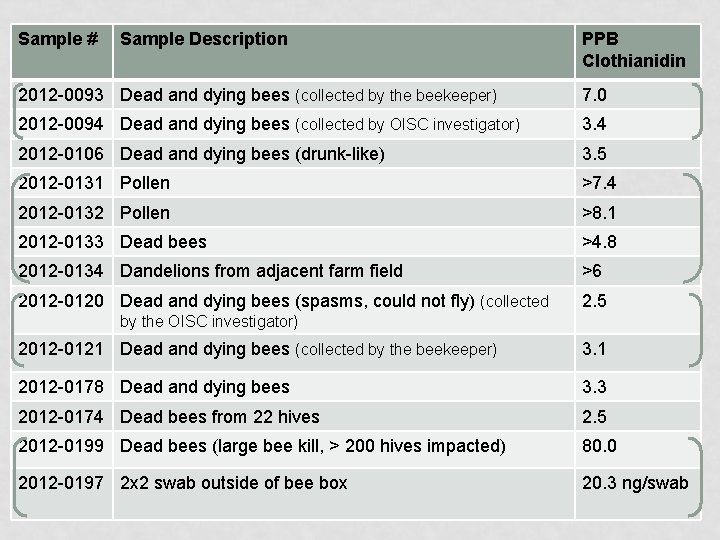
Sample # Sample Description PPB Clothianidin 2012 -0093 Dead and dying bees (collected by the beekeeper) 7. 0 2012 -0094 Dead and dying bees (collected by OISC investigator) 3. 4 2012 -0106 Dead and dying bees (drunk-like) 3. 5 2012 -0131 Pollen >7. 4 2012 -0132 Pollen >8. 1 2012 -0133 Dead bees >4. 8 2012 -0134 Dandelions from adjacent farm field >6 2012 -0120 Dead and dying bees (spasms, could not fly) (collected 2. 5 by the OISC investigator) 2012 -0121 Dead and dying bees (collected by the beekeeper) 3. 1 2012 -0178 Dead and dying bees 3. 3 2012 -0174 Dead bees from 22 hives 2. 5 2012 -0199 Dead bees (large bee kill, > 200 hives impacted) 80. 0 2012 -0197 2 x 2 swab outside of bee box 20. 3 ng/swab
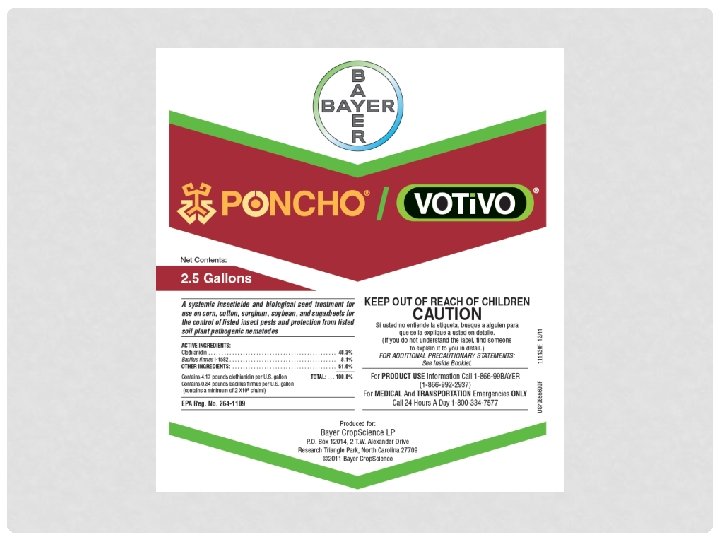
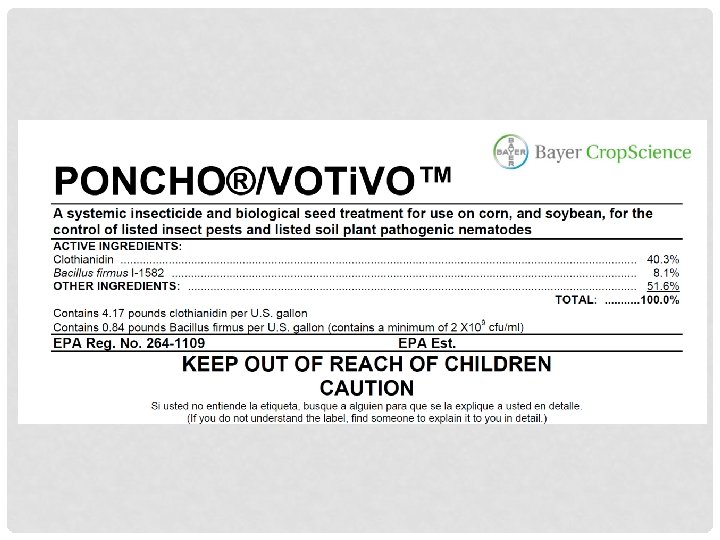
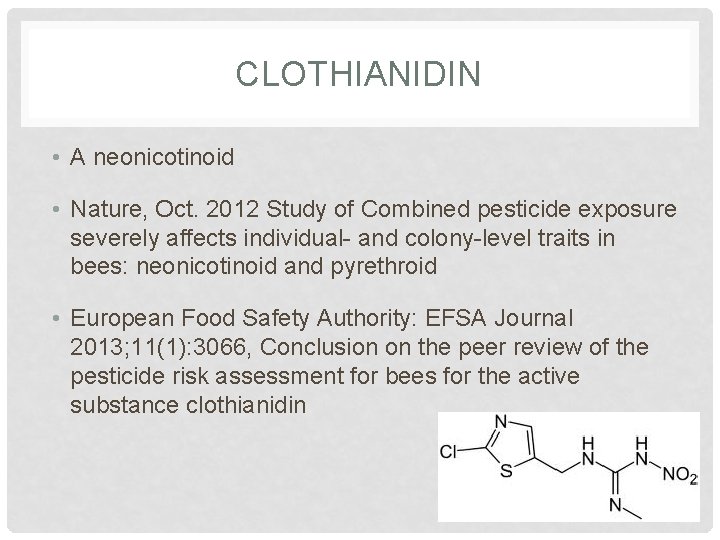
CLOTHIANIDIN • A neonicotinoid • Nature, Oct. 2012 Study of Combined pesticide exposure severely affects individual- and colony-level traits in bees: neonicotinoid and pyrethroid • European Food Safety Authority: EFSA Journal 2013; 11(1): 3066, Conclusion on the peer review of the pesticide risk assessment for bees for the active substance clothianidin
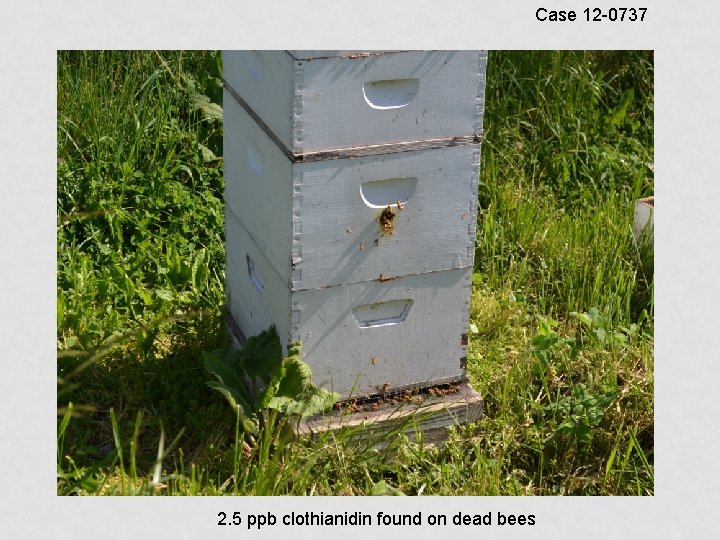
Case 12 -0737 2. 5 ppb clothianidin found on dead bees
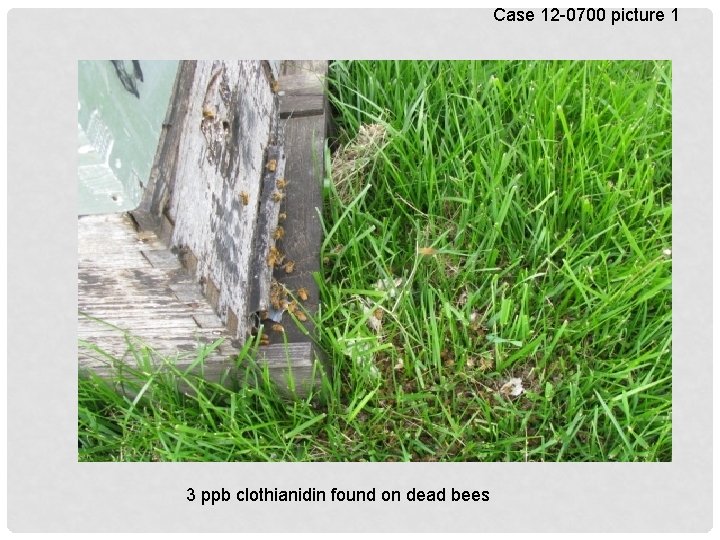
Case 12 -0700 picture 1 3 ppb clothianidin found on dead bees
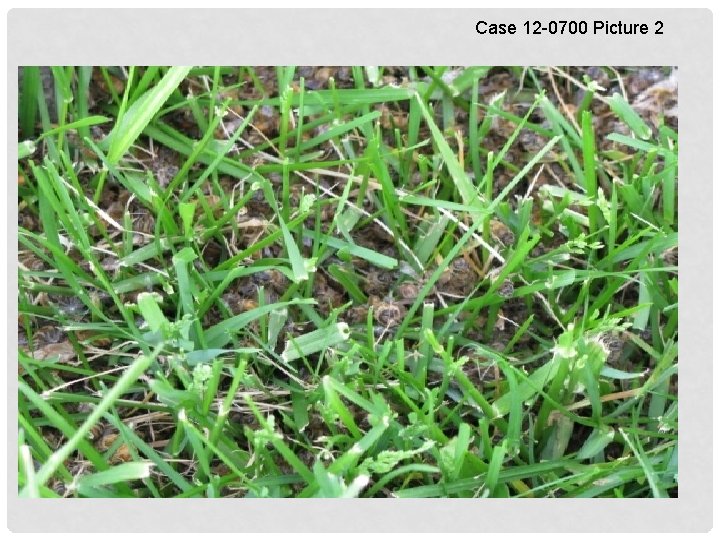
Case 12 -0700 Picture 2
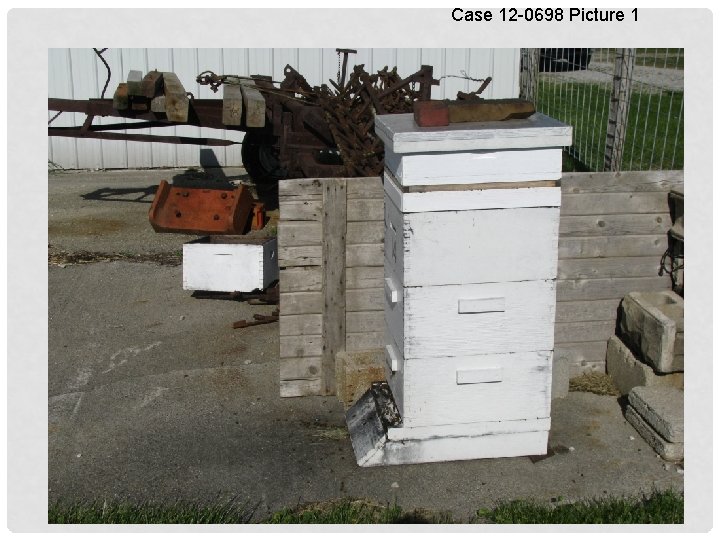
Case 12 -0698 Picture 1
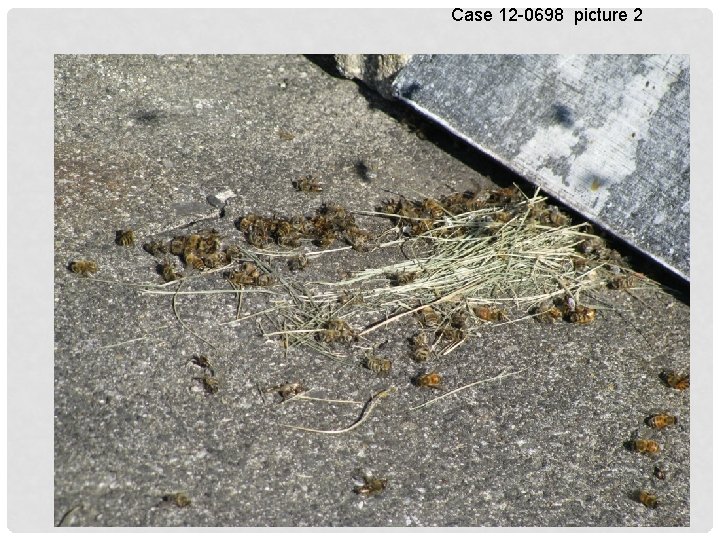
Case 12 -0698 picture 2
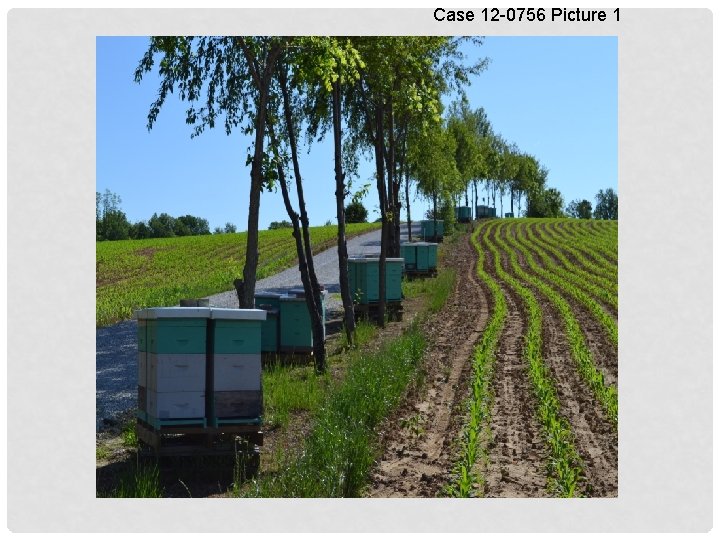
Case 12 -0756 Picture 1
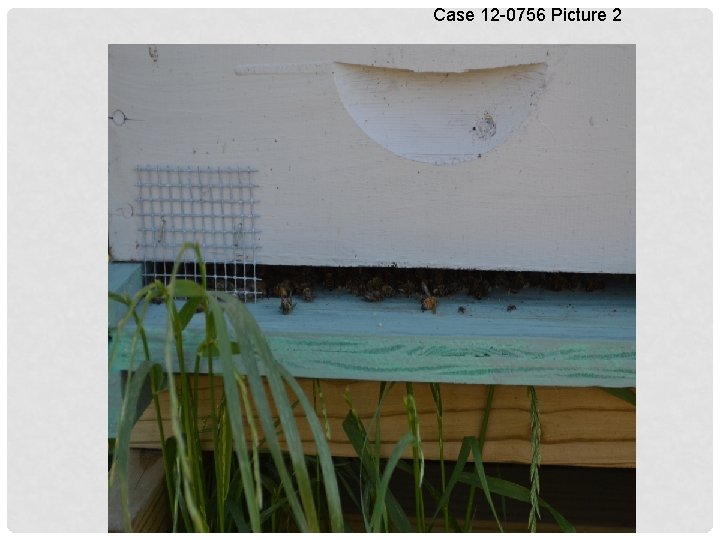
Case 12 -0756 Picture 2
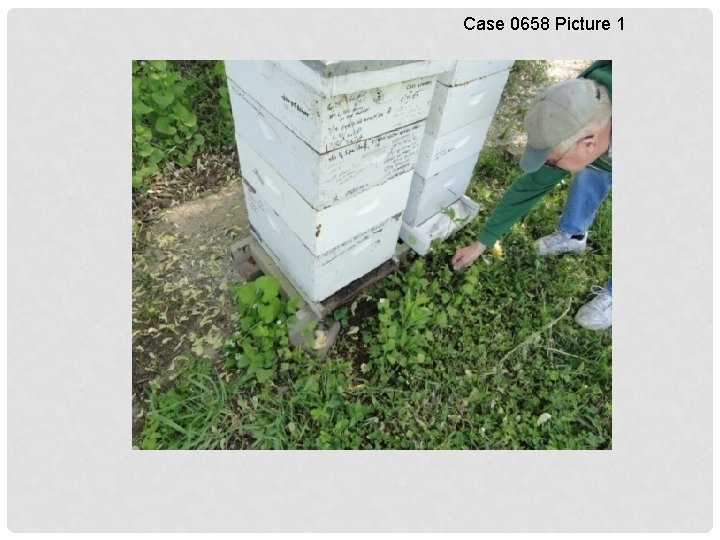
Case 0658 Picture 1
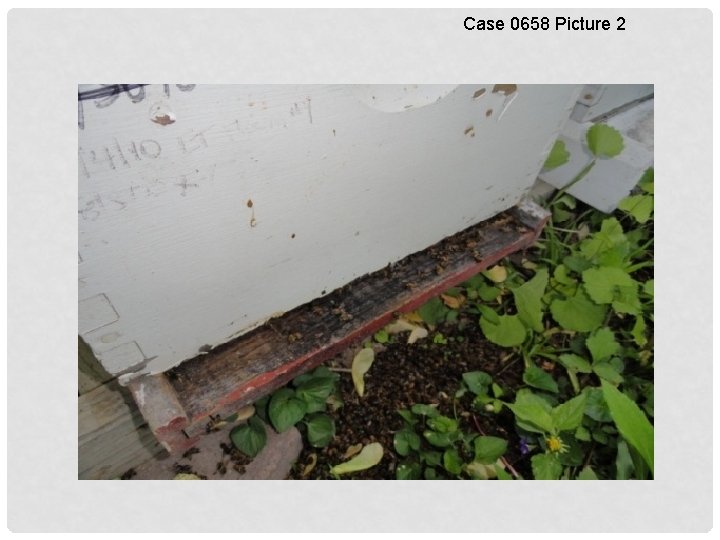
Case 0658 Picture 2
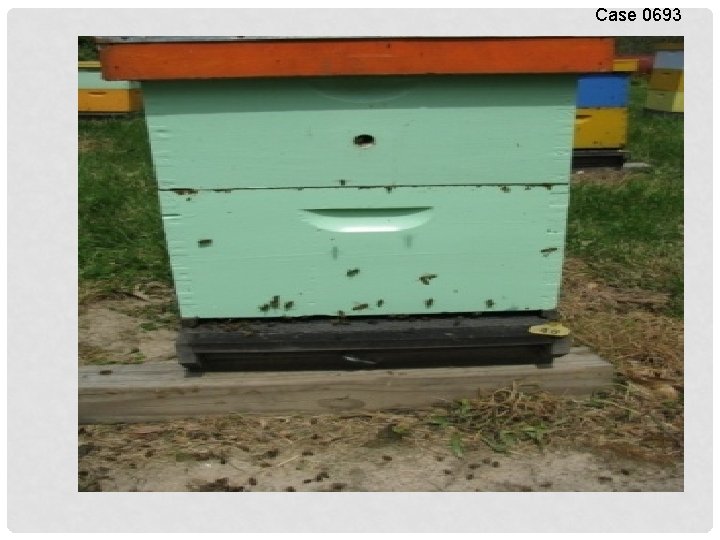
Case 0693
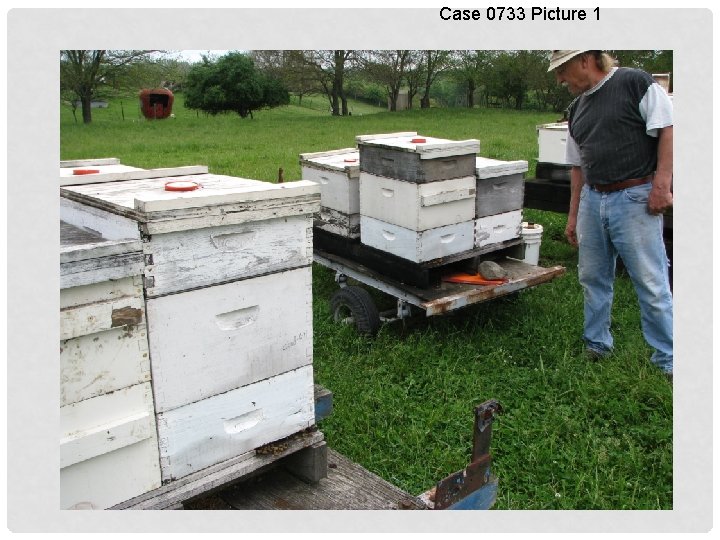
Case 0733 Picture 1
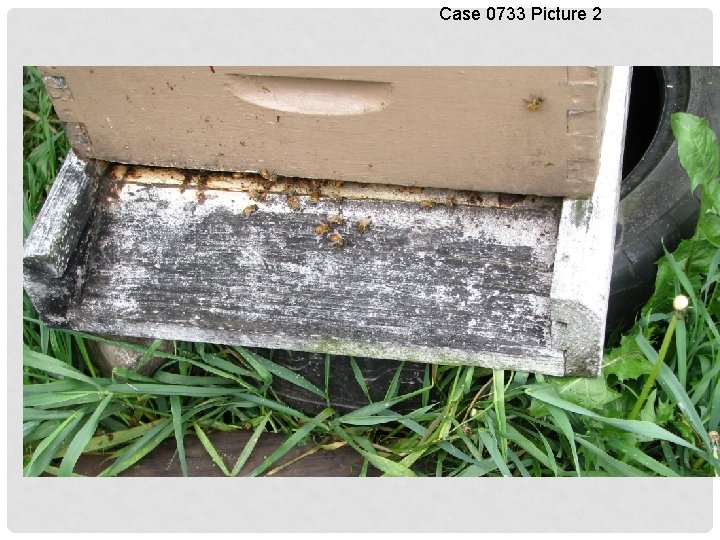
Case 0733 Picture 2
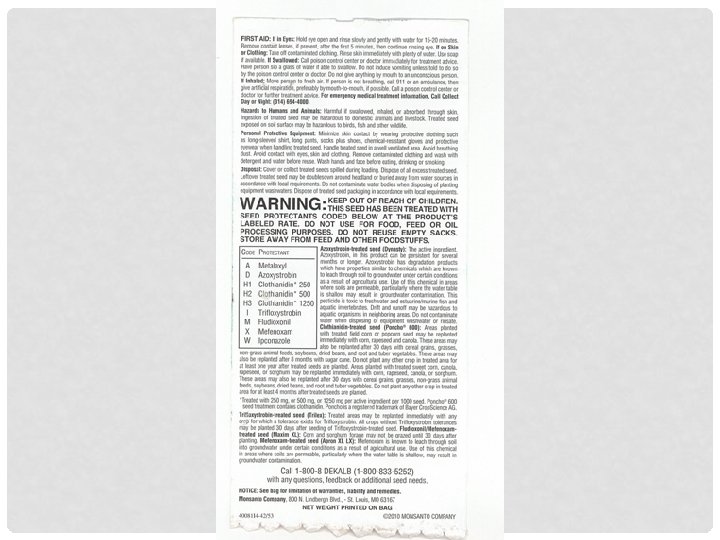
FIELD SAMPLING • How many bees? collect (or have bee keeper collect) sufficient amount (1 pint per agency/dept. ) • Mylar bags are good for storing dead bees. Glass jars are preferred for pollen and wax materials. • Collect foliage/vegetation or soil samples? • Transfer samples on ice and freeze as soon as samples arrive in lab. • Information about pesticide applications (i. e. corn planting) • • What crops are planted What kinds of seed treatment? planting date? planter box cleanout performed?
ANALYTICAL METHOD • “Refined methodology for the determination of neonicotinoid pesticides and their metabolites in honey bees and bee products by liquid chromatographytandem mass spectrometry (LC-MS/MS)” J. Ag. Food Chem. 2010, 58(10): 5926 -31 • UCT application note: Qu. ECh. ERS Analysis of Miticides and Other Agrochemicals in Honey Bees, Wax or Pollen
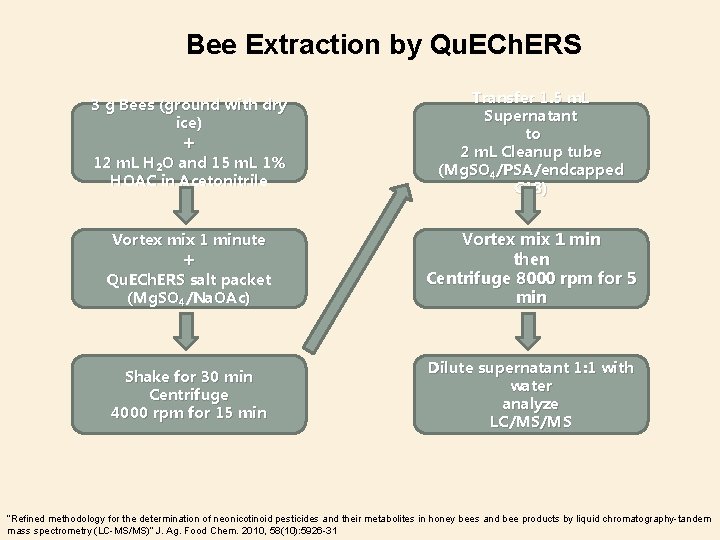
Bee Extraction by Qu. ECh. ERS 3 g Bees (ground with dry ice) + 12 m. L H 2 O and 15 m. L 1% HOAC in Acetonitrile Vortex mix 1 minute + Qu. ECh. ERS salt packet (Mg. SO 4/Na. OAc) Shake for 30 min Centrifuge 4000 rpm for 15 min Transfer 1. 5 m. L Supernatant to 2 m. L Cleanup tube (Mg. SO 4/PSA/endcapped C 18) Vortex mix 1 min then Centrifuge 8000 rpm for 5 min Dilute supernatant 1: 1 with water analyze LC/MS/MS “Refined methodology for the determination of neonicotinoid pesticides and their metabolites in honey bees and bee products by liquid chromatography-tandem mass spectrometry (LC-MS/MS)” J. Ag. Food Chem. 2010, 58(10): 5926 -31
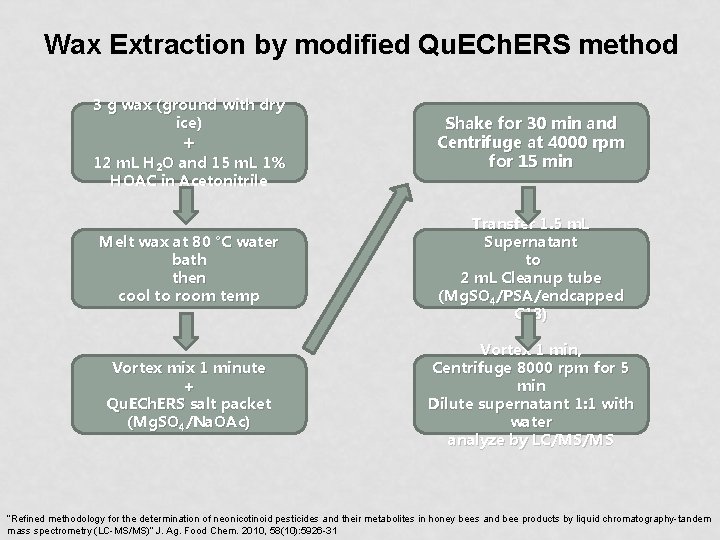
Wax Extraction by modified Qu. ECh. ERS method 3 g wax (ground with dry ice) + Shake for 30 min and Centrifuge at 4000 rpm for 15 min Melt wax at 80 °C water bath then cool to room temp Transfer 1. 5 m. L Supernatant to 2 m. L Cleanup tube (Mg. SO 4/PSA/endcapped C 18) Vortex mix 1 minute + Qu. ECh. ERS salt packet (Mg. SO 4/Na. OAc) Vortex 1 min, Centrifuge 8000 rpm for 5 min Dilute supernatant 1: 1 with water analyze by LC/MS/MS 12 m. L H 2 O and 15 m. L 1% HOAC in Acetonitrile “Refined methodology for the determination of neonicotinoid pesticides and their metabolites in honey bees and bee products by liquid chromatography-tandem mass spectrometry (LC-MS/MS)” J. Ag. Food Chem. 2010, 58(10): 5926 -31
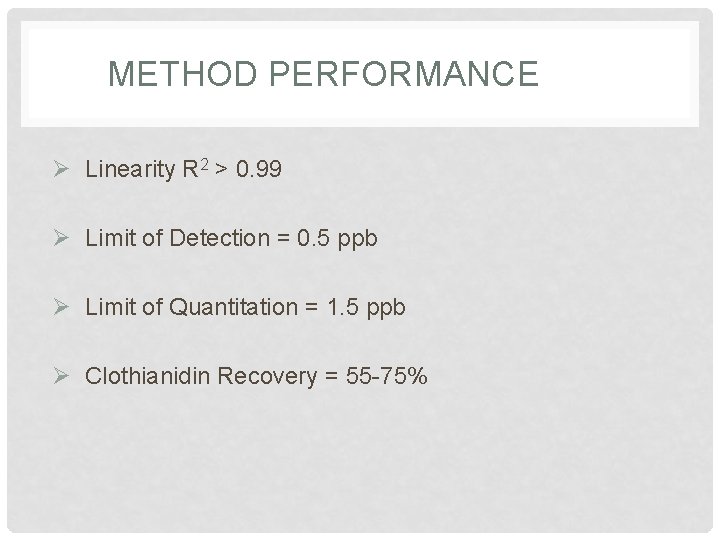
METHOD PERFORMANCE Ø Linearity R 2 > 0. 99 Ø Limit of Detection = 0. 5 ppb Ø Limit of Quantitation = 1. 5 ppb Ø Clothianidin Recovery = 55 -75%
CONCLUSIONS Ø Clothianidin was detected in bees and pollens. Ø No violation of the Indiana Use of Application Law could be documented.
- Slides: 25