
2013 2 nd Quizzes What are the differences
![Site Mantel test among all individuals. [Moran’s I vs ln (geographic distance)] ID ALL](https://slidetodoc.com/presentation_image_h/c35b4e5c2f3e457bd113f0fd02bb805e/image-9.jpg "Site Mantel test among all individuals. [Moran’s I vs ln (geographic distance)] ID ALL")
- Slides: 46
2013 2 nd Quizzes • What are the differences between a native and an emergent disease • What role do native forest diseases play • What is the Janzen-Connell hypothesis • What is the relationship between disease and density and what are the notable exceptions • What are the counterweights to numerical effects of disease, why do they count • What are soil feed-backs and why are they important
More Ecology of Forest Diseases (Gilbert 2002) • Density Dependence • Counterweights to numerical effects • Disease and competition • Dispersal and Local Adaptation
Density Dependence • Most studies have shown a positive relationship between density and disease incidence – Shorter distance to be covered – Potentially limiting resources – However there are examples that show a different pattern, in particular for diseases that are vectored, and for diseases that require an alternate host
Counterweights to numerical effects • Disease = damage, but communities will compensate – Disease reduced number and size of survivors, but at maturity disease-infested plots had the largest trees – Survivors produce more seed • Cross generational effects – Diseased mothers will produce inferior seed – Diseased mothers will generate progeny that is more resistant to that disease
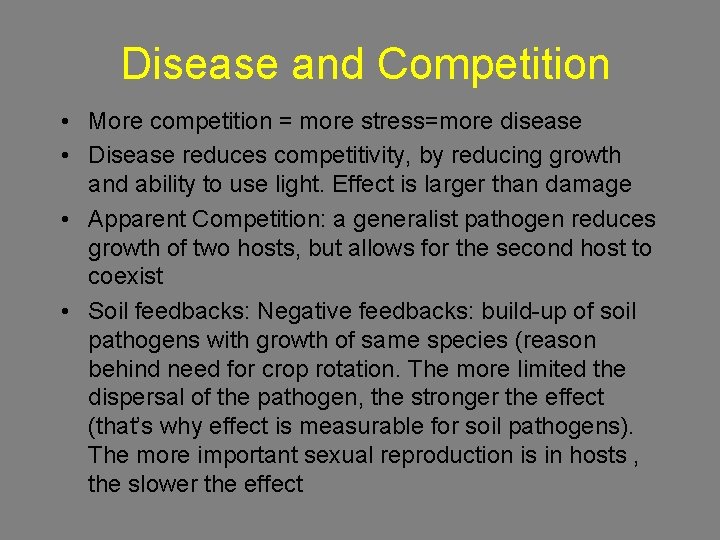
Disease and Competition • More competition = more stress=more disease • Disease reduces competitivity, by reducing growth and ability to use light. Effect is larger than damage • Apparent Competition: a generalist pathogen reduces growth of two hosts, but allows for the second host to coexist • Soil feedbacks: Negative feedbacks: build-up of soil pathogens with growth of same species (reason behind need for crop rotation. The more limited the dispersal of the pathogen, the stronger the effect (that’s why effect is measurable for soil pathogens). The more important sexual reproduction is in hosts , the slower the effect
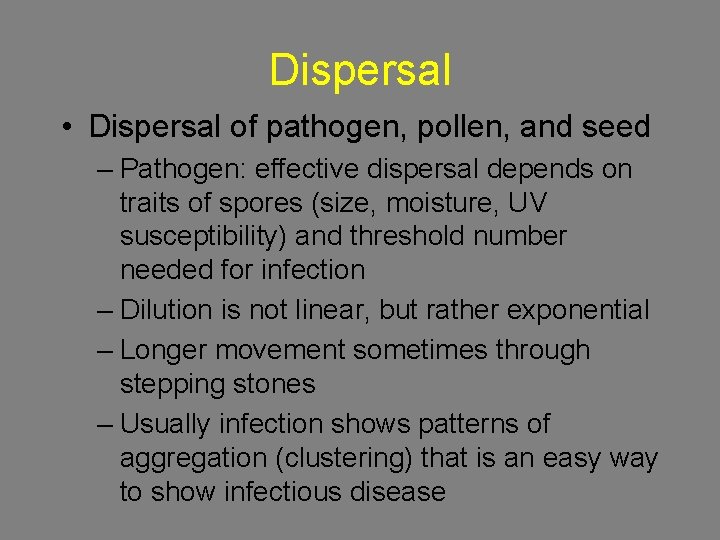
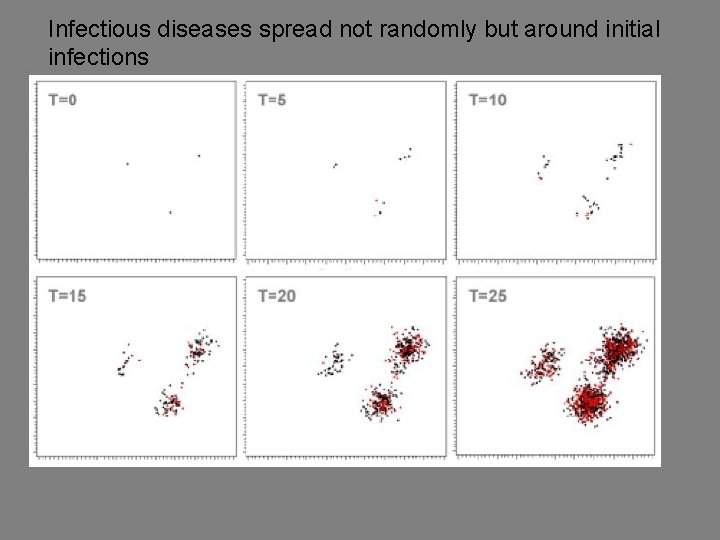
Dispersal • Dispersal of pathogen, pollen, and seed – Pathogen: effective dispersal depends on traits of spores (size, moisture, UV susceptibility) and threshold number needed for infection – Dilution is not linear, but rather exponential – Longer movement sometimes through stepping stones – Usually infection shows patterns of aggregation (clustering) that is an easy way to show infectious disease
Infectious diseases spread not randomly but around initial infections
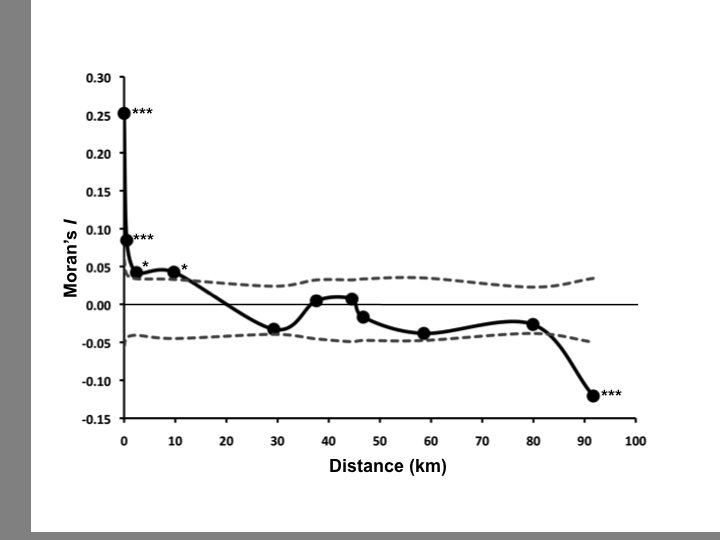
Site Mantel test among all individuals. [Moran’s I vs ln (geographic distance)] ID ALL Correlation coeff. (r) P-value (1000, 000 perm) -0. 2153 <0. 000001
Local Adaptation • Process strongly dependent on generational rates, that is why microbes increase virulence more rapidly than hosts, however a generational turn over of the host may increase host resistance • Importance of metapopulations: locally co-evolving hosts and pathogens are more likely to undergo selective processes. If long distance effective dispersal occurs, resistance will be slower to show up in hosts, and virulence will increase more slowly in pathogens • Red queen hypothesis: relationship between hosts and pathogens is always dynamic: pathogen increases virulence, plants will be selected for increased resistance. Often virulence and resistance are determined by individual genes, but these genes cannot be accumulated indefinitely due to their cost
Forest Disease Concepts (Tainter and Baker, chapter 5) • Inoculum and its sources: inoculum defined as the organism itself or specialized cells of an organism that are capable of infecting a host • Viruses, bacteria, mycoplasmas the organisms themselves, nematodes also their eggs • Fungi: mycelia, rhizomorphs or strands, chlamydospores, sclerotia • Release: active or passive (weather controlled)
• Dispersal: in general limited, vast majority of spores stay within 100 m, however, longer distances are reported: 500 m up to 500 Kms, Some fungi are vectored by insects, others by water. Insects can carry spores on surface or mycelia in specialized organs called mycangia • Dormancy and survival: fungal spores usually survive from a few days to about a year. Oomycete mycelia: 2 months, Basidiomycete mycelia 63 years, zoospores three weeks • Disease Expression=Inoculum potential x disease potential, where ip=effective inoculum density and dp=host susceptibility
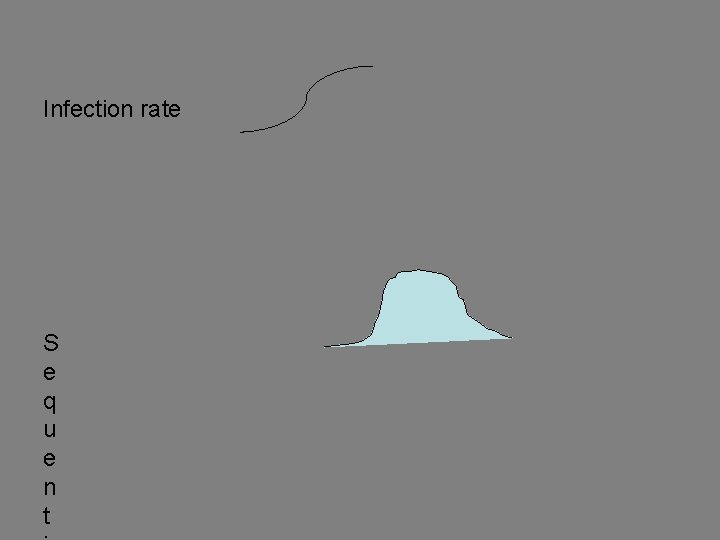
Infection rate S e q u e n t
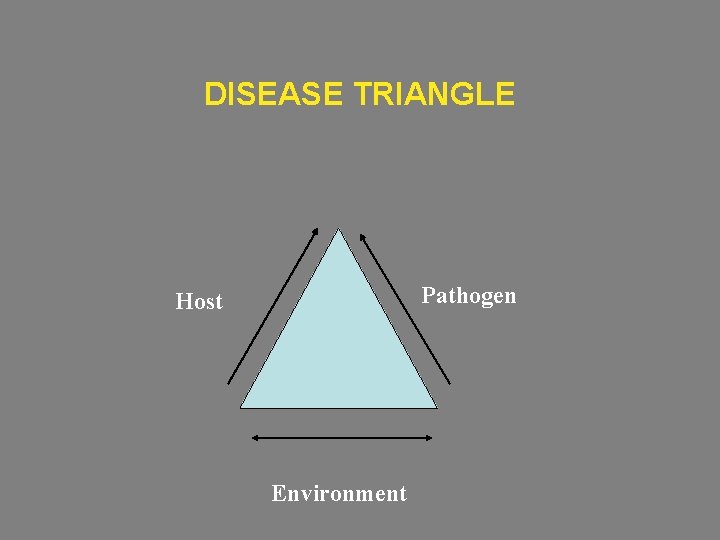
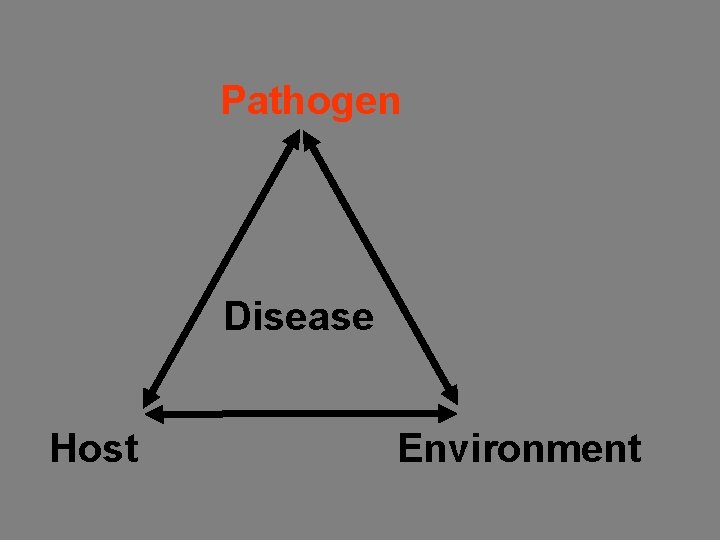
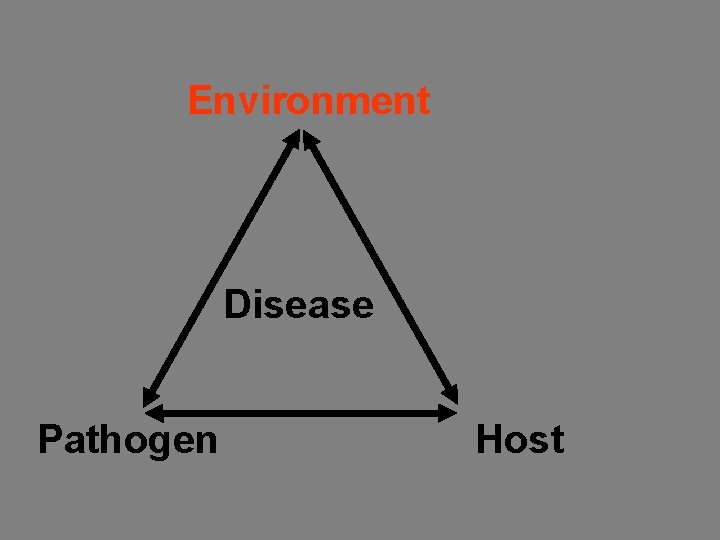
DISEASE TRIANGLE Pathogen Host Environment
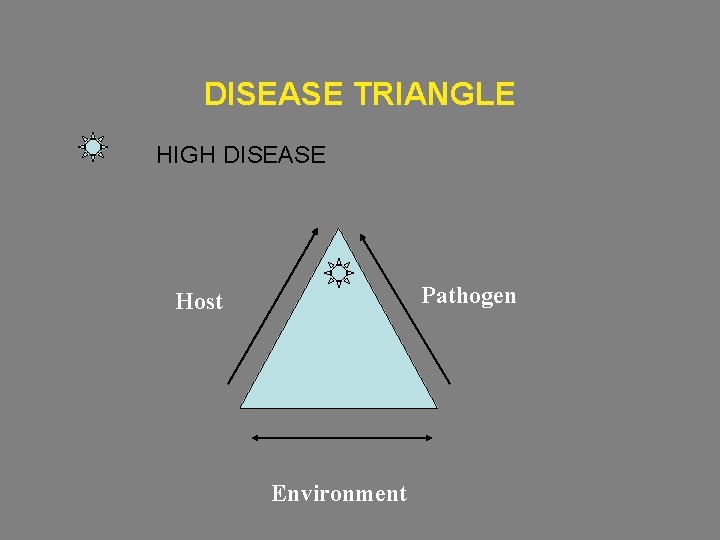
DISEASE TRIANGLE HIGH DISEASE Pathogen Host Environment
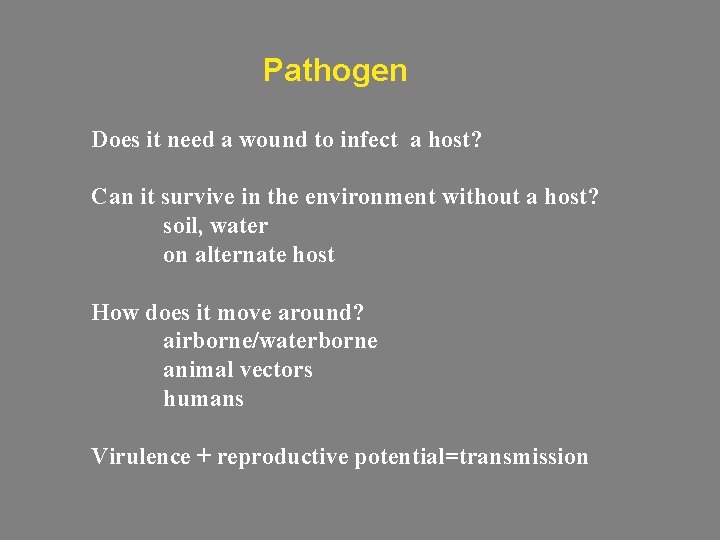
Pathogen Does it need a wound to infect a host? Can it survive in the environment without a host? soil, water on alternate host How does it move around? airborne/waterborne animal vectors humans Virulence + reproductive potential=transmission
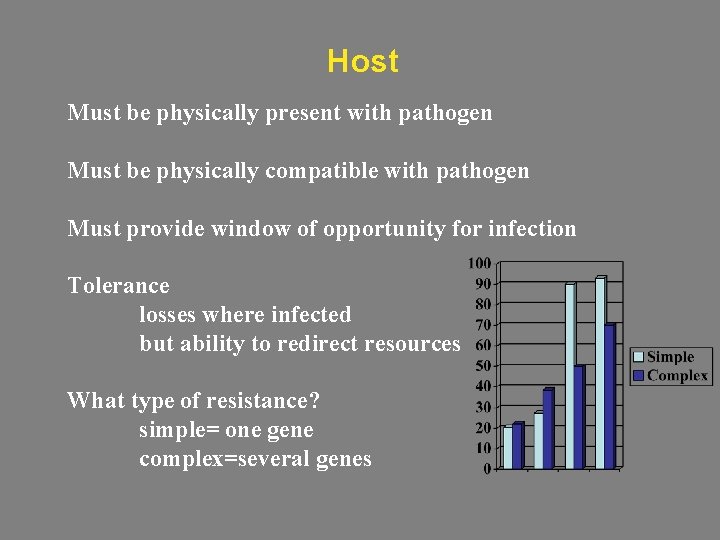
Host Must be physically present with pathogen Must be physically compatible with pathogen Must provide window of opportunity for infection Tolerance losses where infected but ability to redirect resources What type of resistance? simple= one gene complex=several genes
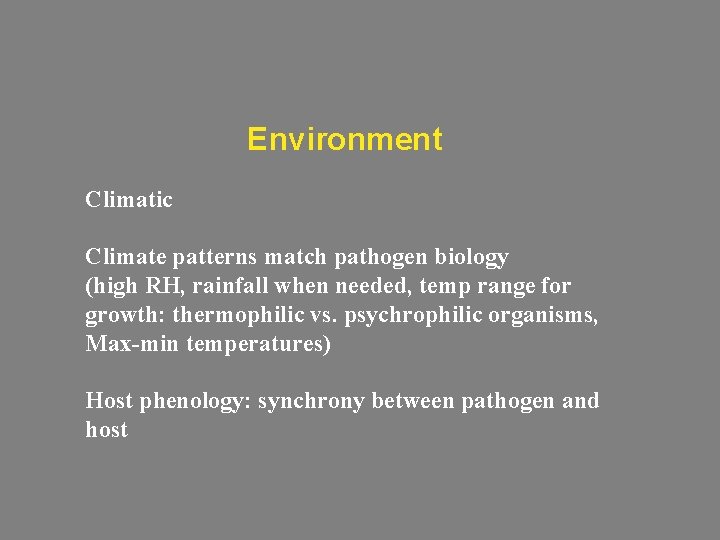
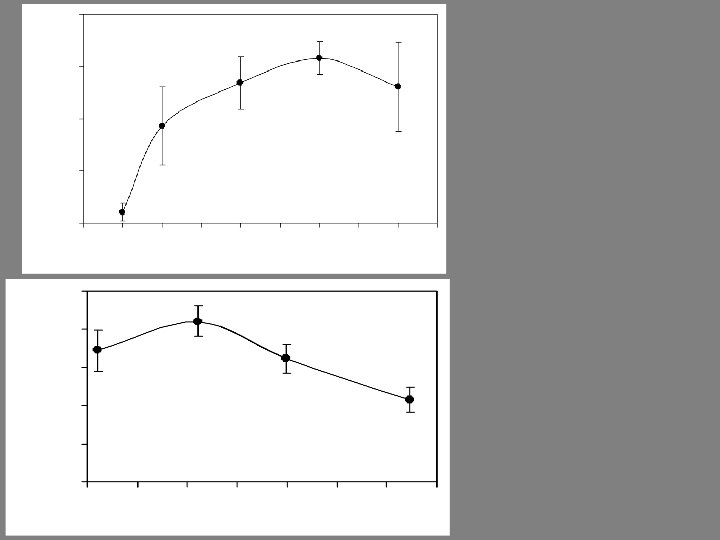
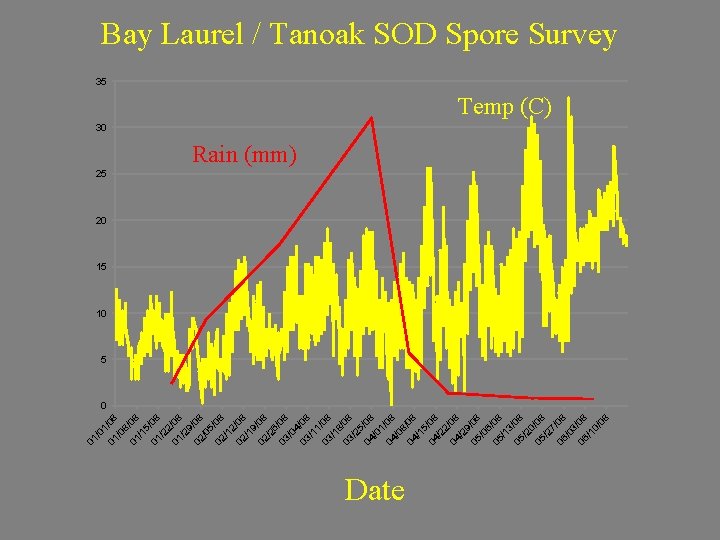
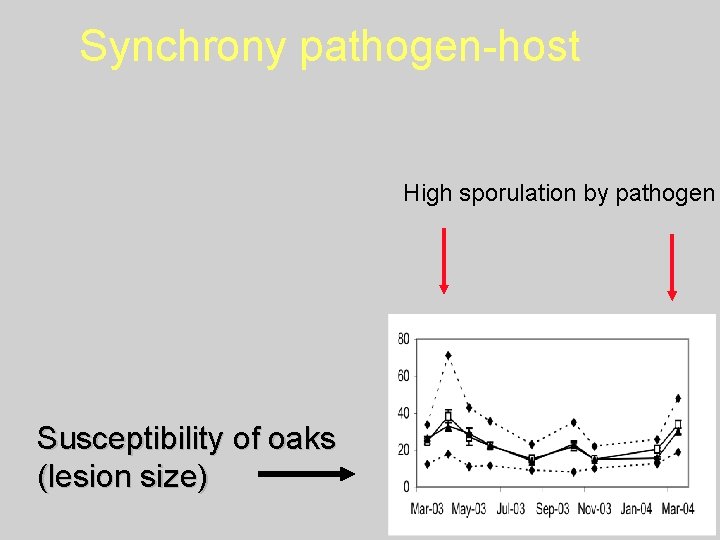
Environment Climatic Climate patterns match pathogen biology (high RH, rainfall when needed, temp range for growth: thermophilic vs. psychrophilic organisms, Max-min temperatures) Host phenology: synchrony between pathogen and host
Wetness > 12 h Temp >19 C
08 01 08 /1 5 01 /08 /2 2 01 /08 /2 9 02 /08 /0 5 02 /08 /1 2 02 /08 /1 9 02 /08 /2 6 03 /08 /0 4 03 /08 /1 1 03 /08 /1 8 03 /08 /2 5 04 /08 /0 1 04 /08 /0 8 04 /08 /1 5 04 /08 /2 2 04 /08 /2 9 05 /08 /0 6 05 /08 /1 3 05 /08 /2 0 05 /08 /2 7 06 /08 /0 3 06 /08 /1 0/ 08 /0 8/ 01 /0 1/ 01 Bay Laurel / Tanoak SOD Spore Survey 35 Temp (C) 30 Rain (mm) 25 20 15 10 5 0 Date
Synchrony pathogen-host High sporulation by pathogen Susceptibility of oaks (lesion size)
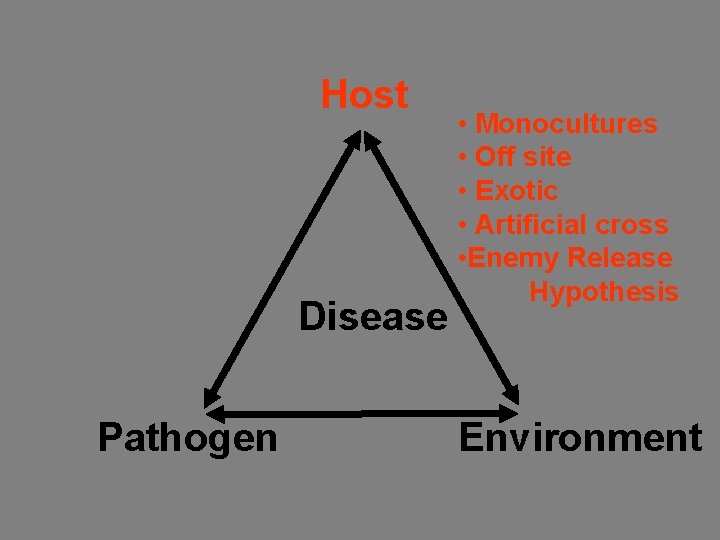
Host Disease Pathogen • Monocultures • Off site • Exotic • Artificial cross • Enemy Release Hypothesis Environment
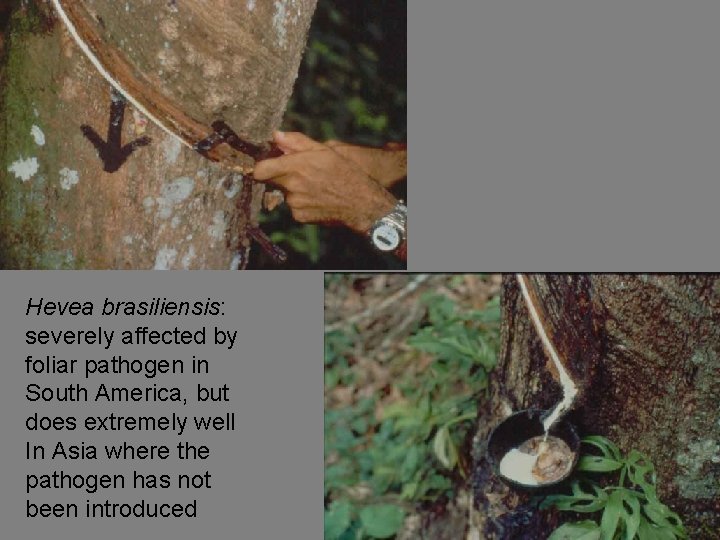
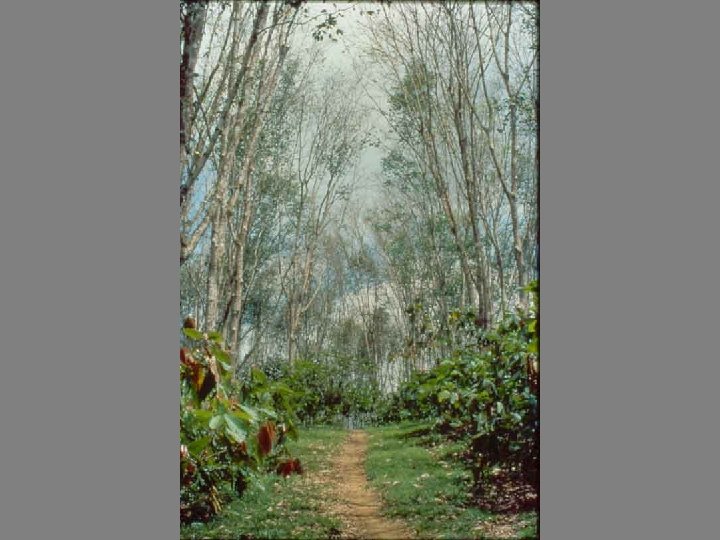
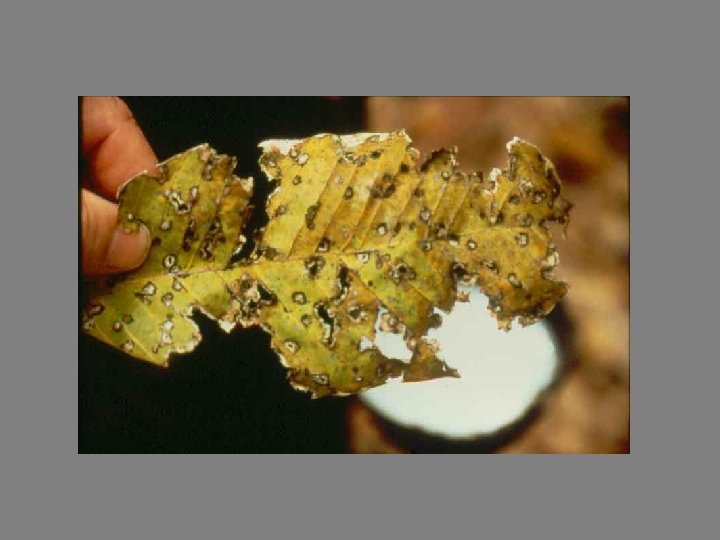
Hevea brasiliensis: severely affected by foliar pathogen in South America, but does extremely well In Asia where the pathogen has not been introduced
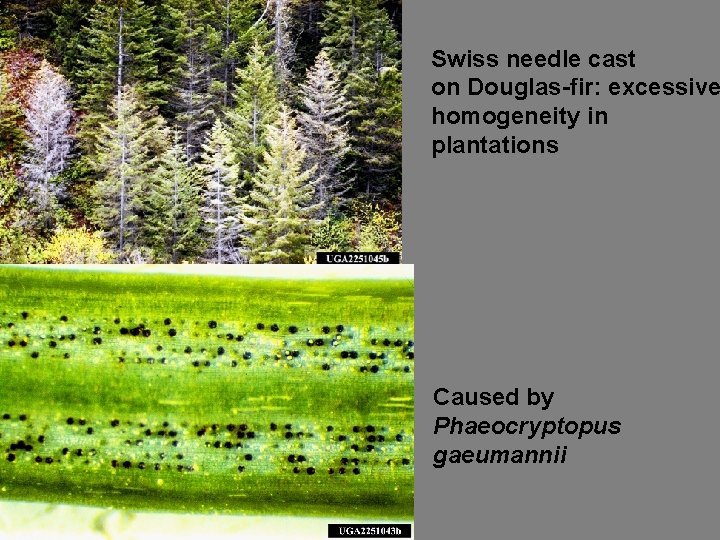
Swiss needle cast on Douglas-fir: excessive homogeneity in plantations Caused by Phaeocryptopus gaeumannii
Pathogen Disease Host Environment
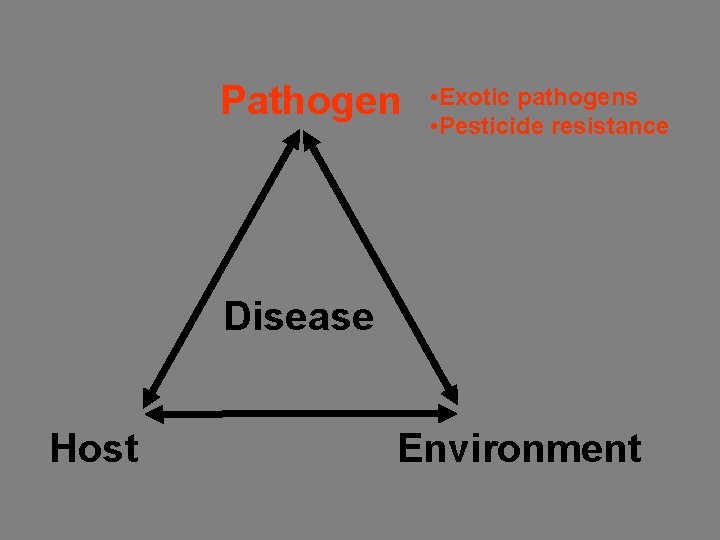
Pathogen • Exotic pathogens • Pesticide resistance Disease Host Environment
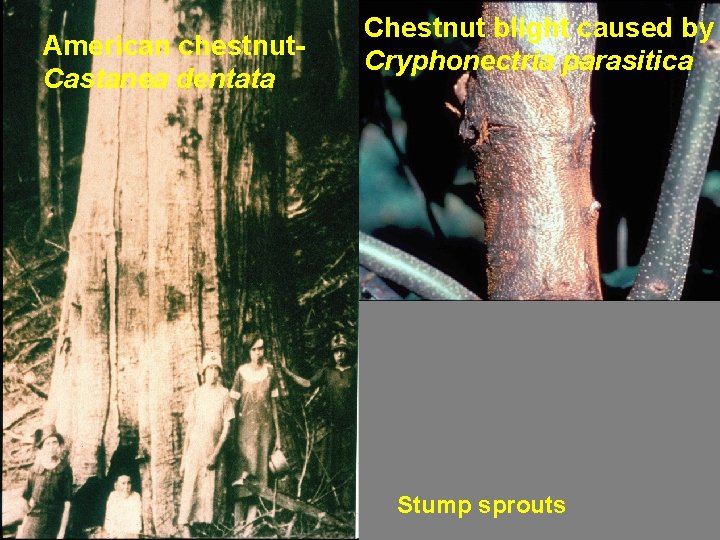
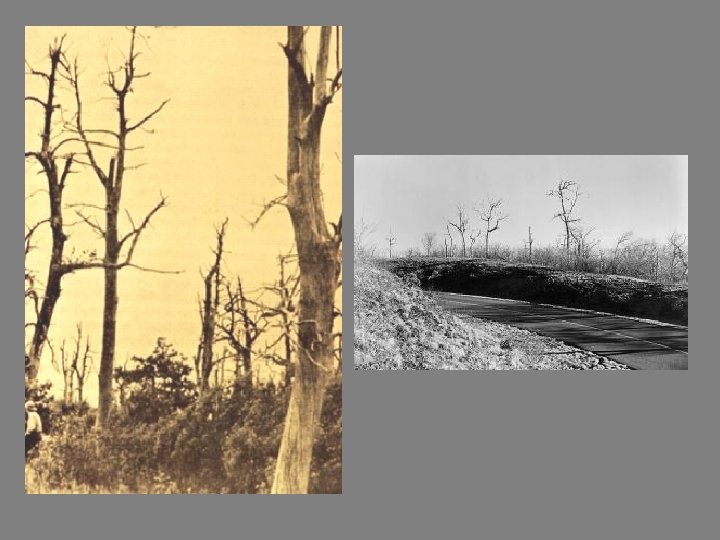
American chestnut. Castanea dentata Chestnut blight caused by Cryphonectria parasitica Stump sprouts
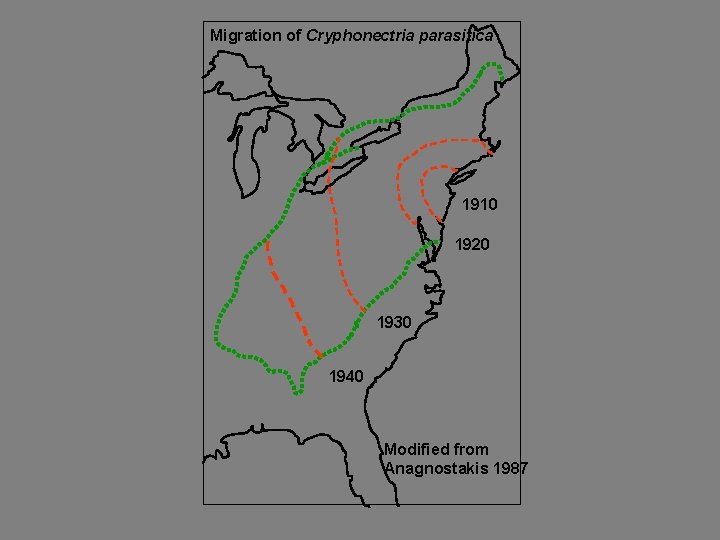
Migration of Cryphonectria parasitica 1910 1920 1930 1940 Modified from Anagnostakis 1987
Introduced Forest Pathogens in CA Port-Orford Cedar root disease Phytophthora lateralis White Pine Blister Rust Cronartium ribicola Pitch canker Fusarium circinatum Phytophthora root rot Phytophthora cinnamomi
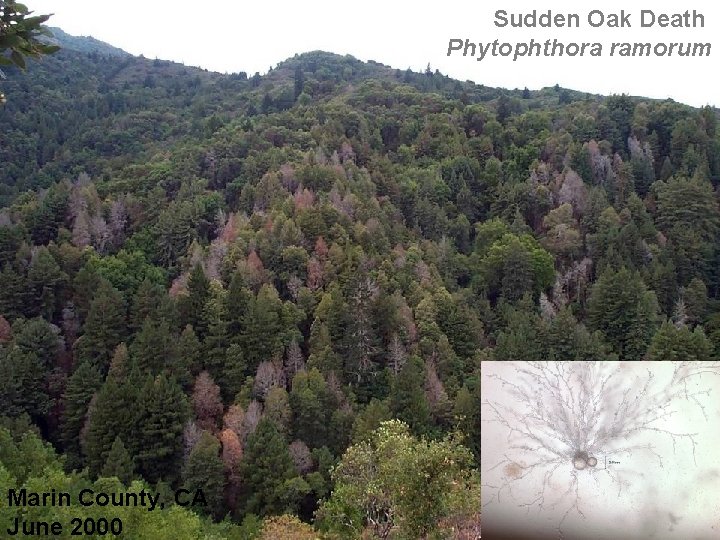
Sudden Oak Death Phytophthora ramorum Marin County, CA June 2000
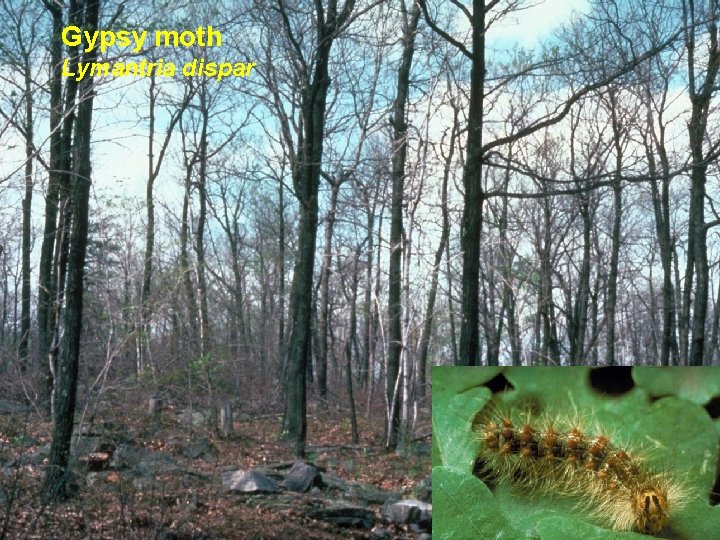
Gypsy moth Lymantria dispar
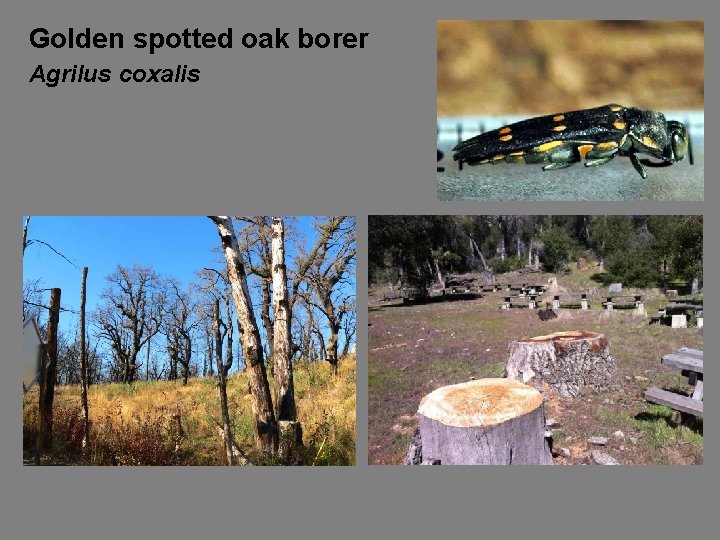
Golden spotted oak borer Agrilus coxalis
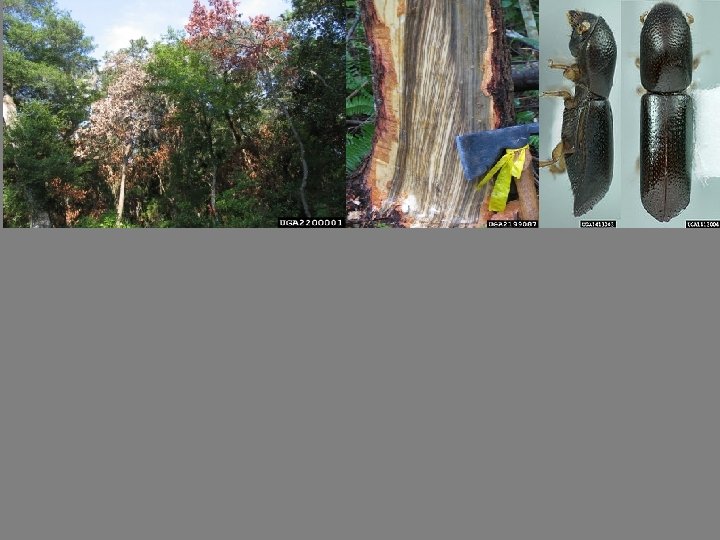
Laurel Wilt Raffaelea lauricola sp. nov. consistently isolated from affected tissue. . . from exotic boring beetle: Xyleborus glabratus (an ambrosia beetle) &
Pesticide resistance • Late blight of potato, caused by Phytopthora infestans • 1845 -1849 caused the Irish famine, potato was like the rubber tree. Moved from its native range, but without the pathogen (ERH). Then pathogen was introduced in Europe with dire consequences on crop production • More recently, introduction in Europe and North America of different mating type allowed pathogen to reproduce sexually and overcome effect of pesticide methalaxyl with 50% drop in potato production
Environment Disease Pathogen Host
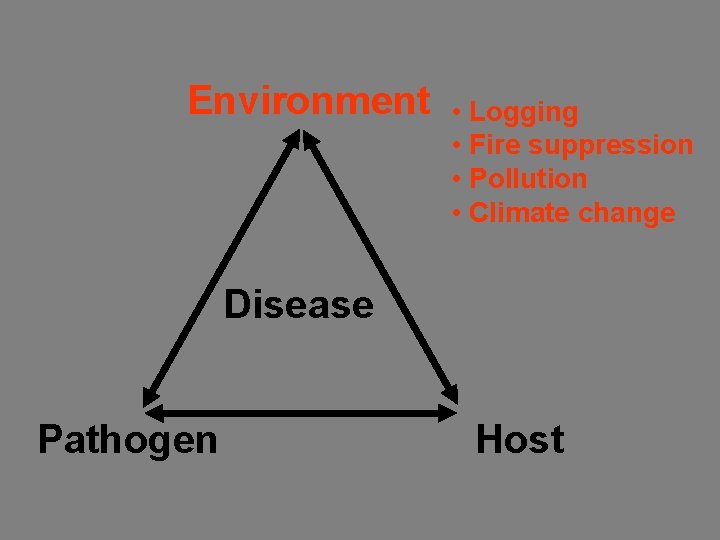
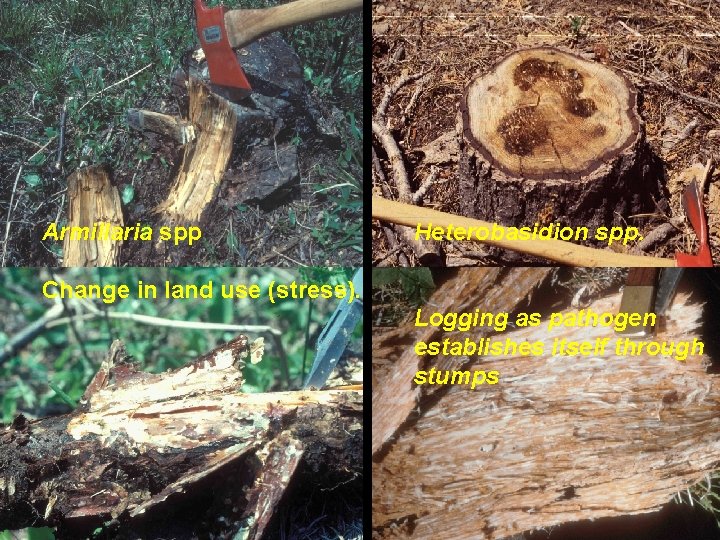
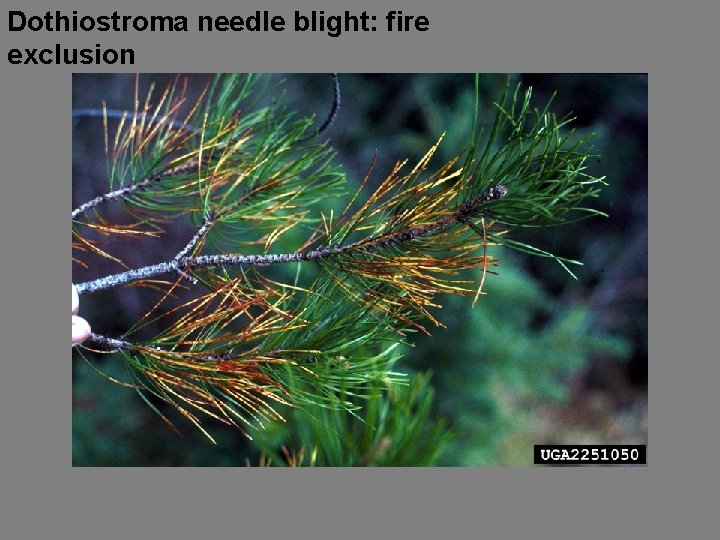
Environment • Logging • Fire suppression • Pollution • Climate change Disease Pathogen Host
Armillaria spp Heterobasidion spp. Change in land use (stress). Logging as pathogen establishes itself through stumps
Dothiostroma needle blight: fire exclusion
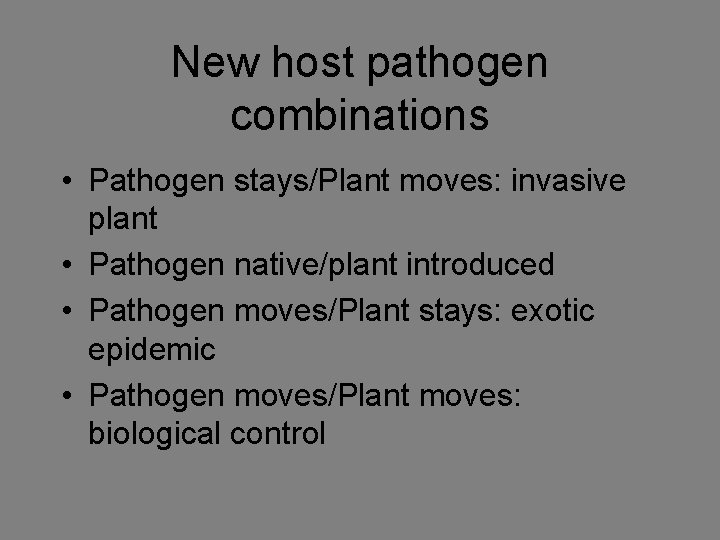
New host pathogen combinations • Pathogen stays/Plant moves: invasive plant • Pathogen native/plant introduced • Pathogen moves/Plant stays: exotic epidemic • Pathogen moves/Plant moves: biological control
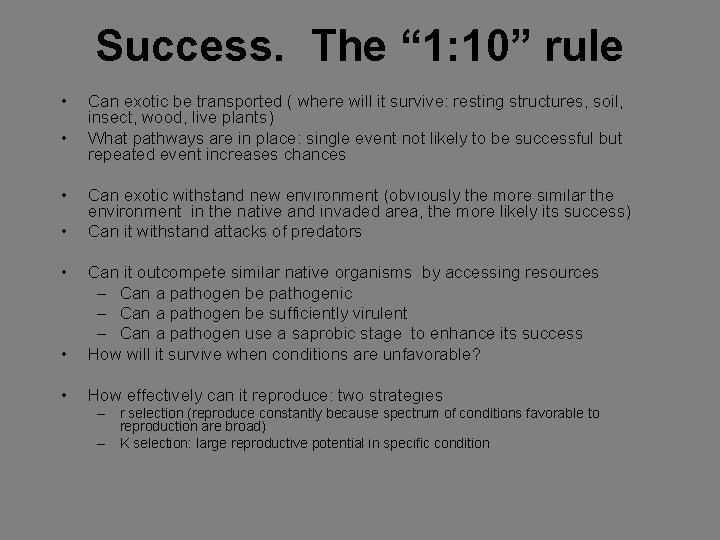
Success. The “ 1: 10” rule • • • Can exotic be transported ( where will it survive: resting structures, soil, insect, wood, live plants) What pathways are in place: single event not likely to be successful but repeated event increases chances Can exotic withstand new environment (obviously the more similar the environment in the native and invaded area, the more likely its success) Can it withstand attacks of predators • Can it outcompete similar native organisms by accessing resources – Can a pathogen be pathogenic – Can a pathogen be sufficiently virulent – Can a pathogen use a saprobic stage to enhance its success How will it survive when conditions are unfavorable? • How effectively can it reproduce: two strategies – r selection (reproduce constantly because spectrum of conditions favorable to reproduction are broad) – K selection: large reproductive potential in specific condition
• Invasion driven by ecological conditions • Enemy release hypothesis • Resource availability (pathogenicity/virulence): lack of coevolution