
2012 UF Bloodborne Pathogen Training Biological Safety Office
2012 UF Bloodborne Pathogen Training Biological Safety Office Environmental Health & Safety 352 -392 -1591 www. ehs. ufl. edu bso@ehs. ufl. edu
BBP Standard 1990: Occupational Safety & Health Administration (OSHA) estimates >200 deaths & 9000 infections/year from occupational BBP exposure BBP standard implemented in 1991 to protect workers from occupational exposure 29 CFR 1910. 1030 http: //www. osha. gov/pls/oshaweb/owadisp. show_document? p_t able=STANDARDS&p_id=10051 Revised in 2001 – safe sharps devices, maintain a log of injuries from contaminated sharps

BBP Training Requirement UF follows OSHA requirement ALL employees, staff, students, volunteers, affiliates with potential exposure to BBP from human blood/OPIM General and workplace-specific training Completed BEFORE individual is assigned to tasks with the potential for BBP exposure and ANNUALLY thereafter In addition to training, individuals with potential exposure must also have: Access to the regulatory text and an explanation of its contents Access to a copy of the UF Exposure Control Plan Access to site-specific Standard Operating Procedures (SOPs) http: //www. ehs. ufl. edu/Bio/BBP/ECP 2012. pdf http: //www. ehs. ufl. edu/Bio/BBPSOPS. pdf
Bloodborne Pathogens (BBPs) Pathogenic microorganisms present in blood and other potentially infectious material (OPIM) that are able to cause disease in humans Hepatitis B virus (HBV, Hep. B) Hepatitis C virus (HCV, Hep. C) Human immunodeficiency virus (HIV) Less commonly, human T-lymphotropic virus (HTLV-1), Epstein-Barr virus (EBV), malaria, brucellosis, rabies, leptospirosis, babesiosis, syphilis, Creutzfeld-Jakob disease, arboviral infections (WNV, EEE), etc.
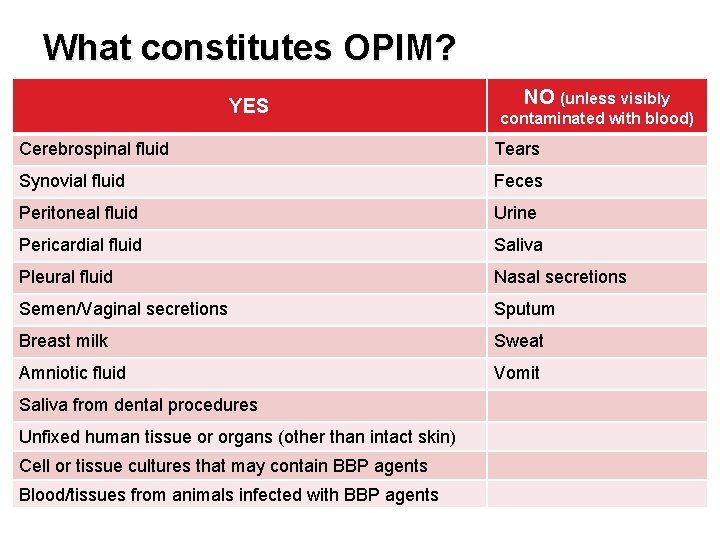
What constitutes OPIM? YES NO (unless visibly contaminated with blood) Cerebrospinal fluid Tears Synovial fluid Feces Peritoneal fluid Urine Pericardial fluid Saliva Pleural fluid Nasal secretions Semen/Vaginal secretions Sputum Breast milk Sweat Amniotic fluid Vomit Saliva from dental procedures Unfixed human tissue or organs (other than intact skin) Cell or tissue cultures that may contain BBP agents Blood/tissues from animals infected with BBP agents
Research using human cell lines… Cell lines may be infected or become infected/contaminated in subsequent handling/passaging ATCC started testing newly manufactured/deposited cell lines for common viral pathogens (HIV, Hep. B, Hep. C, HPV, EBV, and CMV) in January 2010 Many infectious agents yet to be discovered and for which there is no test § Remember HIV? Use Universal Precautions for all human cell lines
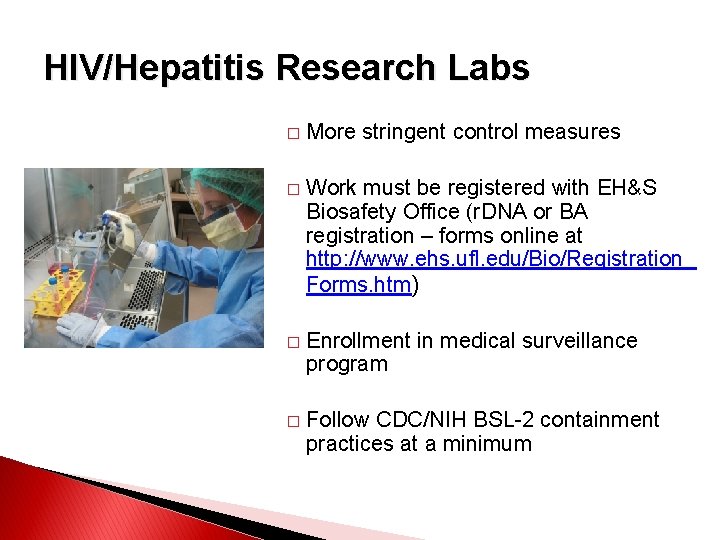
HIV/Hepatitis Research Labs � More stringent control measures � Work must be registered with EH&S Biosafety Office (r. DNA or BA registration – forms online at http: //www. ehs. ufl. edu/Bio/Registration_ Forms. htm) � Enrollment in medical surveillance program � Follow CDC/NIH BSL-2 containment practices at a minimum
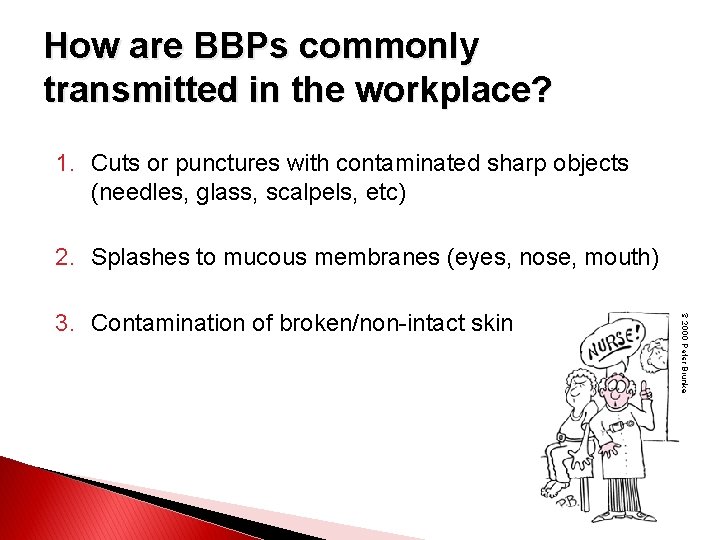
How are BBPs commonly transmitted in the workplace? 1. Cuts or punctures with contaminated sharp objects (needles, glass, scalpels, etc) 2. Splashes to mucous membranes (eyes, nose, mouth) 3. Contamination of broken/non-intact skin
“UNIVERSAL PRECAUTIONS” Cornerstone of exposure prevention All human blood or OPIM is treated as infectious Standard precautions = universal precautions + body substance isolation. Applies to blood & all other body fluids, secretions, excretions (except sweat), nonintact skin, and mucous membranes
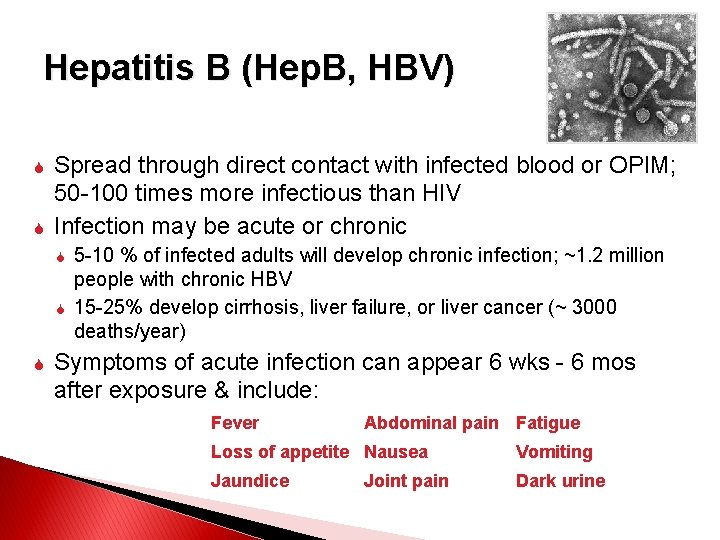
Hepatitis B (Hep. B, HBV) Spread through direct contact with infected blood or OPIM; 50 -100 times more infectious than HIV Infection may be acute or chronic 5 -10 % of infected adults will develop chronic infection; ~1. 2 million people with chronic HBV 15 -25% develop cirrhosis, liver failure, or liver cancer (~ 3000 deaths/year) Symptoms of acute infection can appear 6 wks - 6 mos after exposure & include: Fever Abdominal pain Fatigue Loss of appetite Nausea Vomiting Jaundice Dark urine Joint pain
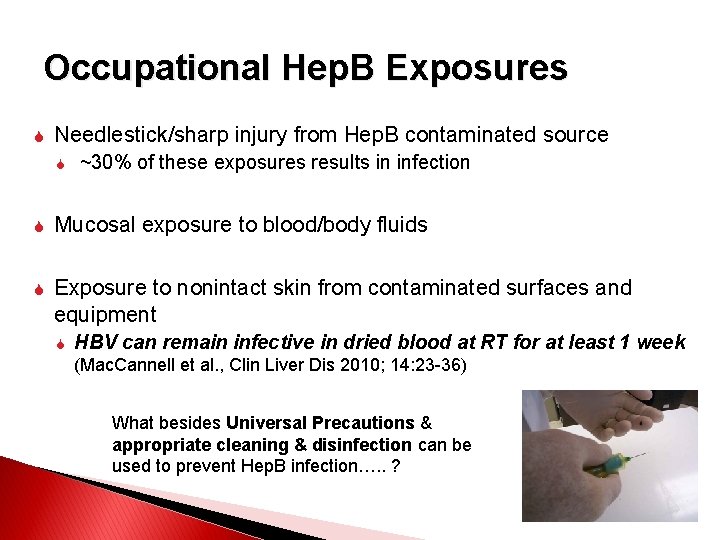
Occupational Hep. B Exposures Needlestick/sharp injury from Hep. B contaminated source ~30% of these exposures results in infection Mucosal exposure to blood/body fluids Exposure to nonintact skin from contaminated surfaces and equipment HBV can remain infective in dried blood at RT for at least 1 week (Mac. Cannell et al. , Clin Liver Dis 2010; 14: 23 -36) What besides Universal Precautions & appropriate cleaning & disinfection can be used to prevent Hep. B infection…. . ?
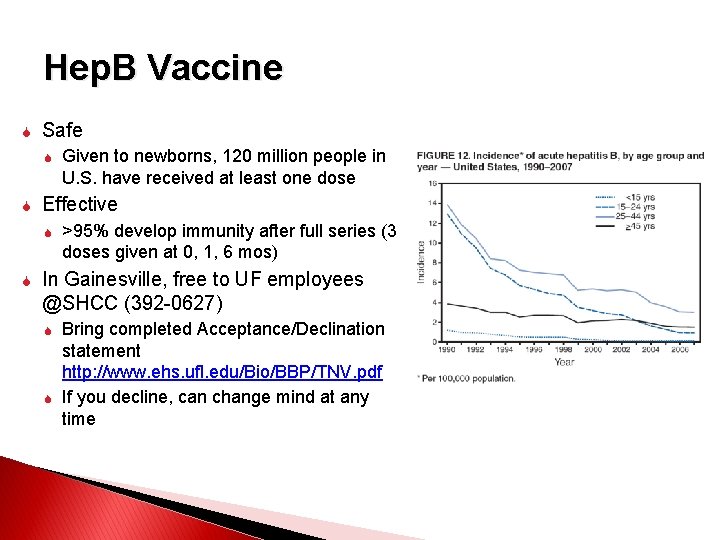
Hep. B Vaccine Safe Effective Given to newborns, 120 million people in U. S. have received at least one dose >95% develop immunity after full series (3 doses given at 0, 1, 6 mos) In Gainesville, free to UF employees @SHCC (392 -0627) Bring completed Acceptance/Declination statement http: //www. ehs. ufl. edu/Bio/BBP/TNV. pdf If you decline, can change mind at any time
Postvaccination testing Health-care workers or public safety workers at high risk for continued percutaneous or mucosal exposure to blood or body fluids, HBV research lab workers Performed 1 -2 months after dose #3 Hep. B surface antibody (anti-HBs) ≥ 10 m. IU/m. L - immune Anti-HBs < 10 m. IU/m. L – revaccinate (3 doses) and retest anti-HBs Still negative – nonresponder, need HBIG after exposure Previously vaccinated but not tested? Test for anti-HBs after an exposure; if negative, treat as susceptible.
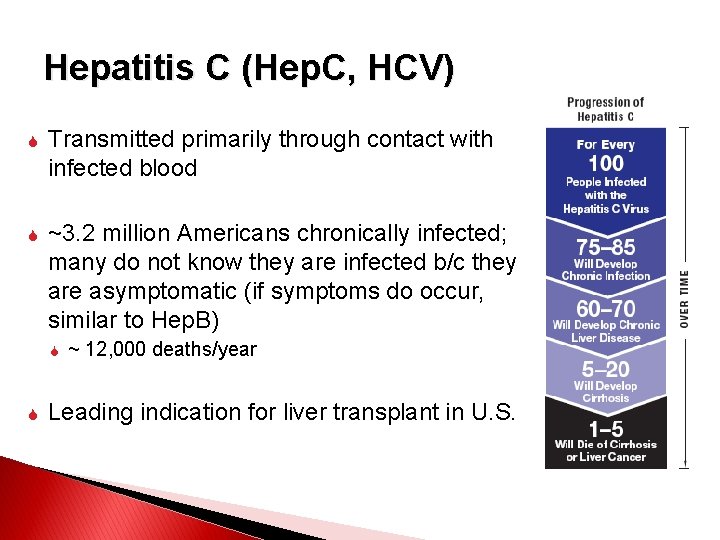
Hepatitis C (Hep. C, HCV) Transmitted primarily through contact with infected blood ~3. 2 million Americans chronically infected; many do not know they are infected b/c they are asymptomatic (if symptoms do occur, similar to Hep. B) ~ 12, 000 deaths/year Leading indication for liver transplant in U. S.
Occupational Hep. C Exposures Percutaneous injury, esp. with deep punctures or extensive blood exposures ~2% develop infection Mucosal/nonintact skin exposures rarely documented Proper cleaning/disinfection of surfaces important HCV in dried blood samples remains infective for at least 16 hours (Kamili et al. , Infect Control Hosp Epidemiol 2007; 28: 519 -524) Universal Precautions for Prevention! NO VACCINE Antivirals (peginterferon/ribavirin) can have serious side effects, treatment lasts 24 -48 weeks New HCV protease inhibitors – boceprevir & telaprevir (approved 5/11). Given in combination with traditional therapy, many side effects, drug resistance, only effective for genotype 1
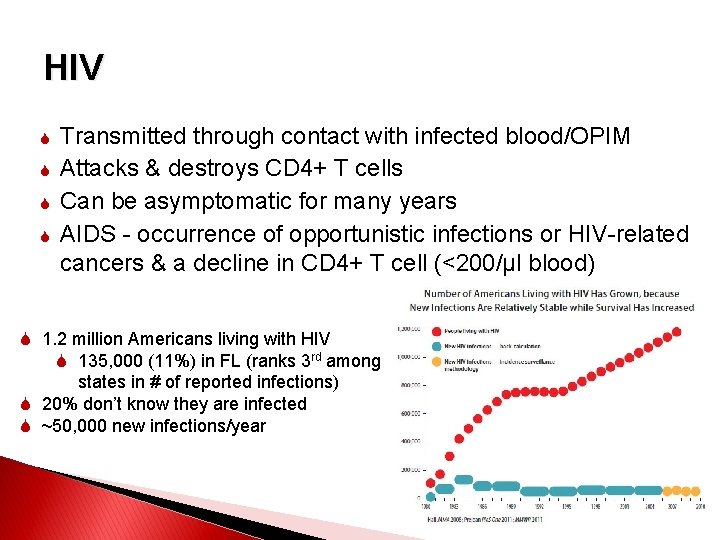
HIV Transmitted through contact with infected blood/OPIM Attacks & destroys CD 4+ T cells Can be asymptomatic for many years AIDS - occurrence of opportunistic infections or HIV-related cancers & a decline in CD 4+ T cell (<200/µl blood) 1. 2 million Americans living with HIV 135, 000 (11%) in FL (ranks 3 rd among states in # of reported infections) 20% don’t know they are infected ~50, 000 new infections/year
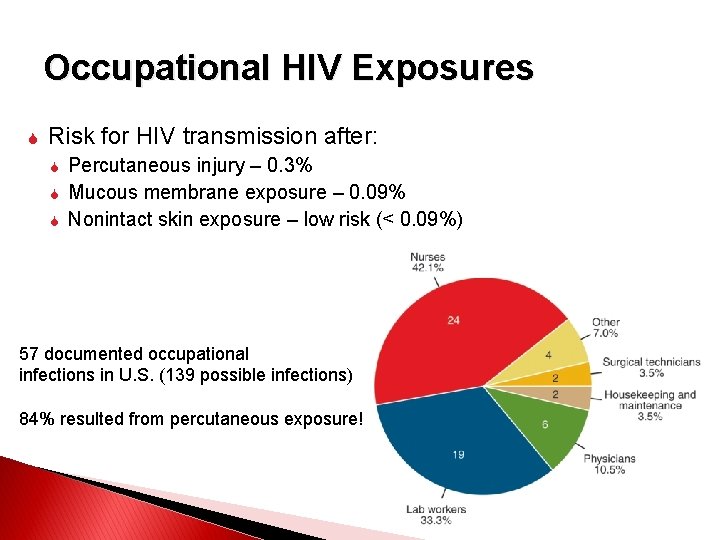
Occupational HIV Exposures Risk for HIV transmission after: Percutaneous injury – 0. 3% Mucous membrane exposure – 0. 09% Nonintact skin exposure – low risk (< 0. 09%) 57 documented occupational infections in U. S. (139 possible infections) 84% resulted from percutaneous exposure!
If HIV is such low risk, why worry? No cure No vaccine Antiretroviral therapy – cocktail of 3 or more drugs, costly, side effects, drug resistance Always use Universal Precautions!
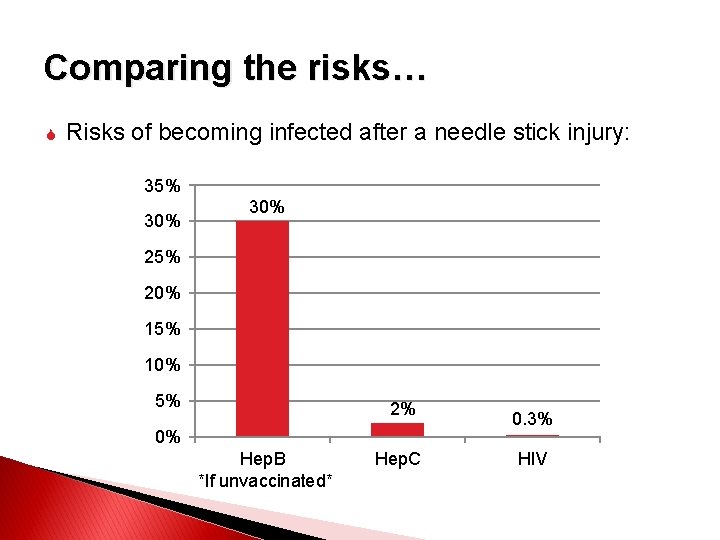
Comparing the risks… Risks of becoming infected after a needle stick injury: 35% 30% 25% 20% 15% 10% 5% 2% 0% Hep. B *If unvaccinated* Hep. C 0. 3% HIV
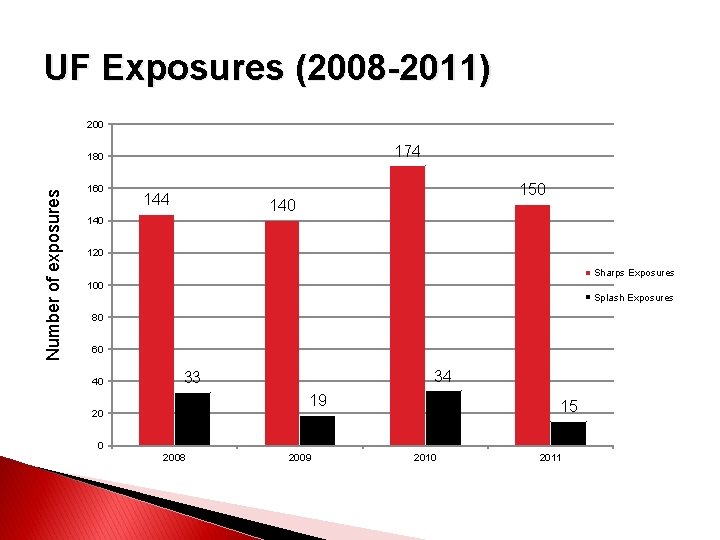
UF Exposures (2008 -2011) 200 174 Number of exposures 180 160 144 150 140 120 Sharps Exposures 100 Splash Exposures 80 60 40 34 33 19 20 15 0 2008 2009 2010 2011
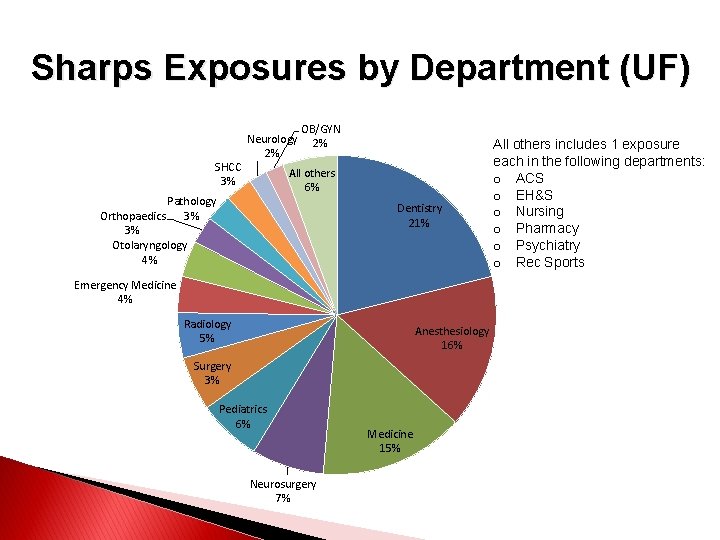
Sharps Exposures by Department (UF) SHCC 3% Neurology 2% OB/GYN 2% All others 6% Pathology 3% Orthopaedics 3% Otolaryngology 4% Dentistry 21% Emergency Medicine 4% Radiology 5% Anesthesiology 16% Surgery 3% Pediatrics 6% Neurosurgery 7% Medicine 15% All others includes 1 exposure each in the following departments: o ACS o EH&S o Nursing o Pharmacy o Psychiatry o Rec Sports
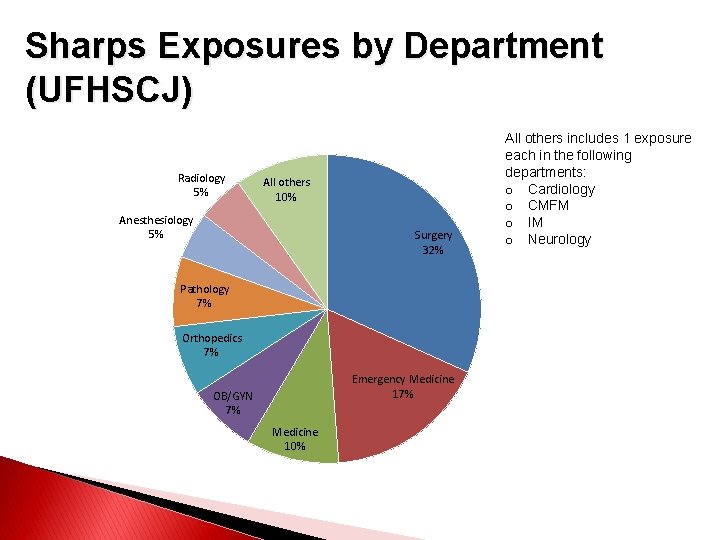
Sharps Exposures by Department (UFHSCJ) Radiology 5% All others 10% Anesthesiology 5% Surgery 32% Pathology 7% Orthopedics 7% Emergency Medicine 17% OB/GYN 7% Medicine 10% All others includes 1 exposure each in the following departments: o Cardiology o CMFM o IM o Neurology
Controls to Protect Against BBP Exposures
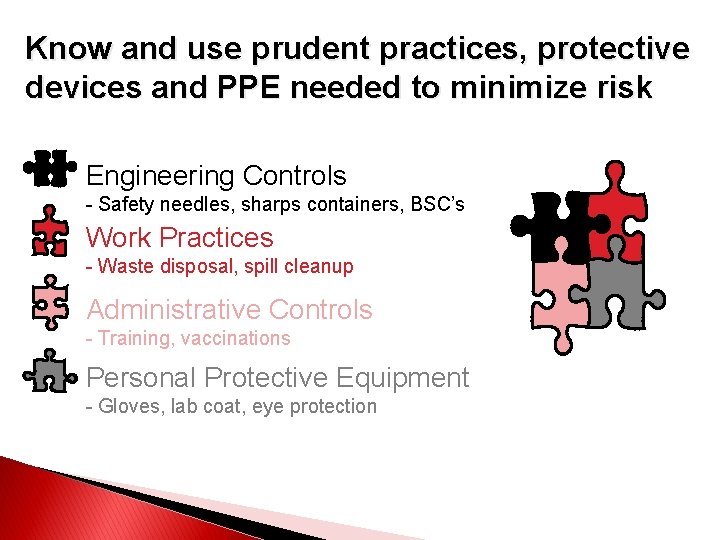
Know and use prudent practices, protective devices and PPE needed to minimize risk Engineering Controls - Safety needles, sharps containers, BSC’s Work Practices - Waste disposal, spill cleanup Administrative Controls - Training, vaccinations Personal Protective Equipment - Gloves, lab coat, eye protection
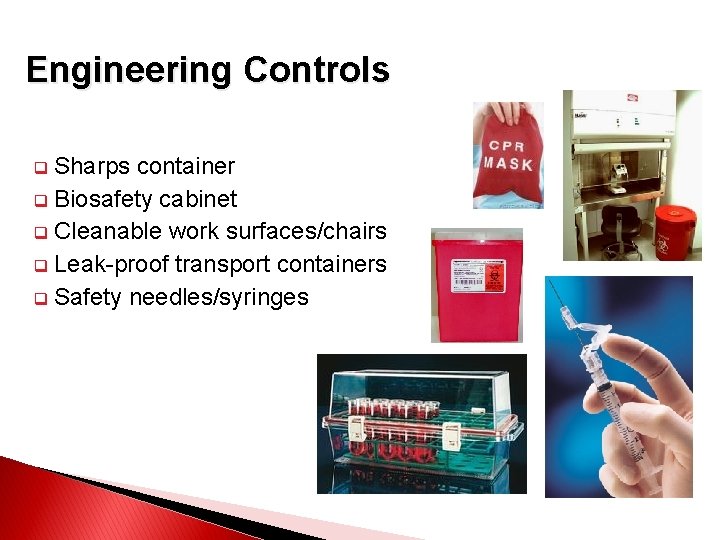
Engineering Controls Sharps container q Biosafety cabinet q Cleanable work surfaces/chairs q Leak-proof transport containers q Safety needles/syringes q
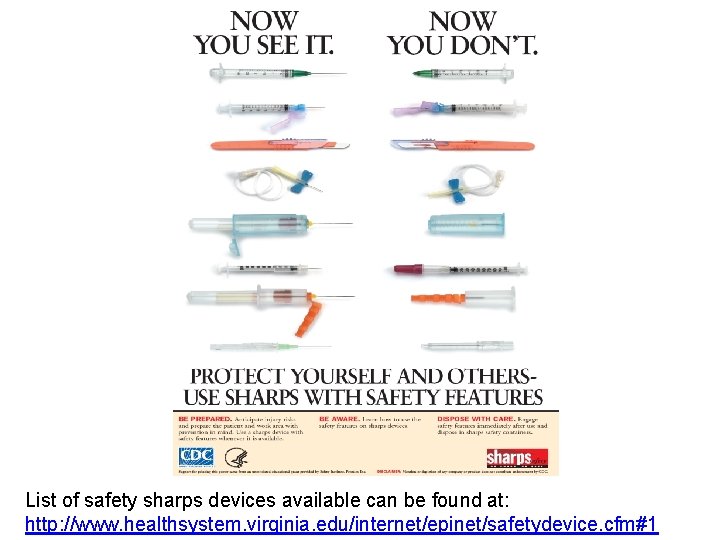
List of safety sharps devices available can be found at: http: //www. healthsystem. virginia. edu/internet/epinet/safetydevice. cfm#1
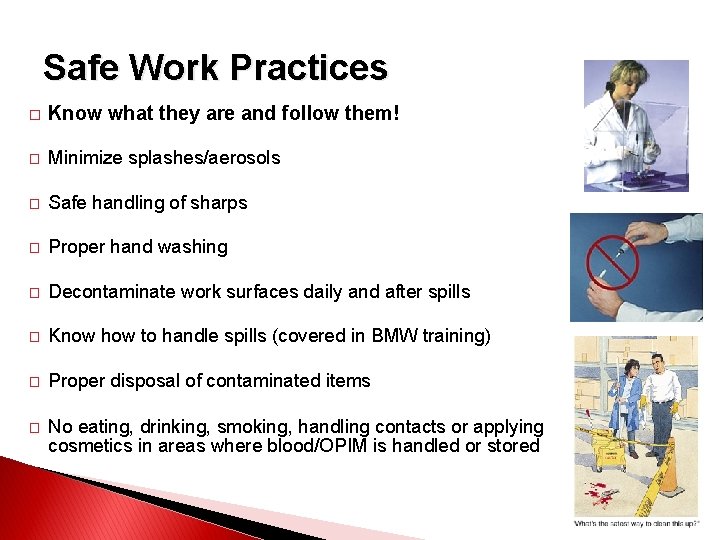
Safe Work Practices � Know what they are and follow them! � Minimize splashes/aerosols � Safe handling of sharps � Proper hand washing � Decontaminate work surfaces daily and after spills � Know how to handle spills (covered in BMW training) � Proper disposal of contaminated items � No eating, drinking, smoking, handling contacts or applying cosmetics in areas where blood/OPIM is handled or stored
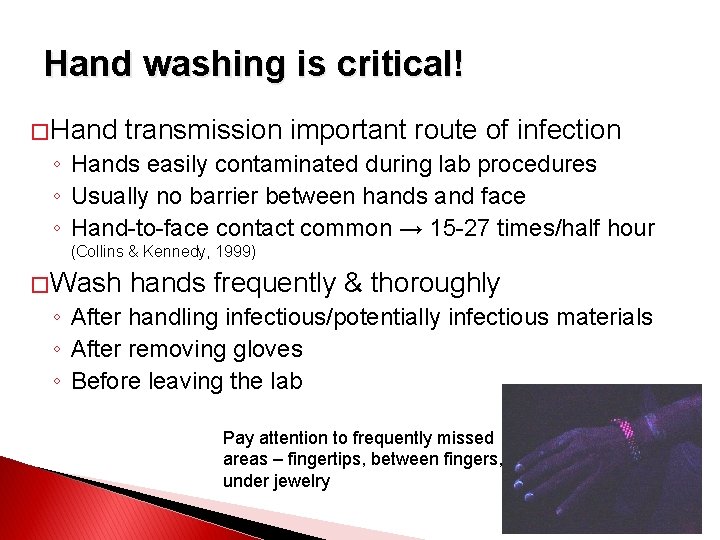
Hand washing is critical! � Hand transmission important route of infection ◦ Hands easily contaminated during lab procedures ◦ Usually no barrier between hands and face ◦ Hand-to-face contact common → 15 -27 times/half hour (Collins & Kennedy, 1999) � Wash hands frequently & thoroughly ◦ After handling infectious/potentially infectious materials ◦ After removing gloves ◦ Before leaving the lab Pay attention to frequently missed areas – fingertips, between fingers, under jewelry
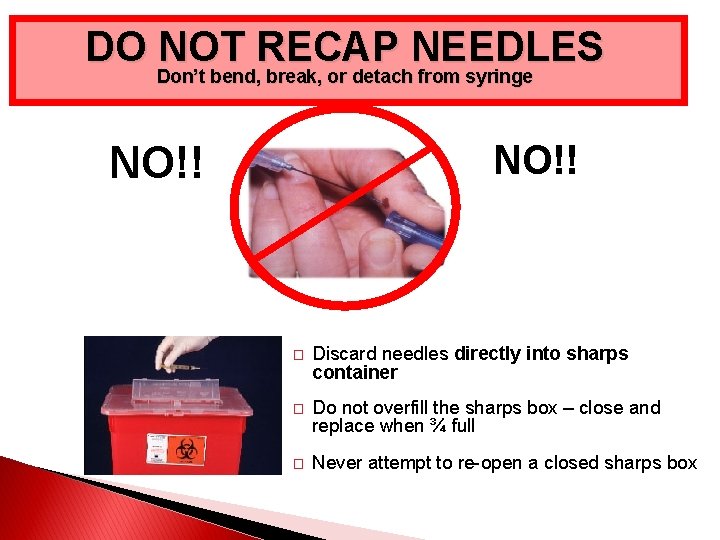
DO NOT RECAP NEEDLES Don’t bend, break, or detach from syringe NO!! � Discard needles directly into sharps container � Do not overfill the sharps box – close and replace when ¾ full � Never attempt to re-open a closed sharps box
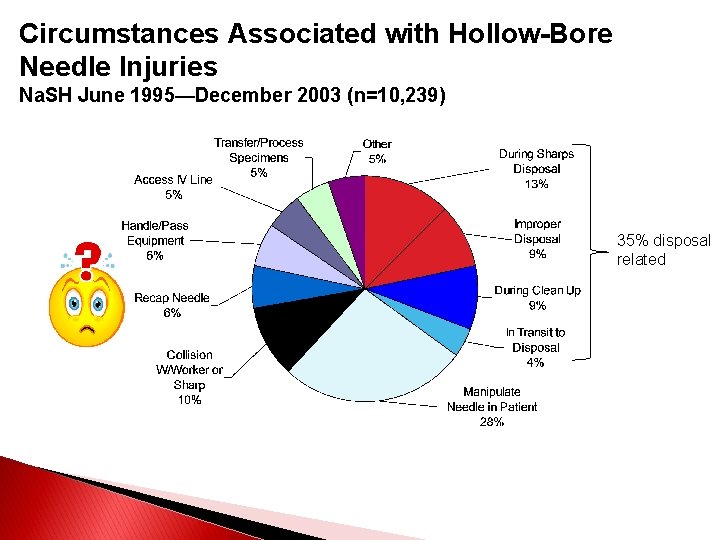
Circumstances Associated with Hollow-Bore Needle Injuries Na. SH June 1995—December 2003 (n=10, 239) 35% disposal related
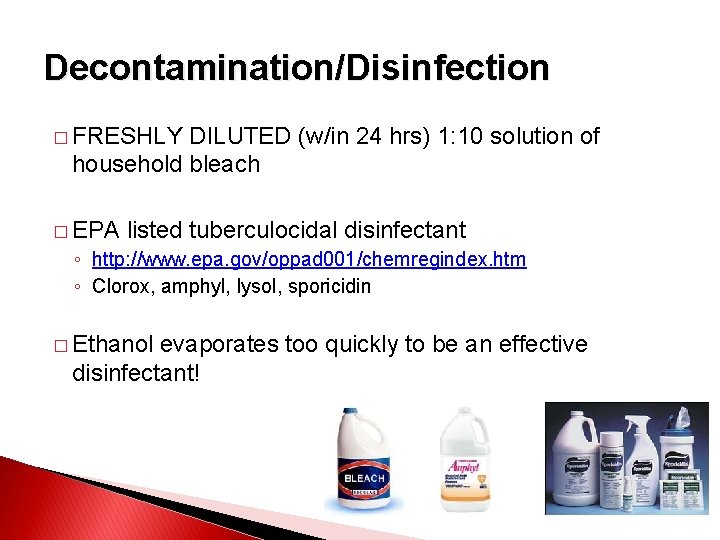
Decontamination/Disinfection � FRESHLY DILUTED (w/in 24 hrs) 1: 10 solution of household bleach � EPA listed tuberculocidal disinfectant ◦ http: //www. epa. gov/oppad 001/chemregindex. htm ◦ Clorox, amphyl, lysol, sporicidin � Ethanol evaporates too quickly to be an effective disinfectant!
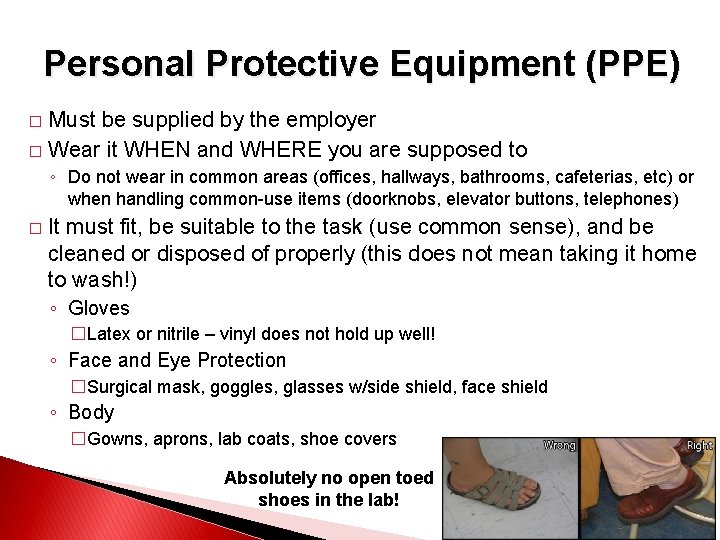
Personal Protective Equipment (PPE) Must be supplied by the employer � Wear it WHEN and WHERE you are supposed to � ◦ Do not wear in common areas (offices, hallways, bathrooms, cafeterias, etc) or when handling common-use items (doorknobs, elevator buttons, telephones) � It must fit, be suitable to the task (use common sense), and be cleaned or disposed of properly (this does not mean taking it home to wash!) ◦ Gloves �Latex or nitrile – vinyl does not hold up well! ◦ Face and Eye Protection �Surgical mask, goggles, glasses w/side shield, face shield ◦ Body �Gowns, aprons, lab coats, shoe covers Absolutely no open toed shoes in the lab!
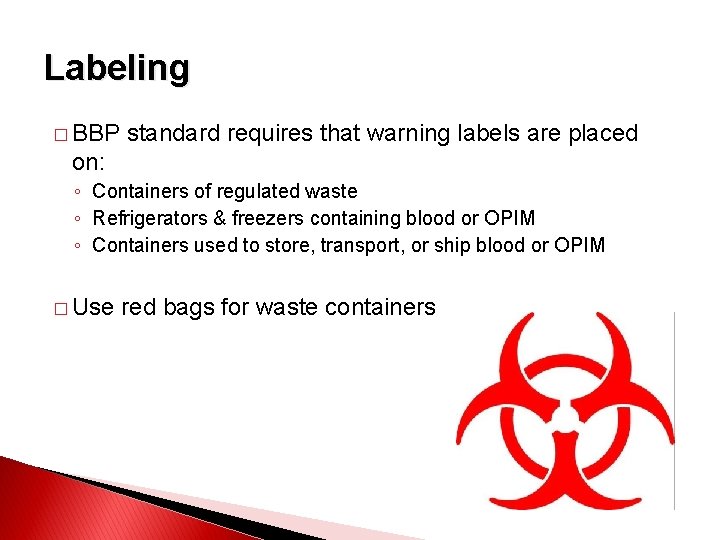
Labeling � BBP standard requires that warning labels are placed on: ◦ Containers of regulated waste ◦ Refrigerators & freezers containing blood or OPIM ◦ Containers used to store, transport, or ship blood or OPIM � Use red bags for waste containers
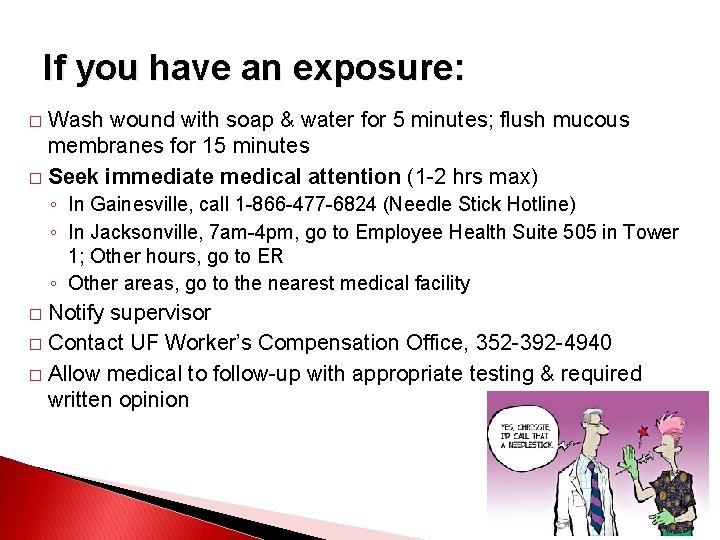
If you have an exposure: Wash wound with soap & water for 5 minutes; flush mucous membranes for 15 minutes � Seek immediate medical attention (1 -2 hrs max) � ◦ In Gainesville, call 1 -866 -477 -6824 (Needle Stick Hotline) ◦ In Jacksonville, 7 am-4 pm, go to Employee Health Suite 505 in Tower 1; Other hours, go to ER ◦ Other areas, go to the nearest medical facility Notify supervisor � Contact UF Worker’s Compensation Office, 352 -392 -4940 � Allow medical to follow-up with appropriate testing & required written opinion �
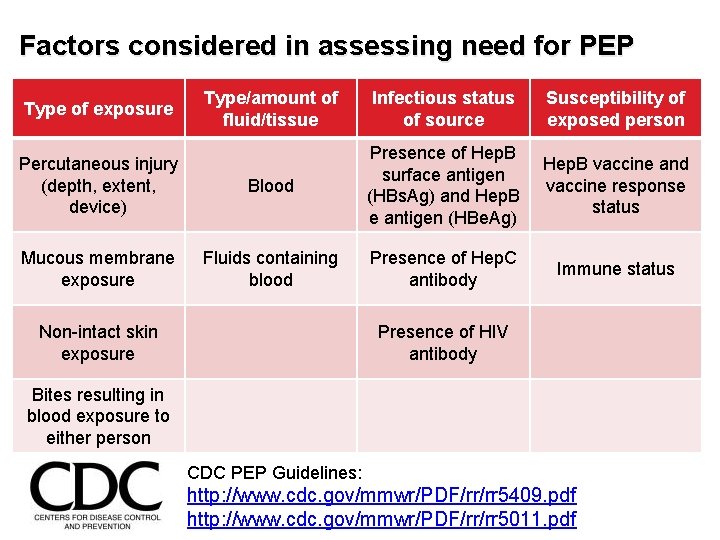
Factors considered in assessing need for PEP Type/amount of fluid/tissue Infectious status of source Susceptibility of exposed person Percutaneous injury (depth, extent, device) Blood Presence of Hep. B surface antigen (HBs. Ag) and Hep. B e antigen (HBe. Ag) Hep. B vaccine and vaccine response status Mucous membrane exposure Fluids containing blood Presence of Hep. C antibody Immune status Type of exposure Non-intact skin exposure Presence of HIV antibody Bites resulting in blood exposure to either person CDC PEP Guidelines: http: //www. cdc. gov/mmwr/PDF/rr/rr 5409. pdf http: //www. cdc. gov/mmwr/PDF/rr/rr 5011. pdf
This completes the Power. Point segment of the Bloodborne Pathogen. Training Please exit the session and click on the link for Tests & Quizzes on the left hand side of the screen. You must take the quiz & score at least 75% to fulfill the training requirement.
- Slides: 36