
2012 The Mc GrawHill Companies Inc All rights
- Slides: 39
© 2012 The Mc. Graw-Hill Companies, Inc. All rights reserved. 1 -1 Mc. Graw-Hill/Irwin 27 -1
Chapter 27 Job Order Cost Accounting Section 1: Cost Accounting Section Objectives 1. Explain how a job order cost accounting system operates. 27 -2
Types of Cost Accounting Systems l Job Order Cost Accounting (This Chapter) l Process Cost Accounting (Next Chapter) Standard cost accounting is described in Chapter 29 and may be used with either the job order cost system or the process cost system. 27 -3
Types of Cost Accounting Systems A job order cost accounting system is used by businesses that produce special orders or produce more than one product in batches. A process cost accounting system is used when standard products are manufactured using a continuous process. A standard cost accounting system, in which standard costs of production are measured, can be used with a job order or a process cost system. 27 -4
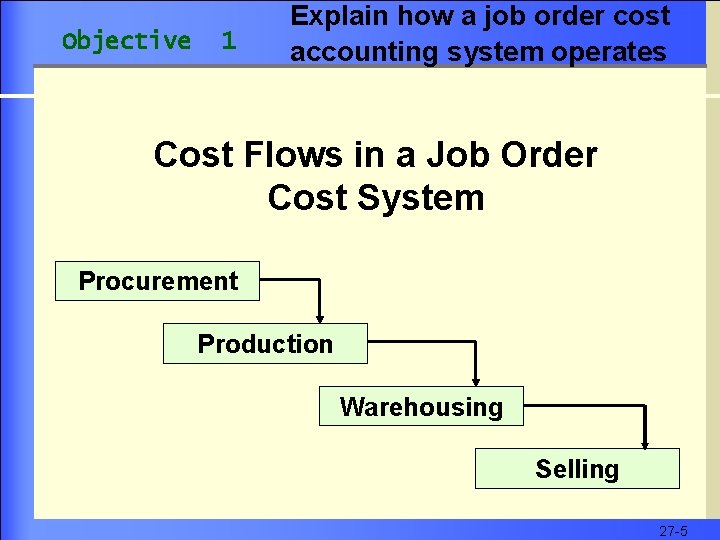
Objective 1 Explain how a job order cost accounting system operates Cost Flows in a Job Order Cost System Procurement Production Warehousing Selling 27 -5
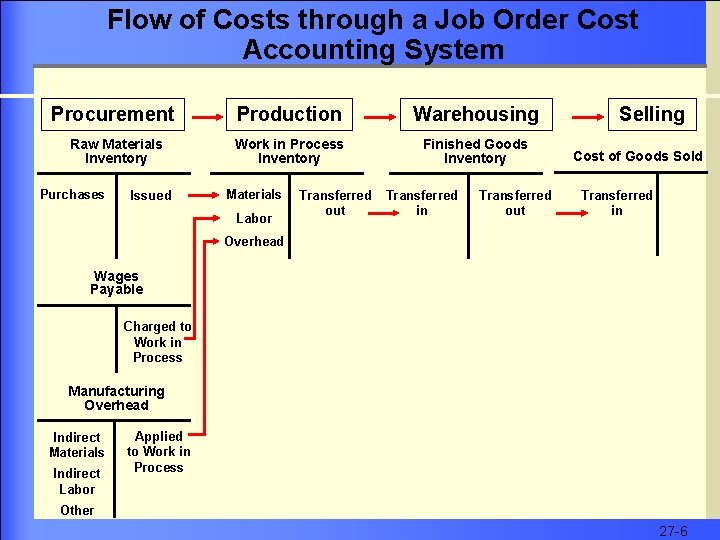
Flow of Costs through a Job Order Cost Accounting System Procurement Production Warehousing Raw Materials Inventory Work in Process Inventory Finished Goods Inventory Purchases Issued Materials Labor Transferred out Transferred in Transferred out Selling Cost of Goods Sold Transferred in Overhead Wages Payable Charged to Work in Process Manufacturing Overhead Indirect Materials Indirect Labor Applied to Work in Process Other 27 -6
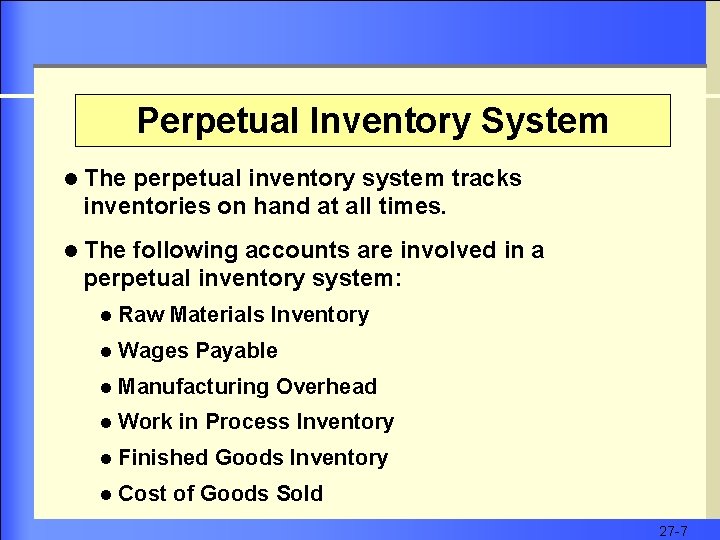
Perpetual Inventory System l The perpetual inventory system tracks inventories on hand at all times. l The following accounts are involved in a perpetual inventory system: l Raw Materials Inventory l Wages Payable l Manufacturing Overhead l Work in Process Inventory l Finished Goods Inventory l Cost of Goods Sold 27 -7
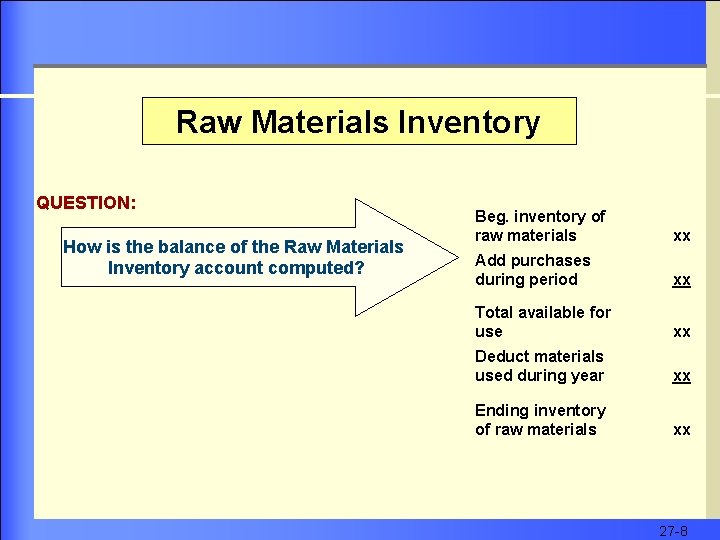
Raw Materials Inventory QUESTION: How is the balance of the Raw Materials Inventory account computed? Beg. inventory of raw materials xx Add purchases during period xx Total available for use xx Deduct materials used during year xx Ending inventory of raw materials xx 27 -8
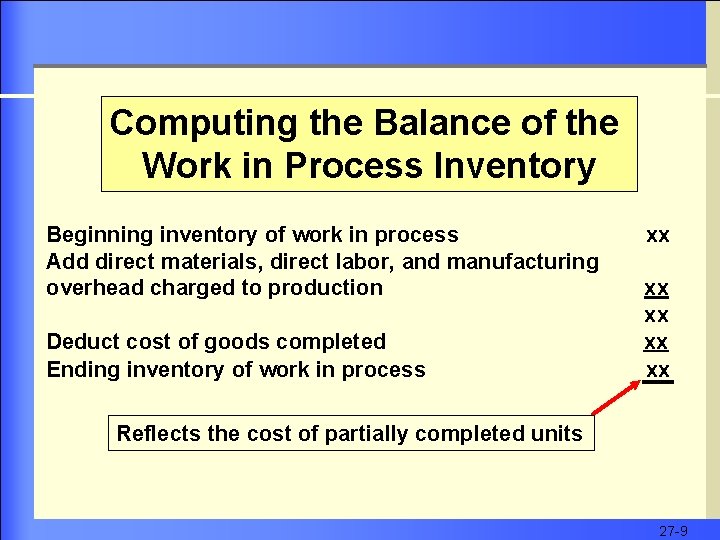
Computing the Balance of the Work in Process Inventory Beginning inventory of work in process Add direct materials, direct labor, and manufacturing overhead charged to production Deduct cost of goods completed Ending inventory of work in process xx xx xx Reflects the cost of partially completed units 27 -9
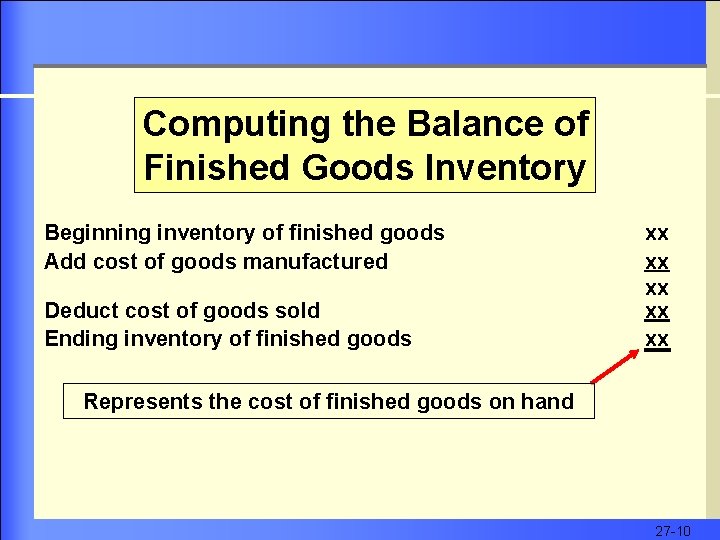
Computing the Balance of Finished Goods Inventory Beginning inventory of finished goods Add cost of goods manufactured Deduct cost of goods sold Ending inventory of finished goods xx xx xx Represents the cost of finished goods on hand 27 -10
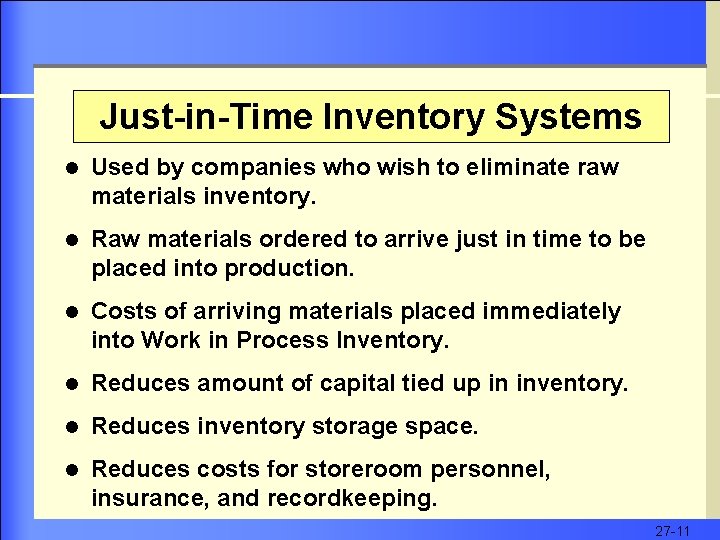
Just-in-Time Inventory Systems l Used by companies who wish to eliminate raw materials inventory. l Raw materials ordered to arrive just in time to be placed into production. l Costs of arriving materials placed immediately into Work in Process Inventory. l Reduces amount of capital tied up in inventory. l Reduces inventory storage space. l Reduces costs for storeroom personnel, insurance, and recordkeeping. 27 -11
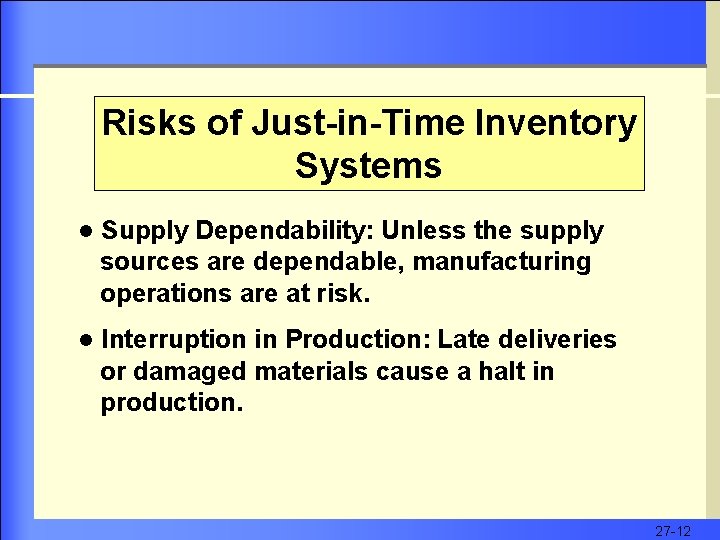
Risks of Just-in-Time Inventory Systems l Supply Dependability: Unless the supply sources are dependable, manufacturing operations are at risk. l Interruption in Production: Late deliveries or damaged materials cause a halt in production. 27 -12
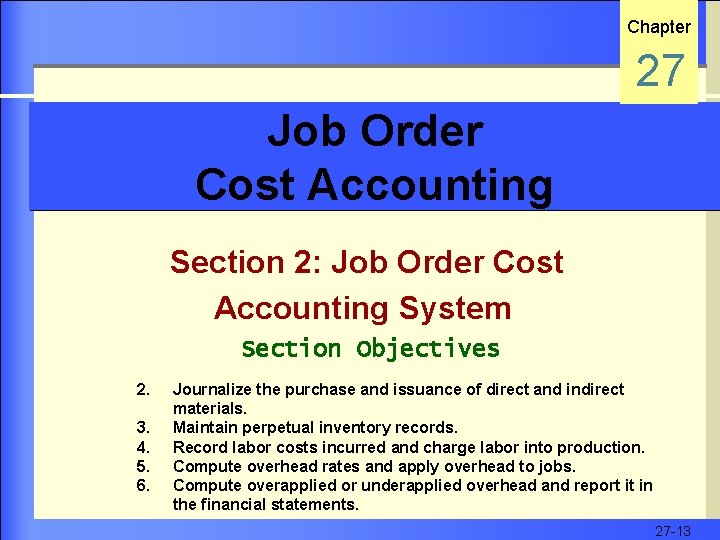
Chapter 27 Job Order Cost Accounting Section 2: Job Order Cost Accounting System Section Objectives 2. 3. 4. 5. 6. Journalize the purchase and issuance of direct and indirect materials. Maintain perpetual inventory records. Record labor costs incurred and charge labor into production. Compute overhead rates and apply overhead to jobs. Compute overapplied or underapplied overhead and report it in the financial statements. 27 -13
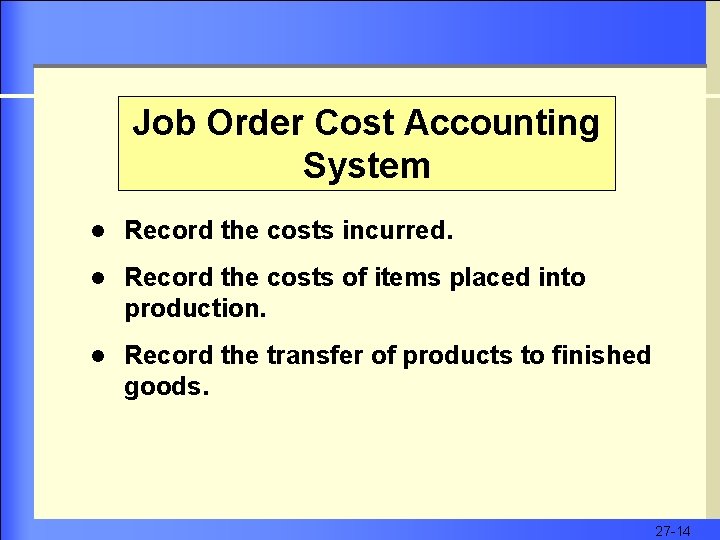
Job Order Cost Accounting System l Record the costs incurred. l Record the costs of items placed into production. l Record the transfer of products to finished goods. 27 -14
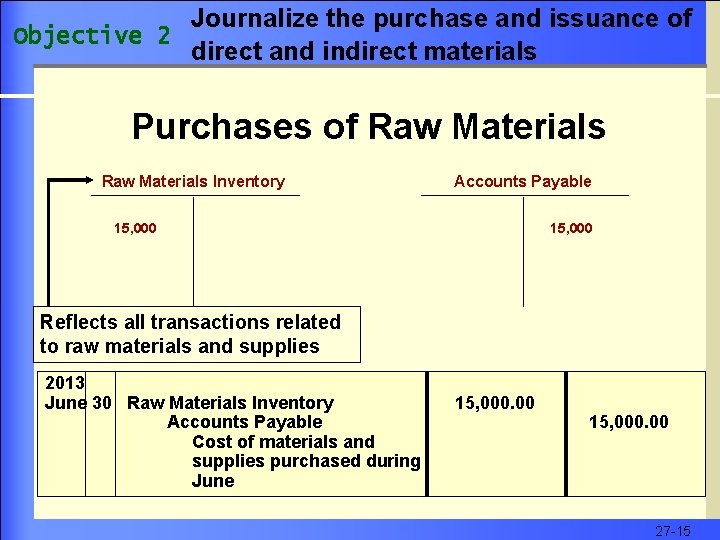
Journalize the purchase and issuance of Objective 2 direct and indirect materials Purchases of Raw Materials Inventory Accounts Payable 15, 000 Reflects all transactions related to raw materials and supplies 2013 June 30 Raw Materials Inventory Accounts Payable Cost of materials and supplies purchased during June 15, 000. 00 27 -15
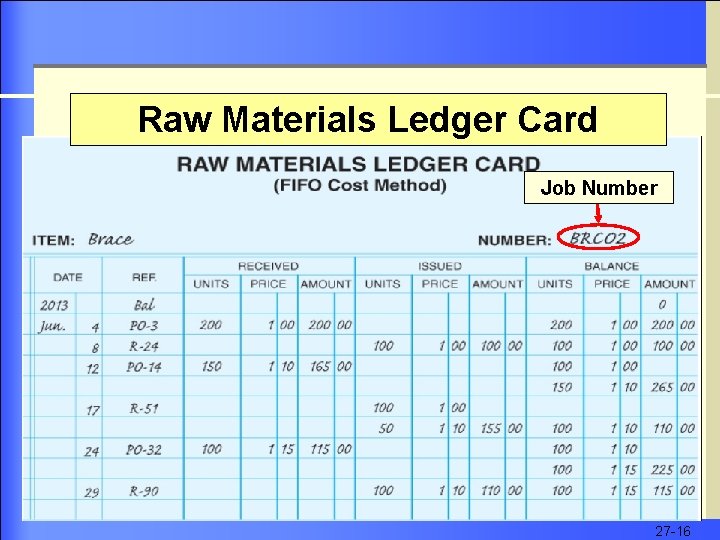
Raw Materials Ledger Card Job Number 27 -16
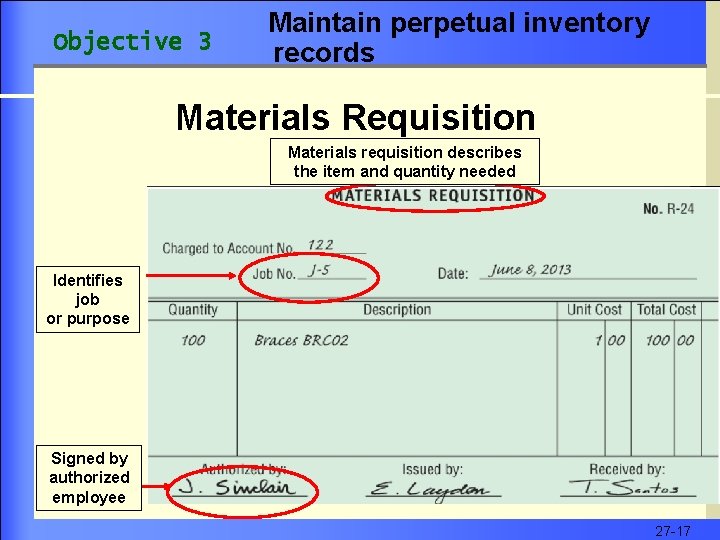
Objective 3 Maintain perpetual inventory records Materials Requisition Materials requisition describes the item and quantity needed Identifies job or purpose Signed by authorized employee 27 -17
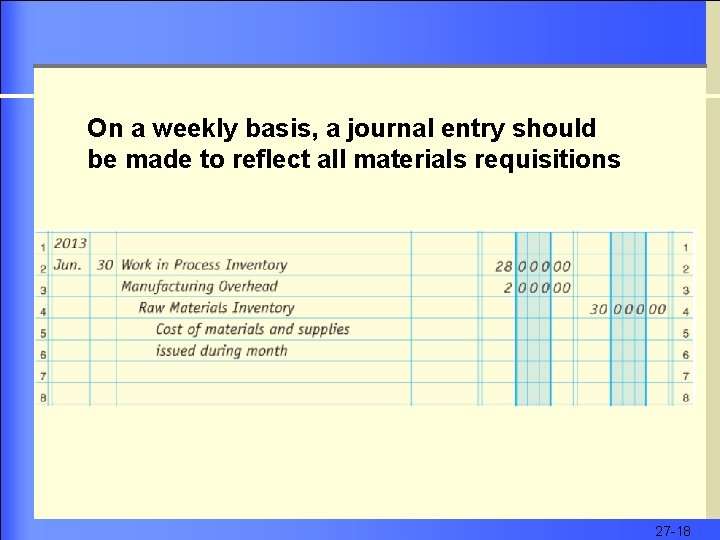
On a weekly basis, a journal entry should be made to reflect all materials requisitions 27 -18
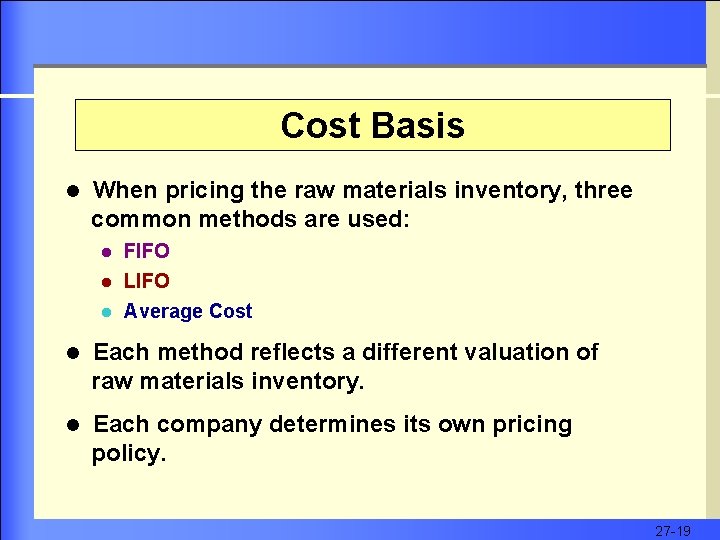
Cost Basis l When pricing the raw materials inventory, three common methods are used: FIFO l LIFO l Average Cost l l Each method reflects a different valuation of raw materials inventory. l Each company determines its own pricing policy. 27 -19
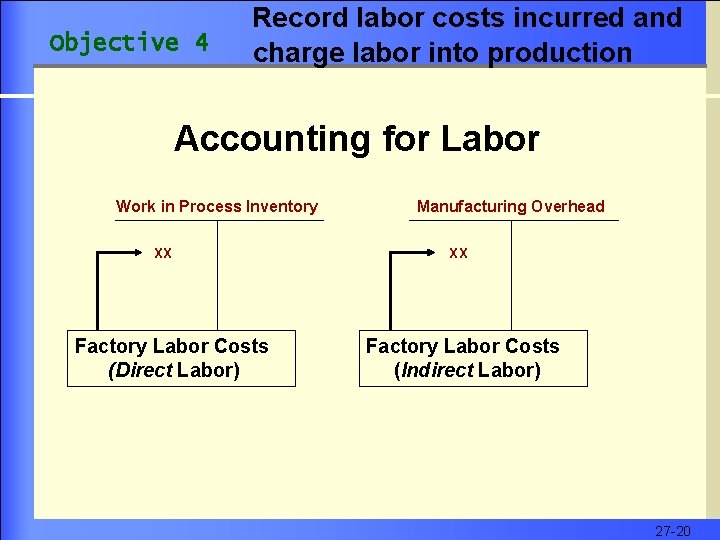
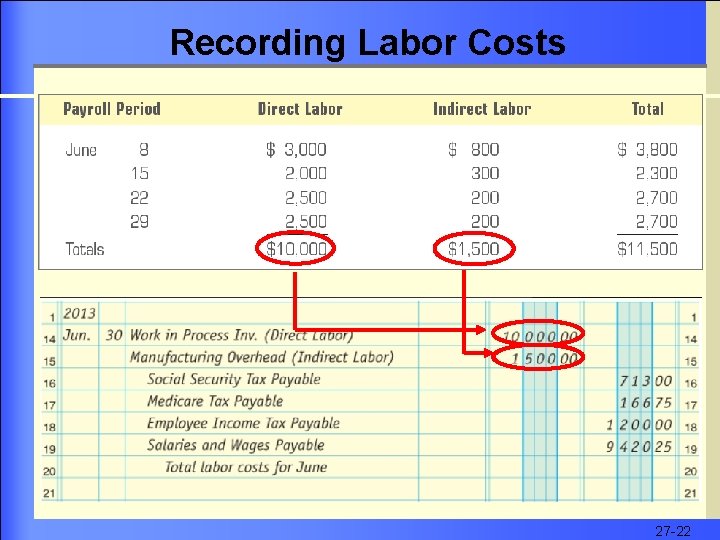
Objective 4 Record labor costs incurred and charge labor into production Accounting for Labor Work in Process Inventory XX Factory Labor Costs (Direct Labor) Manufacturing Overhead XX Factory Labor Costs (Indirect Labor) 27 -20
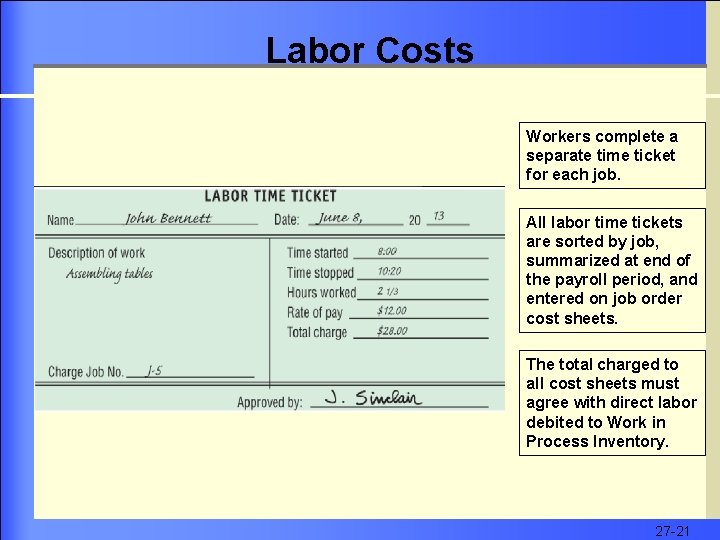
Labor Costs Workers complete a separate time ticket for each job. All labor time tickets are sorted by job, summarized at end of the payroll period, and entered on job order cost sheets. The total charged to all cost sheets must agree with direct labor debited to Work in Process Inventory. 27 -21
Recording Labor Costs 27 -22
Objective 5 Compute overhead rates and apply overhead to jobs Manufacturing Overhead l Includes all manufacturing costs except direct materials and direct labor. l Examples: l Indirect materials l Indirect labor l Depreciation l Insurance l Utilities l Rent 27 -23
Applying Overhead to Jobs l Overhead costs are applied to specific jobs based on an overhead application rate. Several different bases can be used to develop the overhead application rate. Some of more common bases for allocating overhead are: l l Based on direct labor costs. l Based on direct labor hours l Based on machine hours. 27 -24
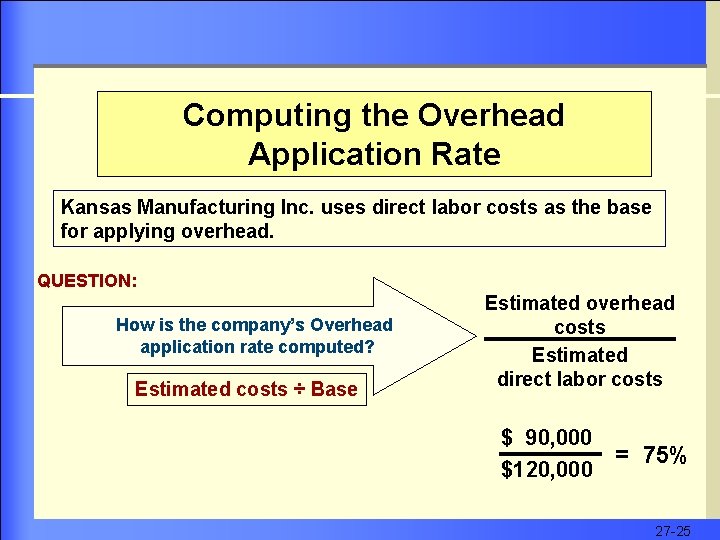
Computing the Overhead Application Rate Kansas Manufacturing Inc. uses direct labor costs as the base for applying overhead. QUESTION: How is the company’s Overhead application rate computed? Estimated costs ÷ Base Estimated overhead costs Estimated direct labor costs $ 90, 000 $120, 000 = 75% 27 -25
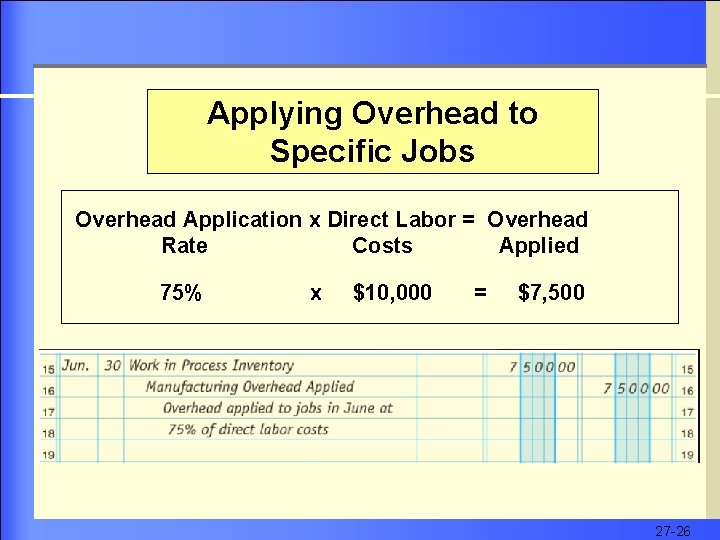
Applying Overhead to Specific Jobs Overhead Application x Direct Labor = Overhead Rate Costs Applied 75% x $10, 000 = $7, 500 27 -26
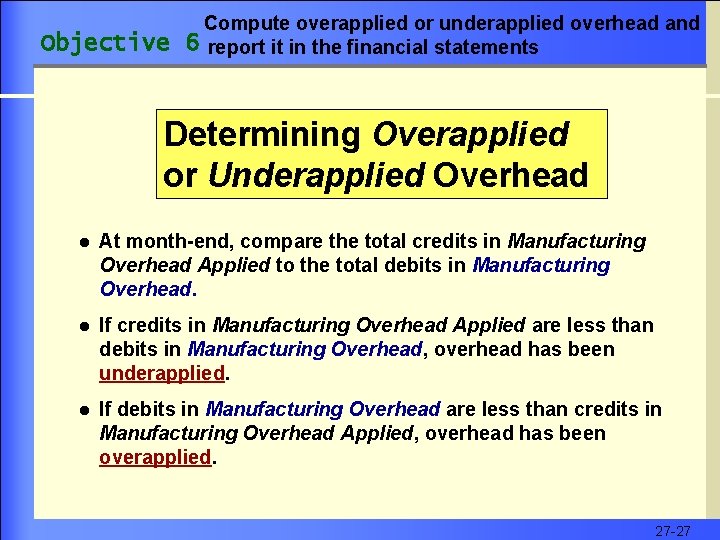
Objective Compute overapplied or underapplied overhead and 6 report it in the financial statements Determining Overapplied or Underapplied Overhead l At month-end, compare the total credits in Manufacturing Overhead Applied to the total debits in Manufacturing Overhead. l If credits in Manufacturing Overhead Applied are less than debits in Manufacturing Overhead, overhead has been underapplied. l If debits in Manufacturing Overhead are less than credits in Manufacturing Overhead Applied, overhead has been overapplied. 27 -27
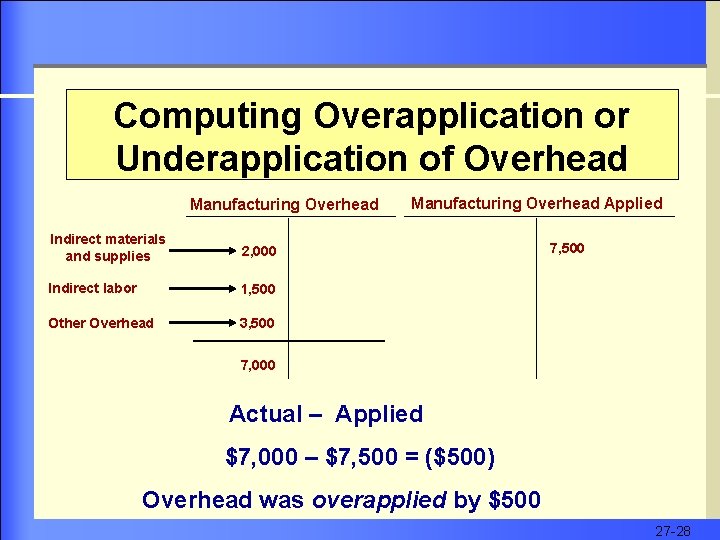
Computing Overapplication or Underapplication of Overhead Manufacturing Overhead Indirect materials and supplies 2, 000 Indirect labor 1, 500 Other Overhead 3, 500 Manufacturing Overhead Applied 7, 500 7, 000 Actual – Applied $7, 000 – $7, 500 = ($500) Overhead was overapplied by $500 27 -28
Chapter 27 Job Order Cost Accounting Section 3: Accounting for Job Orders Section Objectives 7. Maintain job order cost sheets. 8. Record the cost of jobs completed and the cost of goods sold under a perpetual inventory system. 27 -29
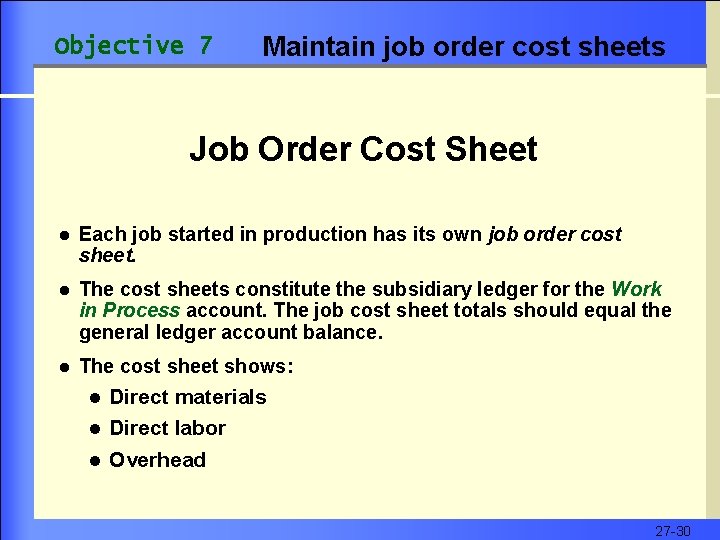
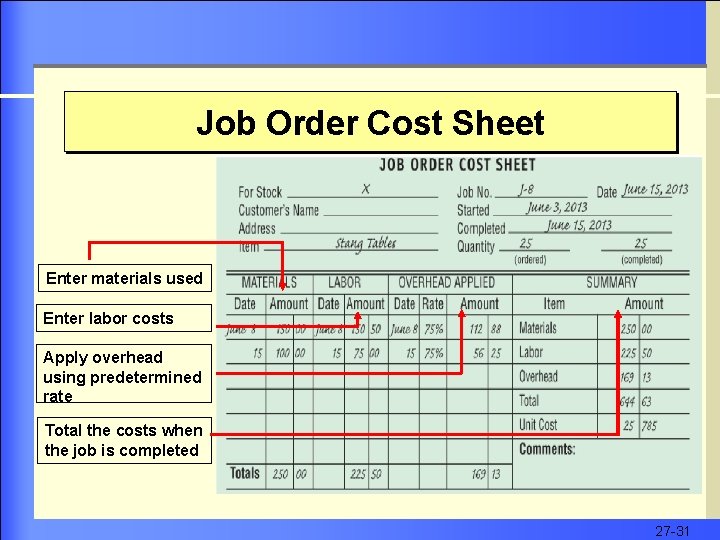
Objective 7 Maintain job order cost sheets Job Order Cost Sheet l Each job started in production has its own job order cost sheet. l The cost sheets constitute the subsidiary ledger for the Work in Process account. The job cost sheet totals should equal the general ledger account balance. l The cost sheet shows: Direct materials l Direct labor l Overhead l 27 -30
Job Order Cost Sheet Enter materials used Enter labor costs Apply overhead using predetermined rate Total the costs when the job is completed 27 -31
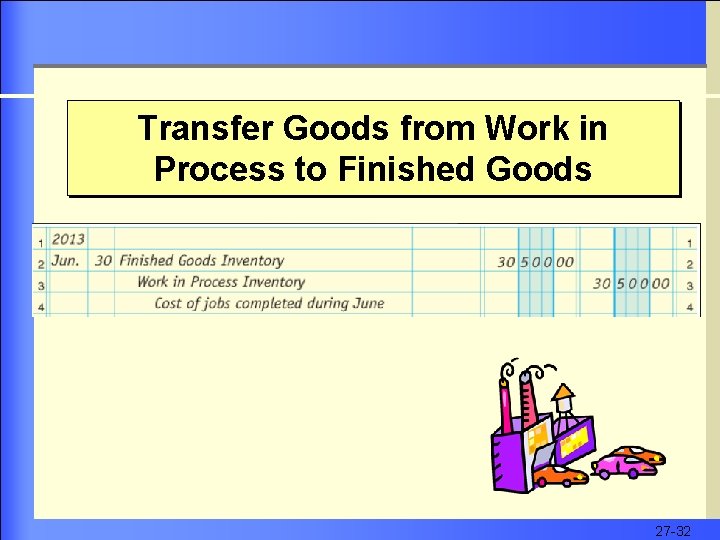
Transfer Goods from Work in Process to Finished Goods 27 -32
Objective 8 Record the cost of jobs completed and the cost of goods sold under a perpetual inventory system 27 -33
Cost of Goods Sold l Recall that in a periodic inventory system, the cost of goods sold is determined by using the Purchases and Inventory accounts. l A perpetual inventory system uses an actual Cost of Goods Sold general ledger account. 27 -34
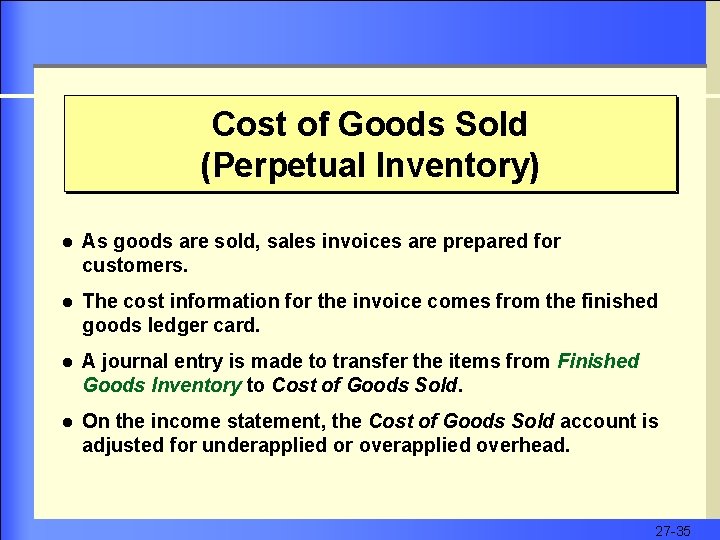
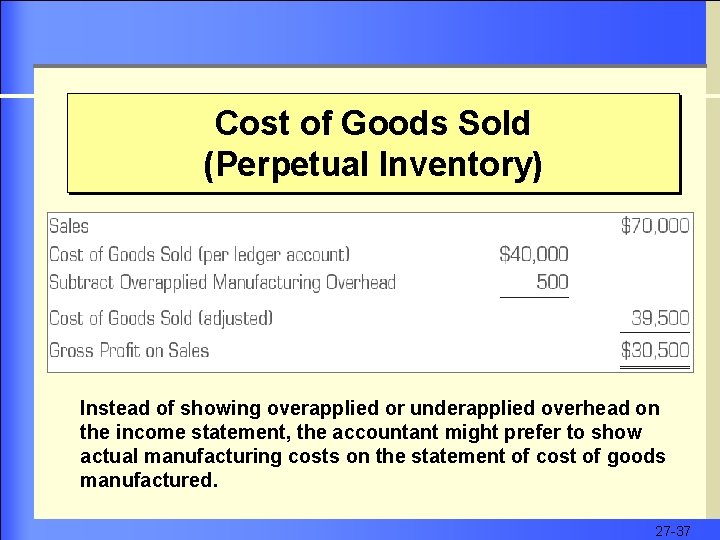
Cost of Goods Sold (Perpetual Inventory) l As goods are sold, sales invoices are prepared for customers. l The cost information for the invoice comes from the finished goods ledger card. l A journal entry is made to transfer the items from Finished Goods Inventory to Cost of Goods Sold. l On the income statement, the Cost of Goods Sold account is adjusted for underapplied or overapplied overhead. 27 -35
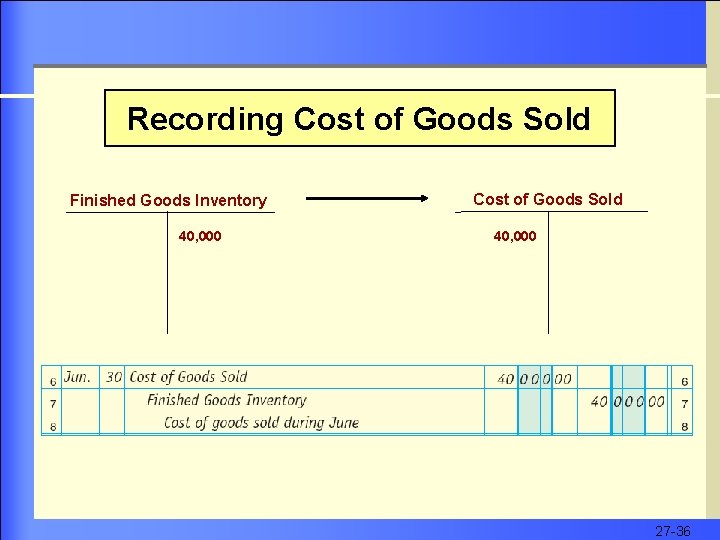
Recording Cost of Goods Sold Finished Goods Inventory 40, 000 Cost of Goods Sold 40, 000 27 -36
Cost of Goods Sold (Perpetual Inventory) Instead of showing overapplied or underapplied overhead on the income statement, the accountant might prefer to show actual manufacturing costs on the statement of cost of goods manufactured. 27 -37
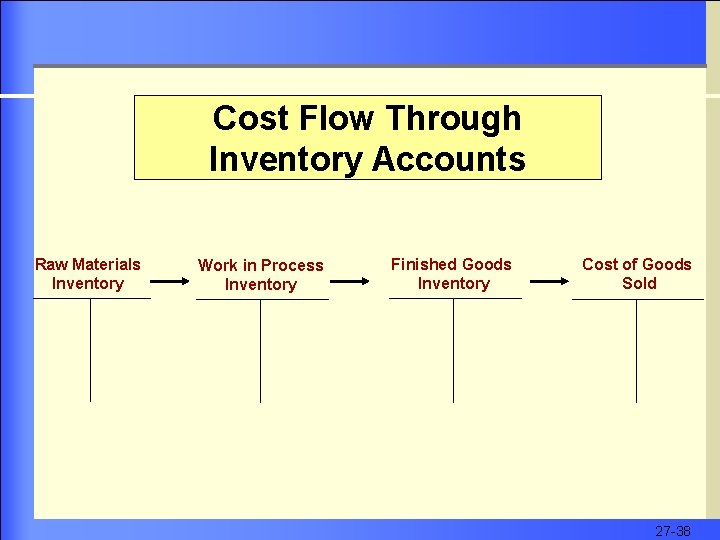
Cost Flow Through Inventory Accounts Raw Materials Inventory Work in Process Inventory Finished Goods Inventory Cost of Goods Sold 27 -38
Thank You for using College Accounting, 13 th Edition Price • Haddock • Brock 27 -39