
2012 Formula SAE Outboard Suspension Jose Colin Efe
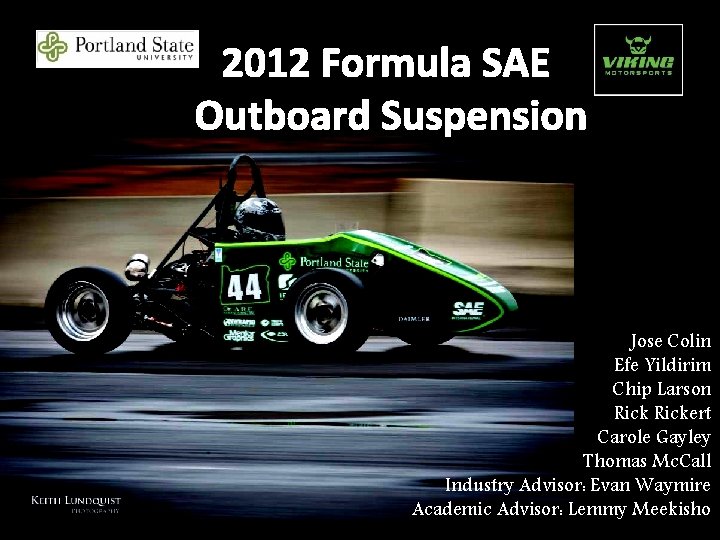
2012 Formula SAE Outboard Suspension Jose Colin Efe Yildirim Chip Larson Rickert Carole Gayley Thomas Mc. Call Industry Advisor: Evan Waymire Academic Advisor: Lemmy Meekisho
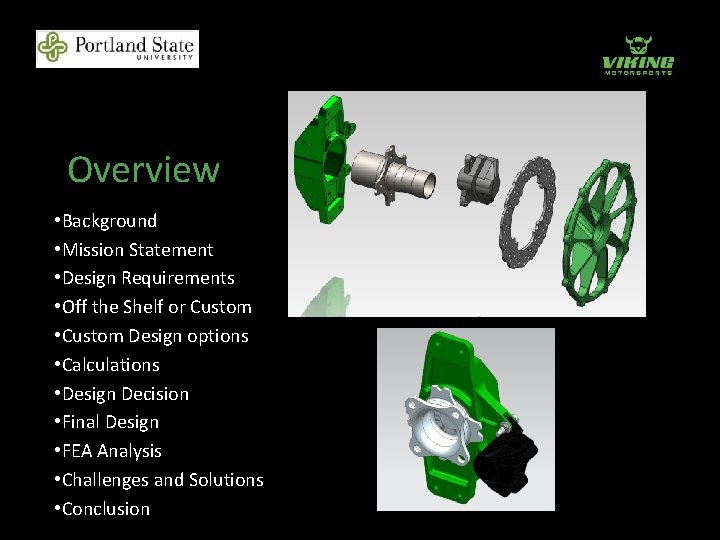
Overview • Background • Mission Statement • Design Requirements • Off the Shelf or Custom • Custom Design options • Calculations • Design Decision • Final Design • FEA Analysis • Challenges and Solutions • Conclusion
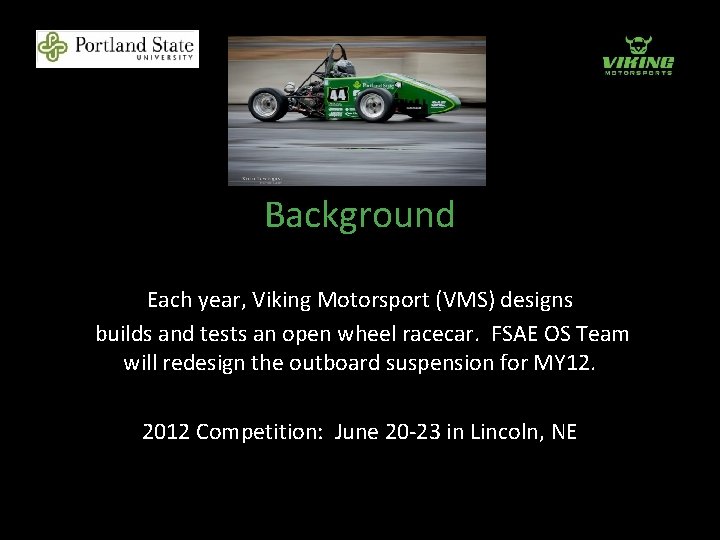
Background Each year, Viking Motorsport (VMS) designs builds and tests an open wheel racecar. FSAE OS Team will redesign the outboard suspension for MY 12. 2012 Competition: June 20 -23 in Lincoln, NE
Functional need for center-lock wheels Competition in Nebraska-it may rain at a moments notice, so wheel change would be quicker Less rotational inertia
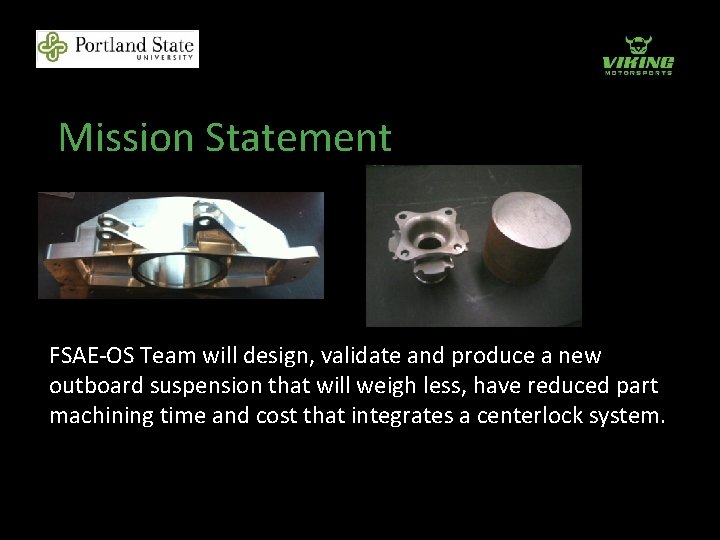
Mission Statement FSAE-OS Team will design, validate and produce a new outboard suspension that will weigh less, have reduced part machining time and cost that integrates a centerlock system.
Design Requirements 2011 & 2012 parts are interchangeable Back-up system in case of failure Centerlock nut retention with two threads exposed FSAE rule Hub Weight Target: 2 lb Must withstand 2 G cornering load Customer requirement
Design Requirements Ease of Manufacturing Machining time: 80 min Hub cost $200 each Service life 2 years Installation torque No more than 300 ft. lbf
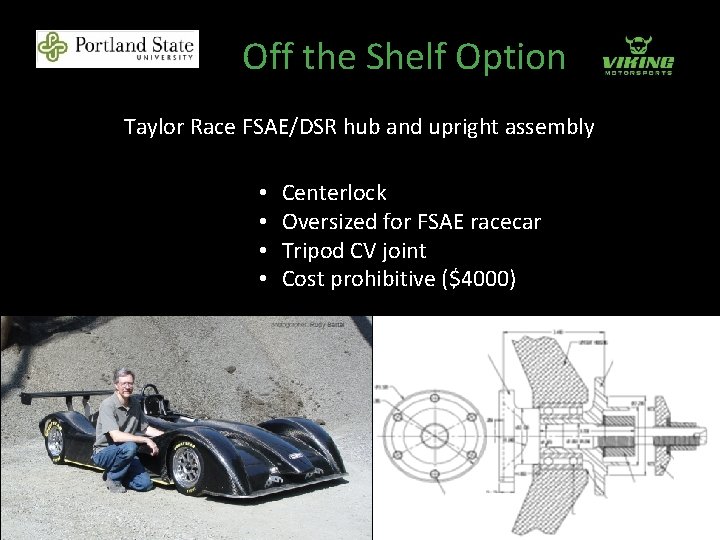
Off the Shelf Option Taylor Race FSAE/DSR hub and upright assembly • • Centerlock Oversized for FSAE racecar Tripod CV joint Cost prohibitive ($4000)
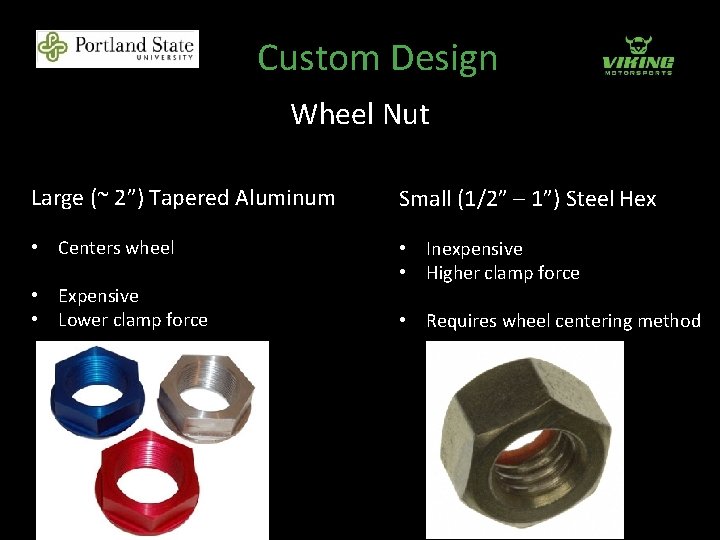
Custom Design Wheel Nut Large (~ 2”) Tapered Aluminum Small (1/2” – 1”) Steel Hex • Centers wheel • Inexpensive • Higher clamp force • Expensive • Lower clamp force • Requires wheel centering method
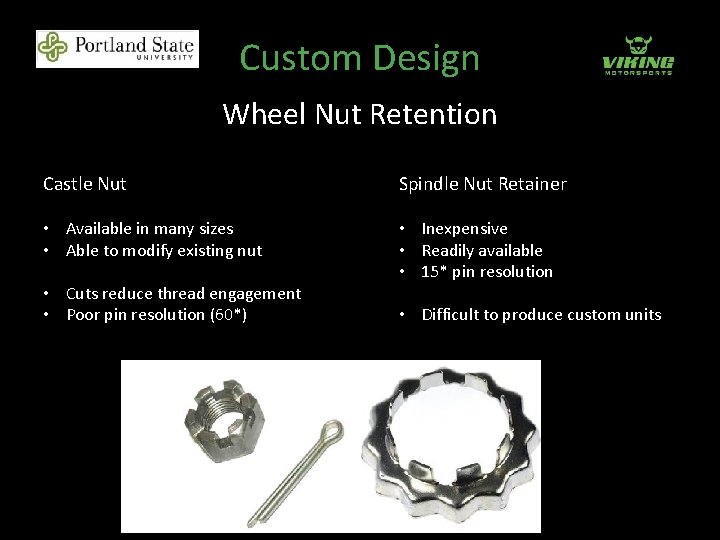
Custom Design Wheel Nut Retention Castle Nut Spindle Nut Retainer • Available in many sizes • Able to modify existing nut • Inexpensive • Readily available • 15* pin resolution • Cuts reduce thread engagement • Poor pin resolution (60*) • Difficult to produce custom units
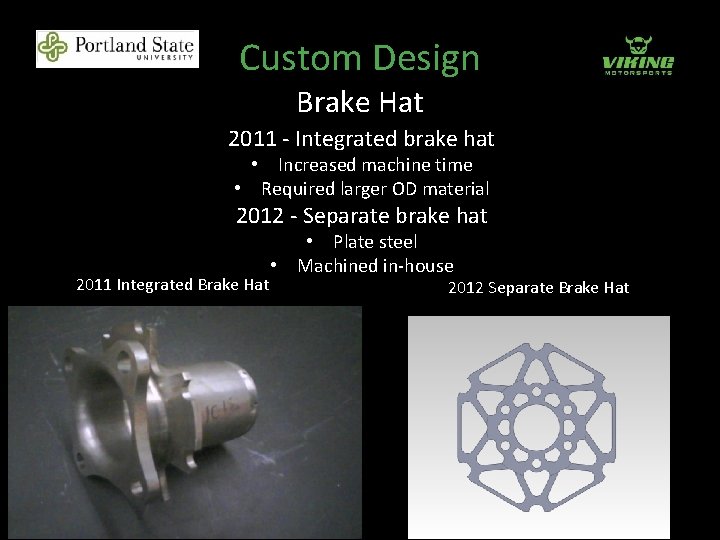
Custom Design Brake Hat 2011 - Integrated brake hat • Increased machine time • Required larger OD material 2012 - Separate brake hat 2011 Integrated Brake Hat • Plate steel • Machined in-house 2012 Separate Brake Hat
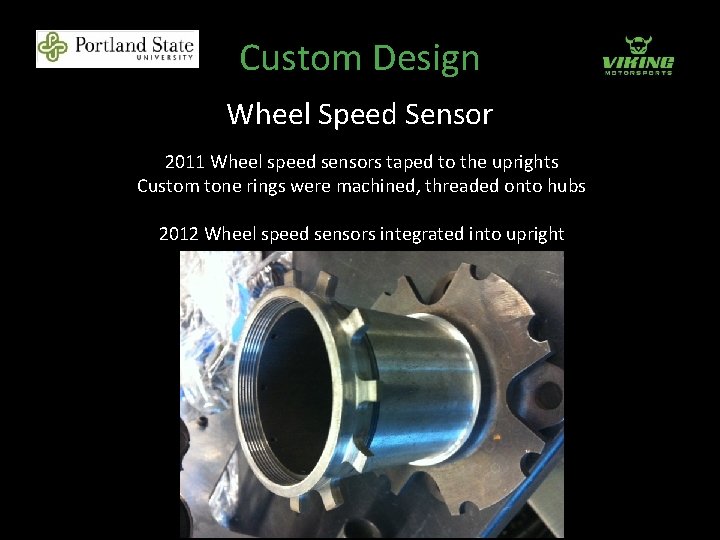
Custom Design Wheel Speed Sensor 2011 Wheel speed sensors taped to the uprights Custom tone rings were machined, threaded onto hubs 2012 Wheel speed sensors integrated into upright
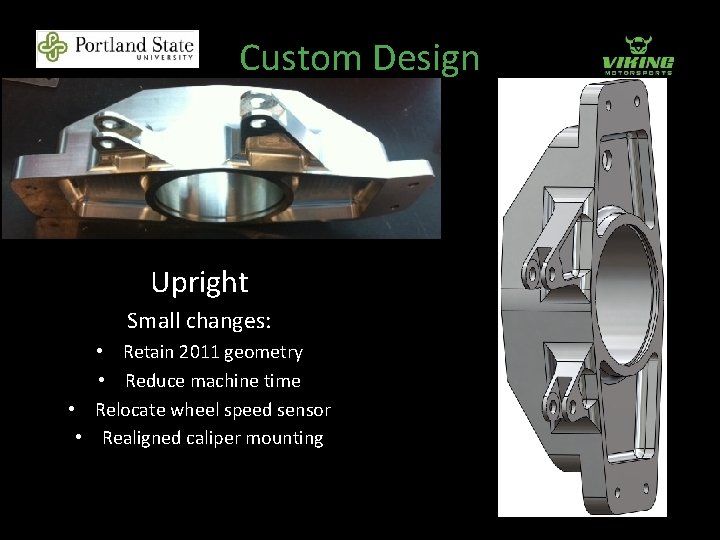
Custom Design Upright Small changes: • Retain 2011 geometry • Reduce machine time • Relocate wheel speed sensor • Realigned caliper mounting
Calculations Hub • Wheel nut torque • Pin wheel contact stress • Wheel to hub friction • Thermal expansion Bearings • Loads from cornering • Bearing to upright interference • Bearing hub interference
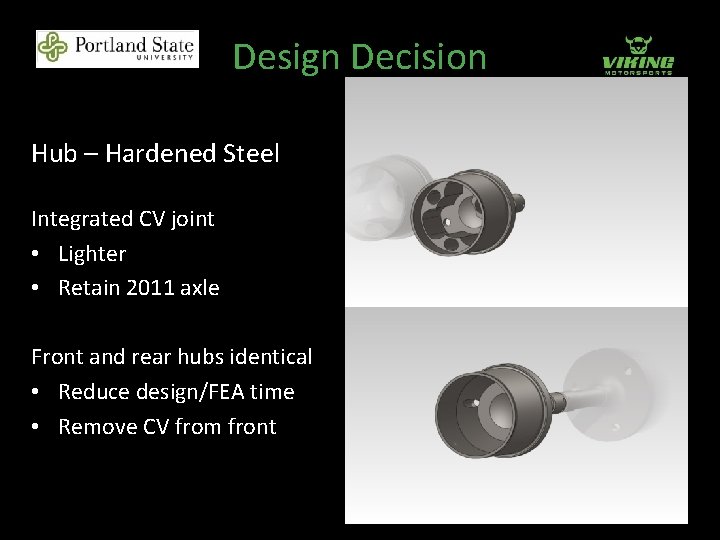
Design Decision Hub – Hardened Steel Integrated CV joint • Lighter • Retain 2011 axle Front and rear hubs identical • Reduce design/FEA time • Remove CV from front
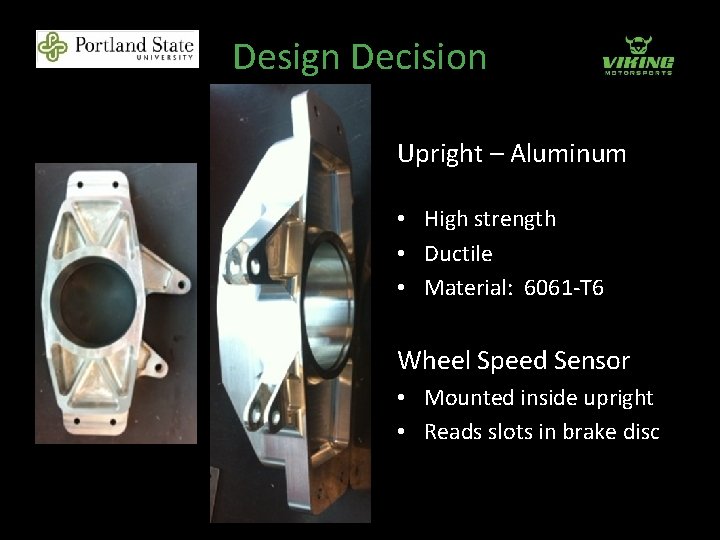
Design Decision Upright – Aluminum • High strength • Ductile • Material: 6061 -T 6 Wheel Speed Sensor • Mounted inside upright • Reads slots in brake disc
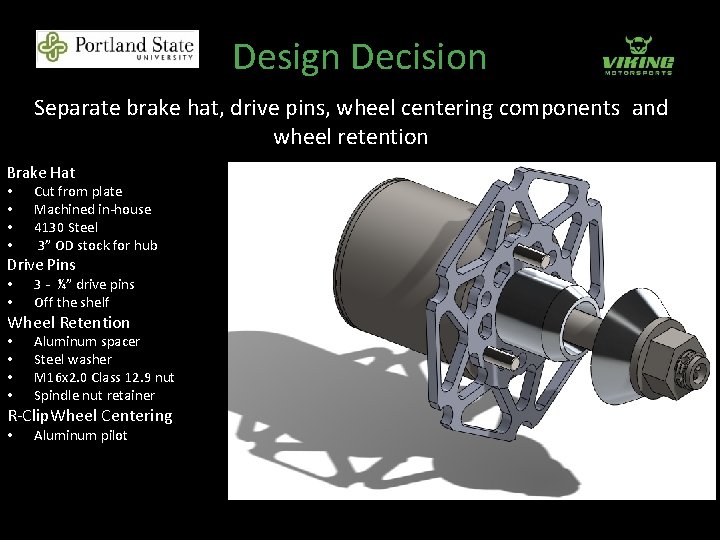
Design Decision Separate brake hat, drive pins, wheel centering components and wheel retention Brake Hat • • Cut from plate Machined in-house 4130 Steel 3” OD stock for hub Drive Pins • • 3 - ¼” drive pins Off the shelf Wheel Retention • • Aluminum spacer Steel washer M 16 x 2. 0 Class 12. 9 nut Spindle nut retainer R-Clip. Wheel Centering • Aluminum pilot
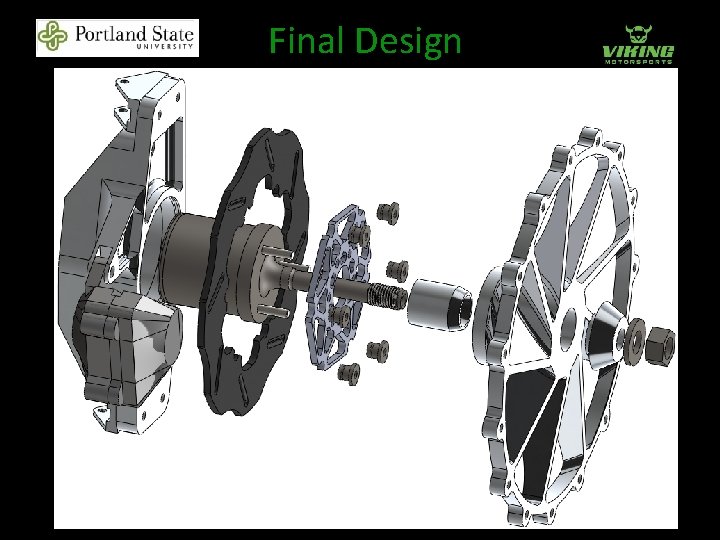
Final Design
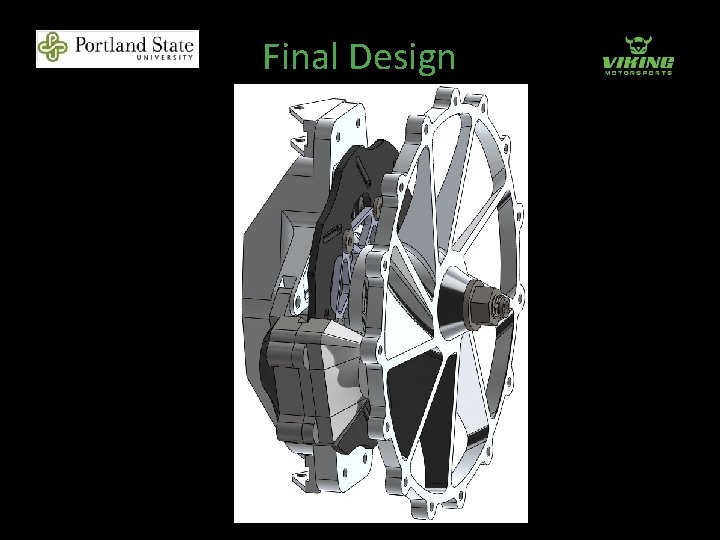
Final Design
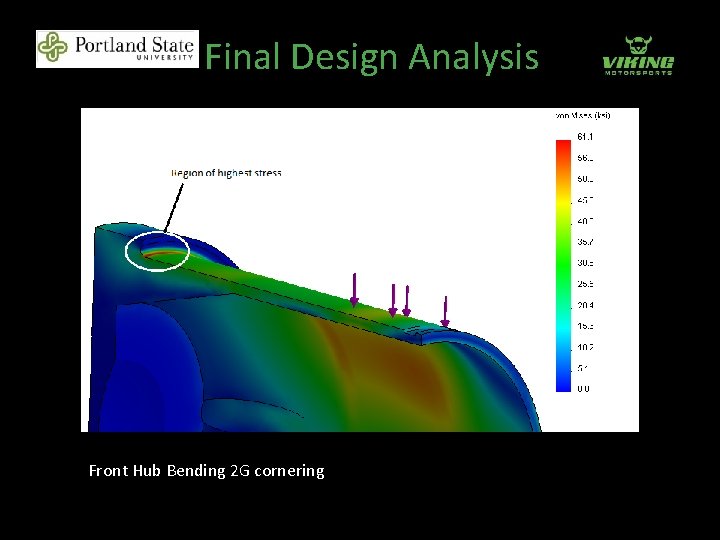
Final Design Analysis Front Hub Bending 2 G cornering
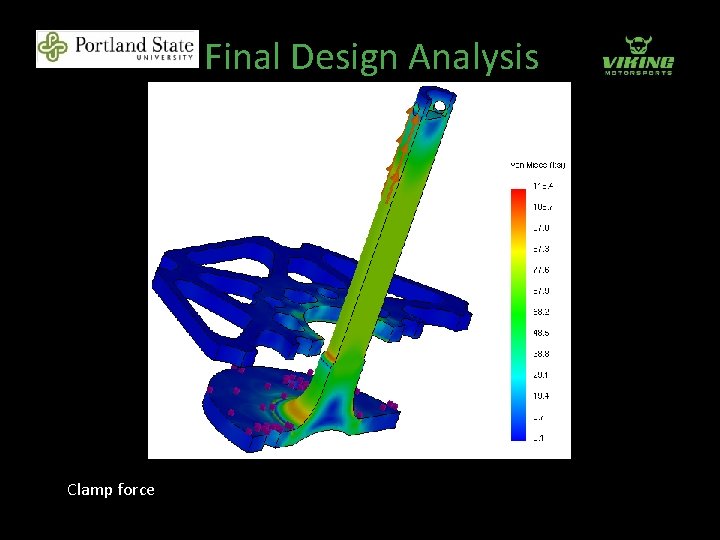
Final Design Analysis Clamp force
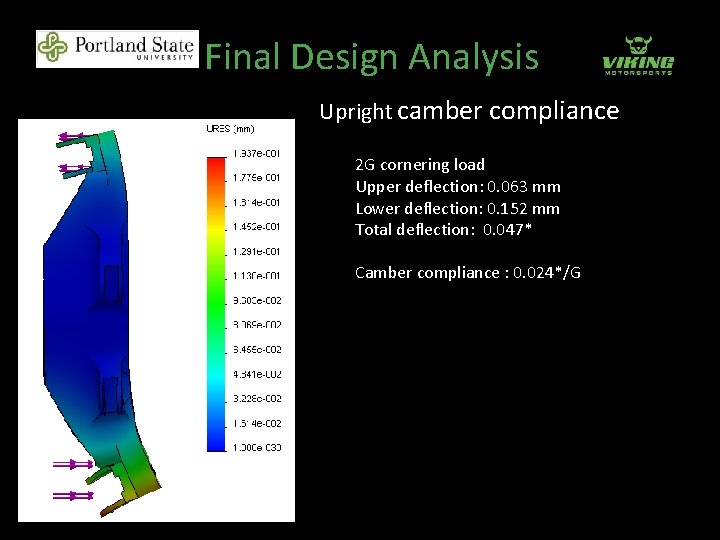
Final Design Analysis Upright camber compliance 2 G cornering load Upper deflection: 0. 063 mm Lower deflection: 0. 152 mm Total deflection: 0. 047* Camber compliance : 0. 024*/G
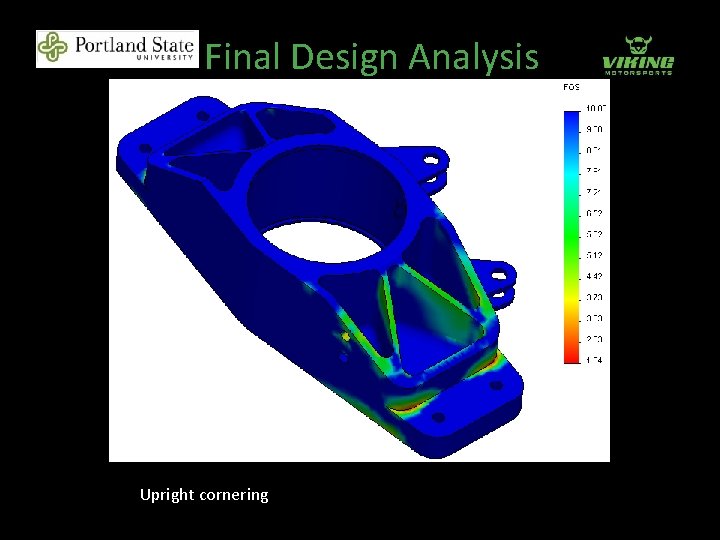
Final Design Analysis Upright cornering
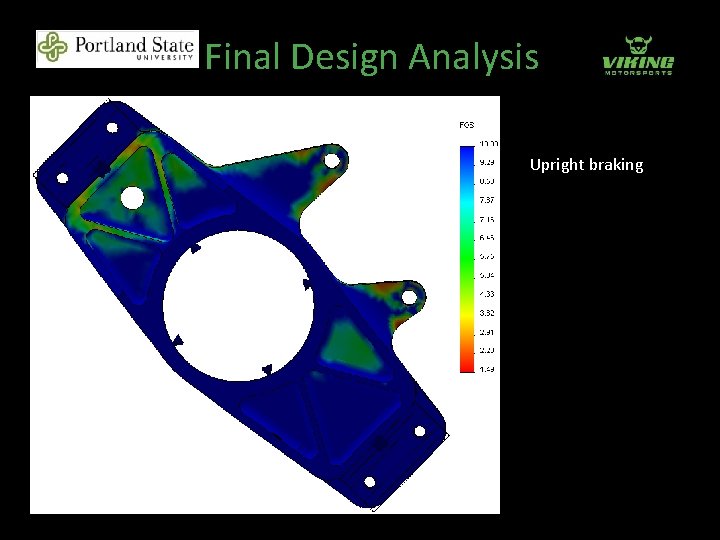
Final Design Analysis Upright braking
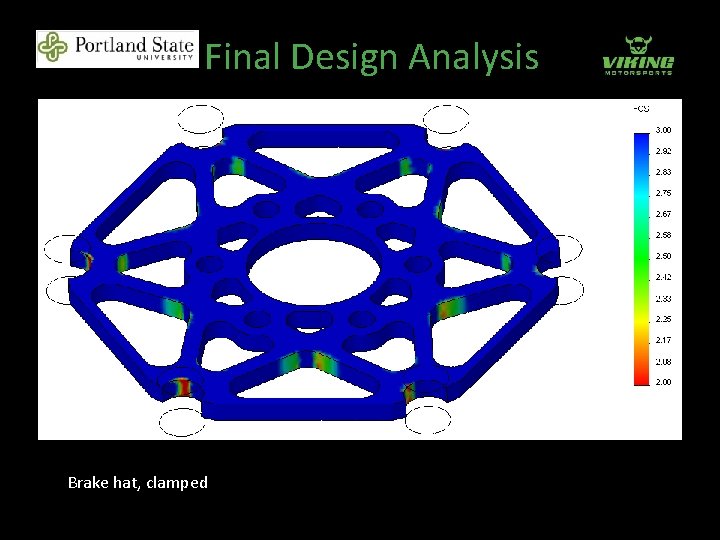
Final Design Analysis Brake hat, clamped
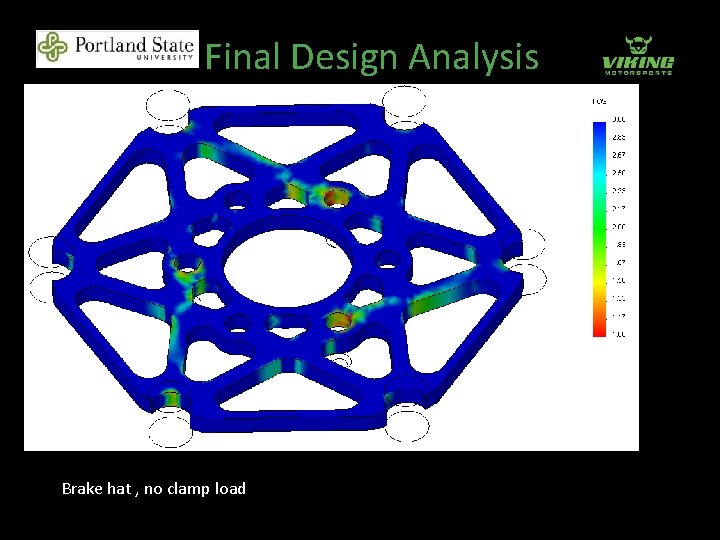
Final Design Analysis Brake hat , no clamp load
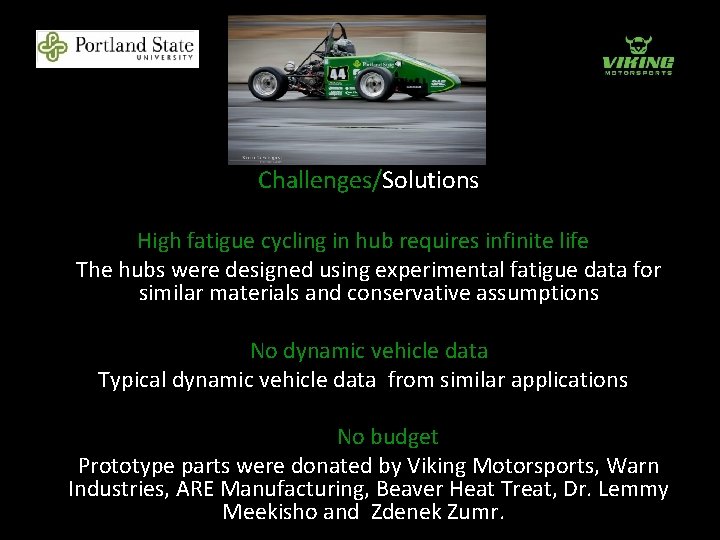
Challenges/Solutions High fatigue cycling in hub requires infinite life The hubs were designed using experimental fatigue data for similar materials and conservative assumptions No dynamic vehicle data Typical dynamic vehicle data from similar applications No budget Prototype parts were donated by Viking Motorsports, Warn Industries, ARE Manufacturing, Beaver Heat Treat, Dr. Lemmy Meekisho and Zdenek Zumr.
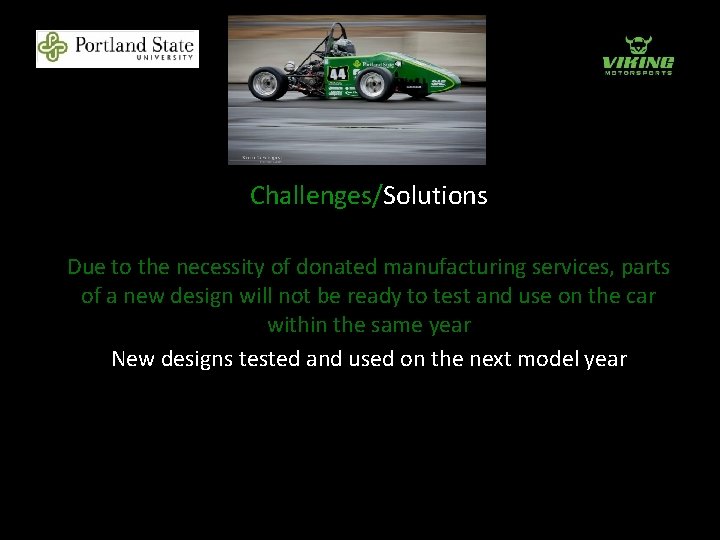
Challenges/Solutions Due to the necessity of donated manufacturing services, parts of a new design will not be ready to test and use on the car within the same year New designs tested and used on the next model year
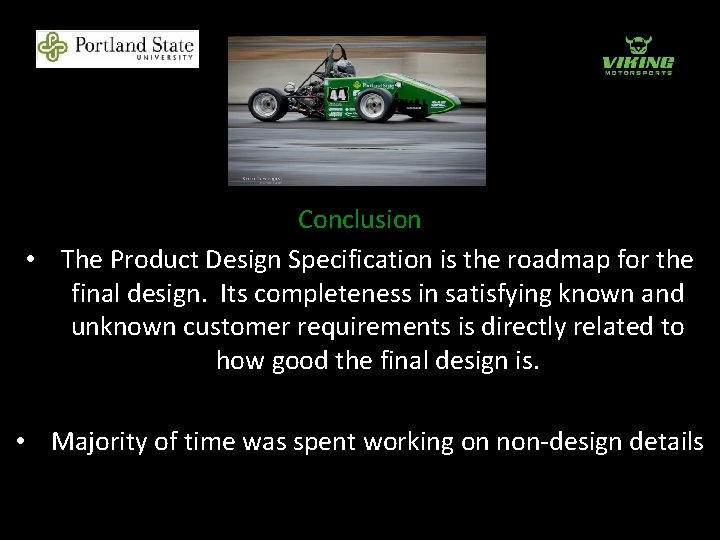
Conclusion • The Product Design Specification is the roadmap for the final design. Its completeness in satisfying known and unknown customer requirements is directly related to how good the final design is. • Majority of time was spent working on non-design details
Q u e s t I o n s ?
- Slides: 30