
2011S TROPICAL STORM ARLENE FIRST SEVERE WINDSTORM OF

- Slides: 11
2011’S TROPICAL STORM ARLENE FIRST SEVERE WINDSTORM OF ATLANTIC -- GULF OF MEXICO BASIN STRIKES VERACRUZ STATE, MEXICO DR. WALTER HAYS GLOBAL ALLIANCE FOR DISASTER REDUCTION Thursday, June 30, 2011
2005’S TROPICAL STORM ARLENE
2005’S TROPICAL STORM ARLENE • Tropical Storm Arlene formed near Honduras on June 8, 2005 and moved northwards, crossing western Cuba on June 10, and strengthening to just under hurricane strength before making its final landfall on the Florida Panhandle on June 9. and becoming extratropical on June 13. • 2005’s Arlene was responsible for only one death and minor damages.
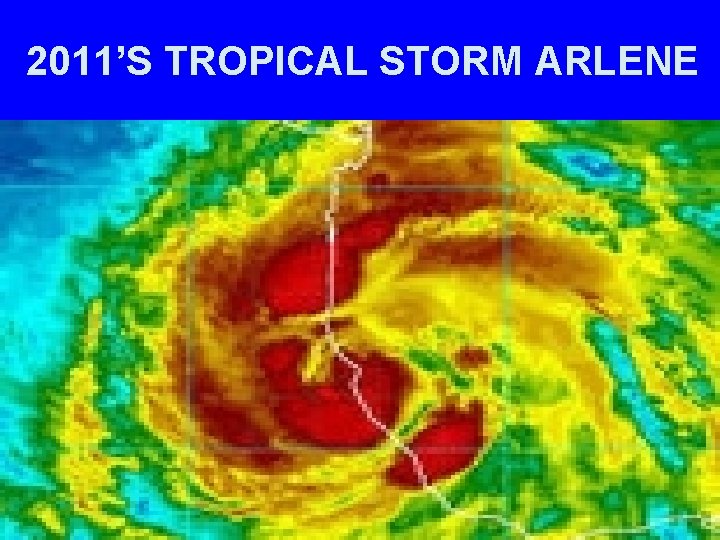
2011’S TROPICAL STORM ARLENE
ARLENE’S PHYSICAL CHARACTERISTICS § Arlene had an estimated minimum central pressure of 993 mb and maximum sustained winds of 100 kph (65 mph). § Tropical storm force winds and rain bands extended outward up to 330 km (205 miles) from the eye.
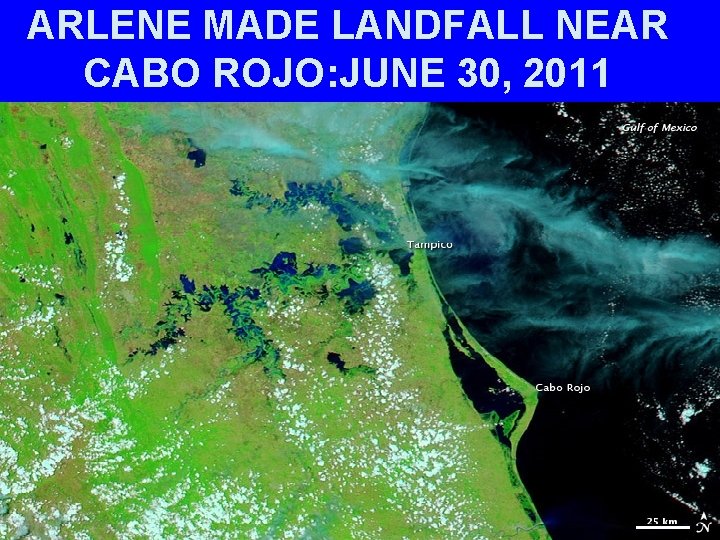
ARLENE MADE LANDFALL NEAR CABO ROJO: JUNE 30, 2011
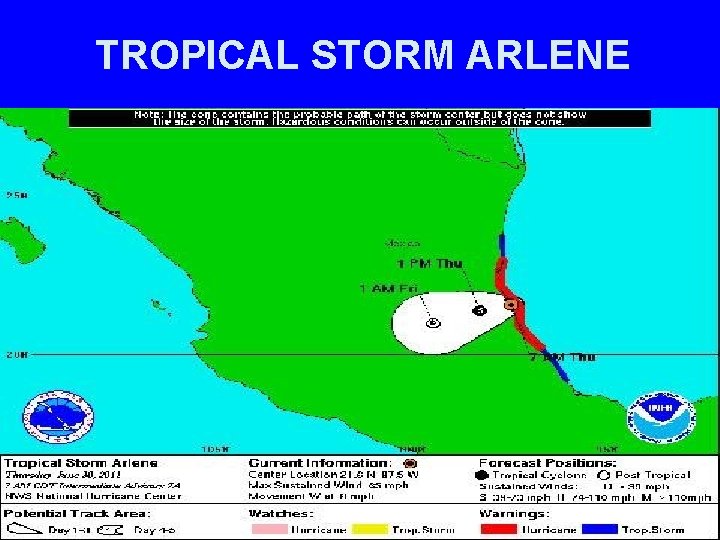
TROPICAL STORM ARLENE
ARLENE’S PHYSICAL EFFECTS § Tropical storm force winds and rain bands extended outward for up to 330 km (205 miles) from the eye.
ARLENE’S PHYSICAL EFFECTS § Arlene’s storm surge raised water levels by as much as 1/3 to 1 m (1 to 3 feet) along the immediate coast near and to the north of Cabo Rojo. § Arlene generated 20 cm (8 inches) of rain, which was mostly welcome due to the dry conditions, even though it caused minor flooding and triggered 6 landslides.
PREPARATION FOR ARLENE § Having anticipated flooding, officials in the states of Veracruz, Tamaulipas and San Luis Potosi and closed schools, mobilized emergency medical units and prepared evacuation shelters.
DEATHS § Government officials reported 22 deaths.