
201023 National Literacy and Numeracy Learning Progressions Overview
- Slides: 20
201023 National Literacy and Numeracy Learning Progressions: Overview
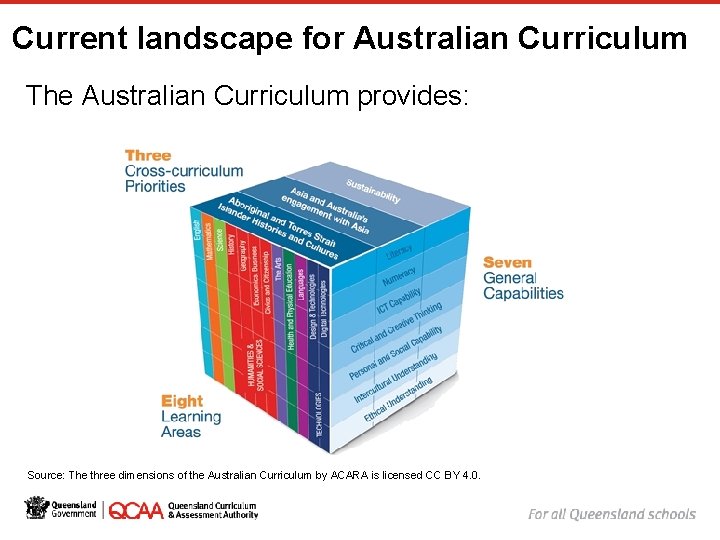
Current landscape for Australian Curriculum The Australian Curriculum provides: Source: The three dimensions of the Australian Curriculum by ACARA is licensed CC BY 4. 0.
Literacy in the Australian Curriculum The Australian Curriculum: English has a central role in the development of literacy. In addition, all Australian Curriculum learning areas require students to apply and develop discipline-specific literacy knowledge and skills.
Numeracy in the Australian Curriculum The Australian Curriculum: Mathematics has a central role in the development of numeracy. In addition, all Australian Curriculum learning areas require students to apply and develop discipline-specific numeracy knowledge and skills.
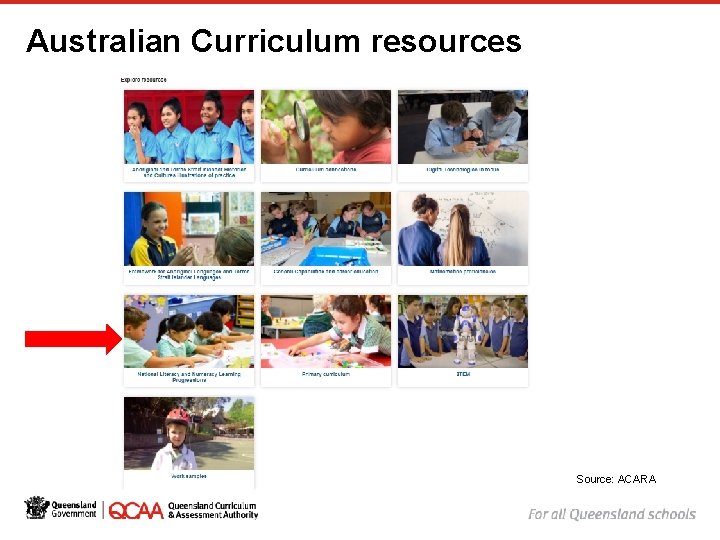
Australian Curriculum resources Source: ACARA
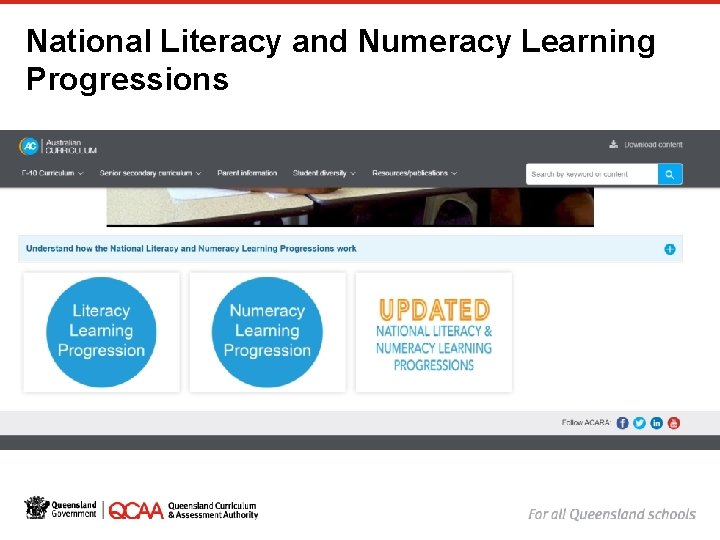
National Literacy and Numeracy Learning Progressions
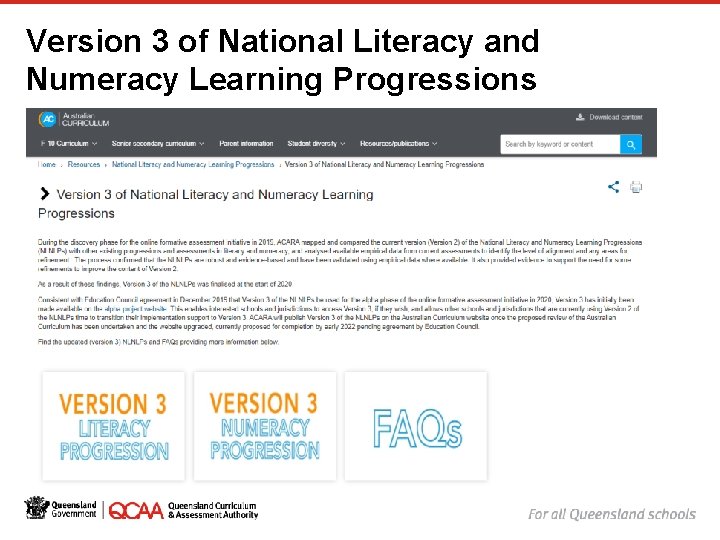
Version 3 of National Literacy and Numeracy Learning Progressions
Why the learning progressions were developed The Education Council identified literacy and numeracy as areas for national action. This included extending the national literacy and numeracy continua to: … assist teachers to identify and address individual student needs according to the expected skills and growth in student learning at key progress points. (Education Council 2015)
The purpose of the progressions The progressions: • provide a useful resource for targeted students • offer more fine-grained details of literacy and numeracy development than the general capabilities • provide a detailed map of how students become increasingly adept in particular aspects of literacy and numeracy • support teachers to be more explicit and targeted in their teaching.
Progressions are a resource The National Literacy and Numeracy Learning Progressions: • do not replace the curriculum • do not describe what to teach.
Using the progressions The progressions provide a tool to: • locate each student’s current level of literacy and numeracy development on the learning progression • identify the next steps for literacy and numeracy learning • develop a shared understanding of literacy and numeracy development.
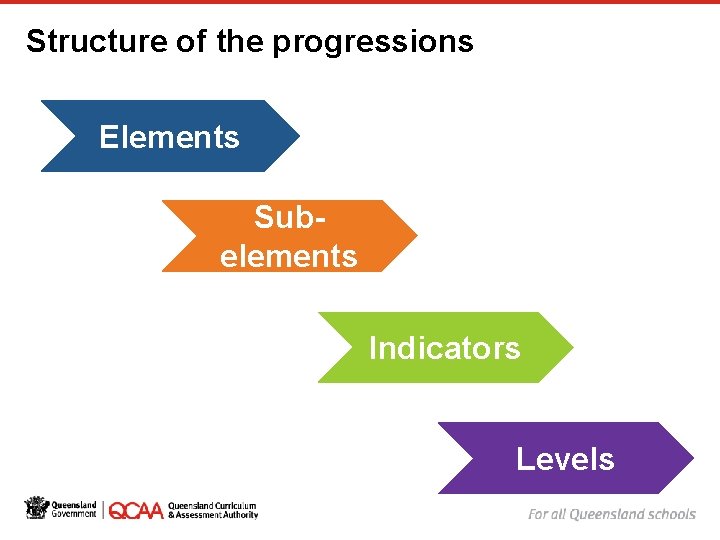
1 2 Structure of the progressions Elements Subelements Indicators Levels
1 3 Elements The elements in the progressions are the largest structural unit of literacy and numeracy development. For literacy, the elements align to the modes of language use. For numeracy, the elements reflect aspects of numeracy development.
Sub-elements Each element includes sub-elements that represent important components of knowledge, understanding and skills.
1 5 Indicators The sub-elements are populated by indicators, which describe how students demonstrate literacy and numeracy skills. The indicators are grouped together to form developmental levels. These indicators are not hierarchical. Each indicator begins with ‘A student …’
1 6 Levels The levels in each sub-element represent a group of indicators that describe what a student knows, says, does and produces. Each level is more complex and sophisticated than the preceding level.
Maximising the benefits of the progressions A whole-school, systematic approach to literacy and numeracy development should ensure: • teacher understanding of literacy and numeracy development • capacity to locate the literacy and numeracy development of targeted students • information about students’ literacy and numeracy progress.
Student diversity and the progressions The progressions help teachers cater for diverse learners by acknowledging differences in starting points and rates of progression. The progressions also acknowledge that teachers should be supported to differentiate for students at all stages of schooling.
Where to now? QCAA advises that the National Literacy and Numeracy Learning Progressions are a resource schools may choose to use. Schools are best placed to decide how to use the progressions, with advice from their sector. The National Literacy and Numeracy Learning Progressions are on the Australian Curriculum website under the ‘Resources/publications’ tab: https: //australiancurriculum. edu. au/resources/nationalliteracy-and-numeracy-learning-progressions
Acknowledgments © State of Queensland (QCAA) 2020 Licence: https: //creativecommons. org/licenses/by/4. 0 | Copyright notice: www. qcaa. qld. edu. au/copyright — lists the full terms and conditions, which specify certain exceptions to the licence. | Attribution: ‘© State of Queensland (QCAA) 2020— please include the link to our copyright notice. Other copyright material in this publication is listed below: 1. With the exception of photographs, content from ACARA, including the National Numeracy Learning Progression, is © ACARA 2010– 2020, licensed under CC BY 4. 0. For the latest information and additional terms of use, please check the Australian Curriculum website and its copyright notice. 2. Photographs from ACARA are excluded from the CC BY licence and may only be used in unaltered form only for your personal, non-commercial educational purposes or for the non-commercial educational purposes of your organization. 3. Education Council (2015) as cited in the National Literacy and Numeracy Learning Progression.