
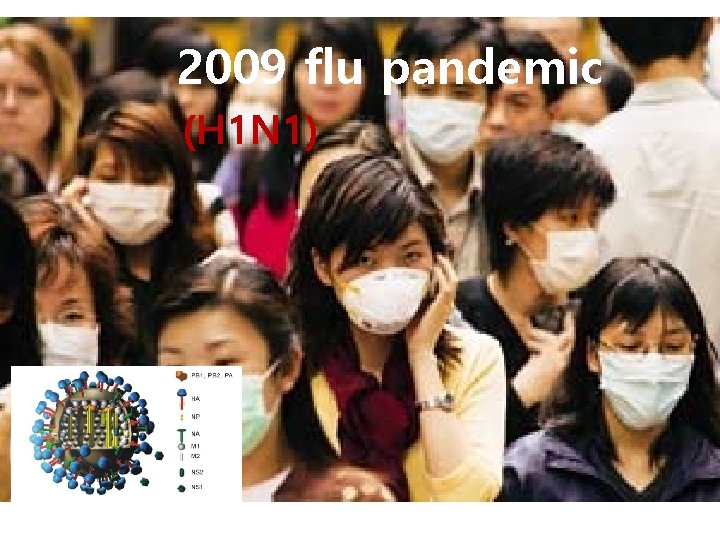
2009 flu pandemic H 1 N 1 Evolution










- Slides: 24
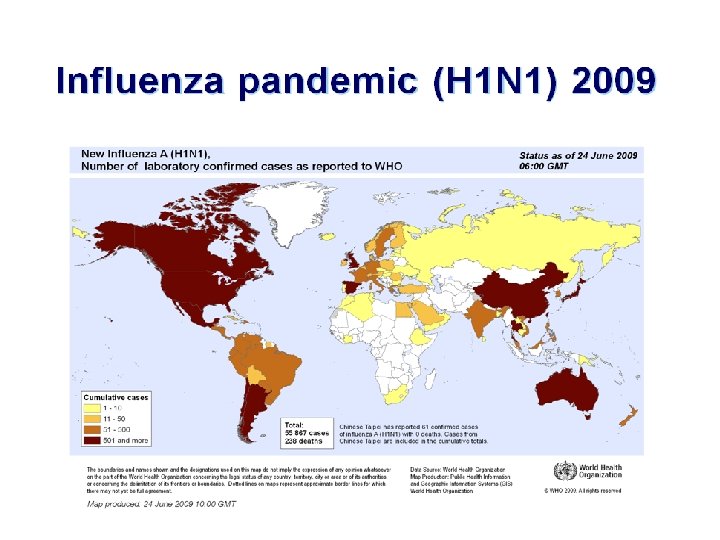
2009 flu pandemic (H 1 N 1)
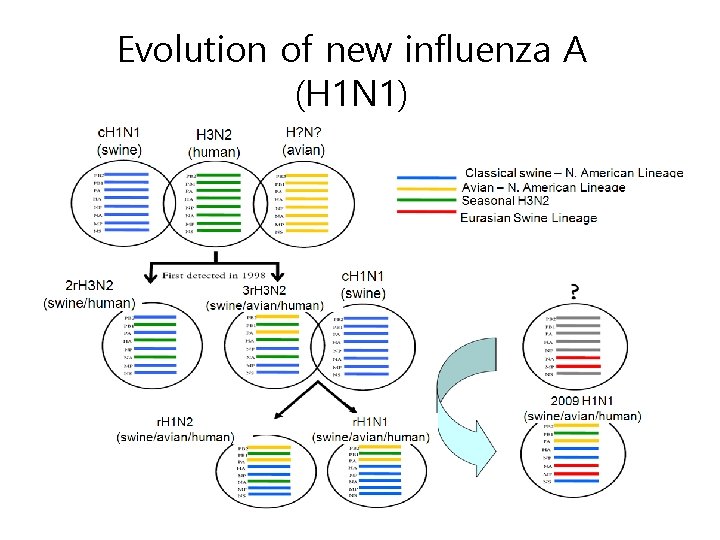
Evolution of new influenza A (H 1 N 1)
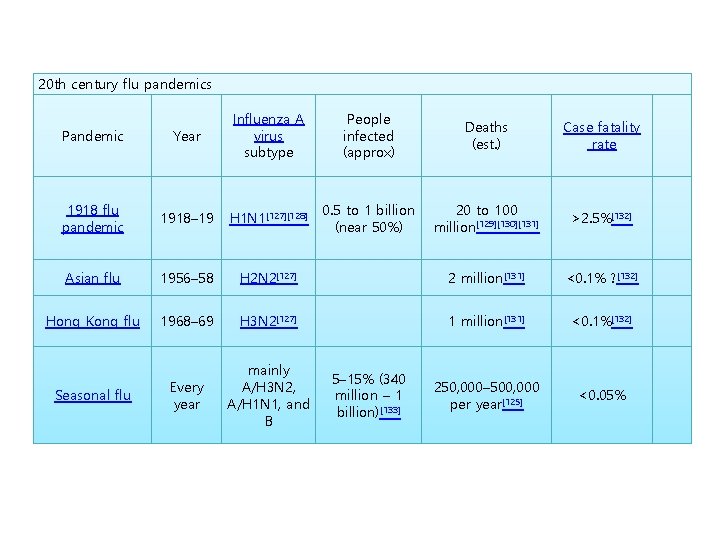
20 th century flu pandemics Pandemic Year Influenza A virus subtype 1918 flu pandemic 1918– 19 H 1 N 1[127][128] Asian flu 1956– 58 H 2 N 2[127] 2 million[131] <0. 1% ? [132] Hong Kong flu 1968– 69 H 3 N 2[127] 1 million[131] <0. 1%[132] Every year mainly A/H 3 N 2, A/H 1 N 1, and B 250, 000– 500, 000 per year[125] <0. 05% Seasonal flu People infected (approx) Deaths (est. ) Case fatality rate 0. 5 to 1 billion (near 50%) 20 to 100 million[129][130][131] >2. 5%[132] 5– 15% (340 million – 1 billion)[133]
How H 1 N 1 spreads According to the World Health Organization (WHO), the "main route of transmission of the new influenza A(H 1 N 1) virus seems to be similar to seasonal influenza, via droplets that are expelled by speaking, sneezing or coughing. You can prevent getting infected by avoiding close contact with people who show influenza-like symptoms (trying to maintain a distance of about 1 metre if possible). "[1]
WHO recommendations According to the WHO, one can decrease their chances of contracting the flu virus by taking the following steps[1]: 1. Avoid touching your mouth and nose; 2. Clean hands thoroughly with soap and water, or cleanse them with an alcohol-based hand rub on a regular basis (especially if touching the mouth and nose, or surfaces that are potentially contaminated); 3. Avoid close contact with people who might be ill; 4. Reduce the time spent in crowded settings if possible; 5. Improve airflow in your living space by opening windows; 6. Practise good health habits including adequate sleep, eating nutritious food, and keeping physically active.