
2007 AGA GI Fellows Nutrition Course Malabsorption A
2007 AGA GI Fellows’ Nutrition Course Malabsorption A Clinical Approach John K. Di. Baise, MD Associate Professor of Medicine Mayo Clinic Arizona
Outline n Normal digestion and absorption n Classification of malabsorption n Tests of malabsorption n Clinical approach to diagnosis
Malabsorption vs. Maldigestion Decreased intestinal absorption of macronutrients and/or micronutrients “malabsorption” – defect in mucosal phase n “maldigestion” – defect in intraluminal phase n
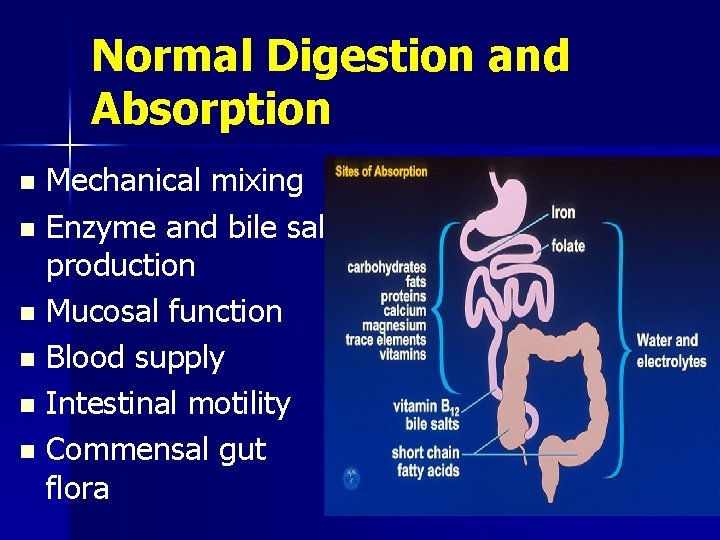
Normal Digestion and Absorption Mechanical mixing n Enzyme and bile salt production n Mucosal function n Blood supply n Intestinal motility n Commensal gut flora n
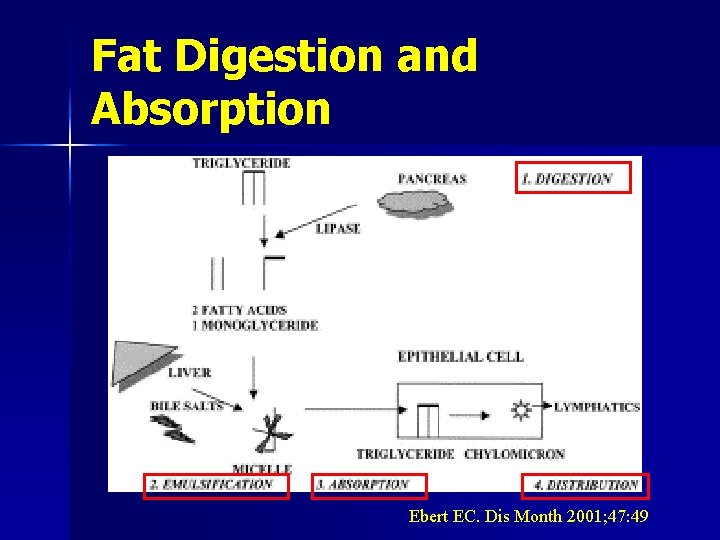
Fat Digestion and Absorption Ebert EC. Dis Month 2001; 47: 49
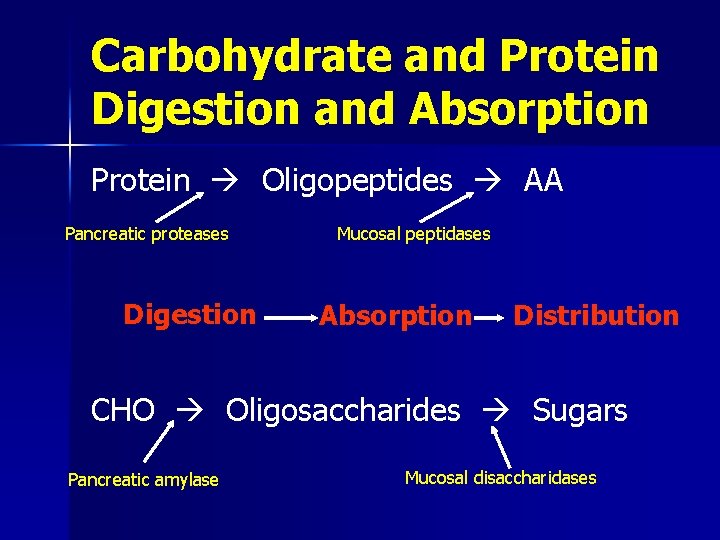
Carbohydrate and Protein Digestion and Absorption Protein Oligopeptides AA Pancreatic proteases Digestion Mucosal peptidases Absorption Distribution CHO Oligosaccharides Sugars Pancreatic amylase Mucosal disaccharidases
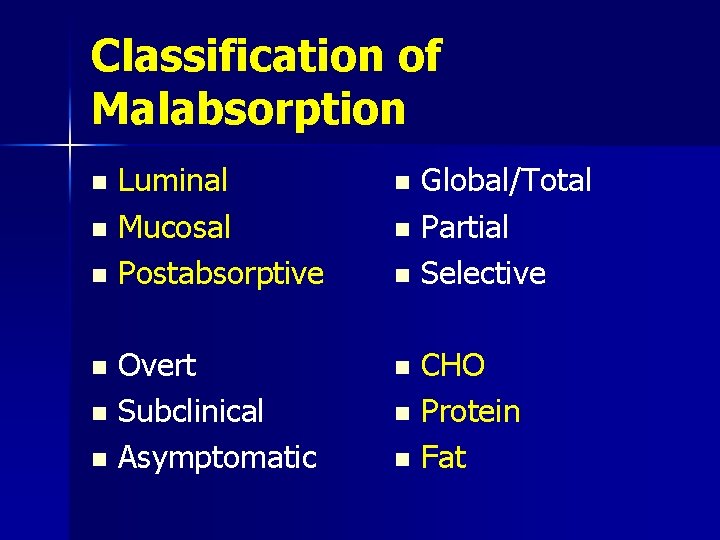
Classification of Malabsorption n n n Luminal Mucosal Postabsorptive n Overt Subclinical Asymptomatic n n n Global/Total Partial Selective CHO Protein Fat
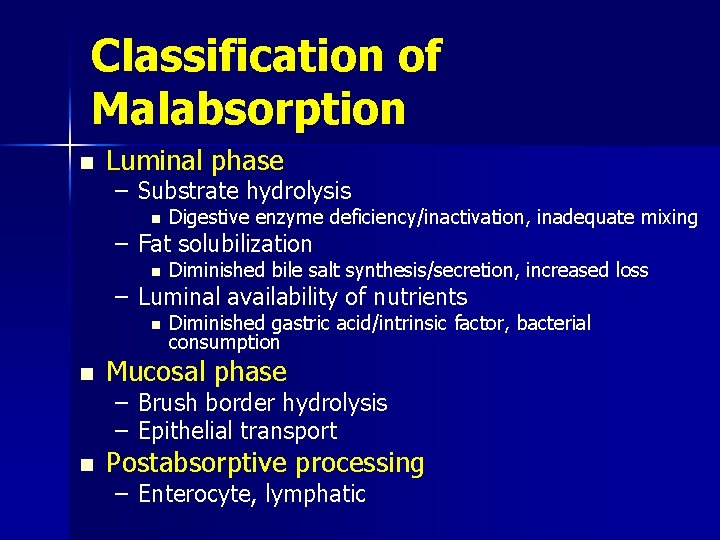
Classification of Malabsorption n Luminal phase – Substrate hydrolysis n Digestive enzyme deficiency/inactivation, inadequate mixing – Fat solubilization n Diminished bile salt synthesis/secretion, increased loss – Luminal availability of nutrients n n Diminished gastric acid/intrinsic factor, bacterial consumption Mucosal phase – Brush border hydrolysis – Epithelial transport n Postabsorptive processing – Enterocyte, lymphatic
Mechanisms of Fat Malabsorption Pancreatic insufficiency n Bile acid deficiency n Small intestinal bacterial overgrowth n Loss of absorptive surface area n Defective enterocyte function n Lymphatic disorders n
Mechanisms of Carbohydrate Malabsorption Selective disaccharidase deficiency n Disruption of brush border/enterocyte function n Loss of mucosal surface area n Pancreatic insufficiency n
Mechanisms of Protein Malabsorption Pancreatic insufficiency n Disorders with impaired enterocyte function n Disorders with decreased absorptive surface n Protein-losing enteropathy n
Clinical Presentation n Diarrhea Steatorrhea Weight loss n n n n Bloating, distension, gas, borborygmi Anorexia or hyperphagia Nausea, vomiting Abdominal discomfort Muscle atrophy Edema Signs/symptoms of specific vitamin deficiencies
History and Exam n n n n Prior GI surgery h/o chronic pancreatitis h/o liver, GI disorder h/o CTD, diabetes h/o radiation therapy Diet and medications Alcohol/drugs h/o chronic sinus or respiratory infections n n n Recent travel history Timing of onset Bowel habits/stool characteristics Associated GI and systemic complaints Evidence of malnutrition or micronutrient deficiencies on exam
Overview of Tests for Malabsorption Blood tests n Fecal fat determination n Imaging studies n Endoscopy with biopsy and aspirate n Breath tests n n D-xylose test, Schilling test, Secretin/CCK test
“Screening” Laboratory Tests n Blood tests – CBC – Electrolytes, Mg, Phos, Ca – Albumin, protein – Vitamin B 12, Folate, Iron – Liver tests – PT/INR, cholesterol – Carotene (? ) n Stool tests – – Inspection Hemoccult O&P Qualitative fat “everything comes down to poo. . . ”
Fecal Fat Determination Quantitative n “Gold standard” to diagnose maldigestion 72 hour collection optimal n Normal < 7 g/day n Limited use in clinical practice due to issues with collection/processing n
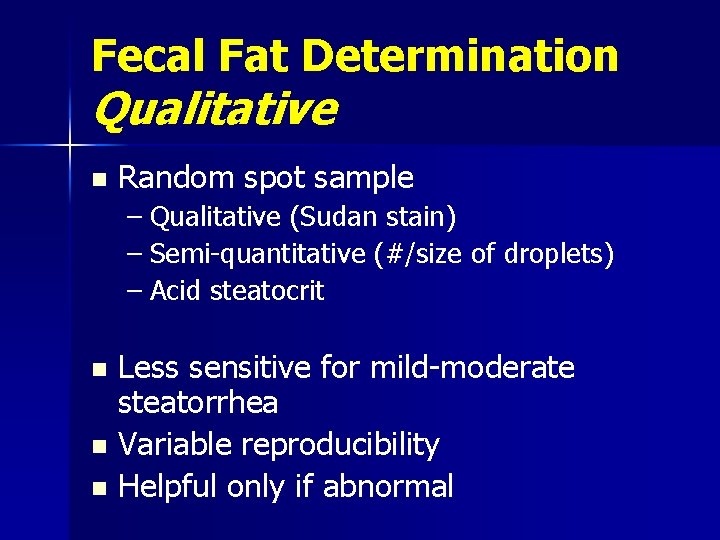
Fecal Fat Determination Qualitative n Random spot sample – Qualitative (Sudan stain) – Semi-quantitative (#/size of droplets) – Acid steatocrit Less sensitive for mild-moderate steatorrhea n Variable reproducibility n Helpful only if abnormal n
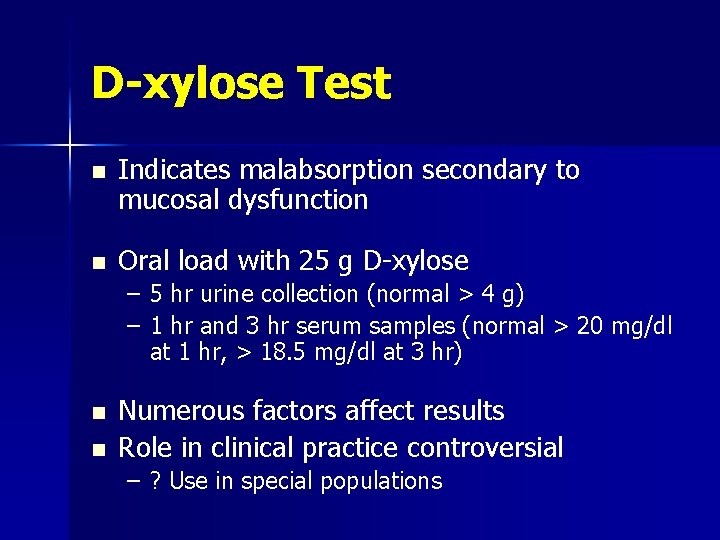
D-xylose Test n n Indicates malabsorption secondary to mucosal dysfunction Oral load with 25 g D-xylose – 5 hr urine collection (normal > 4 g) – 1 hr and 3 hr serum samples (normal > 20 mg/dl at 1 hr, > 18. 5 mg/dl at 3 hr) n n Numerous factors affect results Role in clinical practice controversial – ? Use in special populations
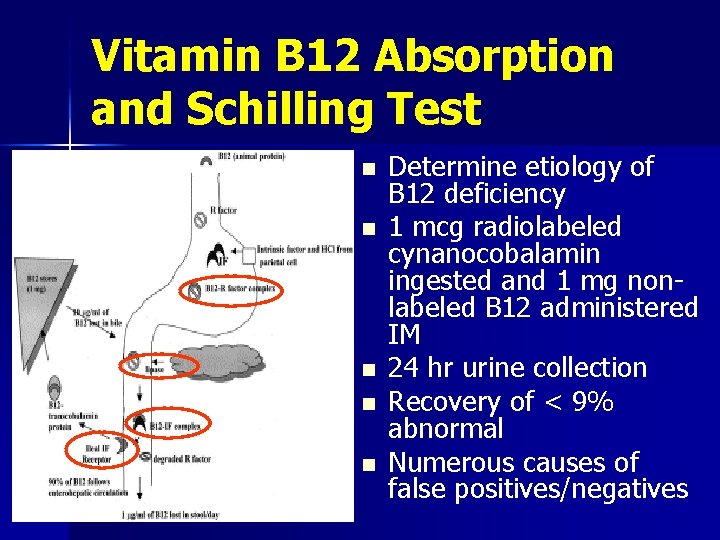
Vitamin B 12 Absorption and Schilling Test n n n Determine etiology of B 12 deficiency 1 mcg radiolabeled cynanocobalamin ingested and 1 mg nonlabeled B 12 administered IM 24 hr urine collection Recovery of < 9% abnormal Numerous causes of false positives/negatives
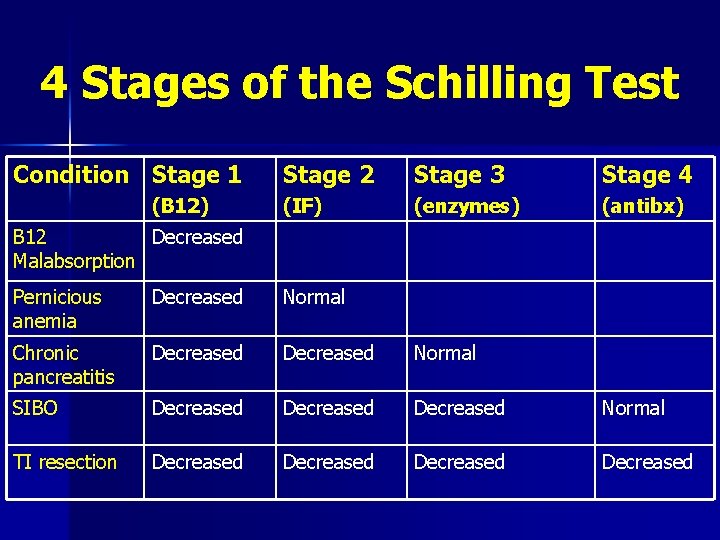
4 Stages of the Schilling Test Condition Stage 1 (B 12) Stage 2 Stage 3 Stage 4 (IF) (enzymes) (antibx) B 12 Decreased Malabsorption Pernicious anemia Decreased Normal Chronic pancreatitis Decreased Normal SIBO Decreased Normal TI resection Decreased
Direct Pancreatic Function Tests n n n Gold standard Quantitative stimulation tests using either secretin or CCK or test (Lundh) meal Requires Dreiling tube placed into duodenum with collection of contents for an hour Analyzed for bicarbonate (secretin) or amylase/lipase/trypsin (CCK) Low concentrations (< 80 -90 m. Eq/L HCO 3; < 780 IU/L lipase) consistent with pancr. insuff. Limited by availability, invasiveness, expense
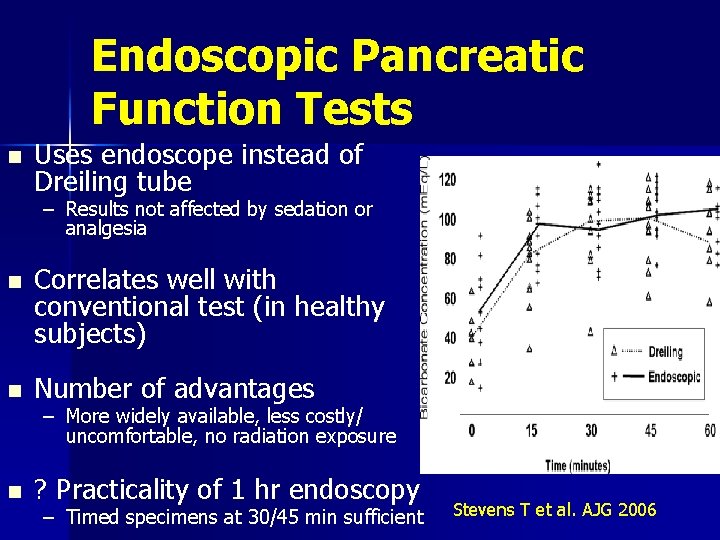
Endoscopic Pancreatic Function Tests n Uses endoscope instead of Dreiling tube – Results not affected by sedation or analgesia n n Correlates well with conventional test (in healthy subjects) Number of advantages – More widely available, less costly/ uncomfortable, no radiation exposure n ? Practicality of 1 hr endoscopy – Timed specimens at 30/45 min sufficient Stevens T et al. AJG 2006
Indirect Pancreatic Function Tests Serum trypsinogen/trypsin n Fecal chymotrypsin n Fecal elastase-1 n Pancreolauryl test n Bentiromide test n n “Tubeless tests” Trial of pancreatic enzymes
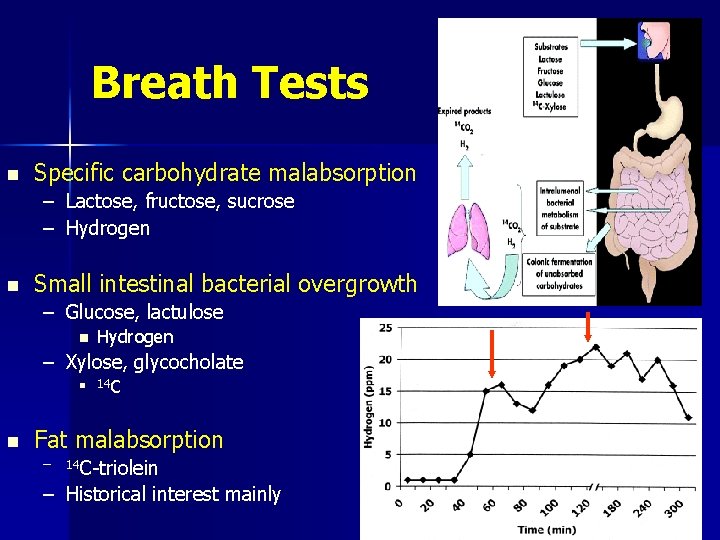
Breath Tests n Specific carbohydrate malabsorption – Lactose, fructose, sucrose – Hydrogen n Small intestinal bacterial overgrowth – Glucose, lactulose n Hydrogen – Xylose, glycocholate n n 14 C Fat malabsorption – 14 C-triolein – Historical interest mainly
Small Bowel Culture n “Gold Standard” test for SIBO – Abnormal > 105 cfu/ml n Many limitations – Invasive – Expensive – Contamination – Many bacterial uncultivatable – Difficulty culturing anaerobes
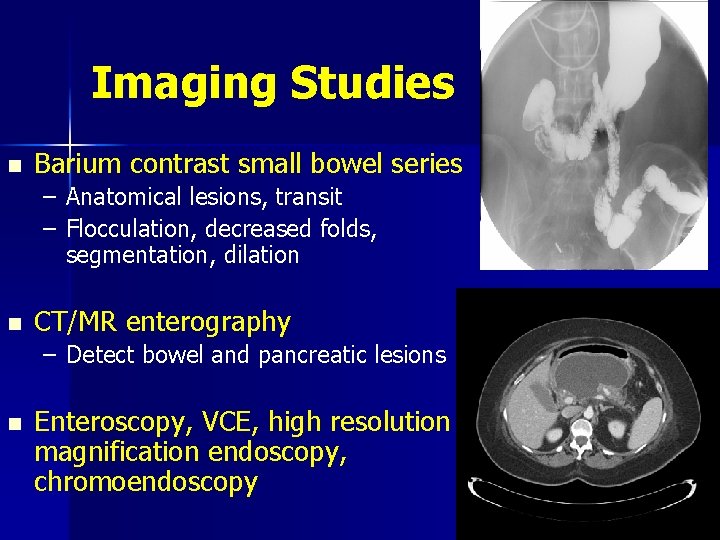
Imaging Studies n Barium contrast small bowel series – Anatomical lesions, transit – Flocculation, decreased folds, segmentation, dilation n CT/MR enterography – Detect bowel and pancreatic lesions n Enteroscopy, VCE, high resolution magnification endoscopy, chromoendoscopy
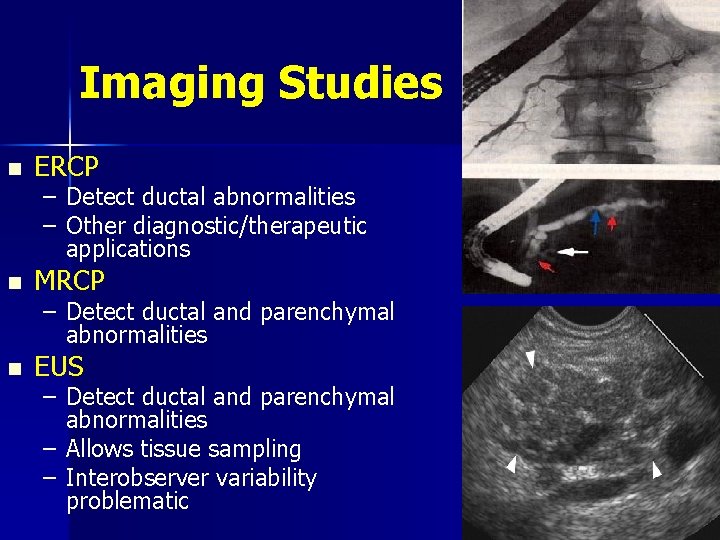
Imaging Studies n ERCP – Detect ductal abnormalities – Other diagnostic/therapeutic applications n MRCP – Detect ductal and parenchymal abnormalities n EUS – Detect ductal and parenchymal abnormalities – Allows tissue sampling – Interobserver variability problematic
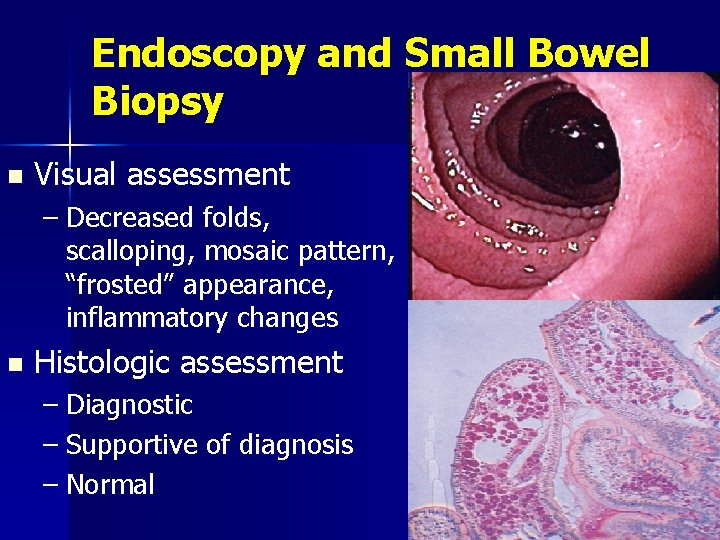
Endoscopy and Small Bowel Biopsy n Visual assessment – Decreased folds, scalloping, mosaic pattern, “frosted” appearance, inflammatory changes n Histologic assessment – Diagnostic – Supportive of diagnosis – Normal
Tests of Fat Malabsorption Fecal fat collection n Spot fecal fat n 14 C-triolein, 13 C-triglyceride breath tests n Near infrared reflectance analysis (NIRA) n – Can measure fecal fat, nitrogen and CHO – As accurate but less time consuming then 72 hr fecal fat collection – Not widely available
Tests of Carbohydrate Malabsorption n Oral breath tests Quantitative analysis of fecal CHO n Stool p. H n Oral tolerance tests n Direct assay of mono- and disaccharidases n
Protein-Losing Enteropathy n Characterized by excessive loss of serum proteins into the gut – Hypoproteinemia, hypoalbuminemia, edema, muscle atrophy May occur as isolated phenomenon or part of global malabsorption n Need to r/o malnutrition, nephrosis, liver disease n
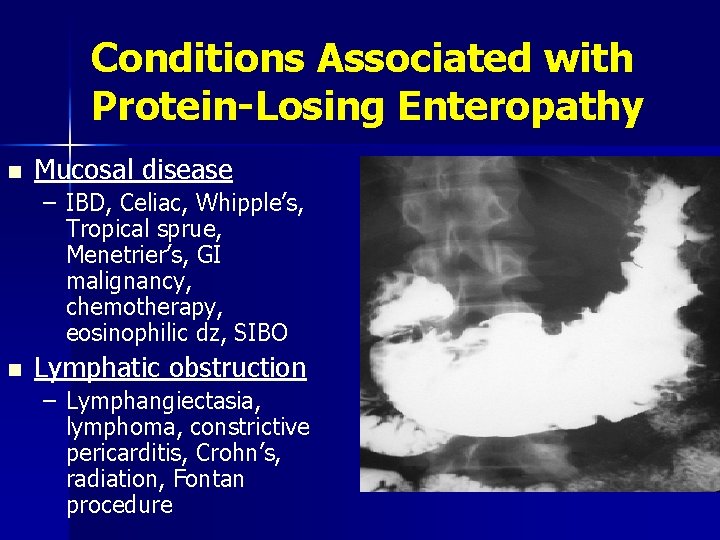
Conditions Associated with Protein-Losing Enteropathy n Mucosal disease – IBD, Celiac, Whipple’s, Tropical sprue, Menetrier’s, GI malignancy, chemotherapy, eosinophilic dz, SIBO n Lymphatic obstruction – Lymphangiectasia, lymphoma, constrictive pericarditis, Crohn’s, radiation, Fontan procedure
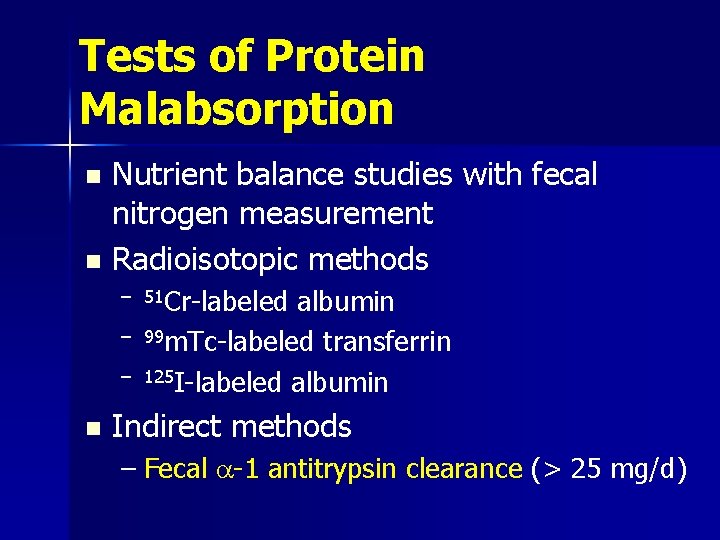
Tests of Protein Malabsorption Nutrient balance studies with fecal nitrogen measurement n Radioisotopic methods n – 51 Cr-labeled – – n Cr-labeled albumin 99 m. Tc-labeled transferrin 125 I-labeled albumin Indirect methods – Fecal -1 antitrypsin clearance (> 25 mg/d)
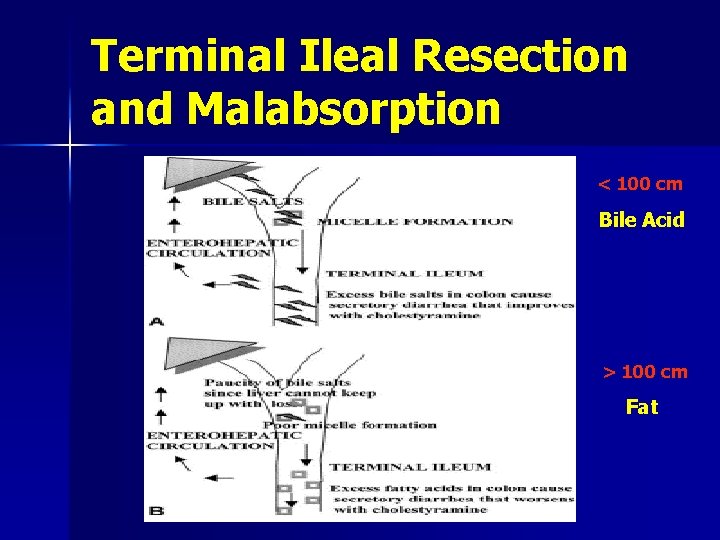
Terminal Ileal Resection and Malabsorption < 100 cm Bile Acid > 100 cm Fat
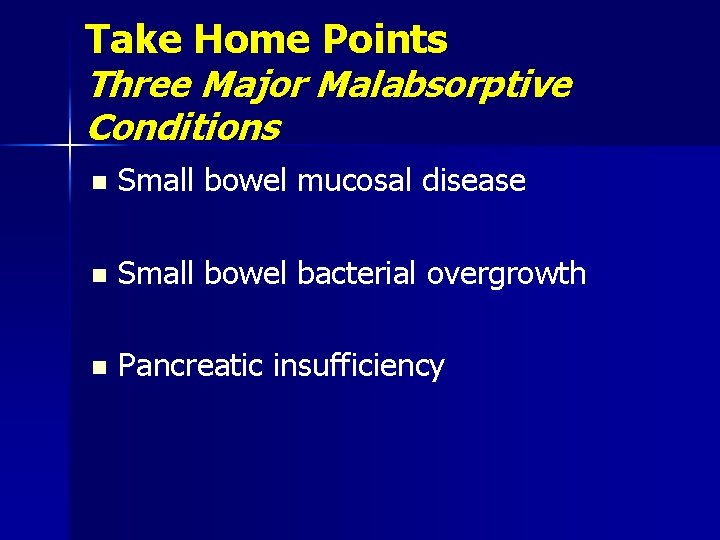
Take Home Points Three Major Malabsorptive Conditions n Small bowel mucosal disease n Small bowel bacterial overgrowth n Pancreatic insufficiency
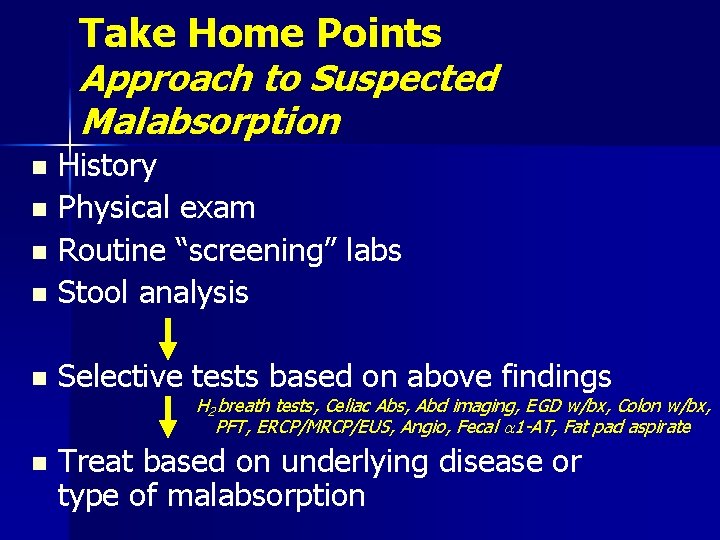
Take Home Points Approach to Suspected Malabsorption History n Physical exam n Routine “screening” labs n Stool analysis n n Selective tests based on above findings n Treat based on underlying disease or type of malabsorption H 2 breath tests, Celiac Abs, Abd imaging, EGD w/bx, Colon w/bx, PFT, ERCP/MRCP/EUS, Angio, Fecal 1 -AT, Fat pad aspirate

Cases
Case 1 n n n 47 yo man h/o alcoholism c/o constant vague abdominal pain, one “constipated” stool/day and 20 pound weight loss CT scan shows pancreatic atrophy Lab tests – Serum carotene 50 mcg/dl (normal > 80) – 72 hr fecal fat 28 g/day (normal < 7) – 5 hr urinary D-xylose 7. 5 g (normal > 4) n What’s the next step? – Further testing? What test(s)? – Treatment? With what?
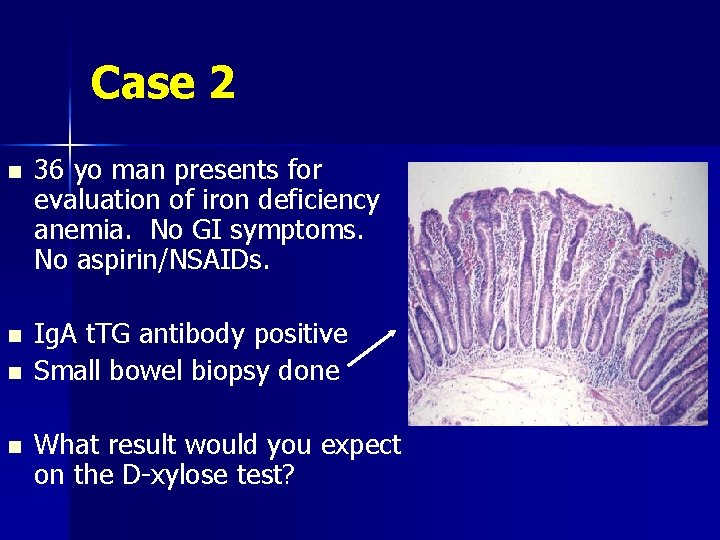
Case 2 n n 36 yo man presents for evaluation of iron deficiency anemia. No GI symptoms. No aspirin/NSAIDs. Ig. A t. TG antibody positive Small bowel biopsy done What result would you expect on the D-xylose test?
Case 3 n 62 yo woman with h/o prior gastric surgery (Roux-en-Y GJ) for PUD c/o early satiety, diarrhea, foul-smelling breath and weight loss What’s the most likely diagnosis? n What test(s) can confirm the diagnosis? n
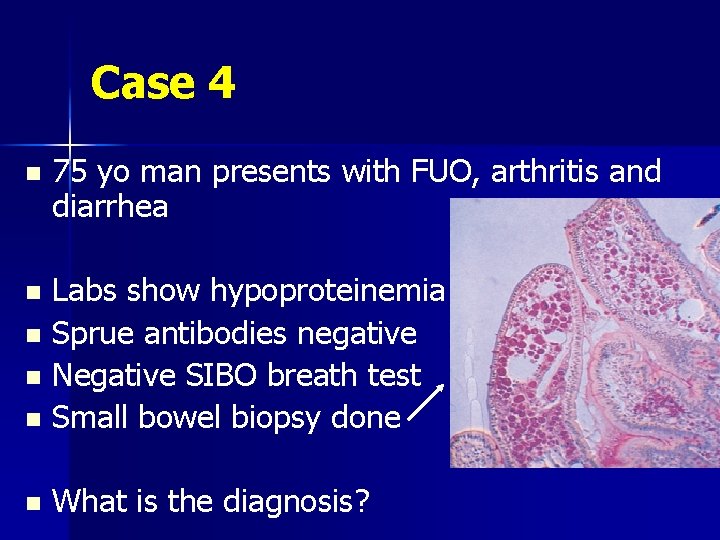
Case 4 n 75 yo man presents with FUO, arthritis and diarrhea Labs show hypoproteinemia n Sprue antibodies negative n Negative SIBO breath test n Small bowel biopsy done n n What is the diagnosis?
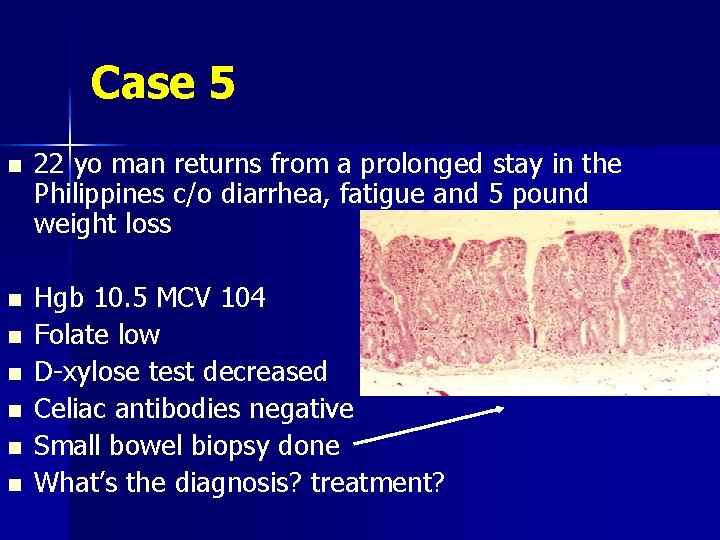
Case 5 n n n n 22 yo man returns from a prolonged stay in the Philippines c/o diarrhea, fatigue and 5 pound weight loss Hgb 10. 5 MCV 104 Folate low D-xylose test decreased Celiac antibodies negative Small bowel biopsy done What’s the diagnosis? treatment?
- Slides: 42