
2005 2006 Training The ARD Committee DecisionMaking Process




- Slides: 98
2005 -2006 Training The ARD Committee Decision-Making Process for the Texas Assessment Program 1
Agenda n n n Introductions/General Information Purpose of the Training Components of the 2006 Assessment Program Highlights of the 2006 Changes to the Manual Subject Area Assessment Information Writing/ELA Achievement Levels LEP Students in Special Education Testing Accommodations Field Tests Student Success Initiative (SSI) Resources 2
Purpose of Training n n n How to make decisions about student placement in the Texas Assessment Program by using the TEKS curriculum as documented in the student’s IEP; How to determine which of the accommodations documented in the IEP are appropriate and allowable for the assessments; and How to set student expected achievement levels (ARD expectations) on an SDAA II assessment. Reference Manual Page 12 3
Objectives n n Definitions of accommodations and modifications How accommodations and modifications fit into the process of planning and implementing the Individual Education Plan (IEP) and making state assessment decisions. 4
Objectives n n Definition of measurable annual goals How measurable annual goals fit into the process of planning and implementing the Individual Education Plan (IEP) and making state assessment decisions. 5
Who Needs to Be Trained? n Region Level n n n ESC Staff Campus Grades 3 -11 n District Level n n Superintendents Administrators Special Ed. Administrators Testing Coordinators n n n n Reference Manual Page 1 Principals and other administrators Ed. Diagnosticians Licensed Specialist in School Psychology Counselors Special Ed. Staff General Ed. Staff Testing Coordinators Test Administrators Parents 6
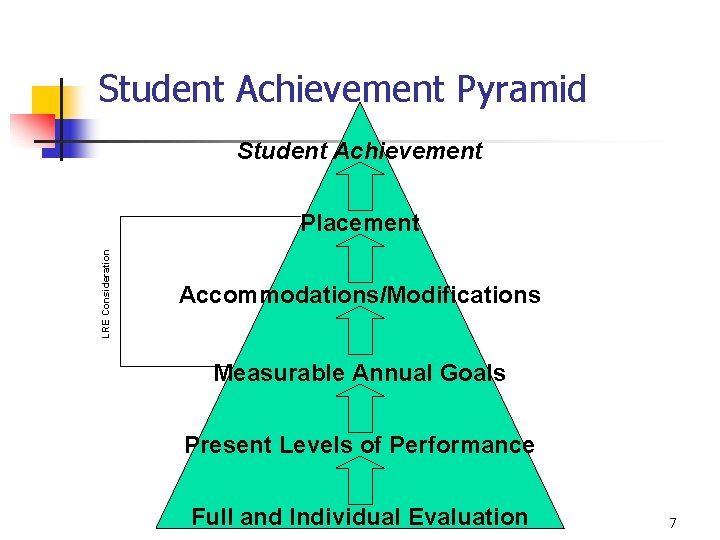
Student Achievement Pyramid Student Achievement LRE Consideration Placement Accommodations/Modifications Measurable Annual Goals Present Levels of Performance Full and Individual Evaluation 7
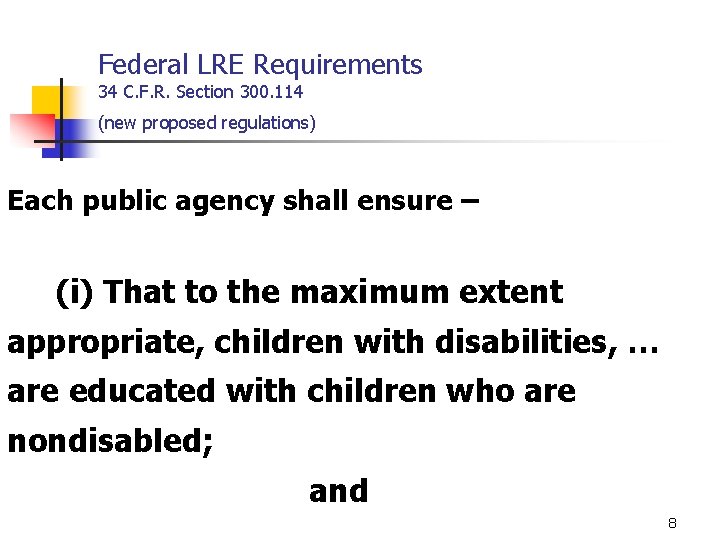
Federal LRE Requirements 34 C. F. R. Section 300. 114 (new proposed regulations) Each public agency shall ensure – (i) That to the maximum extent appropriate, children with disabilities, … are educated with children who are nondisabled; and 8
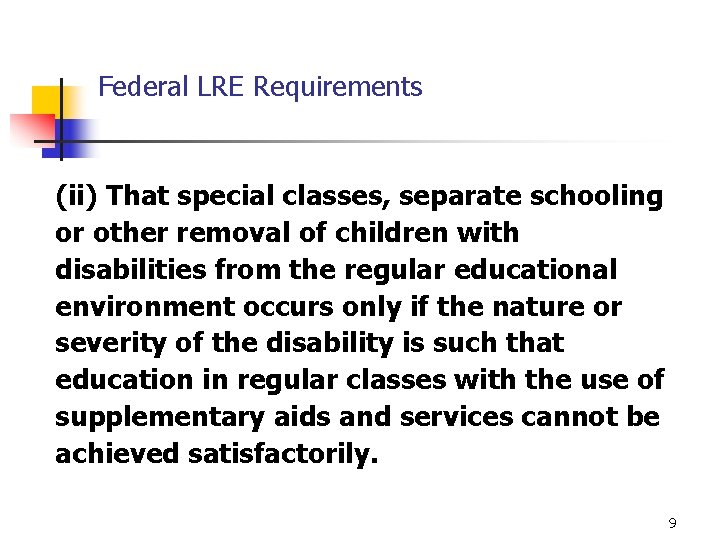
Federal LRE Requirements (ii) That special classes, separate schooling or other removal of children with disabilities from the regular educational environment occurs only if the nature or severity of the disability is such that education in regular classes with the use of supplementary aids and services cannot be achieved satisfactorily. 9
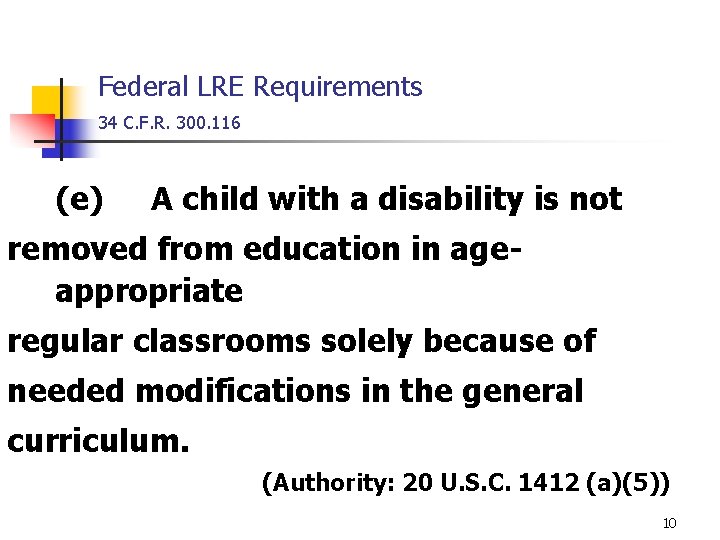
Federal LRE Requirements 34 C. F. R. 300. 116 (e) A child with a disability is not removed from education in ageappropriate regular classrooms solely because of needed modifications in the general curriculum. (Authority: 20 U. S. C. 1412 (a)(5)) 10
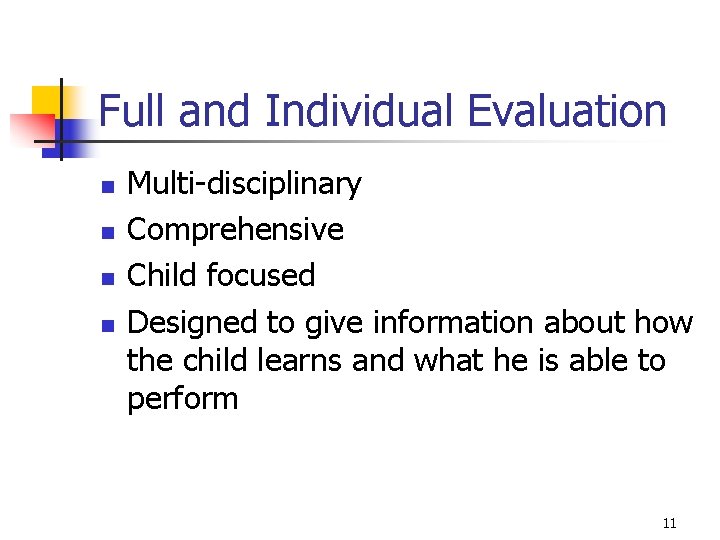
Full and Individual Evaluation n n Multi-disciplinary Comprehensive Child focused Designed to give information about how the child learns and what he is able to perform 11
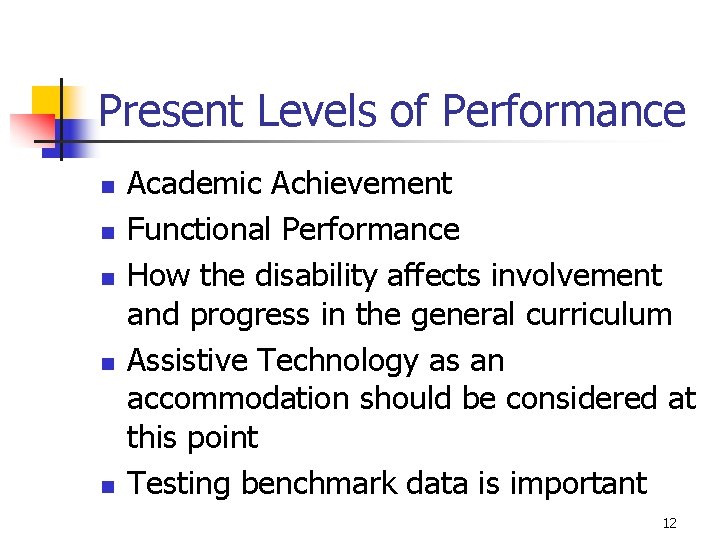
Present Levels of Performance n n n Academic Achievement Functional Performance How the disability affects involvement and progress in the general curriculum Assistive Technology as an accommodation should be considered at this point Testing benchmark data is important 12
Measurable Annual Goals n Write goals based on PLOP for identified needs. 13
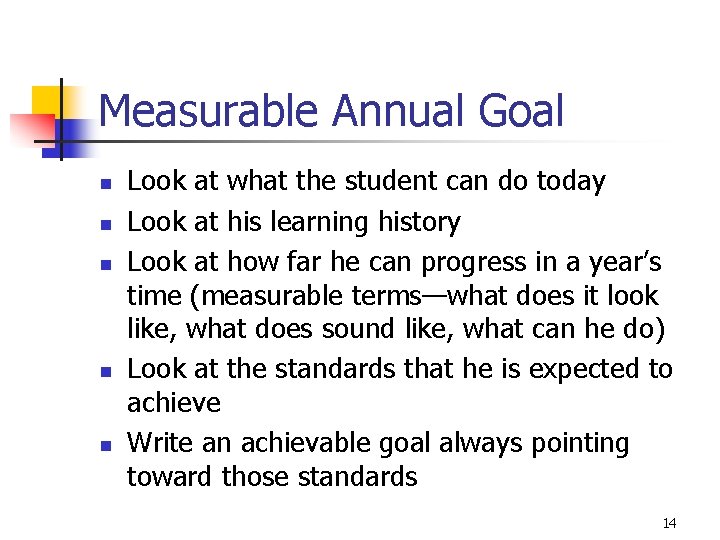
Measurable Annual Goal n n n Look at what the student can do today Look at his learning history Look at how far he can progress in a year’s time (measurable terms—what does it look like, what does sound like, what can he do) Look at the standards that he is expected to achieve Write an achievable goal always pointing toward those standards 14
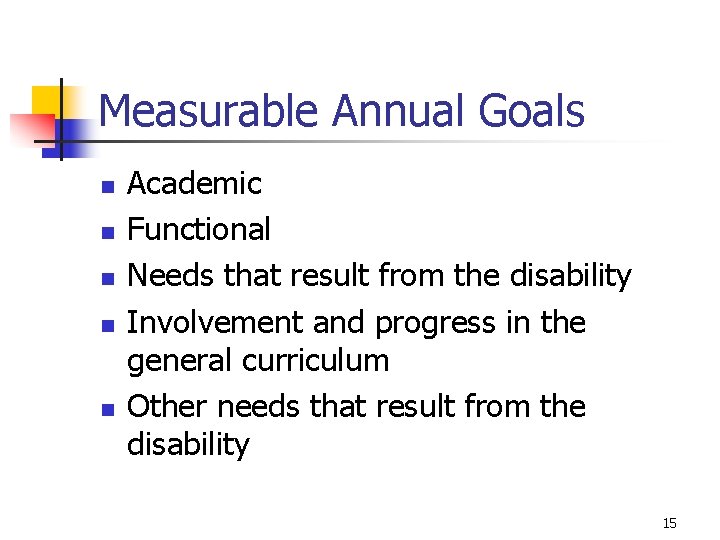
Measurable Annual Goals n n n Academic Functional Needs that result from the disability Involvement and progress in the general curriculum Other needs that result from the disability 15
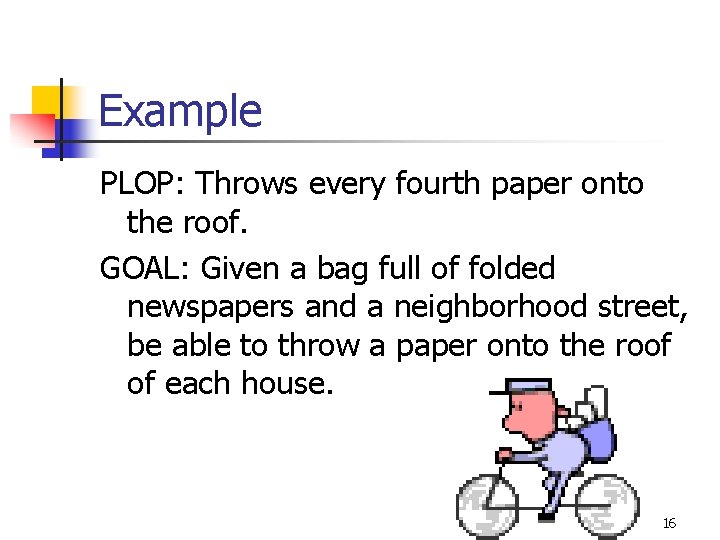
Example PLOP: Throws every fourth paper onto the roof. GOAL: Given a bag full of folded newspapers and a neighborhood street, be able to throw a paper onto the roof of each house. 16
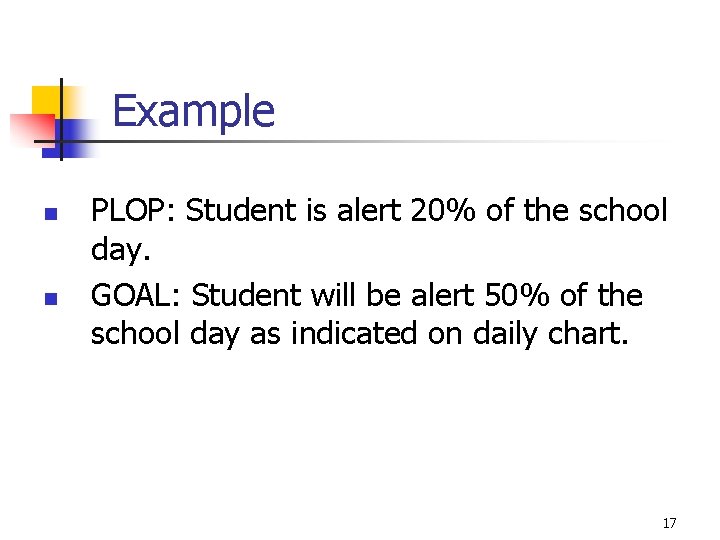
Example n n PLOP: Student is alert 20% of the school day. GOAL: Student will be alert 50% of the school day as indicated on daily chart. 17
Example n n PLOP: While supine in turtle, and given resistance against his feet, will push 80 feet 2 of 5 data days. GOAL: While supine in turtle, and given resistance against his feet, will push 80 feet 4 of 6 data days. 18
Standards n If you don’t know where you are going, you never know when you arrive. 19
Accommodations: The How 20
Modifications: The What 21
Terminology n n Terms in use for many years No legal definition of these terms Best practice definitions for accommodations and modifications widely accepted since IDEA ‘ 97 No longer interchangeable terms 22
Accommodations n An accommodation allows a student to complete the same assignment or test as other students, but with a change in the timing, formatting, setting, scheduling, response and/or presentation. This accommodation does not alter in any significant way what the test or assignment measures. 23
Modifications n A modification is an adjustment to an assignment or a test that changes the standard or what the test or assignment is supposed to measure. They are changes in what the student is expected to learn and demonstrate in the content area. 24
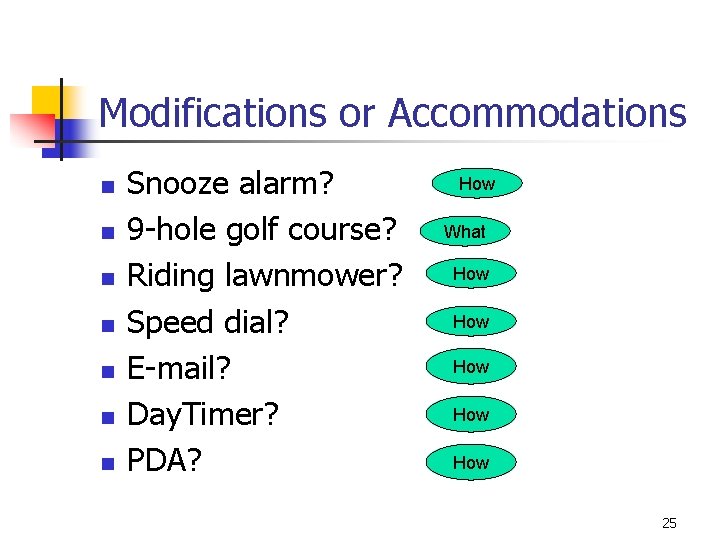
Modifications or Accommodations n n n n Snooze alarm? 9 -hole golf course? Riding lawnmower? Speed dial? E-mail? Day. Timer? PDA? How What How How How 25
Accommodations n n When do I accommodate? Why should that accommodation go into the IEP? Should I make sure that every accommodation that I make in my classroom is written down? How does this relate to decisions about the state assessment program? 26
Student Placement n n Where are the opportunities in the general education classroom for the student to participate in activities to achieve these goals, supported by the accommodations and/or modifications? Continuum of alternative placements 27
Student Achievement n n n Placement without expected achievement is management, not education. Plans need to be re-evaluated! Frequent and accurate assessment is vital. 28
Highlights of the 2006 Changes n • • • New Terms (page iii) TEKS Curriculum-the state-mandated curriculum Modified TEKS Curriculum-access to the TEKS curriculum by using adaptations and modifications in instructional strategies Alternate TEKS Curriculum-access to the TEKS curriculum by using supports and structure needed for the functional level of students 29
Highlights of the 2006 Changes n • • • New Supports (page iii) “Assessment by Grade level and Subject Area” Page 2 “ 2005 -2006 LDAA Reporting Deadlines” Page 7 “Considerations for ARD Assessment Decisions” sample forms per subject Pages 106 -111 30
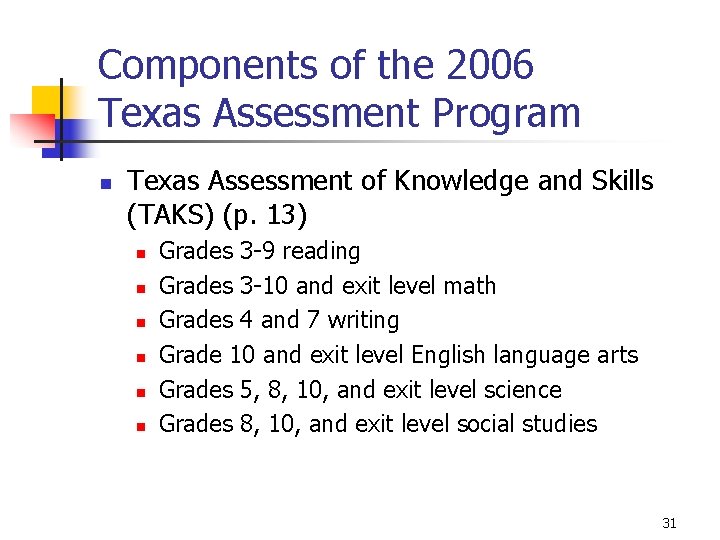
Components of the 2006 Texas Assessment Program n Texas Assessment of Knowledge and Skills (TAKS) (p. 13) n n n Grades 3 -9 reading Grades 3 -10 and exit level math Grades 4 and 7 writing Grade 10 and exit level English language arts Grades 5, 8, 10, and exit level science Grades 8, 10, and exit level social studies 31
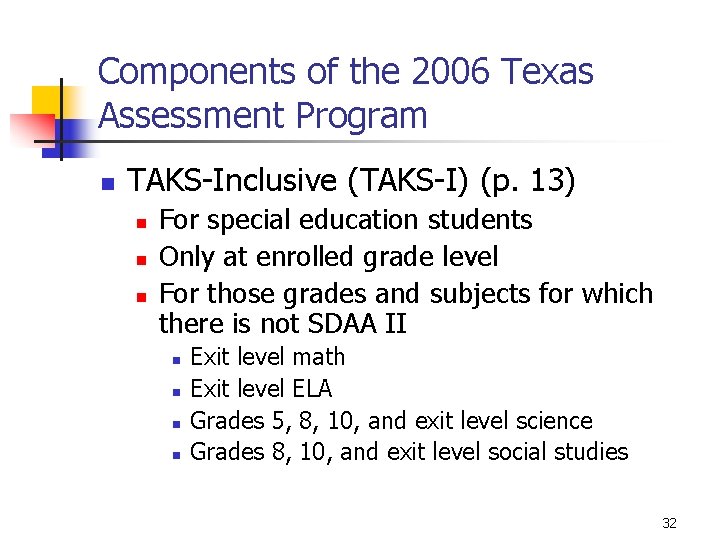
Components of the 2006 Texas Assessment Program n TAKS-Inclusive (TAKS-I) (p. 13) n n n For special education students Only at enrolled grade level For those grades and subjects for which there is not SDAA II n n Exit level math Exit level ELA Grades 5, 8, 10, and exit level science Grades 8, 10, and exit level social studies 32
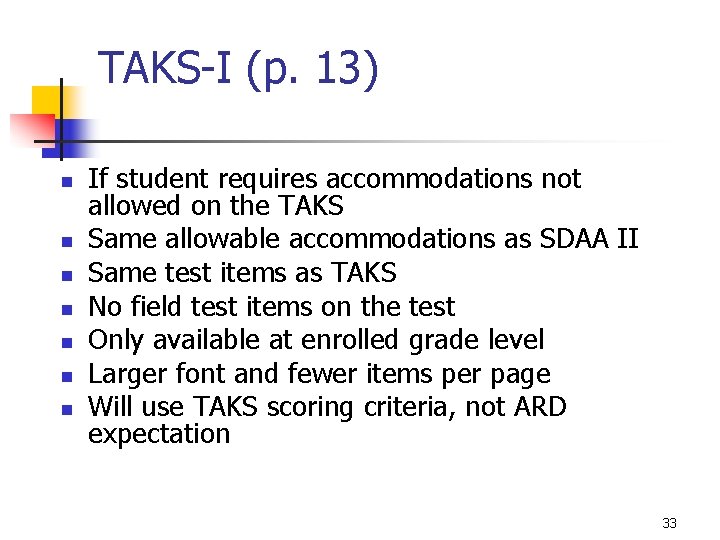
TAKS-I (p. 13) n n n n If student requires accommodations not allowed on the TAKS Same allowable accommodations as SDAA II Same test items as TAKS No field test items on the test Only available at enrolled grade level Larger font and fewer items per page Will use TAKS scoring criteria, not ARD expectation 33
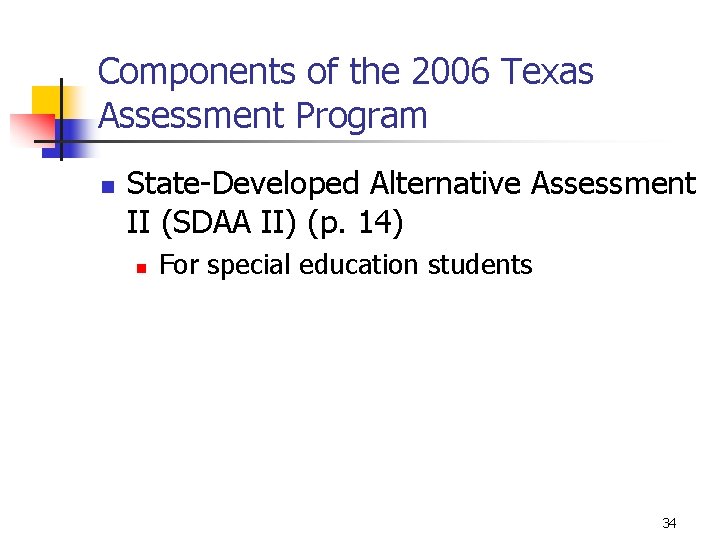
Components of the 2006 Texas Assessment Program n State-Developed Alternative Assessment II (SDAA II) (p. 14) n For special education students 34
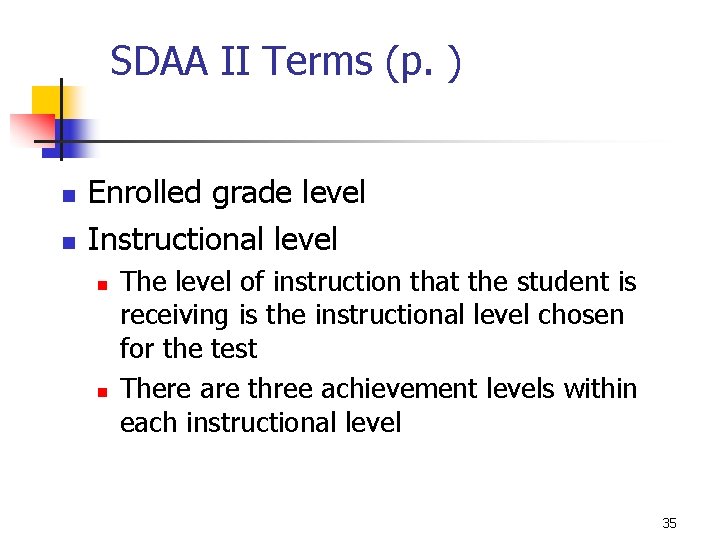
SDAA II Terms (p. ) n n Enrolled grade level Instructional level n n The level of instruction that the student is receiving is the instructional level chosen for the test There are three achievement levels within each instructional level 35
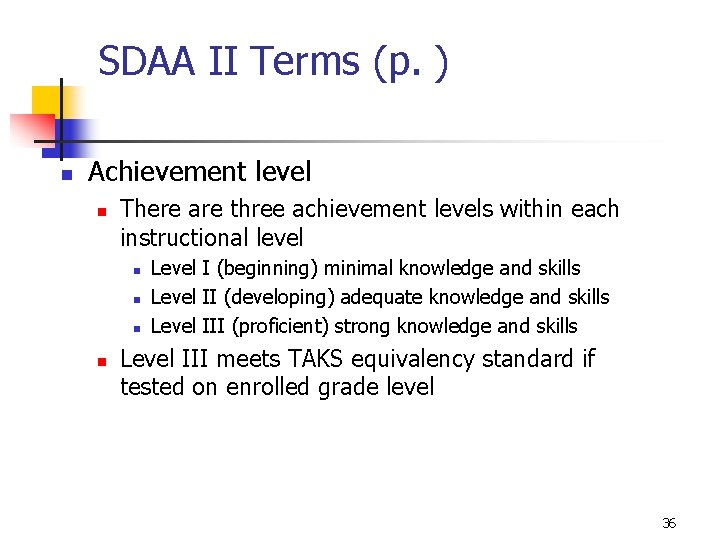
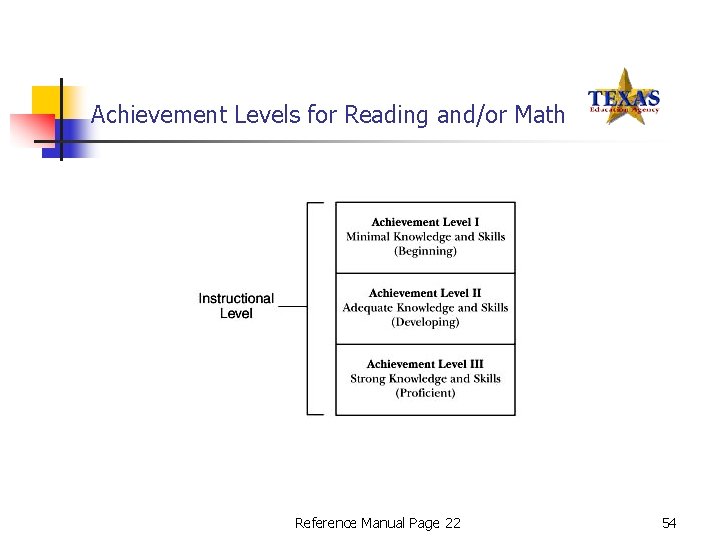
SDAA II Terms (p. ) n Achievement level n There are three achievement levels within each instructional level n n Level I (beginning) minimal knowledge and skills Level II (developing) adequate knowledge and skills Level III (proficient) strong knowledge and skills Level III meets TAKS equivalency standard if tested on enrolled grade level 36
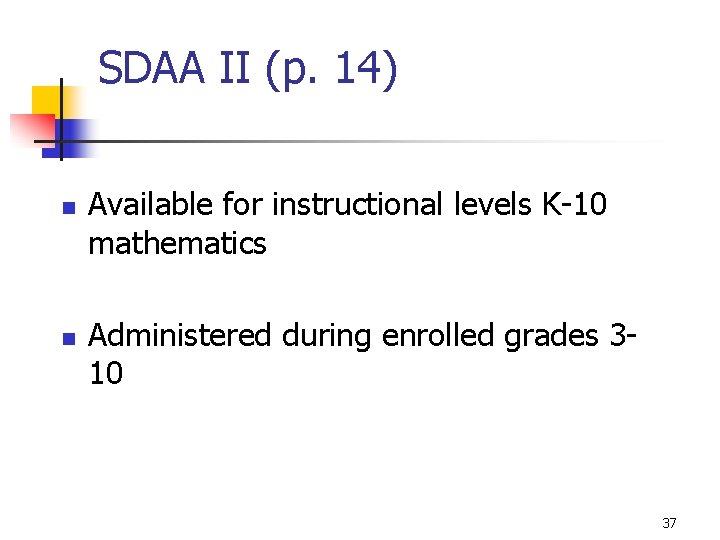
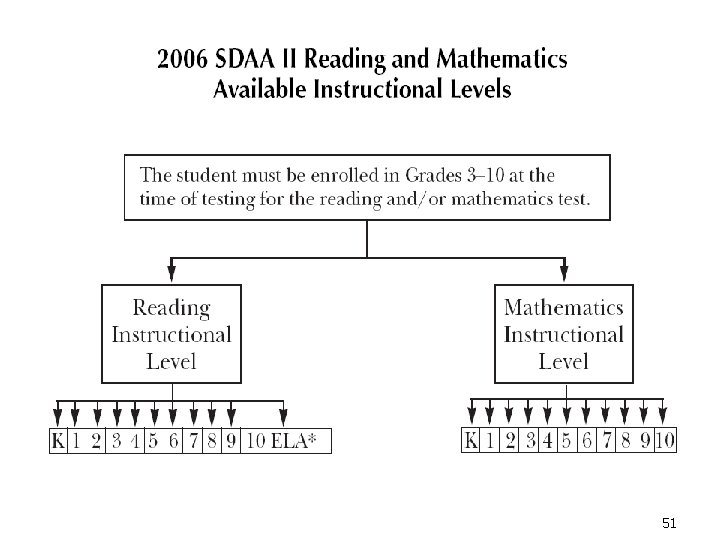
SDAA II (p. 14) n n Available for instructional levels K-10 mathematics Administered during enrolled grades 310 37
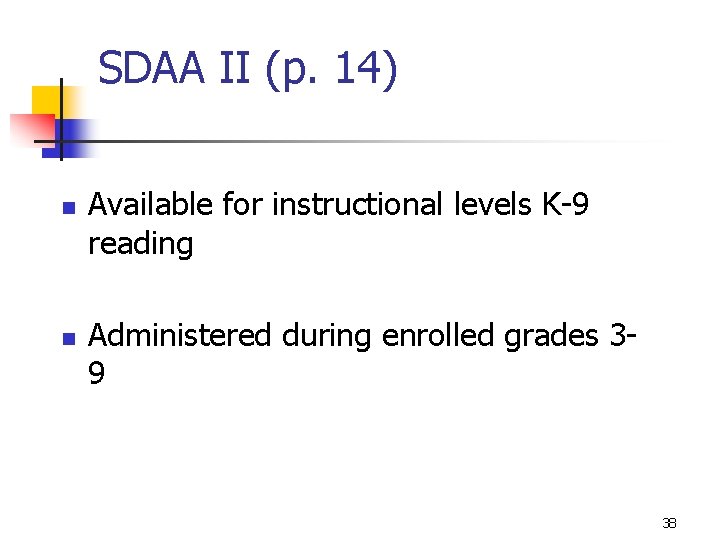
SDAA II (p. 14) n n Available for instructional levels K-9 reading Administered during enrolled grades 39 38
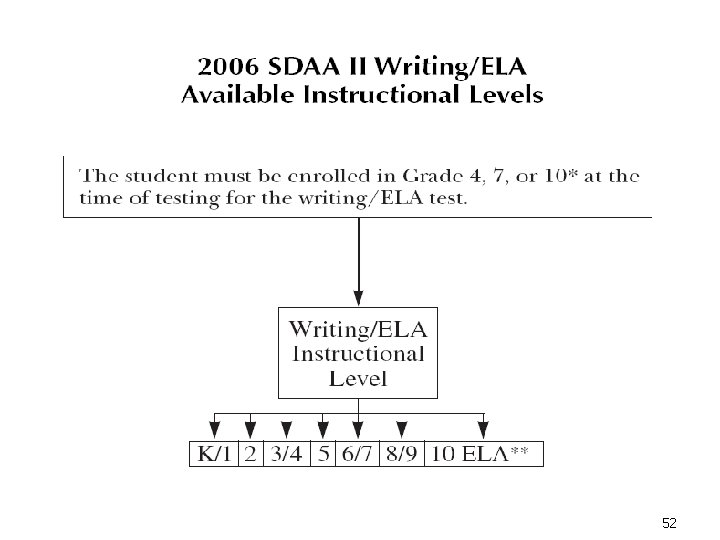
SDAA II (p. 14) n n Available for instructional levels K-9 writing Administered during enrolled grades 4 and 7 writing 39
SDAA II (p. 14) n n Available for instructional level 10 ELA Administered during enrolled grade 10 ELA 40
Components of the 2006 Texas Assessment Program n Locally Determined Alternate Assessment (LDAA) (p. 14) n The ARD Committee should choose an assessment that most closely aligns to the instruction the student is receiving 41
Components of the 2006 Texas Assessment Program n Spanish TAKS (p. 13) n n Grades 3 -6 reading Grades 3 -6 math Grade 4 writing Grade 5 science 42
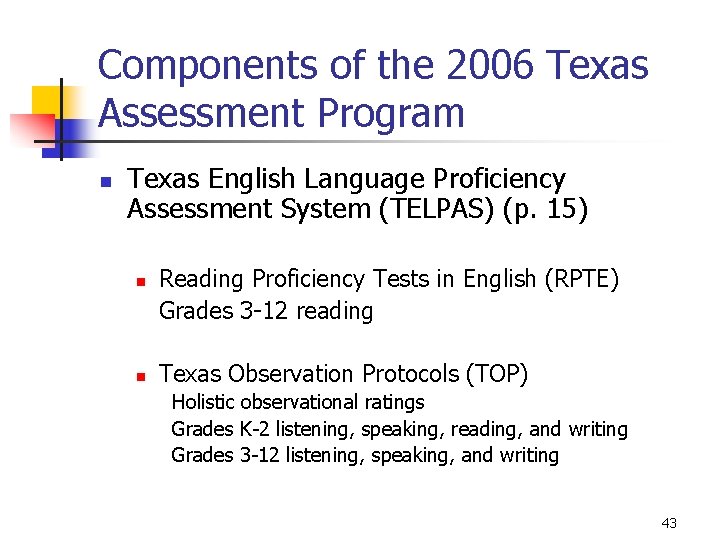
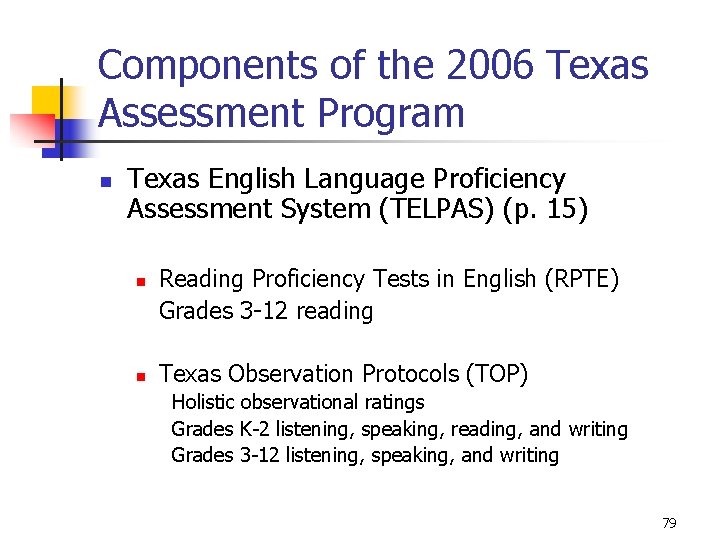
Components of the 2006 Texas Assessment Program n Texas English Language Proficiency Assessment System (TELPAS) (p. 15) n n Reading Proficiency Tests in English (RPTE) Grades 3 -12 reading Texas Observation Protocols (TOP) Holistic observational ratings Grades K-2 listening, speaking, reading, and writing Grades 3 -12 listening, speaking, and writing 43
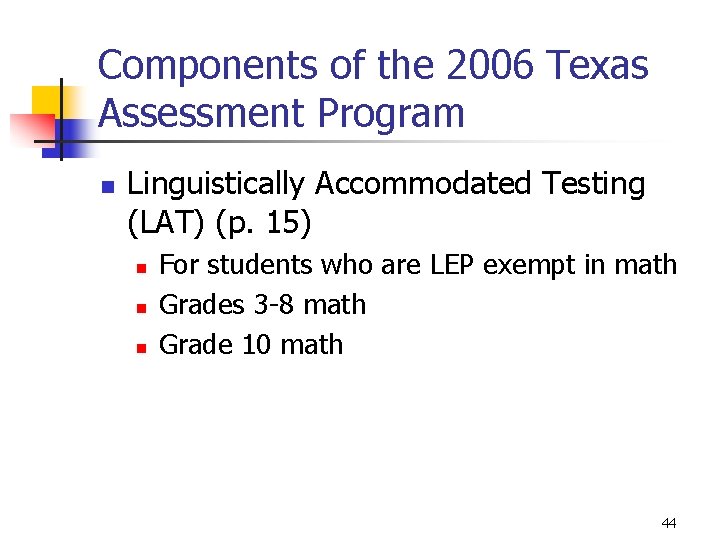
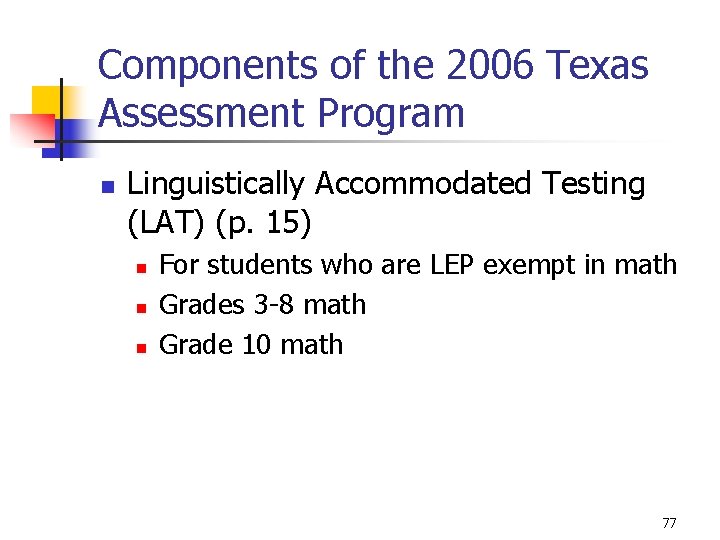
Components of the 2006 Texas Assessment Program n Linguistically Accommodated Testing (LAT) (p. 15) n n n For students who are LEP exempt in math Grades 3 -8 math Grade 10 math 44
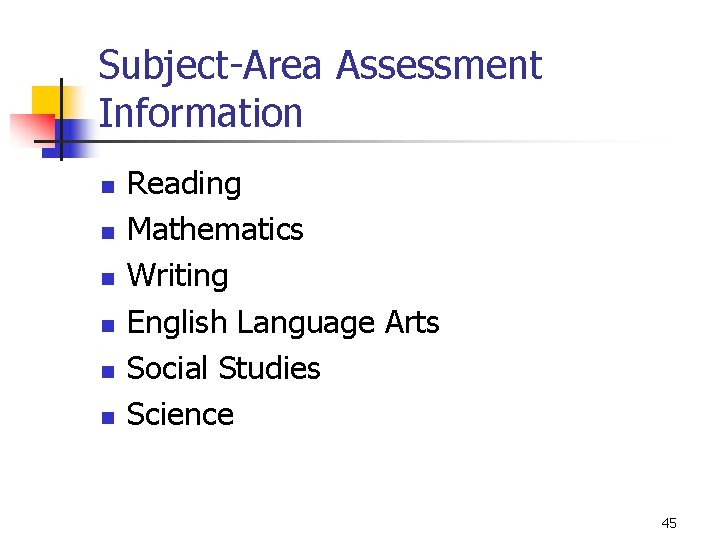
Subject-Area Assessment Information n n n Reading Mathematics Writing English Language Arts Social Studies Science 45
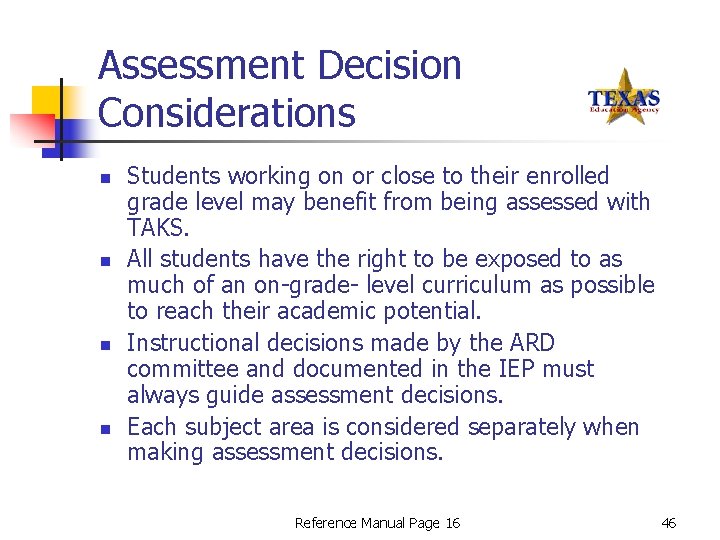
Assessment Decision Considerations n n Students working on or close to their enrolled grade level may benefit from being assessed with TAKS. All students have the right to be exposed to as much of an on-grade- level curriculum as possible to reach their academic potential. Instructional decisions made by the ARD committee and documented in the IEP must always guide assessment decisions. Each subject area is considered separately when making assessment decisions. Reference Manual Page 16 46
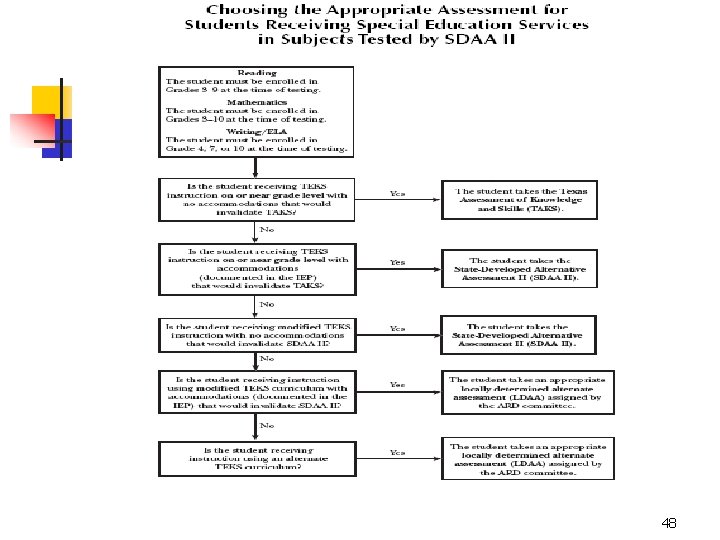
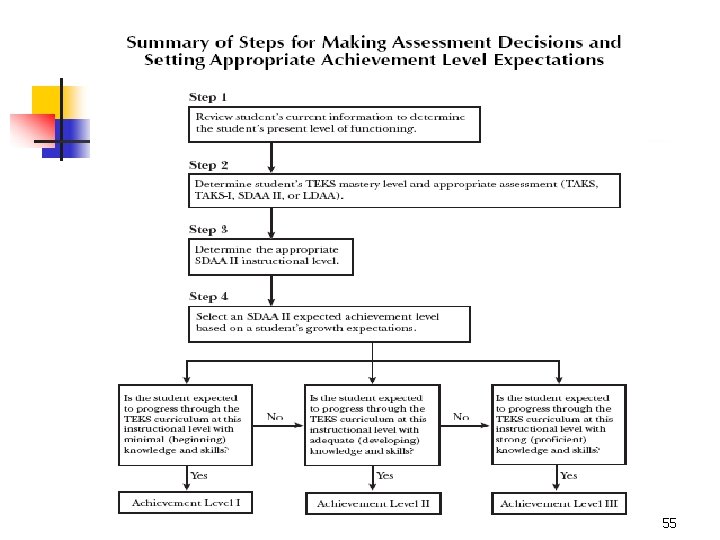
Setting Appropriate SDAA II Achievement Expectations Step 1: Review the student’s current information to determine the student’s present level of functioning (IEP, work samples, informal and formal assessments, CSR). Step 2: Determine student’s TEKS mastery level and appropriate assessment (TAKS, TAKS-I, SDAA II, or LDAA). Stop here if TAKS, TAKS-I, or LDAA is to be given. Reference Manual Pages 22 -24 47
n Insert Chart from page 22 of manual. 48
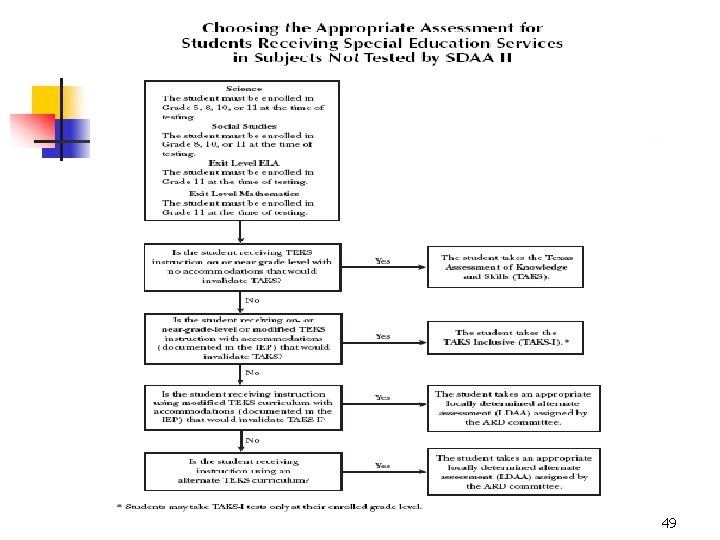
n Insert Chart from page 23 49
Setting Appropriate SDAA II Achievement Expectations n Step 3: Determine the appropriate SDAA II instructional level. 50
n Insert Chart from page 25 51
n Chart from Manual Page 26 52
Setting Appropriate SDAA II Achievement Expectations n Step 4: Select an SDAA II expected achievement level based on the student’s growth expectations. 53
Achievement Levels for Reading and/or Math Reference Manual Page 22 54
n Insert chart from page 31 of manual 55
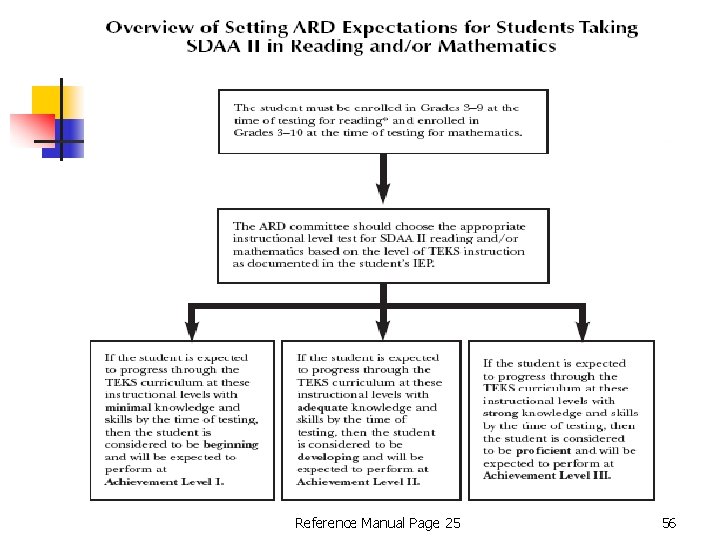
Reference Manual Page 25 56
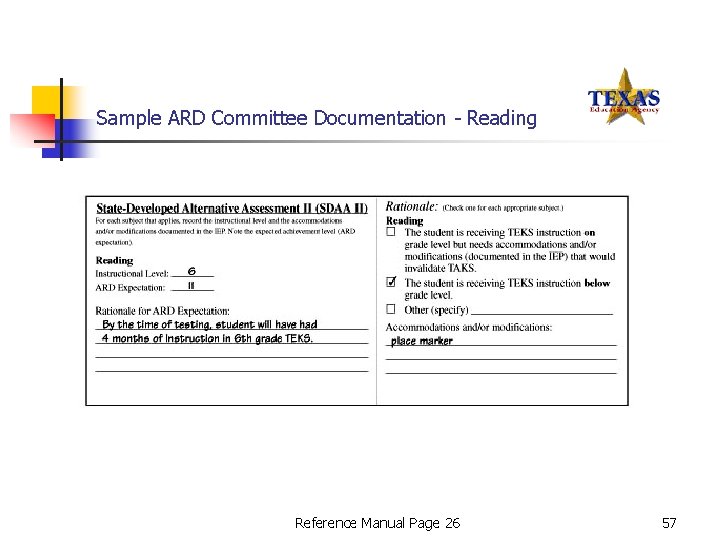
Sample ARD Committee Documentation - Reading Reference Manual Page 26 57
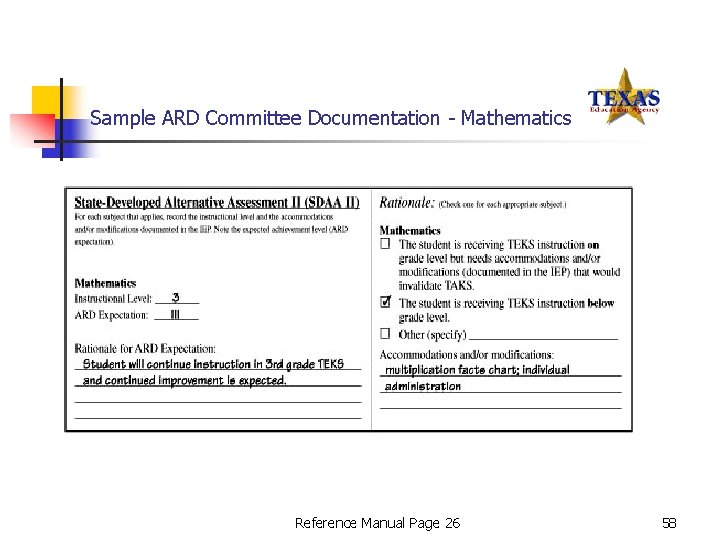
Sample ARD Committee Documentation - Mathematics Reference Manual Page 26 58
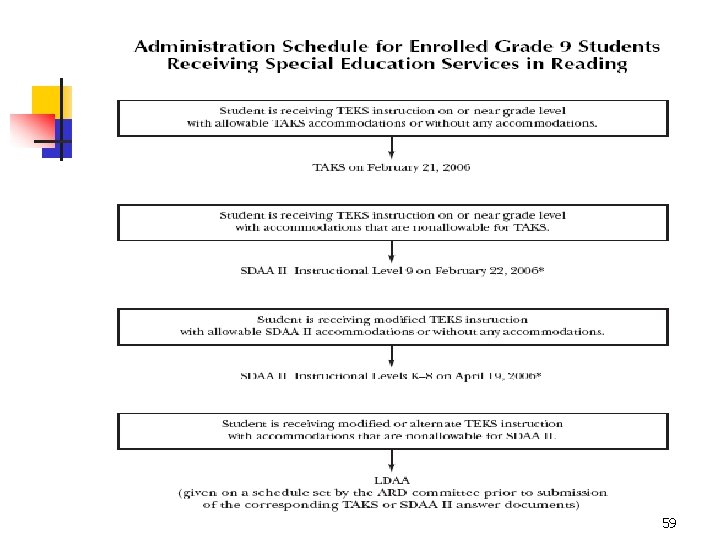
59
Writing/ELA Achievement Levels 60
SDAA II Writing Achievement Level Descriptions n n SDAA II Writing Achievement Level Descriptions are provided to assist ARD committees in determining an achievement level which best represents a student’s likely performance on the SDAA II writing test. This section describes typical student performance at each writing instructional level cluster and achievement level. Reference Manual Pages 37 -41 61
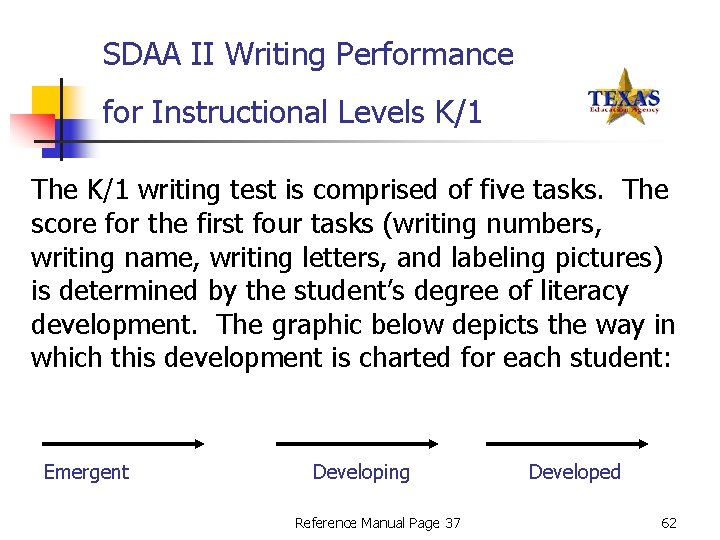
SDAA II Writing Performance for Instructional Levels K/1 The K/1 writing test is comprised of five tasks. The score for the first four tasks (writing numbers, writing name, writing letters, and labeling pictures) is determined by the student’s degree of literacy development. The graphic below depicts the way in which this development is charted for each student: Emergent Developing Reference Manual Page 37 Developed 62
SDAA II Writing Performance for Instructional Levels K/1 The fifth task (responding to a picture prompt) is based on the language level the student is able to use to write his/her response. Development of language is divided into six levels for this task with 1 as the least developed level and 6 as the highest. The student’s achievement level (combined performance on all five tasks) should represent his/her overall stage of literacy development in the fundamentals of writing at the time of assessment. Reference Manual Pages 37 63
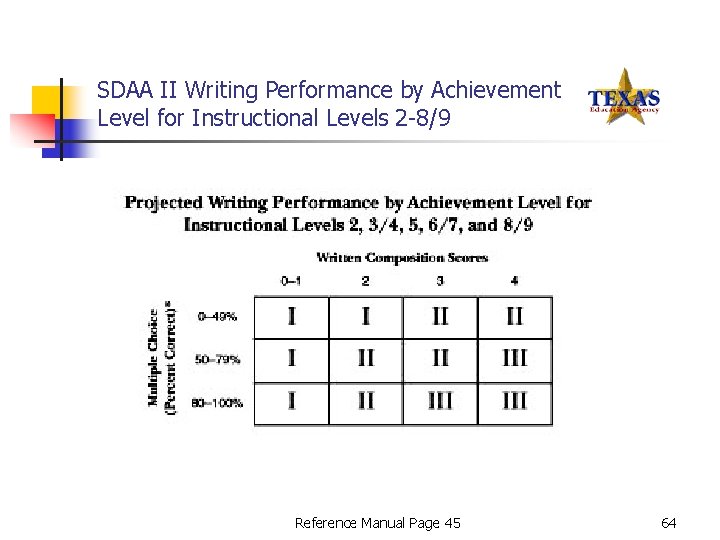
SDAA II Writing Performance by Achievement Level for Instructional Levels 2 -8/9 Reference Manual Page 45 64
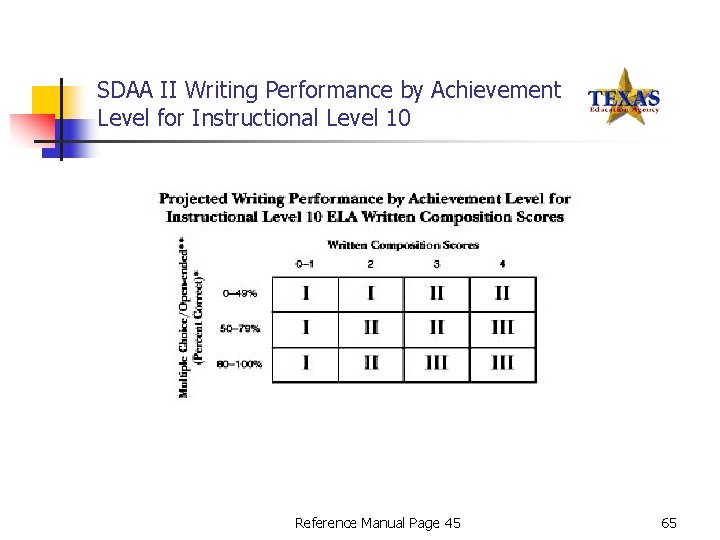
SDAA II Writing Performance by Achievement Level for Instructional Level 10 Reference Manual Page 45 65
Level 9 Reading/Level 10 ELA Triplet n n n Reading selections have multiple-choice and open-ended items Thematically linked reading selections 1. 2. 3. Published literary selection Published informational selection One page viewing and representing piece 66
Level 10 ELA n n Multiple-choice revising and editing items Grade 10 writing prompt is thematically linked to the reading triplet 67
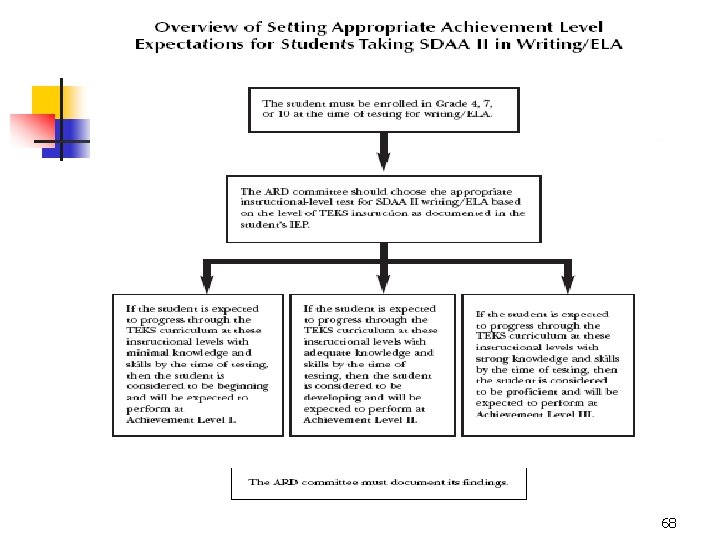
n Insert chart from page 49 of manual. 68
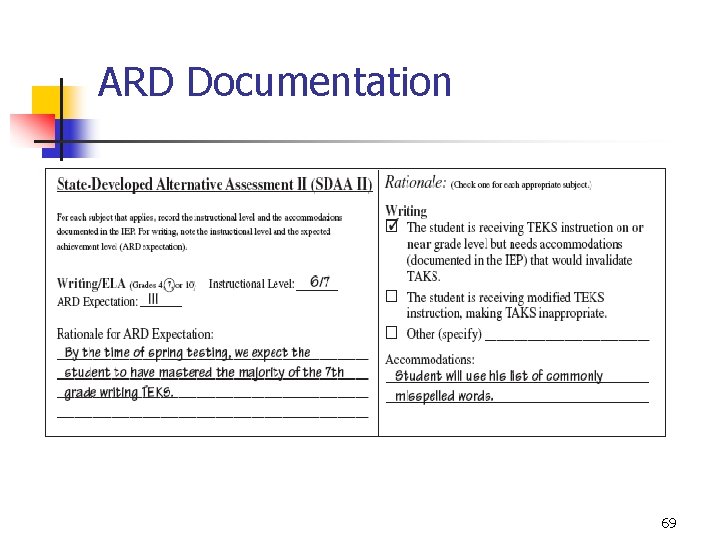
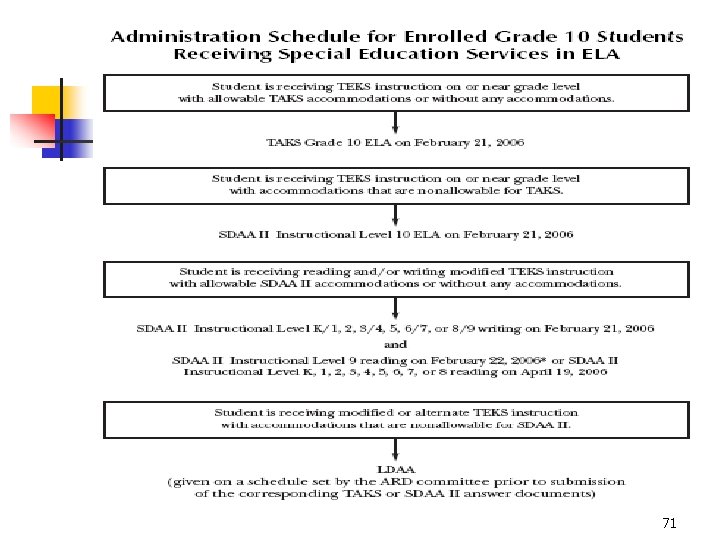
ARD Documentation n Insert chart from page 50 69
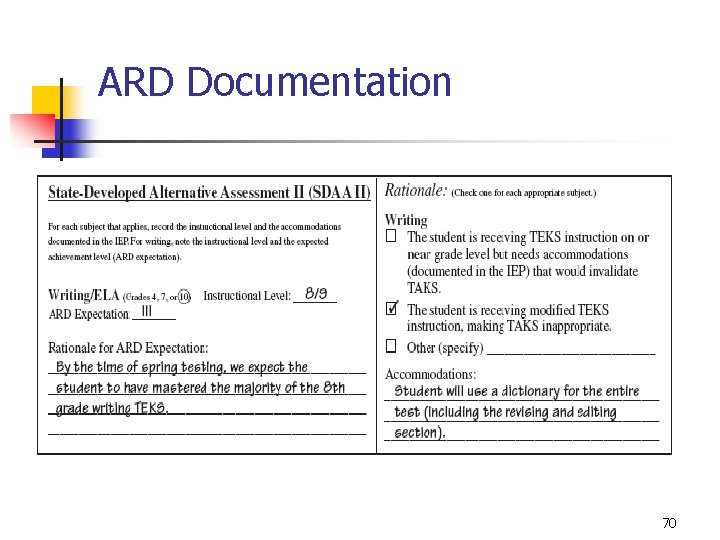
ARD Documentation n Insert chart from page 50 70
71
LEP Students Who Receive Special Education Services 72
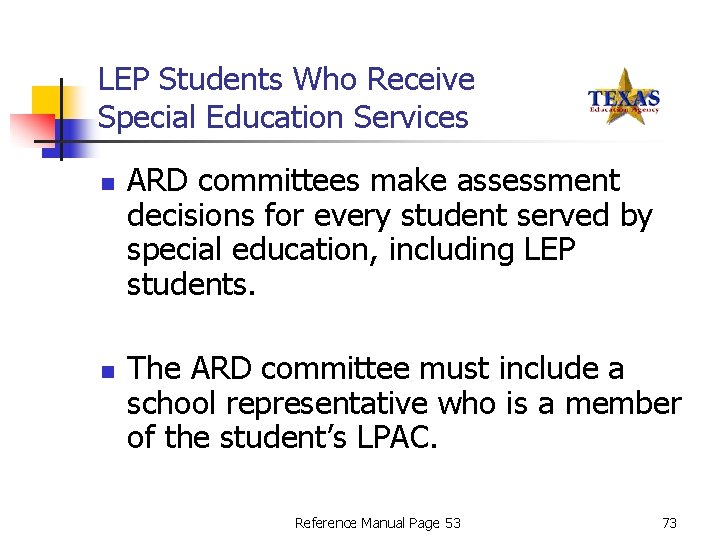
LEP Students Who Receive Special Education Services n n ARD committees make assessment decisions for every student served by special education, including LEP students. The ARD committee must include a school representative who is a member of the student’s LPAC. Reference Manual Page 53 73
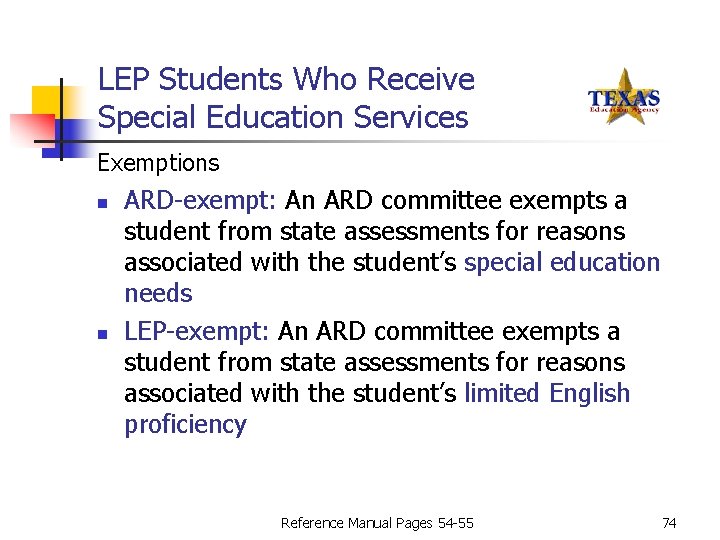
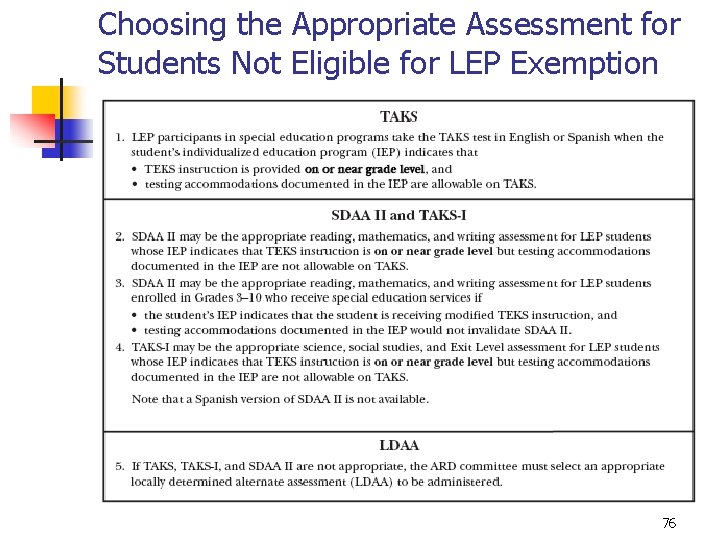
LEP Students Who Receive Special Education Services Exemptions n n ARD-exempt: An ARD committee exempts a student from state assessments for reasons associated with the student’s special education needs LEP-exempt: An ARD committee exempts a student from state assessments for reasons associated with the student’s limited English proficiency Reference Manual Pages 54 -55 74
More LEP Information n n LEP exemptions have certain eligibility requirements. (Refer to LPAC Manual for more information. ) Frequently Asked Questions concerning LEP students are located on pages 9899 of the ARD Manual. 75
Choosing the Appropriate Assessment for Students Not Eligible for LEP Exemption 76
Components of the 2006 Texas Assessment Program n Linguistically Accommodated Testing (LAT) (p. 15) n n n For students who are LEP exempt in math Grades 3 -8 math Grade 10 math 77
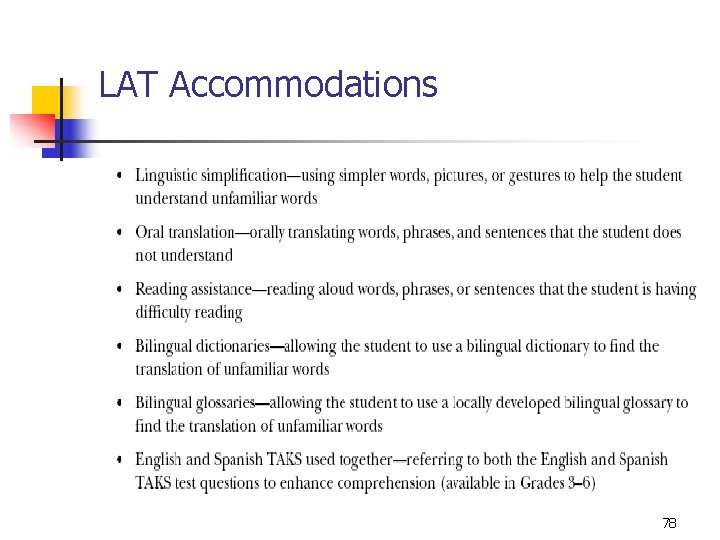
LAT Accommodations 78
Components of the 2006 Texas Assessment Program n Texas English Language Proficiency Assessment System (TELPAS) (p. 15) n n Reading Proficiency Tests in English (RPTE) Grades 3 -12 reading Texas Observation Protocols (TOP) Holistic observational ratings Grades K-2 listening, speaking, reading, and writing Grades 3 -12 listening, speaking, and writing 79
Testing Accommodations 80
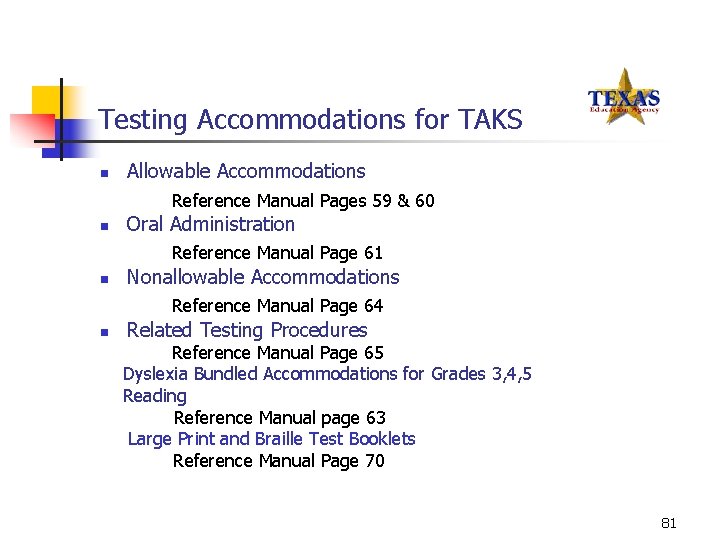
Testing Accommodations for TAKS n Allowable Accommodations Reference Manual Pages 59 & 60 n Oral Administration Reference Manual Page 61 n Nonallowable Accommodations Reference Manual Page 64 n Related Testing Procedures Reference Manual Page 65 Dyslexia Bundled Accommodations for Grades 3, 4, 5 Reading Reference Manual page 63 Large Print and Braille Test Booklets Reference Manual Page 70 81
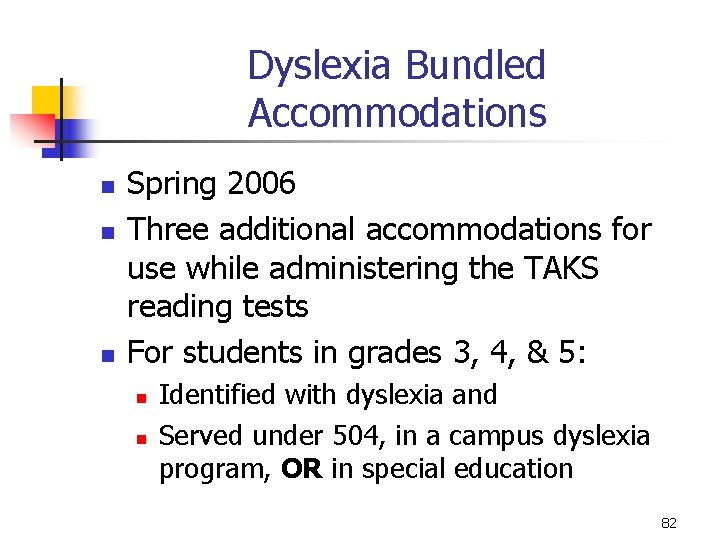
Dyslexia Bundled Accommodations n n n Spring 2006 Three additional accommodations for use while administering the TAKS reading tests For students in grades 3, 4, & 5: n n Identified with dyslexia and Served under 504, in a campus dyslexia program, OR in special education 82
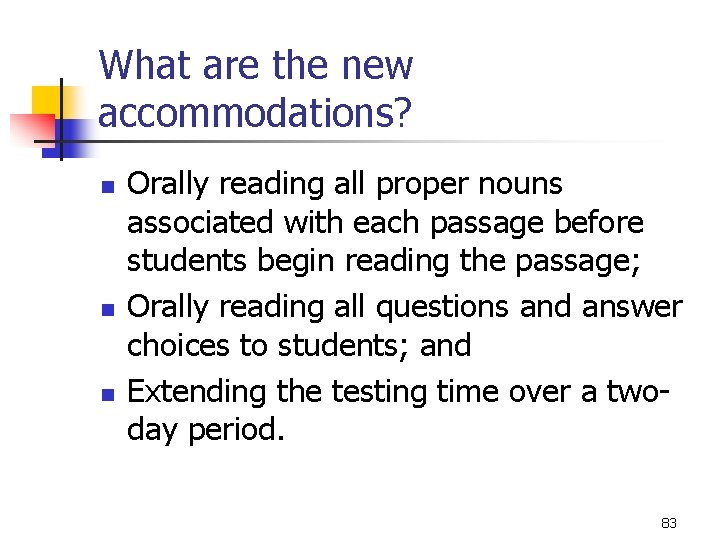
What are the new accommodations? n n n Orally reading all proper nouns associated with each passage before students begin reading the passage; Orally reading all questions and answer choices to students; and Extending the testing time over a twoday period. 83
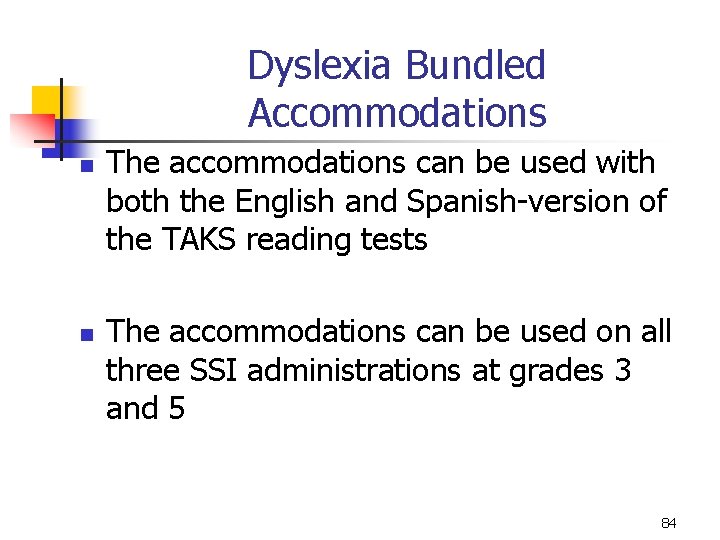
Dyslexia Bundled Accommodations n n The accommodations can be used with both the English and Spanish-version of the TAKS reading tests The accommodations can be used on all three SSI administrations at grades 3 and 5 84
Reading proper nouns n n Proper nouns are often idiosyncratic Helps reduce the decoding difficulties specifically associated with dyslexia Proper nouns do not contribute to understanding the meaning of the passage Reading proper nouns reduces the reliance on decoding skills without invalidating the test 85
Reading comprehension questions and answer choices n n The TAKS reading test is a comprehension assessment that determines how well the student understands the passage he/she reads The determination of comprehension is not dependent on the student’s ability to read the comprehension questions 86
Reading comprehension questions and answer choices n n No “read aloud” accommodation can be provided while the student actually reads the TAKS passage; however, The comprehension questions and answer choices can be read to the student, thus reducing demands on word decoding skills in students with dyslexia 87
Dyslexia Study: Recommendations n Students in special education who have word reading difficulties should benefit from this accommodation package to the extent that students are similar to those evaluated in the study. 88
Why are the accommodations referred to as “bundled accommodations? ” n n n MUST use the accommodations as a “bundled package” Test administrator MUST administer the reading test using all three accommodations The accommodations CANNOT be separated 89
Testing Accommodations for TAKS-I and SDAA II n Allowable Accommodations Reference Manual Page 66 n Oral Administration Reference Manual Page 67 n Non-allowable Accommodations Reference Manual Page 66 n n Related Testing Procedures Reference Manual Page 68 & 69 Large Print and Braille Test booklets Reference Manual page 70 90
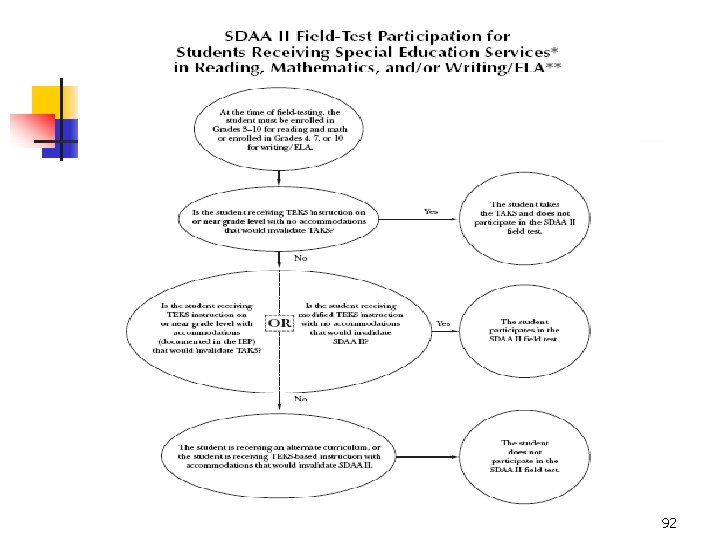
SDAA II Field Tests Considerations: n n Although the current IEP should be referenced, the ARD committee does not need to convene to determine field-test placement, accommodations, and/or modifications Districts will NOT receive results from field tests Reference Manual Page 71 91
n Insert Chart from page 73 92
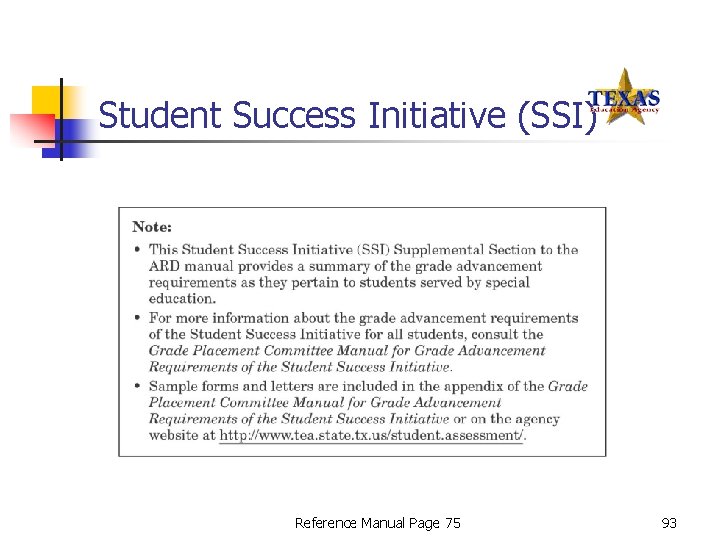
Student Success Initiative (SSI) Reference Manual Page 75 93
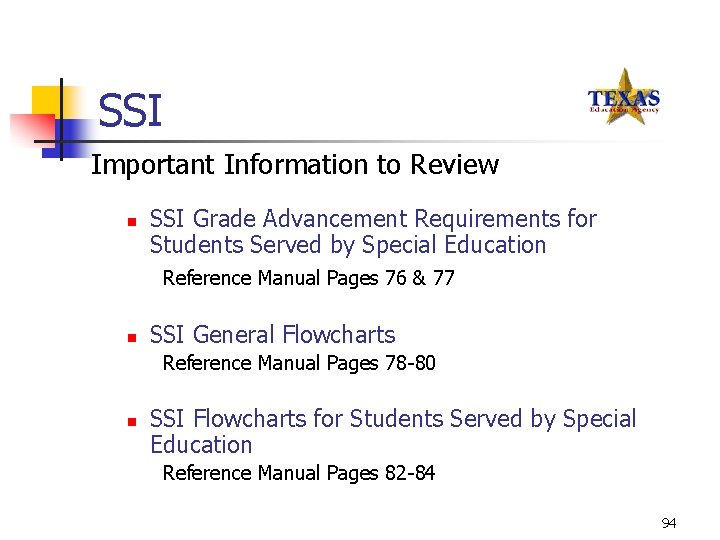
SSI Important Information to Review n SSI Grade Advancement Requirements for Students Served by Special Education Reference Manual Pages 76 & 77 n SSI General Flowcharts Reference Manual Pages 78 -80 n SSI Flowcharts for Students Served by Special Education Reference Manual Pages 82 -84 94
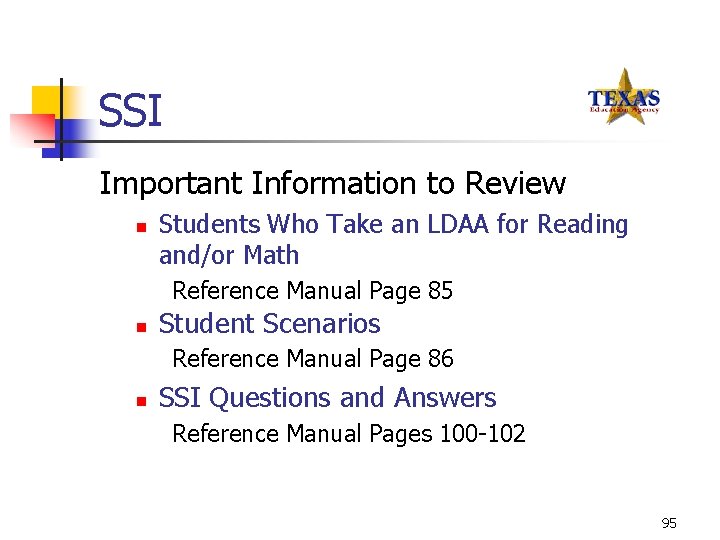
SSI Important Information to Review n Students Who Take an LDAA for Reading and/or Math Reference Manual Page 85 n Student Scenarios Reference Manual Page 86 n SSI Questions and Answers Reference Manual Pages 100 -102 95
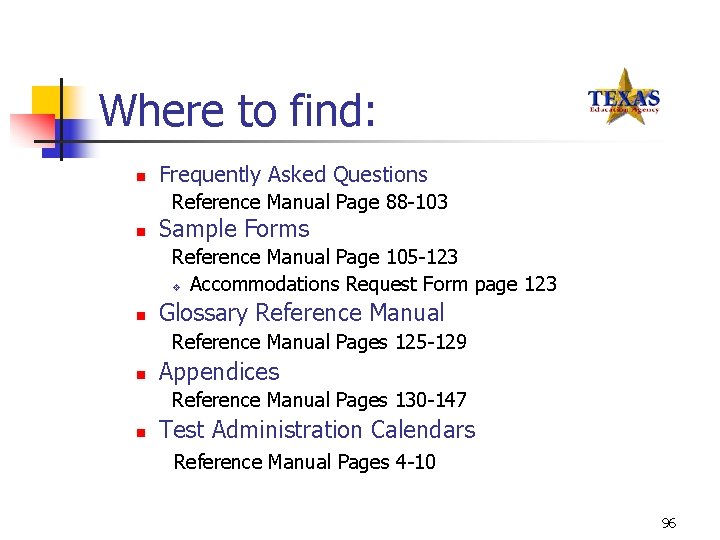
Where to find: n Frequently Asked Questions Reference Manual Page 88 -103 n Sample Forms Reference Manual Page 105 -123 v Accommodations Request Form page 123 n Glossary Reference Manual Pages 125 -129 n Appendices Reference Manual Pages 130 -147 n Test Administration Calendars Reference Manual Pages 4 -10 96
Resources § TEA Student Assessment Division www. tea. state. tx. us/student. assessment § Student Assessment Division (512) 463 -9536 97
Contact Information n Jan Barry n n Linda Dunlap n n 903 -988 -6908, slusk@esc 7. net Diana Mc. Burnett n n 903 -988 -6766, ldunlap@esc 7. net Sharon Lusk n n 903 -988 -6903, jbarry@esc 7. net 903 -988 -6909, dmcburnett@esc 7. net Robert Smith n 903 -988 -6890, rsmith@esc 7. net 98