
200 ke V Mott Scattering Chamber Progress Eric

200 ke. V Mott Scattering Chamber Progress Eric Forman October 16, 2020

Mott Scattering Chamber • Goal is to repurpose an already existing Mott polarimeter scattering chamber for the Robust Photocathode Experiment. • The first question to answer in this regard: is the scattering chamber on-hand appropriate for this purpose?

Mott Cross Section • Electrons scatter under the influence of the nuclear electric field due to the magnetic force in the electron rest frame. • The interaction of this magnetic field with the electron magnetic moment introduces a spin dependent term in the scattering cross section ( ) that produces a left/right asymmetry. Spin Independent Term From Suleiman, Riad; 5 Me. V Mott Polarimeter Progress; April 10, 2012; p 3 -7 Spin Dependent Term
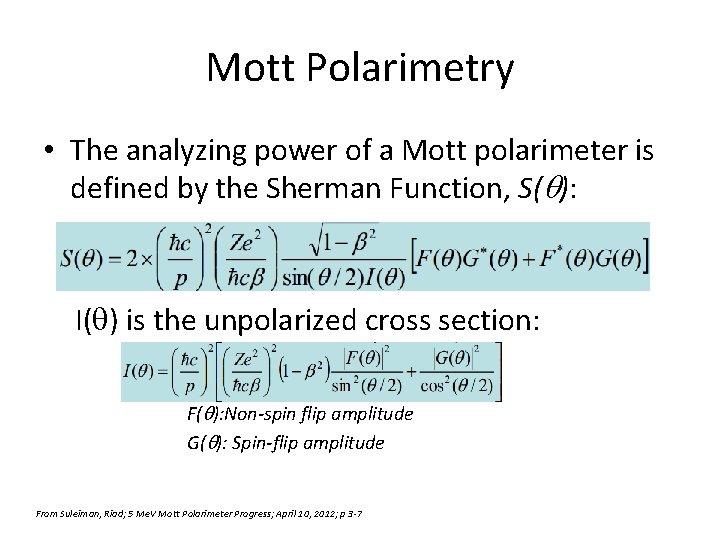
Mott Polarimetry • The analyzing power of a Mott polarimeter is defined by the Sherman Function, S( ): I( ) is the unpolarized cross section: F( ): Non-spin flip amplitude G( ): Spin-flip amplitude From Suleiman, Riad; 5 Me. V Mott Polarimeter Progress; April 10, 2012; p 3 -7

Mott Polarimetry • Sherman Function is dependent on: – Target Z (larger for higher Z) – Electron Kinetic Energy (larger for lower energy) – Scattering Angle From Suleiman, Riad; 5 Me. V Mott Polarimeter Progress; April 10, 2012; p 3 -7
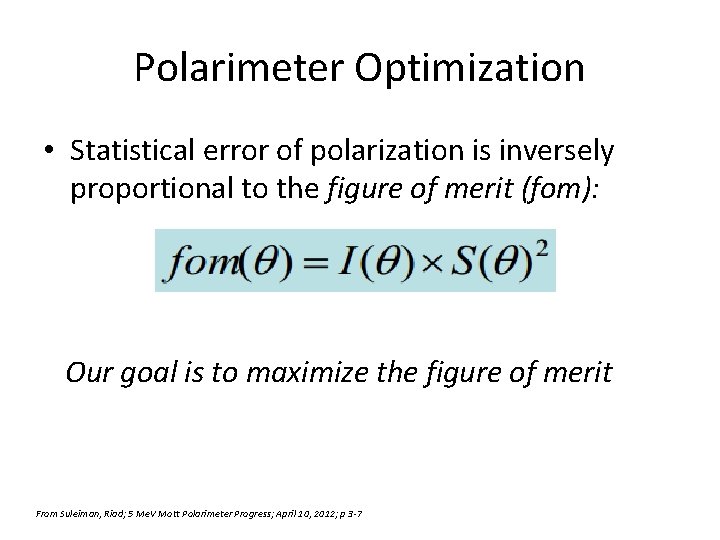
Polarimeter Optimization • Statistical error of polarization is inversely proportional to the figure of merit (fom): Our goal is to maximize the figure of merit From Suleiman, Riad; 5 Me. V Mott Polarimeter Progress; April 10, 2012; p 3 -7
Does the scattering chamber onhand have detector ports configured at scattering angles that will give us a reasonable count asymmetry?

Mott Scattering Chamber
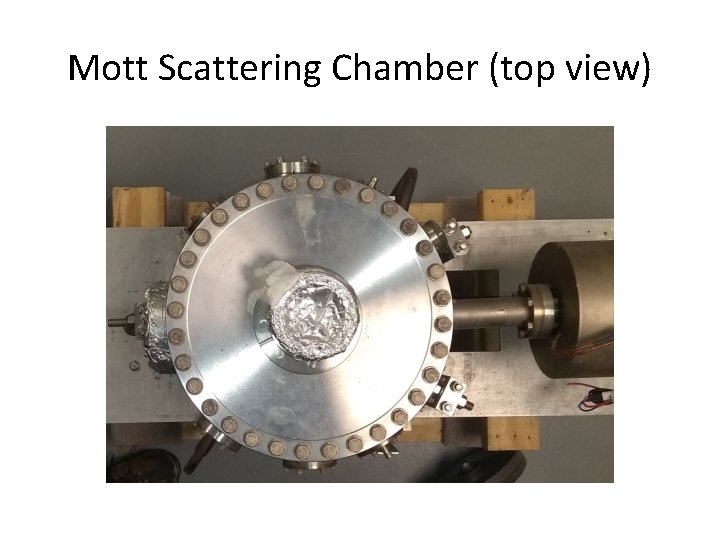
Mott Scattering Chamber (top view)
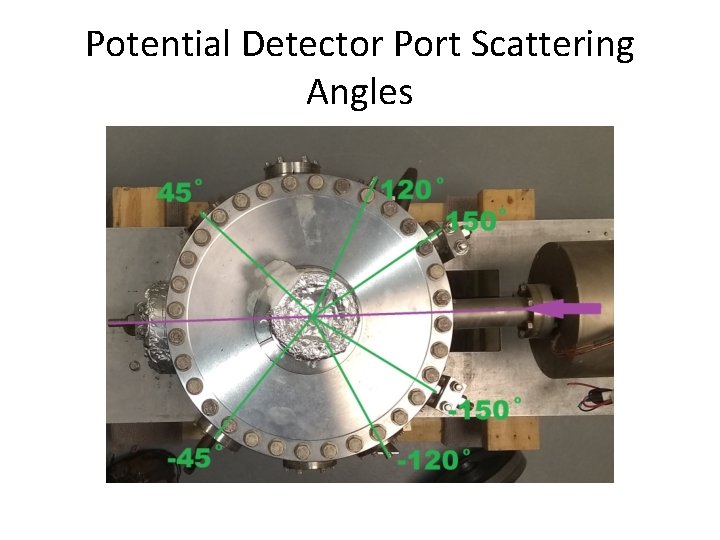
Potential Detector Port Scattering Angles
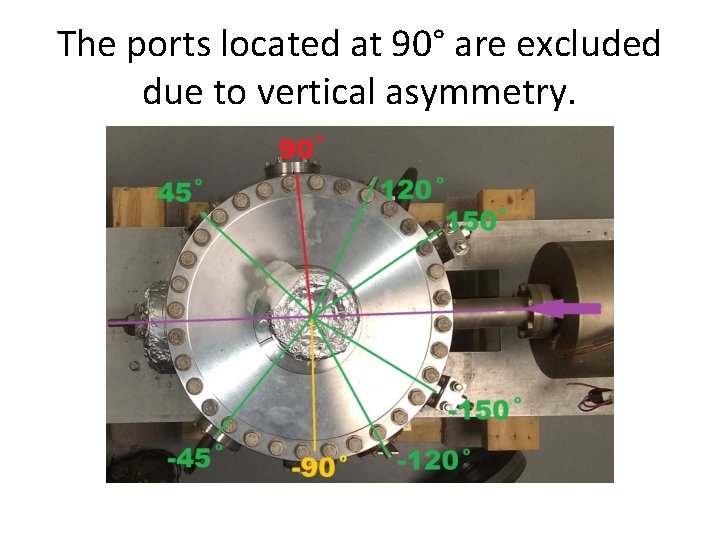
The ports located at 90° are excluded due to vertical asymmetry.
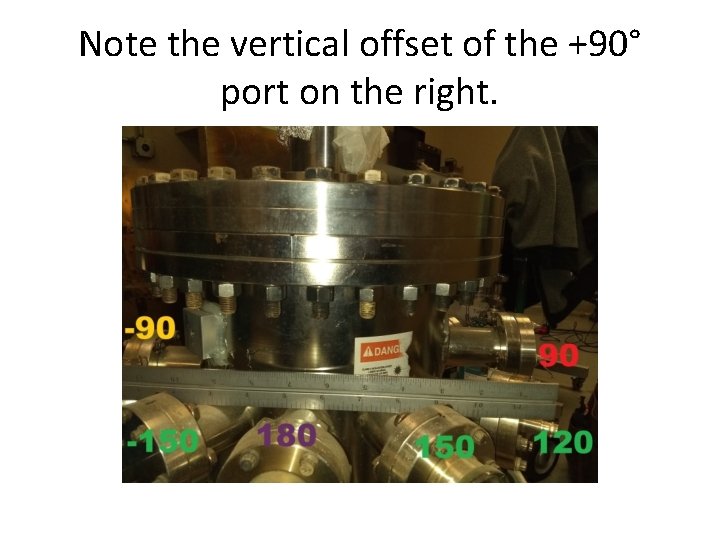
Note the vertical offset of the +90° port on the right.
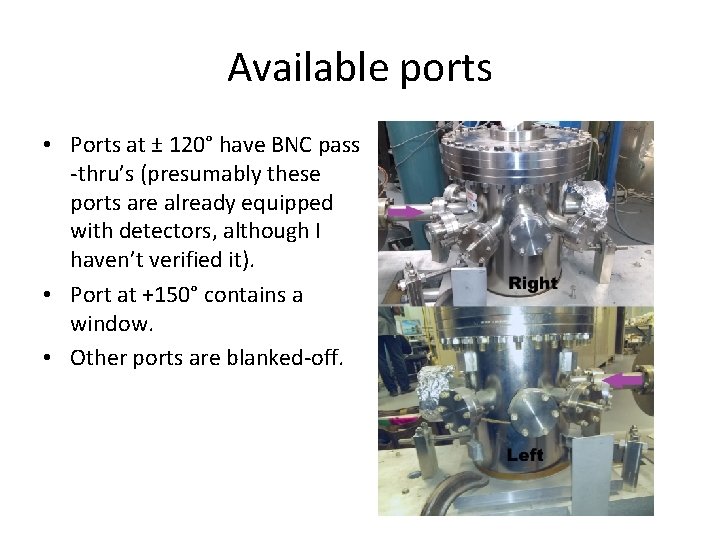
Available ports • Ports at ± 120° have BNC pass -thru’s (presumably these ports are already equipped with detectors, although I haven’t verified it). • Port at +150° contains a window. • Other ports are blanked-off.
Picking the optimum detector port • Sherman Function and cross section was calculated using code written by Riad Suleiman. • The code calculates S( ) and I( ) for scattering angles from 9. 5 to 178. 5 for a user-defined energy and target Z. • Calculations were done for 100 ke. V to 300 ke. V energies for targets of gold, silver and copper.
Picking the optimum detector port • Once we have calculated S( ) and I( ), fom( ) can be determined. • The port with the highest fom is the optimum port.
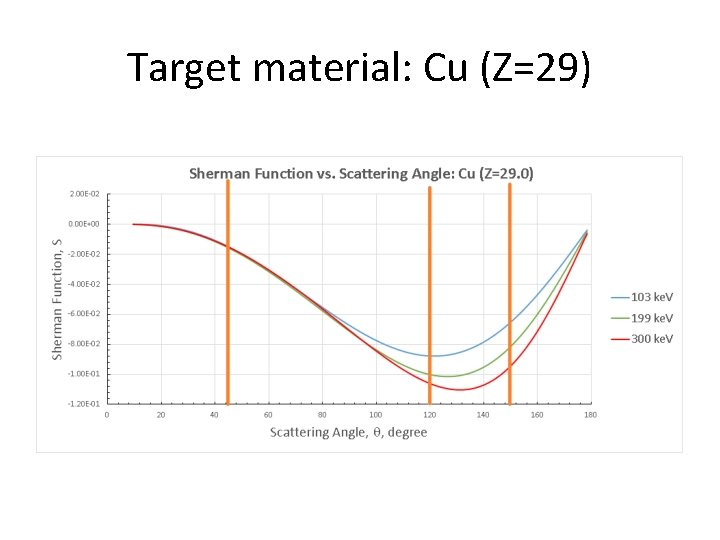
Target material: Cu (Z=29)
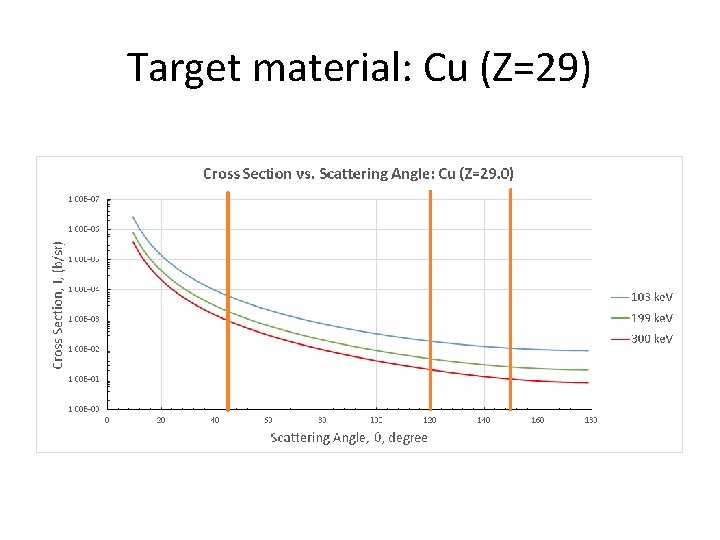
Target material: Cu (Z=29)
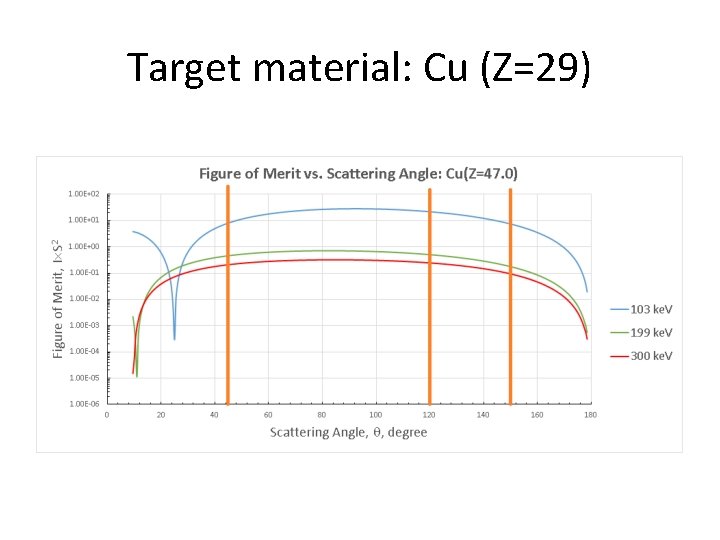
Target material: Cu (Z=29)
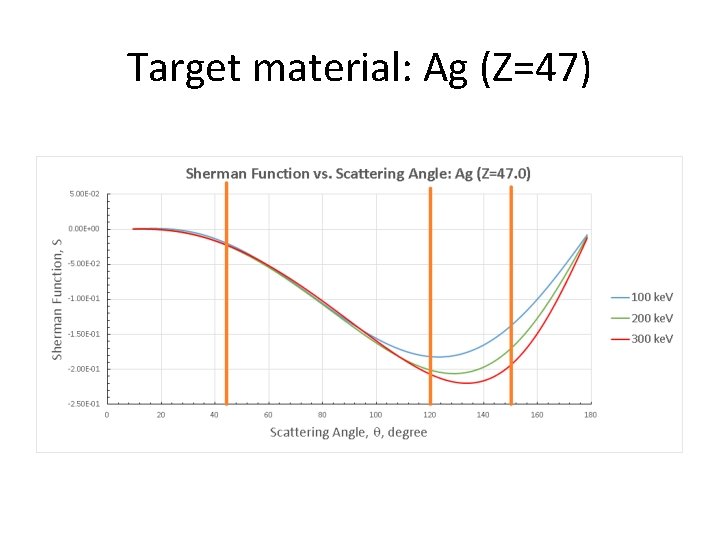
Target material: Ag (Z=47)
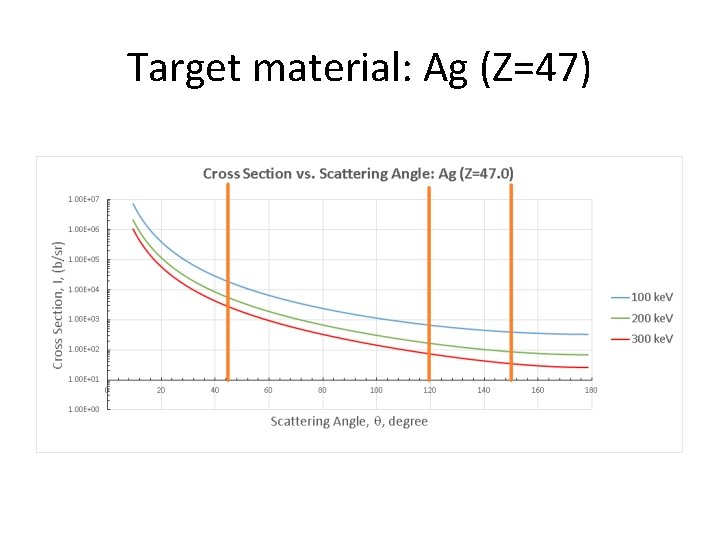
Target material: Ag (Z=47)
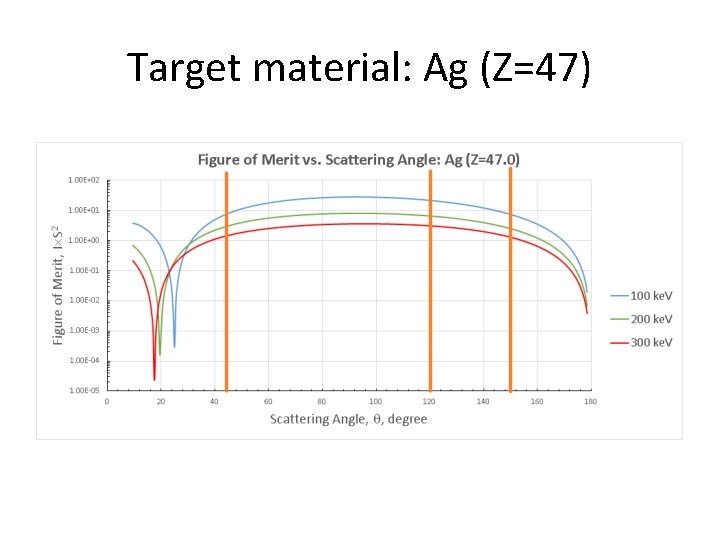
Target material: Ag (Z=47)
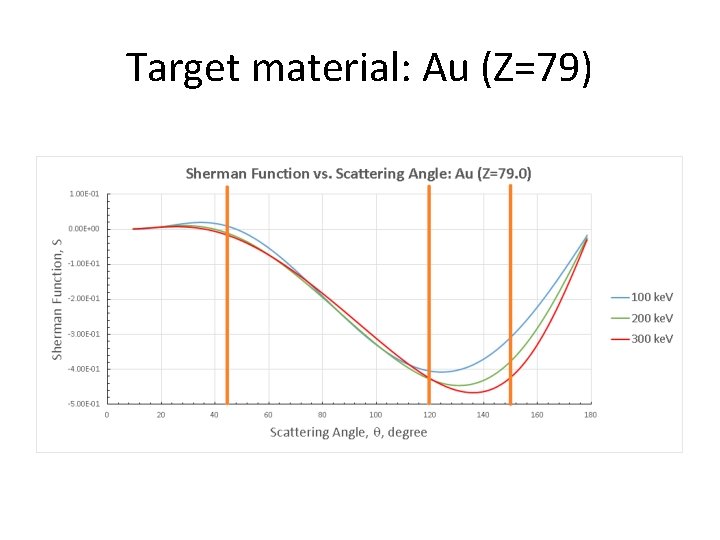
Target material: Au (Z=79)
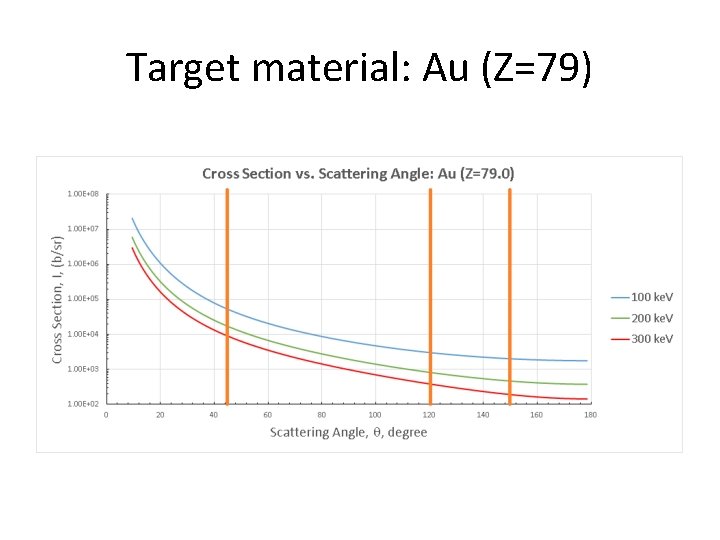
Target material: Au (Z=79)
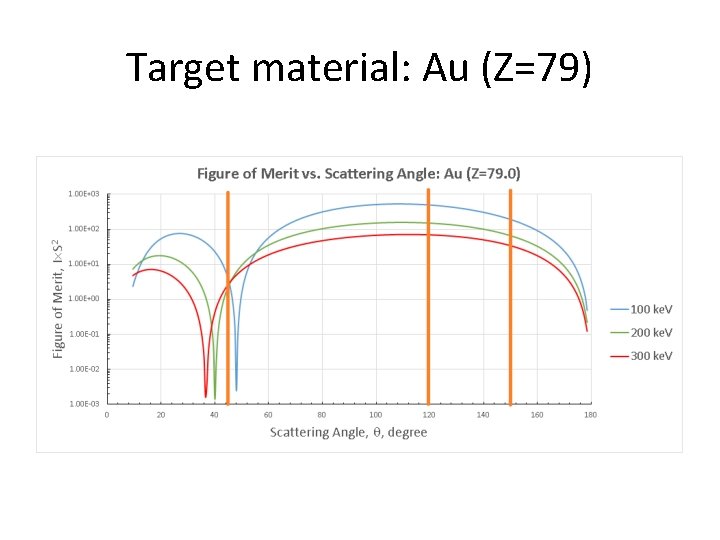
Target material: Au (Z=79)
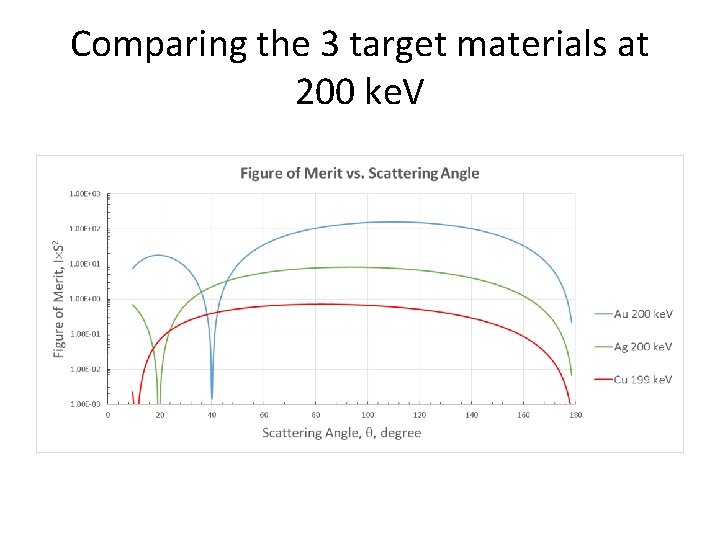
Comparing the 3 target materials at 200 ke. V
Conclusions • For all target materials, the ± 120° ports are closest to optimum at in the energy range of interest (100 -300 ke. V). • Gold (Au, Z=79) is the optimum target material of the three investigated.
Items for follow-up • Open the scattering chamber and document the collimators. • Calculate the detector rate and measurement time for a given statistical error.
• From Suleiman, Riad; 5 Me. V Mott Polarimeter Progress; April 10, 2012; p 3 -7
- Slides: 28