
20 Unemployment Previously Big Questions 1 What are

20 Unemployment
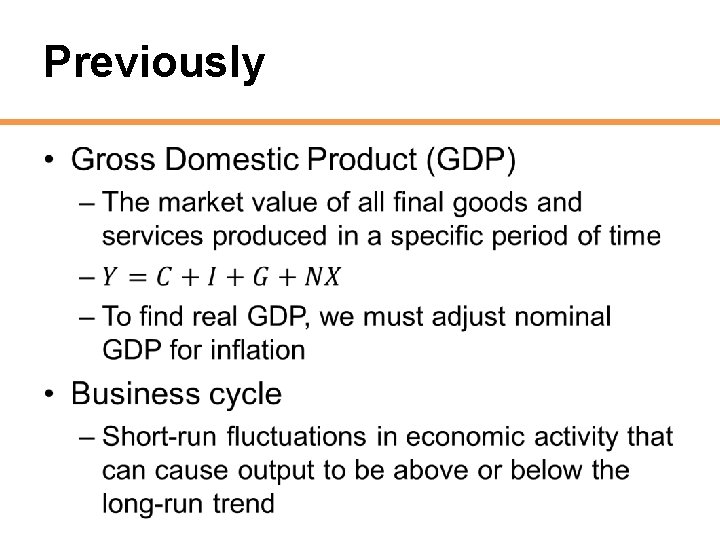
Previously •
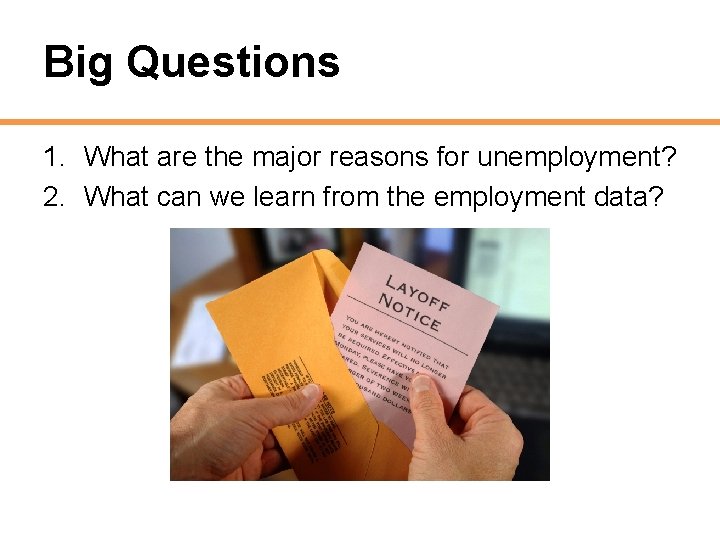
Big Questions 1. What are the major reasons for unemployment? 2. What can we learn from the employment data?
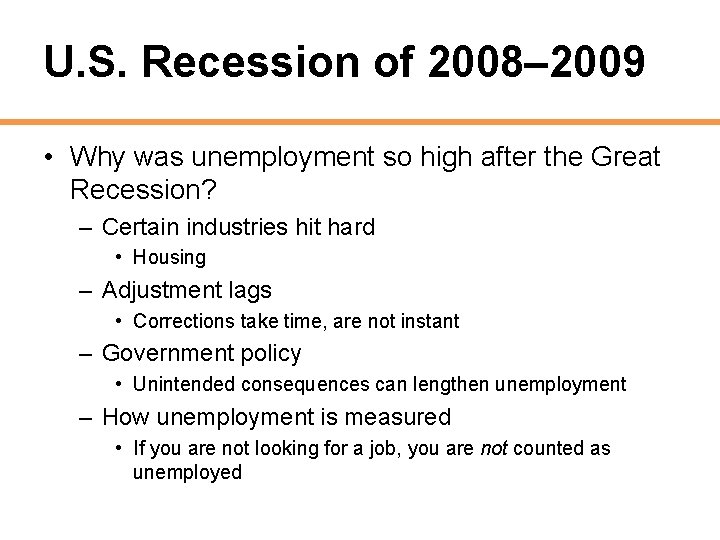
U. S. Recession of 2008– 2009 • Why was unemployment so high after the Great Recession? – Certain industries hit hard • Housing – Adjustment lags • Corrections take time, are not instant – Government policy • Unintended consequences can lengthen unemployment – How unemployment is measured • If you are not looking for a job, you are not counted as unemployed
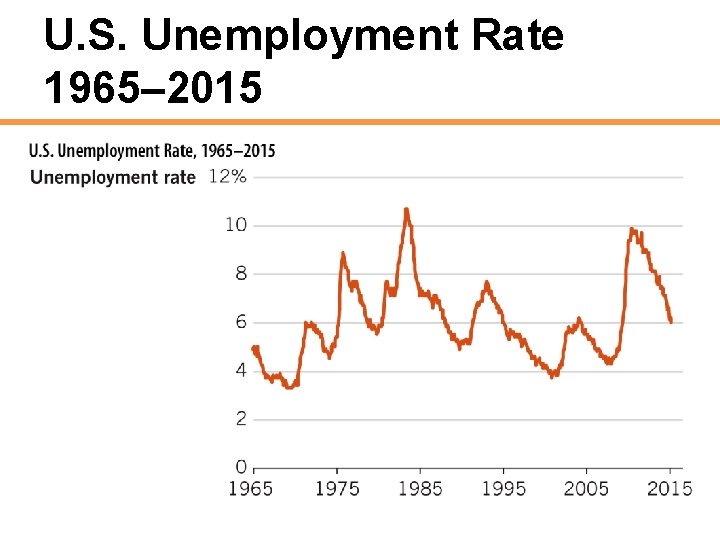
U. S. Unemployment Rate 1965– 2015
Three Types of Unemployment • Is it practical to have zero unemployment? – Generally, unemployment is undesirable. – However, as the economy evolves, jobs are created and destroyed. • Three types of unemployment – Structural – Frictional – Cyclical
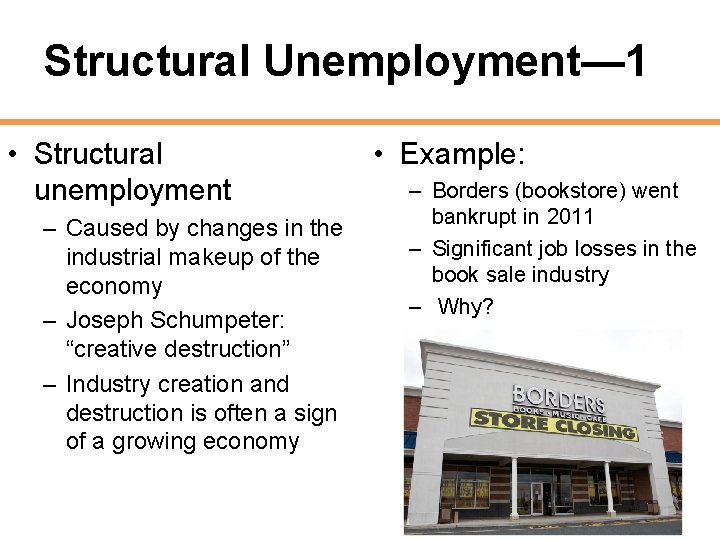
Structural Unemployment— 1 • Structural unemployment – Caused by changes in the industrial makeup of the economy – Joseph Schumpeter: “creative destruction” – Industry creation and destruction is often a sign of a growing economy • Example: – Borders (bookstore) went bankrupt in 2011 – Significant job losses in the book sale industry – Why?
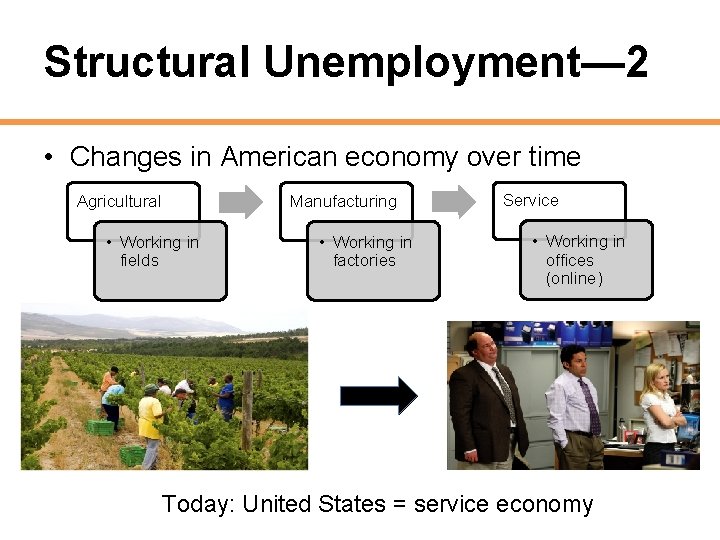
Structural Unemployment— 2 • Changes in American economy over time Agricultural Manufacturing • Working in fields • Working in factories Service • Working in offices (online) Today: United States = service economy
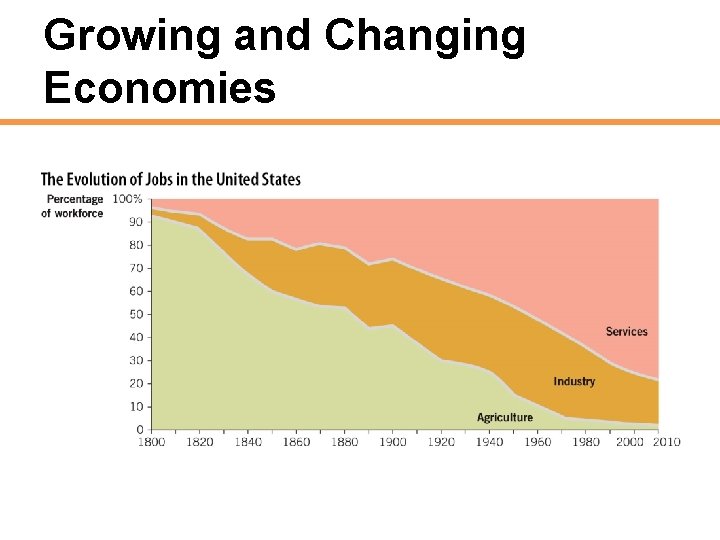
Growing and Changing Economies
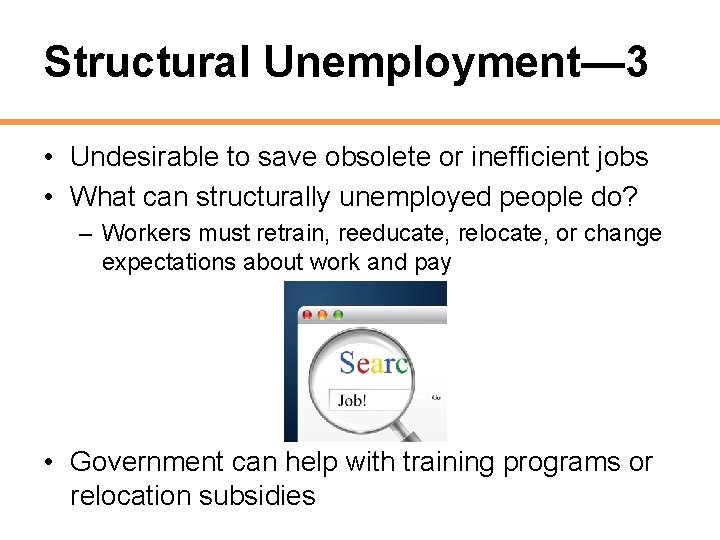
Structural Unemployment— 3 • Undesirable to save obsolete or inefficient jobs • What can structurally unemployed people do? – Workers must retrain, reeducate, relocate, or change expectations about work and pay • Government can help with training programs or relocation subsidies
Practice What You Know— 1 • Which of the following is an example of structural unemployment? A. Alfred the VCR repairman is unemployed because there are very few people who still own VCRs. B. Macy the construction worker is unemployed because no one is building houses right now. C. Lucinda the restaurant chef is unemployed because he and his wife recently moved to a new city.
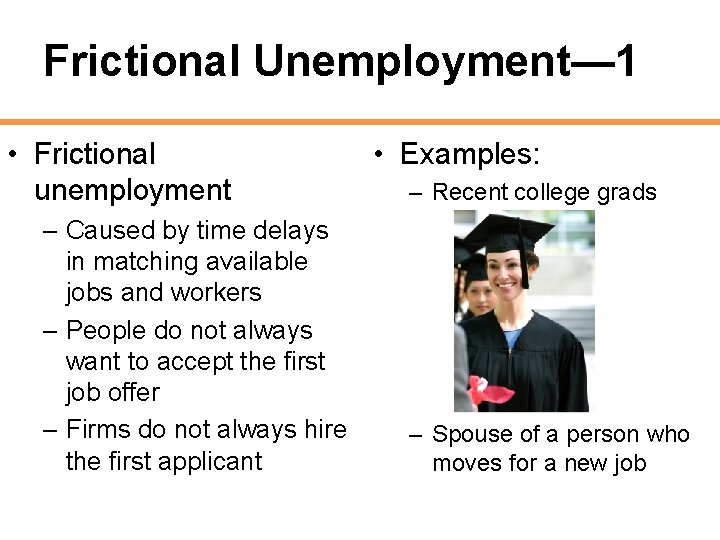
Frictional Unemployment— 1 • Frictional unemployment – Caused by time delays in matching available jobs and workers – People do not always want to accept the first job offer – Firms do not always hire the first applicant • Examples: – Recent college grads – Spouse of a person who moves for a new job
Frictional Unemployment— 2 • Length of frictional unemployment: – Internet has decreased time and costs of job searching – Also affected by government regulations that make it difficult to hire or fire • Consequences of unemployment insurance: + Provides income to workers who are laid off + Provides people time to find a new job + Prevents economic problems from spilling over to other industries ־ Reduces incentives to find another job quickly
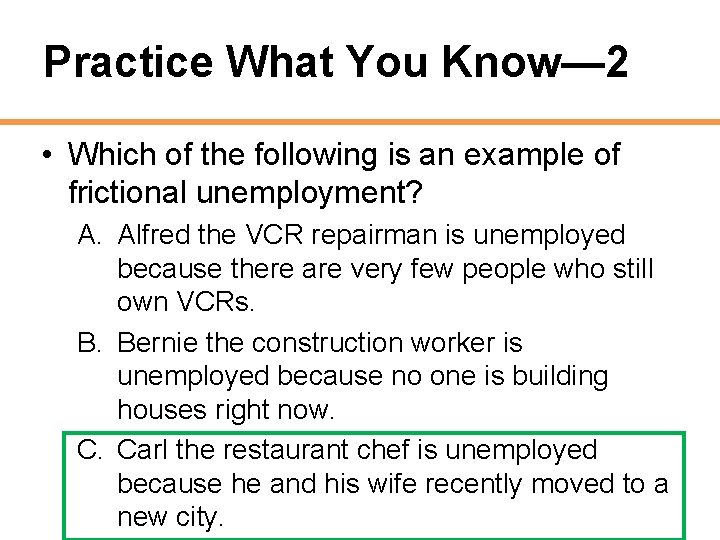
Practice What You Know— 2 • Which of the following is an example of frictional unemployment? A. Alfred the VCR repairman is unemployed because there are very few people who still own VCRs. B. Bernie the construction worker is unemployed because no one is building houses right now. C. Carl the restaurant chef is unemployed because he and his wife recently moved to a new city.
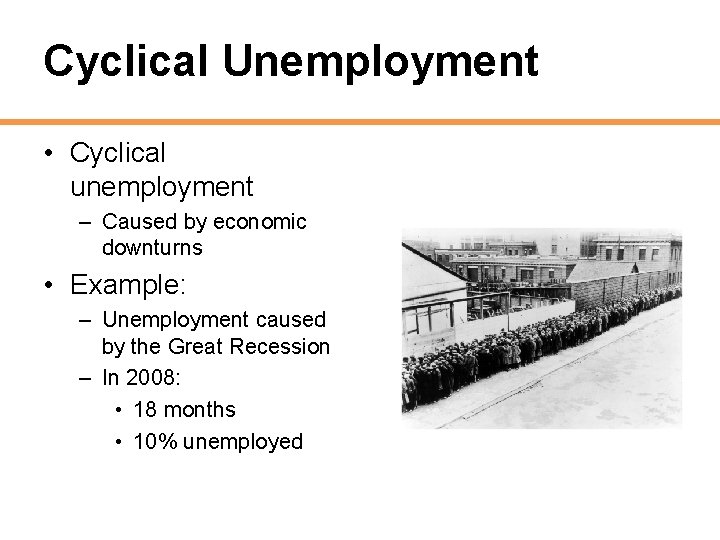
Cyclical Unemployment • Cyclical unemployment – Caused by economic downturns • Example: – Unemployment caused by the Great Recession – In 2008: • 18 months • 10% unemployed
Natural Rate of Unemployment and Full Employment Output • Natural rate of unemployment (u*) – Typical rate of unemployment in a healthy economy • Full employment output (Y*) – Output by an economy with no cyclical unemployment
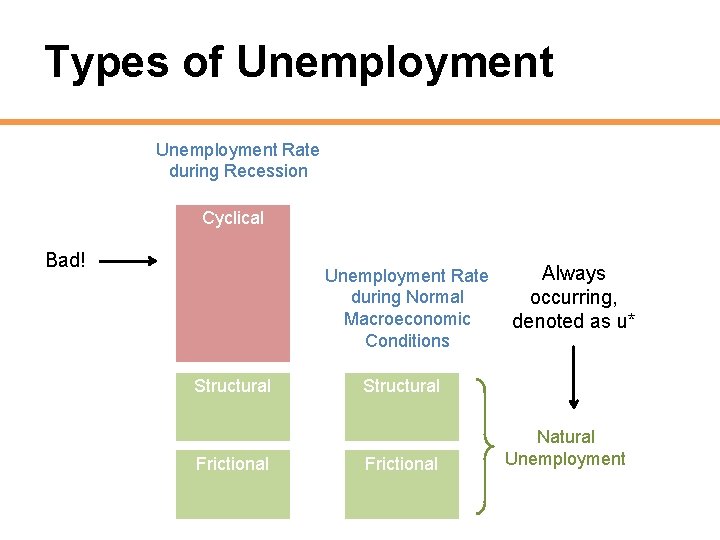
Types of Unemployment Rate during Recession Cyclical Bad! Unemployment Rate during Normal Macroeconomic Conditions Structural Frictional Always occurring, denoted as u* Structural Frictional Natural Unemployment
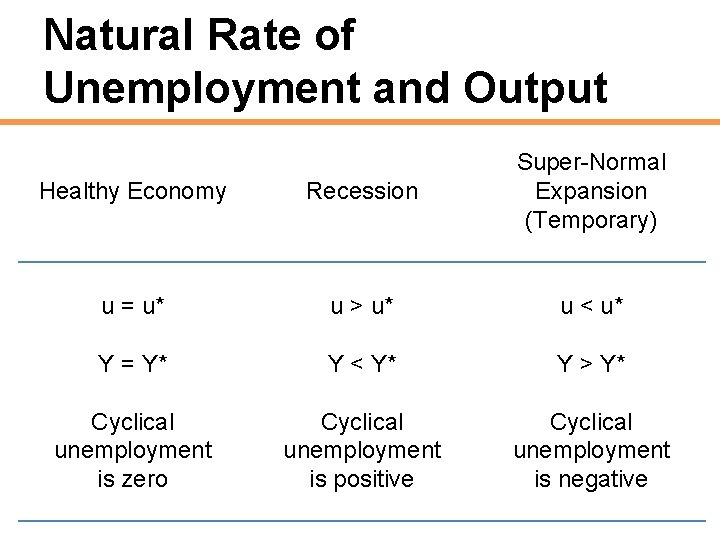
Natural Rate of Unemployment and Output Healthy Economy Recession Super-Normal Expansion (Temporary) u = u* u > u* u < u* Y = Y* Y < Y* Y > Y* Cyclical unemployment is zero Cyclical unemployment is positive Cyclical unemployment is negative
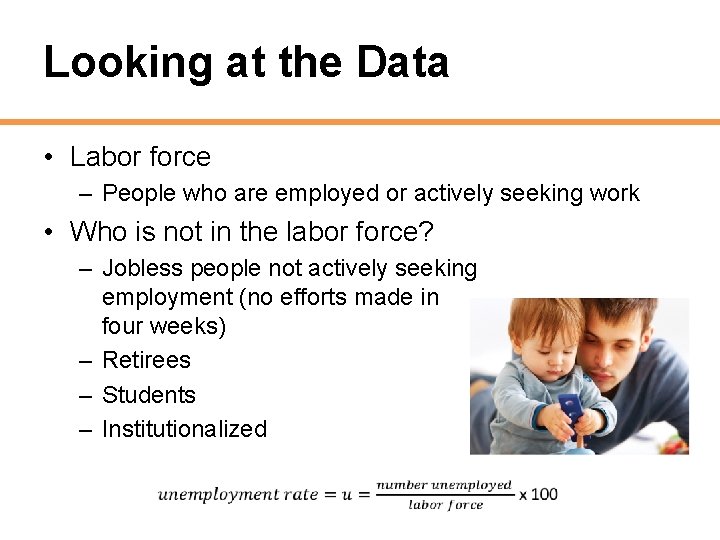
Looking at the Data • Labor force – People who are employed or actively seeking work • Who is not in the labor force? – Jobless people not actively seeking employment (no efforts made in four weeks) – Retirees – Students – Institutionalized
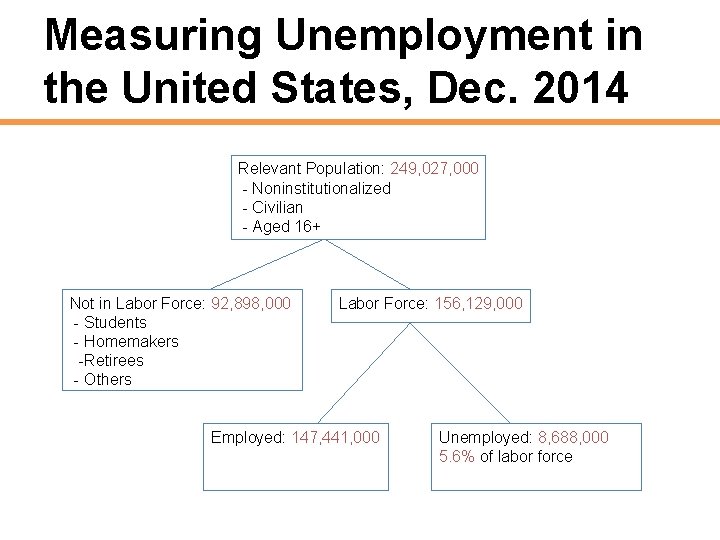
Measuring Unemployment in the United States, Dec. 2014 Relevant Population: 249, 027, 000 - Noninstitutionalized - Civilian - Aged 16+ Not in Labor Force: 92, 898, 000 - Students - Homemakers -Retirees - Others Labor Force: 156, 129, 000 Employed: 147, 441, 000 Unemployed: 8, 688, 000 5. 6% of labor force
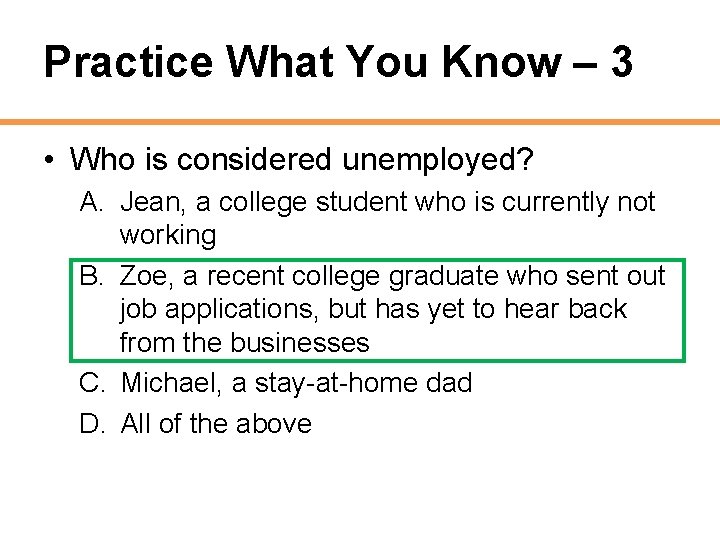
Practice What You Know – 3 • Who is considered unemployed? A. Jean, a college student who is currently not working B. Zoe, a recent college graduate who sent out job applications, but has yet to hear back from the businesses C. Michael, a stay-at-home dad D. All of the above
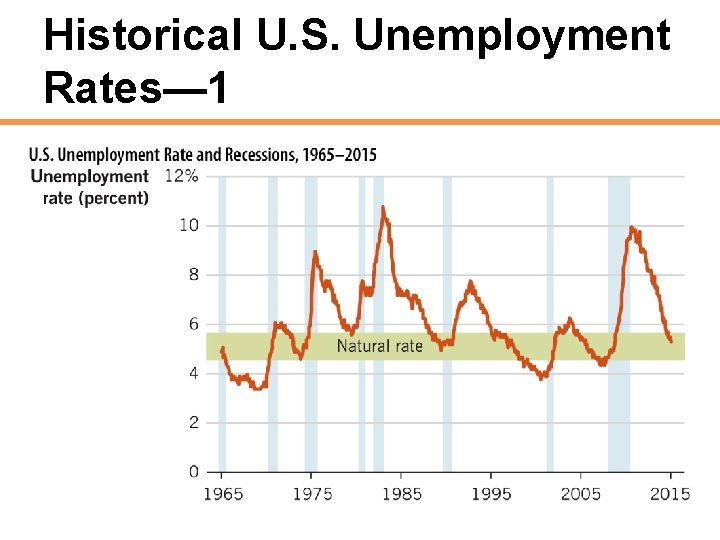
Historical U. S. Unemployment Rates— 1
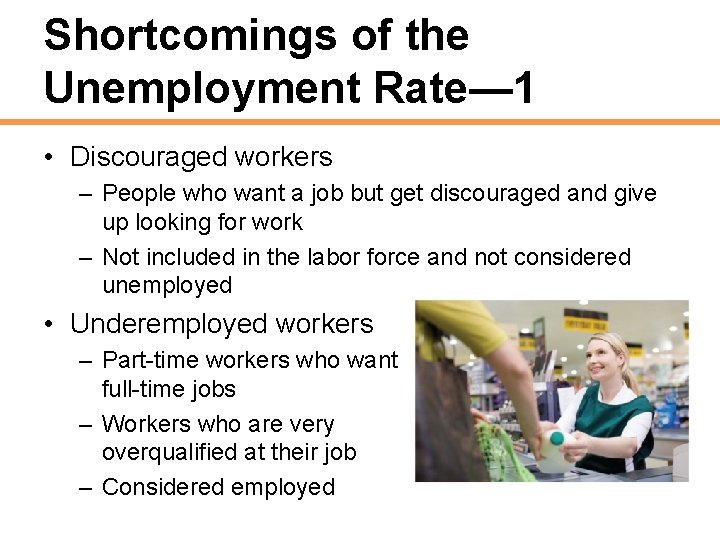
Shortcomings of the Unemployment Rate— 1 • Discouraged workers – People who want a job but get discouraged and give up looking for work – Not included in the labor force and not considered unemployed • Underemployed workers – Part-time workers who want full-time jobs – Workers who are very overqualified at their job – Considered employed
Practice What You Know— 4 • If a discouraged worker re-enters the labor force and begins searching for jobs but doesn’t find one, the unemployment rate will: A. Go down because our economy is on the right track with more people wanting to work B. Stay the same because the number of people with jobs didn’t change C. Stay the same because the worker isn’t counted in the labor force until he finds a job again D. Increase because the percentage of labor force participants with jobs decreased
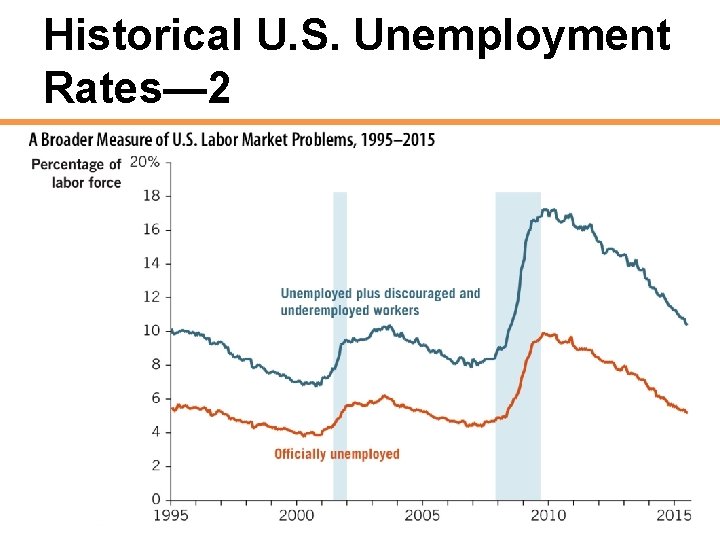
Historical U. S. Unemployment Rates— 2
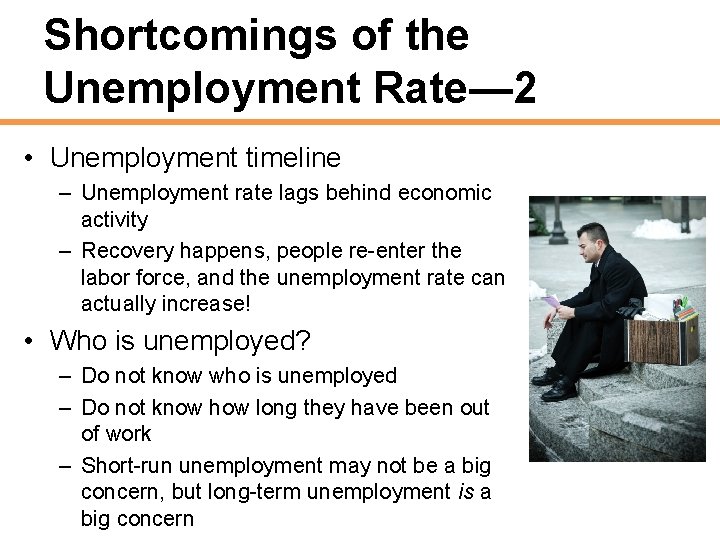
Shortcomings of the Unemployment Rate— 2 • Unemployment timeline – Unemployment rate lags behind economic activity – Recovery happens, people re-enter the labor force, and the unemployment rate can actually increase! • Who is unemployed? – Do not know who is unemployed – Do not know how long they have been out of work – Short-run unemployment may not be a big concern, but long-term unemployment is a big concern
Lagging versus Leading Indicators • A leading indicator – Helps us predict what’s coming, and will usually change before the economy as a whole does – Example: Average weekly hours for manufacturing – Example: Building permits • A lagging indicator – Usually changes after the economy as a whole changes, so it doesn’t have much predictive power – Example: Average duration of unemployment – Example: Change in the price index
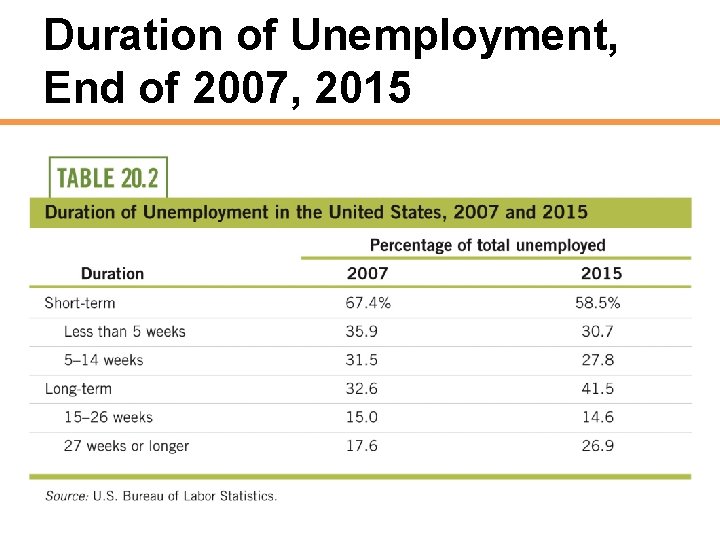
Duration of Unemployment, End of 2007, 2015
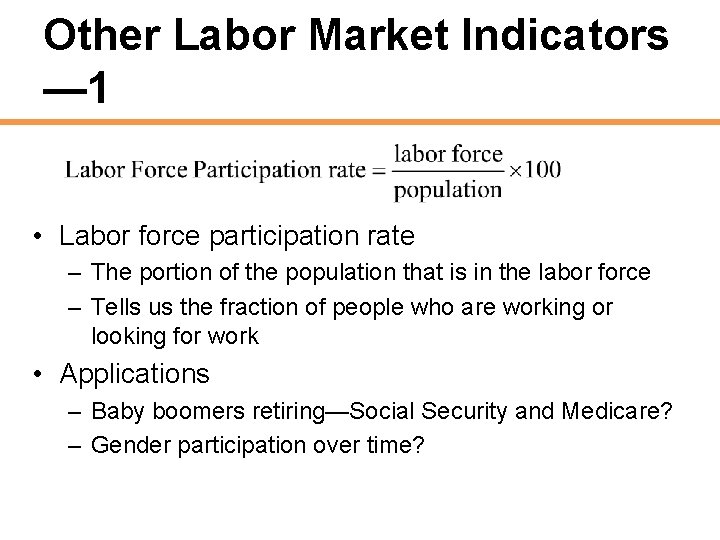
Other Labor Market Indicators — 1 • Labor force participation rate – The portion of the population that is in the labor force – Tells us the fraction of people who are working or looking for work • Applications – Baby boomers retiring—Social Security and Medicare? – Gender participation over time?
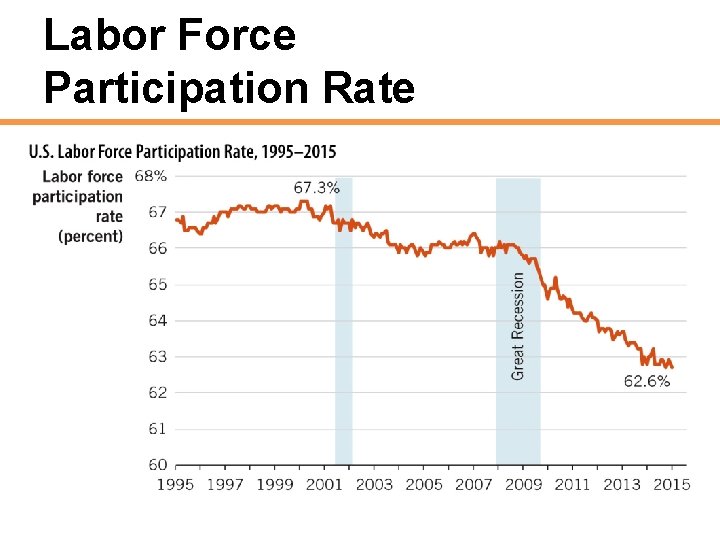
Labor Force Participation Rate
Other Labor Market Indicators — 2 • People tend to leave the labor force in bad times and re-enter in good times – Causes unemployment rate to lag economic conditions – Secondary indicators include nonfarm employment • Total employment figures – Reported each month – Help evaluate cyclical effects
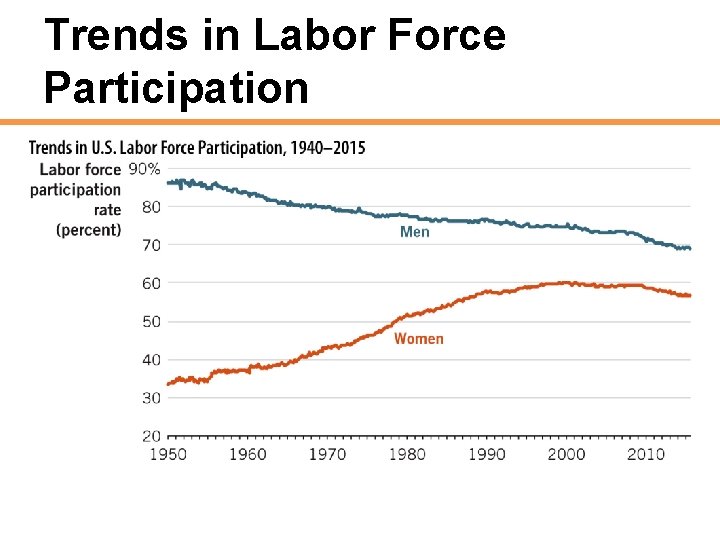
Trends in Labor Force Participation
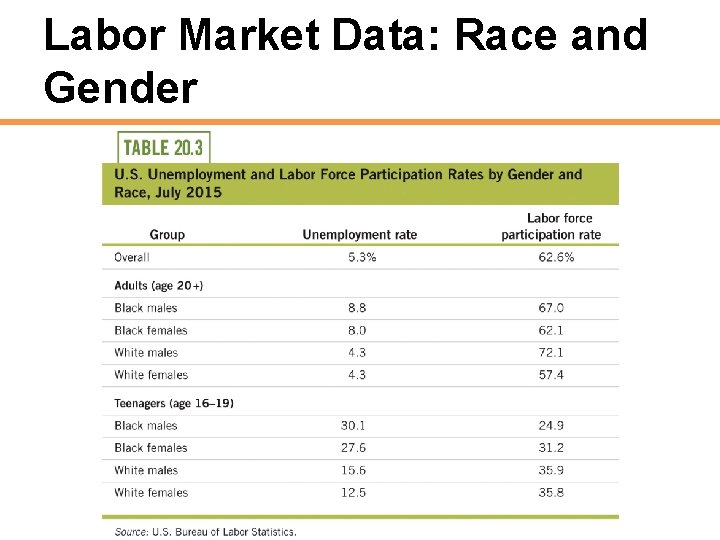
Labor Market Data: Race and Gender
Conclusion • Unemployment rate – Monitored as an indicator of macroeconomic health – Helps us gauge labor market conditions – Can also be misleading and incomplete, since as an indicator it lags behind economic activity and doesn’t account for underemployment and discouraged workers – Includes different types of unemployment, some worse than others – Can be influenced by government policy. This seems to have played a big part in propping up rates in the aftermath of the 2008 recession.
- Slides: 34