
20 The Archaea 1 Copyright Mc GrawHill Global
20 The Archaea 1 Copyright © Mc. Graw-Hill Global Education Holdings, LLC. Permission required for reproduction or display.
20. 1 Overview of the Archaea 1. List some common habitats in which archaea reside 2. Describe the debate that surrounds archaeal taxonomy 3. Compare at least three key metabolic pathways that are central to archaeal physiology with those used by bacteria 2
Archaea • Many features in common with Eukarya – genes encoding protein: replication, transcription, translation • Features in common with Bacteria – genes for metabolism • Other elements are unique to Archaea – unique r. RNA gene structure – capable of methanogenesis 3
Archaea • Highly diverse with respect to morphology, physiology, reproduction, and ecology • Best known for growth in anaerobic, hypersaline, p. H extremes, and hightemperature habitats • Also found in marine arctic temperature and tropical waters 4
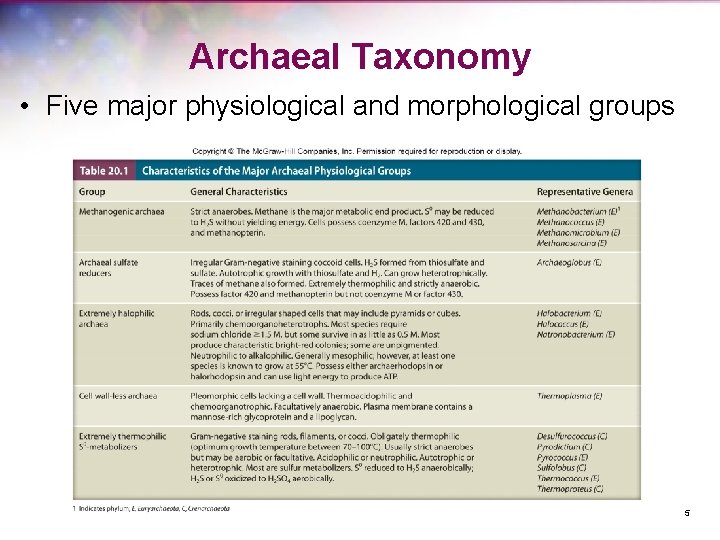
Archaeal Taxonomy • Five major physiological and morphological groups 5

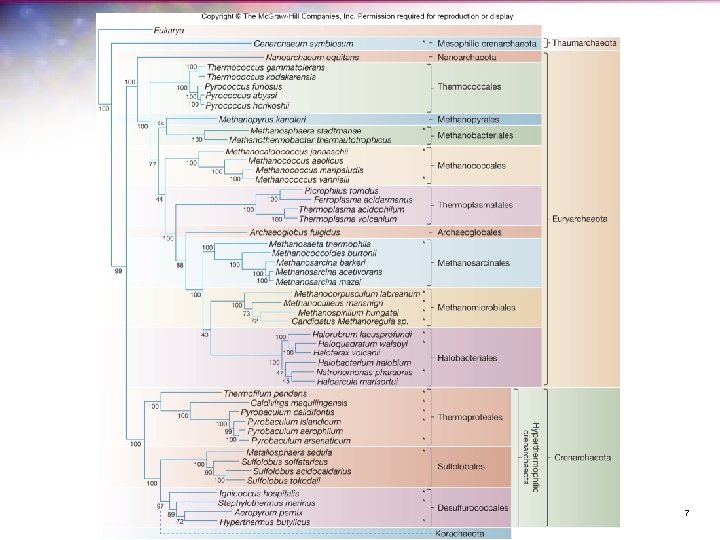
Archaeal Taxonomy • Two phyla based on Bergey’s Manual – Euryarchaeota – Crenarchaeota • 16 S r. RNA and SSU r. RNA analysis also shows – Group I are Thaumarchaeota – Group II are Korachaeota 6
7
20. 2 Phylum Crenarchaeota 1. List the major physiological types among crenarchaea 2. Evaluate the importance of crenarchaeol in the discovery of new crenarchaeotes 3. Discuss hyperthermophilic and thermoacidophilic growth 8
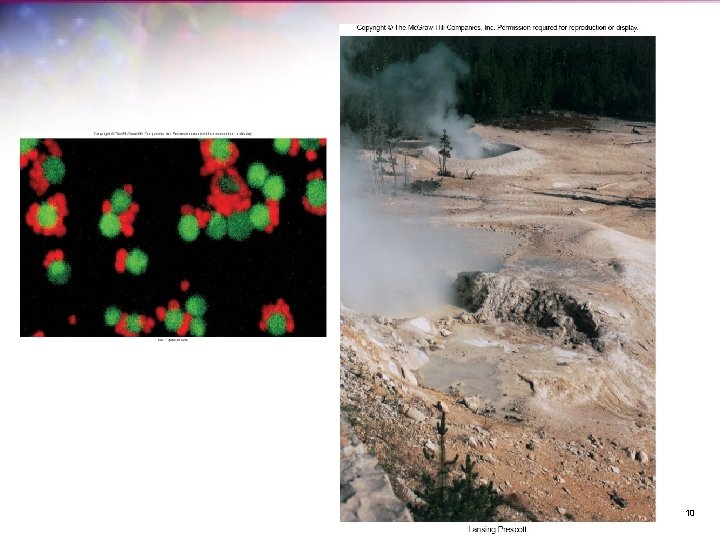
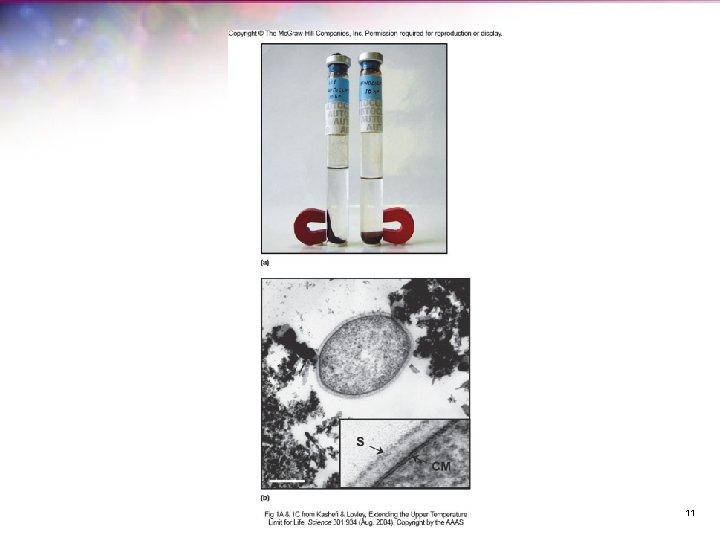
Phylum Crenarchaeota • Most are extremely thermophilic – hyperthermophiles (hydrothermal vents) • Most are strict anaerobes • Some are acidophiles • Many are sulfur-dependent – for some, used as electron acceptor in anaerobic respiration – for some, used as electron source 9
10
11
Crenarchaeota… • Include organotrophs and lithotrophs (sulfuroxidizing and hydrogen-oxidizing) • Contains 25 genera – two best studied are Sulfolobus and Thermoproteus 12
Genus Thermoproteus • Long thin rod, bent or branched – cell walls composed of glycoprotein • Thermoacidophiles – 70– 97 °C – p. H 2. 5– 6. 5 • Anaerobic metabolism – lithotrophic on sulfur and hydrogen – organotrophic on sugars, amino acids, alcohols, and organic acids using elemental sulfur as electron acceptor • Autotrophic using CO or CO 2 as carbon source 13
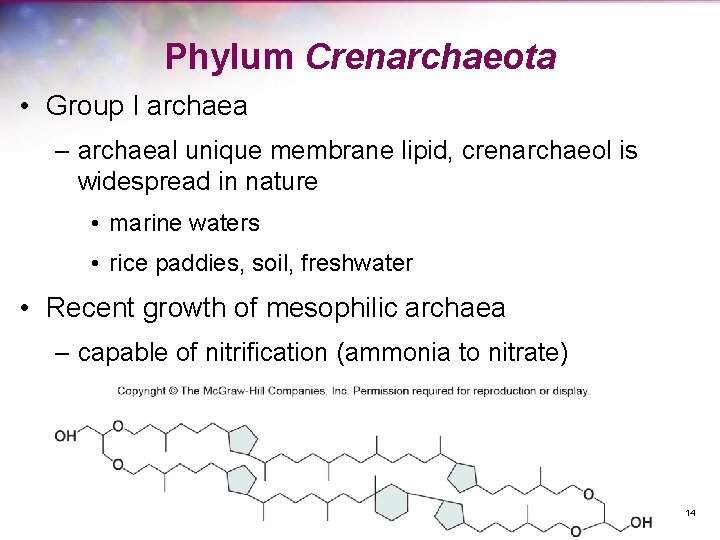
Phylum Crenarchaeota • Group I archaea – archaeal unique membrane lipid, crenarchaeol is widespread in nature • marine waters • rice paddies, soil, freshwater • Recent growth of mesophilic archaea – capable of nitrification (ammonia to nitrate) 14
20. 3 Phylum Euryarchaeota 1. Outline the process of methanogenesis and discuss its importance in the flow of carbon through the biosphere as well as in the production of energy 2. Discuss the physiology and ecology of anaerobic methane oxidation 3. Explain the strategies halophiles have evolved to cope with osmotic stress and why these strategies are needed 4. Outline rhodopsin-based phototrophy as used by halophiles 5. Describe the habitats in which methanogens and halophiles reside 6. List one unique feature for Thermoplasma, Pyrococcus, and Archaeoglobus 15
Phylum Euryarchaeota • Consists of many classes, orders, and families • Often divided informally into five major groups – methanogens – halobacteria – thermoplasms – extremely thermophilic S 0 -metabolizers – sulfate-reducers 16
Methanogens • All methanogenic microbes are Archaea – called methanogens: produce methane • Methanogenesis – last step in the degradation of organic compounds – occurs in anaerobic environments • e. g. , animal rumens • e. g. , anaerobic sludge digesters • e. g. , within anaerobic protozoa 17
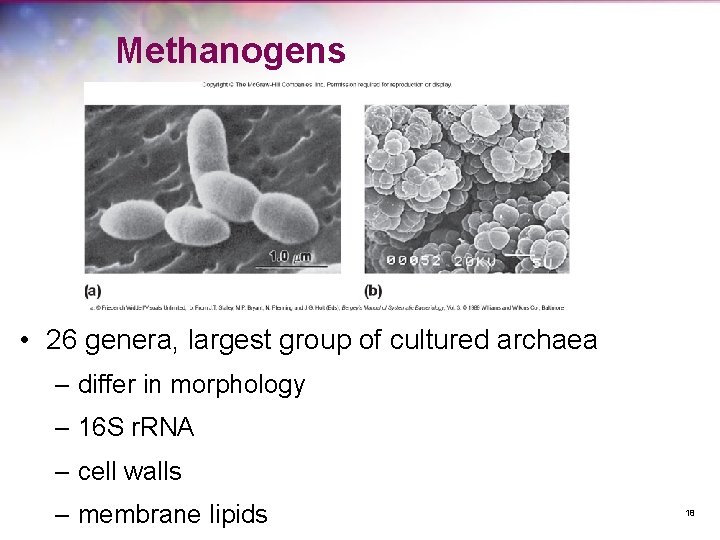
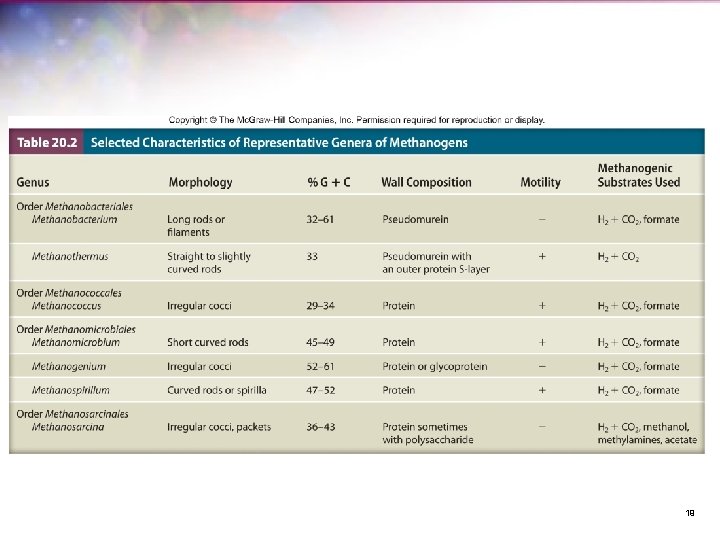
Methanogens • 26 genera, largest group of cultured archaea – differ in morphology – 16 S r. RNA – cell walls – membrane lipids 18
19
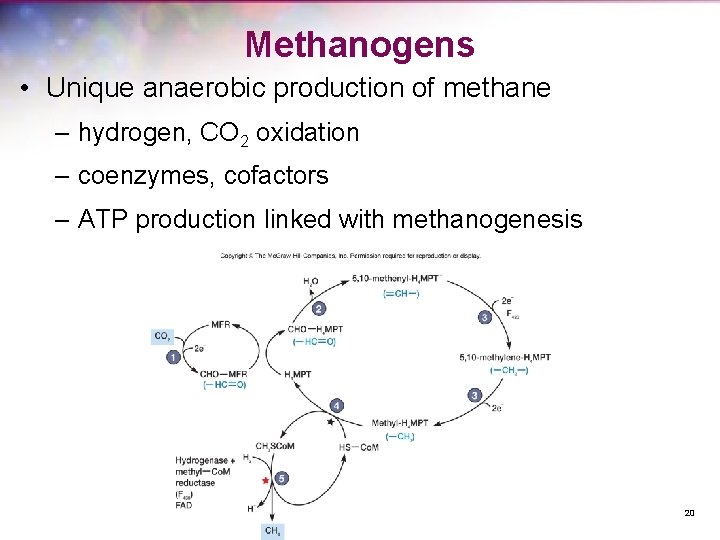
Methanogens • Unique anaerobic production of methane – hydrogen, CO 2 oxidation – coenzymes, cofactors – ATP production linked with methanogenesis 20
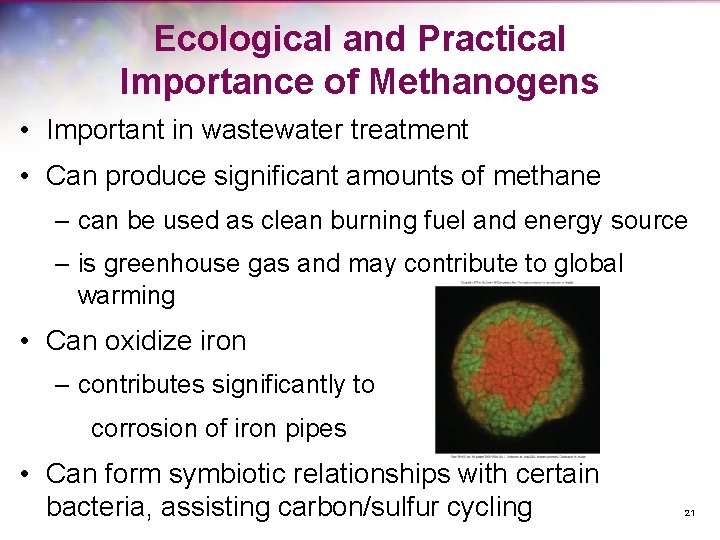
Ecological and Practical Importance of Methanogens • Important in wastewater treatment • Can produce significant amounts of methane – can be used as clean burning fuel and energy source – is greenhouse gas and may contribute to global warming • Can oxidize iron – contributes significantly to corrosion of iron pipes • Can form symbiotic relationships with certain bacteria, assisting carbon/sulfur cycling 21
Halobacteria • Order Halobacteriales; 17 genera in one family, Halobacteriaceae • Extreme halophiles (halobacteria) – require at least 1. 5 M Na. Cl • cell wall disintegrates if [Na. Cl] < 1. 5 M – growth optima near 3– 4 M Na. Cl • Aerobic, respiratory, chemoheterotrophs with complex nutritional requirements 22
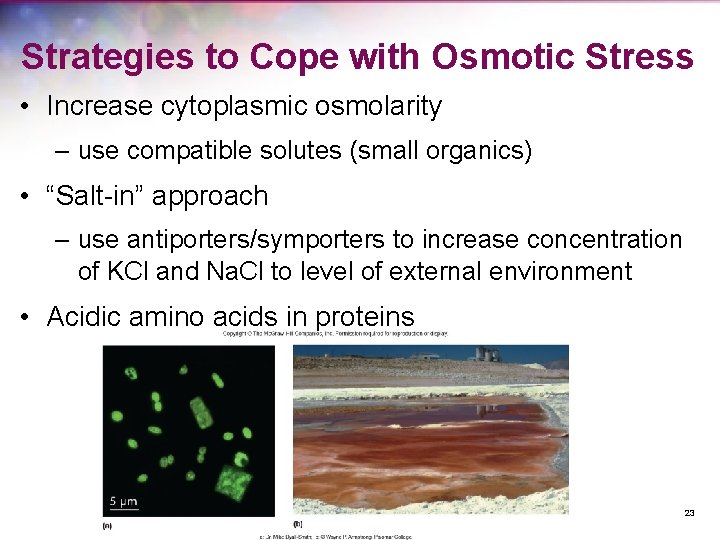
Strategies to Cope with Osmotic Stress • Increase cytoplasmic osmolarity – use compatible solutes (small organics) • “Salt-in” approach – use antiporters/symporters to increase concentration of KCl and Na. Cl to level of external environment • Acidic amino acids in proteins 23
e. g. , Halobacterium salinarium (H. halobium) • Has unique type of photosynthesis – not chlorophyll based – uses modified cell membrane (contains bacteriorhodopsin) – absorption of light by bacteriorhodopsin drives proton transport, creating PMF for ATP synthesis 24
Genus Thermoplasma • Thermoacidophiles; grow in refuse piles of coal mines at 55– 59°C, p. H 1– 2, Fe. S • Cell structure – shape depends on temperature – may be flagellated and motile – cell membrane strengthened by diglycerol tetraethers, lipopolysaccharides, and glycoproteins – nucleosome-like structures formed by association of DNA with histonelike proteins 25
Extremely Thermophilic S 0 -Reducers • Class Thermococci; one order, Thermococcales • One family containing three genera, Thermococcus, Paleococcus, Pyrococcus • Motile by flagella • Optimum growth temperatures 88– 100°C • Strictly anaerobic • Reduce sulfur to sulfide 26
Sulfate-Reducing Euryarchaeota • class Archaeoglobi; order Archaeoglobales; one family with one genus, Archaeoglobus • irregular coccoid cells – cell walls consist of glycoprotein subunits • extremely thermophilic (optimum 83°C) – isolated from marine hydrothermal vents • metabolism – lithotrophic (H 2) or organotrophic (lactate/glucose) – use sulfate, sulfite, or thiosulfite as electron acceptor – possess some methanogen coenzymes 27
- Slides: 27