
20 Memory techniques Organize it Makes it easier
- Slides: 20
20 Memory techniques • Organize it Makes it easier to find information. 1. Learn from general to the specific. • Before reading an assignment, skim through for the general idea.
3. Create Associations • You can recall new data more effectively if you store it near similar data.
Use your Body: 4. Learn it once, actively. • 90% of what we do, 75% of what we see, and 20% of what we hear. • Action is a great memory enhancer. • Try studying standing up. • Pace back and forth. • Get your whole body involve while you study.
5. Relax • Absorb information quickly and recall it with greater ease and accuracy. • Harder to recall information while under stress. • Can be relax and active at the same time.
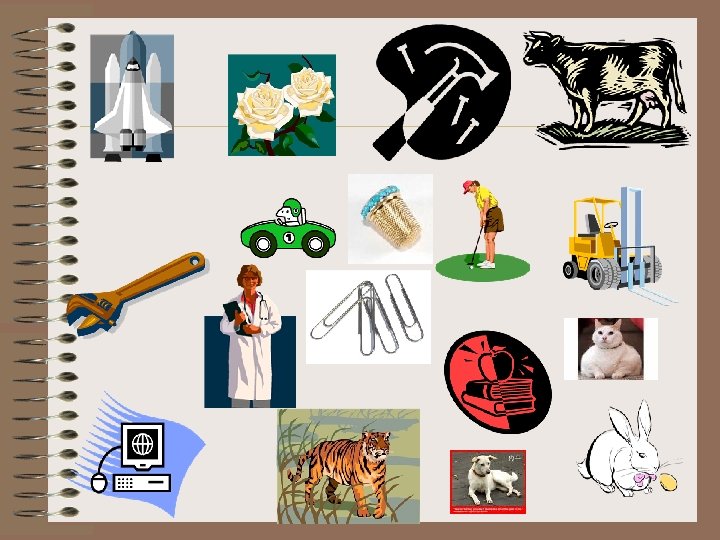
6. Create pictures • Draw diagrams or make cartoons. • Use images to connect facts and illustrate relationships.
#7. Recite and Repeat • Repeating something affects two senses. • Recite out loud and put concepts into your own words. • Repetition blazes a path.
#8. Write it down • Write it down many times. • Reveals gaps missed by oral reviews. • Remember what you do.
Use your brain: #9. Reduce interference • Find a quiet place that is free from distractions. • 2 hours in front of t. v. might be worth 10 minutes of studying where it is quiet.
10. Overlearn • Learn more than you need to know about a subject.
11. Escape the short-term memory trap • Short term memory can fade away after a few minutes. • Short review can move short term memory to long term memory. • Quick minireview can save you hours.
12. Use daylight • Some people can study better during daylight hours. • Study hardest subjects first.
13. Distribute learning • Experiment with shorter, spaced-out sessions. • Study for 2 hours or least and then wash the dishes. • Then go back a study for another 2 hours.
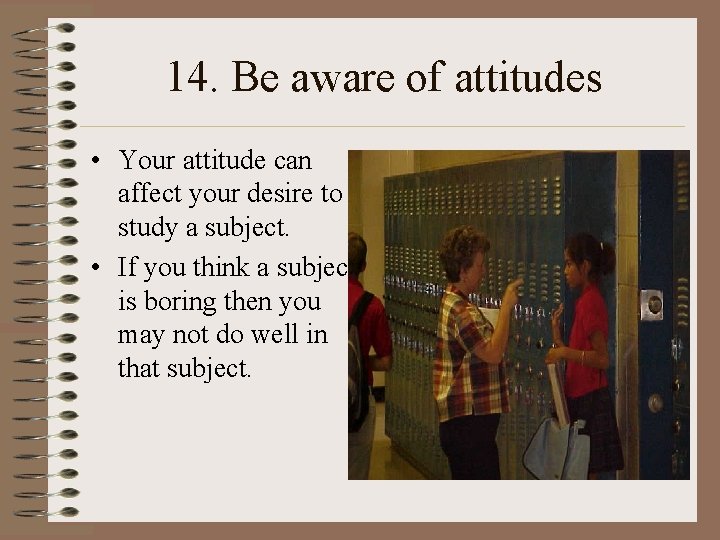
14. Be aware of attitudes • Your attitude can affect your desire to study a subject. • If you think a subject is boring then you may not do well in that subject.
15. Choose what not to store in memory • Decide what’s essential to remember. • Choose what is important to remember, like what will be on the test.
16. Combine memory techniques • Memory techniques work even better when you combine them.
Recall it: Remember something else. • If you can’t remember something try to remember something that is related to it. • Brainstorm by writing down related facts to help you remember.
18. Notice when you do remember • Notice when you remember information easily and ask yourself what techniques did you use.
19. Use it before you lose it • Make regular use of the information before it gets hard for you to use it. • Write, say it, read it, listen to it, and apply it, to keep it fresh.
20. And remember, you never forget. • Adopt the attitude that you never forget, but just have problems recalling the information. • Intend to remember.