
20 3 Stereoisomers Isomers molecules with the same


![[E]-1 -, 2 -dichloroethene [Z]-1 -, 2 -dichloroethene or or trans-1 -, 2 -dichloroethene](https://slidetodoc.com/presentation_image_h2/56e80e7cff6cfc13d277601e4b146c62/image-10.jpg "[E]-1 -, 2 -dichloroethene [Z]-1 -, 2 -dichloroethene or or trans-1 -, 2 -dichloroethene")
![Optical isomers will rotate polarized light: D-form: clockwise rotation [from the Latin dextro (right)]](https://slidetodoc.com/presentation_image_h2/56e80e7cff6cfc13d277601e4b146c62/image-13.jpg "Optical isomers will rotate polarized light: D-form: clockwise rotation [from the Latin dextro (right)]")
- Slides: 16
20. 3 Stereoisomers Isomers: molecules with the same molecular formula, but different structural formulas.
1. ) Structural isomers have a different order of bonding: C 4 H 10
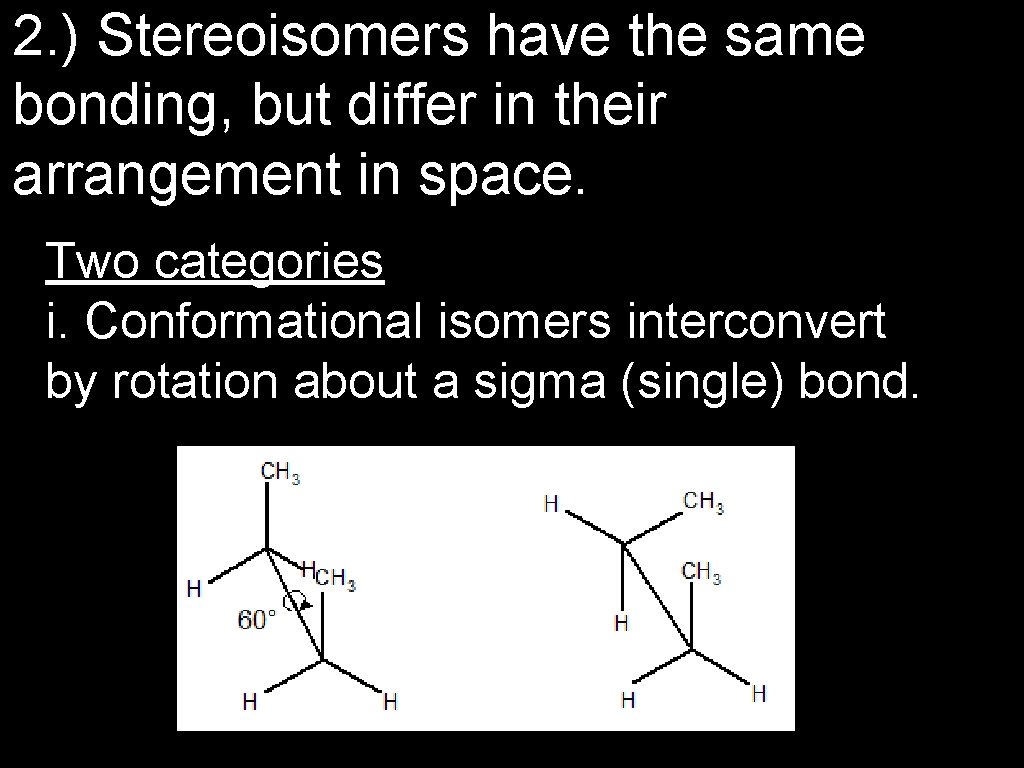
2. ) Stereoisomers have the same bonding, but differ in their arrangement in space. Two categories i. Conformational isomers interconvert by rotation about a sigma (single) bond.
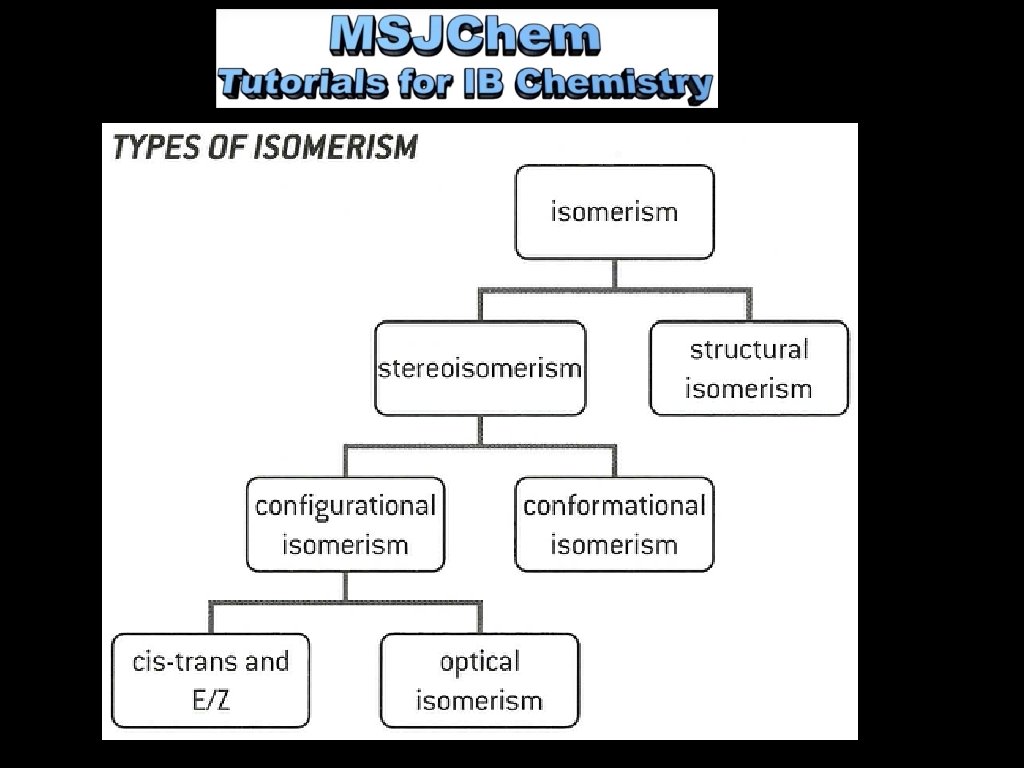
ii. Configurational isomers can only be interconverted by the breaking of bonds. Two classifications a. Cis-trans and E/Z b. Optical isomerism
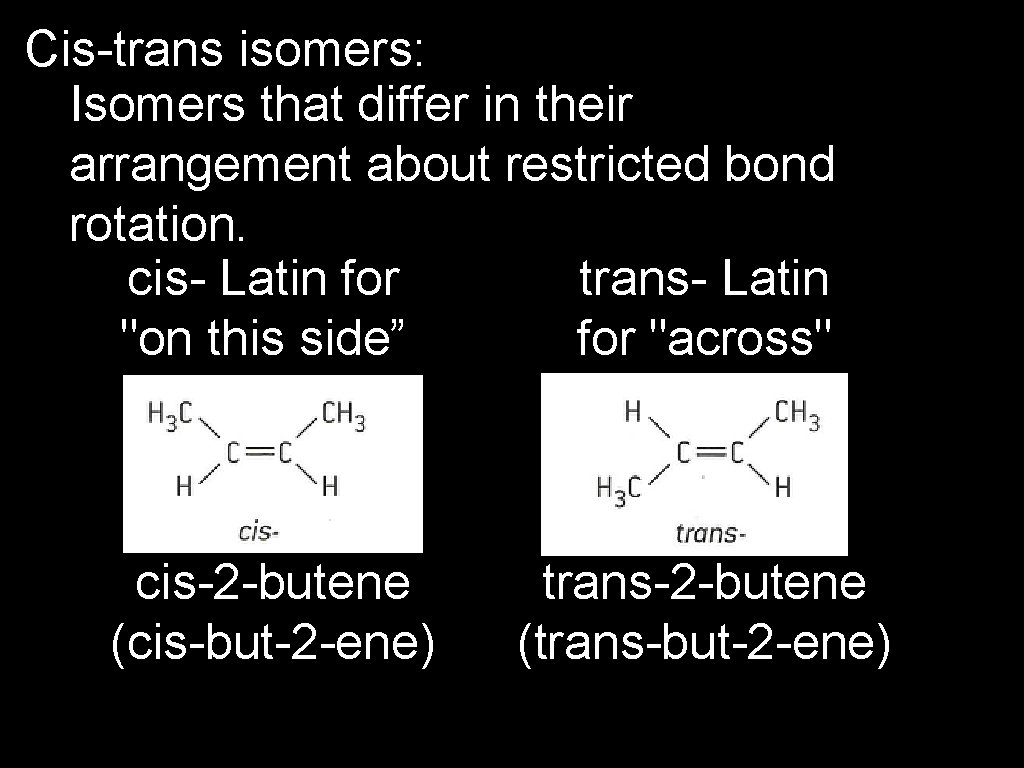
Cis-trans isomers: Isomers that differ in their arrangement about restricted bond rotation. cis- Latin for trans- Latin "on this side” for "across" cis-2 -butene (cis-but-2 -ene) trans-2 -butene (trans-but-2 -ene)
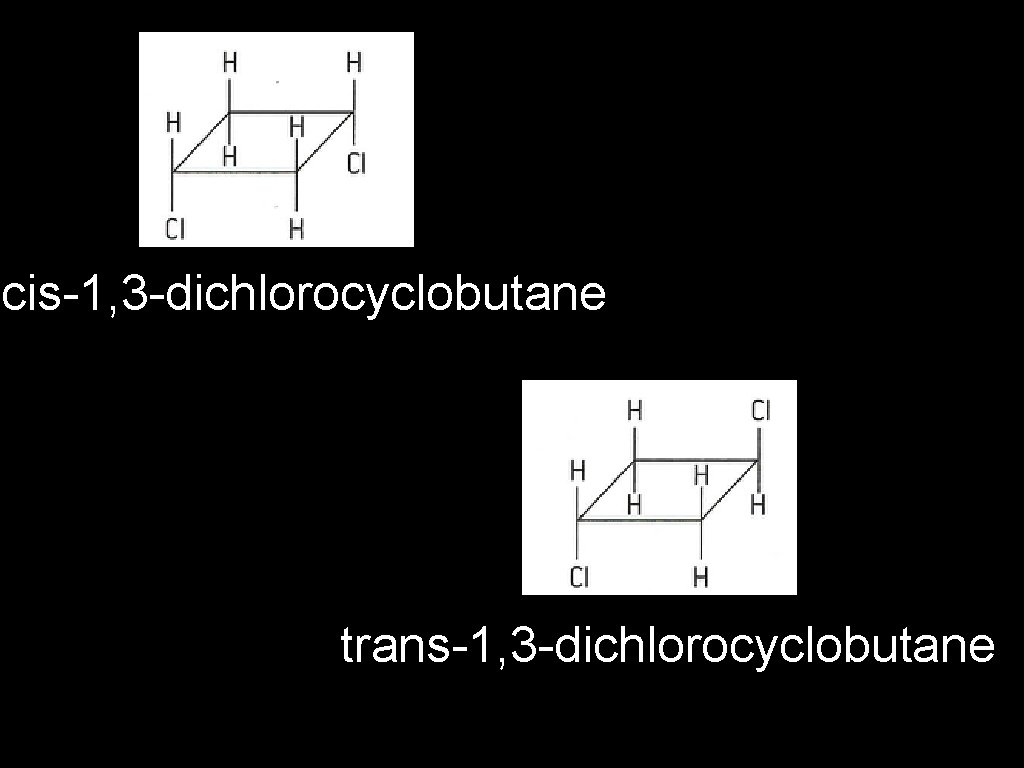
cis-1, 3 -dichlorocyclobutane trans-1, 3 -dichlorocyclobutane
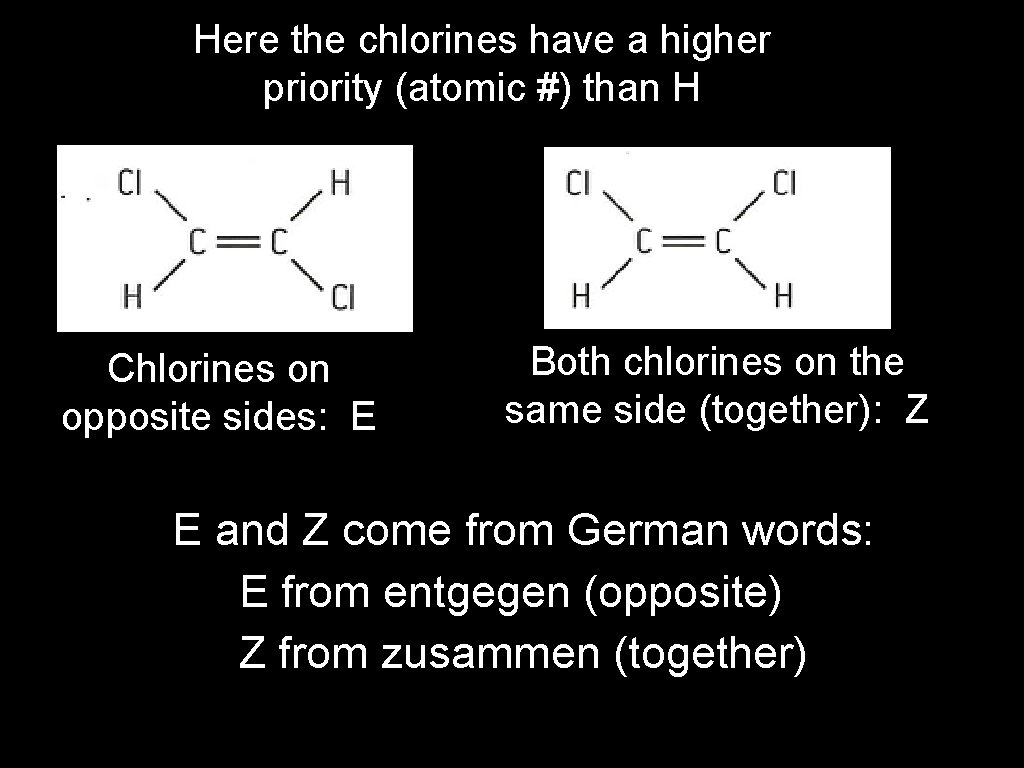
E/Z isomers: Isomers based on the Cahn-Ingold. Prelog (CIP) rules which assign priority around a double bond based on the atomic numbers of attached atoms.
Here the chlorines have a higher priority (atomic #) than H Chlorines on opposite sides: E Both chlorines on the same side (together): Z E and Z come from German words: E from entgegen (opposite) Z from zusammen (together)
[E]-1 -, 2 -dichloroethene [Z]-1 -, 2 -dichloroethene or or trans-1 -, 2 -dichloroethene cis-1 -, 2 -dichloroethene
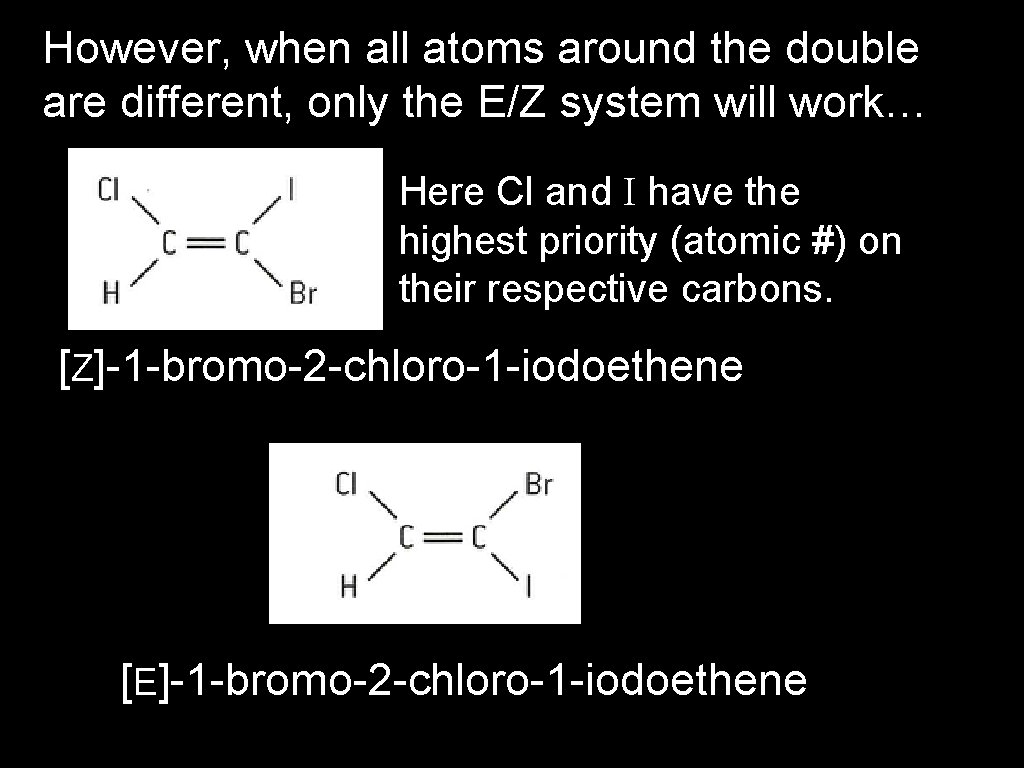
However, when all atoms around the double are different, only the E/Z system will work… Here Cl and I have the highest priority (atomic #) on their respective carbons. [Z]-1 -bromo-2 -chloro-1 -iodoethene [E]-1 -bromo-2 -chloro-1 -iodoethene
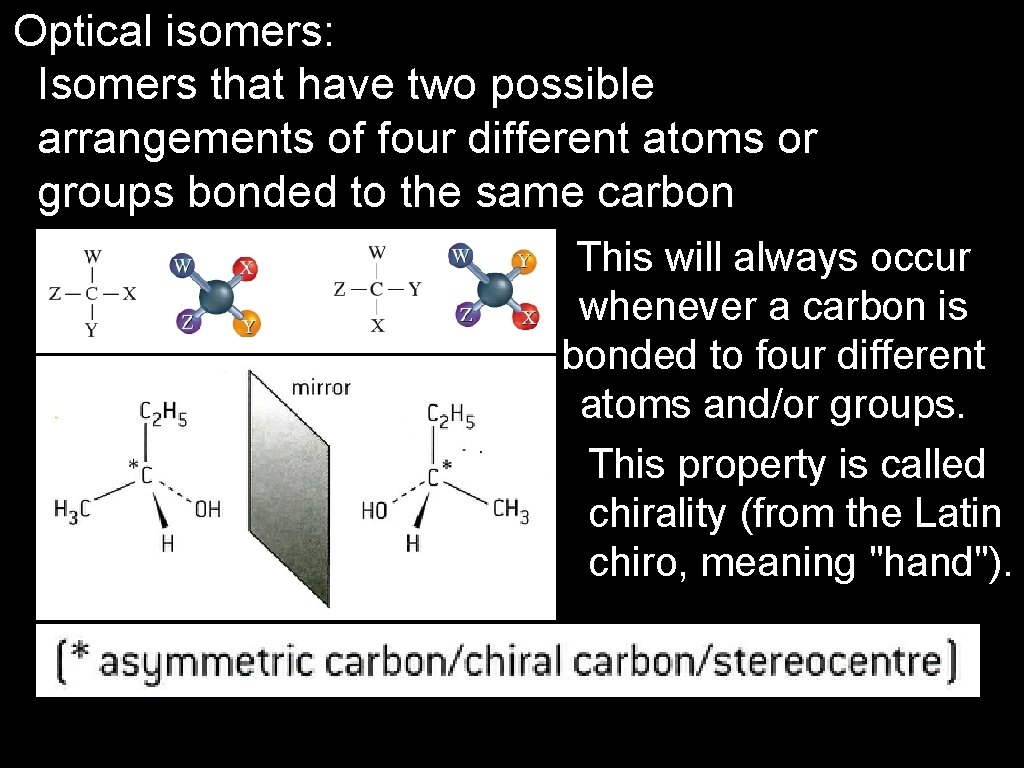
Optical isomers: Isomers that have two possible arrangements of four different atoms or groups bonded to the same carbon atom. This will always occur whenever a carbon is bonded to four different atoms and/or groups. This property is called chirality (from the Latin chiro, meaning "hand").
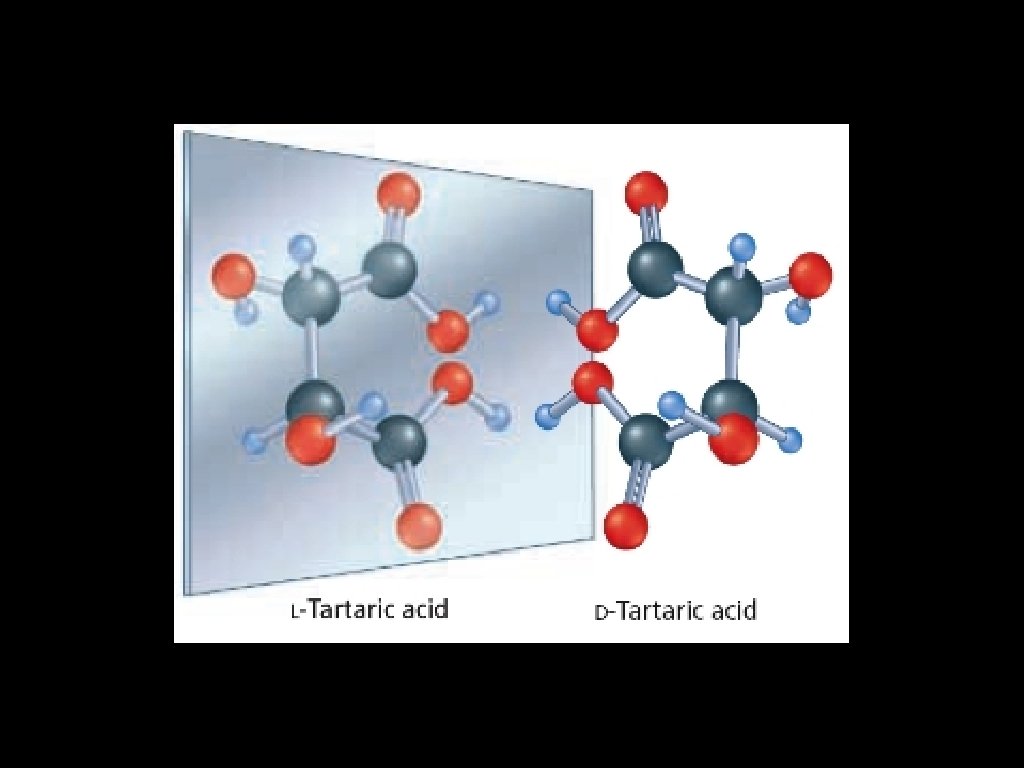
Optical isomers will rotate polarized light: D-form: clockwise rotation [from the Latin dextro (right)] L-form: counterclockwise rotation [from the Latin levo (left)]
Optical isomers are called enantiomers (from the Latin enantio, meaning “opposite”). A racemic mixture contains equal amounts of two enantiomers and is optically inactive - i. e. , each cancels the effect of the other. Enantiomers have identical physical and chemical properties, but may have different physiological effects. For example: The artificial sweetener aspartame is an optical isomer, one of its enantiomers tastes sweet, the other bitter.
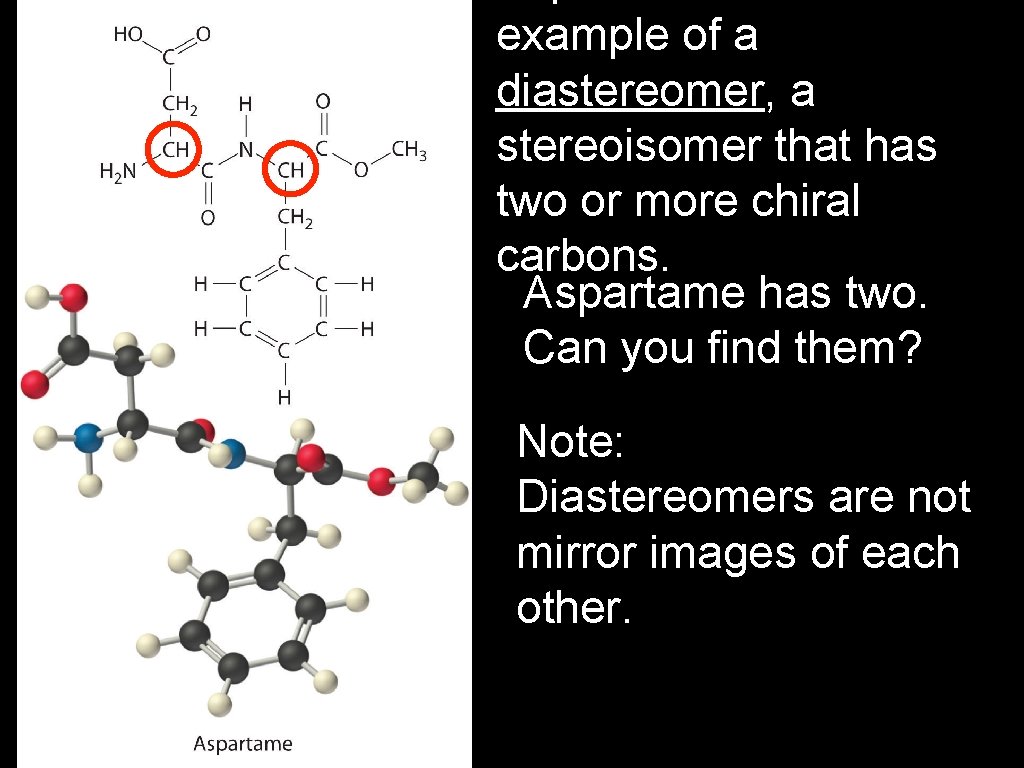
example of a diastereomer, a stereoisomer that has two or more chiral carbons. Aspartame has two. Can you find them? Note: Diastereomers are not mirror images of each other.