
20 1 Why Control Control is an issue
- Slides: 26
20 - 1
Why Control? • Control is an issue every manager faces. • How does control help the manager? – Control is a process to regulate organizational activities to make them consistent with established: • Plans • Targets • Standards 20 - 2
What Is the Purpose of Control? • It is one of the four basic management functions and has four basic functions. What are the functions? – Adapts to change. – Limits accumulation of error. – Helps coping with complexity. – Helps minimize costs. 20 - 3
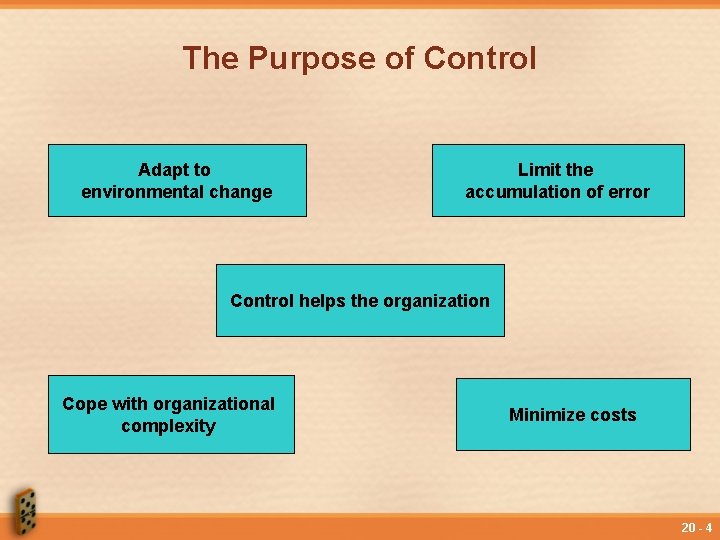
The Purpose of Control Adapt to environmental change Limit the accumulation of error Control helps the organization Cope with organizational complexity Minimize costs 20 - 4
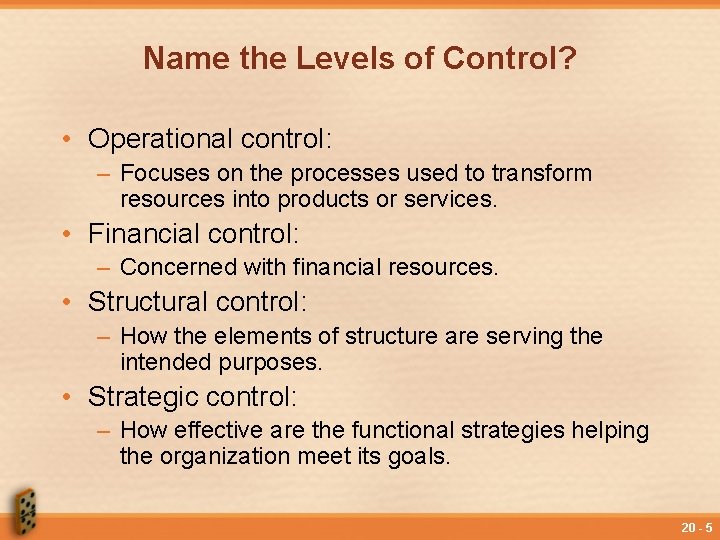
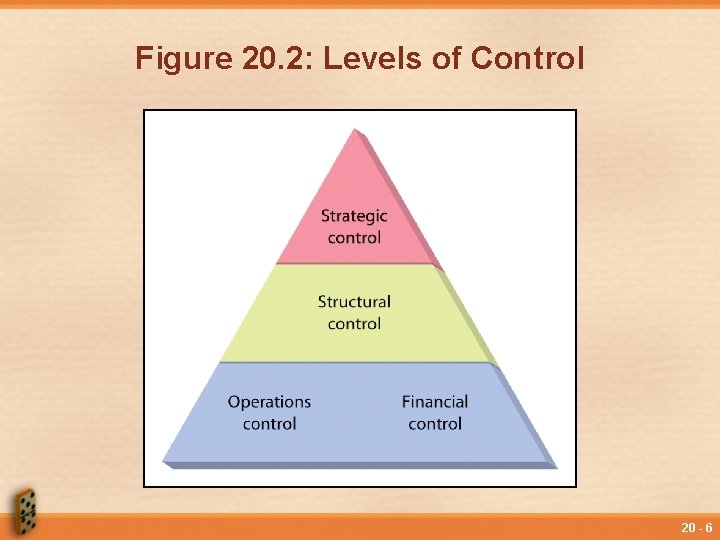
Name the Levels of Control? • Operational control: – Focuses on the processes used to transform resources into products or services. • Financial control: – Concerned with financial resources. • Structural control: – How the elements of structure are serving the intended purposes. • Strategic control: – How effective are the functional strategies helping the organization meet its goals. 20 - 5
Figure 20. 2: Levels of Control 20 - 6
Who Is Responsible for Control? • Control rests with all managers. • Large corporations have a controller. • What does a controller do? – Helps line managers with their control activities. 20 - 7
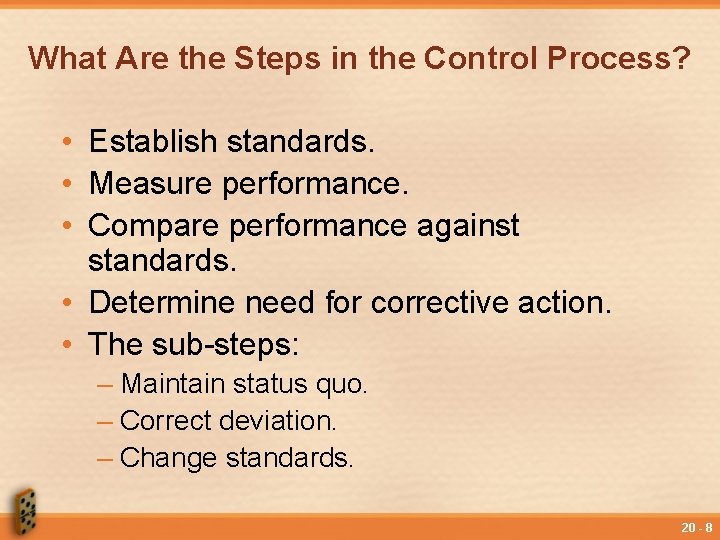
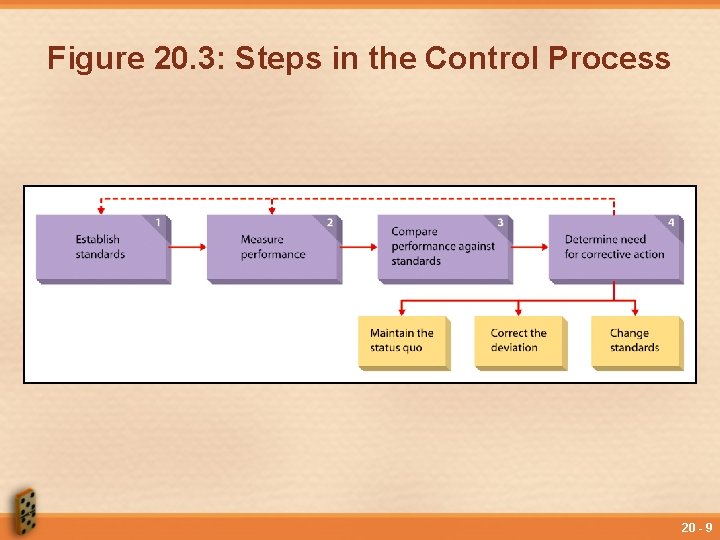
What Are the Steps in the Control Process? • Establish standards. • Measure performance. • Compare performance against standards. • Determine need for corrective action. • The sub-steps: – Maintain status quo. – Correct deviation. – Change standards. 20 - 8
Figure 20. 3: Steps in the Control Process 20 - 9
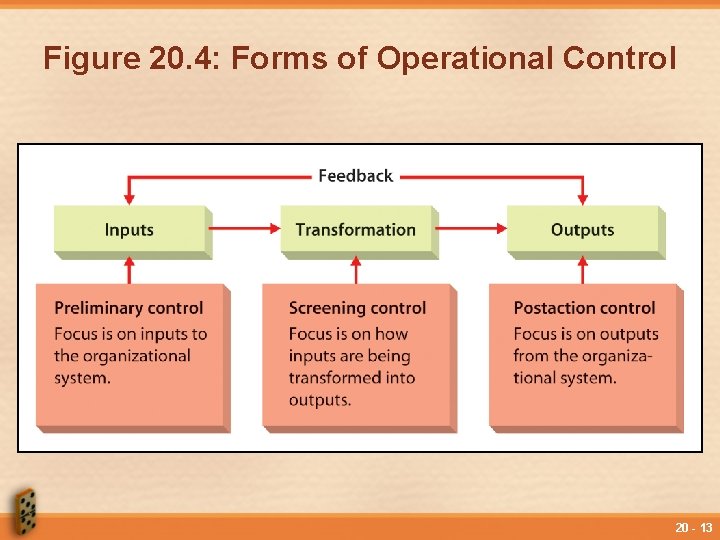
What Does Preliminary Control Monitor? • It attempts to monitor quality and quantity of: – Financial resources. – Material resources. – Human resources. – Information resources. • Why? – Before they become part of the system. 20 - 10
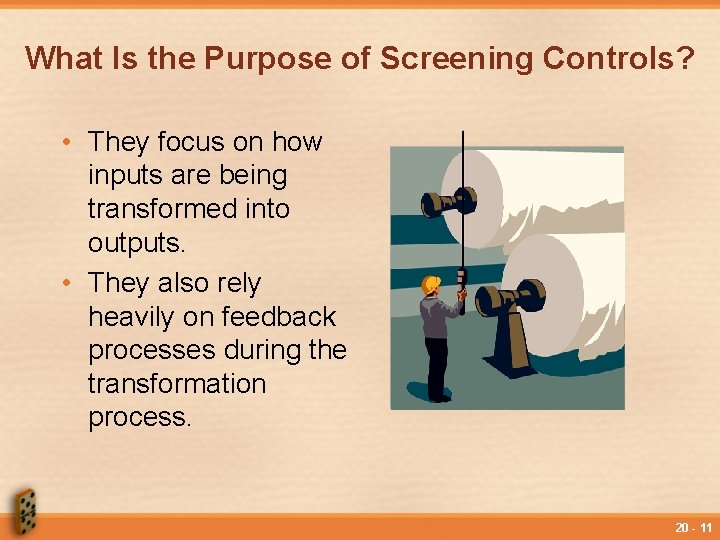
What Is the Purpose of Screening Controls? • They focus on how inputs are being transformed into outputs. • They also rely heavily on feedback processes during the transformation process. 20 - 11
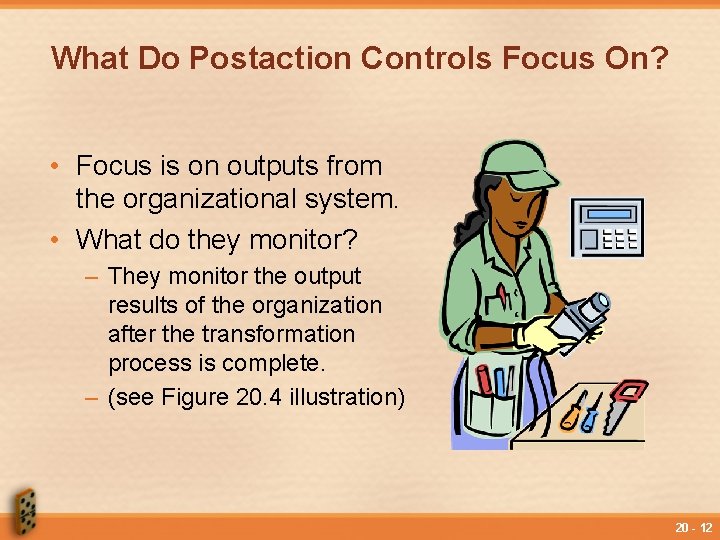
What Do Postaction Controls Focus On? • Focus is on outputs from the organizational system. • What do they monitor? – They monitor the output results of the organization after the transformation process is complete. – (see Figure 20. 4 illustration) 20 - 12
Figure 20. 4: Forms of Operational Control 20 - 13
What Are the Reasons for Financial Controls? • They control the financial resources as they flow into the organization. • Then they are held by the organization. • Then they flow out of the organization. • Businesses must manage their finances so that revenues are sufficient to cover expenses and still return a profit. 20 - 14
What Is a Budget? • It is a plan expressed in numerical terms. • What is the time frame for a budget? – Usually a year, but sometimes broken down into quarters and months. • Budgets are quantitative in nature and provide yardsticks for measuring performance and facilitating comparisons. 20 - 15
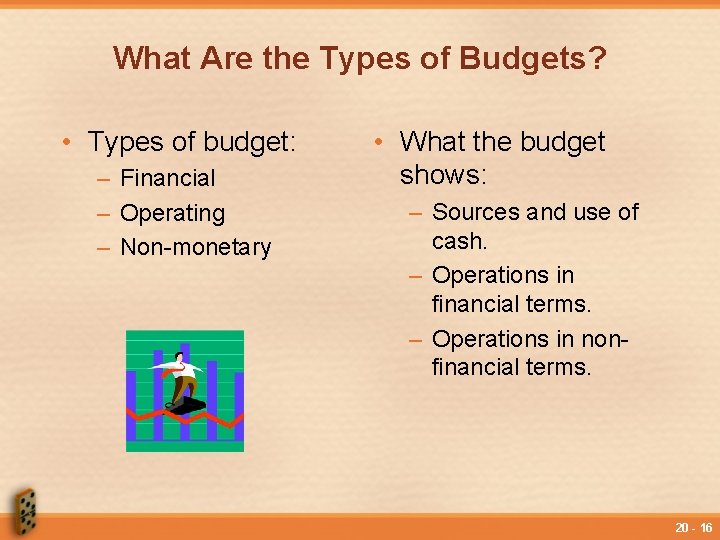
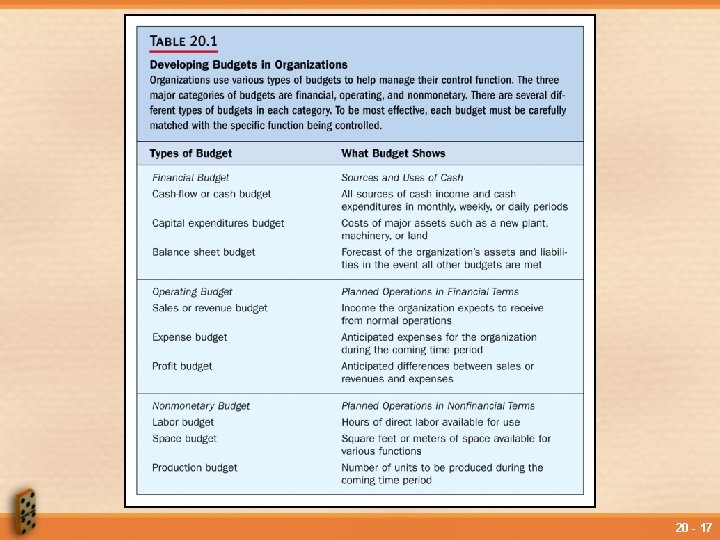
What Are the Types of Budgets? • Types of budget: – Financial – Operating – Non-monetary • What the budget shows: – Sources and use of cash. – Operations in financial terms. – Operations in nonfinancial terms. 20 - 16
20 - 17
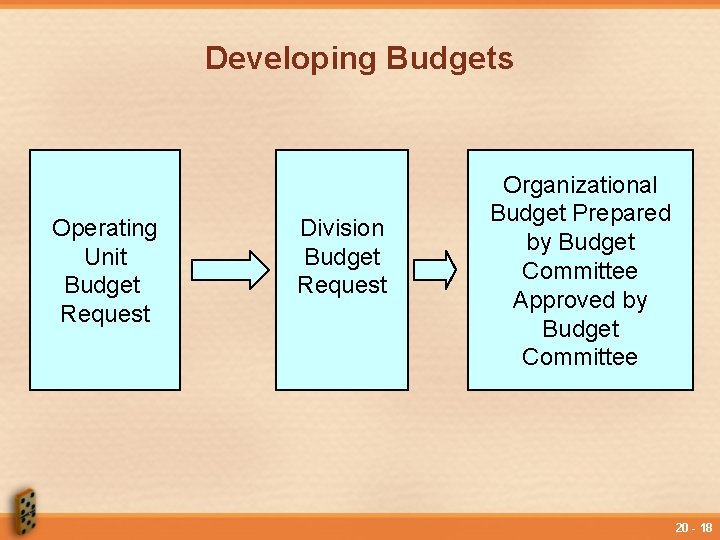
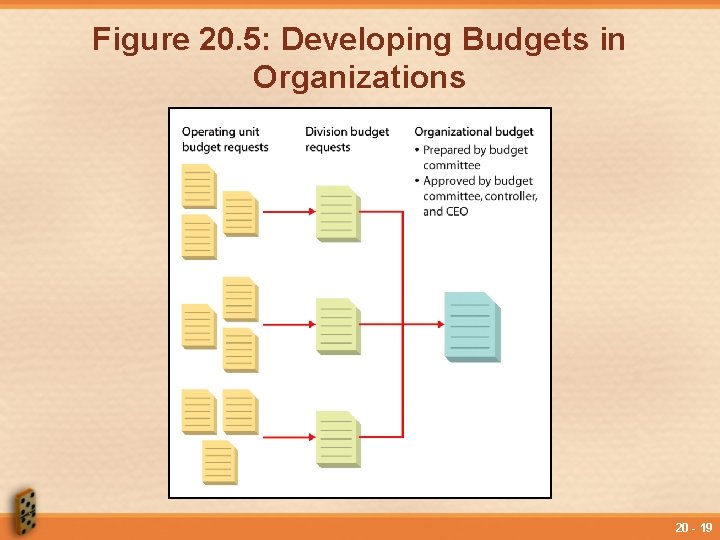
Developing Budgets Operating Unit Budget Request Division Budget Request Organizational Budget Prepared by Budget Committee Approved by Budget Committee 20 - 18
Figure 20. 5: Developing Budgets in Organizations 20 - 19
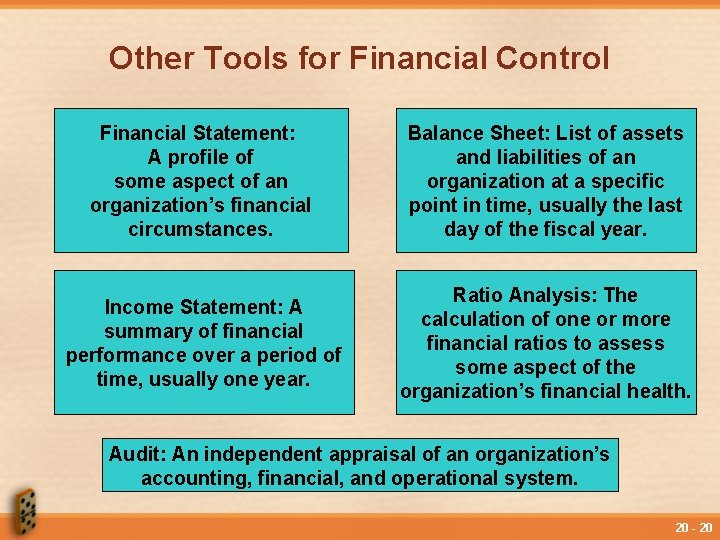
Other Tools for Financial Control Financial Statement: A profile of some aspect of an organization’s financial circumstances. Balance Sheet: List of assets and liabilities of an organization at a specific point in time, usually the last day of the fiscal year. Income Statement: A summary of financial performance over a period of time, usually one year. Ratio Analysis: The calculation of one or more financial ratios to assess some aspect of the organization’s financial health. Audit: An independent appraisal of an organization’s accounting, financial, and operational system. 20 - 20
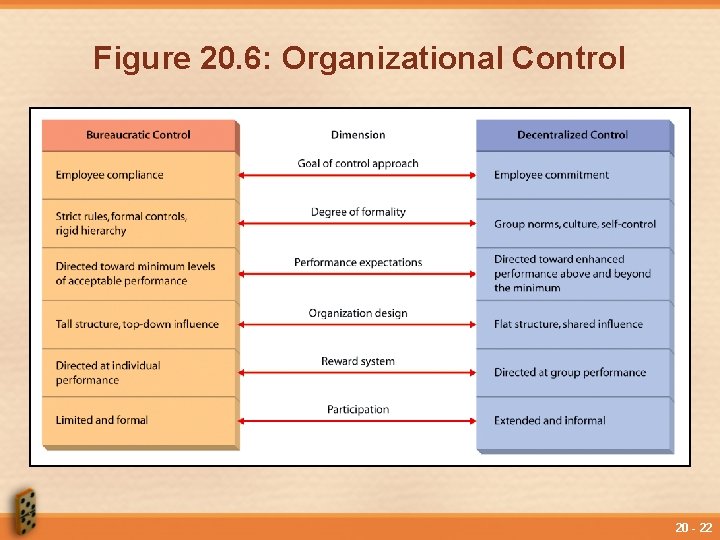
What Is Bureaucratic Control? • A form of organizational control characterized by formal and mechanistic structural arrangements. • What is clan control? – An approach to organizational control characterized by informal and organic structural arrangements. 20 - 21
Figure 20. 6: Organizational Control 20 - 22
What Is Meant by Strategic Control • Control aimed at ensuring that the organization is maintaining an effective alignment with its environment and moving toward achieving its strategic goals. 20 - 23
Characteristics of Effective Control • Integration with planning • Flexibility • Accuracy • Timeliness • Objectivity 20 - 24
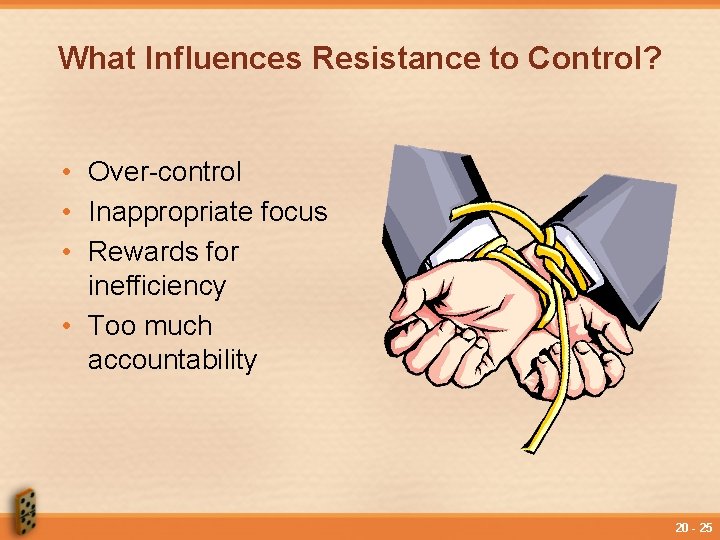
What Influences Resistance to Control? • Over-control • Inappropriate focus • Rewards for inefficiency • Too much accountability 20 - 25
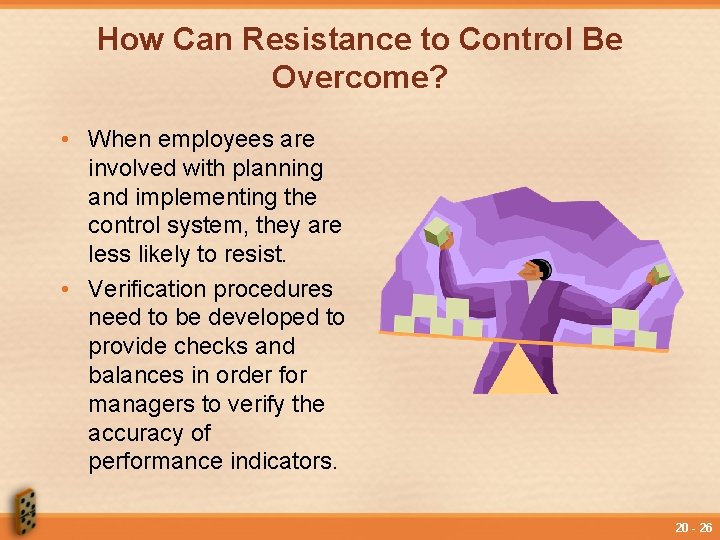
How Can Resistance to Control Be Overcome? • When employees are involved with planning and implementing the control system, they are less likely to resist. • Verification procedures need to be developed to provide checks and balances in order for managers to verify the accuracy of performance indicators. 20 - 26