
20 1 BellringerNotes I Environmental Effects on Health
20. 1 Bellringer/Notes
I. Environmental Effects on Health A. Pollution causes illnesses directly and indirectly. 1. Directly – lead poisoning and lung cancer. 2. Indirectly – diseases, such as cholera spread in polluted environments B. The World Health Organization estimates poor health by days of healthy life lost to death and disease, in different world regions. 1. people in developing countries suffer greater health impacts. 2. The main factor is infectious diseases which are more common in crowded areas with poor sanitation.
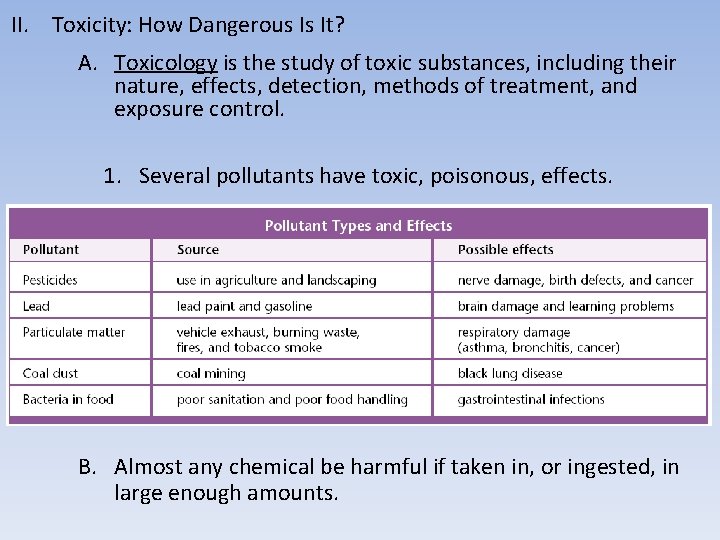
II. Toxicity: How Dangerous Is It? A. Toxicology is the study of toxic substances, including their nature, effects, detection, methods of treatment, and exposure control. 1. Several pollutants have toxic, poisonous, effects. B. Almost any chemical be harmful if taken in, or ingested, in large enough amounts.
C. The toxic effect of a chemical depends on: 1. 2. 3. 4. Dose Exposure Body size Body’s ability to break down the chemicals
III. Epidemiology A. Epidemiology is the study of the distribution of diseases in populations and the study of factors that influence the occurrence and spread of disease. 1. When an epidemic occurs, epidemiologists collect data from health workers on when and where cases of the disease have occurred. 2. Scientists trace the disease to try to find its origin and how to prevent it from spreading.
IV. Pollution from Natural Sources A. Naturally occurring pollutants usually become hazardous to health when they are concentrated above their normal levels in the environment. 1. The most common pollutants from natural sources are dust, soot, and other particulates. B. Particulates - fine particles that are suspended in the atmosphere; associated with air pollution. 1. Can become trapped in the tiny air sacs in our lungs. 2. This results in irritation, which can make lung conditions, such as chronic bronchitis and emphysema.
C. Another pollutant from natural sources are heavy metals. 1. arsenic, cadmium, lead, and mercury. 2. Most of these elements cause nerve damage when they are ingested beyond their threshold dose. V. Industrial Chemicals A. Sources include new buildings that have new furnishings, older building that were painted using lead-based paint. 1. Lead is directly linked to brain damage and learning disabilities.
VI. Waste Disposal A. Much of the pollution in our environment is a byproduct of inadequate waste disposal. 1. Toxic chemicals continue to be carried into our waterways, while incineration plants release toxic products into the air.
- Slides: 8