
2 Year College vs 4 Year University What




- Slides: 25
2 -Year College vs. 4 -Year University
What is a 2 -year college? • The most common type of 2 -year college is referred to as a community college. • Community colleges award Associate degrees and Certificates. • Students can begin their studies at a community college and transfer to a 4 year university or complete an Associates or Certificate and enter into the workforce.
Types of Degrees Awarded @ Community Colleges • Associate of Arts and Science – Prepare students to transfer to a 4 -year university and Note: Applied Science & include. Associate the ‘’basics’’ orof core-curriculum. Certificate programs typically do not transfer to • Associate ofa. Applied Science and Certificates four-year university. – Prepare students for vocational/technical careers in the job market. s s e u G e n o y n A ? e n a B t C h g i M s i h T Why
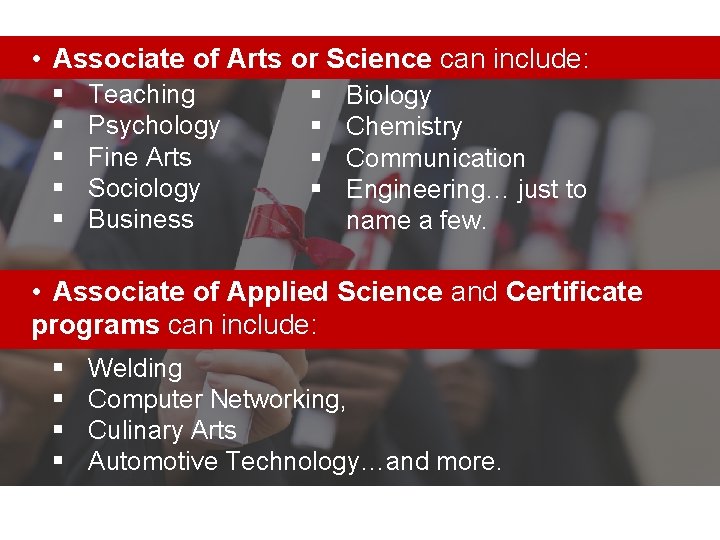
• Associate of Arts or Science can include: § § § Teaching Psychology Fine Arts Sociology Business § § Biology Chemistry Communication Engineering… just to name a few. • Associate of Applied Science and Certificate programs can include: § § Welding Computer Networking, Culinary Arts Automotive Technology…and more.
Associate of Arts or Science • General education classes – such as English, Math, History, etc. These are the courses that every student must take, regardless of major. • Lower-division electives – These classes may pertain to your major or focus, or they may be general electives that fulfill institutional requirements, such as a language or cultural class. • Classes that are related to your major – You can also take classes that will prepare you for your major once you transfer to a four-year institution. This not only cements your interest in your major, but also demonstrates to the university that you are serious about your interests, as well as have an ability to succeed in the subject matter.
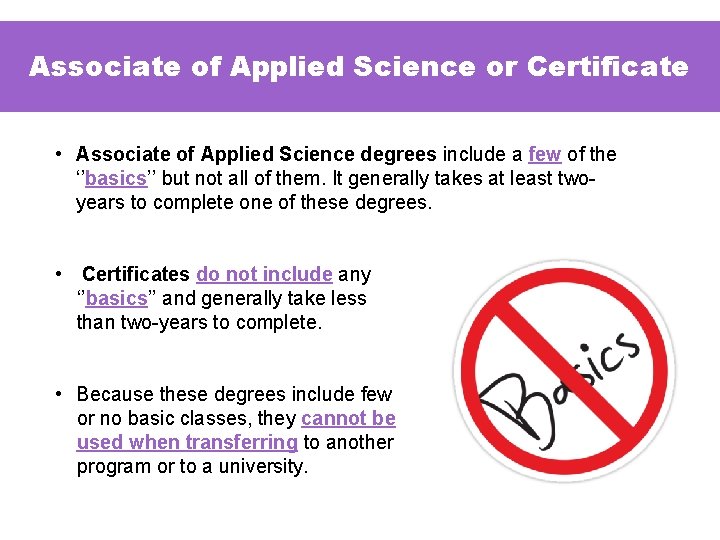
Associate of Applied Science or Certificate • Associate of Applied Science degrees include a few of the ‘’basics’’ but not all of them. It generally takes at least twoyears to complete one of these degrees. • Certificates do not include any ‘’basics’’ and generally take less than two-years to complete. • Because these degrees include few or no basic classes, they cannot be used when transferring to another program or to a university.
Examples of Community Colleges in San Antonio • Can anyone name the five community colleges here in San Antonio? • San Antonio College (SAC) • St. Philip’s College (SPC) • Palo Alto College (PAC) • Northwest Vista College (NVC) • Northeast Lakeview College (NLC)
45% of the U. S. population attends a community college.
• Stop now and split class into two groups • Group A will debate pros of entering a two year and cons of entering a four year. • Group B will debate pros of entering a four year and cons of entering two year. • Have groups research their assignments and have groups debate pros and cons of two year and four years.
Who Goes To Community College? �Texas: 55% of post-secondary students enrolled in a community college. �Texas: 80% Bachelor’s students previously attended a community college.
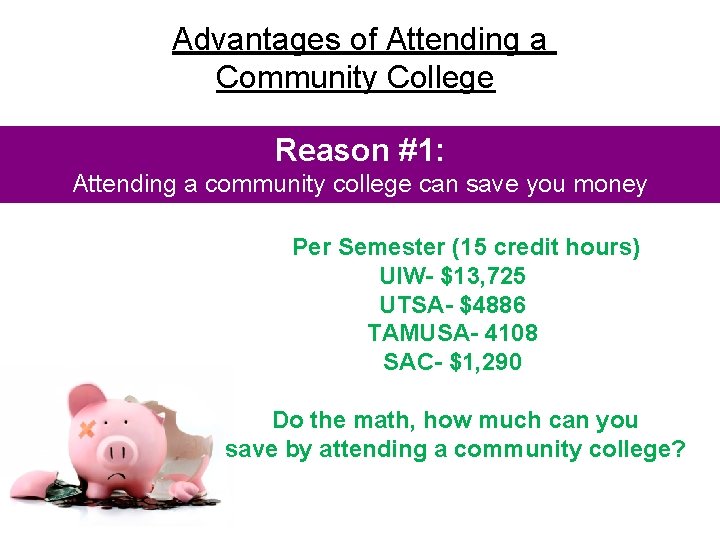
Advantages of Attending a Community College Reason #1: Attending a community college can save you money Per Semester (15 credit hours) UIW- $13, 725 UTSA- $4886 TAMUSA- 4108 SAC- $1, 290 Do the math, how much can you save by attending a community college?
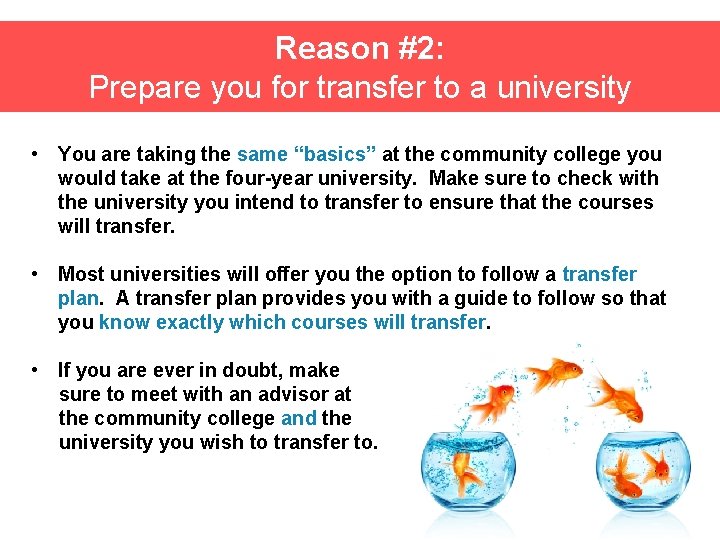
Reason #2: Prepare you for transfer to a university • You are taking the same “basics” at the community college you would take at the four-year university. Make sure to check with the university you intend to transfer to ensure that the courses will transfer. • Most universities will offer you the option to follow a transfer plan. A transfer plan provides you with a guide to follow so that you know exactly which courses will transfer. • If you are ever in doubt, make sure to meet with an advisor at the community college and the university you wish to transfer to.
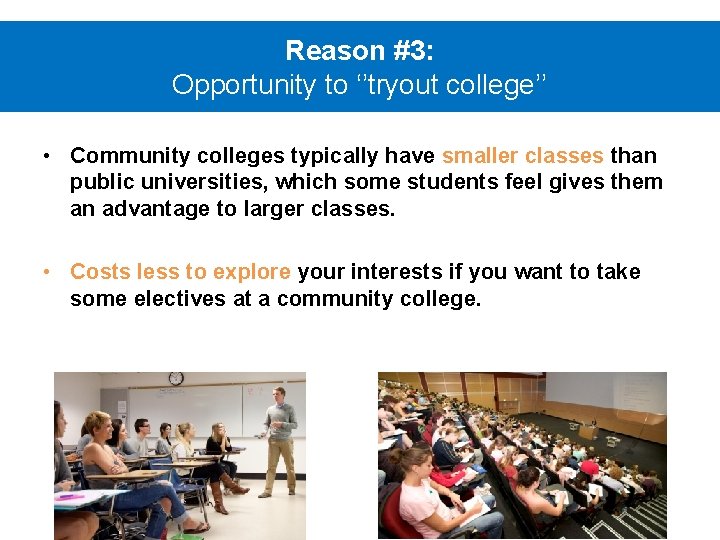
Reason #3: Opportunity to ‘’tryout college’’ • Community colleges typically have smaller classes than public universities, which some students feel gives them an advantage to larger classes. • Costs less to explore your interests if you want to take some electives at a community college.
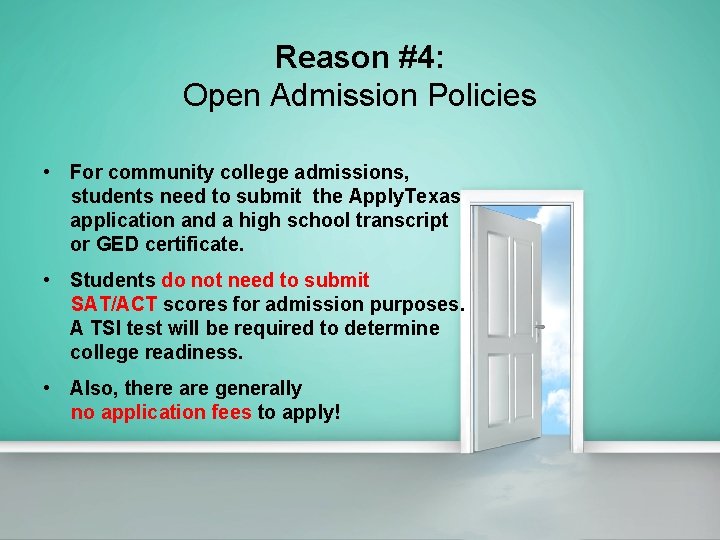
Reason #4: Open Admission Policies • For community college admissions, students need to submit the Apply. Texas application and a high school transcript or GED certificate. • Students do not need to submit SAT/ACT scores for admission purposes. A TSI test will be required to determine college readiness. • Also, there are generally no application fees to apply!
Reason #5: Transfer Admission Policies • Most universities consider students with 30 or more hours a transfer student. • This means that they no longer look at your high school GPA or SAT/ACT scores for admissions. Your transcript will be evaluated for transfer purposes and your transfer GPA calculated.
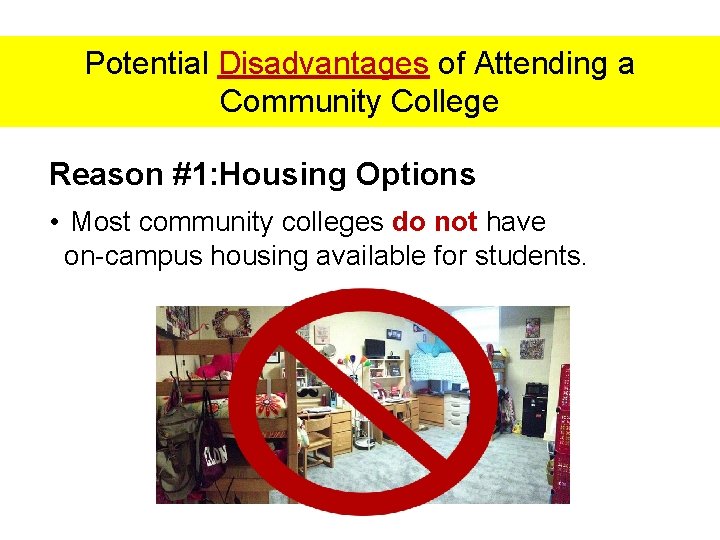
Potential Disadvantages of Attending a Community College Reason #1: Housing Options • Most community colleges do not have on-campus housing available for students.
Reason #2: Must Plan Ahead • It is important to check with the university you plan to transfer to early on so that you know exactly which courses will transfer from the community college. Planning ahead will ensure you get the most from your community college experience.
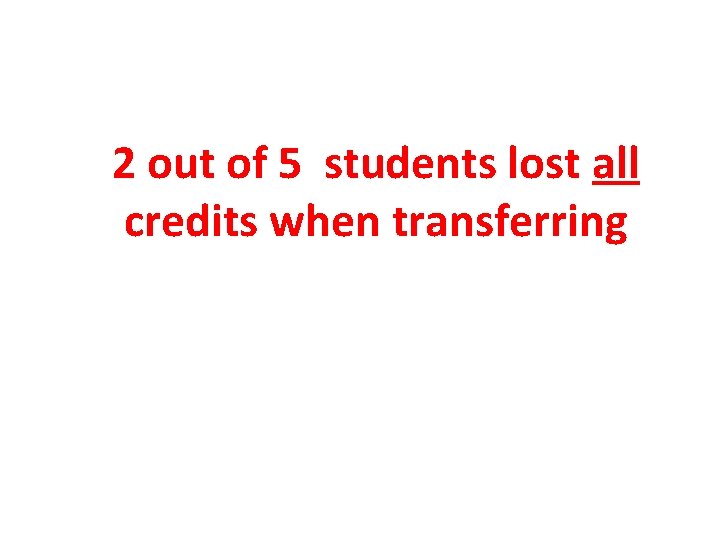
2 out of 5 students lost all credits when transferring
Tips for planning ahead Things to do before you start taking classes • Think about where you would like to transfer • Meet with an admission or transfer counselor from that University • Ask if that school has a Joint Admission or Agreement? • Are there transfer plans available?
The Benefits can outway the Disadvantages. . . • However, community colleges are not for everyone. Do your research and visit different campuses to make sure you find an option that is the best fit for you.
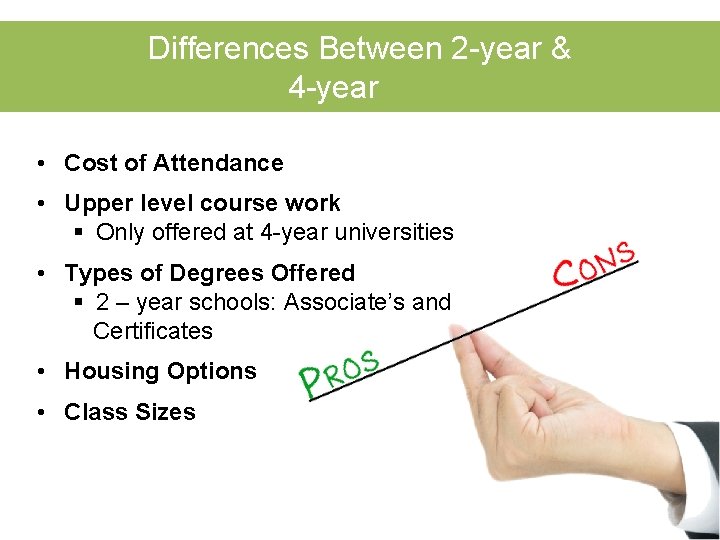
Differences Between 2 -year & 4 -year • Cost of Attendance • Upper level course work § Only offered at 4 -year universities • Types of Degrees Offered § 2 – year schools: Associate’s and Certificates • Housing Options • Class Sizes
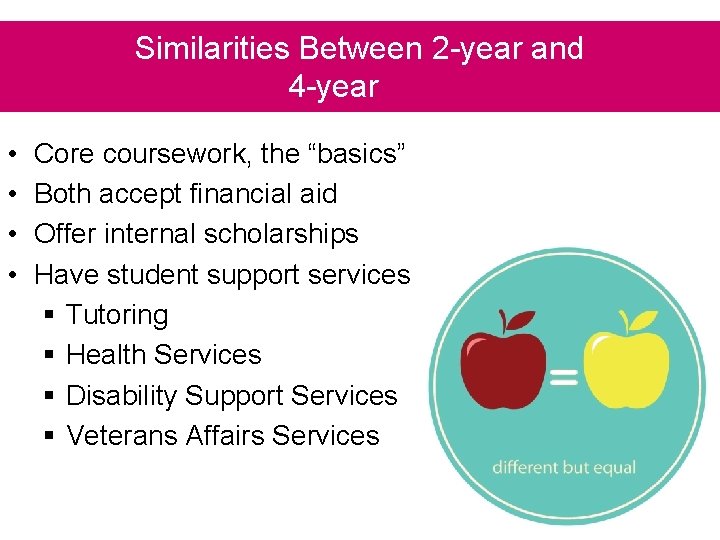
Similarities Between 2 -year and 4 -year • • Core coursework, the “basics” Both accept financial aid Offer internal scholarships Have student support services § Tutoring § Health Services § Disability Support Services § Veterans Affairs Services
What happens when you transfer? • Transcript reviewed for credits earned • Advising • Orientation • Registration • Payment: Financial Aid
Do your research and figure out what is the right fit for you. Still confused? Visit cafécollege for assistance!
? s n o i t s e Qu