
2 We can describe motion in three ways
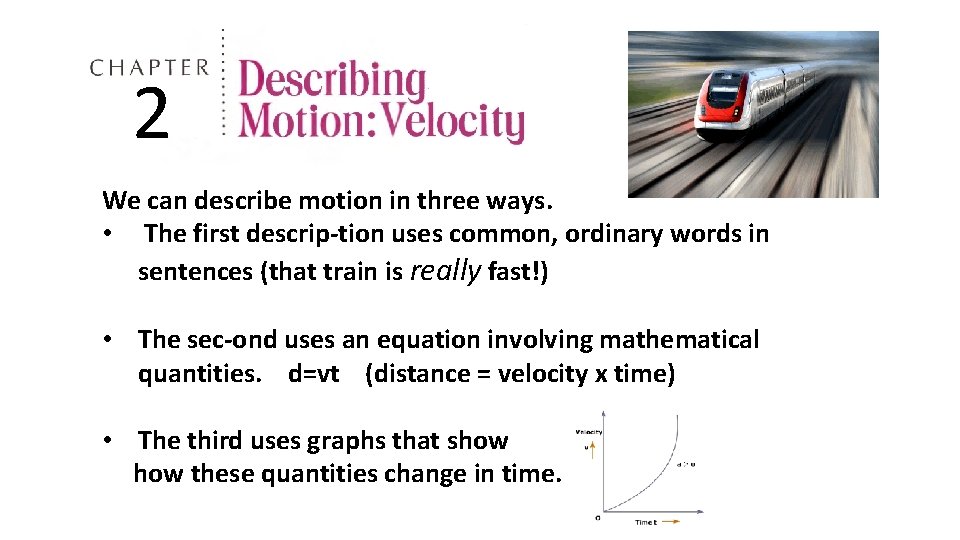
2 We can describe motion in three ways. • The first descrip tion uses common, ordinary words in sentences (that train is really fast!) • The sec ond uses an equation involving mathematical quantities. d=vt (distance = velocity x time) • The third uses graphs that show these quantities change in time.
Objectives: 1. define and give an example of a frame of reference. 2. define the concept of average velocity in a way that shows you know how to calculate it. 3. demonstrate the ability to calculate average velocity and to solve an equation involving velocity, distance, and time. 4. interpret and plot position time graphs for positive and negative positions.
Some “Ground” Rules: • We will only describe motion, not (yet) try to explain its causes. • We will study only linear straight line motions. • We will treat moving objects as Point Objects, not three-dimensional objects.

Reference Point The “Zero” or starting point from which movement and distance are measured. link
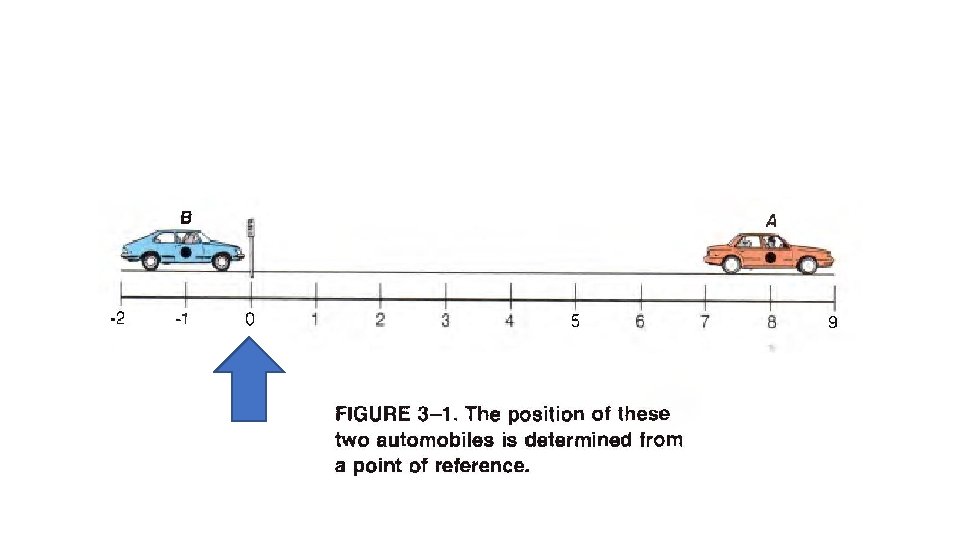

Negative Distance Positive Distance
Distance vs. Displacement Distance is simply the distance between two objects. One of them MAY be the Reference Point, but both might just be physical objects like cars or people. Displacement is a comparison of “where you ended your motion” to where “you started it”. Both use the same units: meters , feet, miles , Km… These are SCALAR terms – they do not tell us anything about the DIRECTION of movement.
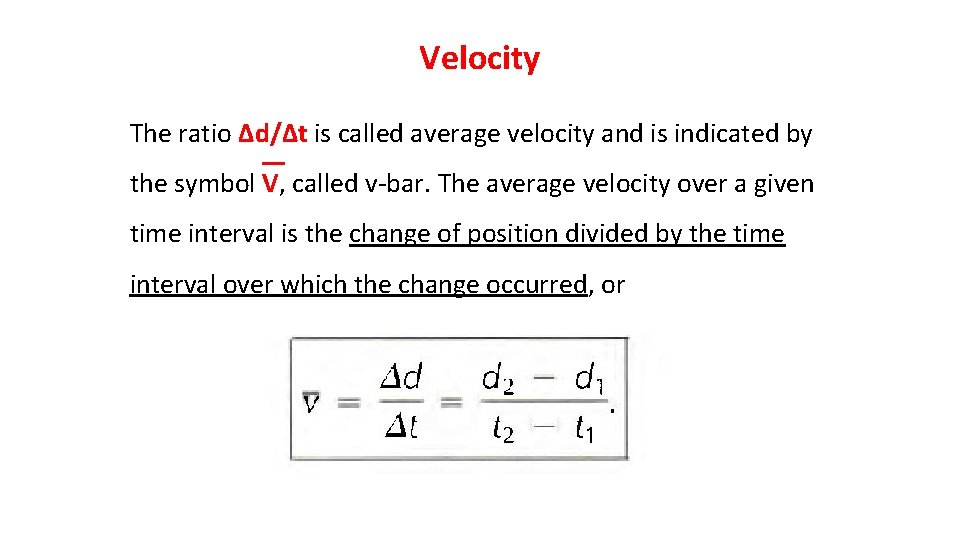
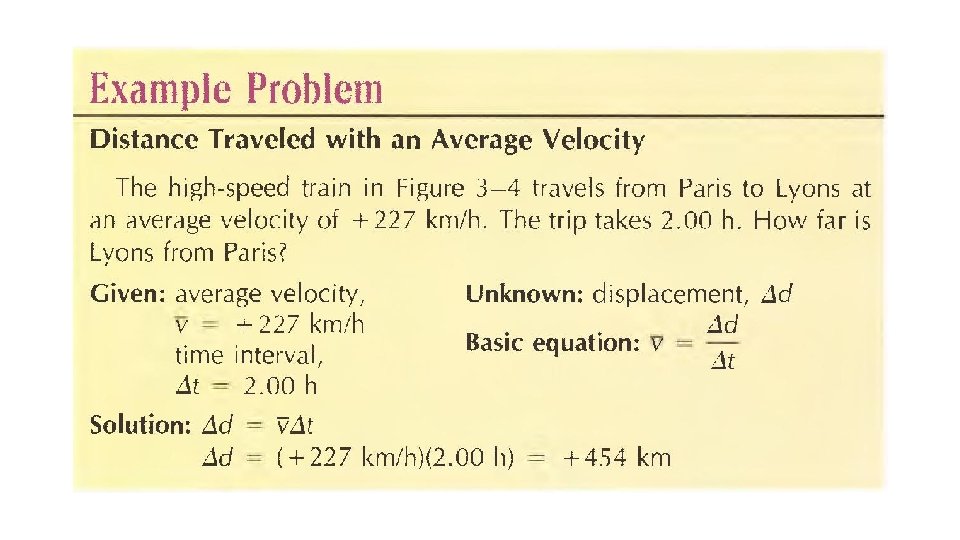
Velocity The ratio Δd/Δt is called average velocity and is indicated by the symbol V, called v-bar. The average velocity over a given time interval is the change of position divided by the time interval over which the change occurred, or
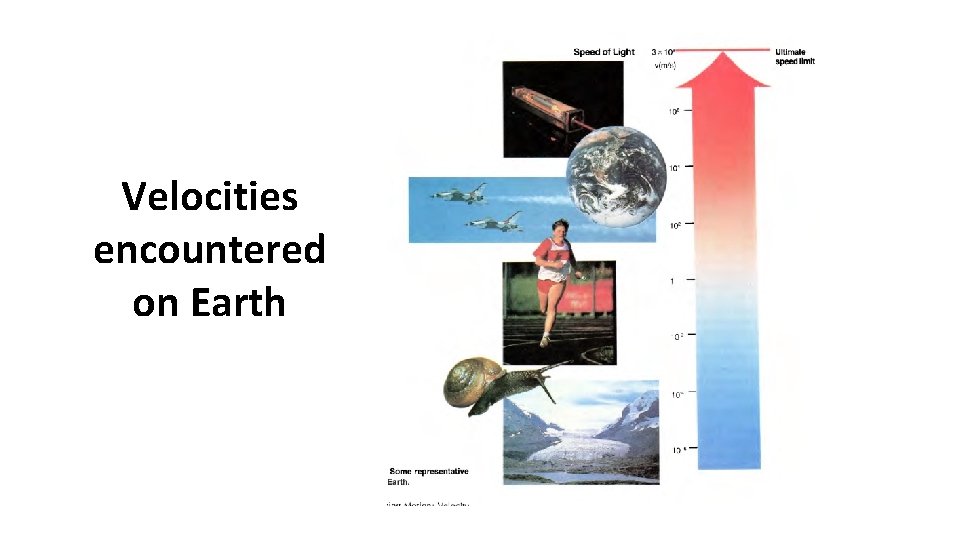
Velocities encountered on Earth ,

Random Cute Kitten Slide…
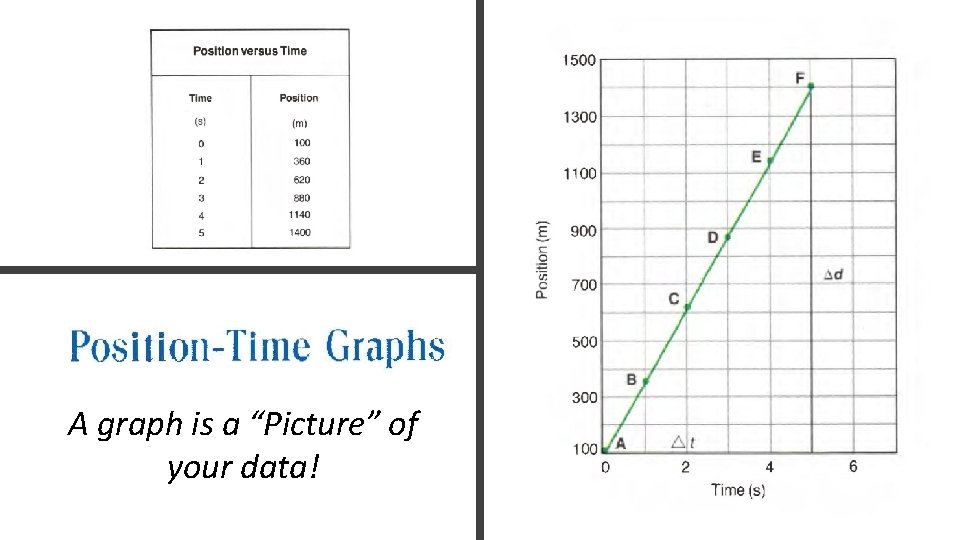
A graph is a “Picture” of your data!
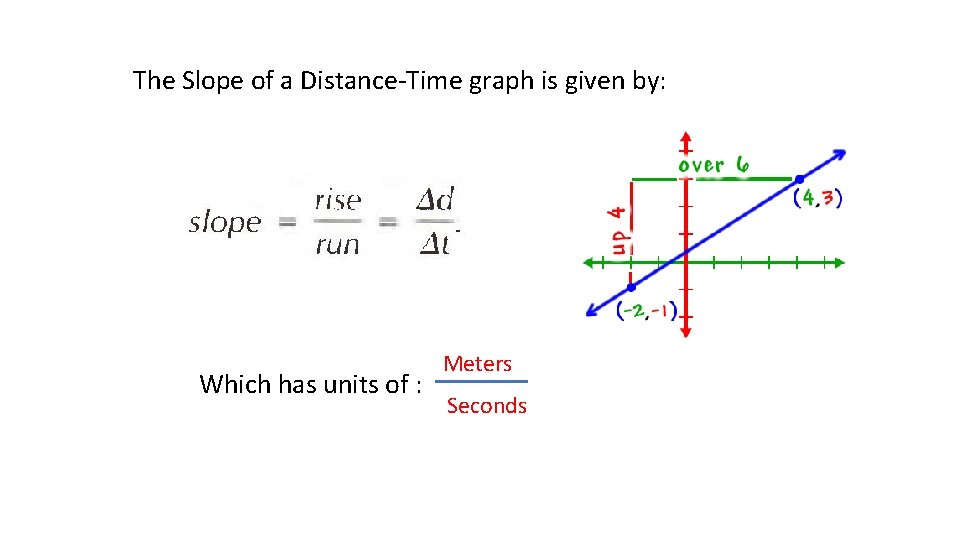
The Slope of a Distance-Time graph is given by: Which has units of : Meters Seconds
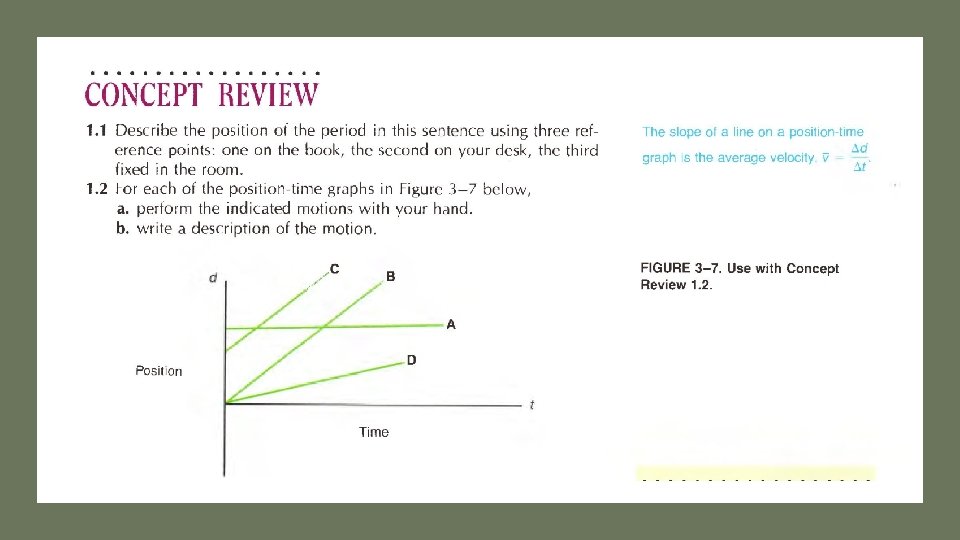
- Slides: 15