
2 types of cell division Mitosis VS Meiosis

- Slides: 12
2 types of cell division: Mitosis VS Meiosis
Types of Cells: �The process of Differentiation produces different types of cells. � 3 major types of cells: Somatic Cells (regular Body Cells) Gametes (“Germ cells” or “sex cells”) Stem Cells (undifferentiated cells – can become any type of cell)
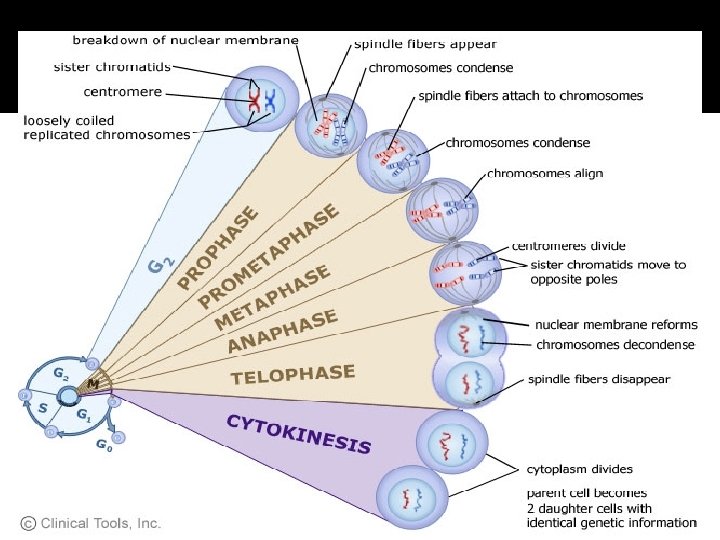
Somatic Cells (Body Cells) �Somatic Cells reproduce by undergoing MITOSIS Both resulting cells are essentially identical (clones) Parent cell and Daughter Cells are DIPLOID (2 n), meaning they have 2 of each chromosome ▪ (1 from Mom and 1 from Dad) Mitosis is important for organismal growth and repair. Mitosis also serves as ASEXUAL reproduction for Single- Celled Organisms.
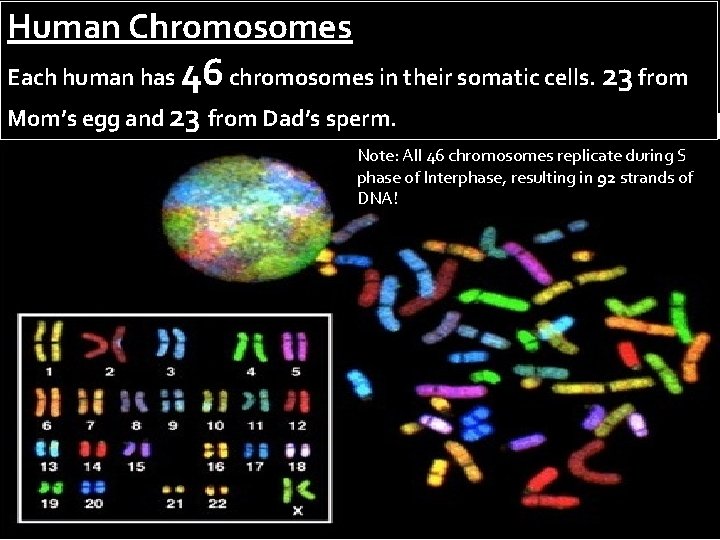
Human Chromosomes Each human has 46 chromosomes in their somatic cells. 23 from Mom’s egg and 23 from Dad’s sperm. Note: All 46 chromosomes replicate during S phase of Interphase, resulting in 92 strands of DNA!
S-Phase of Interphase � DNA replication � Karyotype pictures are taken during Prophase, when chromosome pairs are condensed and easily seen.
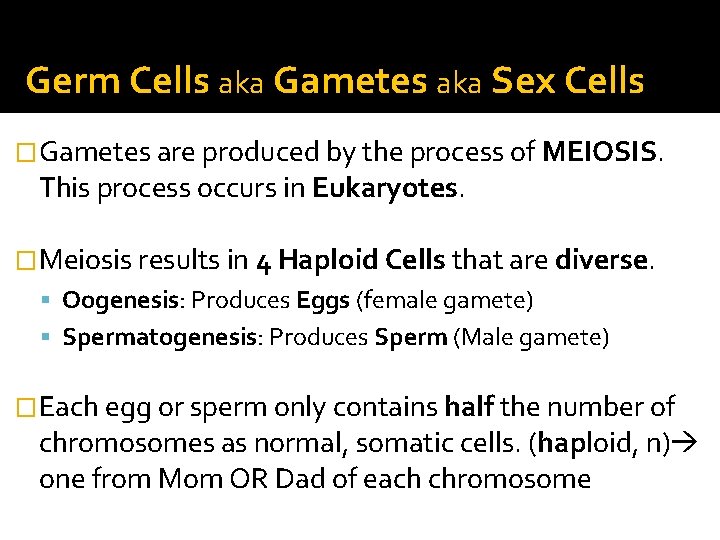
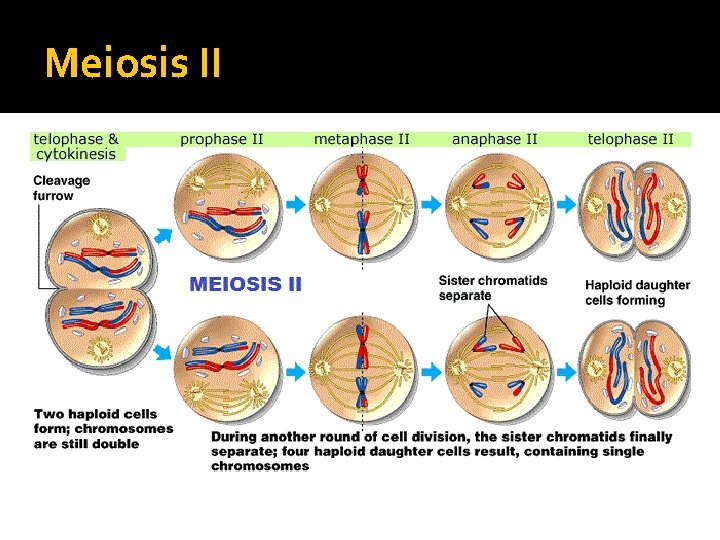
Germ Cells aka Gametes aka Sex Cells �Gametes are produced by the process of MEIOSIS. This process occurs in Eukaryotes. �Meiosis results in 4 Haploid Cells that are diverse. Oogenesis: Produces Eggs (female gamete) Spermatogenesis: Produces Sperm (Male gamete) �Each egg or sperm only contains half the number of chromosomes as normal, somatic cells. (haploid, n) one from Mom OR Dad of each chromosome
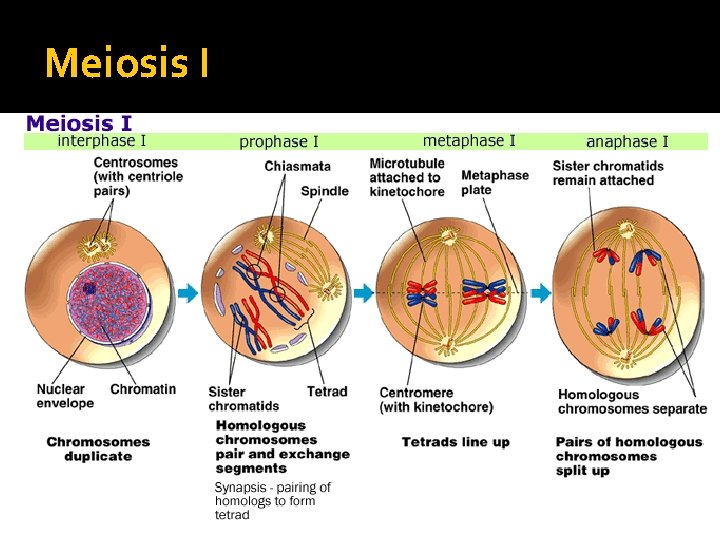
Meiosis I
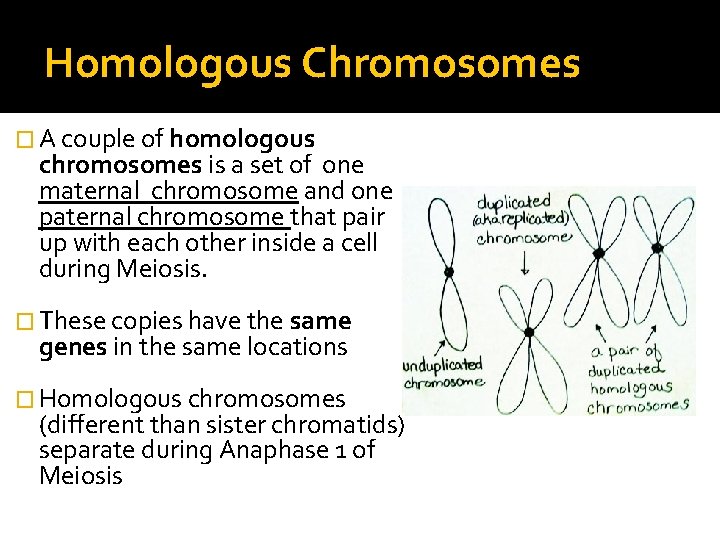
Homologous Chromosomes � A couple of homologous chromosomes is a set of one maternal chromosome and one paternal chromosome that pair up with each other inside a cell during Meiosis. � These copies have the same genes in the same locations � Homologous chromosomes (different than sister chromatids) separate during Anaphase 1 of Meiosis
Meiosis II
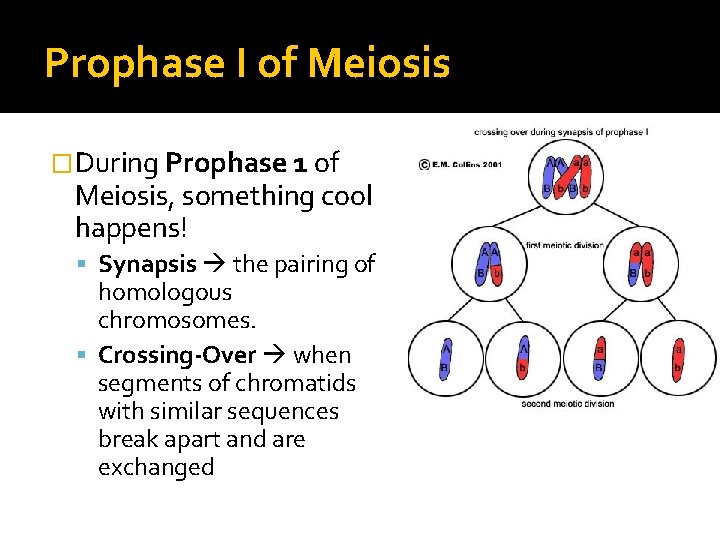
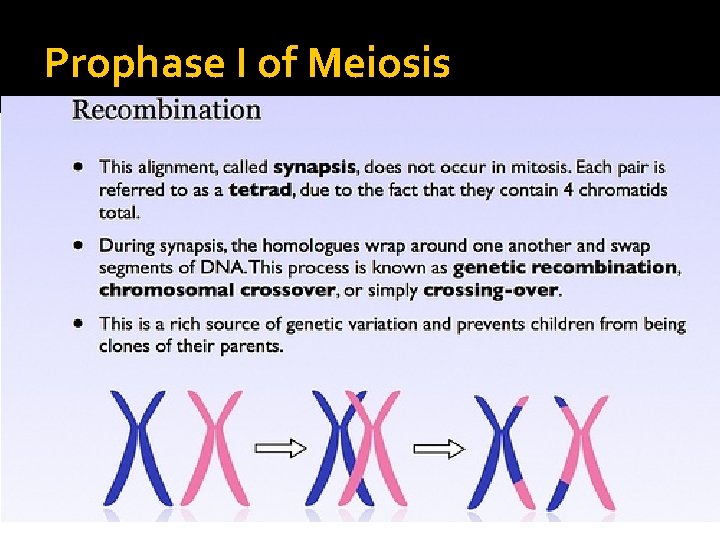
Prophase I of Meiosis �During Prophase 1 of Meiosis, something cool happens! Synapsis the pairing of homologous chromosomes. Crossing-Over when segments of chromatids with similar sequences break apart and are exchanged
Prophase I of Meiosis