
2 stroke engines 2 stroke engines Most common
- Slides: 28
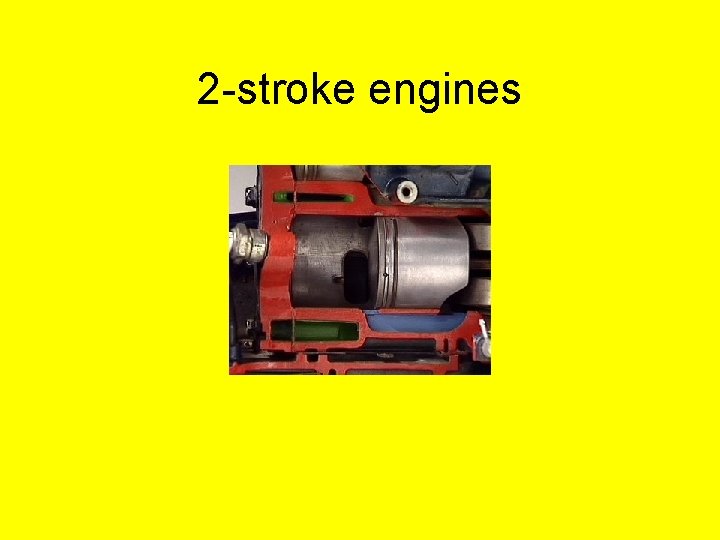
2 -stroke engines
2 -stroke engines • Most common in: – Dirt Bikes – ATV – Snow mobiles – Jet Skis – Lawn Mowers – Etc.
2 stroke vs 4 stroke • The 2 -stroke petrol engine is different from the 4 -stroke petrol engine. In a 2 -stroke engine the inlet and exhaust ports are open and closed by the movement of the piston. But it is still an internal combustion engine and has the five events common to all such engines.
• Summary In most 2 -stroke gasoline engines the inlet and exhaust ports are opened and closed by the movement of the piston, not valves. • Intake occurs when the air-fuel mixture enters the crankcase. It is then transferred from the crankcase to above the piston. • Compression, forcing the mixture into a small volume. • Ignition when the spark from the spark plug ignites the mixture, and it burns. • Power, where energy released by combustion generates the force that turns the crankshaft. • And Exhaust, removing leftover gases. • As in all internal combustion engines, these five events must occur, but not always in the same way.
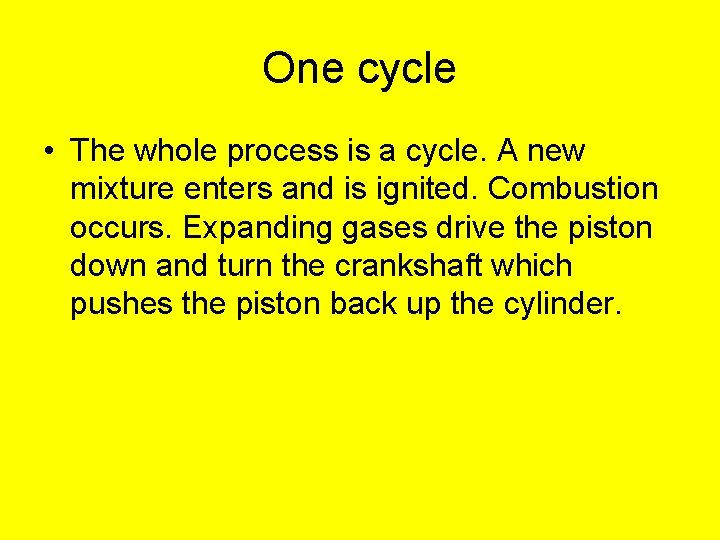
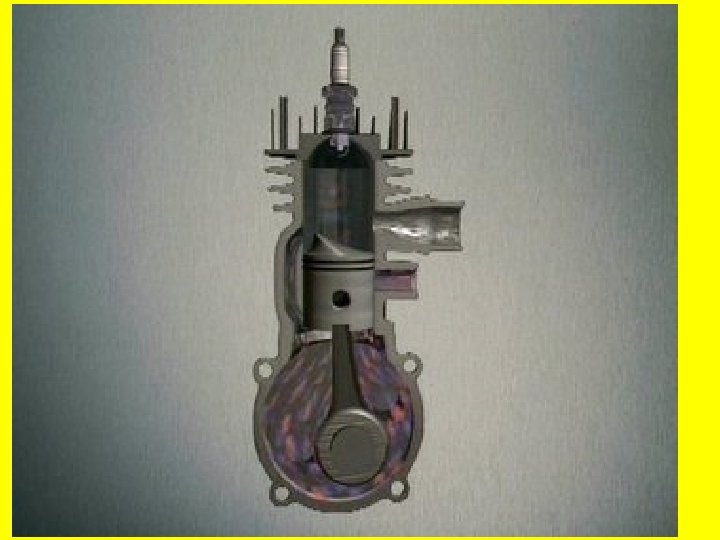
One cycle • The whole process is a cycle. A new mixture enters and is ignited. Combustion occurs. Expanding gases drive the piston down and turn the crankshaft which pushes the piston back up the cylinder.
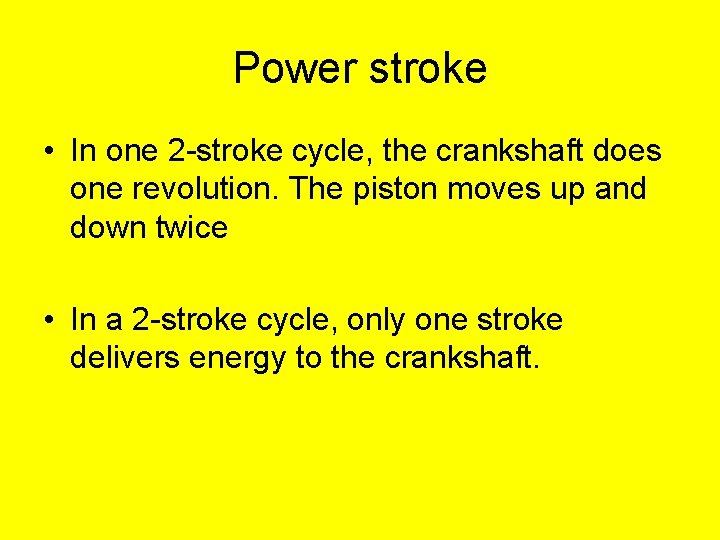
Power stroke • In one 2 -stroke cycle, the crankshaft does one revolution. The piston moves up and down twice • In a 2 -stroke cycle, only one stroke delivers energy to the crankshaft.
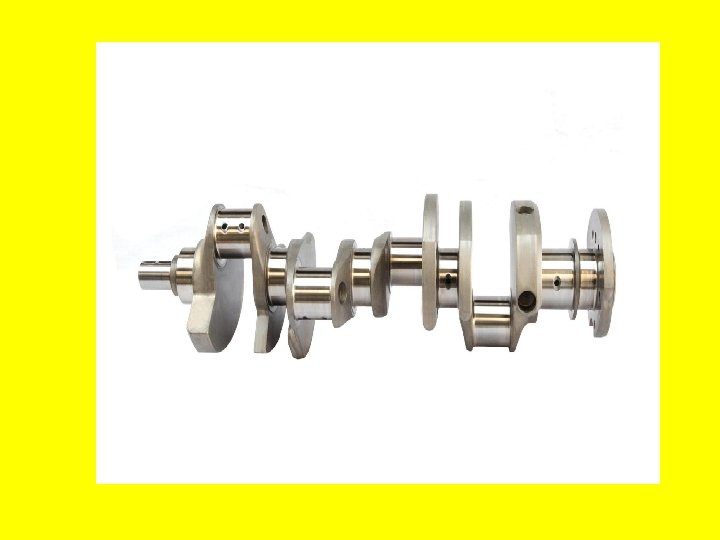
Crankshaft • On an internal combustion engine, the crankshaft is the part that connects to the piston rods and the flywheel. It changes the up and down motion of the pistons to the rotating motion needed to power the vehicle.
2 -stroke engine cycle In a 2 -stroke gasoline engine, the air-fuel mixture first enters the crankcase. It then passes through the transfer port into the combustion chamber.
2 stroke vs 4 stroke • A 4 -Stroke engine, a stroke is the distance from top dead center to bottom dead center.
Definitions • TDC- Top dead center, the piston is at the highest point in the cylinder before starting to move downward • BDC- Bottom dead center, the piston is in the lowest point in the cylinder before starting to move upward
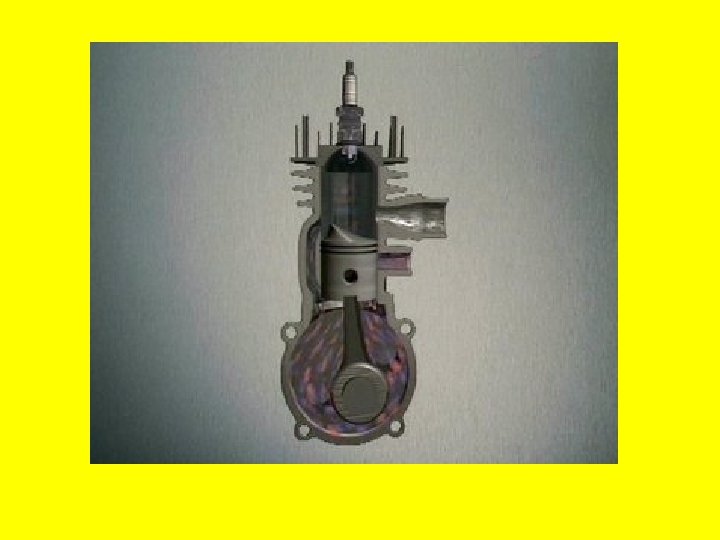
Steps of a 2 -stroke • The piston moves up the cylinder from its lowest point, bottom dead center, compressing air-fuel mixture already in the combustion chamber.
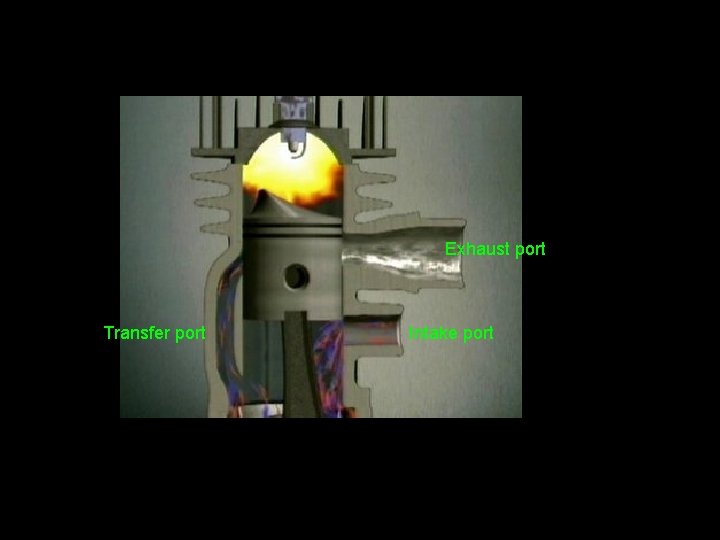
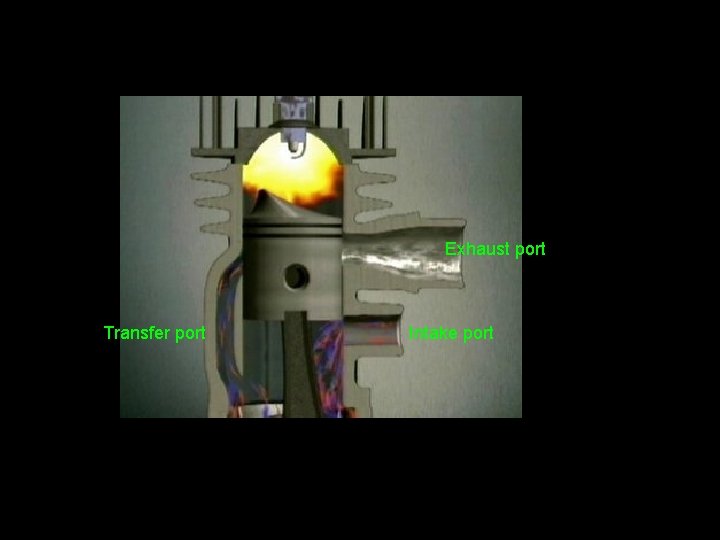
Steps of a 2 -stroke • As the piston rises, the top of the piston covers the exhaust port and the transfer port. The transfer port is a third port or passage between crankcase and cylinder. The bottom of the piston then uncovers the inlet port in the same stroke.
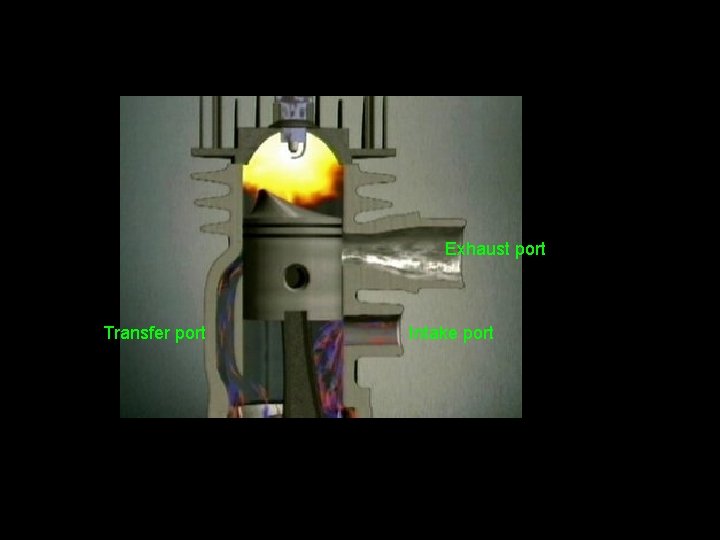
Exhaust port Transfer port Intake port
Steps of a 2 -stroke • At the same time, the rising piston is increasing the volume of the crankcase below the piston. • The pressure in the crankcase falls until it is less than outside air pressure. This pressure difference forces more mixture into the crankcase.
Exhaust port Transfer port Intake port
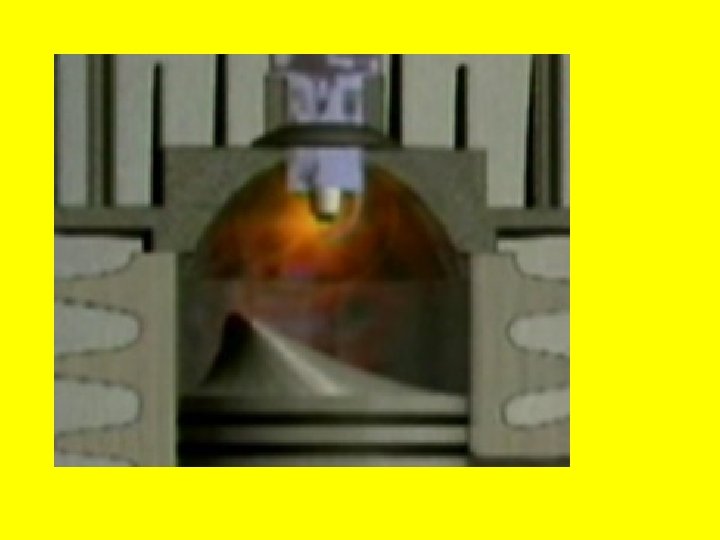
Steps of a 2 -stroke • As the piston reaches top dead center, mixture already there ignites, and expansion of gases starts to drive the piston downward. Closing the intake valve and opening the exhaust and transfer port.
Exhaust port Transfer port Intake port
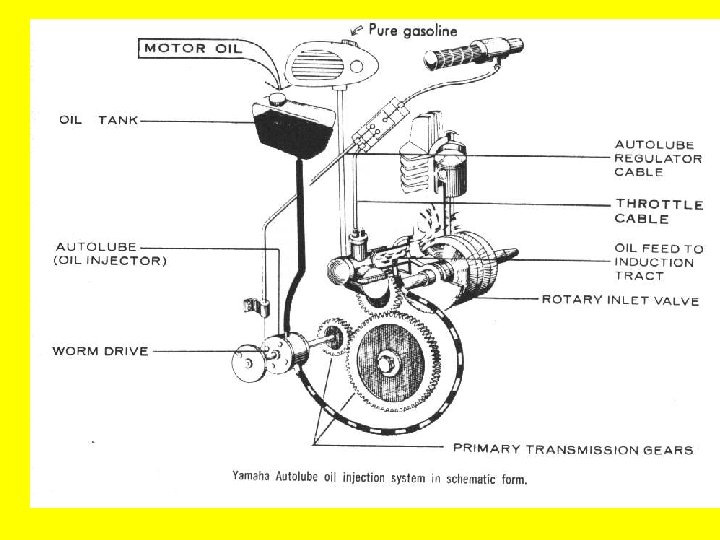
2 -stroke intake system • In some 2 -stroke gasoline engines, intake is controlled by a rotary valve in the crankshaft. Others systems use a reed valve attached to the crankcase.
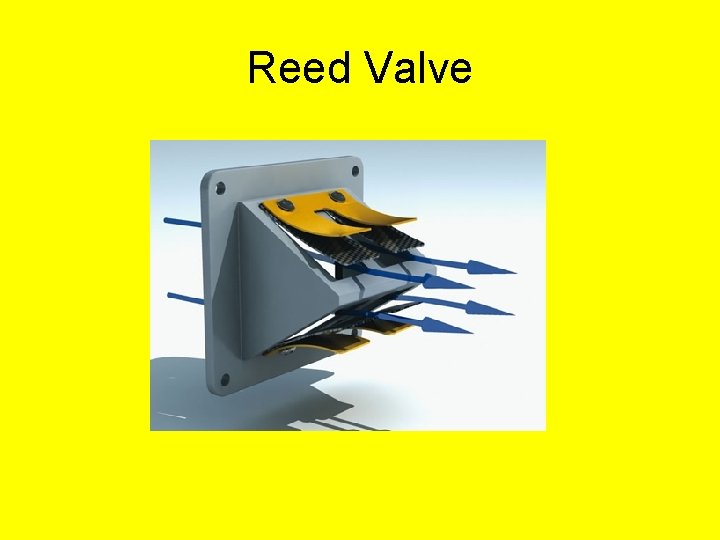
Reed Valve
Reed Valve • Reed valves are commonly used in high-performance versions of the two-stroke engine, where they control the fuel-air mixture admitted to the cylinder. • As the piston rises in the cylinder a vacuum is created in the crankcase beneath the piston. • This vacuum opens the valve and admits the fuel-air mixture into the crankcase. As the piston descends, it raises the crankcase pressure causing the valve to close to retain the mixture and pressurize it for its eventual transfer through to the combustion chamber
Rotary Valve • rotary valve’s do slightly better than reed valves because there is no restriction from reed petals. The rotary valve rotates past the crankcase intake port at a specific time to allow air through, then the rotary valve seals the air in the crankcase.
Intake system continued • This intake system is called a piston - port system because the piston acts as a valve to cover and uncover the ports. • This intake system uses a rotary valve. – As the crankshaft turns, the rotary valve rotates with it, opening and closing the inlet port as it does so. • Some 2 -stroke engines such as outboard motors use an intake system with a reed valve. It is a small flexible metal plate that covers the inlet port, and it can be attached to the crankcase, or to the inlet port. It opens and closes automatically, according to changes in pressure in the crankcase.
2 -stroke vs 4 stroke • The 2 -stroke engine makes only two strokes, one up and one down for each time it fires. That’s only one revolution of the crankshaft for each cycle. • Compare this with a 4 -stroke that needs two revolutions of the crankshaft for each engine cycle and only one power stroke for each four engine strokes.