
2 SOAPS Tone A STRATEGY FOR ACTIVE READING
- Slides: 13
2 SOAPS Tone A STRATEGY FOR ACTIVE READING & WRITING
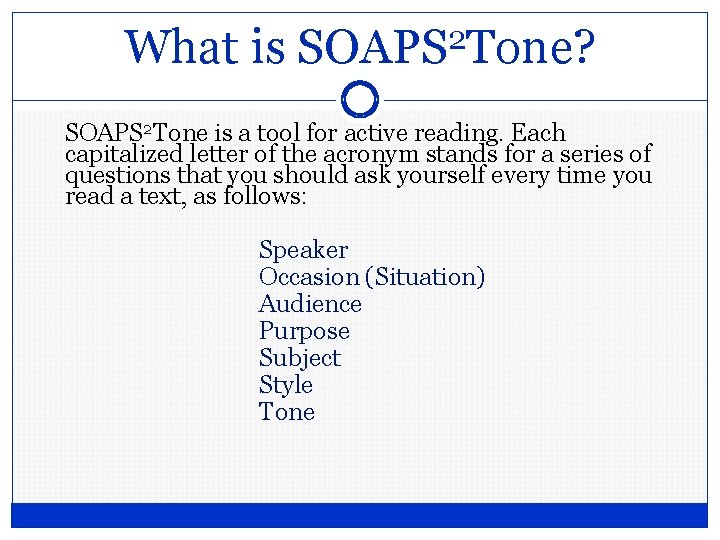
What is SOAPS 2 Tone? SOAPS 2 Tone is a tool for active reading. Each capitalized letter of the acronym stands for a series of questions that you should ask yourself every time you read a text, as follows: Speaker Occasion (Situation) Audience Purpose Subject Style Tone
Who is the Speaker? As you read, ask: What voice is telling the story, reporting on the event, or making the argument? When you write, ask: What voice do I want readers to hear? Should I use the first person, or does this assignment call for a more “objective” perspective? What characteristics of my personality should I reveal (if any) to my readers to accomplish my purpose?
What is the Occasion? When you read, you must also ask about context for the writing: What places and events have influenced the author’s ideas and opinions? What situation does the author/character face? When you write, consider the context of the assignment, the problem, etc. , which will help you to better anticipate the needs of your readers.
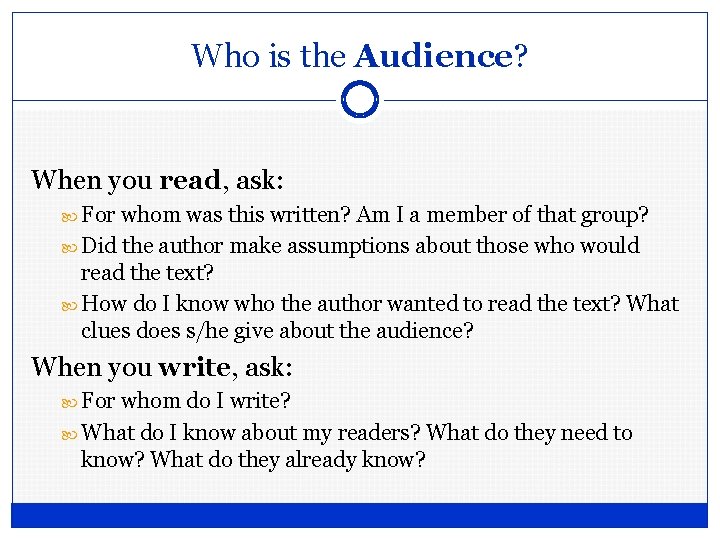
Who is the Audience? When you read, ask: For whom was this written? Am I a member of that group? Did the author make assumptions about those who would read the text? How do I know who the author wanted to read the text? What clues does s/he give about the audience? When you write, ask: For whom do I write? What do I know about my readers? What do they need to know? What do they already know?
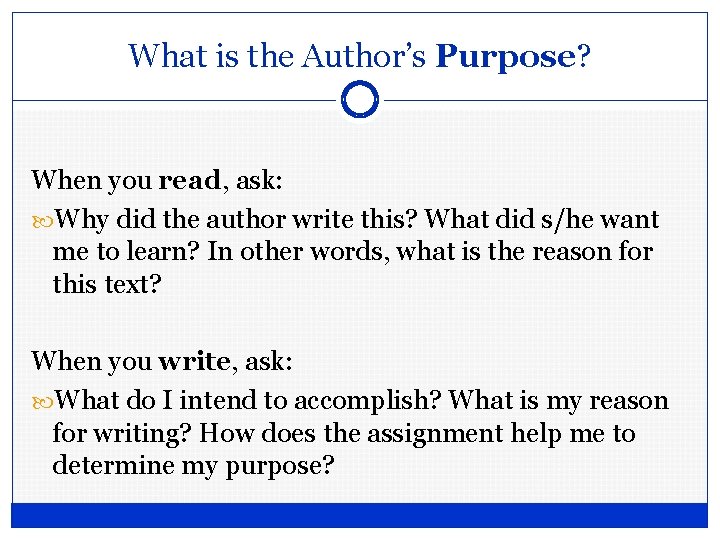
What is the Author’s Purpose? When you read, ask: Why did the author write this? What did s/he want me to learn? In other words, what is the reason for this text? When you write, ask: What do I intend to accomplish? What is my reason for writing? How does the assignment help me to determine my purpose?
What is the Subject of the text? When you read, ask: What is the author talking about? On what subject does s/he write? When you write, ask: What am I writing about?
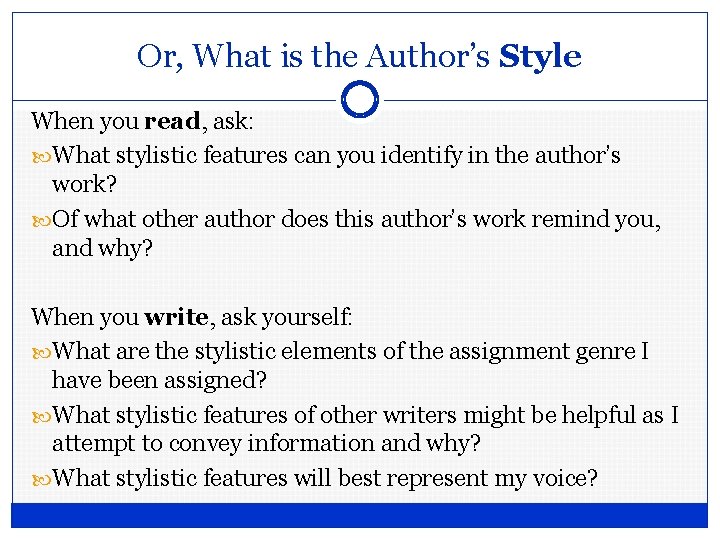
Or, What is the Author’s Style When you read, ask: What stylistic features can you identify in the author’s work? Of what other author does this author’s work remind you, and why? When you write, ask yourself: What are the stylistic elements of the assignment genre I have been assigned? What stylistic features of other writers might be helpful as I attempt to convey information and why? What stylistic features will best represent my voice?
What is the Author’s Tone? It’s about Attitude When you read, ask: How does the author’s attitude shape what I understand? Does the author imply more than what s/he actually says? When you write, ask: What do I want my audience to feel? How will my attitudes shape the audience’s willingness to accept my ideas?
Something Else to Consider Authors don’t write in a vacuum, nor do we read in one. There’s ALWAYS context! Understanding contexts—the author’s, the intended audience’s, and your own—is integral to fully comprehending a text.
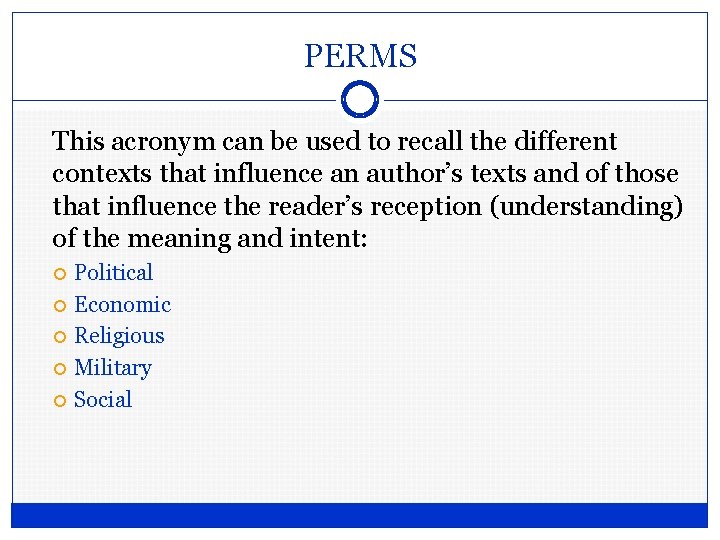
PERMS This acronym can be used to recall the different contexts that influence an author’s texts and of those that influence the reader’s reception (understanding) of the meaning and intent: Political Economic Religious Military Social
Apply SOAPS 2 Tone to actively read and write. Apply PERMS to understand the context of what you’re reading. You will never read the same again
Exit Ticket Relate SOAPS 2 Tone to the Three Appeals of Rhetoric we learned last week. What elements do they have in common? How can we marry the two strategies?