
2 RTI Behavior at Home 2 RTI Behavior
2 RTI - Behavior at Home
2 RTI -Behavior What does 2 (RTI -B) mean? RTI 2 -B is short for Response to Intervention and Instruction for Behavior. RTI 2 -B is sometimes called PBIS, which stands for Positive Behavior Interventions and Supports.
The purpose of • • 2 RTI -B PREVENT problem behavior SUPPORT students’ needs PROMOTE positive choices TEACH new skills REWARD positive behavior MODIFY the environment GUIDE adult responses is to…
2 RTI -B is not just for school! Families can use the same ideas to create a better environment at home for the entire family.
Why use 2 RTI -B? There is TONS of research that shows that RTI 2 -B does work to change kids behavior! Traditional punishment only teaches 2 kids what NOT to do, but RTI -B teaches kids what to do and what we expect. This sets our kids up for success and encourages the behavior we want to
2 RTI -B Our School’s program is called the 3 Bees!
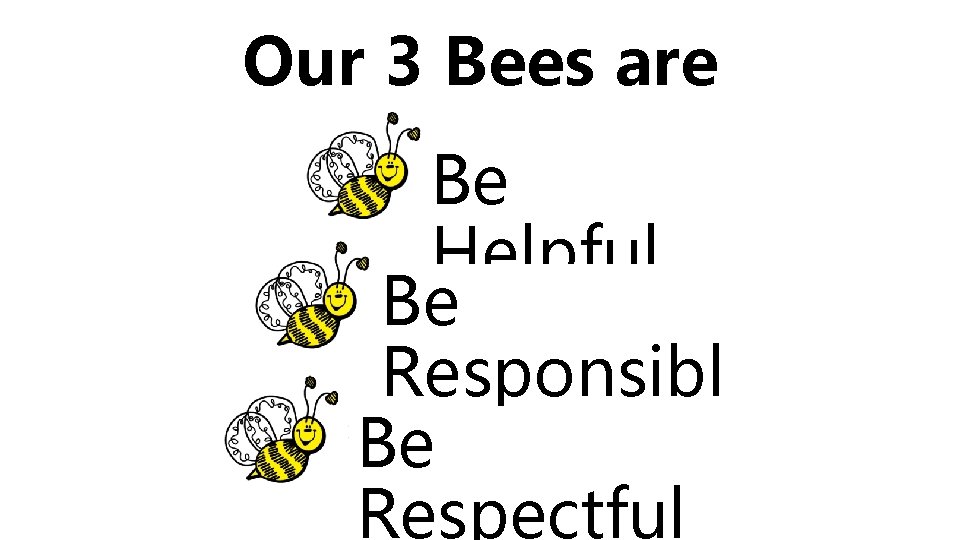
Our 3 Bees are Be Helpful Be Responsibl Be e Respectful
Steps to using the 3 Bees at Home 1. Clear Expectations 2. Family Meeting 3. Positive Reinforcement for Appropriate Behaviors 4. Consequences for Problem Behaviors
Step 1: Clear Expectations • Using a behavior matrix just like the one we use at school is a great way to set clear expectations for your child. • The matrix teaches your child the exact behavior you expect at different times or in

Home Behavior Matrix
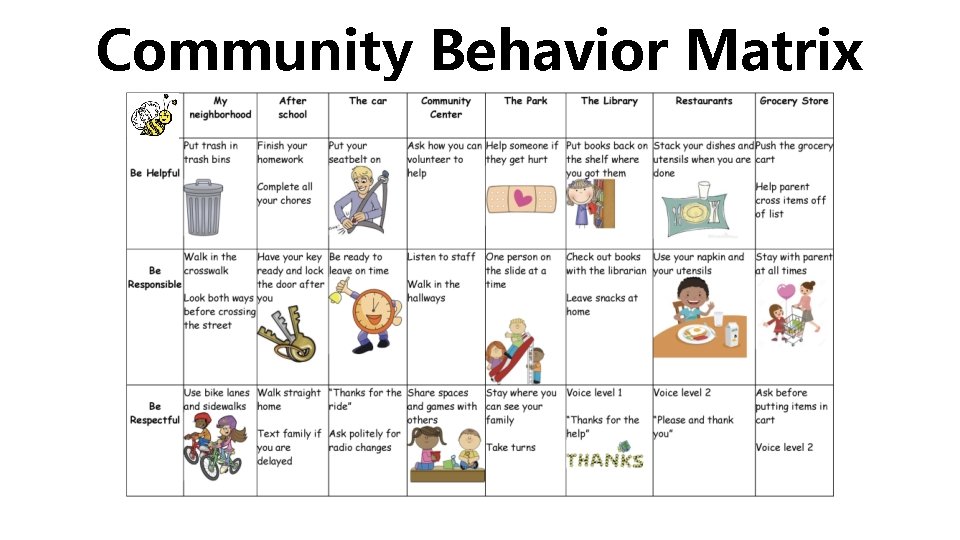
Community Behavior Matrix
Step 2: Family Meeting • Hold a family meeting to present these matrices. • Explain the expected behavior. • Demonstrate the expected behavior. • Role play/practice the behavior. • Explain the positive reinforcers and consequences
Step 3: Positive Reinforcement • It is essential that you CONSISTENTLY provide positive reinforcement of desired behaviors. • Ideas: • Point or sticker chart: One point/sticker is earned for each expectation. Then… • The child should have a goal of X number of stickers/points will equal a reward • There could be a menu of rewards with some big and some small ones that kids can buy with their points • There can also be a family goal: “when we earn X points as a family, we will…”
Reinforcement Ideas • Extra hug or high five • Extra outside time or screen time • Treasure box with small toys and treats • Choose the dinner/breakfast menu • Special treat like ice cream or candy • Extra bedtime story or other special time with parent • “Get out of chore free” card • Family outing: ice cream, movies, zoo, etc. • Movie night—choose the movie and a snack • Work up to a special toy or gift
Reinforcement Tips • It’s important to be VERY consistent, especially in the beginning! • Ask your child what reinforcers they would like. • You may need to change out reinforcers over time to keep it fresh and keep them interested
Verbal praise • Verbal praise is the most effective tool for teaching and maintaining positive behavior. • Every time that a sticker/point is given, give the child specific verbal praise. • Example: “You were so helpful
Verbal praise: Dos and Don’ts • Say: “I like how you are picking up your toys”, instead of, “Great job. ” • Say: “You must feel proud of your report card”, instead of, “I am so proud of your report card. ” • Say: “Thanks for being responsible and putting away your bike”, instead of “I LOVE you when you pick up your bike. ” • Say: “Great job following directions at
Step 4: Consequences • When problem behavior occurs it is important to: • Remain calm. • Remind your child of the expectation. • Re-teach/model and have your child practice the expected behavior. • Use consequences appropriately. Decide ahead of time what consequences there will be for problem
Tips about consequences: • Give the minimum amount of attention required to the misbehavior. Negative attention is still attention and can reinforce misbehavior! • Save talking for when they’re listening. • Use a consequence that is age appropriate and related to the misbehavior. • Related: left your bike out, lose your bike privileges for tomorrow.
Will this really work? • The good news: promoting positive behaviors in the home using RTI 2 -B principles is proven to make a positive difference in 80% of families. • The bad news (kind of): 1. Nothing works for everyone 2. You have to work at it and stay with it! • The difference: YOU will feel more positive when you focus on what is going right. Your kids will respond to that positive change in
These slides were adapted from the PBIS at Home: Step by Step Presentation from the Savannah-Chatham Public School System at http: //internet. savannah. chatham. k 12. ga. us/dis trict/Academic. Affairs/PBIS/Pages/Parents. Famil y. aspx This resource is provided by the West Tennessee Behavior Support Project. For more information, visit our website: www. tbspmemphis. com
- Slides: 21