
2 Peter Dr Andy Woods Senior Pastor Sugar

- Slides: 67
2 Peter Dr. Andy Woods Senior Pastor – Sugar Land Bible Church President – Chafer Theological Seminary
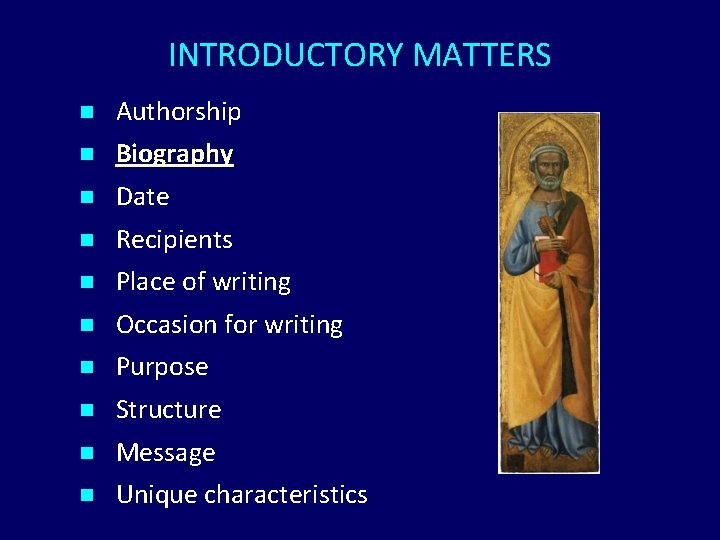
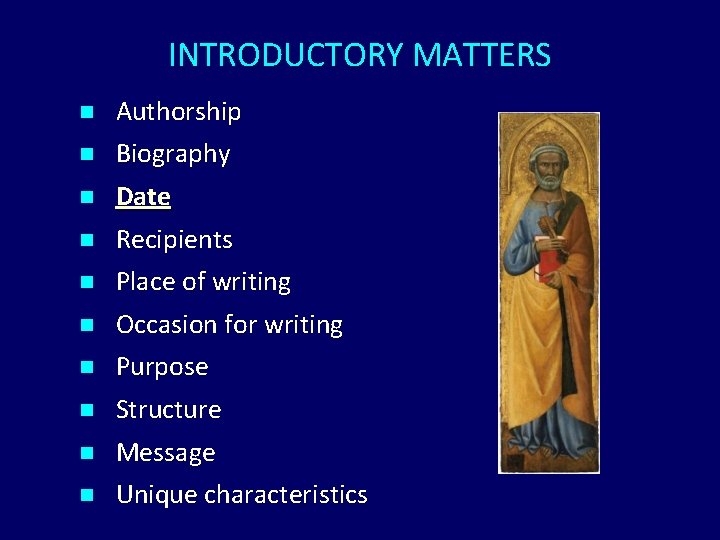
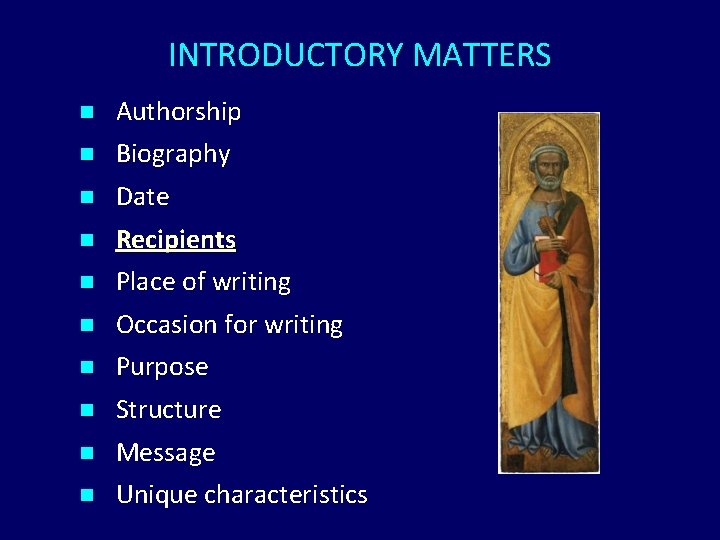
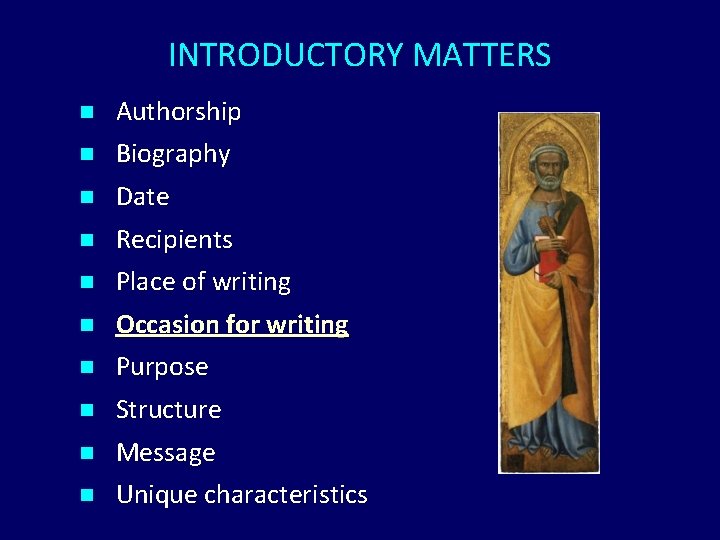
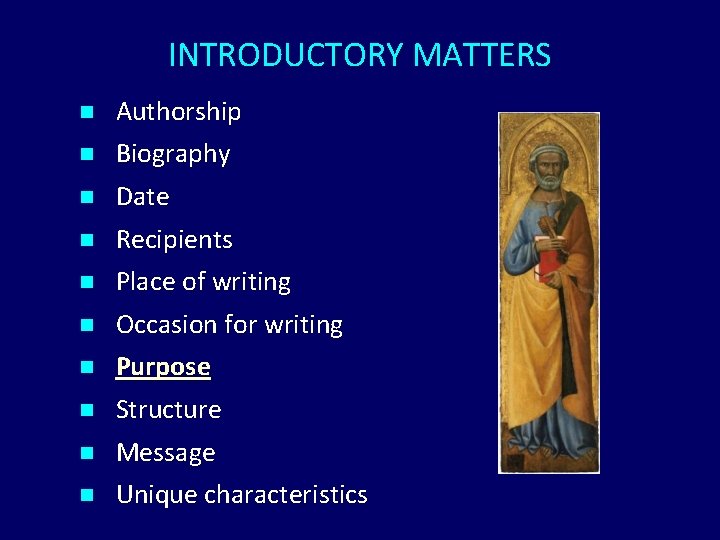
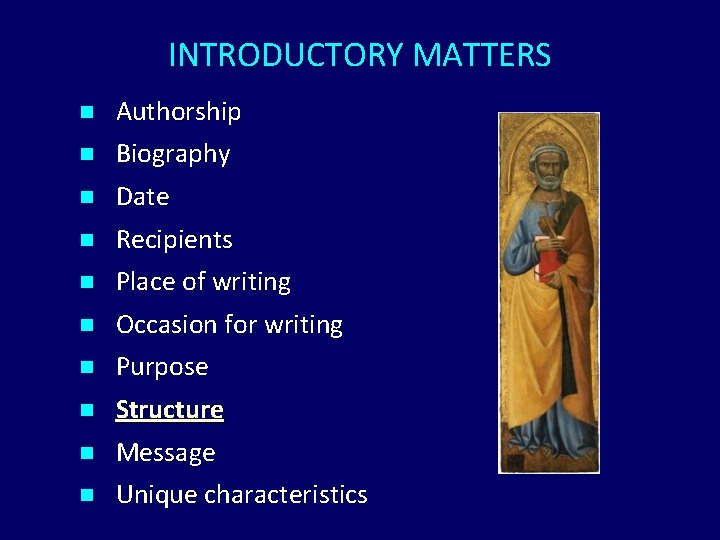
INTRODUCTORY MATTERS n n n n n Authorship Biography Date Recipients Place of writing Occasion for writing Purpose Structure Message Unique characteristics
INTRODUCTORY MATTERS n n n n n Authorship Biography Date Recipients Place of writing Occasion for writing Purpose Structure Message Unique characteristics
AUTHORSHIP n 1: 13 -14; John 21: 18 -19 n 1: 15 -18; Matt 17: 1 -13
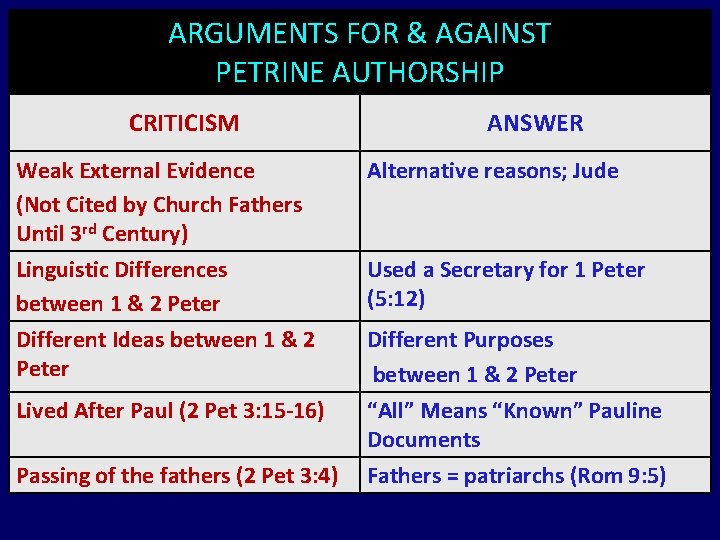
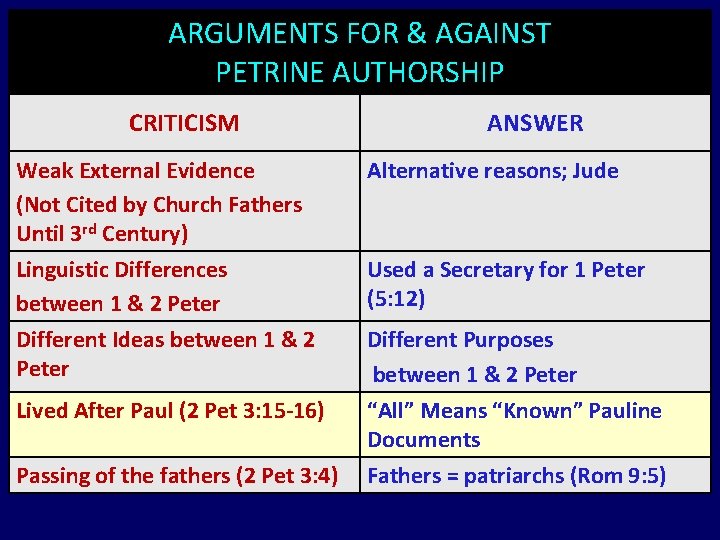
ARGUMENTS FOR & AGAINST PETRINE AUTHORSHIP CRITICISM ANSWER Weak External Evidence (Not Cited by Church Fathers Until 3 rd Century) Alternative reasons; Jude Linguistic Differences between 1 & 2 Peter Used a Secretary for 1 Peter (5: 12) Different Ideas between 1 & 2 Peter Different Purposes between 1 & 2 Peter Lived After Paul (2 Pet 3: 15 -16) “All” Means “Known” Pauline Documents Passing of the fathers (2 Pet 3: 4) Fathers = patriarchs (Rom 9: 5)
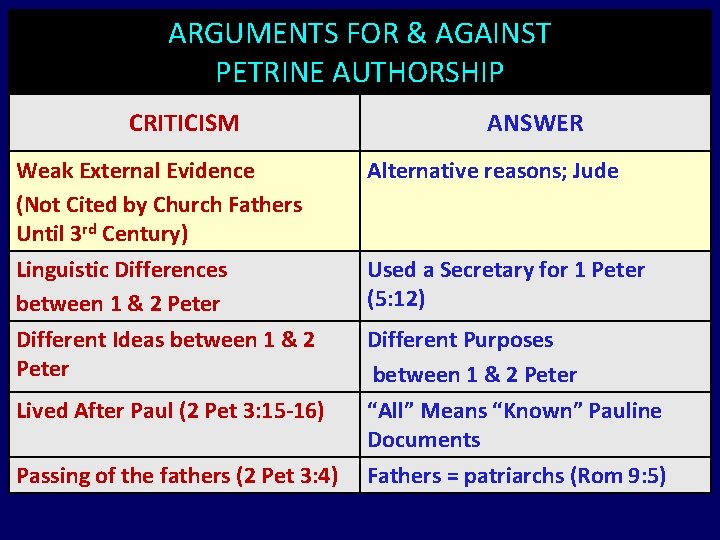
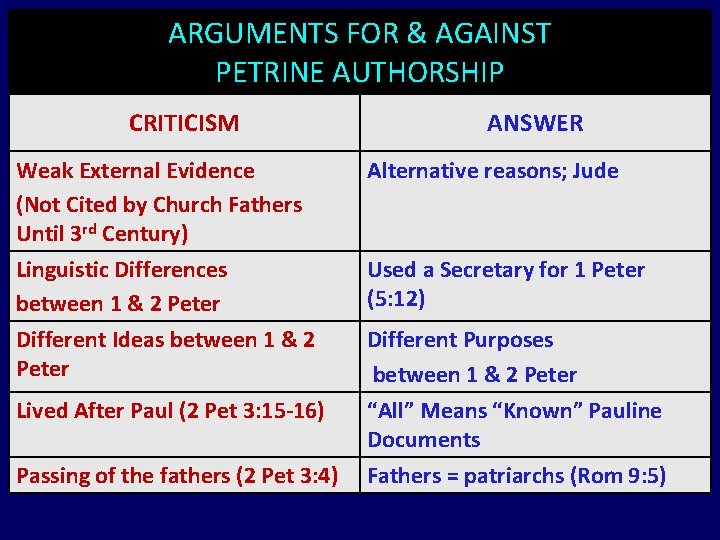
ARGUMENTS FOR & AGAINST PETRINE AUTHORSHIP CRITICISM ANSWER Weak External Evidence (Not Cited by Church Fathers Until 3 rd Century) Alternative reasons; Jude Linguistic Differences between 1 & 2 Peter Used a Secretary for 1 Peter (5: 12) Different Ideas between 1 & 2 Peter Different Purposes between 1 & 2 Peter Lived After Paul (2 Pet 3: 15 -16) “All” Means “Known” Pauline Documents Passing of the fathers (2 Pet 3: 4) Fathers = patriarchs (Rom 9: 5)
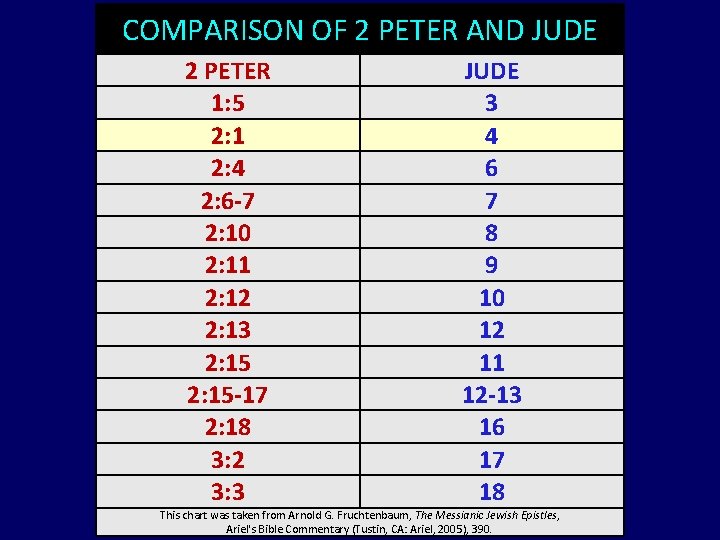
COMPARISON OF 2 PETER AND JUDE 2 PETER 1: 5 2: 1 2: 4 2: 6 -7 2: 10 2: 11 2: 12 2: 13 2: 15 -17 2: 18 3: 2 3: 3 JUDE 3 4 6 7 8 9 10 12 11 12 -13 16 17 18 This chart was taken from Arnold G. Fruchtenbaum, The Messianic Jewish Epistles, Ariel's Bible Commentary (Tustin, CA: Ariel, 2005), 390.
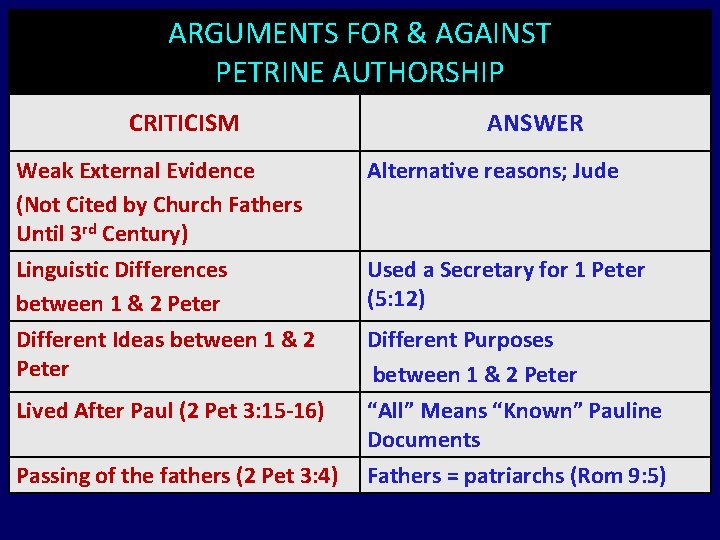
ARGUMENTS FOR & AGAINST PETRINE AUTHORSHIP CRITICISM ANSWER Weak External Evidence (Not Cited by Church Fathers Until 3 rd Century) Alternative reasons; Jude Linguistic Differences between 1 & 2 Peter Used a Secretary for 1 Peter (5: 12) Different Ideas between 1 & 2 Peter Different Purposes between 1 & 2 Peter Lived After Paul (2 Pet 3: 15 -16) “All” Means “Known” Pauline Documents Passing of the fathers (2 Pet 3: 4) Fathers = patriarchs (Rom 9: 5)
ARGUMENTS FOR & AGAINST PETRINE AUTHORSHIP CRITICISM ANSWER Weak External Evidence (Not Cited by Church Fathers Until 3 rd Century) Alternative reasons; Jude Linguistic Differences between 1 & 2 Peter Used a Secretary for 1 Peter (5: 12) Different Ideas between 1 & 2 Peter Different Purposes between 1 & 2 Peter Lived After Paul (2 Pet 3: 15 -16) “All” Means “Known” Pauline Documents Passing of the fathers (2 Pet 3: 4) Fathers = patriarchs (Rom 9: 5)
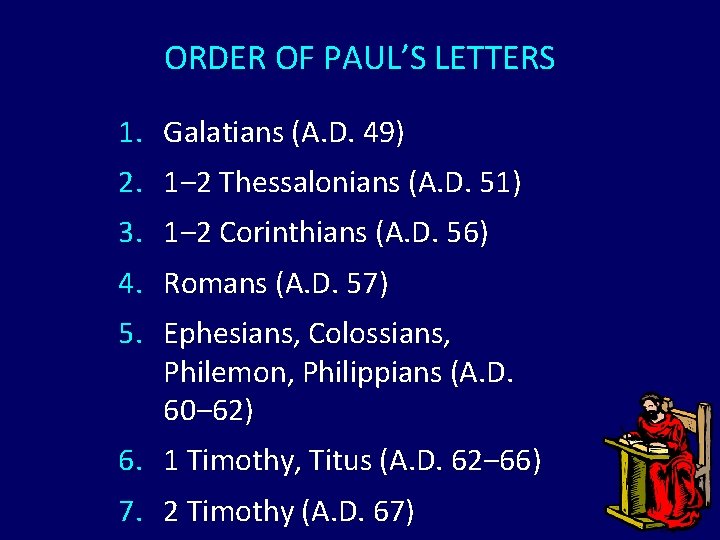
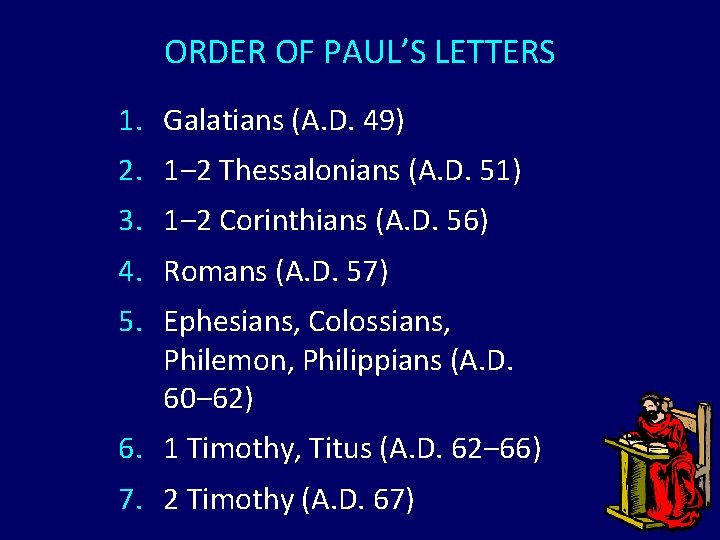
ORDER OF PAUL’S LETTERS 1. Galatians (A. D. 49) 2. 1‒ 2 Thessalonians (A. D. 51) 3. 1‒ 2 Corinthians (A. D. 56) 4. Romans (A. D. 57) 5. Ephesians, Colossians, Philemon, Philippians (A. D. 60‒ 62) 6. 1 Timothy, Titus (A. D. 62‒ 66) 7. 2 Timothy (A. D. 67)
ARGUMENTS FOR & AGAINST PETRINE AUTHORSHIP CRITICISM ANSWER Weak External Evidence (Not Cited by Church Fathers Until 3 rd Century) Alternative reasons; Jude Linguistic Differences between 1 & 2 Peter Used a Secretary for 1 Peter (5: 12) Different Ideas between 1 & 2 Peter Different Purposes between 1 & 2 Peter Lived After Paul (2 Pet 3: 15 -16) “All” Means “Known” Pauline Documents Passing of the fathers (2 Pet 3: 4) Fathers = patriarchs (Rom 9: 5)
INTRODUCTORY MATTERS n n n n n Authorship Biography Date Recipients Place of writing Occasion for writing Purpose Structure Message Unique characteristics
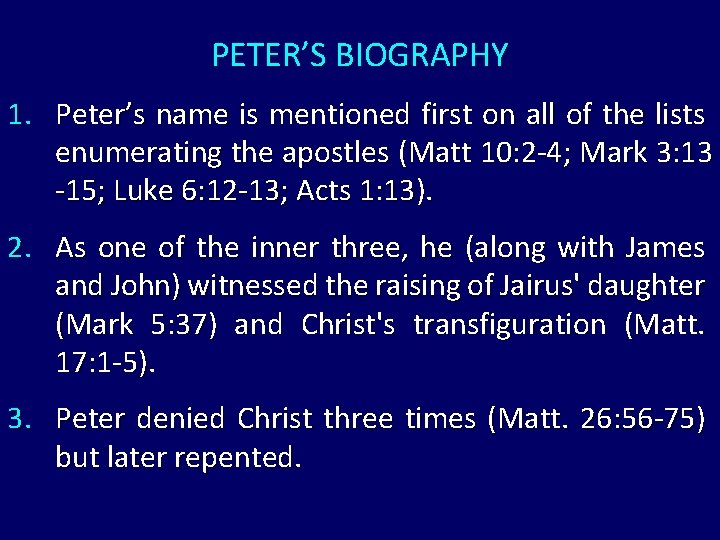
PETER’S BIOGRAPHY 1. Peter’s name is mentioned first on all of the lists enumerating the apostles (Matt 10: 2 -4; Mark 3: 13 -15; Luke 6: 12 -13; Acts 1: 13). 2. As one of the inner three, he (along with James and John) witnessed the raising of Jairus' daughter (Mark 5: 37) and Christ's transfiguration (Matt. 17: 1 -5). 3. Peter denied Christ three times (Matt. 26: 56 -75) but later repented.
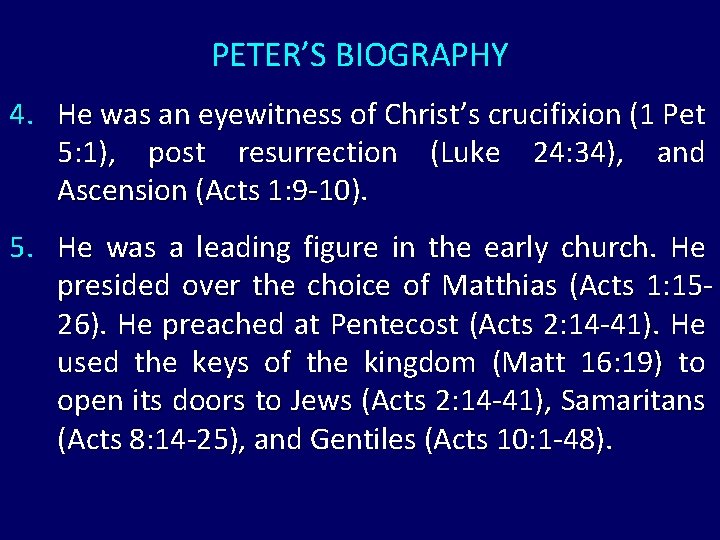
PETER’S BIOGRAPHY 4. He was an eyewitness of Christ’s crucifixion (1 Pet 5: 1), post resurrection (Luke 24: 34), and Ascension (Acts 1: 9 -10). 5. He was a leading figure in the early church. He presided over the choice of Matthias (Acts 1: 1526). He preached at Pentecost (Acts 2: 14 -41). He used the keys of the kingdom (Matt 16: 19) to open its doors to Jews (Acts 2: 14 -41), Samaritans (Acts 8: 14 -25), and Gentiles (Acts 10: 1 -48).
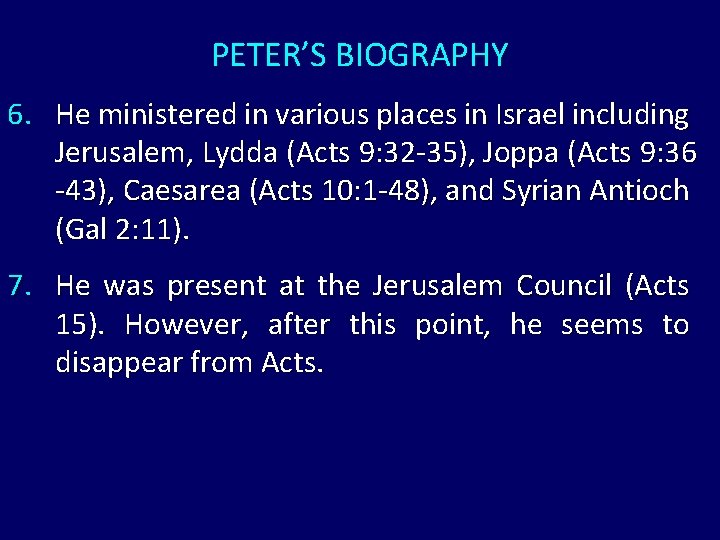
PETER’S BIOGRAPHY 6. He ministered in various places in Israel including Jerusalem, Lydda (Acts 9: 32 -35), Joppa (Acts 9: 36 -43), Caesarea (Acts 10: 1 -48), and Syrian Antioch (Gal 2: 11). 7. He was present at the Jerusalem Council (Acts 15). However, after this point, he seems to disappear from Acts.
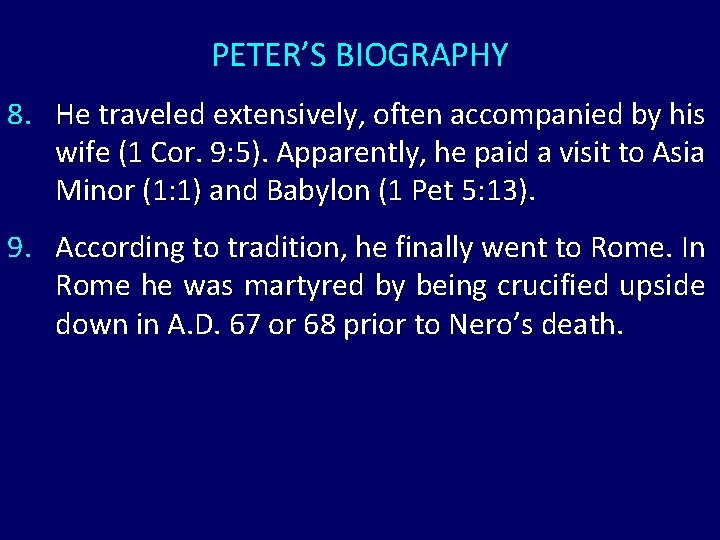
PETER’S BIOGRAPHY 8. He traveled extensively, often accompanied by his wife (1 Cor. 9: 5). Apparently, he paid a visit to Asia Minor (1: 1) and Babylon (1 Pet 5: 13). 9. According to tradition, he finally went to Rome. In Rome he was martyred by being crucified upside down in A. D. 67 or 68 prior to Nero’s death.
INTRODUCTORY MATTERS n n n n n Authorship Biography Date Recipients Place of writing Occasion for writing Purpose Structure Message Unique characteristics
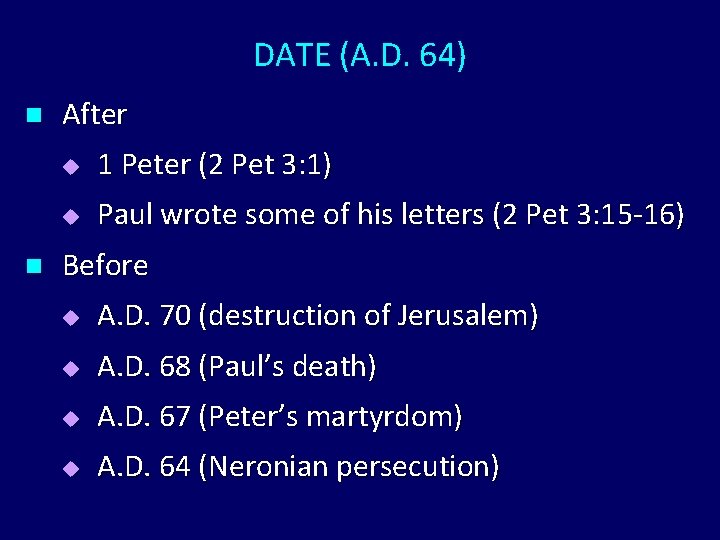
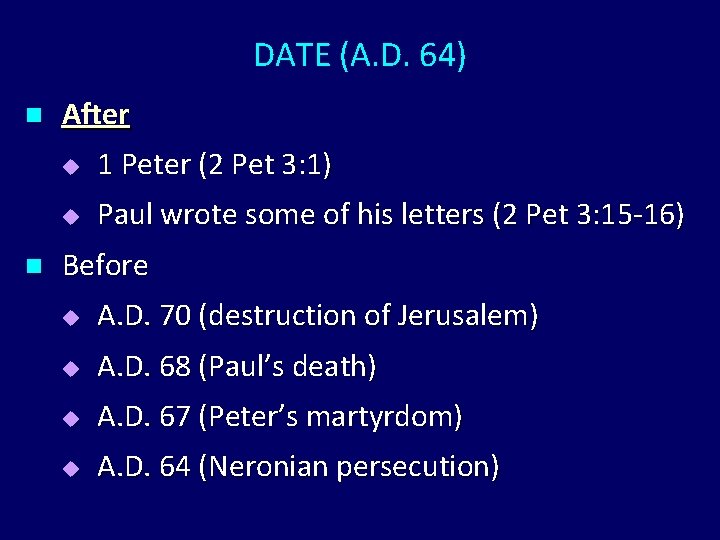
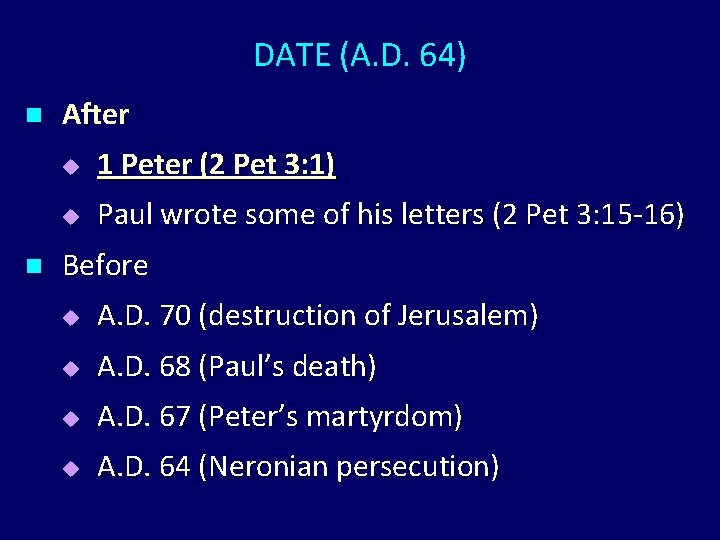
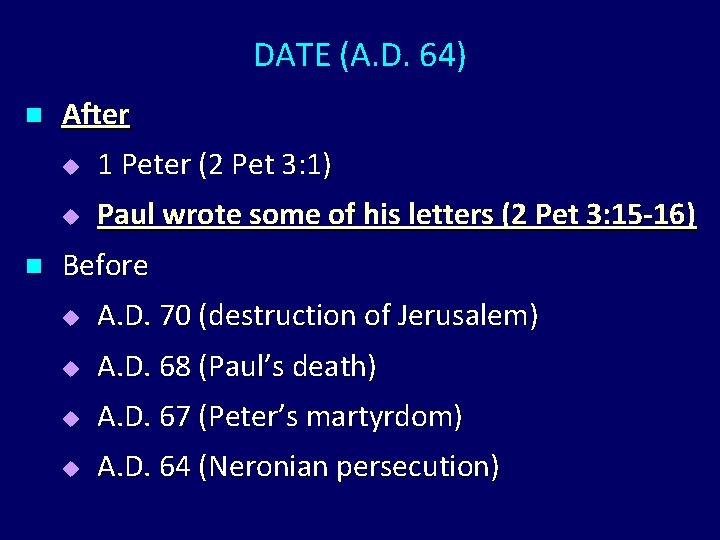
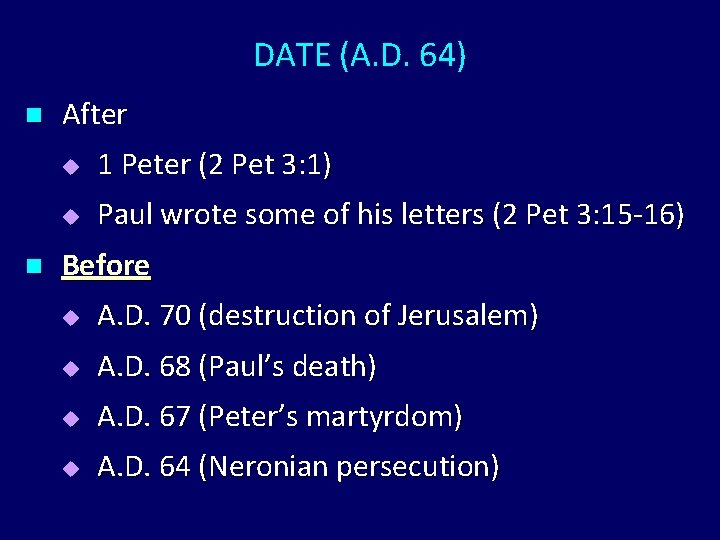
DATE (A. D. 64) n n After u 1 Peter (2 Pet 3: 1) u Paul wrote some of his letters (2 Pet 3: 15 -16) Before u A. D. 70 (destruction of Jerusalem) u A. D. 68 (Paul’s death) u A. D. 67 (Peter’s martyrdom) u A. D. 64 (Neronian persecution)
DATE (A. D. 64) n n After u 1 Peter (2 Pet 3: 1) u Paul wrote some of his letters (2 Pet 3: 15 -16) Before u A. D. 70 (destruction of Jerusalem) u A. D. 68 (Paul’s death) u A. D. 67 (Peter’s martyrdom) u A. D. 64 (Neronian persecution)
DATE (A. D. 64) n n After u 1 Peter (2 Pet 3: 1) u Paul wrote some of his letters (2 Pet 3: 15 -16) Before u A. D. 70 (destruction of Jerusalem) u A. D. 68 (Paul’s death) u A. D. 67 (Peter’s martyrdom) u A. D. 64 (Neronian persecution)
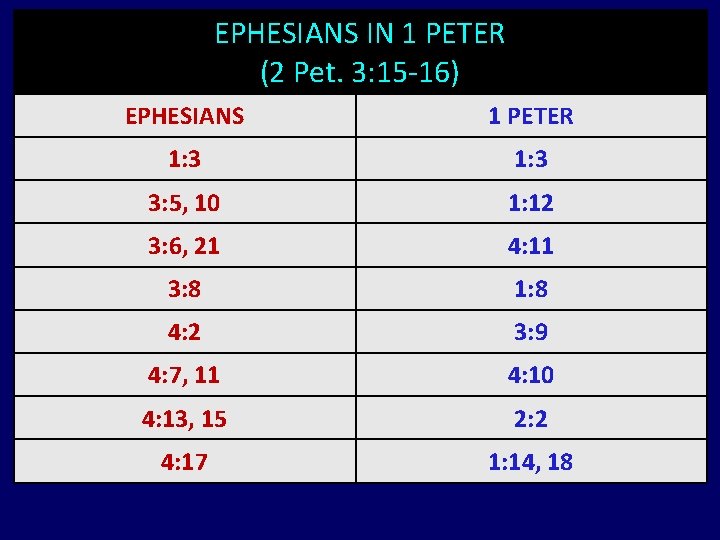
EPHESIANS IN 1 PETER (2 Pet. 3: 15 -16) EPHESIANS 1 PETER 1: 3 3: 5, 10 1: 12 3: 6, 21 4: 11 3: 8 1: 8 4: 2 3: 9 4: 7, 11 4: 10 4: 13, 15 2: 2 4: 17 1: 14, 18
DATE (A. D. 64) n n After u 1 Peter (2 Pet 3: 1) u Paul wrote some of his letters (2 Pet 3: 15 -16) Before u A. D. 70 (destruction of Jerusalem) u A. D. 68 (Paul’s death) u A. D. 67 (Peter’s martyrdom) u A. D. 64 (Neronian persecution)
ORDER OF PAUL’S LETTERS 1. Galatians (A. D. 49) 2. 1‒ 2 Thessalonians (A. D. 51) 3. 1‒ 2 Corinthians (A. D. 56) 4. Romans (A. D. 57) 5. Ephesians, Colossians, Philemon, Philippians (A. D. 60‒ 62) 6. 1 Timothy, Titus (A. D. 62‒ 66) 7. 2 Timothy (A. D. 67)
DATE (A. D. 64) n n After u 1 Peter (2 Pet 3: 1) u Paul wrote some of his letters (2 Pet 3: 15 -16) Before u A. D. 70 (destruction of Jerusalem) u A. D. 68 (Paul’s death) u A. D. 67 (Peter’s martyrdom) u A. D. 64 (Neronian persecution)
INTRODUCTORY MATTERS n n n n n Authorship Biography Date Recipients Place of writing Occasion for writing Purpose Structure Message Unique characteristics
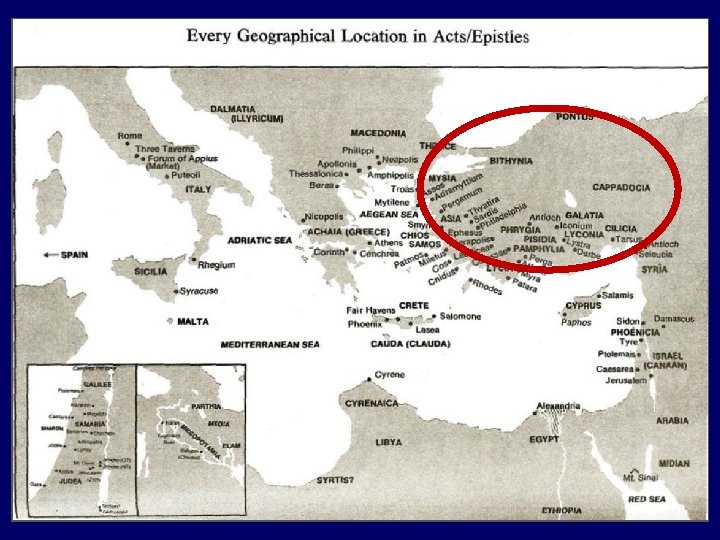
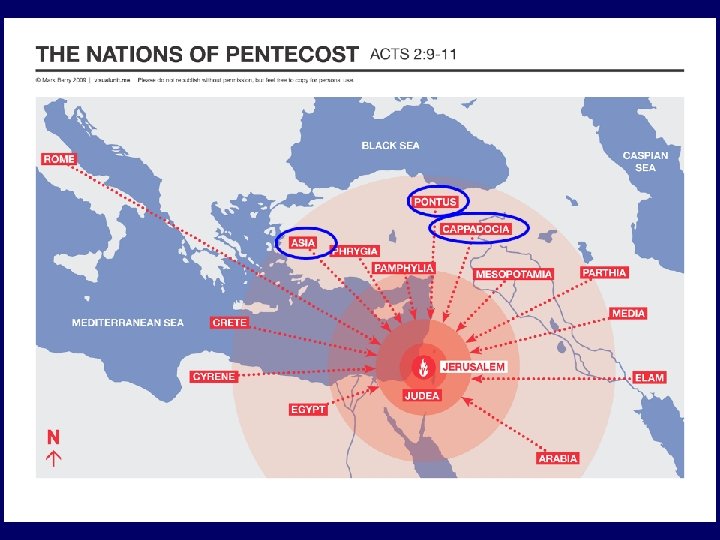
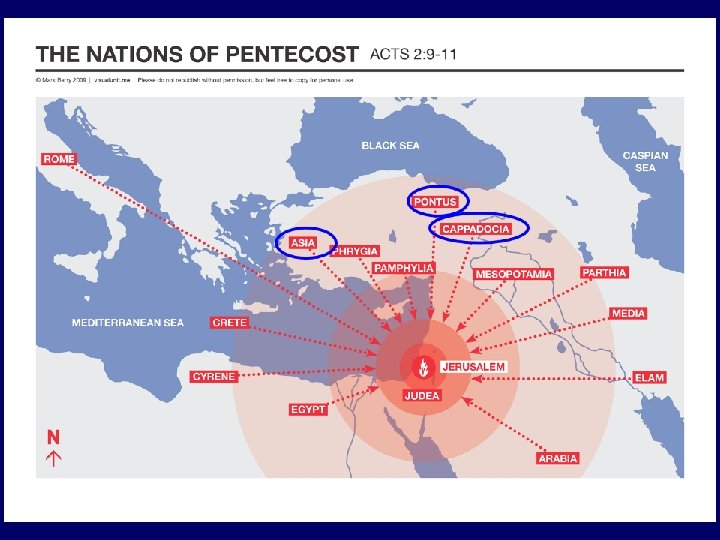
RECIPIENTS n North-central portion of modern Turkey (1 Pet. 1: 1) Regenerated (1 Pet. 1: 3 -4; 2 Pet. 1: 1) n Jewish n u Diaspora (1 Pet. 1: 1; Jas. 1: 1; John 7: 35) u Aliens/sojourners (1 Pet. 1: 1) u Pilgrims (1 Pet. 2: 11) u Distinguished from the Gentiles (1 Pet. 2: 12; 4: 3) u 1 Pet 2: 9 (Exod. 19: 6; Rom. 10: 19) u To the church/churches? (1 Pet. 1: 1; 2 Pet. 1: 1) u Gal. 2: 7 -8
RECIPIENTS n North-central portion of modern Turkey (1 Pet. 1: 1) Regenerated (1 Pet. 1: 3 -4; 2 Pet. 1: 1) n Jewish n u Diaspora (1 Pet. 1: 1; Jas. 1: 1; John 7: 35) u Aliens/sojourners (1 Pet. 1: 1) u Pilgrims (1 Pet. 2: 11) u Distinguished from the Gentiles (1 Pet. 2: 12; 4: 3) u 1 Pet 2: 9 (Exod. 19: 6; Rom. 10: 19) u To the church/churches? (1 Pet. 1: 1; 2 Pet. 1: 1) u Gal. 2: 7 -8
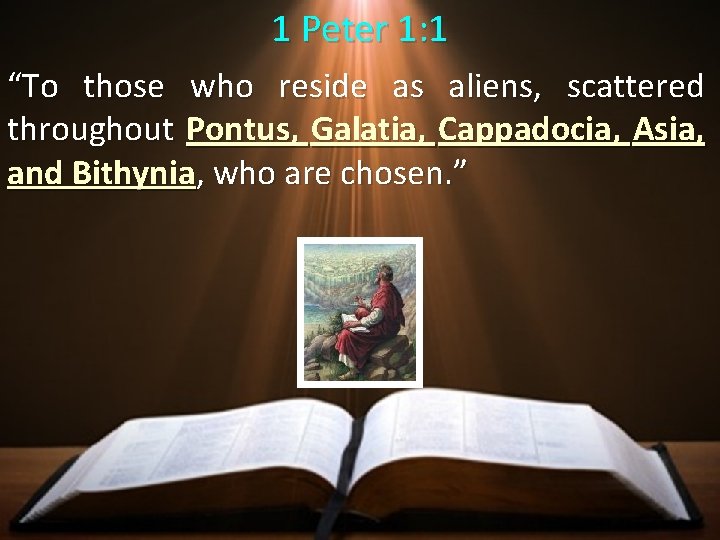
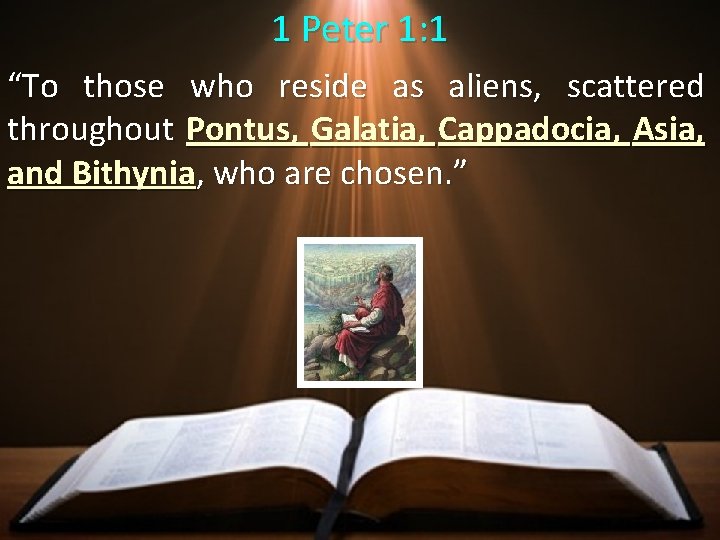
1 Peter 1: 1 “To those who reside as aliens, scattered throughout Pontus, Galatia, Cappadocia, Asia, and Bithynia, who are chosen. ”
RECIPIENTS n North-central portion of modern Turkey (1 Pet. 1: 1) Regenerated (1 Pet. 1: 3 -4; 2 Pet. 1: 1) n Jewish n u Diaspora (1 Pet. 1: 1; Jas. 1: 1; John 7: 35) u Aliens/sojourners (1 Pet. 1: 1) u Pilgrims (1 Pet. 2: 11) u Distinguished from the Gentiles (1 Pet. 2: 12; 4: 3) u 1 Pet 2: 9 (Exod. 19: 6; Rom. 10: 19) u To the church/churches? (1 Pet. 1: 1; 2 Pet. 1: 1) u Gal. 2: 7 -8
RECIPIENTS n n n North-central portion of modern Turkey (1 Pet. 1: 1) Regenerated (1 Pet. 1: 3 -4; 2 Pet. 1: 1) Jewish u Diaspora (1 Pet. 1: 1; Jas. 1: 1; John 7: 35) u Aliens/sojourners (1 Pet. 1: 1) u Pilgrims (1 Pet. 2: 11) u Distinguished from the Gentiles (1 Pet. 2: 12; 4: 3) u 1 Pet 2: 9 (Exod. 19: 6; Rom. 10: 19) u To the church/churches? (1 Pet. 1: 1; 2 Pet. 1: 1) u Gal. 2: 7 -8
INTRODUCTORY MATTERS n n n n n Authorship Biography Date Recipients Place of writing Occasion for writing Purpose Structure Message Unique characteristics
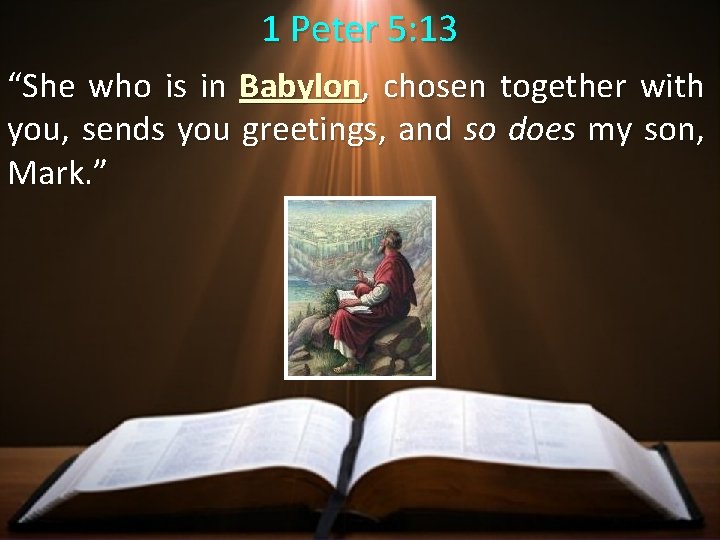
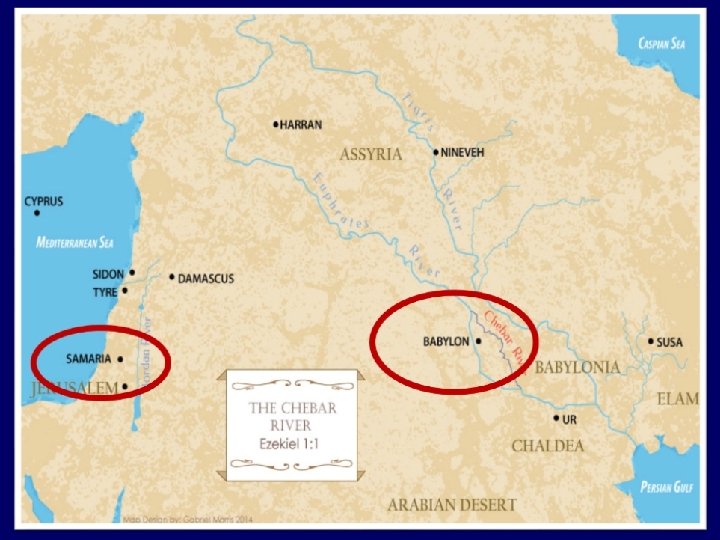
1 Peter 5: 13 “She who is in Babylon, chosen together with you, sends you greetings, and so does my son, Mark. ”
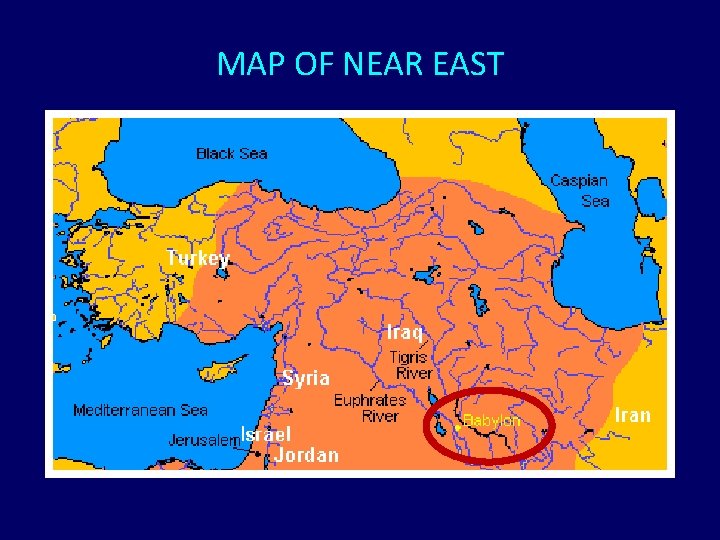
MAP OF NEAR EAST
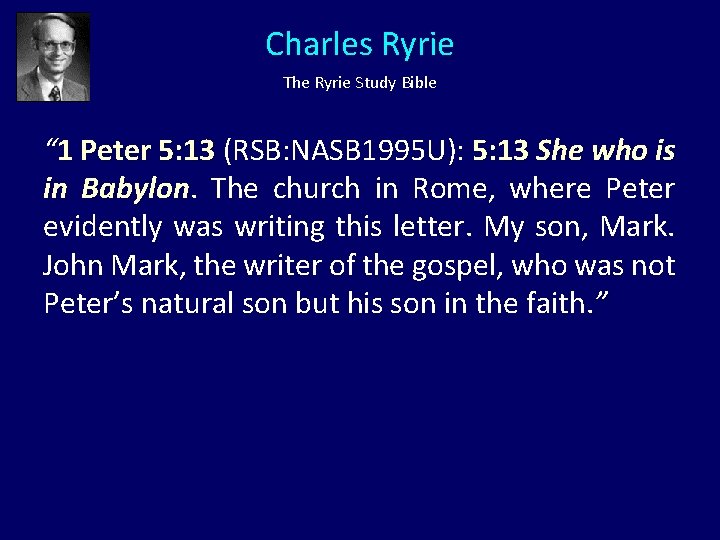
Charles Ryrie The Ryrie Study Bible “ 1 Peter 5: 13 (RSB: NASB 1995 U): 5: 13 She who is in Babylon The church in Rome, where Peter evidently was writing this letter. My son, Mark. John Mark, the writer of the gospel, who was not Peter’s natural son but his son in the faith. ”
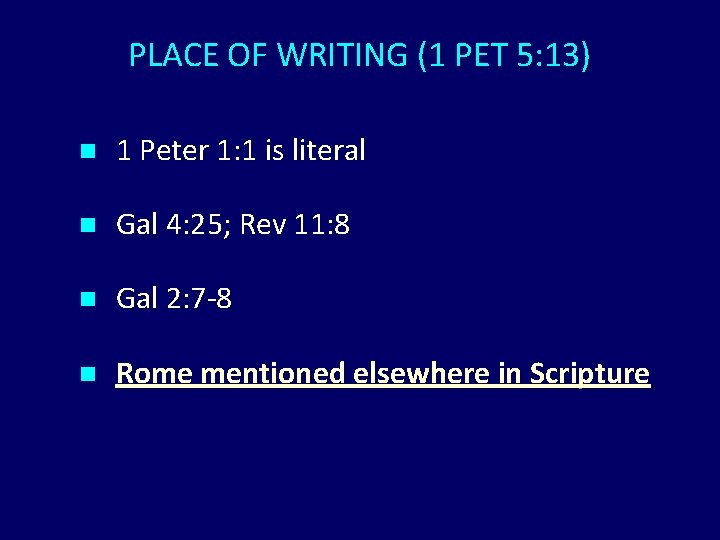
PLACE OF WRITING (1 PET 5: 13) n 1 Peter 1: 1 is literal n Gal 4: 25; Rev 11: 8 n Gal 2: 7 -8 n Rome mentioned elsewhere in Scripture
PLACE OF WRITING (1 PET 5: 13) n 1 Peter 1: 1 is literal n Gal 4: 25; Rev 11: 8 n Gal 2: 7 -8 n Rome mentioned elsewhere in Scripture
1 Peter 1: 1 “To those who reside as aliens, scattered throughout Pontus, Galatia, Cappadocia, Asia, and Bithynia, who are chosen. ”
PLACE OF WRITING (1 PET 5: 13) n 1 Peter 1: 1 is literal n Gal 4: 25; Rev 11: 8 n Gal 2: 7 -8 n Rome mentioned elsewhere in Scripture
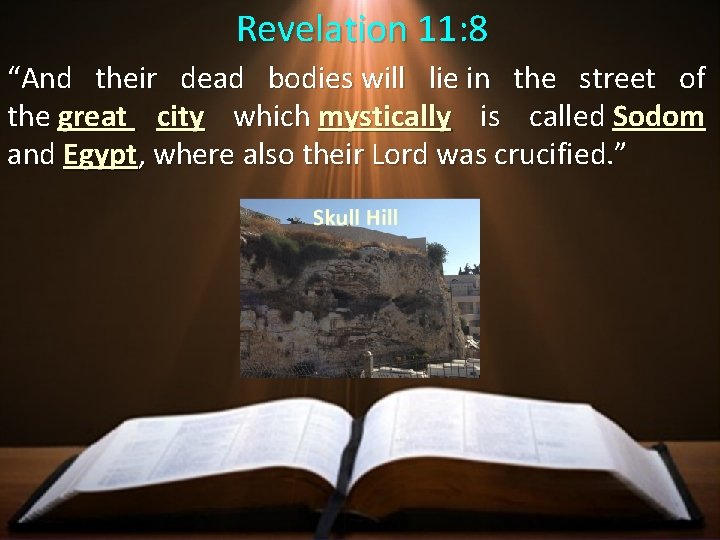
Revelation 11: 8 “And their dead bodies will lie in the street of the great city which mystically is called Sodom and Egypt, where also their Lord was crucified. ”
PLACE OF WRITING (1 PET 5: 13) n 1 Peter 1: 1 is literal n Gal 4: 25; Rev 11: 8 n Gal 2: 7 -8 n Rome mentioned elsewhere in Scripture
Galatians 2: 7 -8 “ 7 But on the contrary, seeing that I had been entrusted with the gospel to the uncircumcised, just as Peter had been to the circumcised 8 (for He who effectually worked for Peter in his apostleship to the circumcised effectually worked for me also to the Gentiles). ”
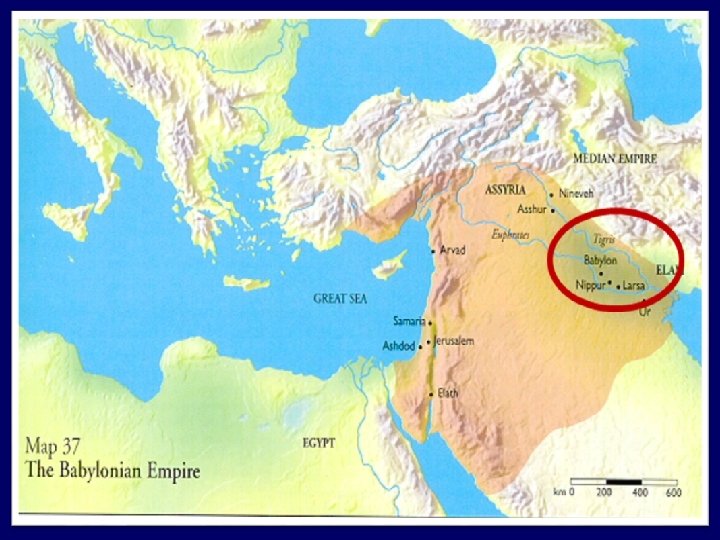
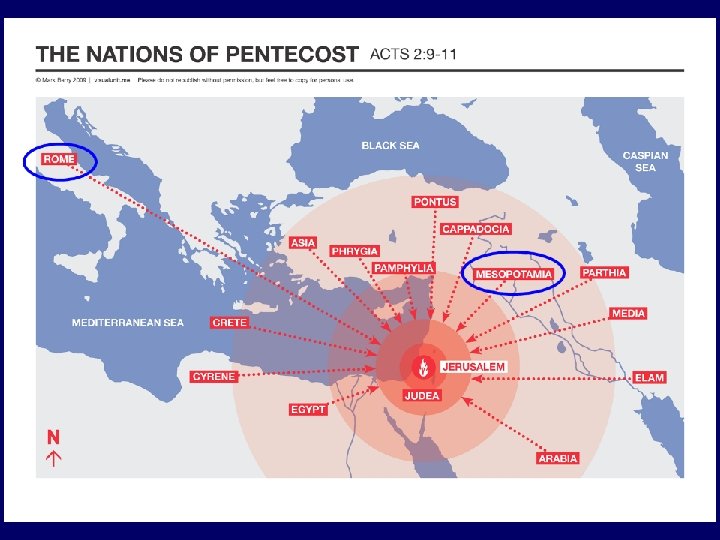
Babylon’s History After 539 B. C. n n n n Herodotus gives Babylon’s measurements (450 B. C. ) Alexander the Great visits and dies in Babylon (323 B. C. ) Seleucus seizes Babylon (312 B. C. ) Strabo pronounces Babylon’s hanging gardens as one of “seven wonders of the world” (25 B. C) Babylonians present on Pentecost (Acts 2: 9) Talmud promulgated from Babylon (A. D. 500) Haukal mentions Babylonian village (A. D. 917) Babylon known as “Two Mosques” and “Hilah” (A. D. 1100) Hitchcock and Ice, The Truth Behind Left Behind, 109
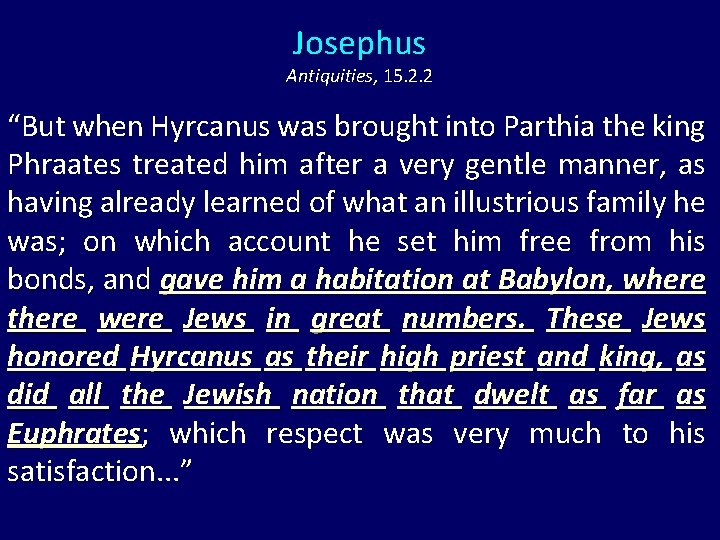
Josephus Antiquities, 15. 2. 2 “But when Hyrcanus was brought into Parthia the king Phraates treated him after a very gentle manner, as having already learned of what an illustrious family he was; on which account he set him free from his bonds, and gave him a habitation at Babylon, where there were Jews in great numbers. These Jews honored Hyrcanus as their high priest and king, as did all the Jewish nation that dwelt as far as Euphrates; which respect was very much to his satisfaction. . . ”
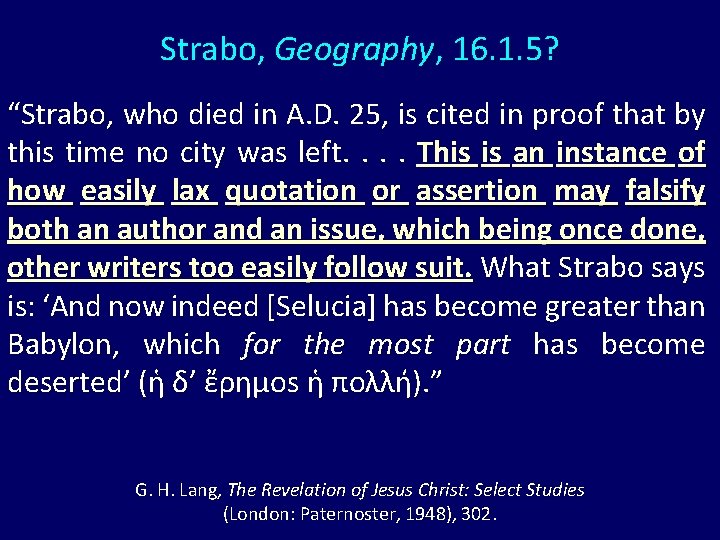
Strabo, Geography, 16. 1. 5? “Strabo, who died in A. D. 25, is cited in proof that by this time no city was left. . This is an instance of how easily lax quotation or assertion may falsify both an author and an issue, which being once done, other writers too easily follow suit. What Strabo says is: ‘And now indeed [Selucia] has become greater than Babylon, which for the most part has become deserted’ (ἡ δʼ ἔρημοs ἡ πολλή). ” G. H. Lang, The Revelation of Jesus Christ: Select Studies (London: Paternoster, 1948), 302.
PLACE OF WRITING (1 PET 5: 13) n 1 Peter 1: 1 is literal n Gal 4: 25; Rev 11: 8 n Gal 2: 7 -8 n Rome mentioned elsewhere in Scripture
INTRODUCTORY MATTERS n n n n n Authorship Biography Date Recipients Place of writing Occasion for writing Purpose Structure Message Unique characteristics
FALSE TEACHERS ARE COMING! Heresies of Gnostics: n Salvation via special knowledge “gnosis” n License (indulgence)
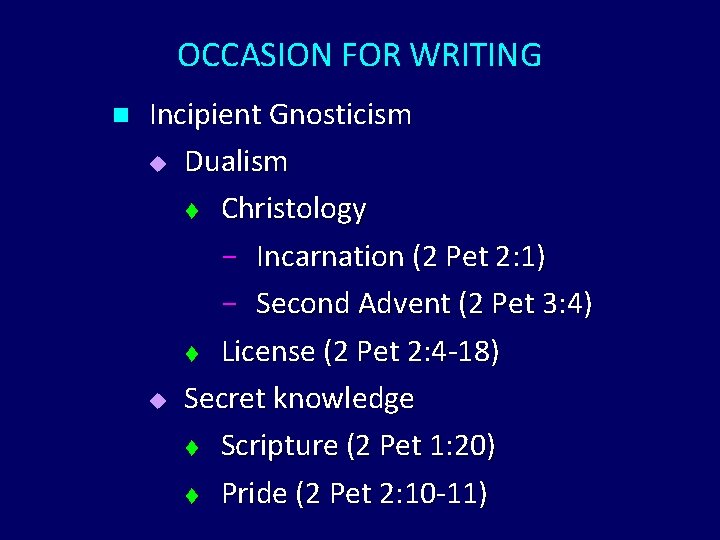
OCCASION FOR WRITING n Incipient Gnosticism u Dualism t Christology - Incarnation (2 Pet 2: 1) - Second Advent (2 Pet 3: 4) t License (2 Pet 2: 4 -18) u Secret knowledge t Scripture (2 Pet 1: 20) t Pride (2 Pet 2: 10 -11)
INTRODUCTORY MATTERS n n n n n Authorship Biography Date Recipients Place of writing Occasion for writing Purpose Structure Message Unique characteristics
PURPOSE To build up his readers in the faith so that they will be insulated from the coming false teachers
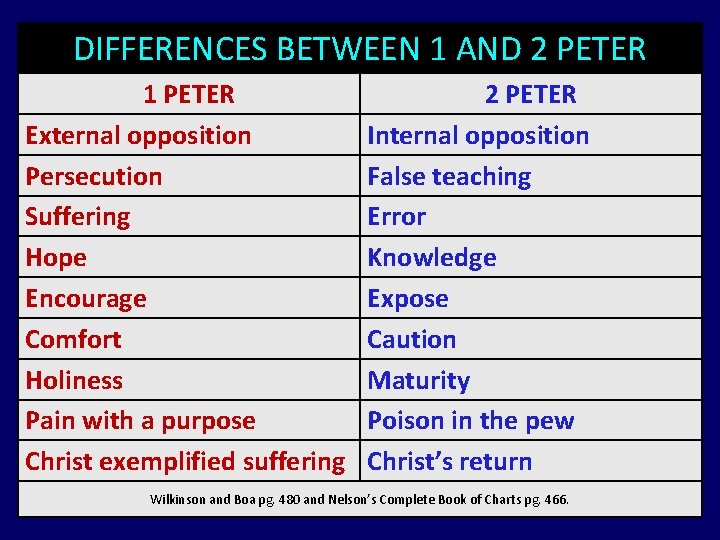
DIFFERENCES BETWEEN 1 AND 2 PETER 1 PETER External opposition Persecution Suffering Hope Encourage Comfort Holiness Pain with a purpose Christ exemplified suffering 2 PETER Internal opposition False teaching Error Knowledge Expose Caution Maturity Poison in the pew Christ’s return Wilkinson and Boa pg. 480 and Nelson’s Complete Book of Charts pg. 466.
INTRODUCTORY MATTERS n n n n n Authorship Biography Date Recipients Place of writing Occasion for writing Purpose Structure Message Unique characteristics
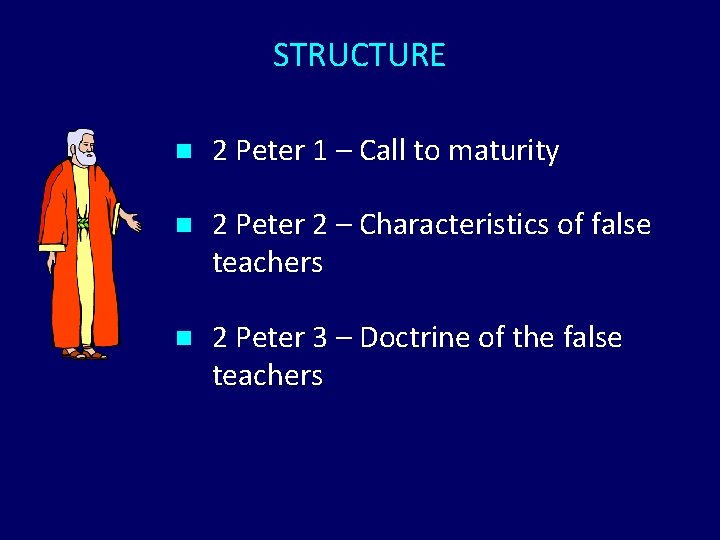
STRUCTURE n 2 Peter 1 – Call to maturity n 2 Peter 2 – Characteristics of false teachers n 2 Peter 3 – Doctrine of the false teachers
INTRODUCTORY MATTERS n n n n n Authorship Biography Date Recipients Place of writing Occasion for writing Purpose Structure Message Unique characteristics
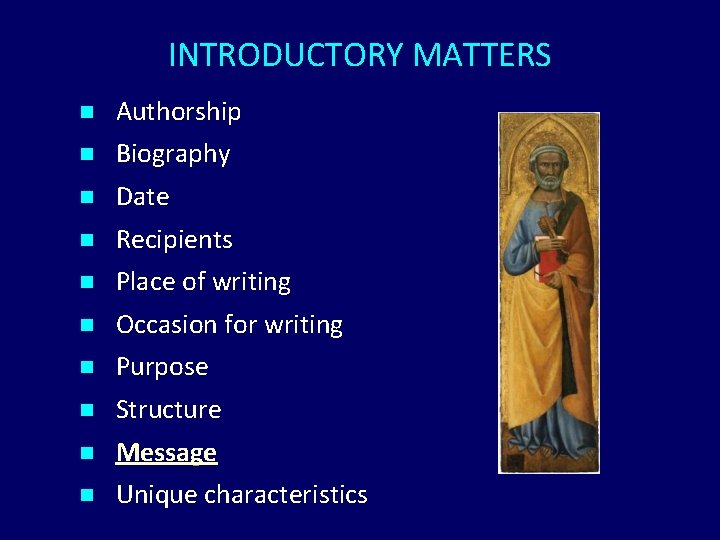
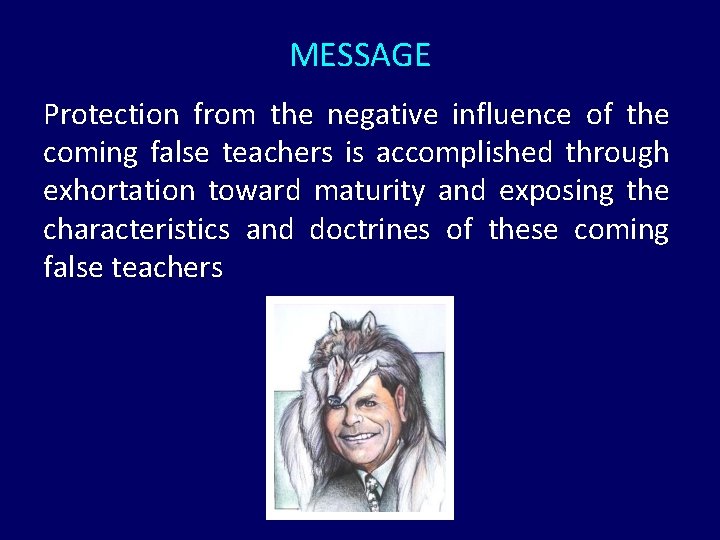
MESSAGE Protection from the negative influence of the coming false teachers is accomplished through exhortation toward maturity and exposing the characteristics and doctrines of these coming false teachers
INTRODUCTORY MATTERS n n n n n Authorship Biography Date Recipients Place of writing Occasion for writing Purpose Structure Message Unique characteristics
UNIQUE CHARACTERISTICS n Knowledge n Bibliology (1: 19 -21; 3: 2; 15 -16) n Destruction of the present world (2 Pet 3: 10 ff) n Polemical n Peter’s last will and testament (2 Pet 1: 14 -15) n Similarities with Jude n Remembrance
Order of Paul’s Letters 1. Galatians (A. D. 49) 2. 1‒ 2 Thessalonians (A. D. 51) 3. 1‒ 2 Corinthians (A. D. 56) 4. Romans (A. D. 57) 5. Ephesians, Colossians, Philemon, Philippians (A. D. 60‒ 62) 6. 1 Timothy, Titus (A. D. 62‒ 66) 7. 2 Timothy (A. D. 67)
REMEMBRANCE n Has forgotten that he has been cleansed (1: 9) n I will always remind you of these things (1: 12) n It is right to refresh your memory (1: 13) n You will always be able to remember these things (1: 15) n I have written both of them as reminders (3: 1) n Do not forget (3: 8) n Bear in mind (3: 15)
CONCLUSION
INTRODUCTORY MATTERS n n n n n Authorship: Peter Biography: Gospels & Acts Date: A. D. 64 Recipients: Regenerated, Asia Minor, Hebrews Place of writing: Babylon Occasion for writing: Incipient Gnosticism Purpose: Insulation from false teaching Structure: 3 parts Message: Protection from false teachers Unique characteristics: Knowledge