
2 nd lab competent cells formation and transformation
2 nd lab competent cells formation and transformation of competent cells with DNA. BCH 462 [practical]
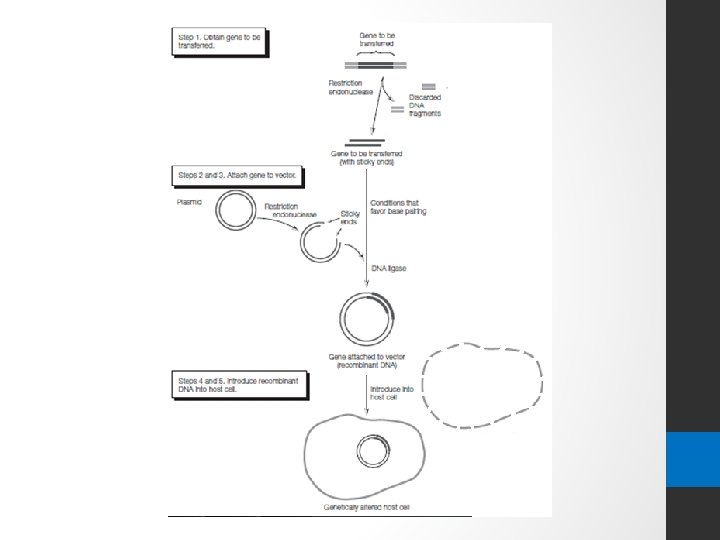
Overall Transformation Process • • The plasmid vector must be cut with restriction endonuclease. DNA ligase joins the DNA fragment and vector. Host cell is made competent to take up the plasmid. Transformed cells are grown on selection media.
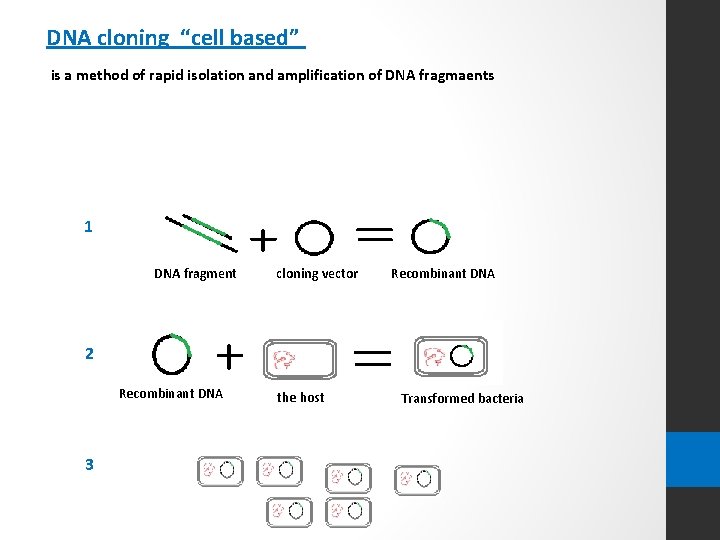
DNA cloning “cell based” is a method of rapid isolation and amplification of DNA fragmaents 1 DNA fragment cloning vector Recombinant DNA 2 Recombinant DNA 3 the host Transformed bacteria
Vector Cloning Vector Molecule of DNA to which the fragment of DNA to be cloned is joined. Three features of all cloning vectors • * They must be capable of independent replication within the bacterial host cells * They must contain at least one specific nucleotide sequence recognized by restriction endonuclease * They must contain at least selectable markers for drug Resistance
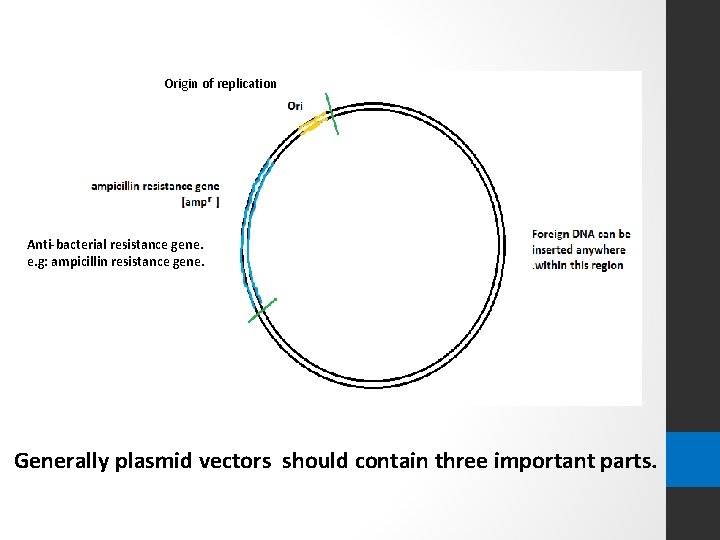
Origin of replication Anti-bacterial resistance gene. e. g: ampicillin resistance gene. Generally plasmid vectors should contain three important parts.
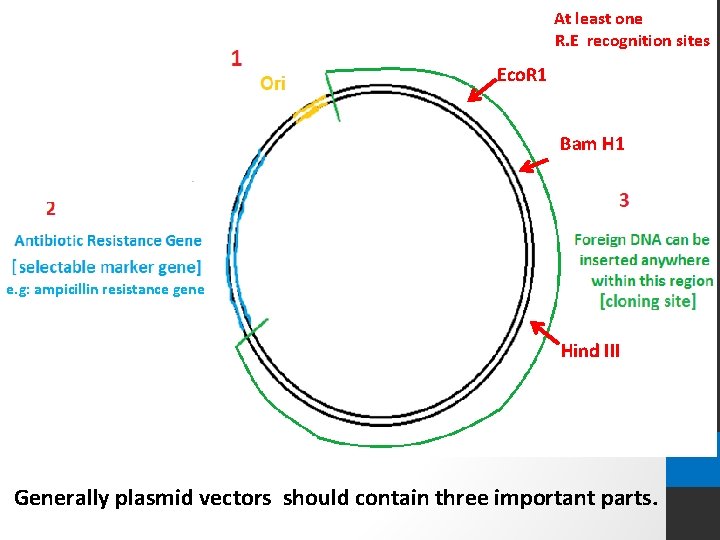
At least one R. E recognition sites Eco. R 1 Bam H 1 e. g: ampicillin resistance gene Hind III Generally plasmid vectors should contain three important parts.
Cloning Vector Types Plasmid: an extra chromosomal circular DNA molecule that autonomously replicates inside the bacterial cell; cloning limit: 100 to 10, 000 base pairs or 0. 1 -10 kilobases (kb). Phage: derivatives of bacteriophage lambda; linear DNA molecules, whose region can be replaced with foreign DNA without disrupting its life cycle; cloning limit: 8 -20 kb. Cosmids: an extra chromosomal circular DNA molecule that combines features of plasmids and phage; cloning limit - 35 -50 kb. Bacterial Artificial Chromosomes (BAC): based on bacterial mini-F plasmids. cloning limit: 75 -300 kb Yeast Artificial Chromosomes (YAC): an artificial chromosome that contains telomeres, origin of replication, a yeast centromere, and a selectable marker for identification in yeast cells; cloning limit: 1001000 kb
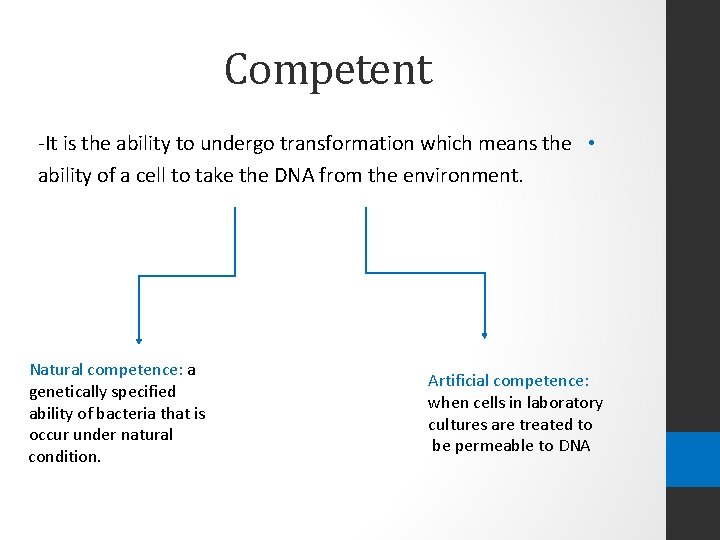
Competent -It is the ability to undergo transformation which means the • ability of a cell to take the DNA from the environment. Natural competence: a genetically specified ability of bacteria that is occur under natural condition. Artificial competence: when cells in laboratory cultures are treated to be permeable to DNA
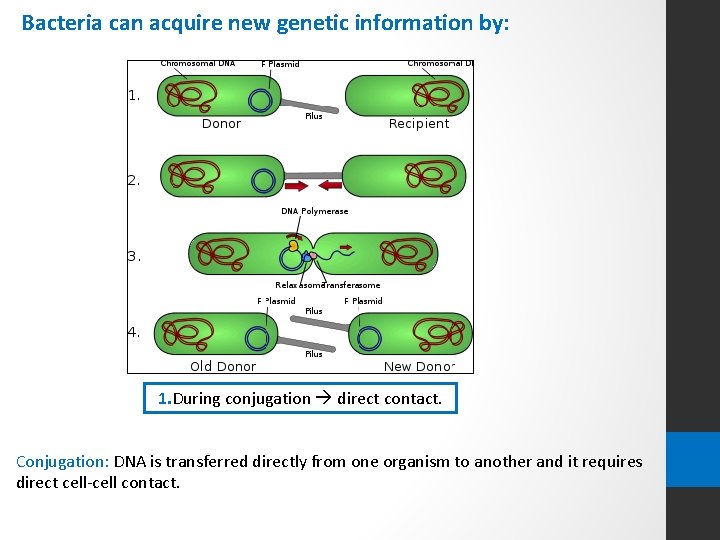
Bacteria can acquire new genetic information by: 1. During conjugation direct contact. Conjugation: DNA is transferred directly from one organism to another and it requires direct cell-cell contact.
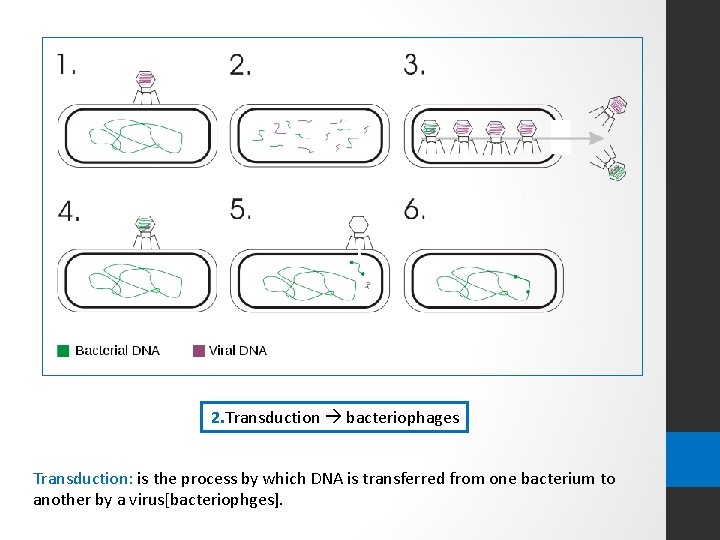
2. Transduction bacteriophages Transduction: is the process by which DNA is transferred from one bacterium to another by a virus[bacteriophges].
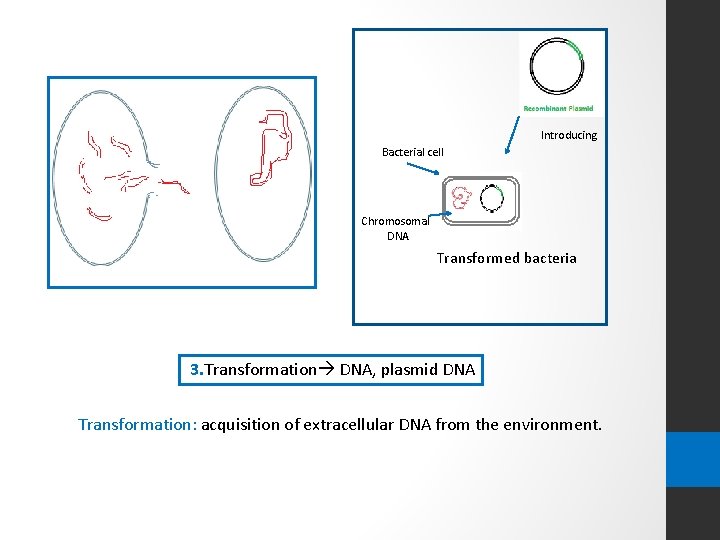
Introducing Bacterial cell Chromosomal DNA Transformed bacteria 3. Transformation DNA, plasmid DNA Transformation: acquisition of extracellular DNA from the environment.
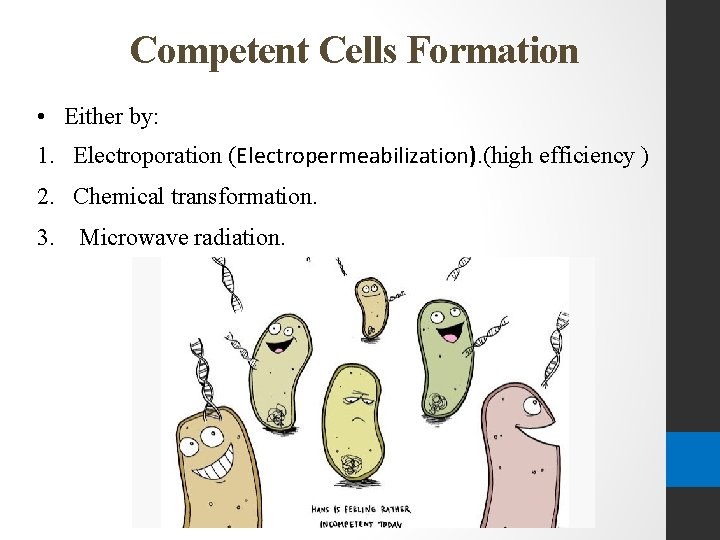
Competent Cells Formation • Either by: 1. Electroporation (Electropermeabilization). (high efficiency ) 2. Chemical transformation. 3. Microwave radiation.
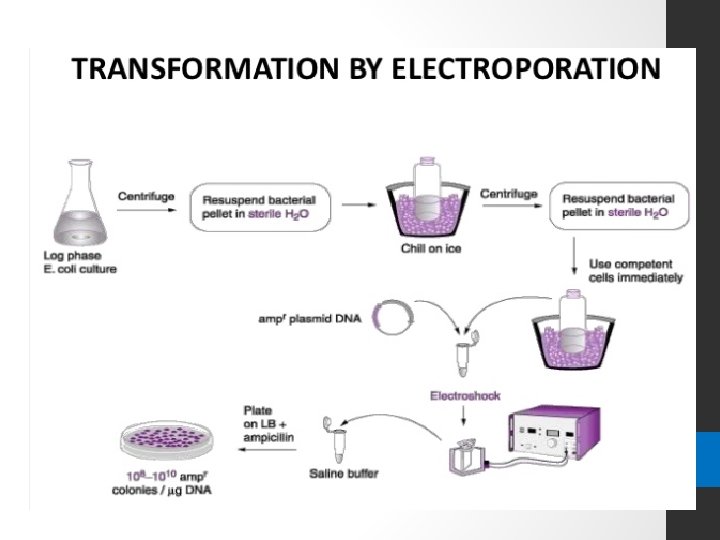
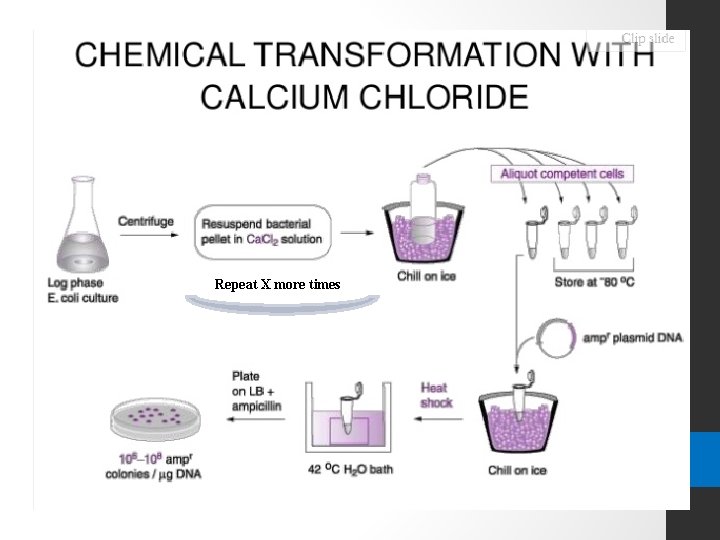
Repeat X more times
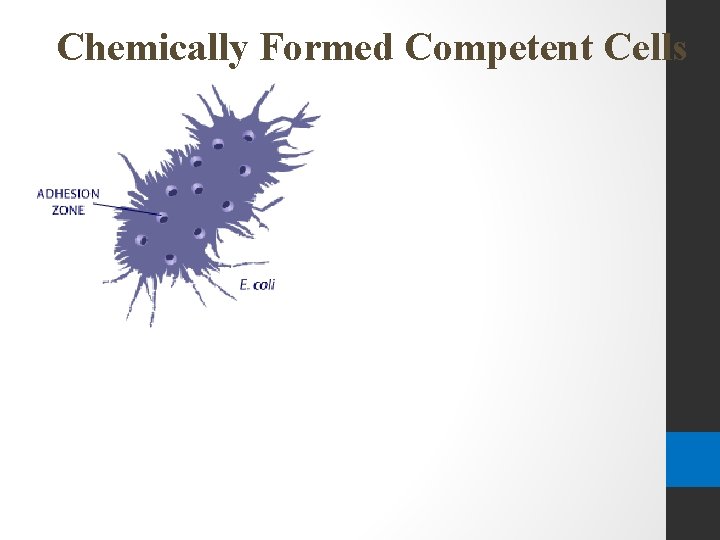
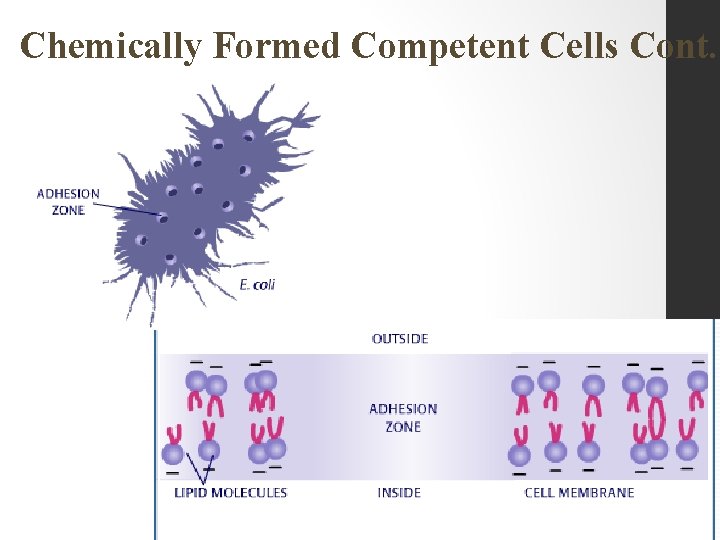
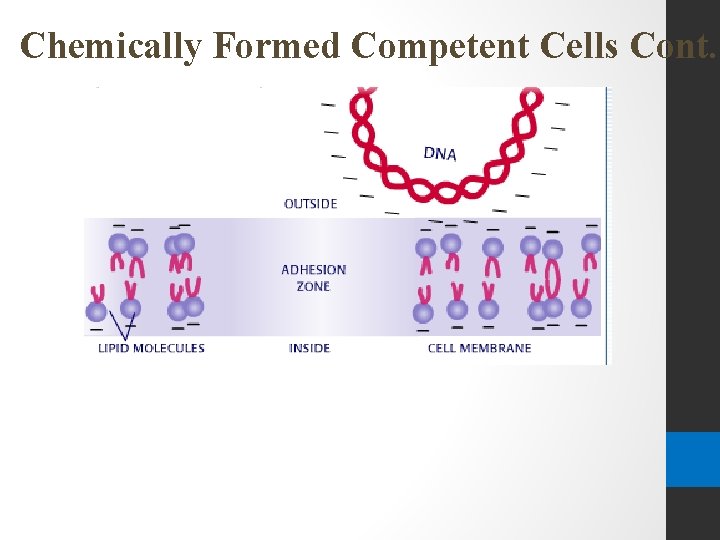
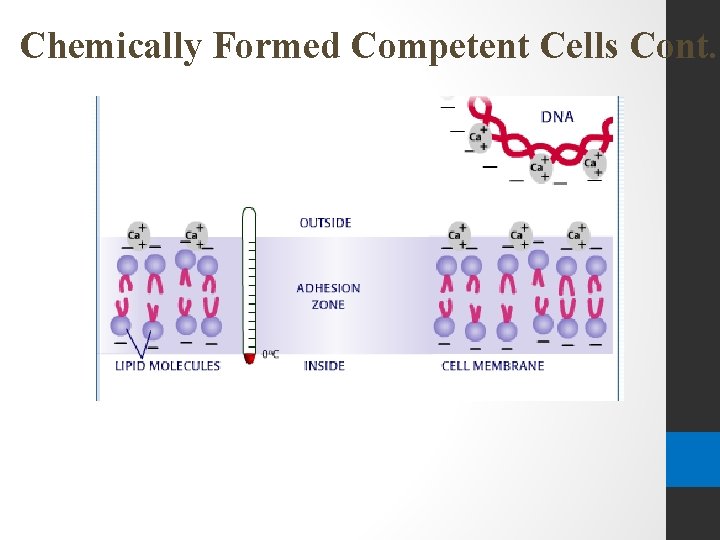
Principle of chemical transformation Since DNA is a very hydrophilic molecule, it won't • normally pass through a bacterial cell's membrane. In order to make bacteria take in the plasmid, this is • done by creating small holes in the bacterial cells by suspending them in a solution with a high concentration of calcium.
Chemically Formed Competent Cells
Chemically Formed Competent Cells Cont.
Chemically Formed Competent Cells Cont.
Chemically Formed Competent Cells Cont.
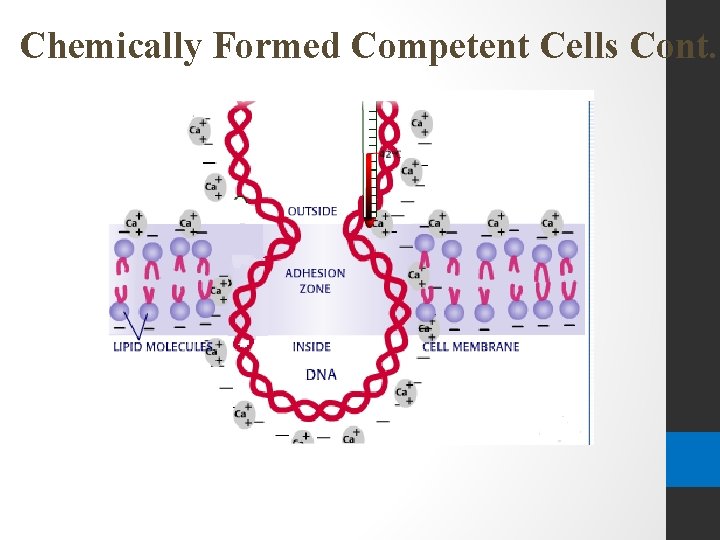
Chemically Formed Competent Cells Cont.
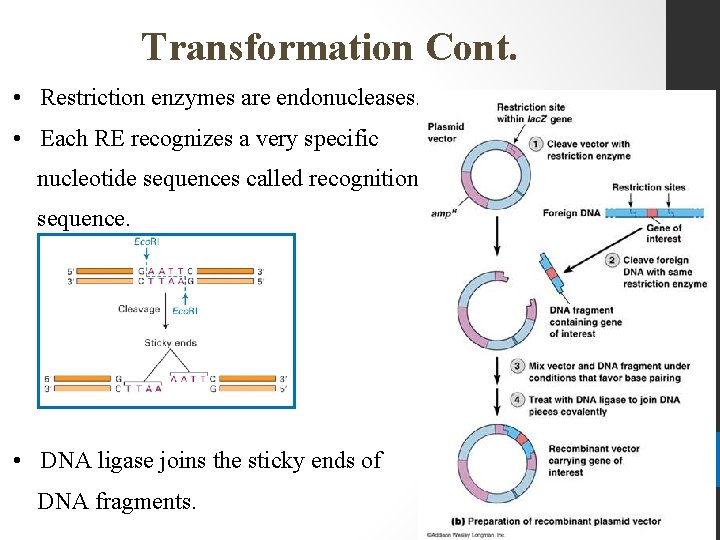
Transformation Cont. • Restriction enzymes are endonucleases. • Each RE recognizes a very specific nucleotide sequences called recognition sequence. • DNA ligase joins the sticky ends of DNA fragments.
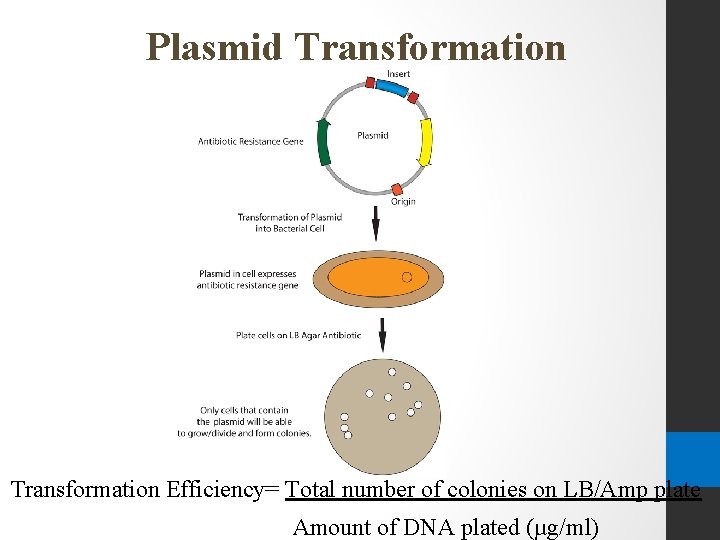
Plasmid Transformation Efficiency= Total number of colonies on LB/Amp plate Amount of DNA plated (µg/ml)
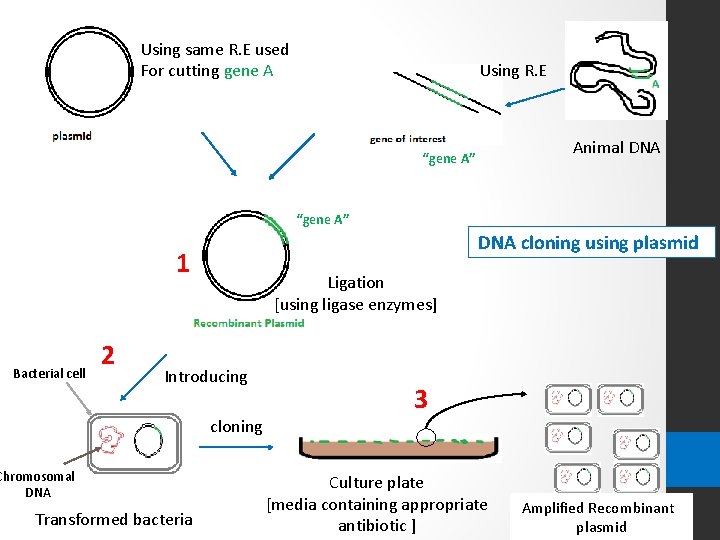
Using same R. E used For cutting gene A Using R. E Animal DNA “gene A” DNA cloning using plasmid 1 Bacterial cell 2 Ligation [using ligase enzymes] Introducing cloning Chromosomal DNA Transformed bacteria 3 Culture plate [media containing appropriate antibiotic ] Amplified Recombinant plasmid
• Animation: • http: //www. dnai. org/b/index. html • Principle of chemical transformation : • http: //www. dnalc. org/resources/animations/transformation 2. html • Mechanism of Recombination: • http: //www. dnalc. org/resources/3 d/20 -mechanism-ofrecombination. html
- Slides: 25