
2 MITOSIS MITOSIS The shortest stage of the

- Slides: 29
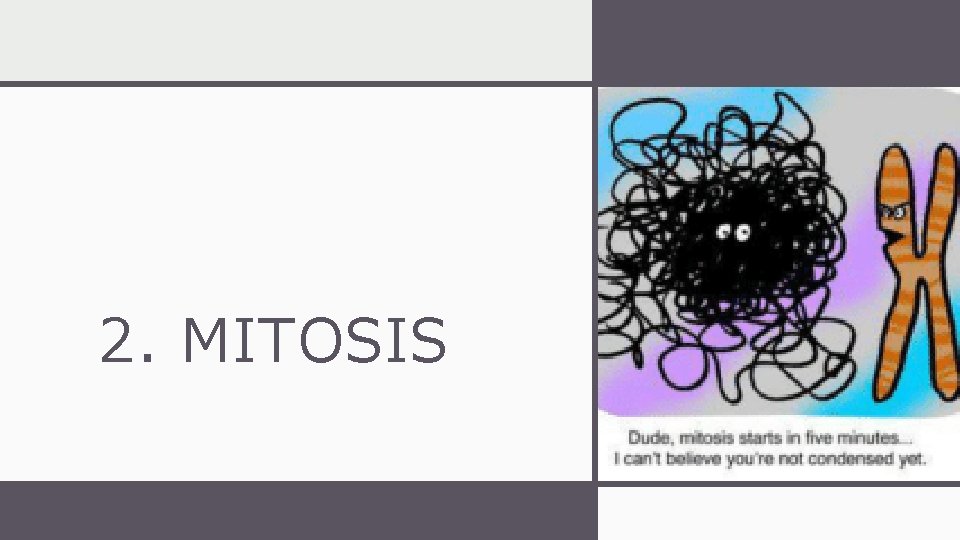
2. MITOSIS
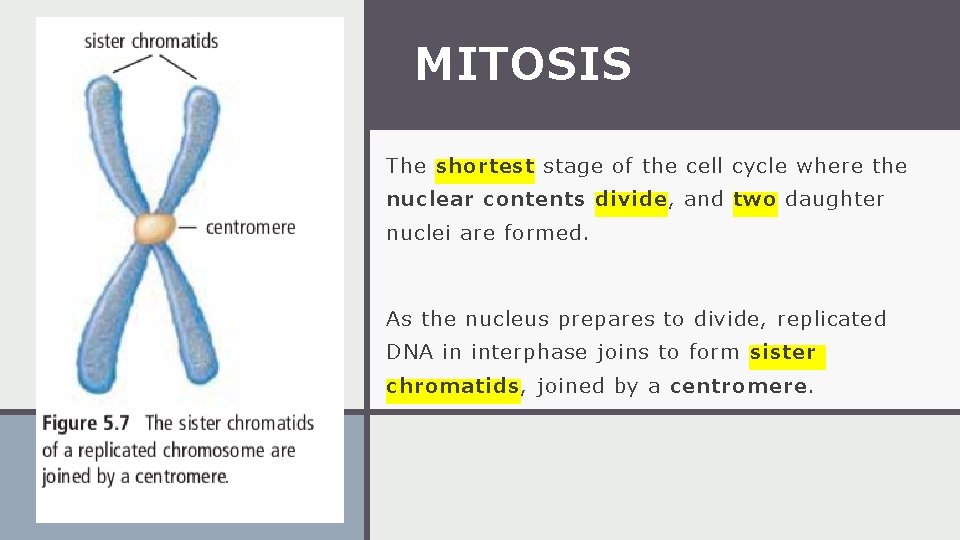
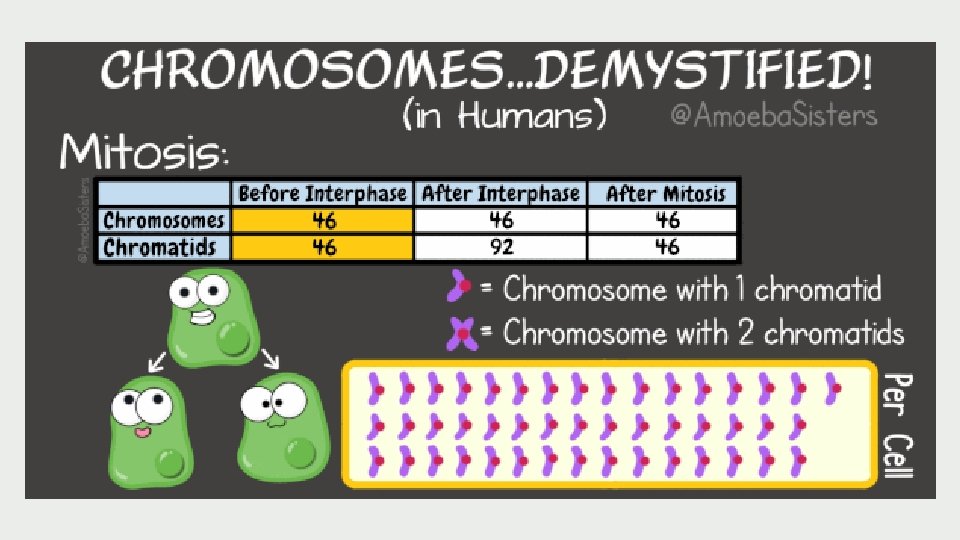
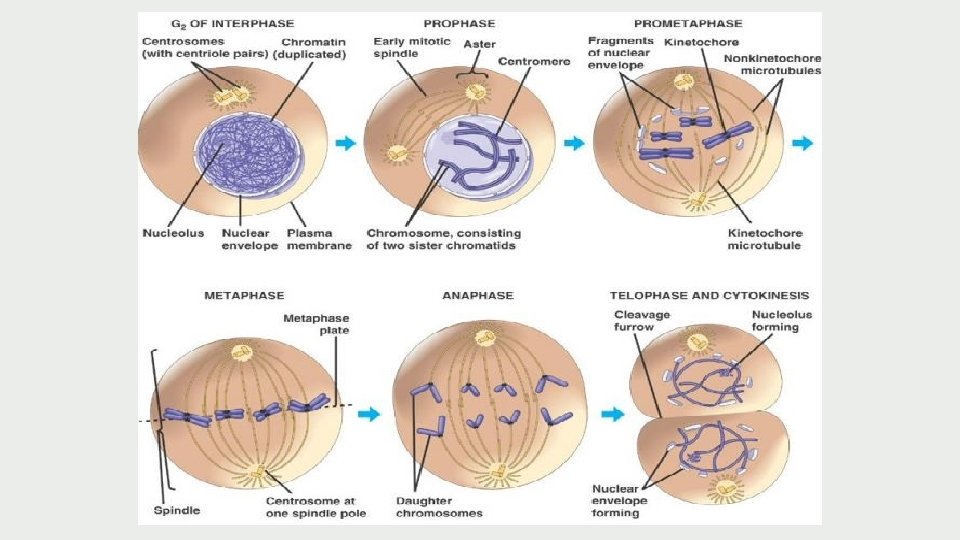
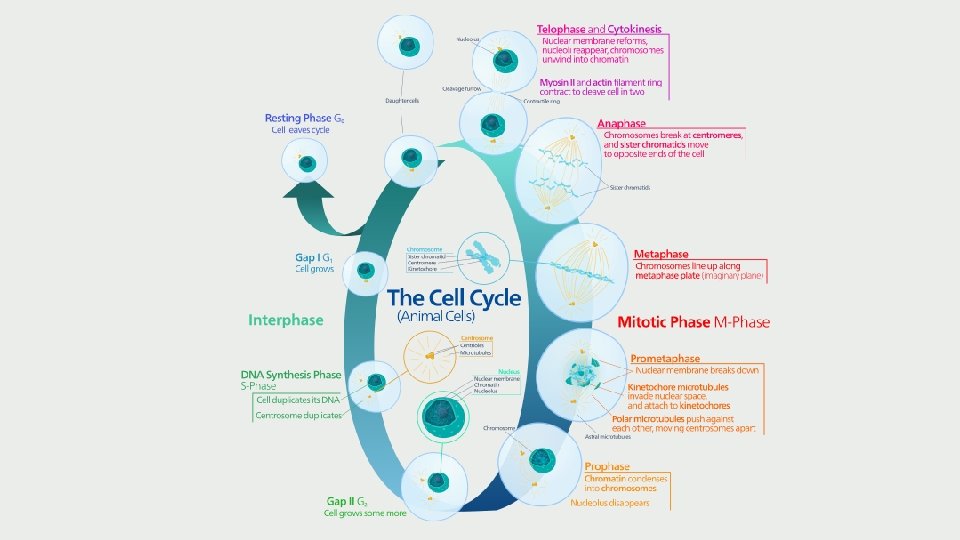
MITOSIS The shortest stage of the cell cycle where the nuclear contents divide, and two daughter nuclei are formed. As the nucleus prepares to divide, replicated DNA in interphase joins to form sister chromatids, joined by a centromere.
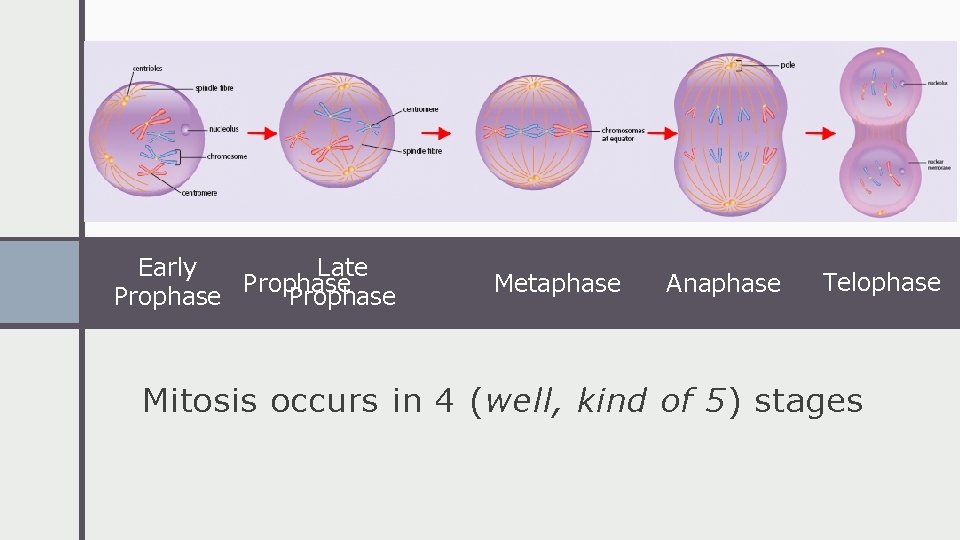
Late Early Prophase Metaphase Anaphase Telophase Mitosis occurs in 4 (well, kind of 5) stages
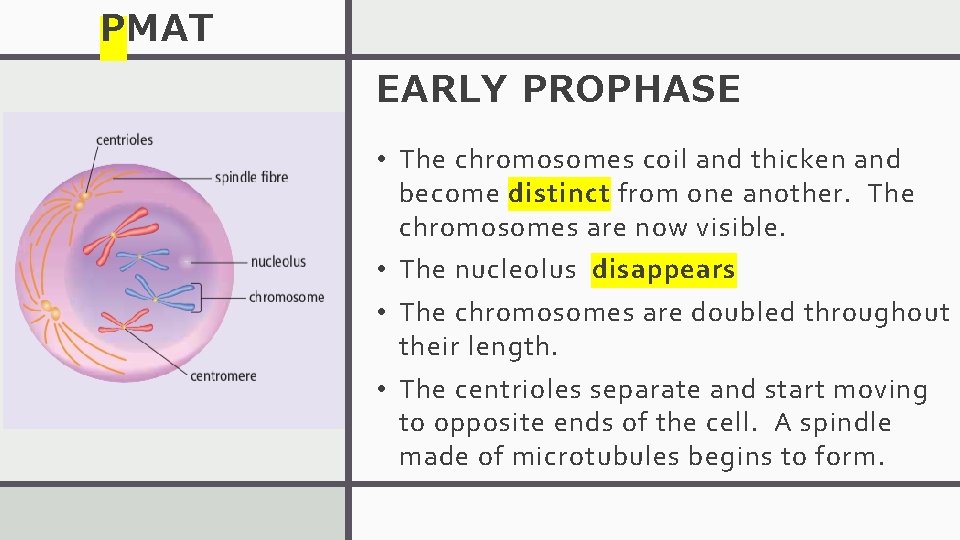
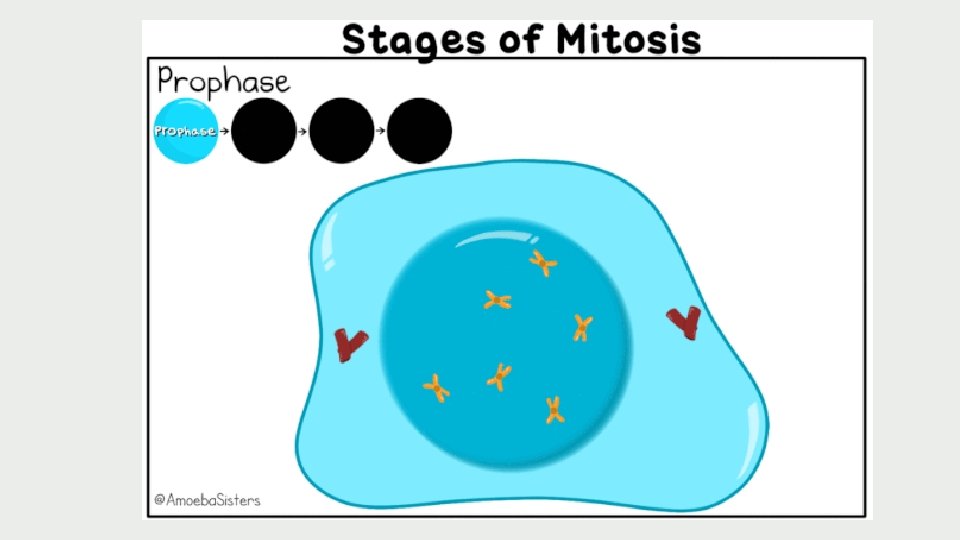
PMAT EARLY PROPHASE • The chromosomes coil and thicken and become distinct from one another. The chromosomes are now visible. • The nucleolus disappears • The chromosomes are doubled throughout their length. • The centrioles separate and start moving to opposite ends of the cell. A spindle made of microtubules begins to form.
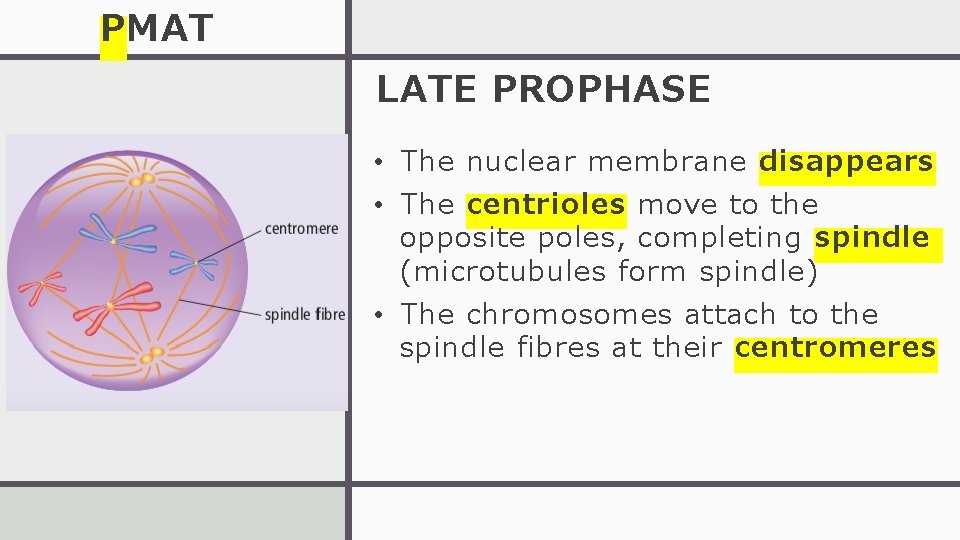
PMAT LATE PROPHASE • The nuclear membrane disappears • The centrioles move to the opposite poles, completing spindle (microtubules form spindle) • The chromosomes attach to the spindle fibres at their centromeres
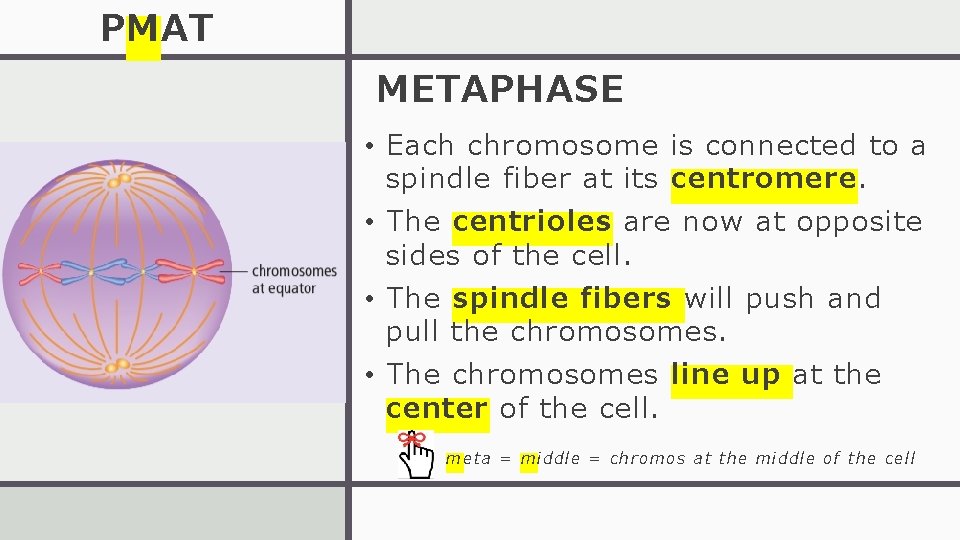
PMAT METAPHASE • Each chromosome is connected to a spindle fiber at its centromere. • The centrioles are now at opposite sides of the cell. • The spindle fibers will push and pull the chromosomes. • The chromosomes line up at the center of the cell. meta = middle = chromos at the middle of the cell
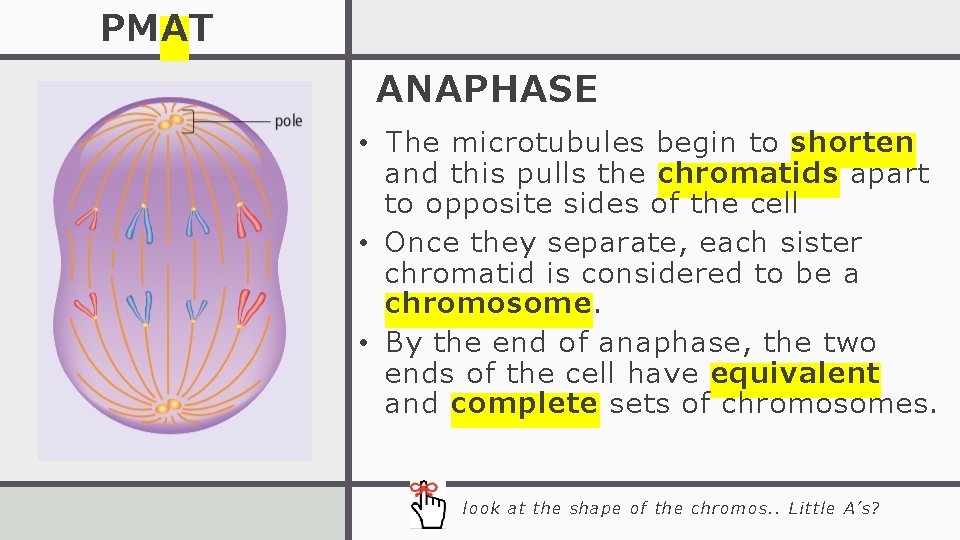
PMAT ANAPHASE • The microtubules begin to shorten and this pulls the chromatids apart to opposite sides of the cell • Once they separate, each sister chromatid is considered to be a chromosome. • By the end of anaphase, the two ends of the cell have equivalent and complete sets of chromosomes. look at the shape of the chromos. . Little A’s?
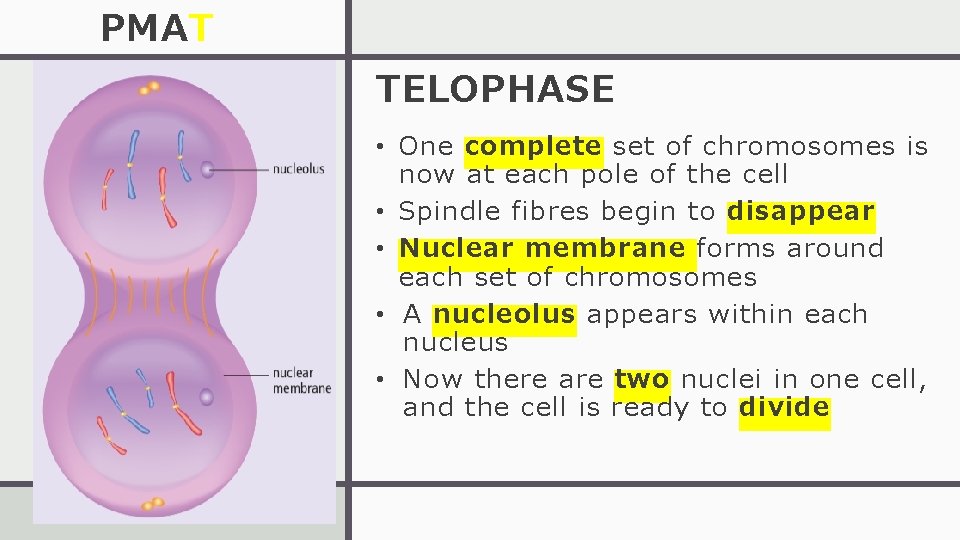
PMAT TELOPHASE • One complete set of chromosomes is now at each pole of the cell • Spindle fibres begin to disappear • Nuclear membrane forms around each set of chromosomes • A nucleolus appears within each nucleus • Now there are two nuclei in one cell, and the cell is ready to divide
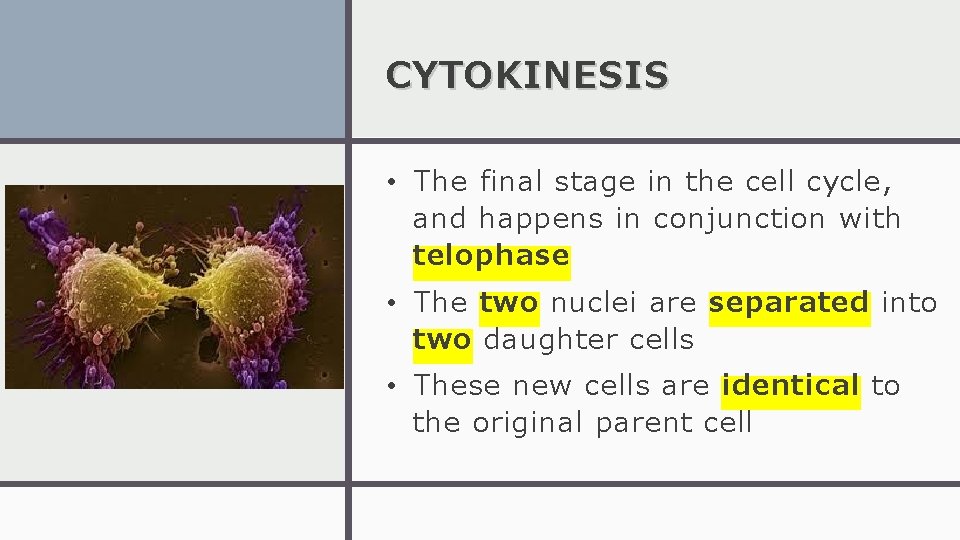
CYTOKINESIS • The final stage in the cell cycle, and happens in conjunction with telophase • The two nuclei are separated into two daughter cells • These new cells are identical to the original parent cell
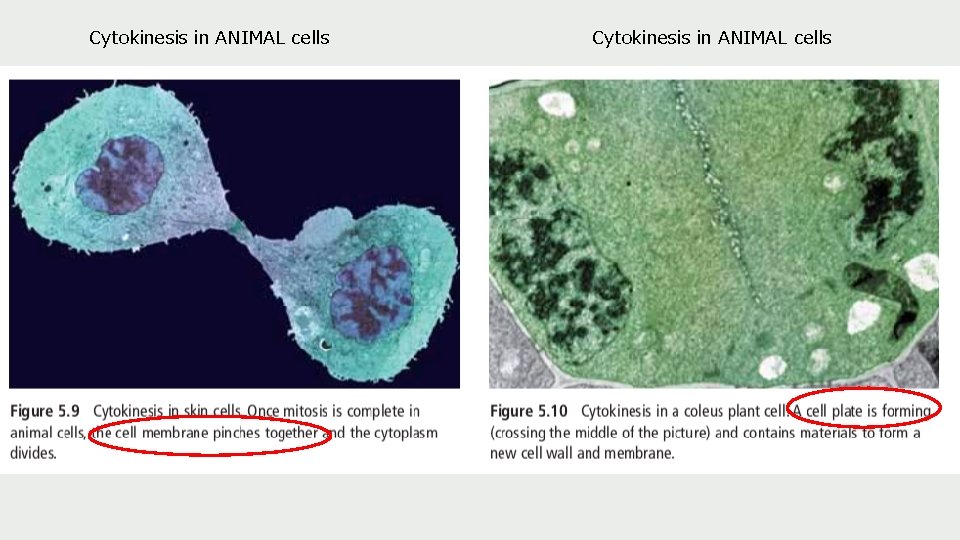
Cytokinesis in ANIMAL cells
Check out short video: Amoeba Sisters Mitosis HERE
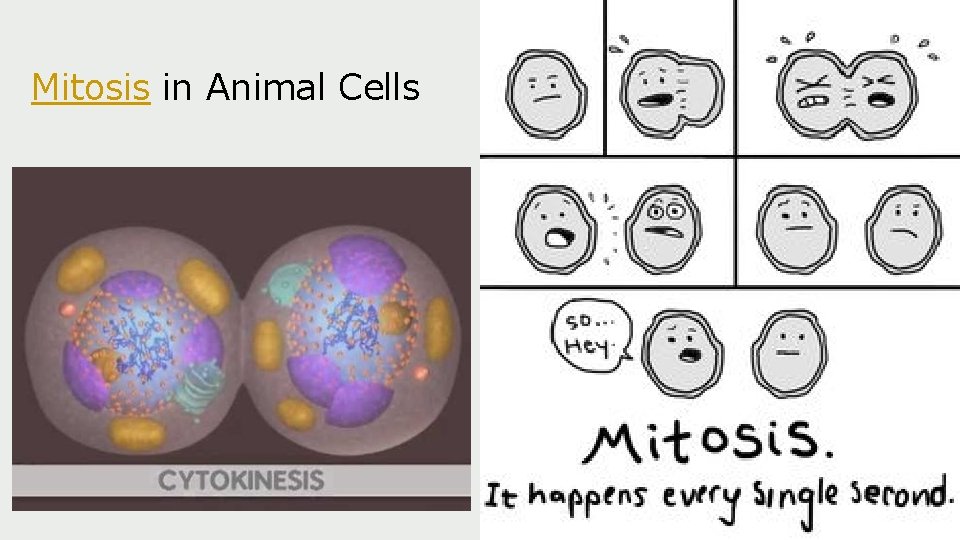
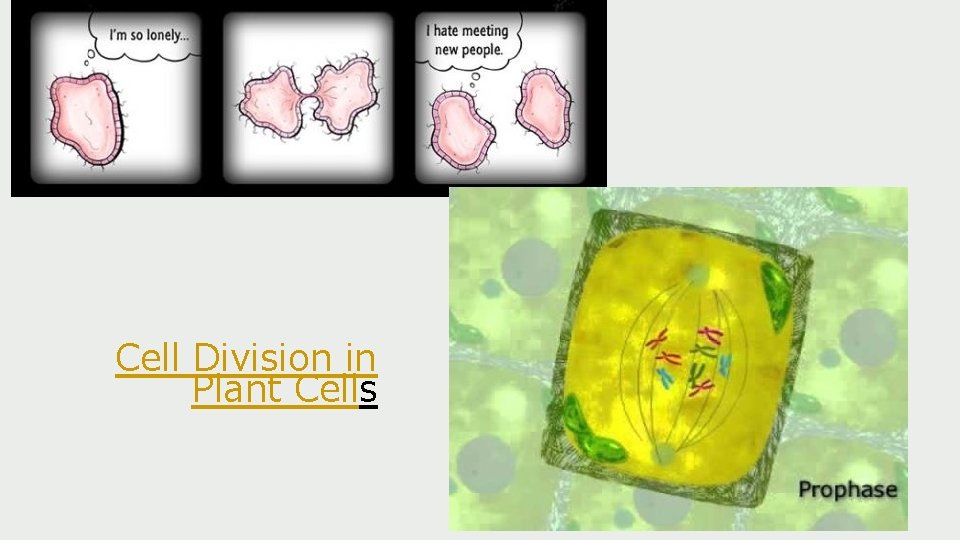
Mitosis in Animal Cells
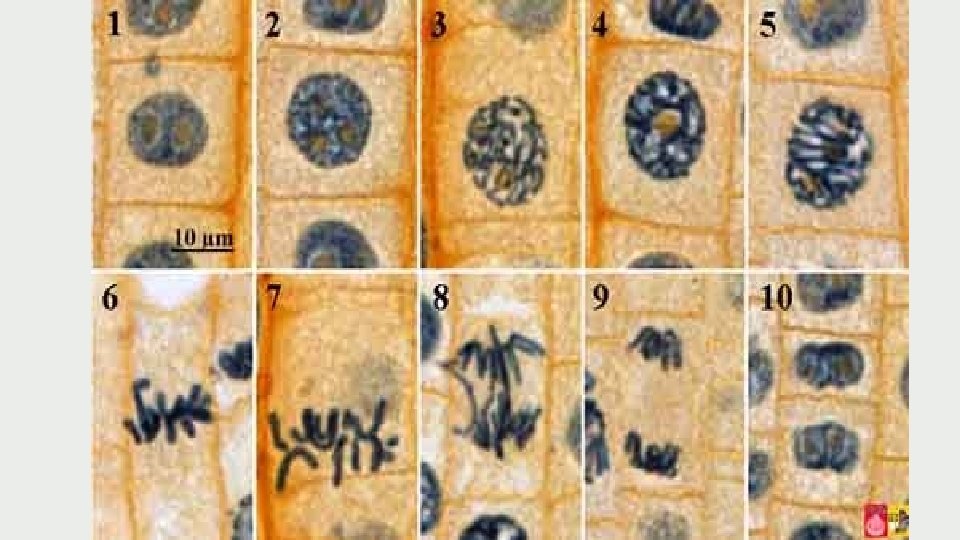
Cell Division in Plant Cells
Mitosis Rap Ok so you can see he’s, um, not a rapper, but this is a good little review
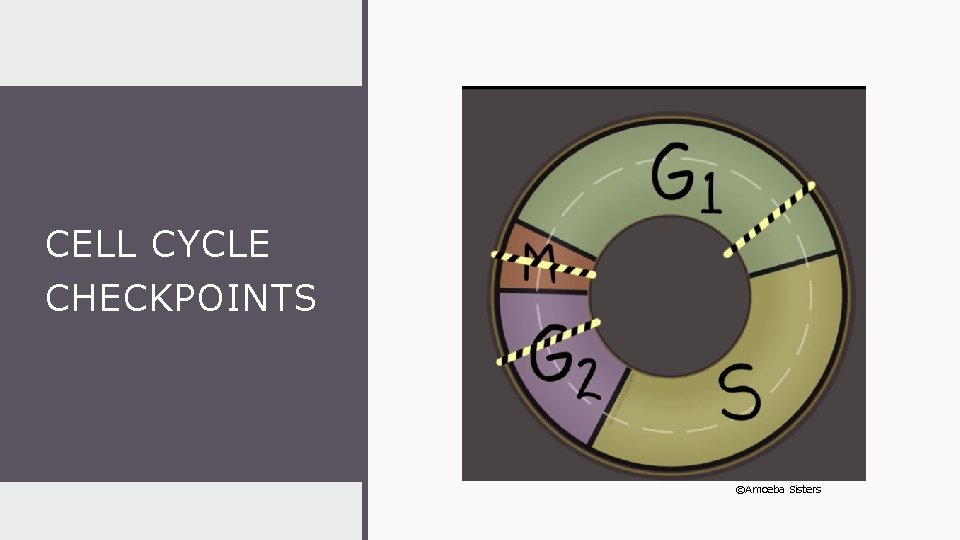
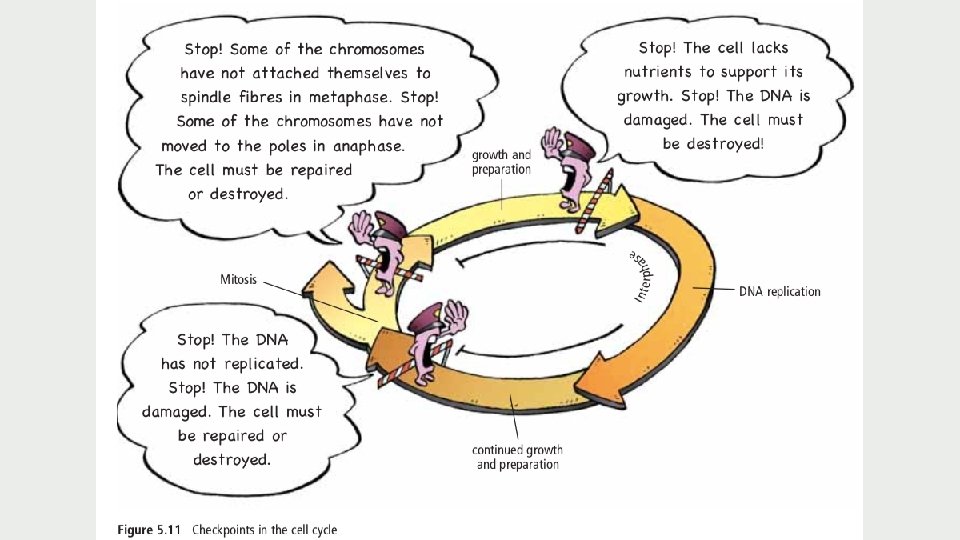
CELL CYCLE CHECKPOINTS ©Amoeba Sisters
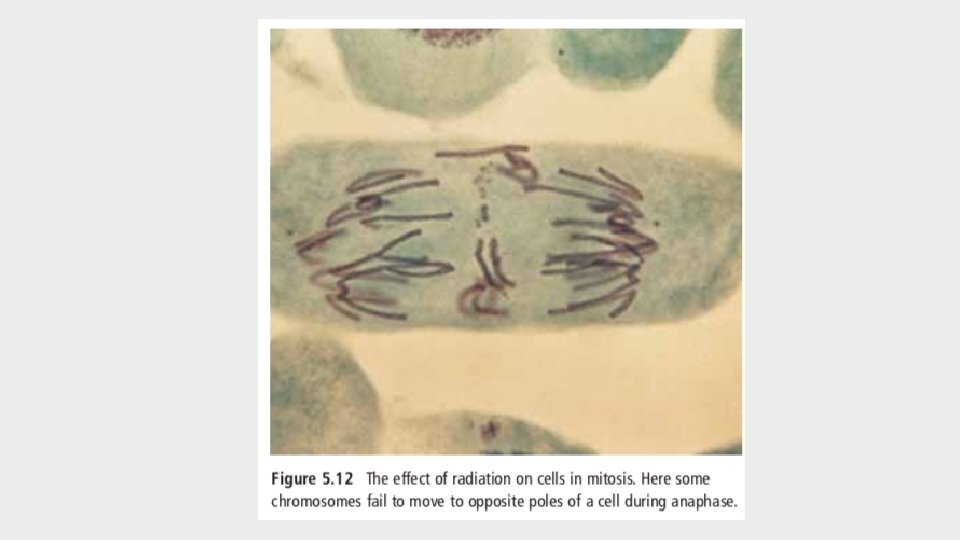
Cell Cycle Problems Checkpoints in the cell cycle will prevent division if: • If the cell is short of nutrients • If the DNA within the nucleus has not been replicated • If the DNA is damaged Mutations in genes involving checkpoints can result in an out-of-control cell cycle. The result can be uncontrolled cell division: cancer.
Check out short video: Amoeba Sisters Cell Cycle HERE
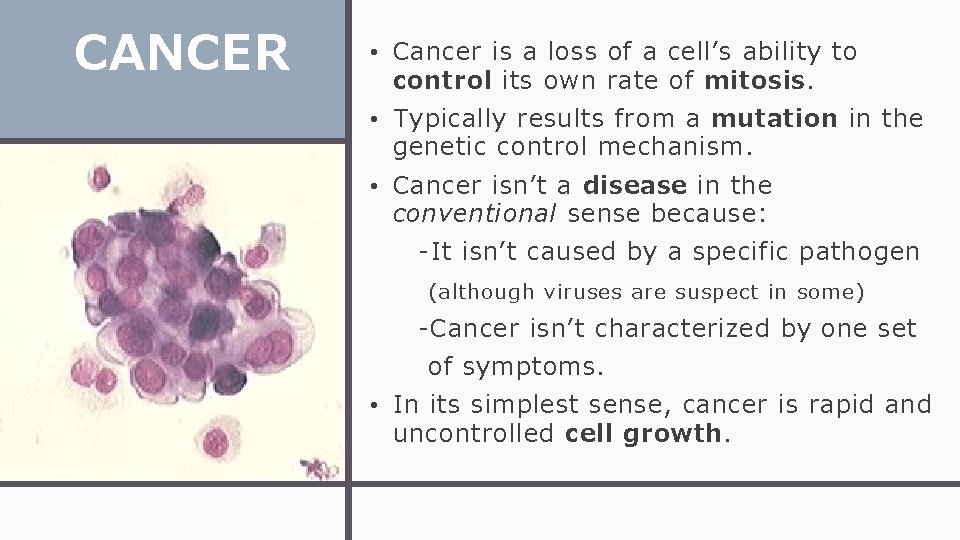
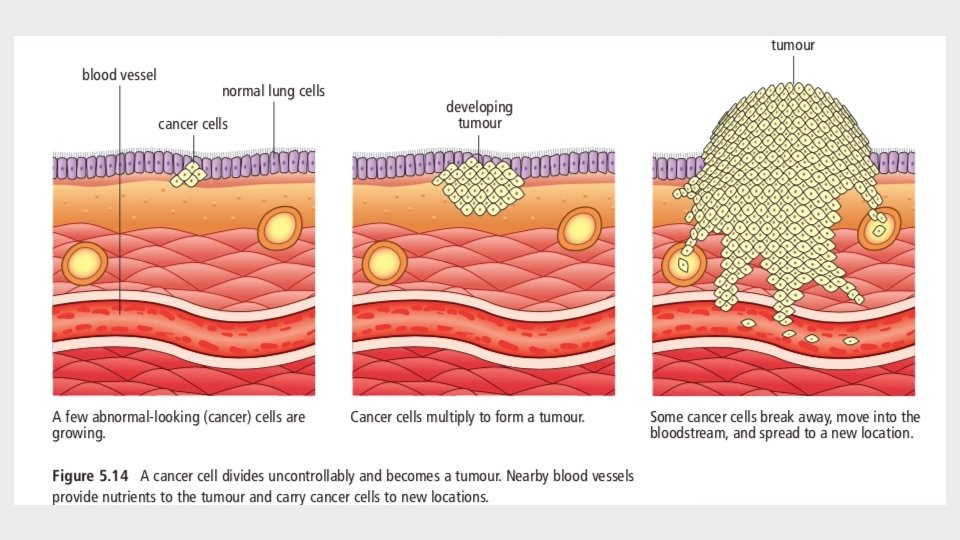
CANCER • Cancer is a loss of a cell’s ability to control its own rate of mitosis. • Typically results from a mutation in the genetic control mechanism. • Cancer isn’t a disease in the conventional sense because: -It isn’t caused by a specific pathogen (although viruses are suspect in some) -Cancer isn’t characterized by one set of symptoms. • In its simplest sense, cancer is rapid and uncontrolled cell growth.
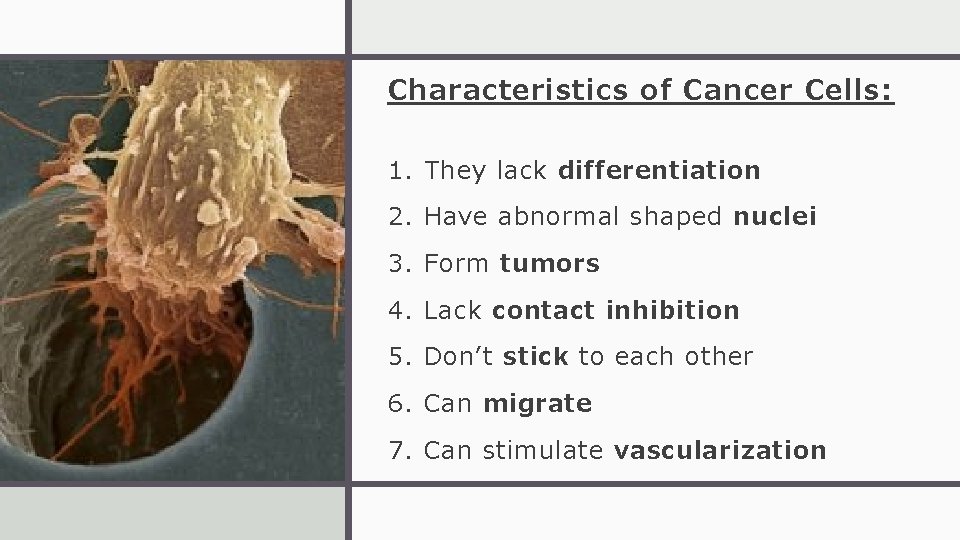
Characteristics of Cancer Cells: 1. They lack differentiation 2. Have abnormal shaped nuclei 3. Form tumors 4. Lack contact inhibition 5. Don’t stick to each other 6. Can migrate 7. Can stimulate vascularization
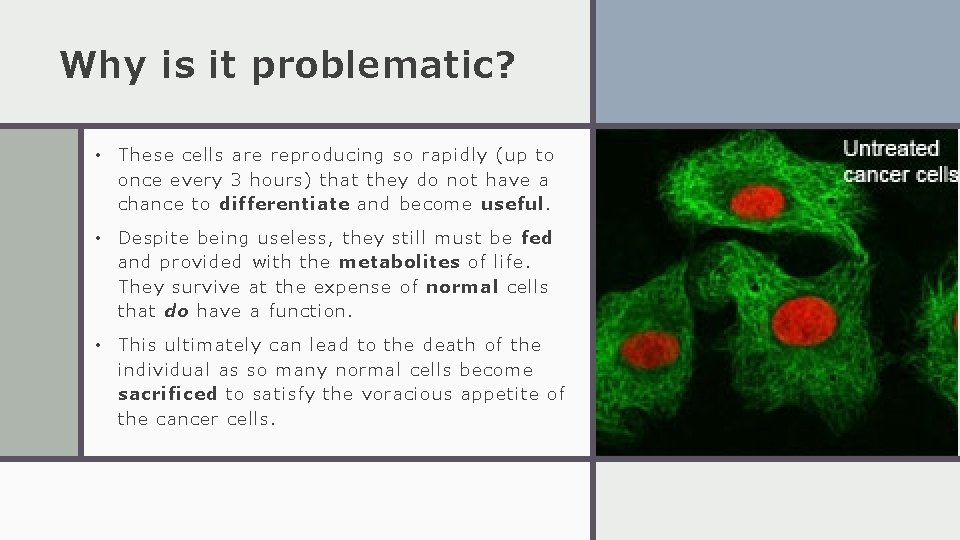
Why is it problematic? • These cells are reproducing so rapidly (up to once every 3 hours) that they do not have a chance to differentiate and become useful. • Despite being useless, they still must be fed and provided with the metabolites of life. They survive at the expense of normal cells that do have a function. • This ultimately can lead to the death of the individual as so many normal cells become sacrificed to satisfy the voracious appetite of the cancer cells.
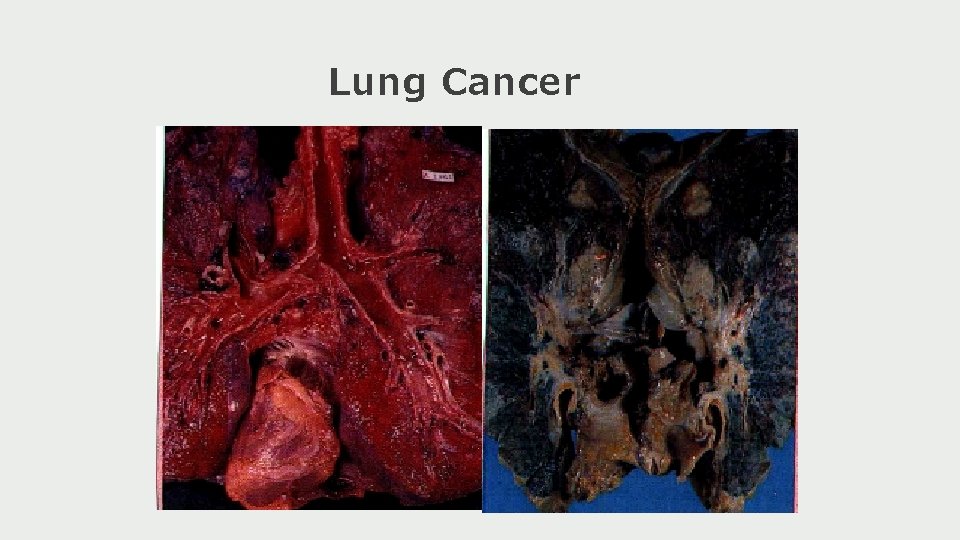
Lung Cancer