
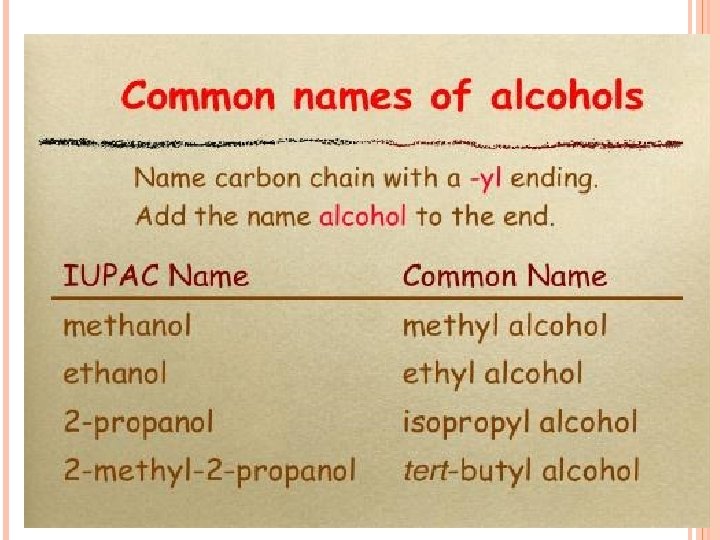
2 methyl1 propanol 2 butanol 2 methyl2 propanol
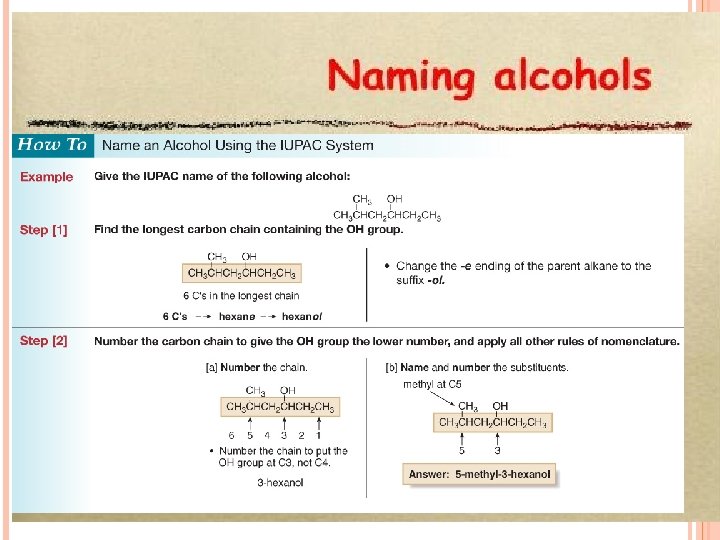
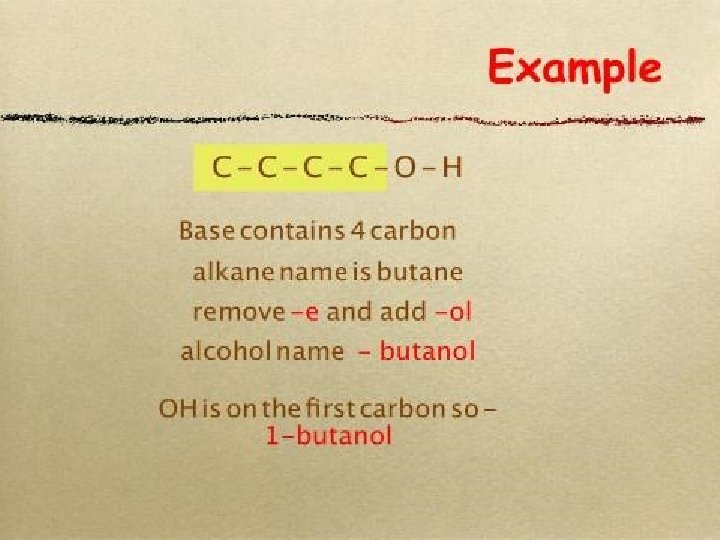
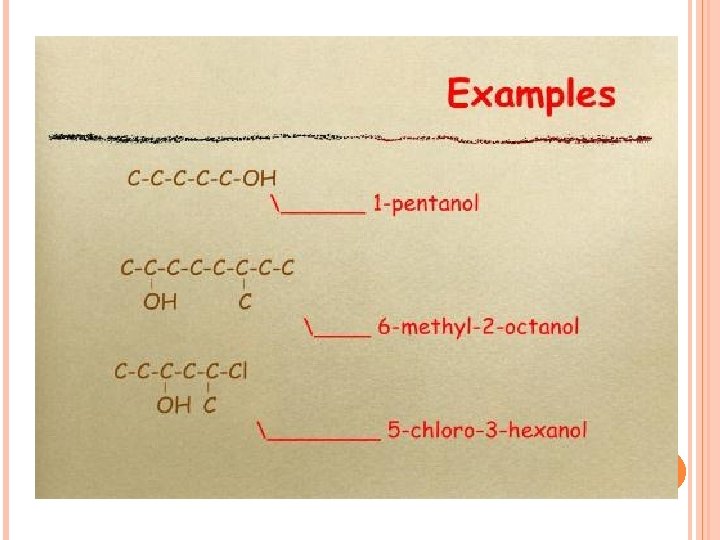

2 -methyl-1 -propanol 2 -butanol 2 -methyl-2 -propanol 3 -bromo-3 -methylcyclohexanol =>
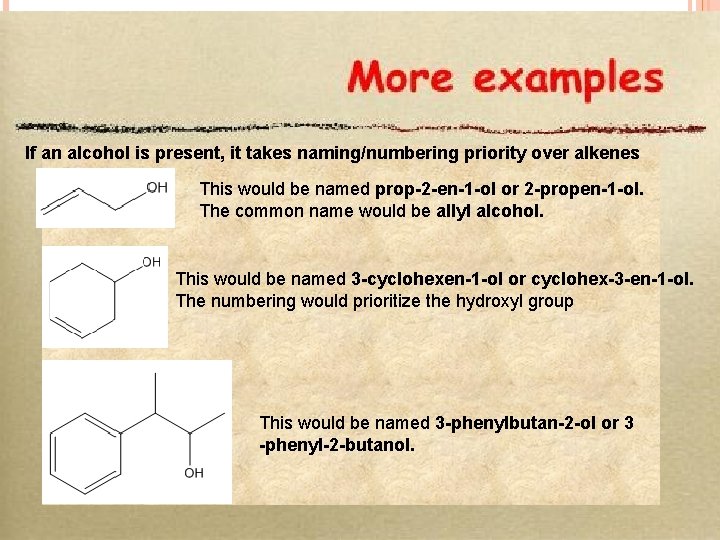
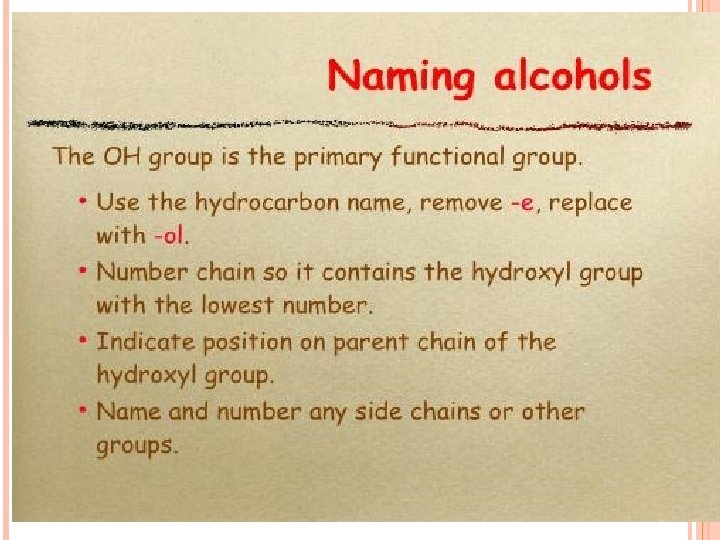
If an alcohol is present, it takes naming/numbering priority over alkenes This would be named prop-2 -en-1 -ol or 2 -propen-1 -ol. The common name would be allyl alcohol. This would be named 3 -cyclohexen-1 -ol or cyclohex-3 -en-1 -ol. The numbering would prioritize the hydroxyl group This would be named 3 -phenylbutan-2 -ol or 3 -phenyl-2 -butanol.
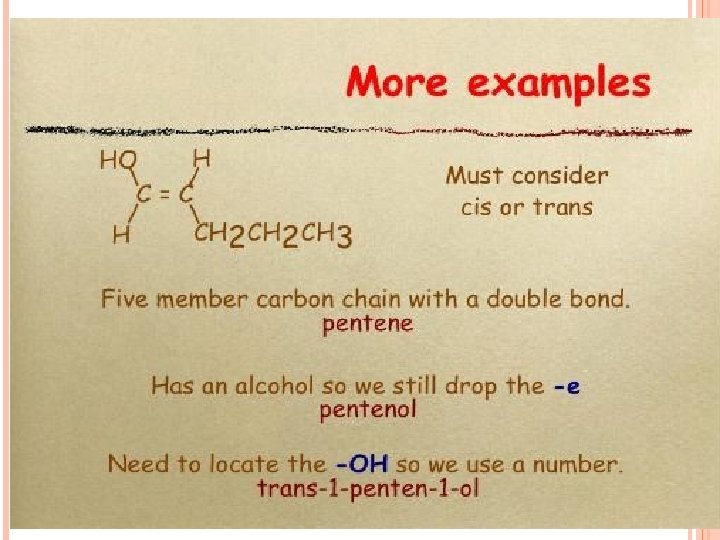
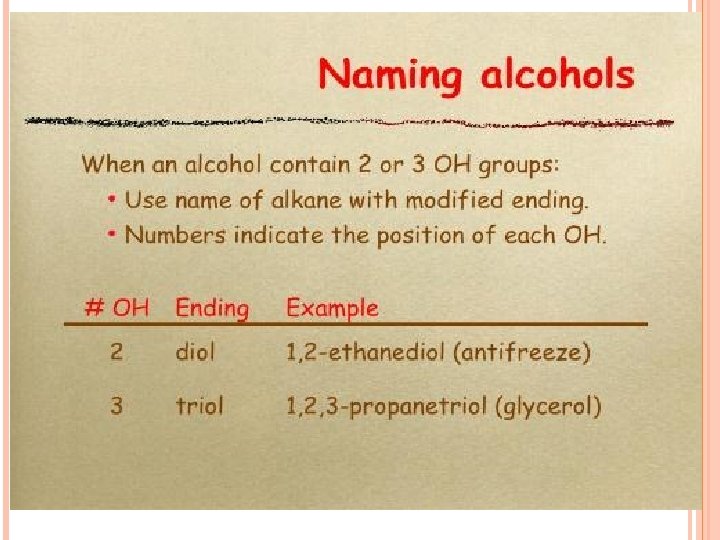
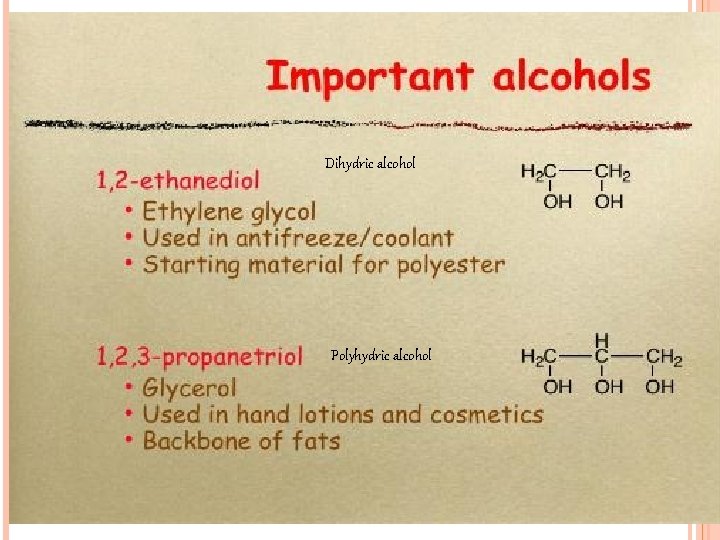
Dihydric alcohol Polyhydric alcohol
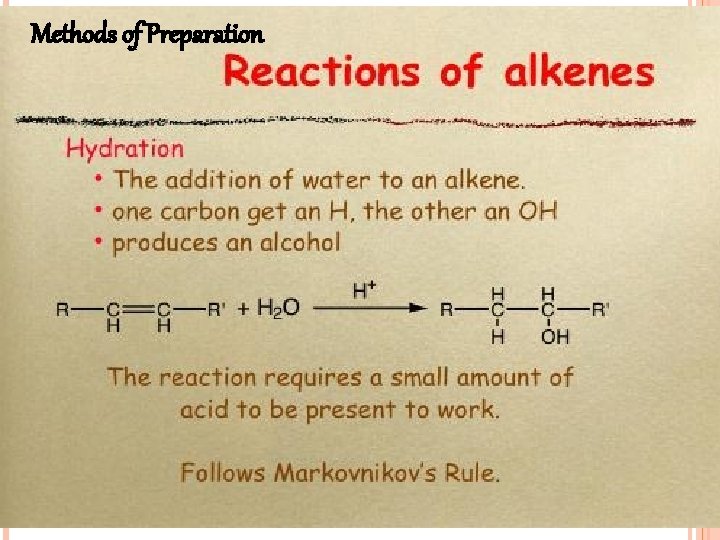
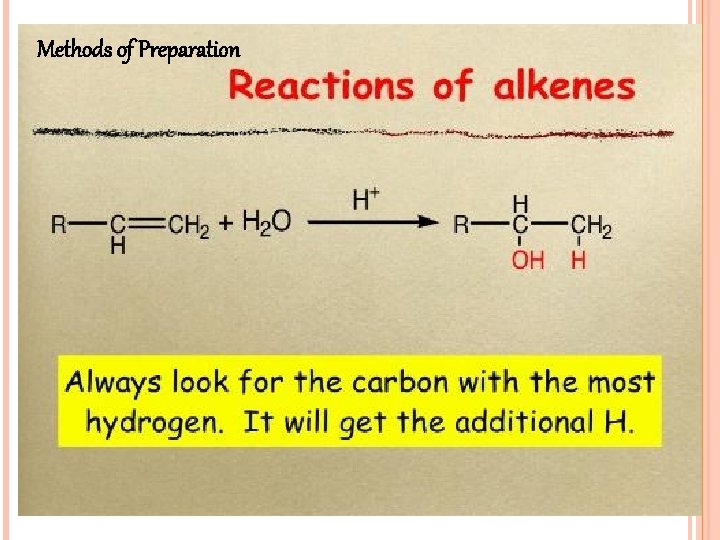
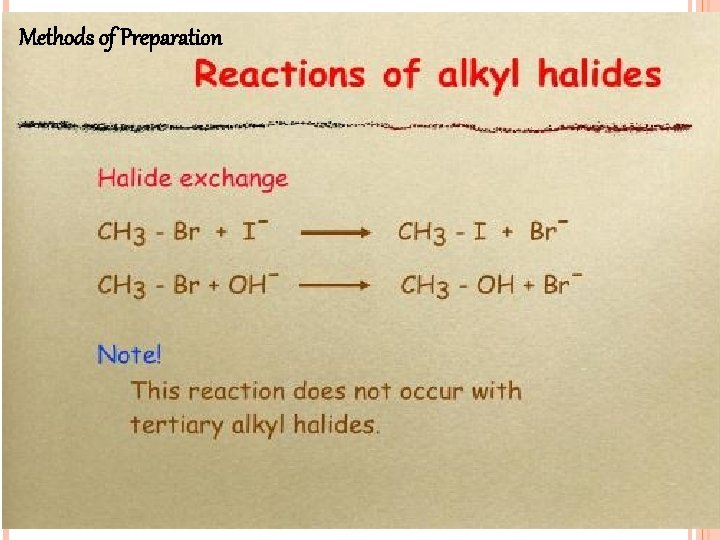
Methods of Preparation Alcohols can be formed from many, many different sources. More than 7 different functional groups can be converted to an alcohol.
Methods of Preparation
Methods of Preparation
Methods of Preparation
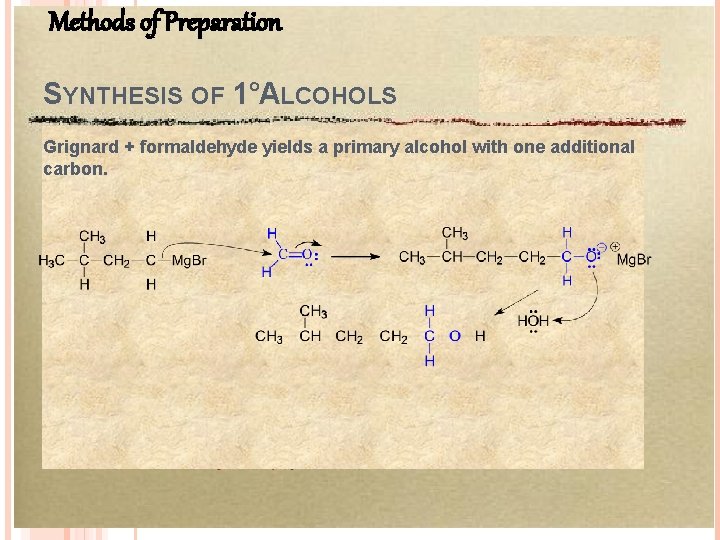
Methods of Preparation SYNTHESIS OF 1°ALCOHOLS Grignard + formaldehyde yields a primary alcohol with one additional carbon.
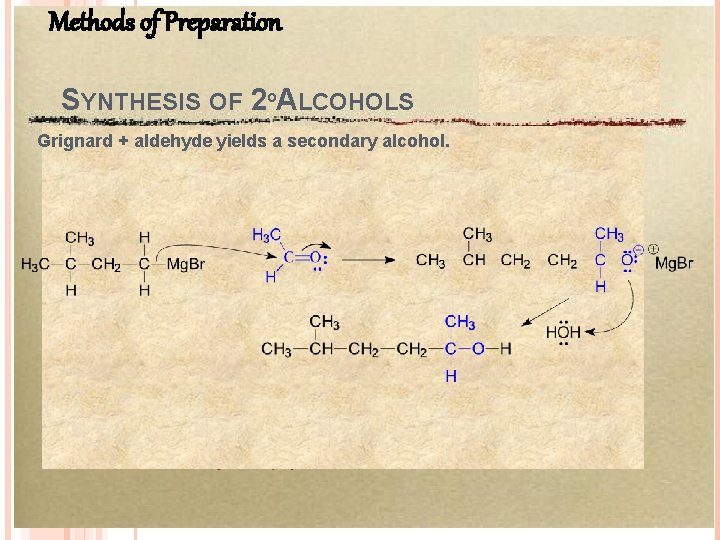
Methods of Preparation SYNTHESIS OF 2ºALCOHOLS Grignard + aldehyde yields a secondary alcohol.
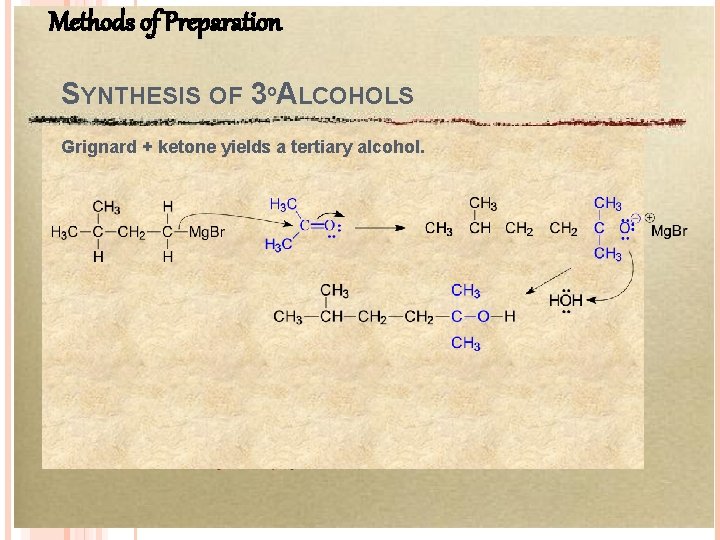
Methods of Preparation SYNTHESIS OF 3ºALCOHOLS Grignard + ketone yields a tertiary alcohol.
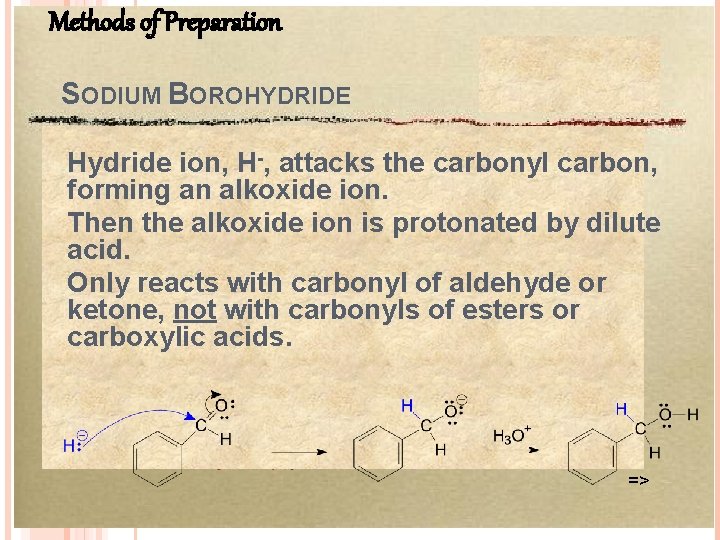
Methods of Preparation SODIUM BOROHYDRIDE Hydride ion, H-, attacks the carbonyl carbon, forming an alkoxide ion. Then the alkoxide ion is protonated by dilute acid. Only reacts with carbonyl of aldehyde or ketone, not with carbonyls of esters or carboxylic acids. =>
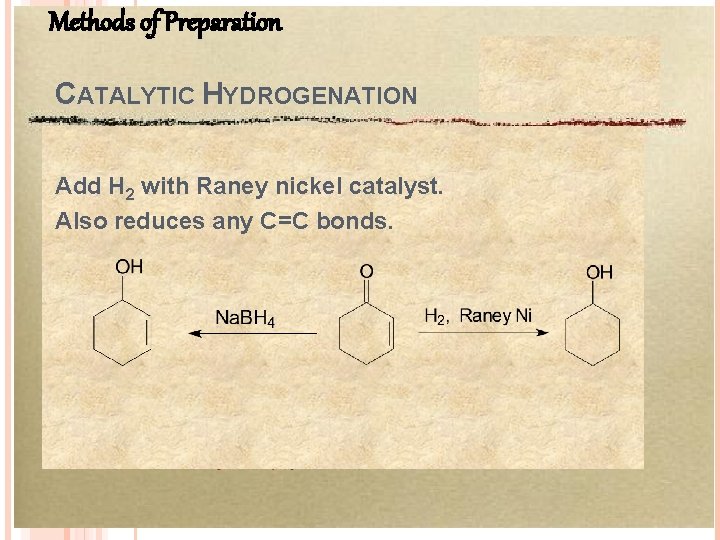
Methods of Preparation CATALYTIC HYDROGENATION Add H 2 with Raney nickel catalyst. Also reduces any C=C bonds.
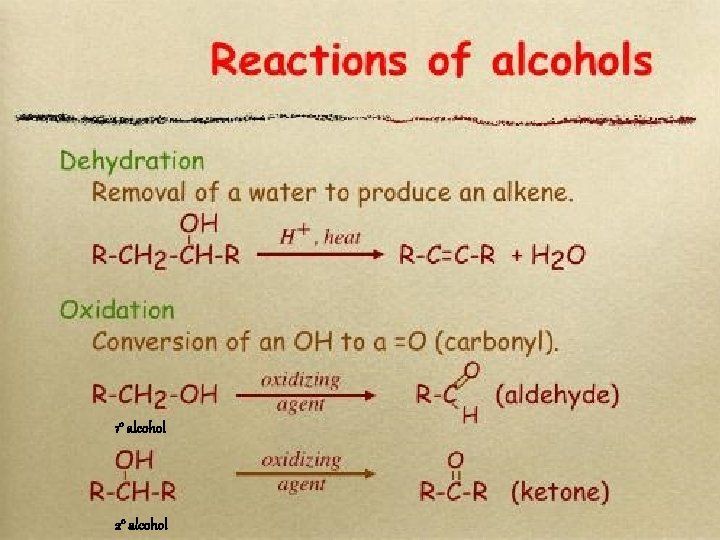
1 o alcohol 2 o alcohol
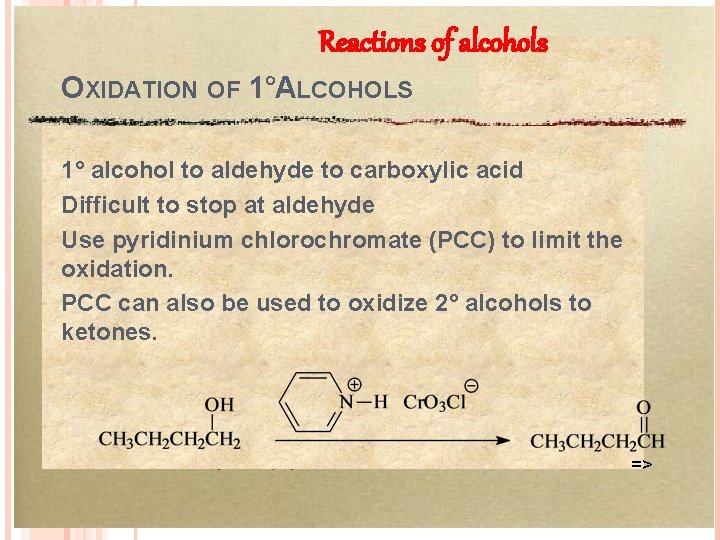
Reactions of alcohols OXIDATION OF 1°ALCOHOLS 1° alcohol to aldehyde to carboxylic acid Difficult to stop at aldehyde Use pyridinium chlorochromate (PCC) to limit the oxidation. PCC can also be used to oxidize 2° alcohols to ketones. =>
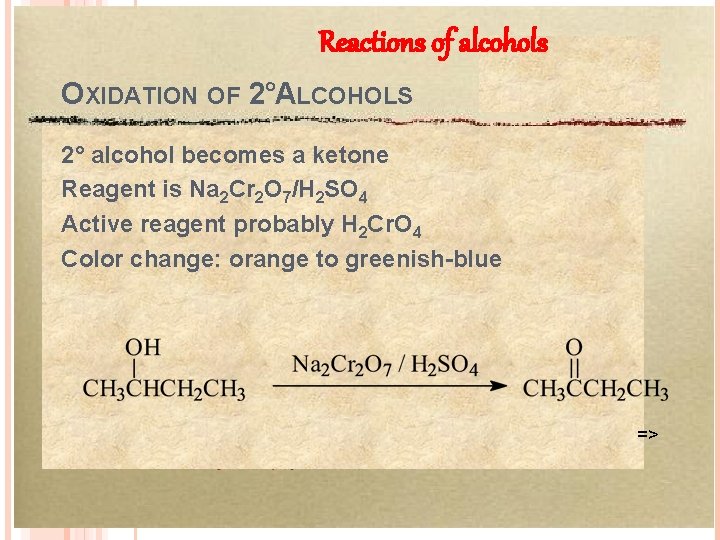
Reactions of alcohols OXIDATION OF 2°ALCOHOLS 2° alcohol becomes a ketone Reagent is Na 2 Cr 2 O 7/H 2 SO 4 Active reagent probably H 2 Cr. O 4 Color change: orange to greenish-blue =>
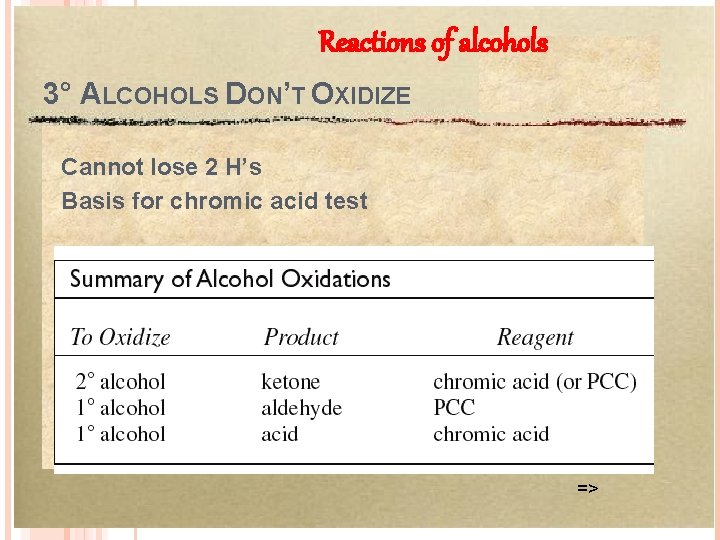
Reactions of alcohols 3° ALCOHOLS DON’T OXIDIZE Cannot lose 2 H’s Basis for chromic acid test =>
Reactions of alcohols REACTION WITH HCL Chloride is a weaker nucleophile than bromide. Add Zn. Cl 2, which bonds strongly with –OH, to promote the reaction. The chloride product is insoluble. Lucas test: Zn. Cl 2 in concentrated HCl: 1° alcohols react slowly or not at all. 2 alcohols react in 1 -5 minutes. 3 alcohols react in less than 1 minute.

Reactions of alcohols SN 1 REACTION WITH THE LUCAS REAGENT Secondary and tertiary alcohols react with the Lucas reagent (HCl and Zn. Cl 2) by the SN 1 mechanism.
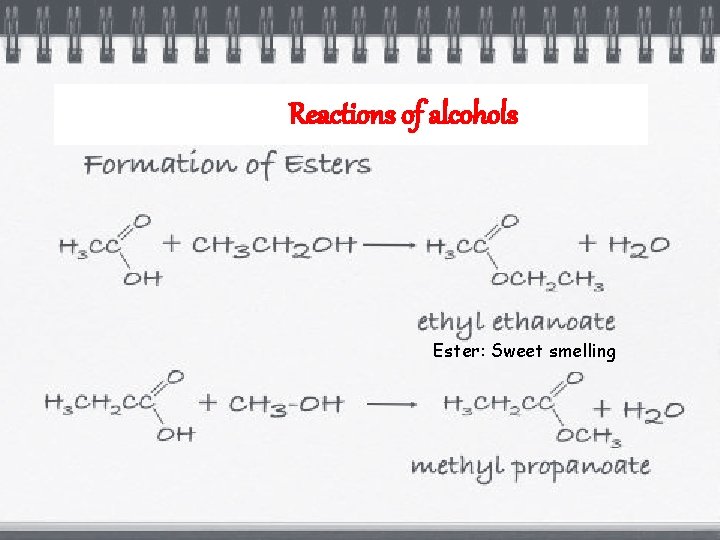
Reactions of alcohols Ester: Sweet smelling
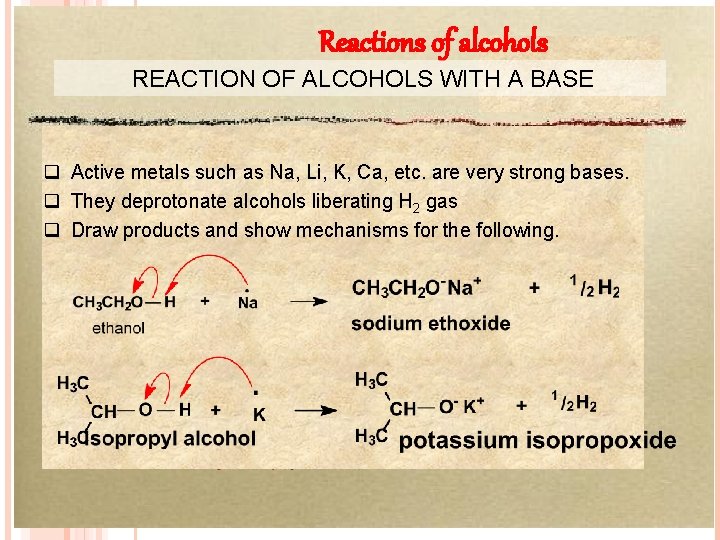
Reactions of alcohols REACTION OF ALCOHOLS WITH A BASE q Active metals such as Na, Li, K, Ca, etc. are very strong bases. q They deprotonate alcohols liberating H 2 gas q Draw products and show mechanisms for the following.
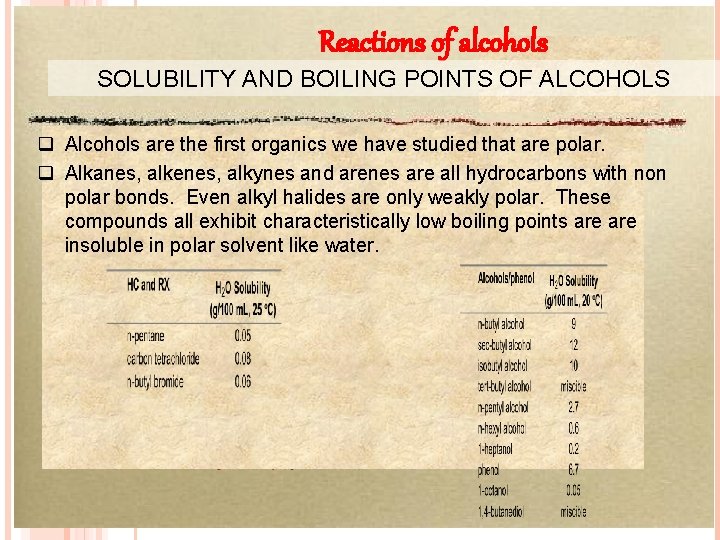
Reactions of alcohols SOLUBILITY AND BOILING POINTS OF ALCOHOLS q Alcohols are the first organics we have studied that are polar. q Alkanes, alkenes, alkynes and arenes are all hydrocarbons with non polar bonds. Even alkyl halides are only weakly polar. These compounds all exhibit characteristically low boiling points are insoluble in polar solvent like water.
Reactions of alcohols
- Slides: 35