
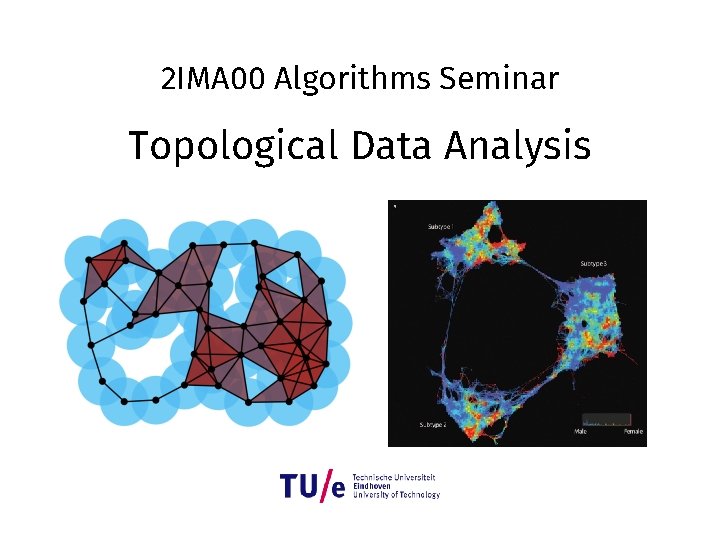
2 IMA 00 Algorithms Seminar Topological Data Analysis


- Slides: 38
2 IMA 00 Algorithms Seminar Topological Data Analysis
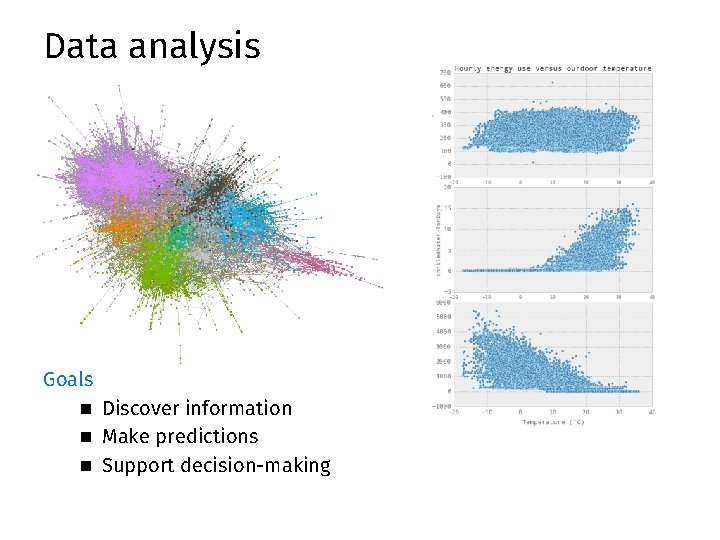
Data analysis Goals n Discover information n Make predictions n Support decision-making
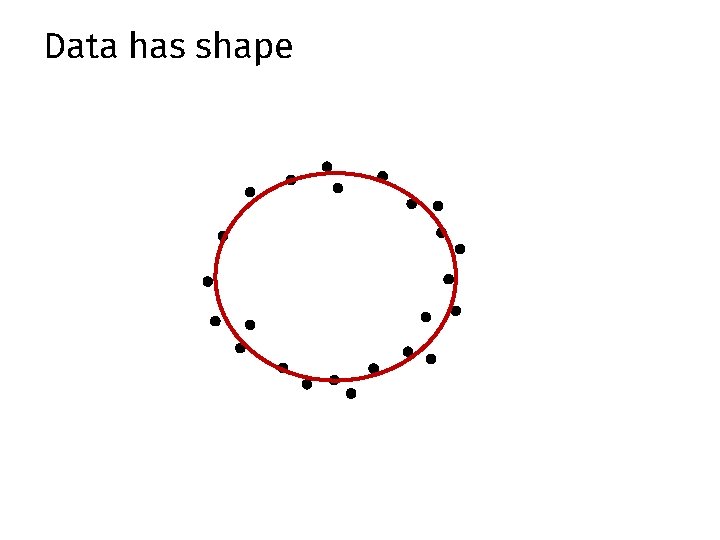
Data has shape And shape matters…
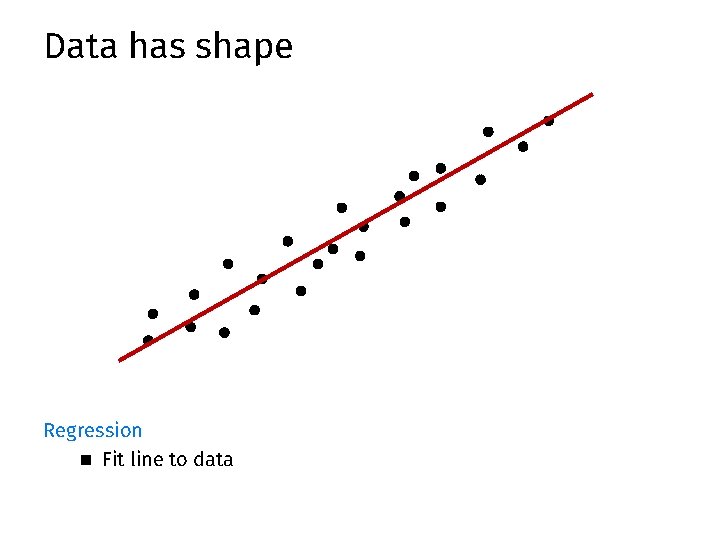
Data has shape Regression n Fit line to data
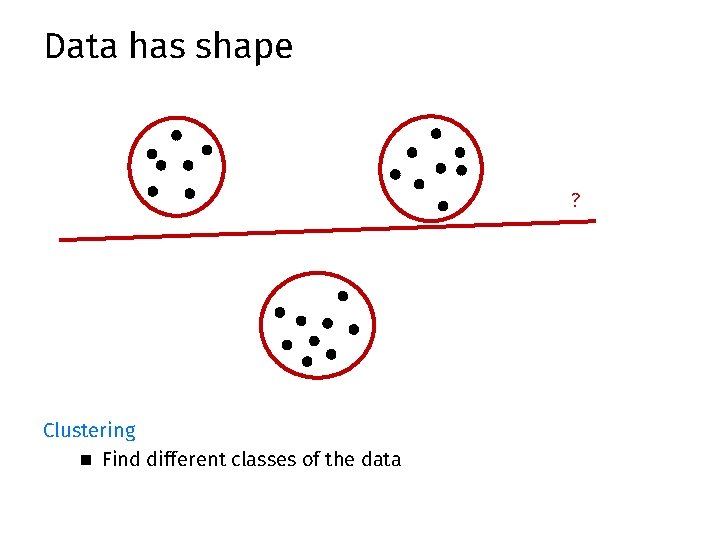
Data has shape ? Clustering n Find different classes of the data
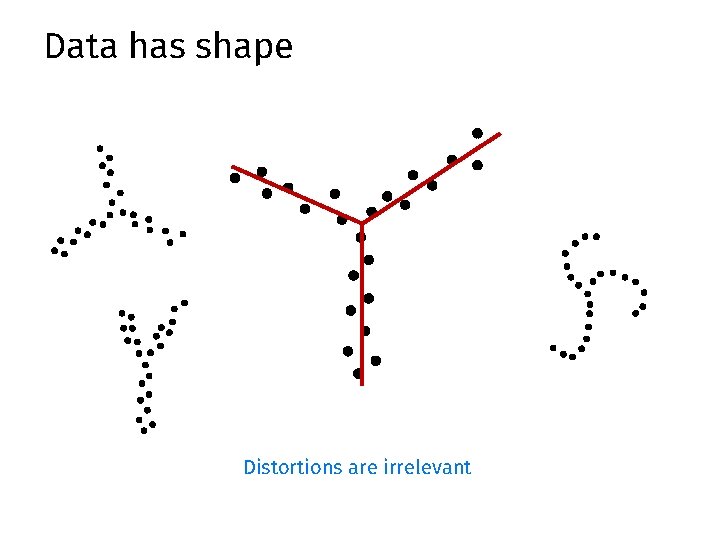
Data has shape
Data has shape Distortions are irrelevant
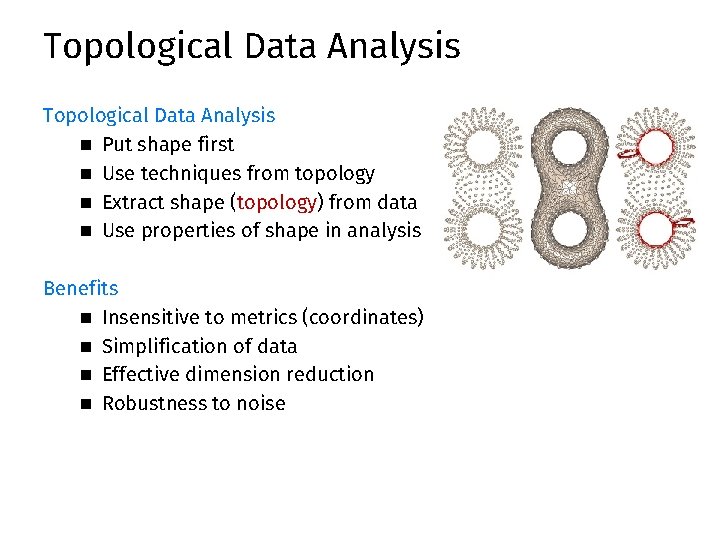
Topological Data Analysis n Put shape first n Use techniques from topology n Extract shape (topology) from data n Use properties of shape in analysis Benefits n Insensitive to metrics (coordinates) n Simplification of data n Effective dimension reduction n Robustness to noise
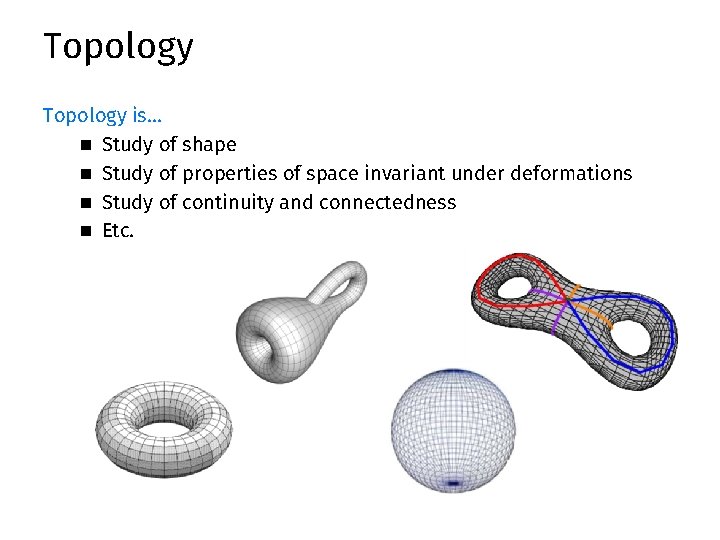
Topology is… n Study of shape n Study of properties of space invariant under deformations n Study of continuity and connectedness n Etc.
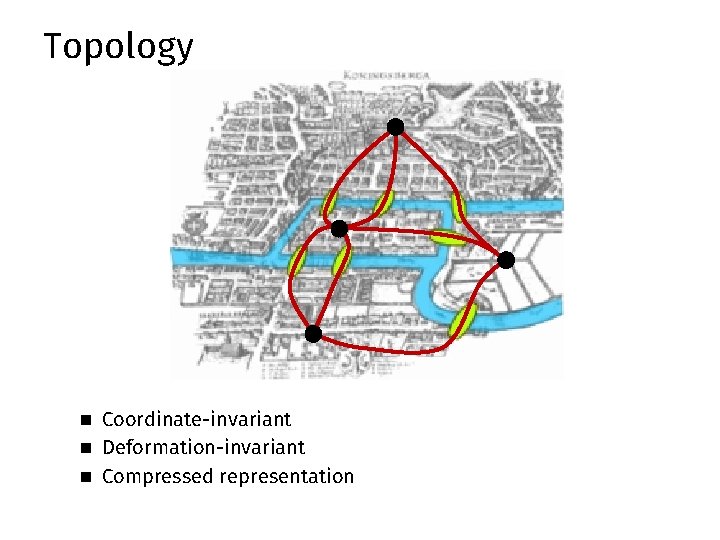
Topology n Coordinate-invariant n Deformation-invariant n Compressed representation
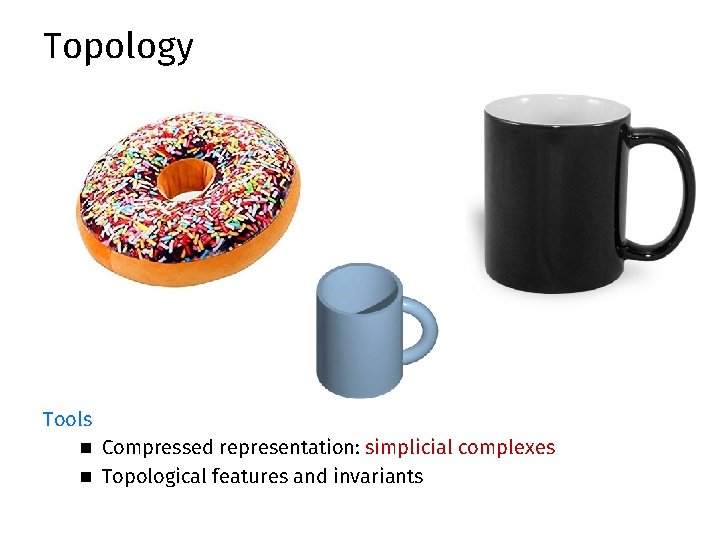
Topology Tools n Compressed representation: simplicial complexes n Topological features and invariants
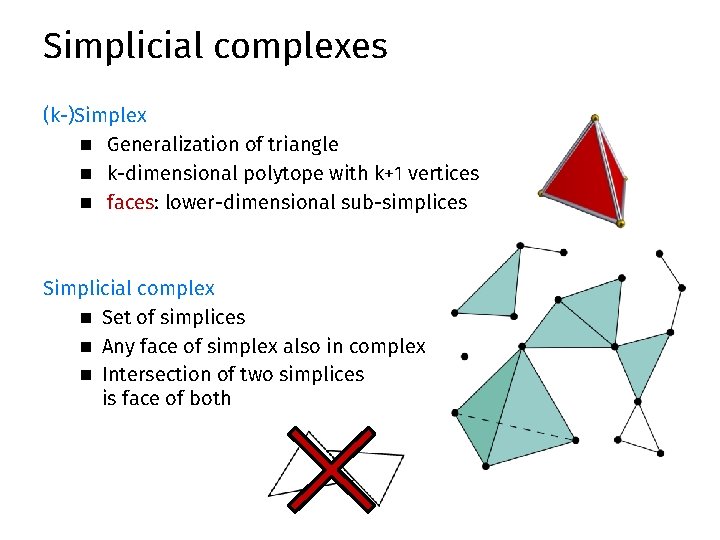
Simplicial complexes (k-)Simplex n Generalization of triangle n k-dimensional polytope with k+1 vertices n faces: lower-dimensional sub-simplices Simplicial complex n Set of simplices n Any face of simplex also in complex n Intersection of two simplices is face of both
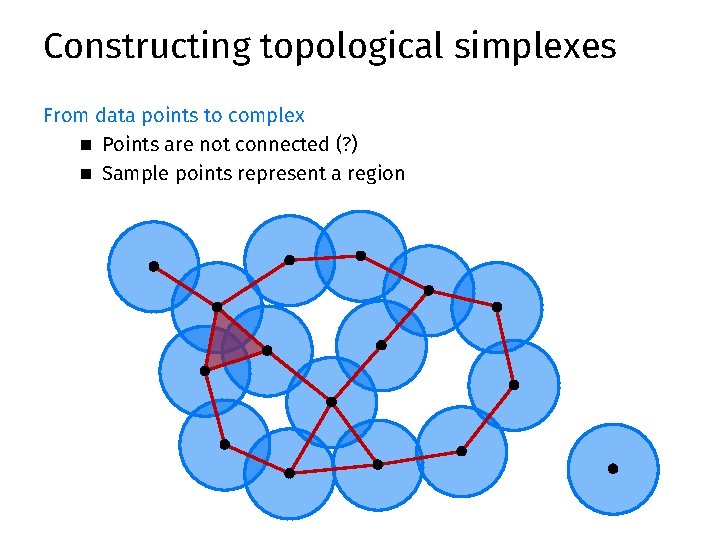
Constructing topological simplexes From data points to complex n Points are not connected (? ) n Sample points represent a region
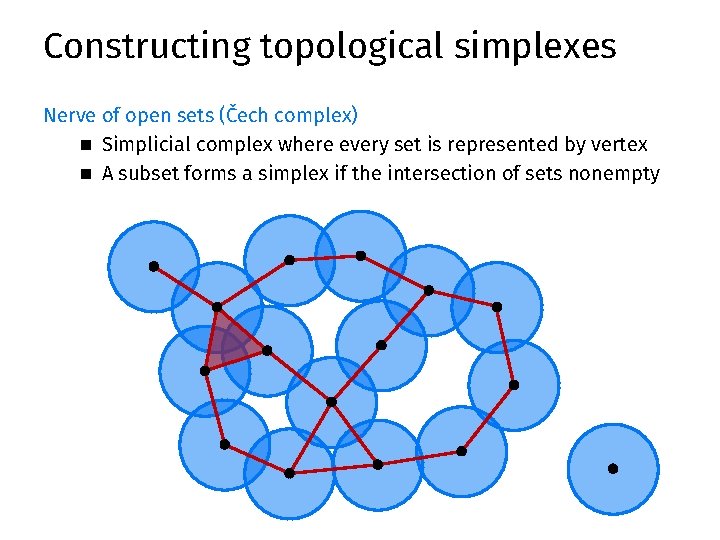
Constructing topological simplexes Nerve of open sets (Čech complex) n Simplicial complex where every set is represented by vertex n A subset forms a simplex if the intersection of sets nonempty
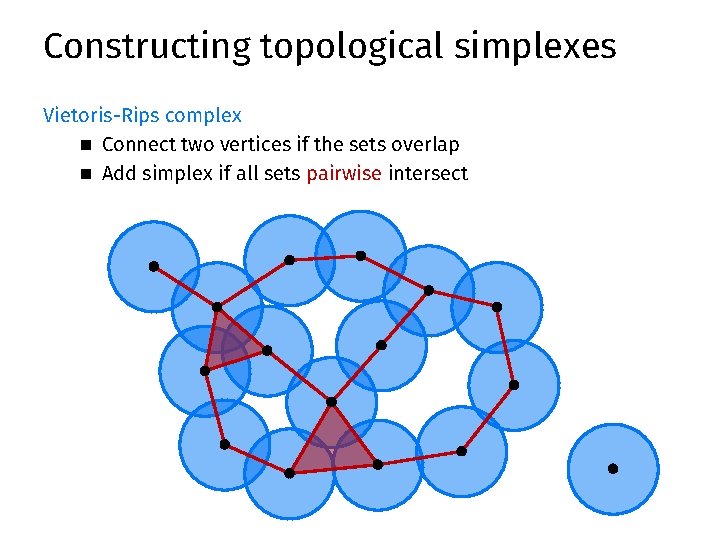
Constructing topological simplexes Vietoris-Rips complex n Connect two vertices if the sets overlap n Add simplex if all sets pairwise intersect
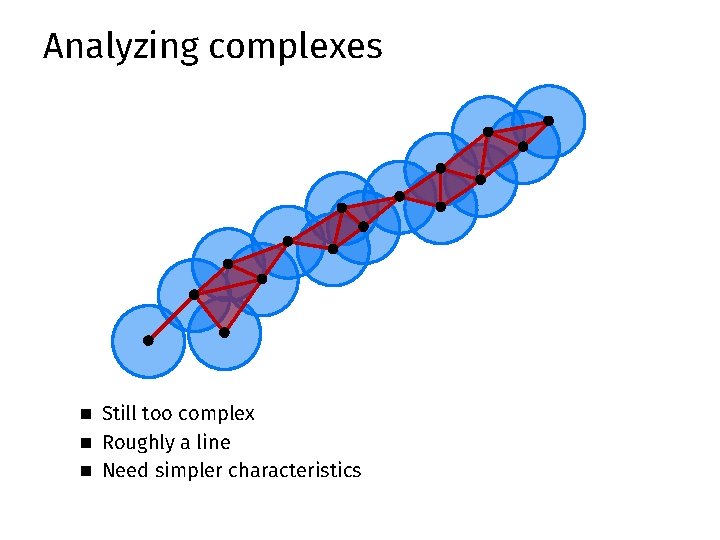
Analyzing complexes n Still too complex n Roughly a line n Need simpler characteristics
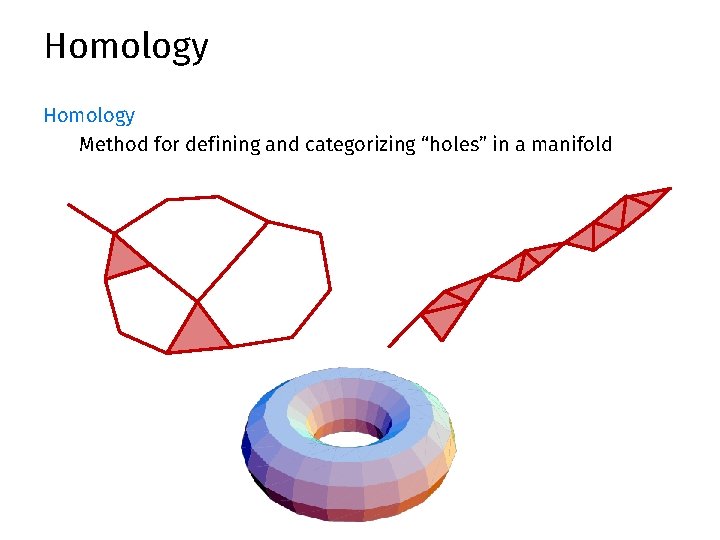
Homology Method for defining and categorizing “holes” in a manifold
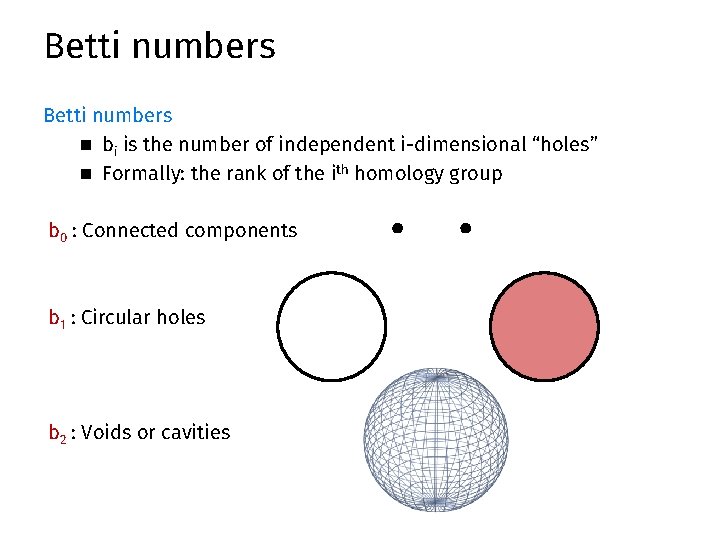
Betti numbers n bi is the number of independent i-dimensional “holes” n Formally: the rank of the ith homology group b 0 : Connected components b 1 : Circular holes b 2 : Voids or cavities
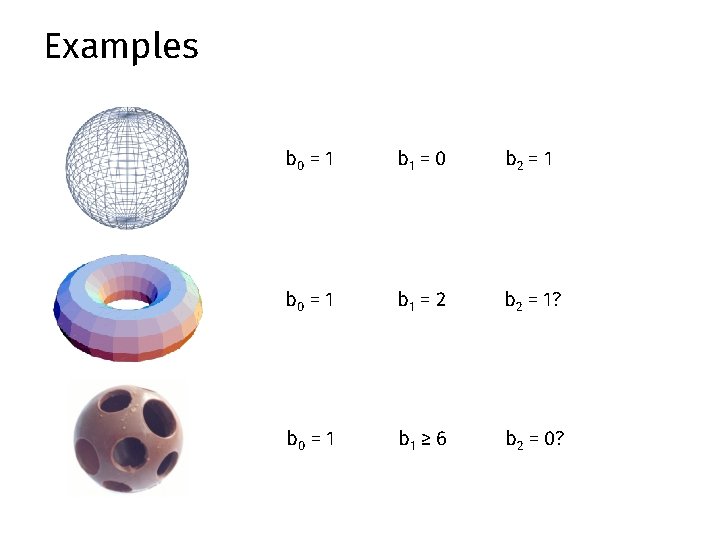
Examples b 0 = 1 b 1 = 0 b 2 = 1 b 0 = 1 b 1 = 2 b 2 = 1? b 0 = 1 b 1 ≥ 6 b 2 = 0?
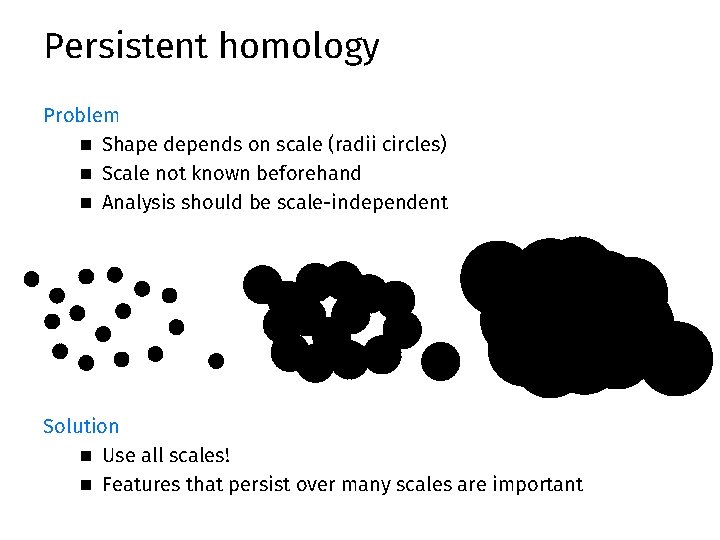
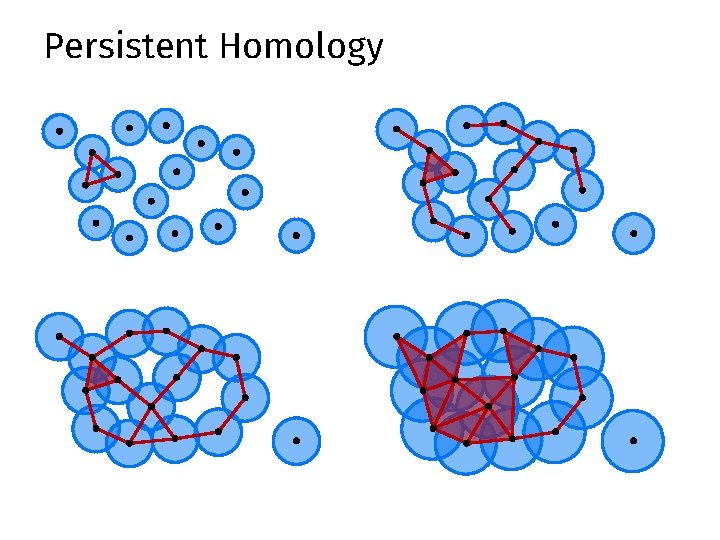
Persistent homology Problem n Shape depends on scale (radii circles) n Scale not known beforehand n Analysis should be scale-independent Solution n Use all scales! n Features that persist over many scales are important
Persistent Homology
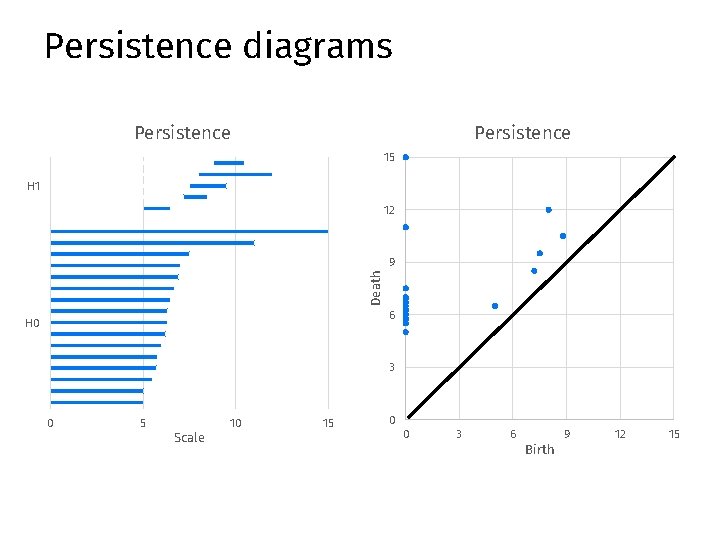
Persistence diagrams Persistence 15 H 1 12 Death 9 6 H 0 3 0 5 10 Scale 15 0 0 3 6 9 Birth 12 15
Maps on spaces Morse theory
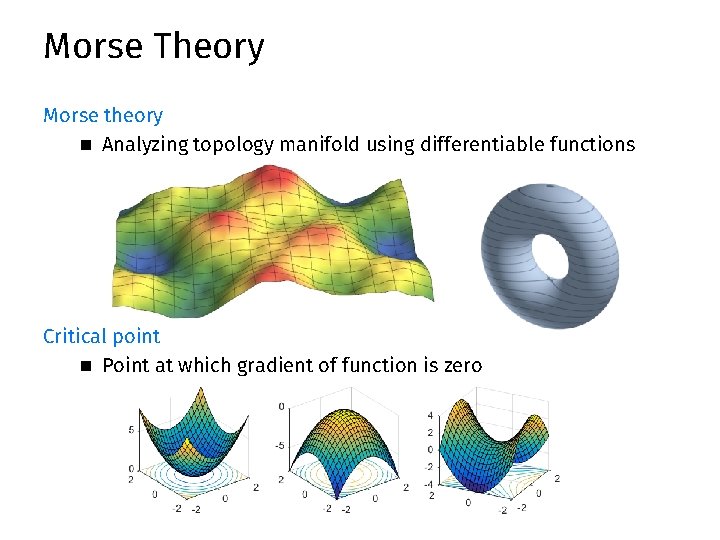
Morse Theory Morse theory n Analyzing topology manifold using differentiable functions Critical point n Point at which gradient of function is zero
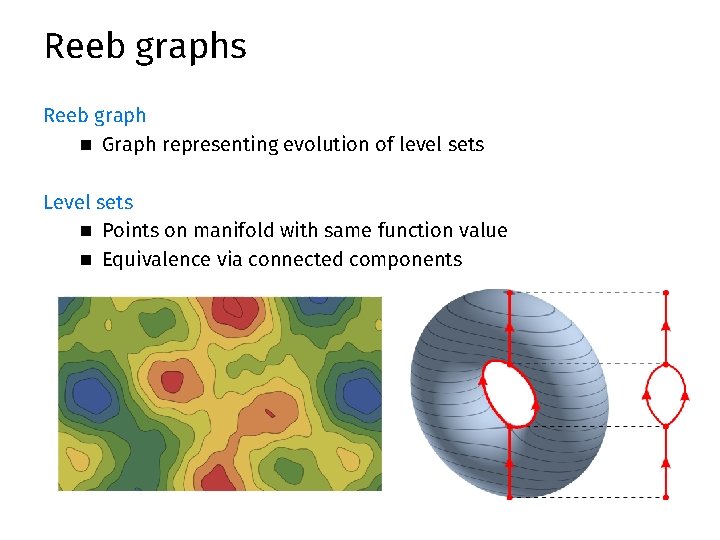
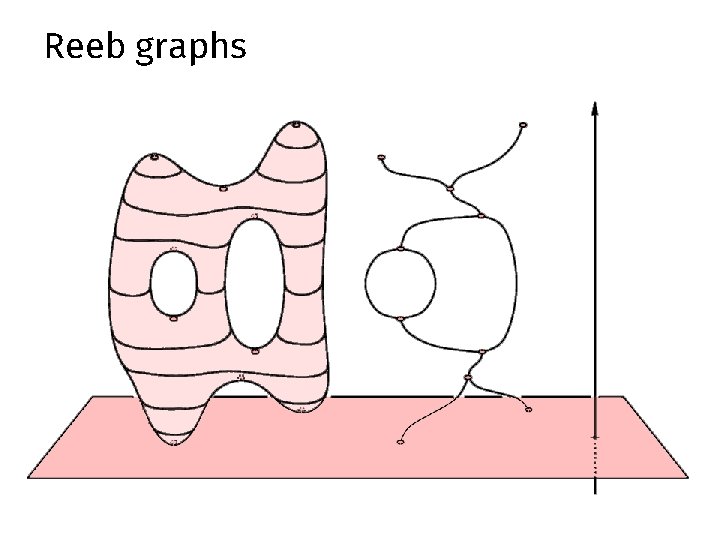
Reeb graphs Reeb graph n Graph representing evolution of level sets Level sets n Points on manifold with same function value n Equivalence via connected components
Reeb graphs
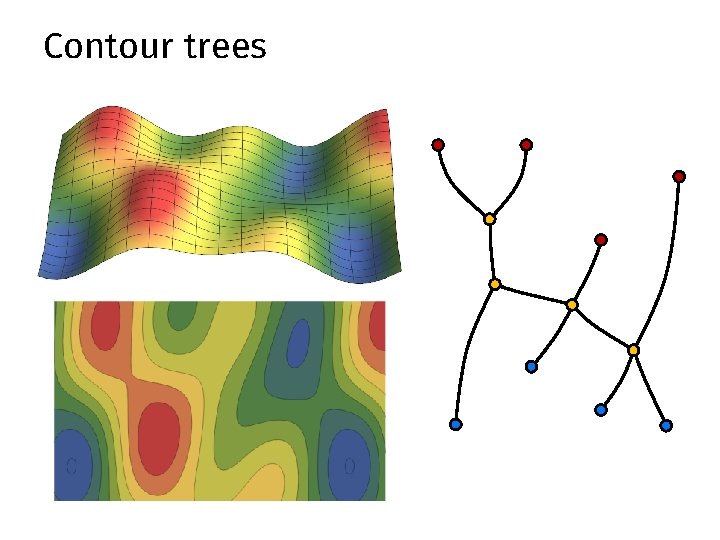
Contour trees
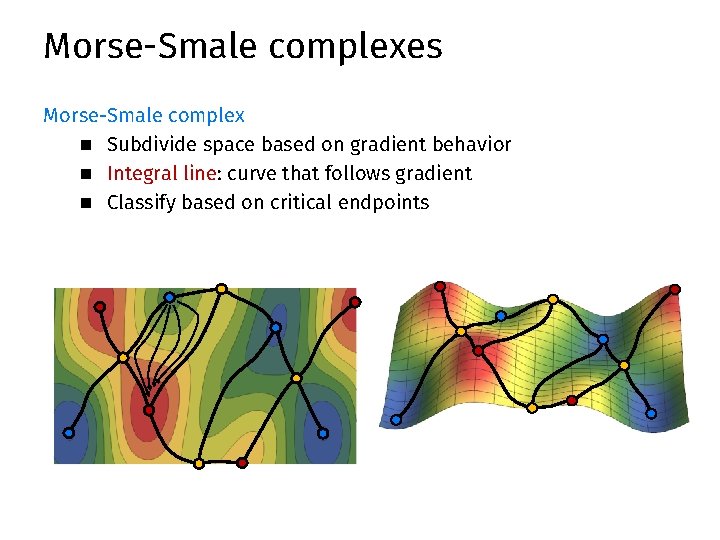
Morse-Smale complexes Morse-Smale complex n Subdivide space based on gradient behavior n Integral line: curve that follows gradient n Classify based on critical endpoints
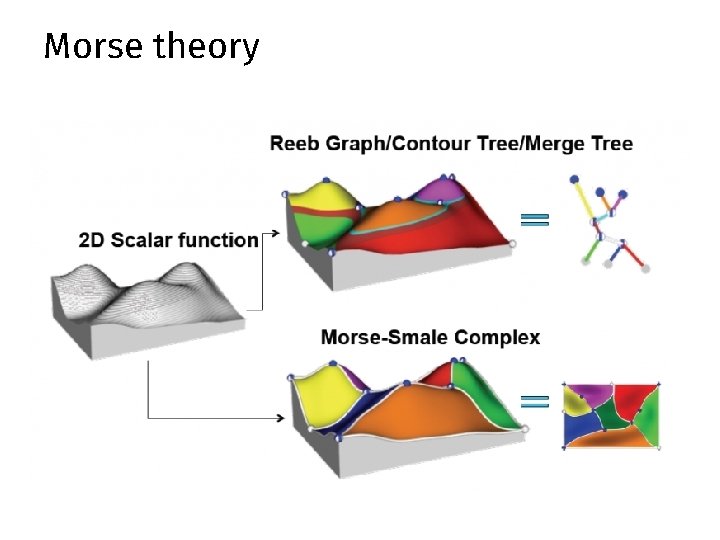
Morse theory
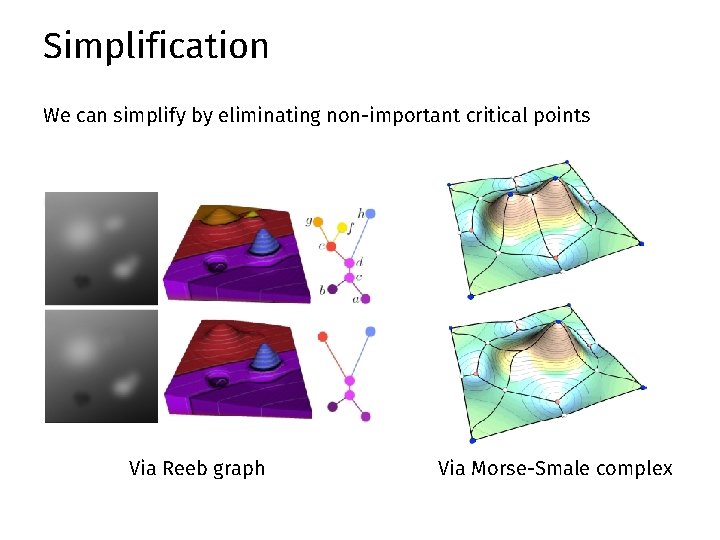
Simplification We can simplify by eliminating non-important critical points Via Reeb graph Via Morse-Smale complex
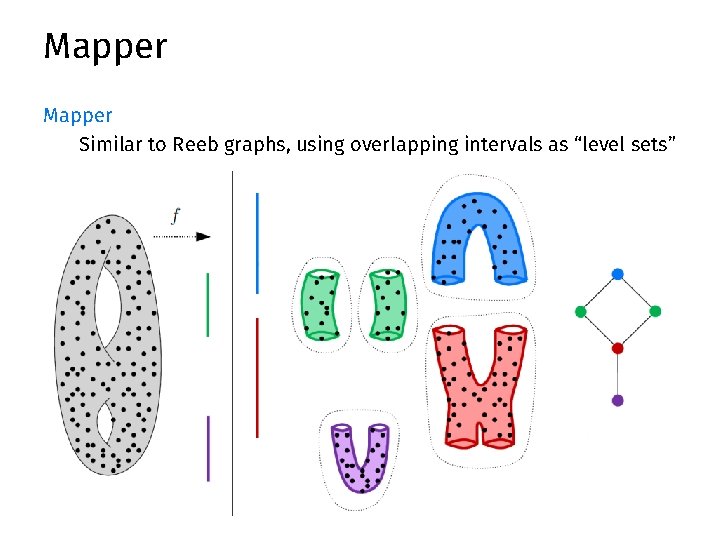
Mapper Similar to Reeb graphs, using overlapping intervals as “level sets”
Application of TDA There are many…
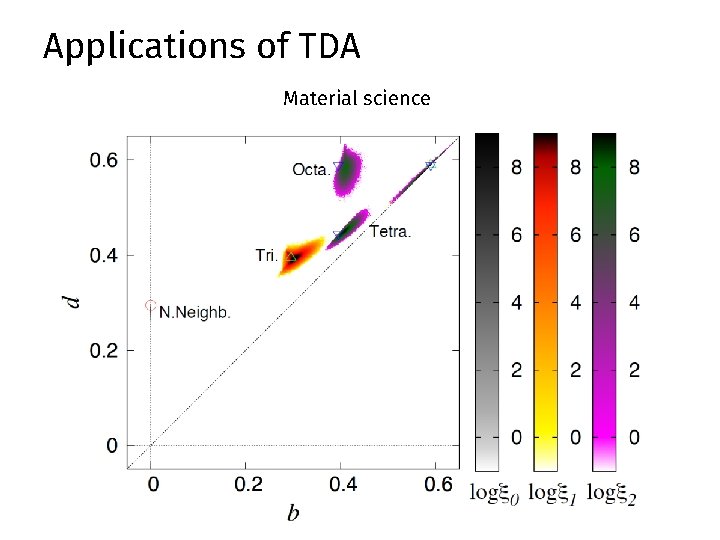
Applications of TDA Material science
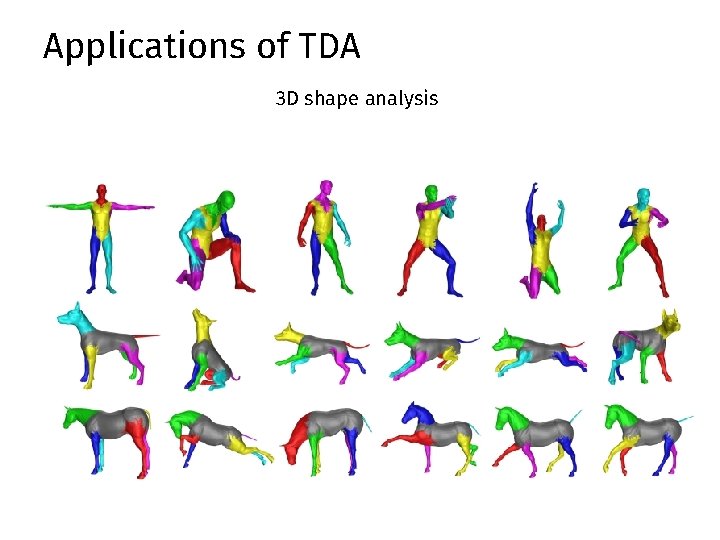
Applications of TDA 3 D shape analysis
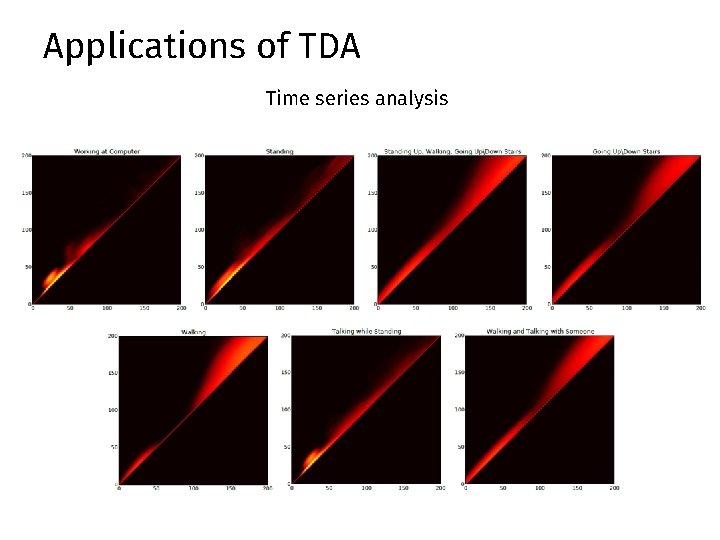
Applications of TDA Time series analysis
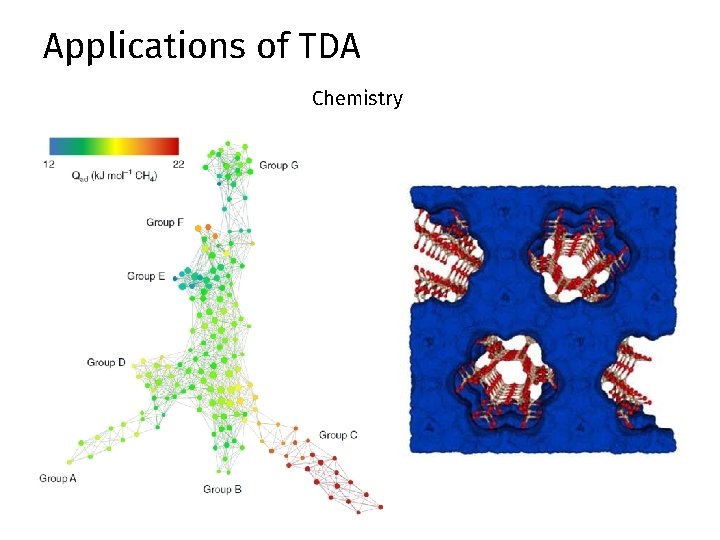
Applications of TDA Chemistry
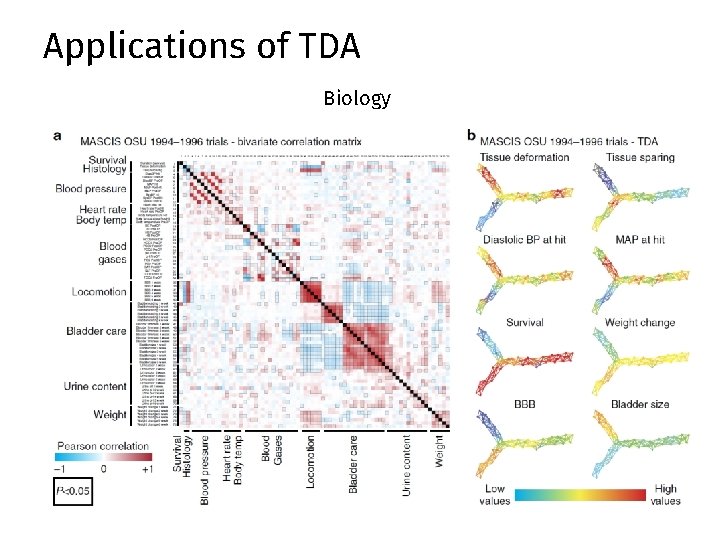
Applications of TDA Biology
Applications of TDA And many more…