
2 Genus Trypanosoma General characters It occur in
- Slides: 14
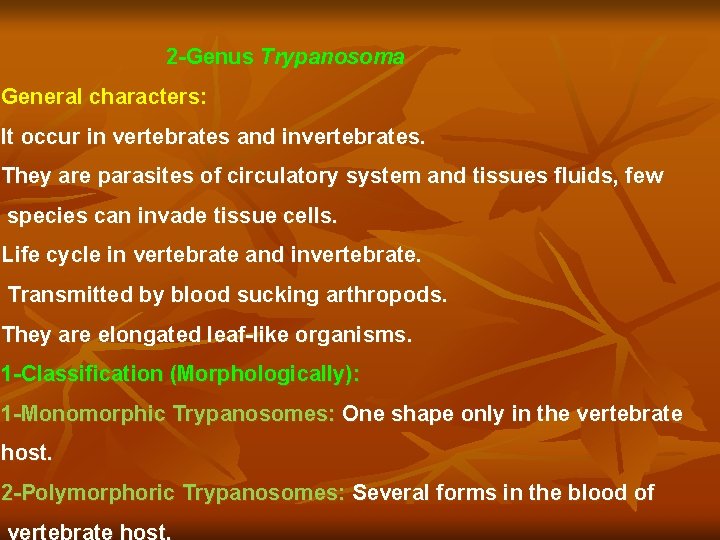
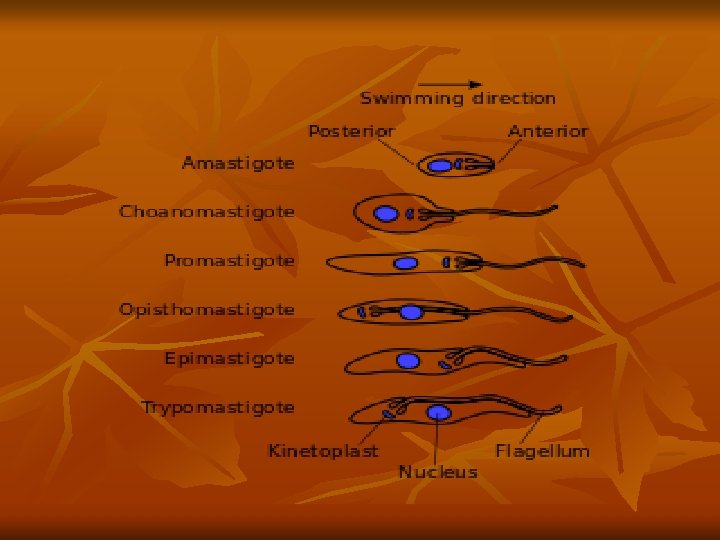
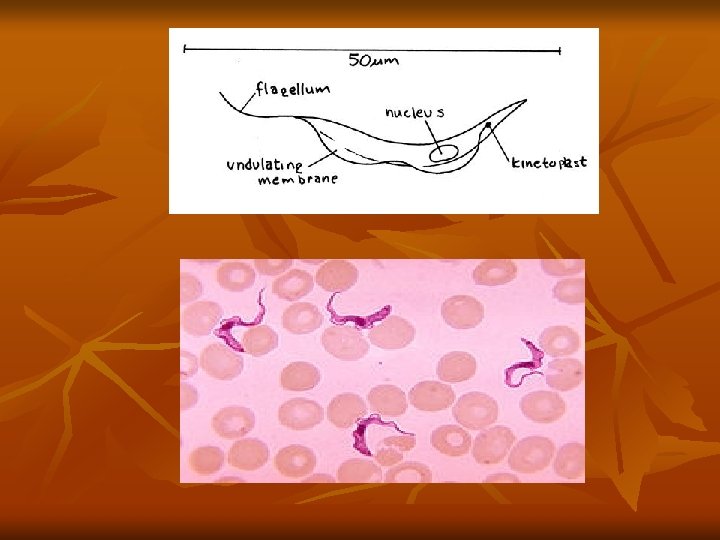
2 -Genus Trypanosoma General characters: It occur in vertebrates and invertebrates. They are parasites of circulatory system and tissues fluids, few species can invade tissue cells. Life cycle in vertebrate and invertebrate. Transmitted by blood sucking arthropods. They are elongated leaf-like organisms. 1 -Classification (Morphologically): 1 -Monomorphic Trypanosomes: One shape only in the vertebrate host. 2 -Polymorphoric Trypanosomes: Several forms in the blood of vertebrate host.
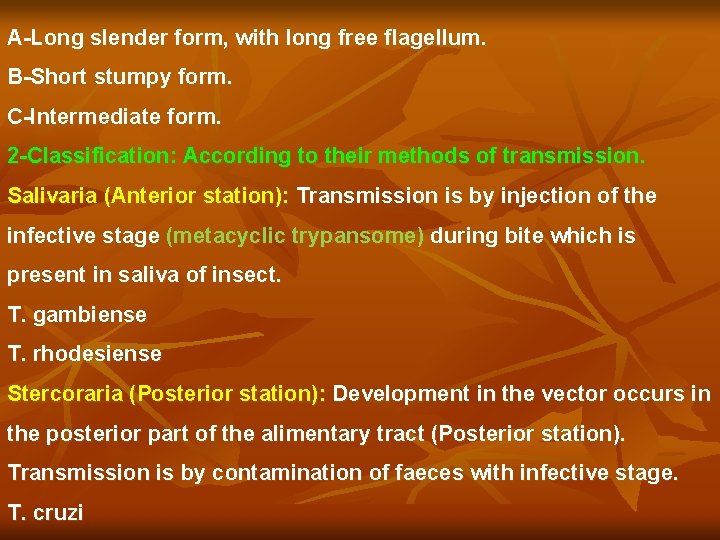
A-Long slender form, with long free flagellum. B-Short stumpy form. C-Intermediate form. 2 -Classification: According to their methods of transmission. Salivaria (Anterior station): Transmission is by injection of the infective stage (metacyclic trypansome) during bite which is present in saliva of insect. T. gambiense T. rhodesiense Stercoraria (Posterior station): Development in the vector occurs in the posterior part of the alimentary tract (Posterior station). Transmission is by contamination of faeces with infective stage. T. cruzi
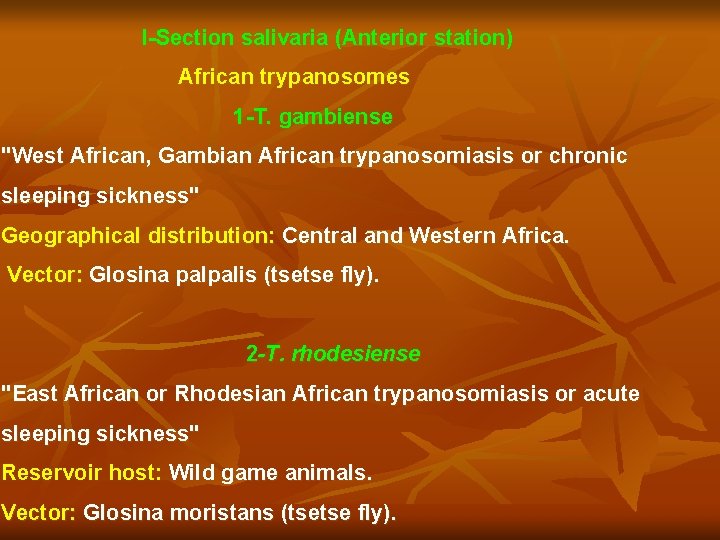
I-Section salivaria (Anterior station) African trypanosomes 1 -T. gambiense "West African, Gambian African trypanosomiasis or chronic sleeping sickness" Geographical distribution: Central and Western Africa. Vector: Glosina palpalis (tsetse fly). 2 -T. rhodesiense "East African or Rhodesian African trypanosomiasis or acute sleeping sickness" Reservoir host: Wild game animals. Vector: Glosina moristans (tsetse fly).
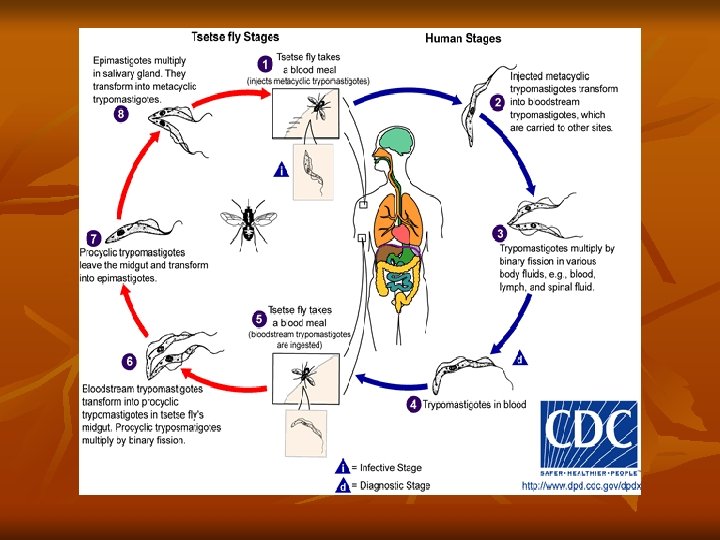
Habitat: Blood, lymphatic system, CSF, Connective tissue and brain. Mode of infection: 1 -Biological: Infection by bite of an infected tsetse fly. 2 -Congenital: Can cross the placenta and infect the fetus. 3 -Blood transfusion. Life cycle: In the vector: 1 -When the trypanosomes ingested by a tse fly, they are localized in the posterior part of the mid gut, change into crithidial form (Epimastigote) and multiply in this form for about 10 days. 2 -Then they migrate under the peritrophic membrane (coating the stomach epithelium) towards the proventriculus, the migrate finally to the salivary glands.
3 -They change into slender forms and multiply, then transform into metacylic trypanosomes. For the second time they transform into crithidial from, multiply and finally transform into metacyclic trypanosome (infective stage), which is a short stumpy trypanosome. In man: 1 -When the insect bites a healthy person it injects the metacyclic trypanosomes into the blood, which is the infective stage. 2 -The trypanosomes spread rapidly and multiply in blood and lymph nodes. 3 -Later in the disease they migrate to the cerebrospinal fluid.
Section Stercoraria (posterior station) Trypanosoma cruzi “American trypanosomiasis "Chaga's disease" Hosts: Definitive host: Man specially infants and young children. Reservoir host: The most important reservoir hosts are armadillos. Also dogs, cat and possibly pig. Habitat: Tissues of mesenchymal origin as heart muscle, smooth muscles, thyroid gland, bone marrow, lung, brain and macrophagephagocyte (reticuloendothelial system. ) Geographical distribution: Central and South America.
Vector: Triatoma megista (Kissing bugs or cone-nose, winged-bugs). Mode of infection: I-Bite of kissing bug which deposits infective feces near or at the bite site (posterior station). 2 - Accidental ingestion of bug (very rare to occur). 3 - Congenital transmission: Transmission by blood transfusion or via the placenta from mother to child. 4 - Blood transfusion and organ transplants.
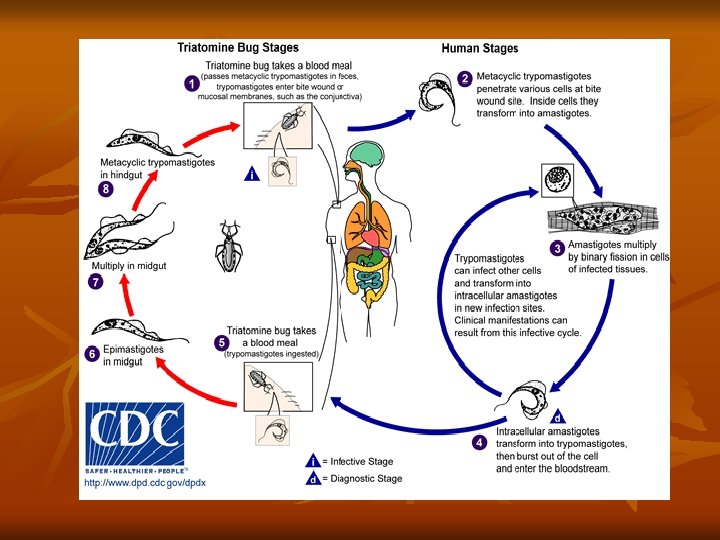
Life cycle: In the vector: 1 -When the winged bug bites an infected patient it takes the trypanosomes (trypomastigote form), which pass to the hindgut. They turn into leishmanoid (amastigote) forms, which multiply by binary fission and turn into crithidial (promastigote) forms. 2 -The crithidial forms multiply further by binary fission and pass to the rectum. 3 -In the rectum the crithidial forms turn into metacyclic trypanosome, which is the infective stage. The life cycle in the invertebrate host takes from 6 -15 days or longer.
4 -The metacyclic trypanosomes pass out in the feces. They can penetrate the mucous membranes or skin actively. In man: 1 -Metacyclic trypanosomes enter the cells of the reticuloendothelial system and striated muscles especially of the heart where they round up and transform into leishmanoid form. 2 -They multiply by binary fission, destroying the host cells and forming cyst-like nests of parasites (pseudocyst). 3. The leishmanoid form turns into trypanosome form, which reenter the blood to be picked up by the winged bugs and repeat its life cycle.