
2 Cradle to Cradle Concept Technical Nutrients Biodegradation
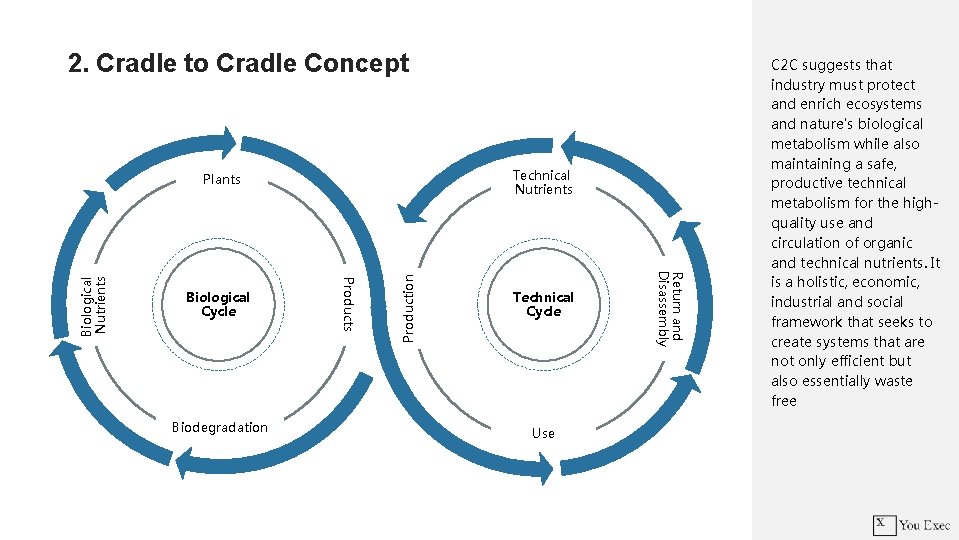
2. Cradle to Cradle Concept Technical Nutrients Biodegradation Production Technical Cycle Use Return and Disassembly Biological Cycle Products Biological Nutrients Plants C 2 C suggests that industry must protect and enrich ecosystems and nature's biological metabolism while also maintaining a safe, productive technical metabolism for the highquality use and circulation of organic and technical nutrients. It is a holistic, economic, industrial and social framework that seeks to create systems that are not only efficient but also essentially waste free
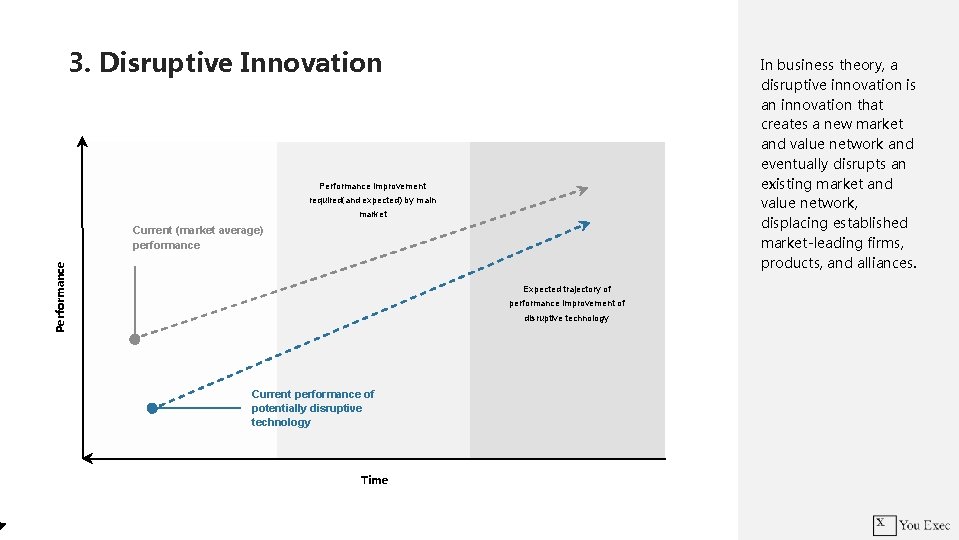
3. Disruptive Innovation In business theory, a disruptive innovation is an innovation that creates a new market and value network and eventually disrupts an existing market and value network, displacing established market-leading firms, products, and alliances. Performance improvement required(and expected) by main market Performance Current (market average) performance Expected trajectory of performance improvement of disruptive technology Current performance of potentially disruptive technology Time
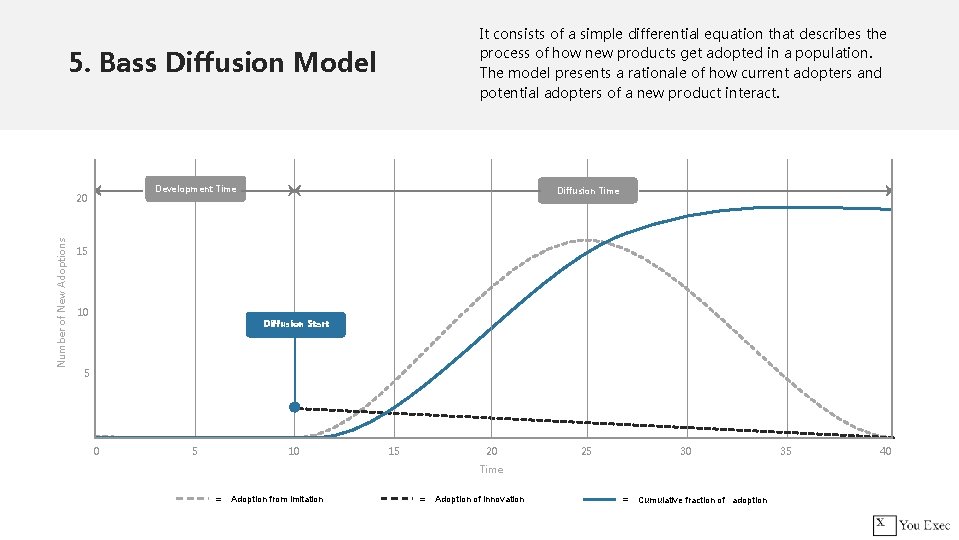
It consists of a simple differential equation that describes the process of how new products get adopted in a population. The model presents a rationale of how current adopters and potential adopters of a new product interact. 5. Bass Diffusion Model Development Time Number of New Adoptions 20 Diffusion Time 15 10 Diffusion Start 5 0 5 10 15 20 25 30 Time = Adoption from imitation = Adoption of innovation = Cumulative fraction of adoption 35 40
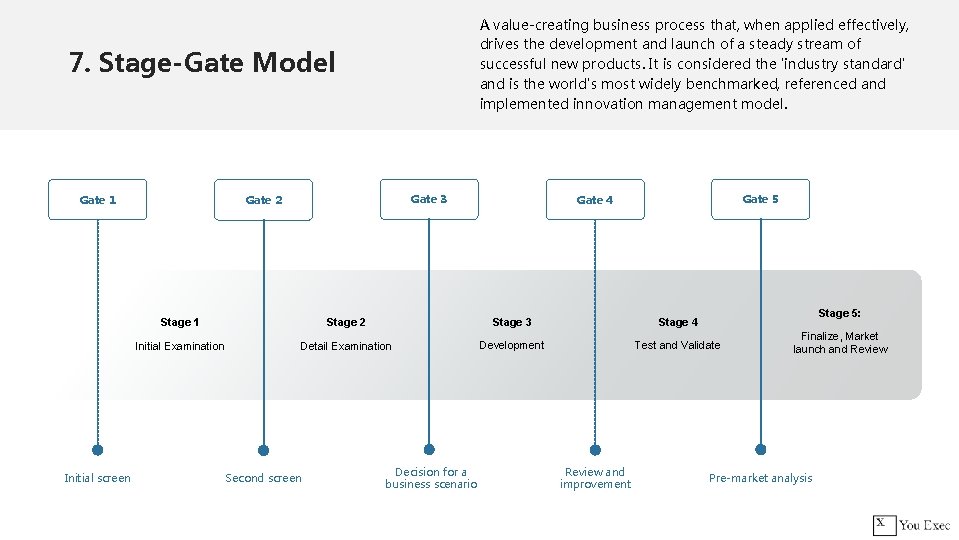
A value-creating business process that, when applied effectively, drives the development and launch of a steady stream of successful new products. It is considered the 'industry standard' and is the world's most widely benchmarked, referenced and implemented innovation management model. 7. Stage-Gate Model Gate 1 Initial screen Gate 3 Gate 2 Gate 5 Gate 4 Stage 5: Stage 1 Stage 2 Stage 3 Stage 4 Initial Examination Detail Examination Development Test and Validate Second screen Decision for a business scenario Review and improvement Finalize, Market launch and Review Pre-market analysis
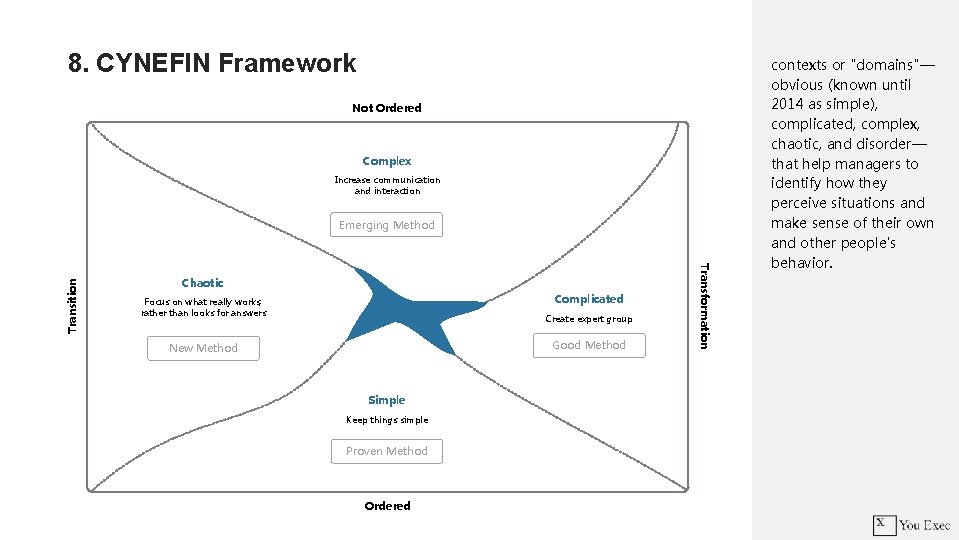
8. CYNEFIN Framework Not Ordered Complex Increase communication and interaction Chaotic Complicated Focus on what really works, rather than looks for answers Create expert group Good Method New Method Simple Keep things simple Proven Method Ordered Transformation Transition Emerging Method contexts or "domains"— obvious (known until 2014 as simple), complicated, complex, chaotic, and disorder— that help managers to identify how they perceive situations and make sense of their own and other people's behavior.
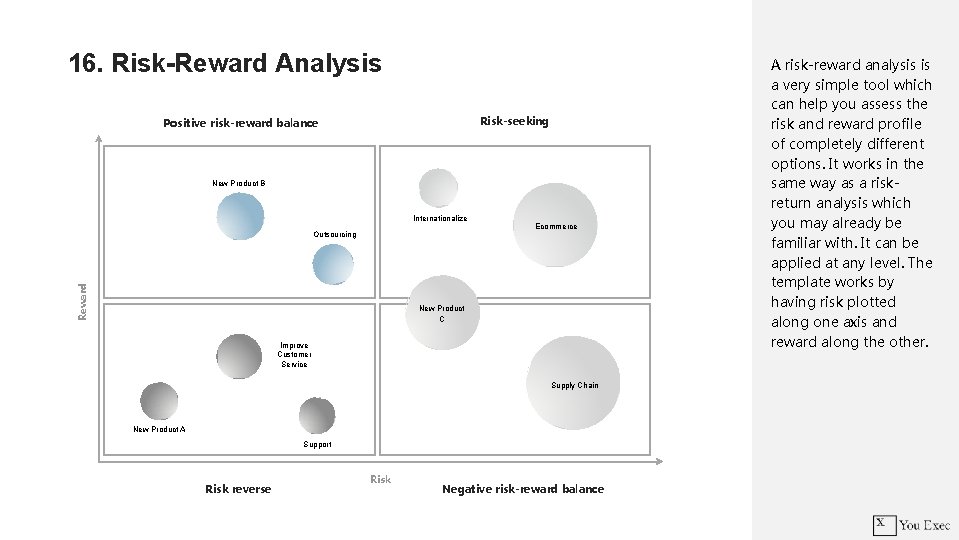
16. Risk-Reward Analysis Risk-seeking Positive risk-reward balance New Product B Internationalize Reward Outsourcing Ecommerce New Product C Improve Customer Service Supply Chain New Product A Support Risk reverse Risk Negative risk-reward balance A risk-reward analysis is a very simple tool which can help you assess the risk and reward profile of completely different options. It works in the same way as a riskreturn analysis which you may already be familiar with. It can be applied at any level. The template works by having risk plotted along one axis and reward along the other.
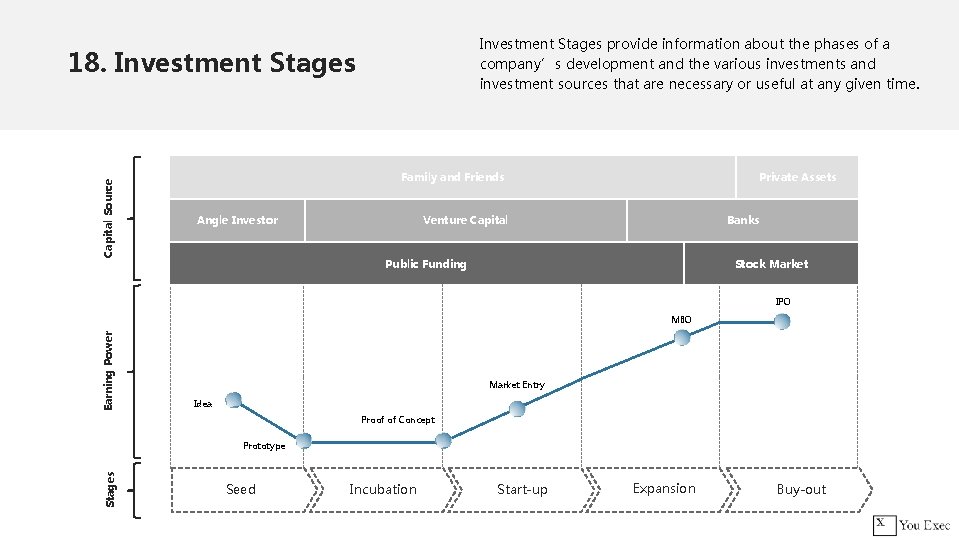
Investment Stages provide information about the phases of a company’s development and the various investments and investment sources that are necessary or useful at any given time. Capital Source 18. Investment Stages Family and Friends Angle Investor Private Assets Venture Capital Banks Public Funding Stock Market IPO Earning Power MBO Market Entry Idea Proof of Concept Stages Prototype Seed Incubation Start-up Expansion Buy-out

23. Competing Values Framework (CVF) Individuality, Flexibility Clan Cooperation Create Flexible, Organization, Structure Internal Focus External Focus Control Compete Hierarchy Market Stability The Competing Values Framework is a theory that was developed initially from research conducted on the major indicators of effective organizations. Based on statistical analyses of a comprehensive list of effectiveness indicators, Quinn and Rohrbaugh discovered two major dimensions underlying conceptions of effectiveness.
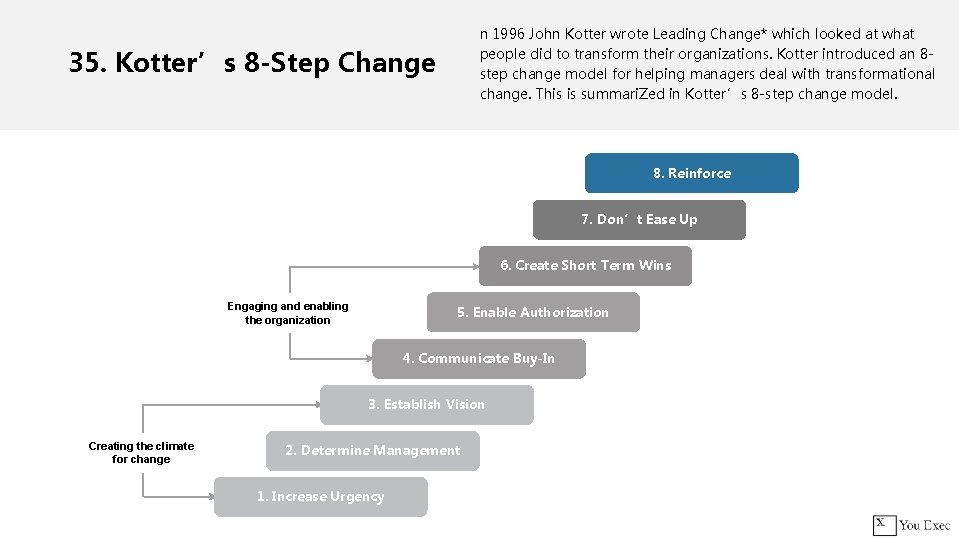
n 1996 John Kotter wrote Leading Change* which looked at what people did to transform their organizations. Kotter introduced an 8 step change model for helping managers deal with transformational change. This is summari. Zed in Kotter’s 8 -step change model. 35. Kotter’s 8 -Step Change 8. Reinforce 7. Don’t Ease Up 6. Create Short Term Wins Engaging and enabling the organization 5. Enable Authorization 4. Communicate Buy-In 3. Establish Vision Creating the climate for change 2. Determine Management 1. Increase Urgency
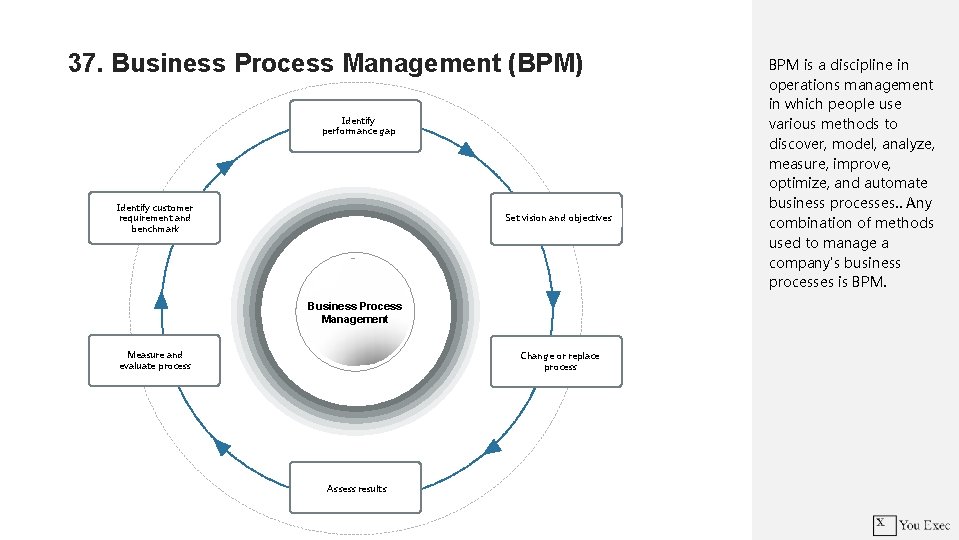
37. Business Process Management (BPM) Identify performance gap Identify customer requirement and benchmark Set vision and objectives Business Process Management Measure and evaluate process Change or replace process Assess results BPM is a discipline in operations management in which people use various methods to discover, model, analyze, measure, improve, optimize, and automate business processes. . Any combination of methods used to manage a company's business processes is BPM.

Get the full version of this presentation and access our library of hundreds of corporate resources Join You Exec Plus today and take your career to new heights. Receive premium corporate resources in your inbox every week. Start today
- Slides: 11