
2 Basic Types of Cells 1 Prokaryotic 2
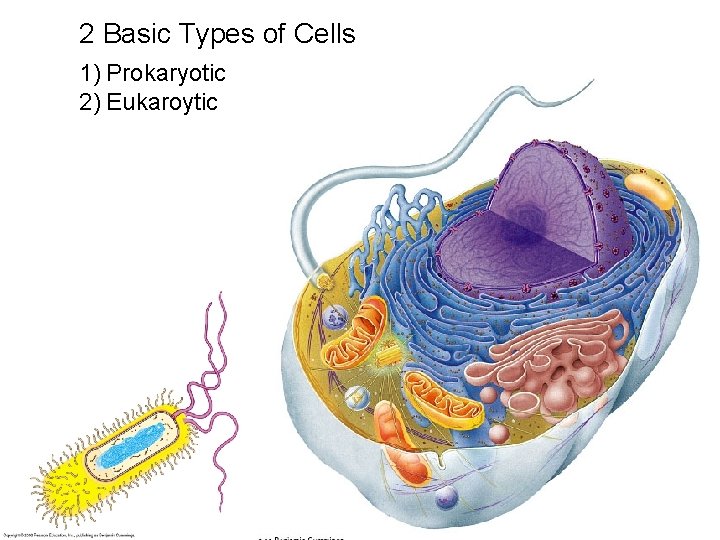
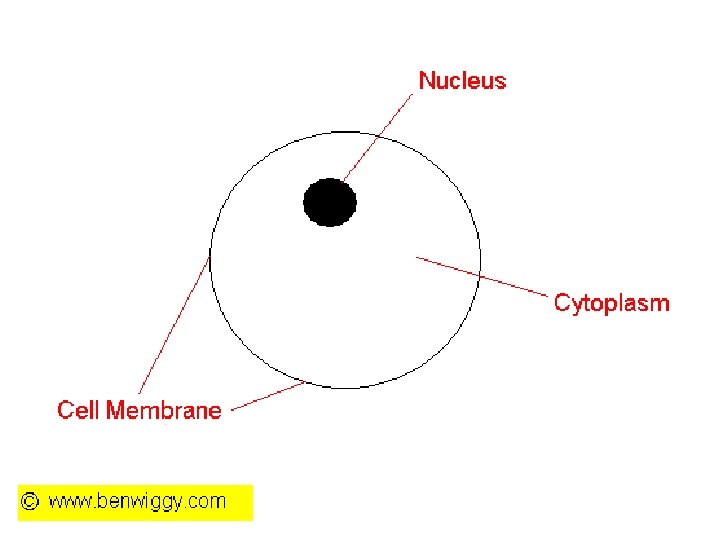
2 Basic Types of Cells 1) Prokaryotic 2) Eukaroytic
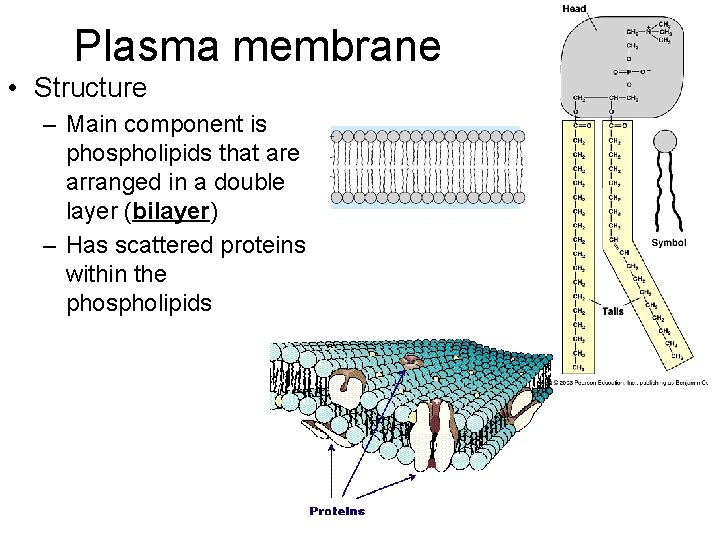
Plasma membrane • Structure – Main component is phospholipids that are arranged in a double layer (bilayer) – Has scattered proteins within the phospholipids
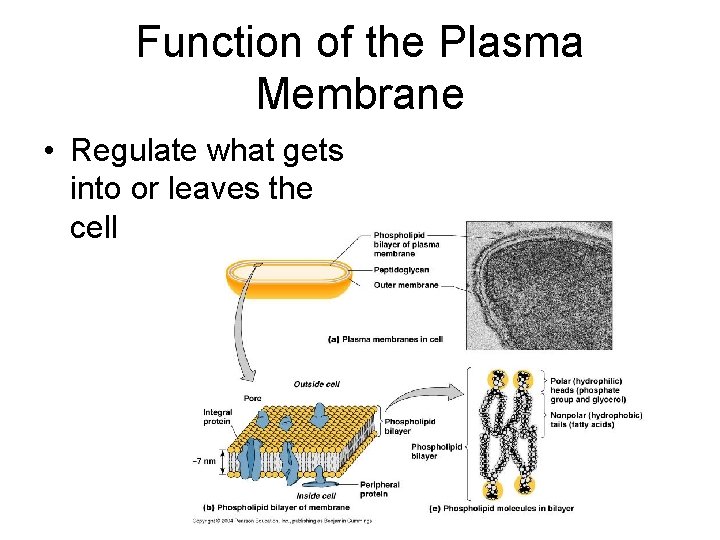
Function of the Plasma Membrane • Regulate what gets into or leaves the cell
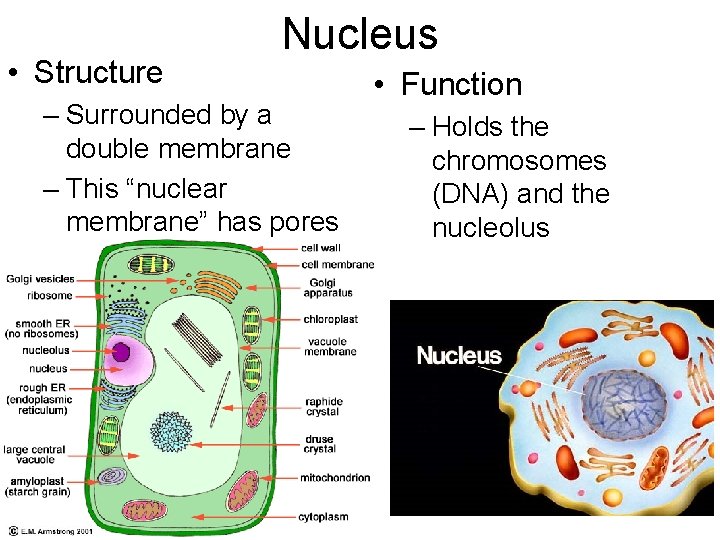
• Structure Nucleus – Surrounded by a double membrane – This “nuclear membrane” has pores • Function – Holds the chromosomes (DNA) and the nucleolus
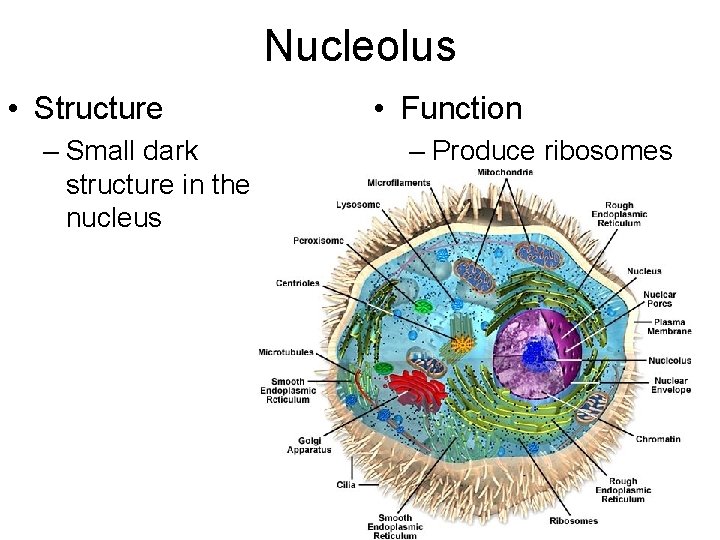
Nucleolus • Structure – Small dark structure in the nucleus • Function – Produce ribosomes

Chromosomes • Structure – String-like structures in the nucleus made of DNA and protein • Function – Contain your genes
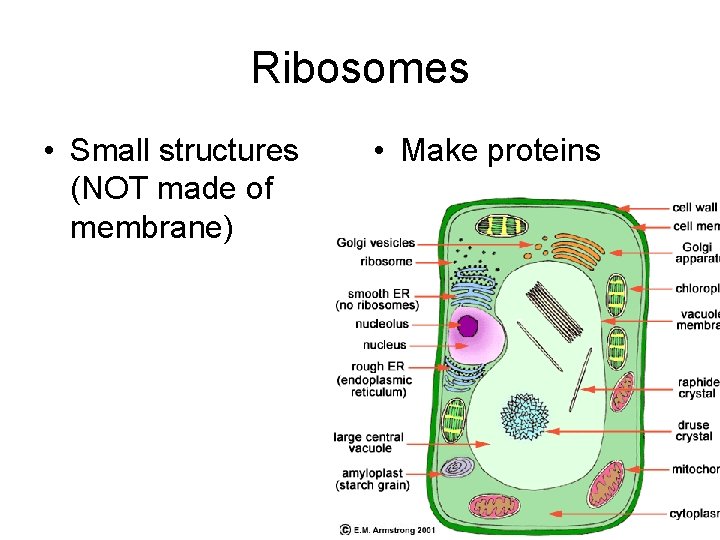
Ribosomes • Small structures (NOT made of membrane) • Make proteins
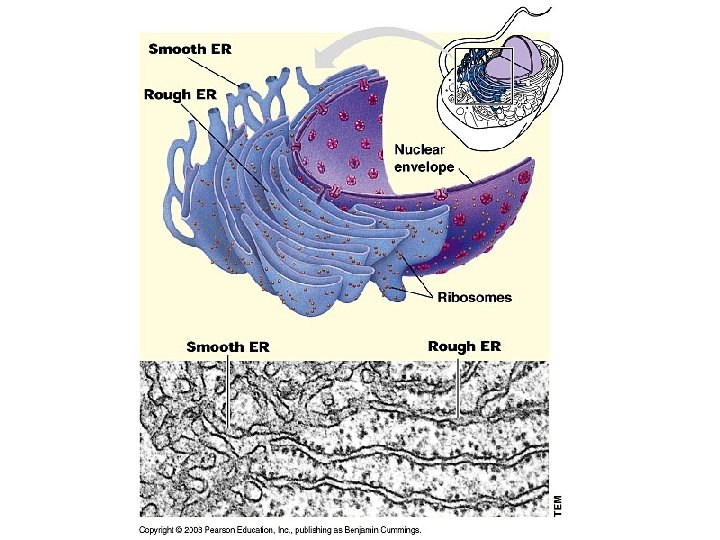
Rough Endoplasmic Reticulum • Structure – Canals and tubes made of membrane – Have ribosomes attached to the outside • Function – Transport materials in the cell – Make proteins
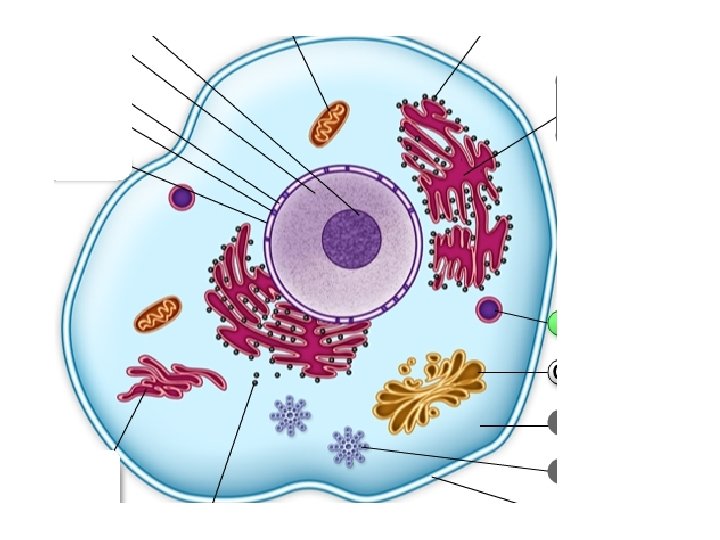
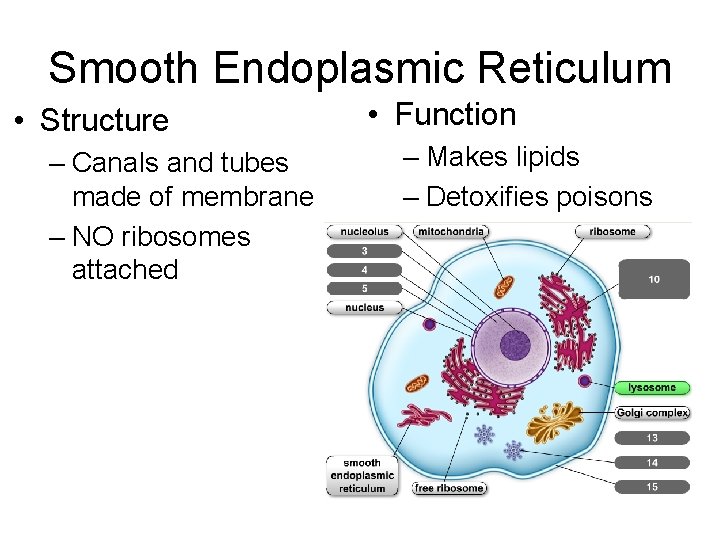
Smooth Endoplasmic Reticulum • Structure – Canals and tubes made of membrane – NO ribosomes attached • Function – Makes lipids – Detoxifies poisons
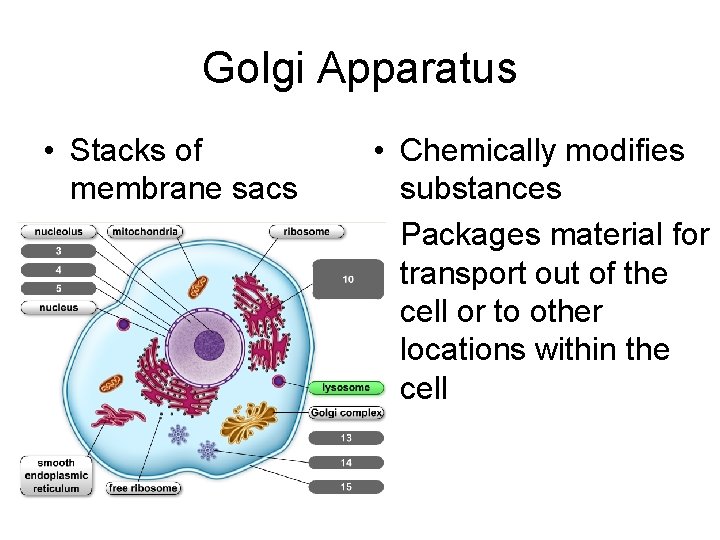
Golgi Apparatus • Stacks of membrane sacs • Chemically modifies substances • Packages material for transport out of the cell or to other locations within the cell
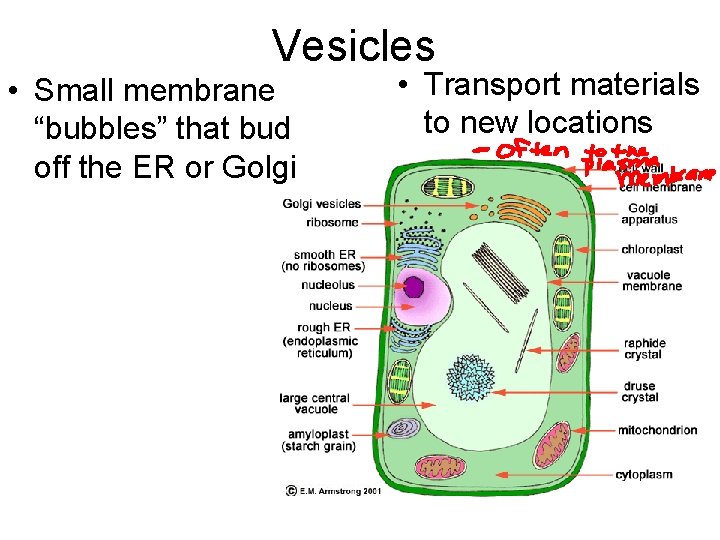
Vesicles • Small membrane “bubbles” that bud off the ER or Golgi • Transport materials to new locations
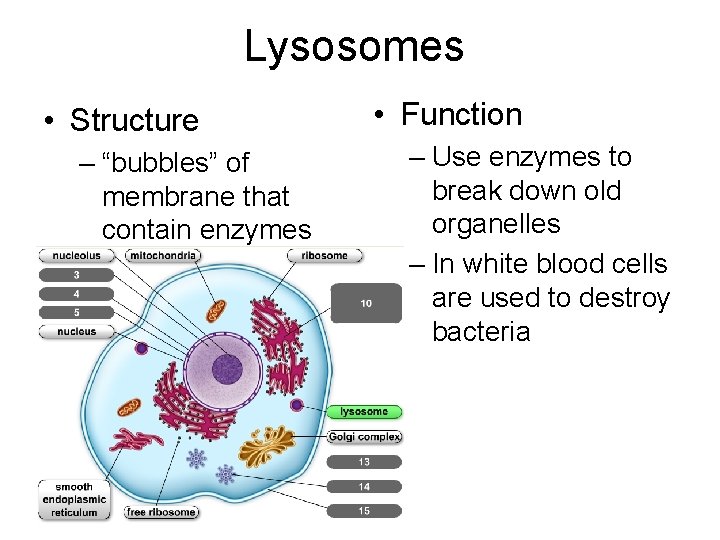
Lysosomes • Structure – “bubbles” of membrane that contain enzymes • Function – Use enzymes to break down old organelles – In white blood cells are used to destroy bacteria
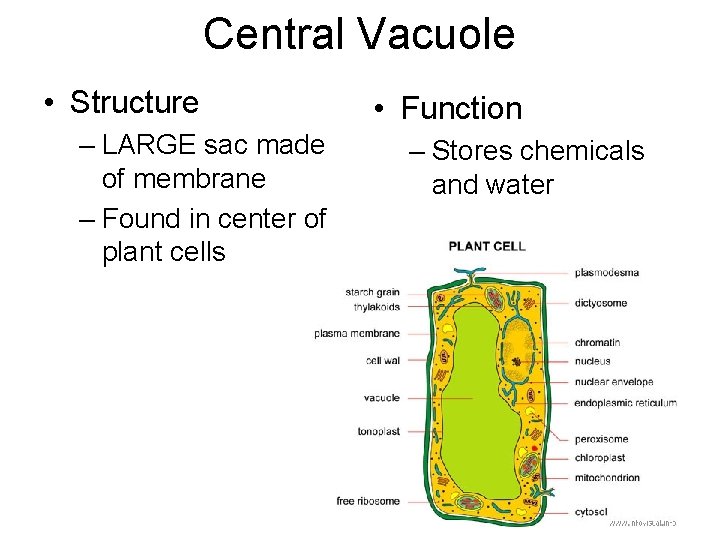
Central Vacuole • Structure – LARGE sac made of membrane – Found in center of plant cells • Function – Stores chemicals and water
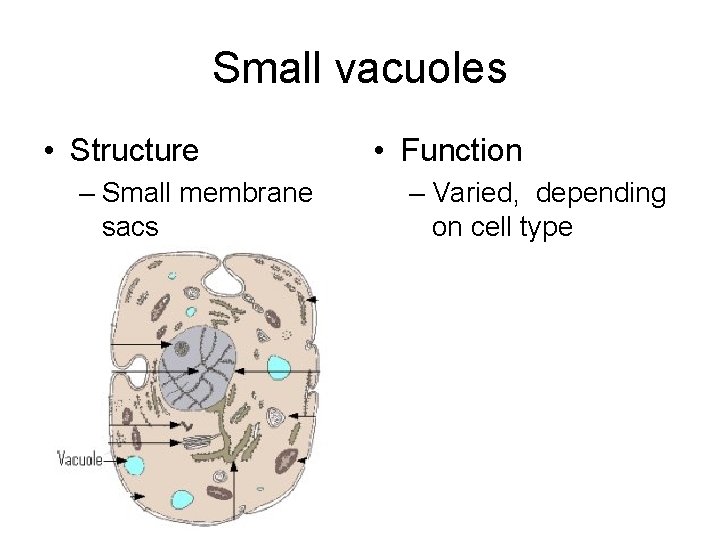
Small vacuoles • Structure – Small membrane sacs • Function – Varied, depending on cell type
Chloroplasts • Structure – Surrounded by a double layer of membrane • Disks found inside • Function – Convert solar energy into chemical energy (food) – Site of photosynthesis
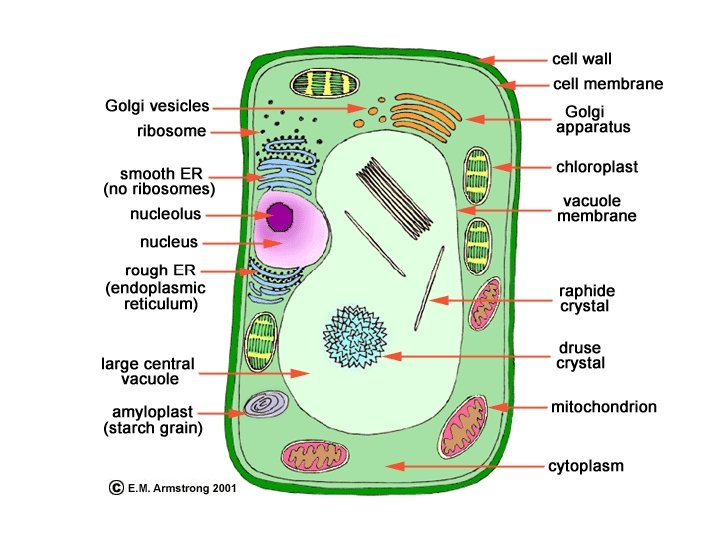
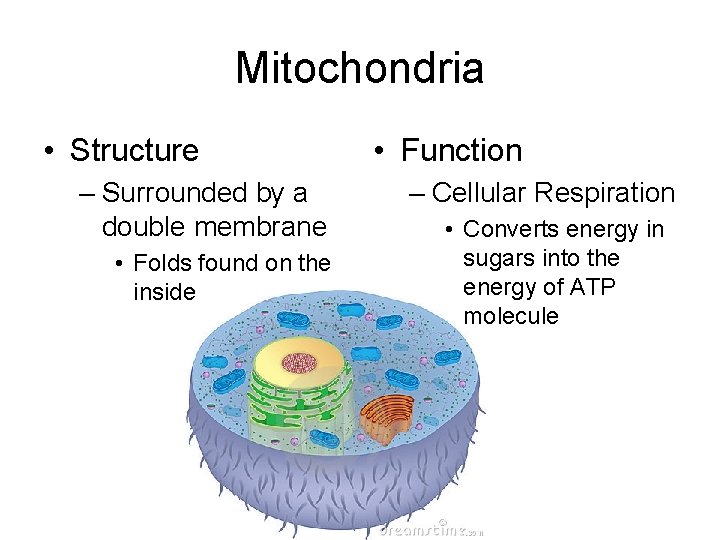
Mitochondria • Structure – Surrounded by a double membrane • Folds found on the inside • Function – Cellular Respiration • Converts energy in sugars into the energy of ATP molecule
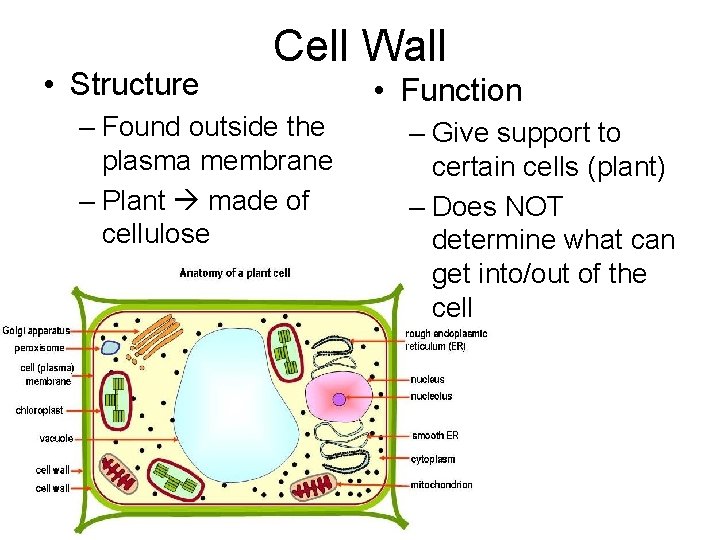
• Structure Cell Wall – Found outside the plasma membrane – Plant made of cellulose • Function – Give support to certain cells (plant) – Does NOT determine what can get into/out of the cell
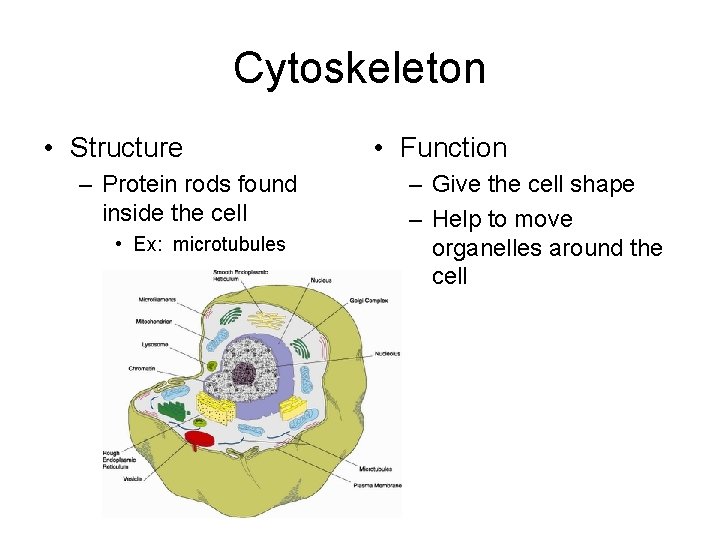
Cytoskeleton • Structure – Protein rods found inside the cell • Ex: microtubules • Function – Give the cell shape – Help to move organelles around the cell
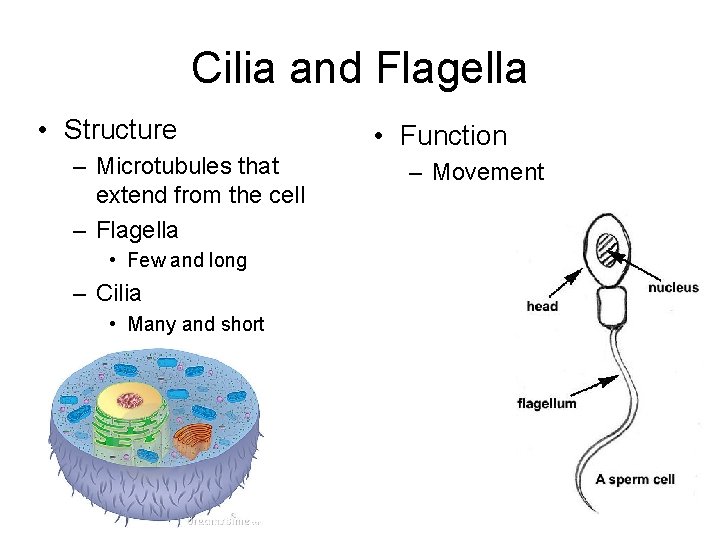
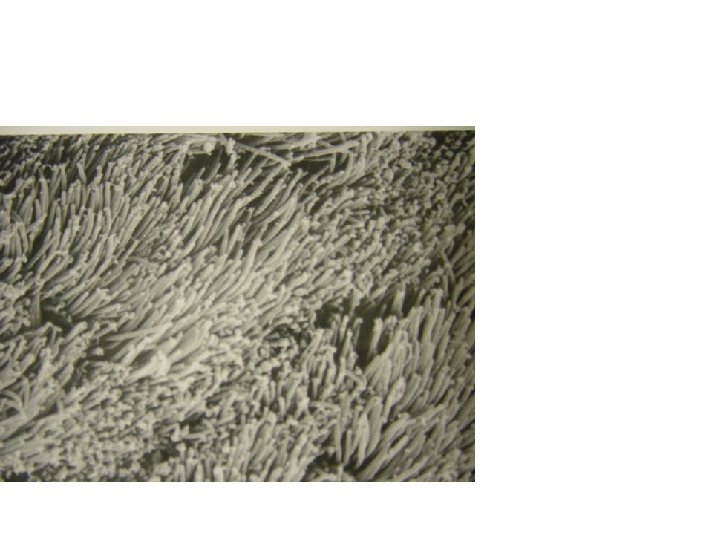
Cilia and Flagella • Structure – Microtubules that extend from the cell – Flagella • Few and long – Cilia • Many and short • Function – Movement
Organelles • Structures within the cell that perform a specific job – – – – Plasma membrane Nucleus Nucleolus Ribosomes Rough endoplasmic reticulum Smooth endoplasmic reticulum Golgi apparatus Vesicles Vacuoles Lysosomes Chloroplasts Mitochondria Cell wall Cytoskeleton flagella / cilia
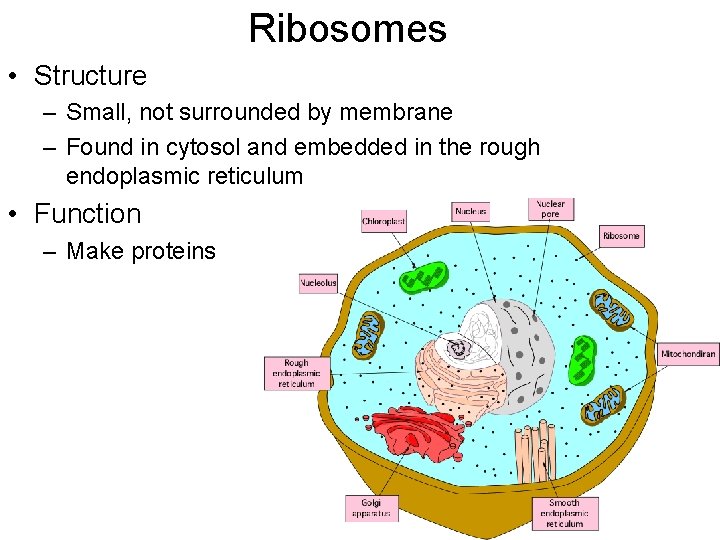
Ribosomes • Structure – Small, not surrounded by membrane – Found in cytosol and embedded in the rough endoplasmic reticulum • Function – Make proteins
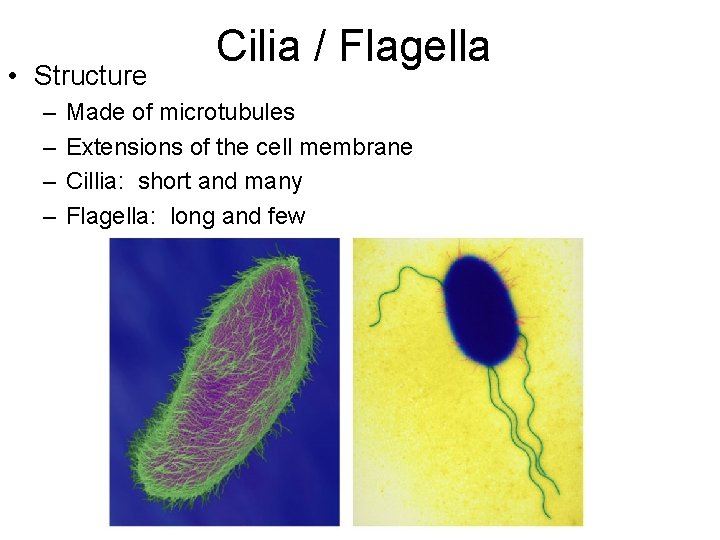
• Structure – – Cilia / Flagella Made of microtubules Extensions of the cell membrane Cillia: short and many Flagella: long and few
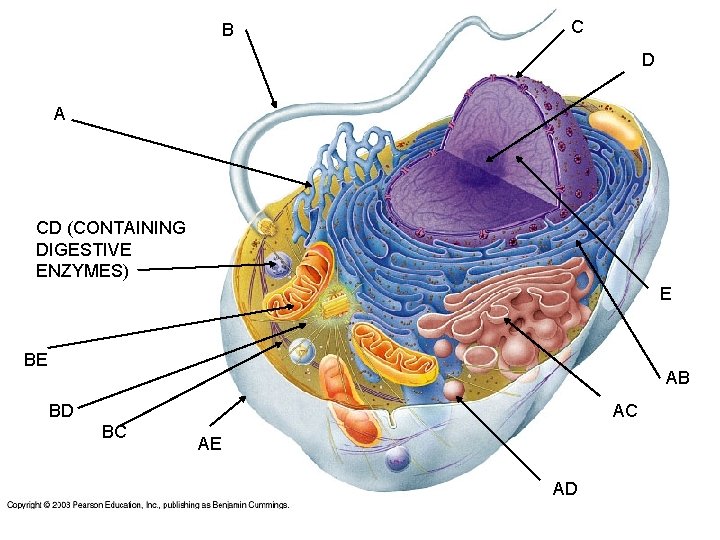
B C D A CD (CONTAINING DIGESTIVE ENZYMES) E BE AB BD AC BC AE AD
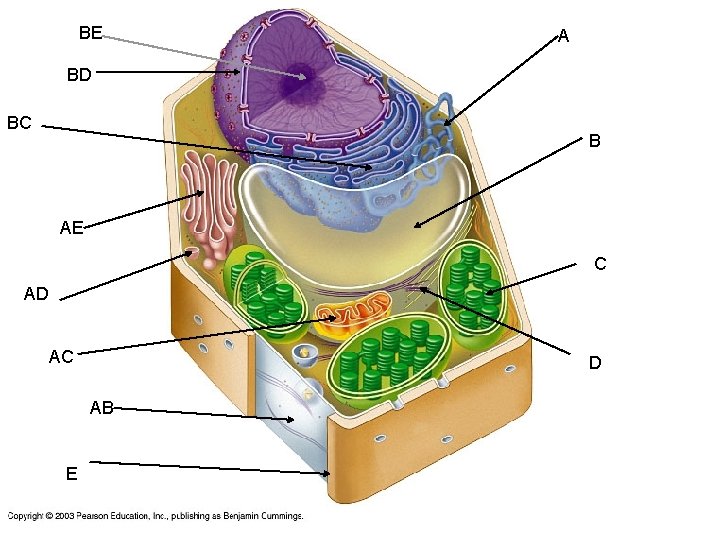
BE A BD BC B AE C AD AC D AB E
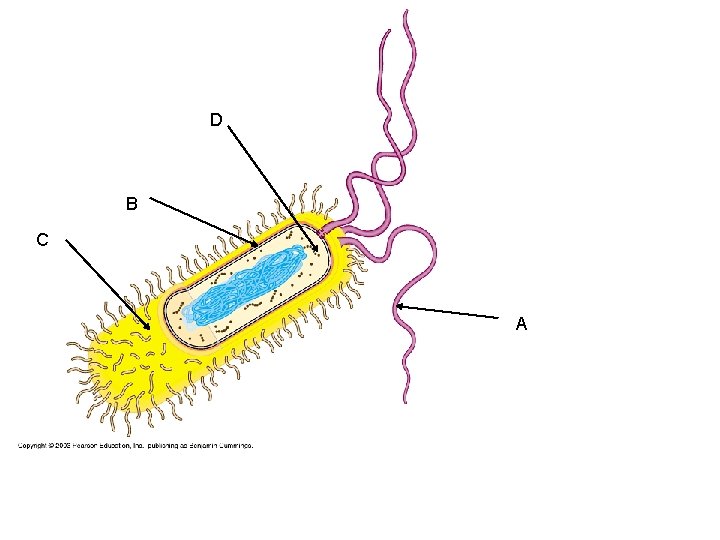
D B C A
- Slides: 30