
2 B 2 Membrane Transport Growth and dynamic
2. B. 2 Membrane Transport Growth and dynamic homeostasis are maintained by the constant movement of molecules across membranes.
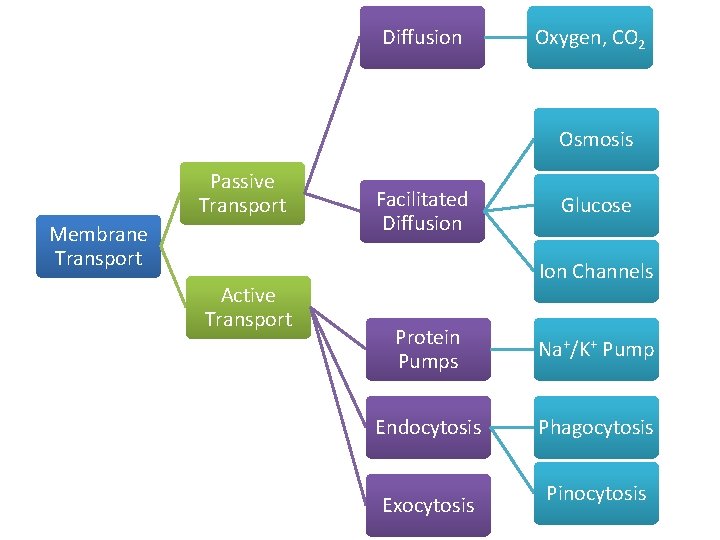
Diffusion Oxygen, CO 2 Osmosis Passive Transport Membrane Transport Active Transport Facilitated Diffusion Glucose Ion Channels Protein Pumps Na+/K+ Pump Endocytosis Phagocytosis Exocytosis Pinocytosis
Passive transport does not require the input of metabolic energy. Passive Transport Membrane Transport Active Transport
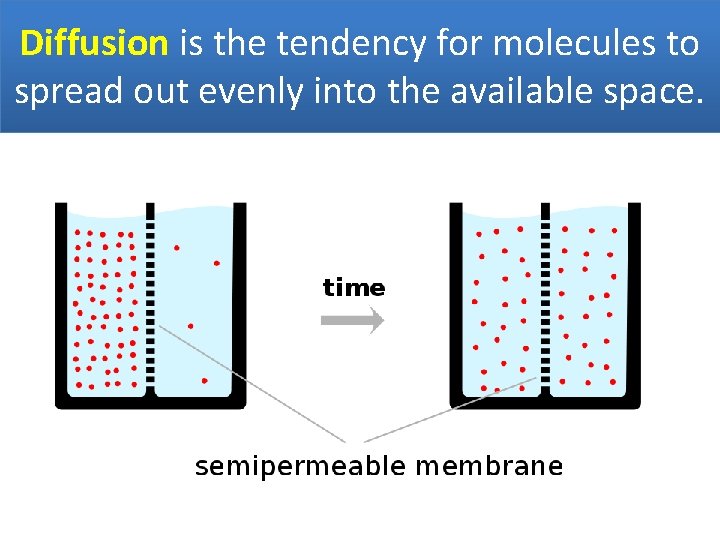
Diffusion is the tendency for molecules to spread out evenly into the available space.

The net movement of molecules is down their concentration gradient: from an area of high concentration to an area of low concentration.
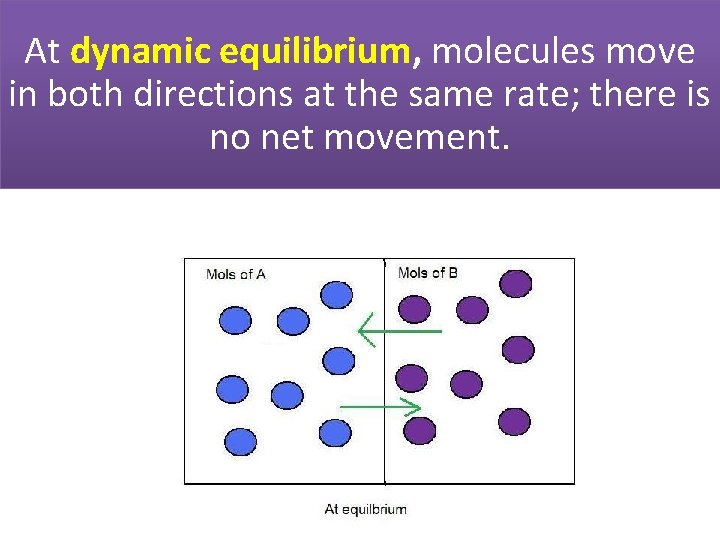
At dynamic equilibrium, molecules move in both directions at the same rate; there is no net movement.
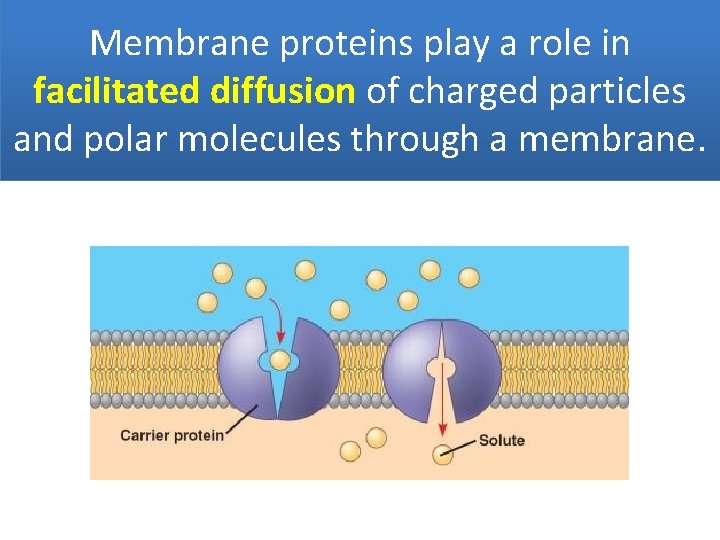
Membrane proteins play a role in facilitated diffusion of charged particles and polar molecules through a membrane.
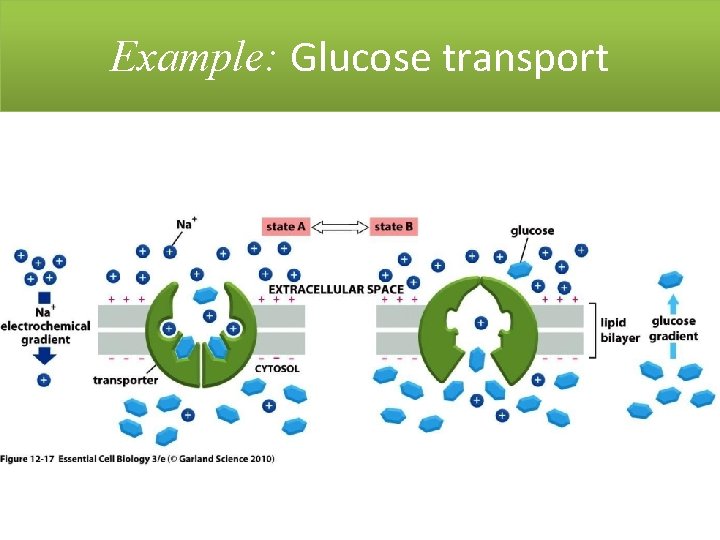
Example: Glucose transport
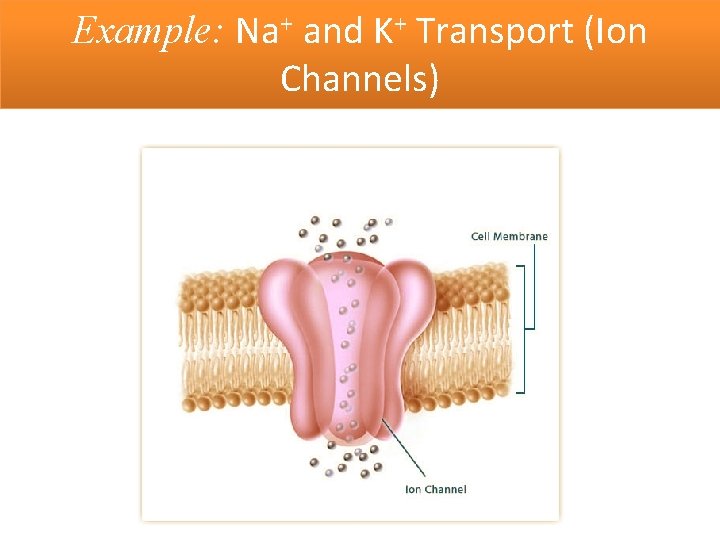
Example: Na+ and K+ Transport (Ion Channels)
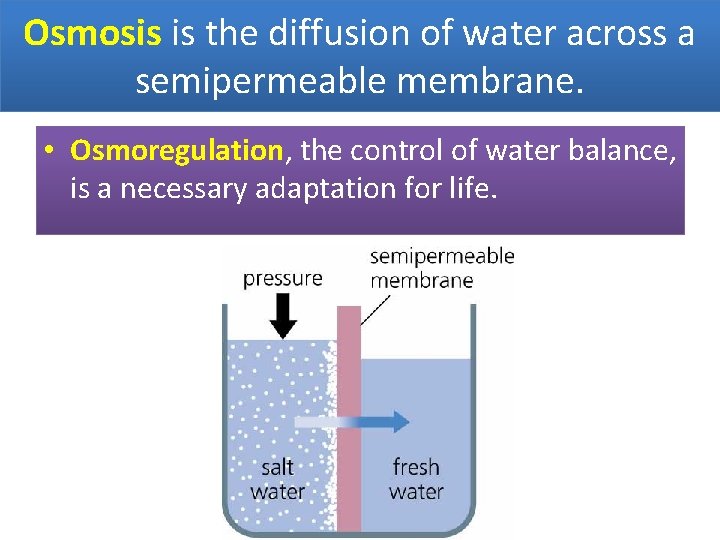
Osmosis is the diffusion of water across a semipermeable membrane. • Osmoregulation, the control of water balance, is a necessary adaptation for life.

External environments can be hypotonic, hypertonic or isotonic to internal environments of cells.

Water will diffuse down its concentration gradient, from an area with more water molecules to an area with less water molecules.
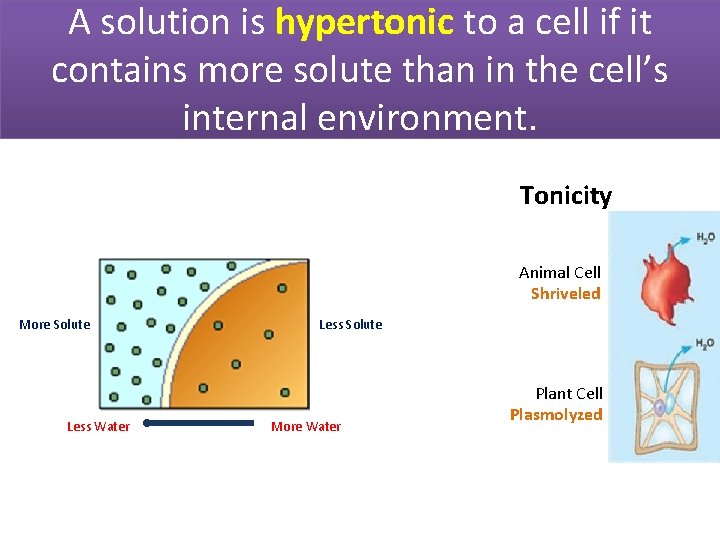
A solution is hypertonic to a cell if it contains more solute than in the cell’s internal environment. Tonicity Animal Cell Shriveled More Solute Less Water Less Solute More Water Plant Cell Plasmolyzed
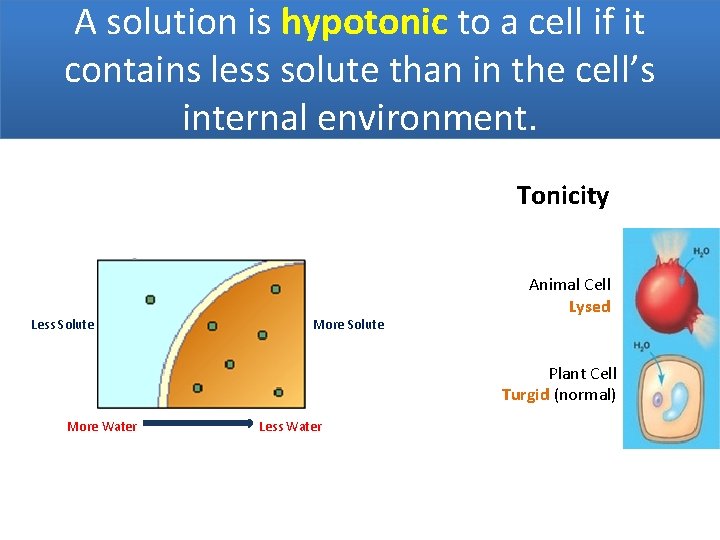
A solution is hypotonic to a cell if it contains less solute than in the cell’s internal environment. Tonicity Less Solute More Solute Animal Cell Lysed Plant Cell Turgid (normal) More Water Less Water
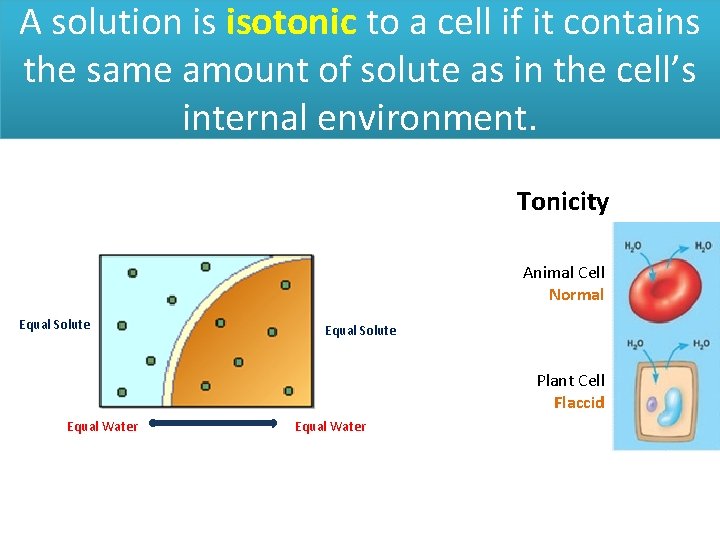
A solution is isotonic to a cell if it contains the same amount of solute as in the cell’s internal environment. Tonicity Animal Cell Normal Equal Solute Plant Cell Flaccid Equal Water
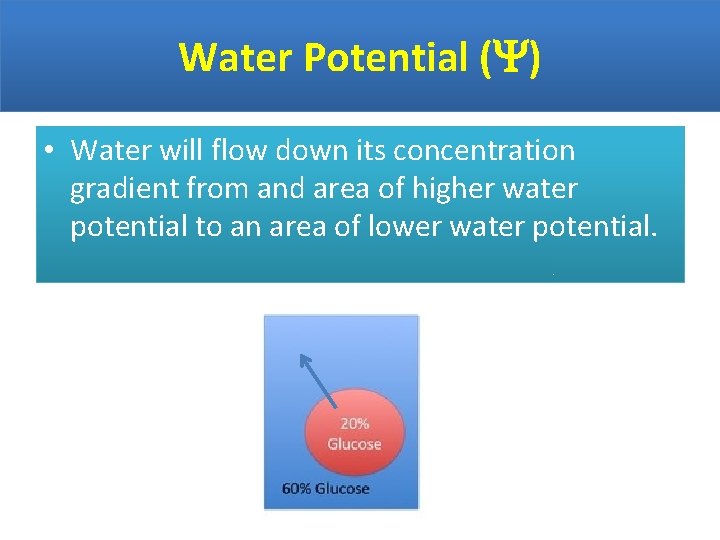
Water Potential ( ) • Water will flow down its concentration gradient from and area of higher water potential to an area of lower water potential.
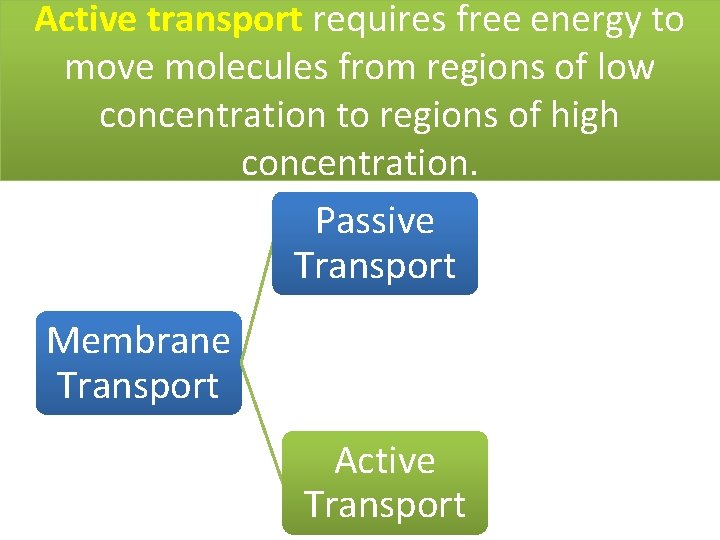
Active transport requires free energy to move molecules from regions of low concentration to regions of high concentration. Passive Transport Membrane Transport Active Transport
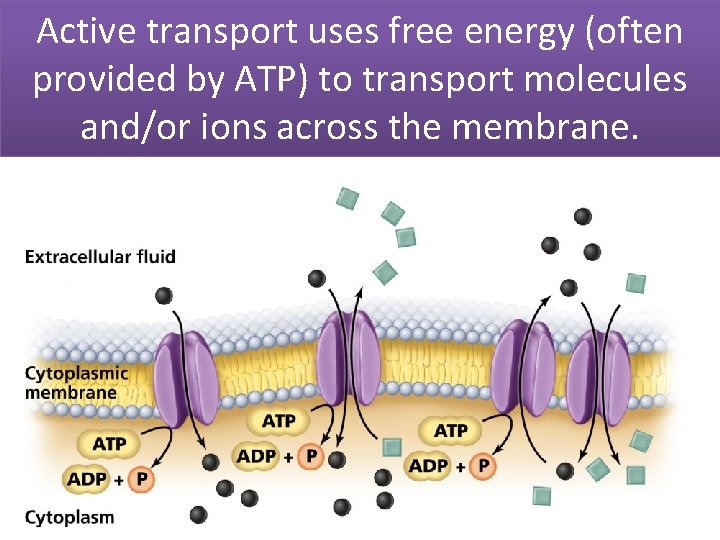
Active transport uses free energy (often provided by ATP) to transport molecules and/or ions across the membrane.
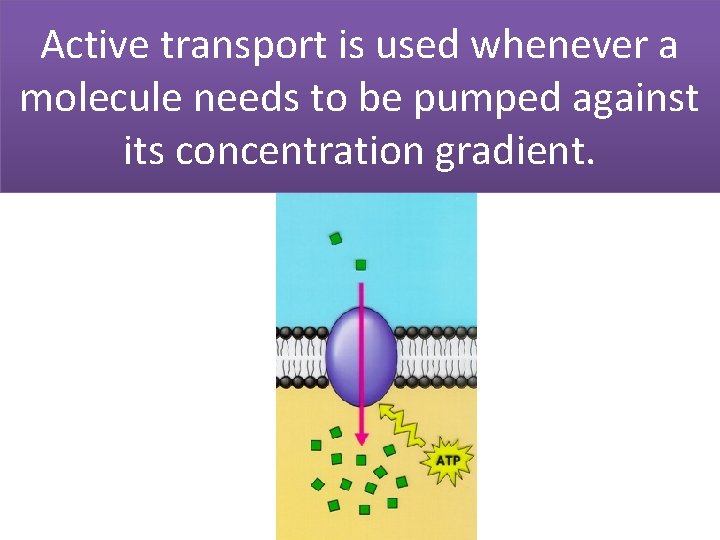
Active transport is used whenever a molecule needs to be pumped against its concentration gradient.
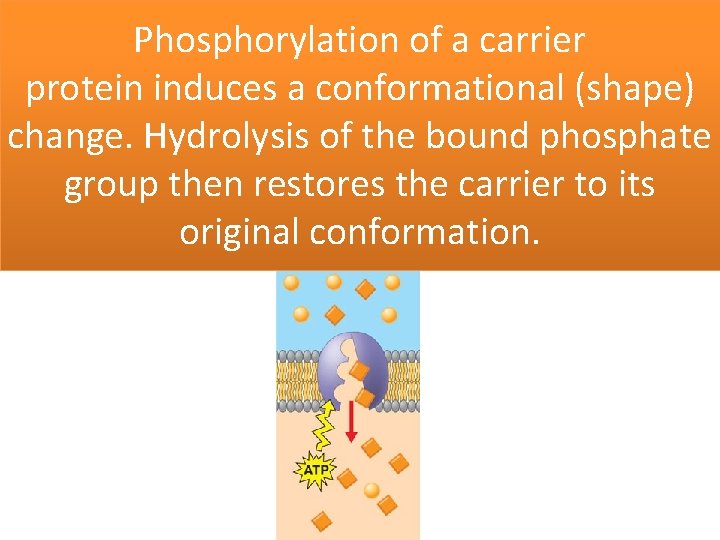
Phosphorylation of a carrier protein induces a conformational (shape) change. Hydrolysis of the bound phosphate group then restores the carrier to its original conformation.

Example: the Sodium-Potassium Pump
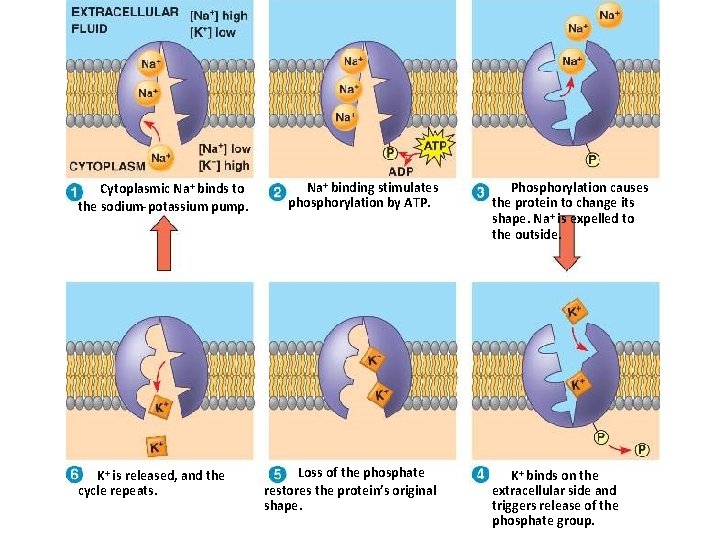
Cytoplasmic Na+ binds to the sodium-potassium pump. K+ is released, and the cycle repeats. Na+ binding stimulates phosphorylation by ATP. Loss of the phosphate restores the protein’s original shape. Phosphorylation causes the protein to change its shape. Na+ is expelled to the outside. K+ binds on the extracellular side and triggers release of the phosphate group.
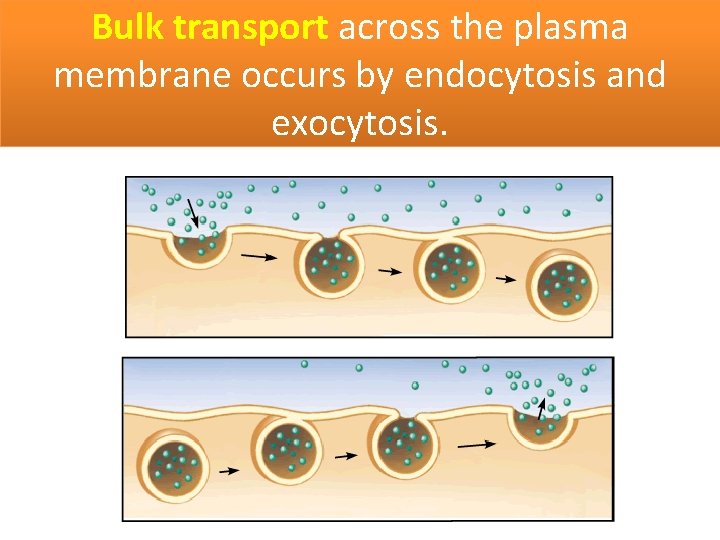
Bulk transport across the plasma membrane occurs by endocytosis and exocytosis.
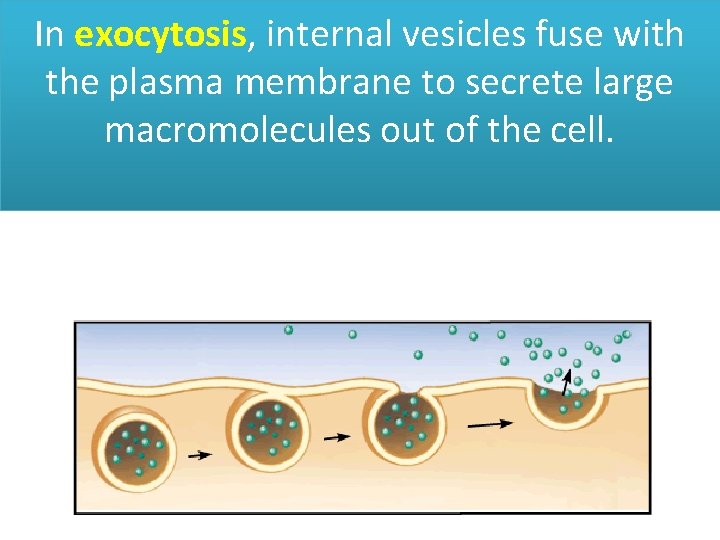
In exocytosis, internal vesicles fuse with the plasma membrane to secrete large macromolecules out of the cell.
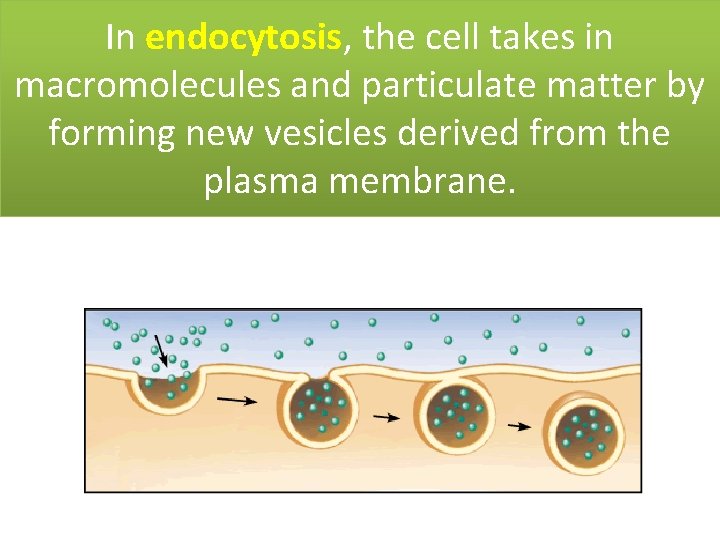
In endocytosis, the cell takes in macromolecules and particulate matter by forming new vesicles derived from the plasma membrane.

Phagocytosis is a form of endocytosis by which cells engulf solid material to ingest. “Cell Eating”
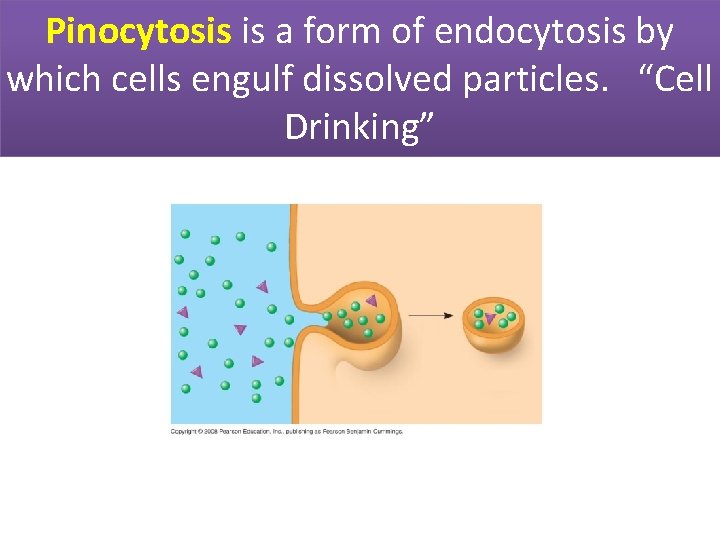
Pinocytosis is a form of endocytosis by which cells engulf dissolved particles. “Cell Drinking”
Learning Objectives: LO 2. 12 The student is able to use representations and models to analyze situations or solve problems qualitatively and quantitatively to investigate whether dynamic homeostasis is maintained by the active movement of molecules across membranes. [See SP 1. 4]
- Slides: 28