
2 Adapter Scenario System built around a class
2. Adapter
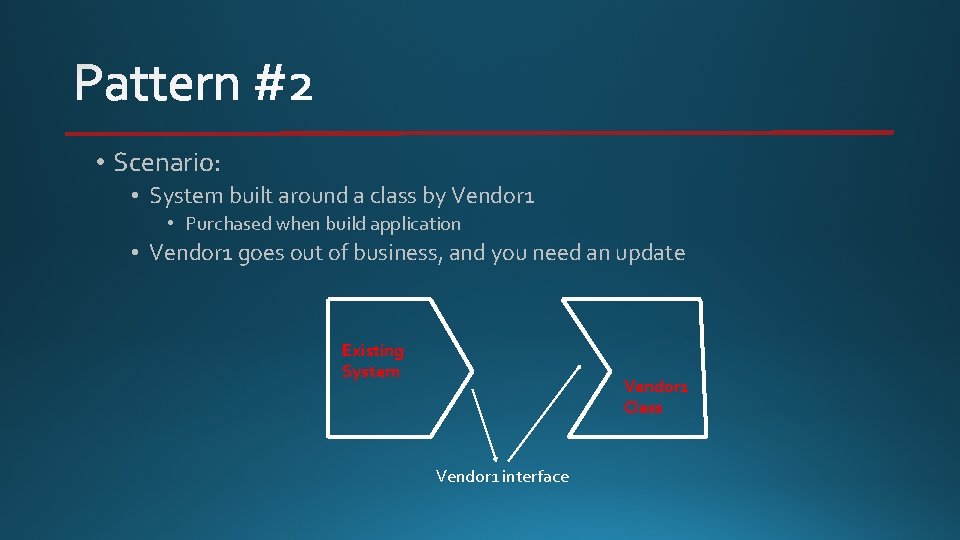
• Scenario: • System built around a class by Vendor 1 • Purchased when build application • Vendor 1 goes out of business, and you need an update Existing System Vendor 1 Class Vendor 1 interface
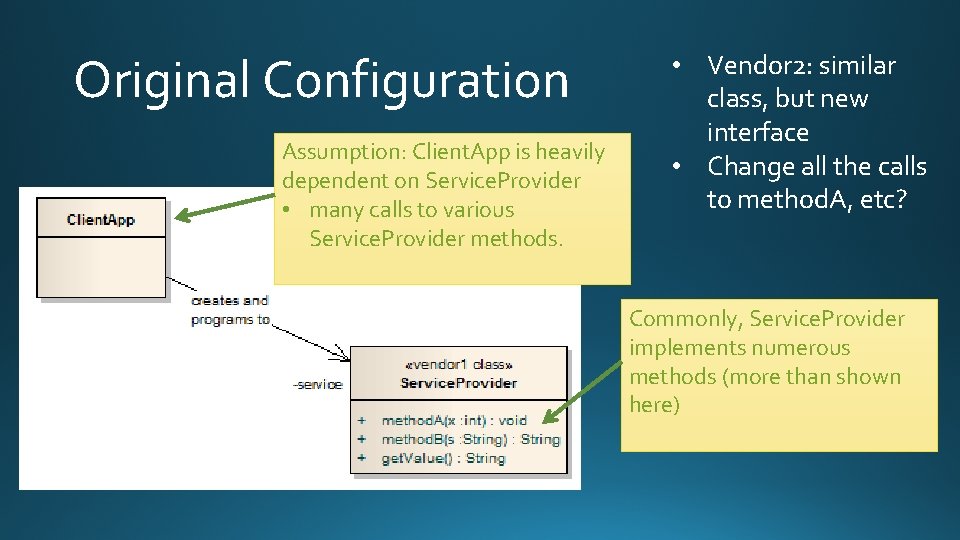
Original Configuration Assumption: Client. App is heavily dependent on Service. Provider • many calls to various Service. Provider methods. • Vendor 2: similar class, but new interface • Change all the calls to method. A, etc? Commonly, Service. Provider implements numerous methods (more than shown here)
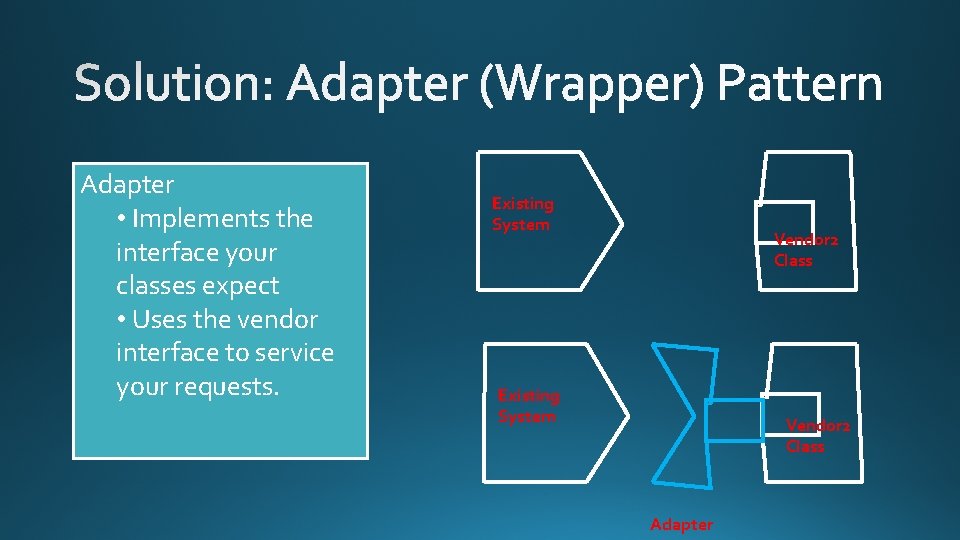
Adapter • Implements the interface your classes expect • Uses the vendor interface to service your requests. Existing System Vendor 2 Class Adapter
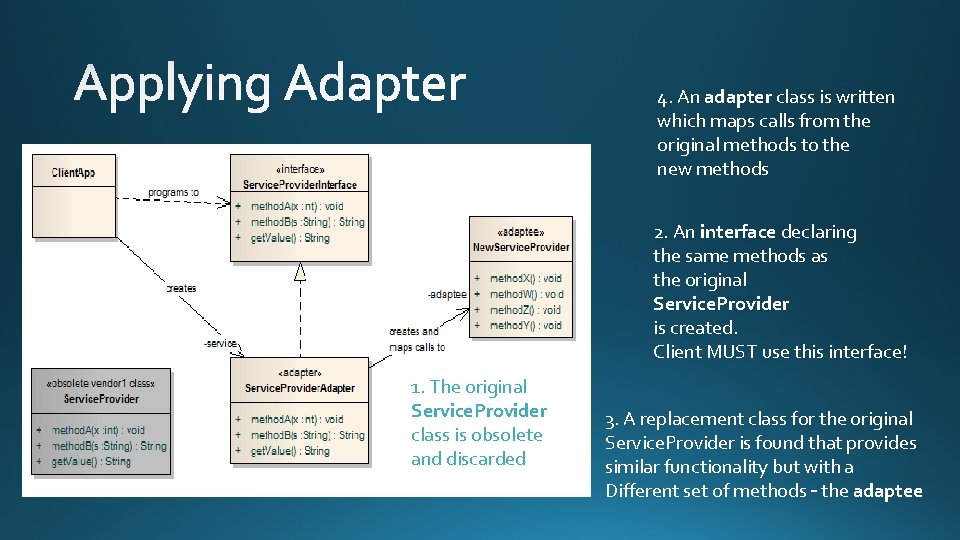
4. An adapter class is written which maps calls from the original methods to the new methods 2. An interface declaring the same methods as the original Service. Provider is created. Client MUST use this interface! 1. The original Service. Provider class is obsolete and discarded 3. A replacement class for the original Service. Provider is found that provides similar functionality but with a Different set of methods – the adaptee
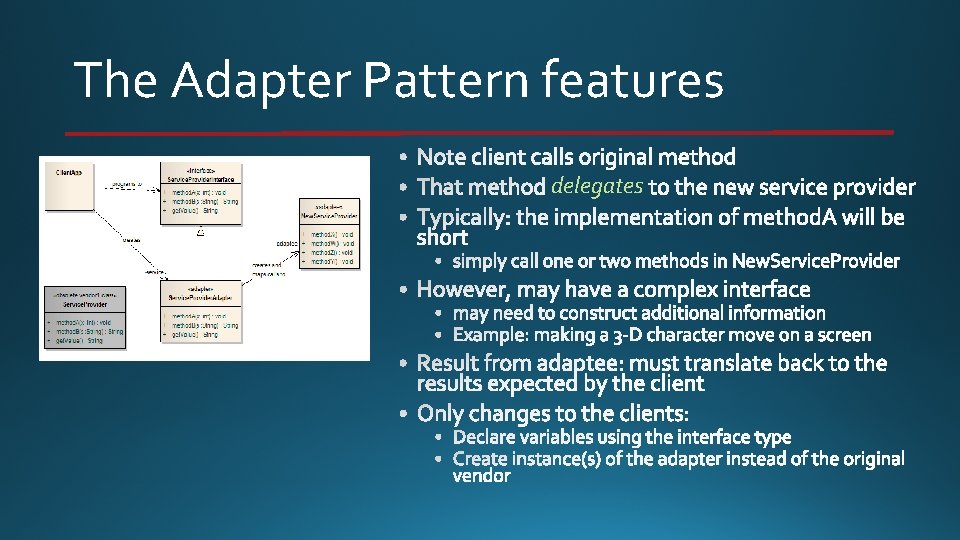
The Adapter Pattern features delegates
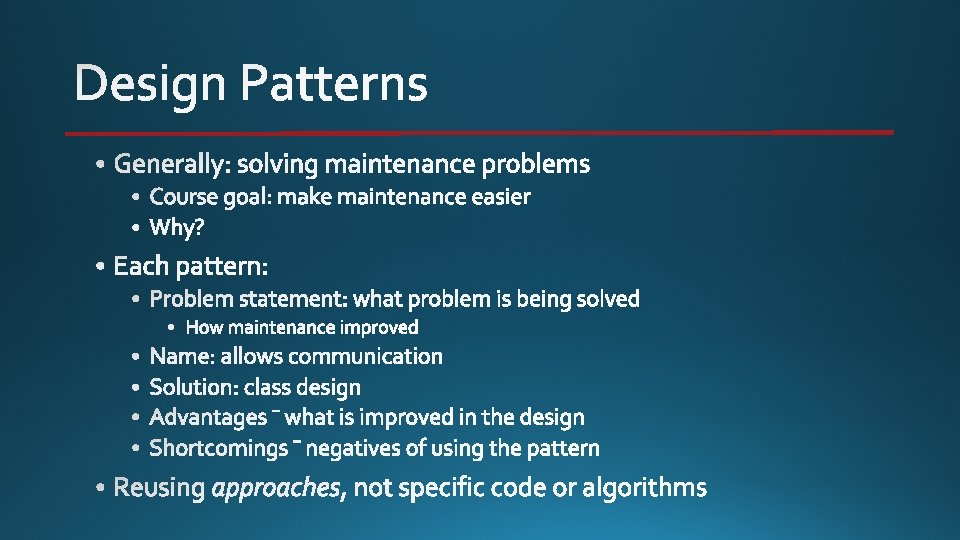
• Legacy code which interfaces to a class library that has changed • Changes might include versions, vendors, new requirements • New application • • Interfaces with known third-party library That library not yet defined Isolate the problem! Define an interface, write the adapter later
Adapter: a structural design pattern • Captures relationships between classes • Reduces the dependencies between classes • Traditional solution: rewrite existing code to meet new need • What if we need the original code for another system? • Clone the code? • When copy/paste is your design strategy, you’ve lost • Don’t repeat yourself (DRY), again!
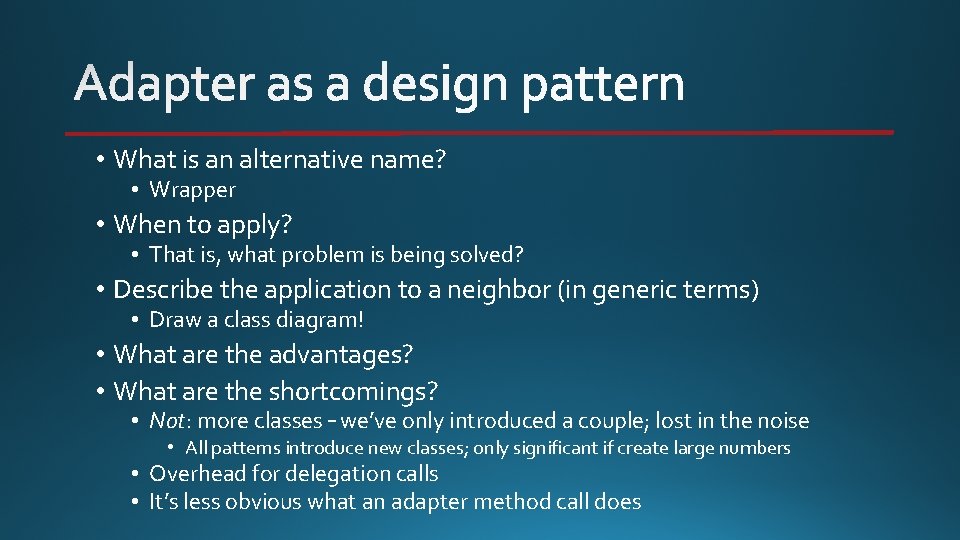
• What is an alternative name? • Wrapper • When to apply? • That is, what problem is being solved? • Describe the application to a neighbor (in generic terms) • Draw a class diagram! • What are the advantages? • What are the shortcomings? • Not: more classes – we’ve only introduced a couple; lost in the noise • All patterns introduce new classes; only significant if create large numbers • Overhead for delegation calls • It’s less obvious what an adapter method call does
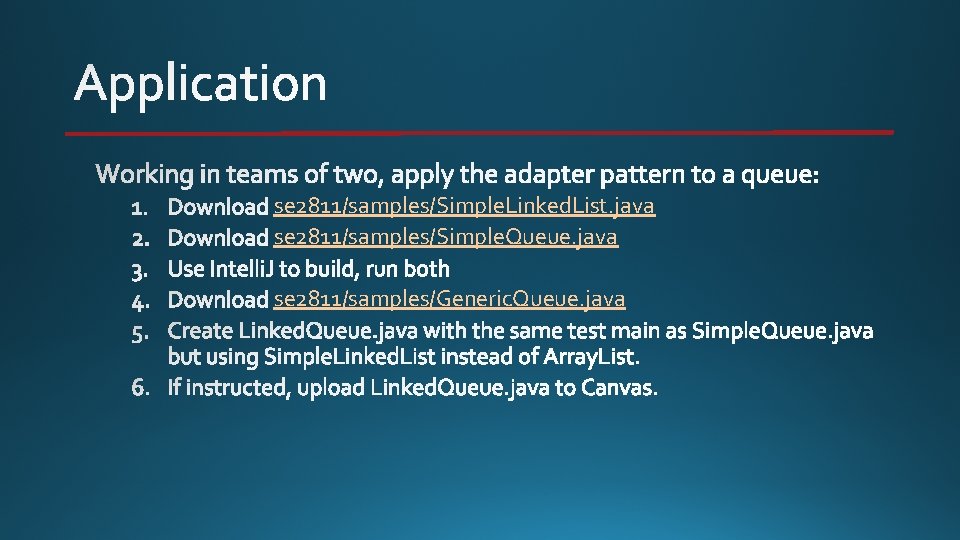
se 2811/samples/Simple. Linked. List. java se 2811/samples/Simple. Queue. java se 2811/samples/Generic. Queue. java
- Slides: 16