
2 9 Photosynthesis Understanding Photosynthesis is the production
- Slides: 27
2. 9 Photosynthesis
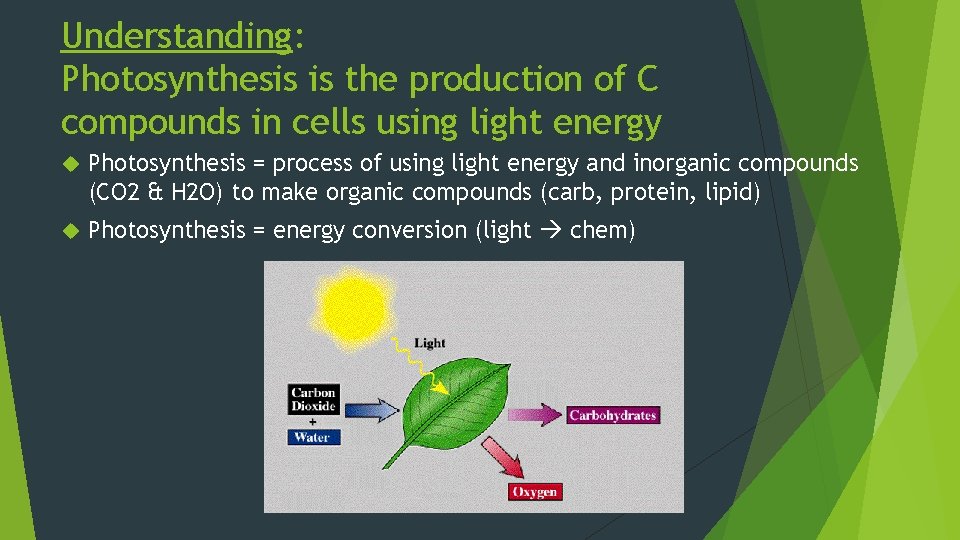
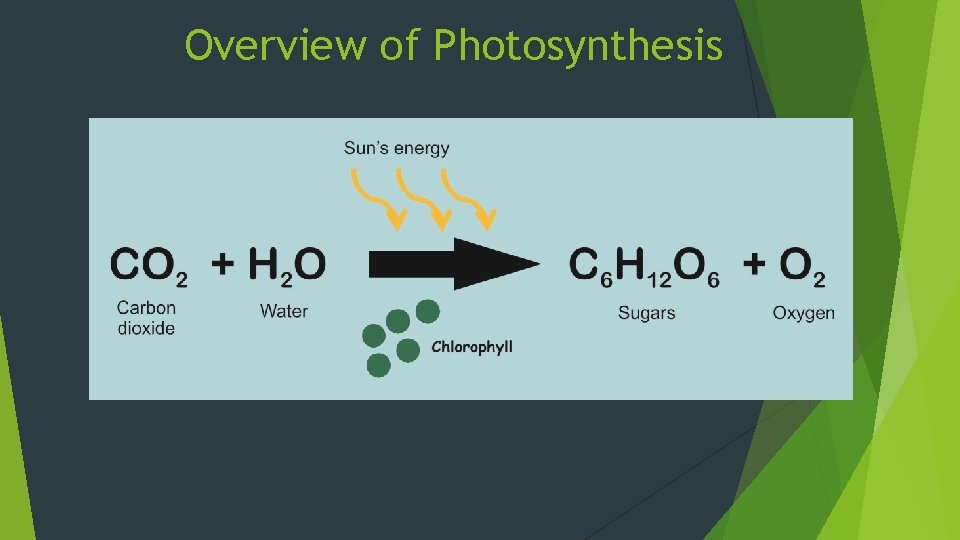
Understanding: Photosynthesis is the production of C compounds in cells using light energy Photosynthesis = process of using light energy and inorganic compounds (CO 2 & H 2 O) to make organic compounds (carb, protein, lipid) Photosynthesis = energy conversion (light chem)
What energy conversion is involved in photosynthesis? A) Chem light B) Light chem C) Light electrical D) Electrical chem
List 3 inputs needed for photosynthesis. A) O 2, glucose, light B) Light, water, O 2 C) Water, light, glucose D) Water, light, CO 2
Overview of Photosynthesis
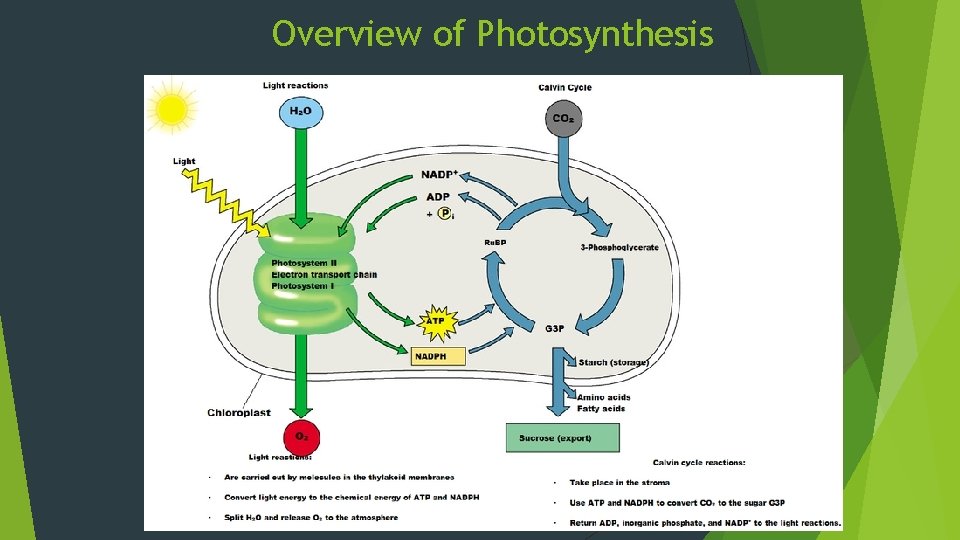
Overview of Photosynthesis
What are the 2 main stages of photosynthesis, in order? A) Light-dependent rxn, Calvin cycle B) Light-independent rxn, light-dependent rxn C) Calvin cycle, light-dependent rxn D) Light rxn, Krebs cycle
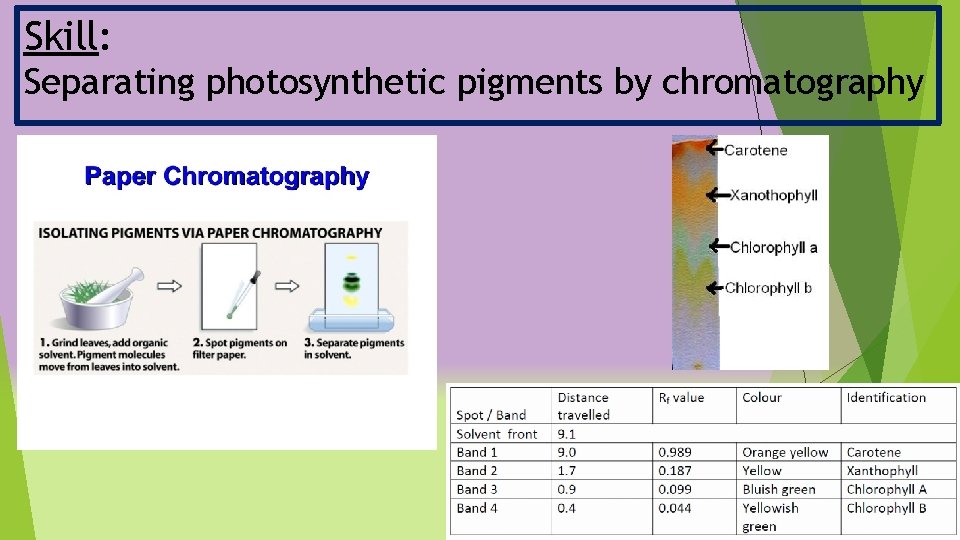
Skill: Separating photosynthetic pigments by chromatography
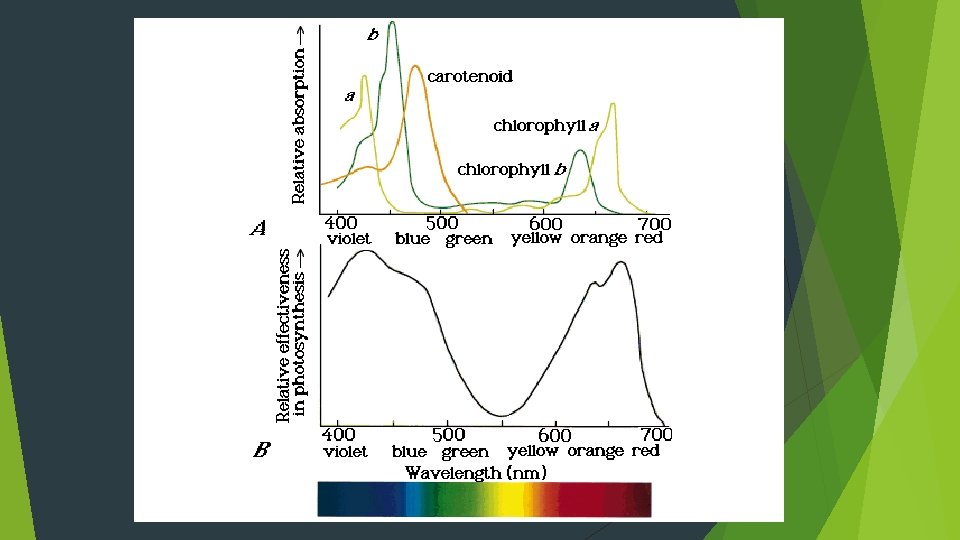
What color wavelengths does chlorophyll a absorb the most? A) Green B) Yellow C) Orange D) Red & violet
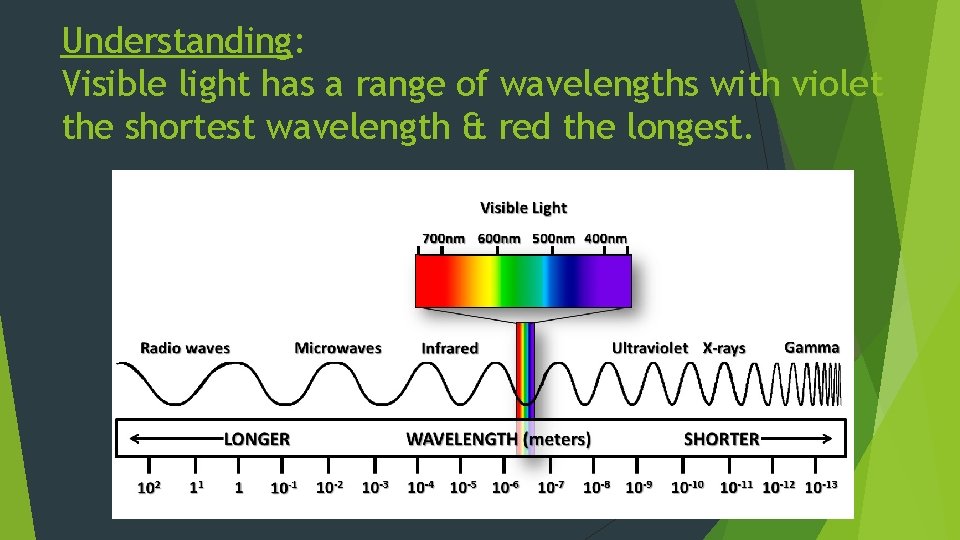
Understanding: Visible light has a range of wavelengths with violet the shortest wavelength & red the longest.
What is the range of the visible light spectrum? A) Violet 400 nm – 700 nm Red B) Red 400 nm – 700 nm Violet C) Violet 200 nm – 800 nm Red D) Red 200 nm – 800 nm Violet
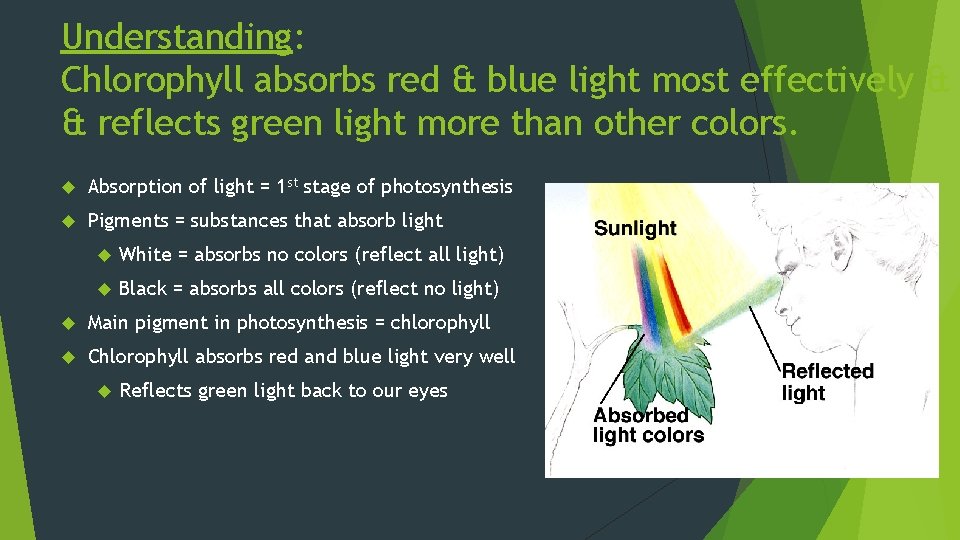
Understanding: Chlorophyll absorbs red & blue light most effectively & & reflects green light more than other colors. Absorption of light = 1 st stage of photosynthesis Pigments = substances that absorb light White = absorbs no colors (reflect all light) Black = absorbs all colors (reflect no light) Main pigment in photosynthesis = chlorophyll Chlorophyll absorbs red and blue light very well Reflects green light back to our eyes
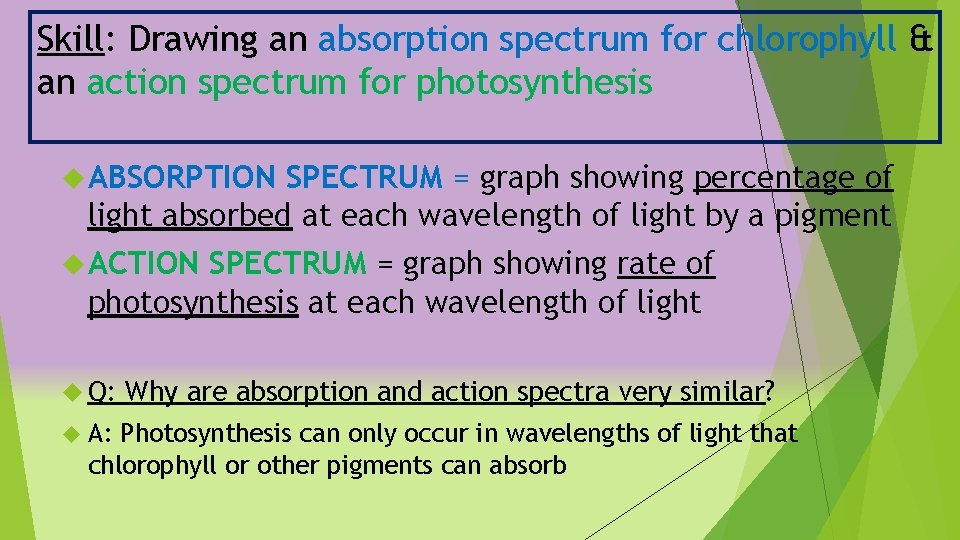
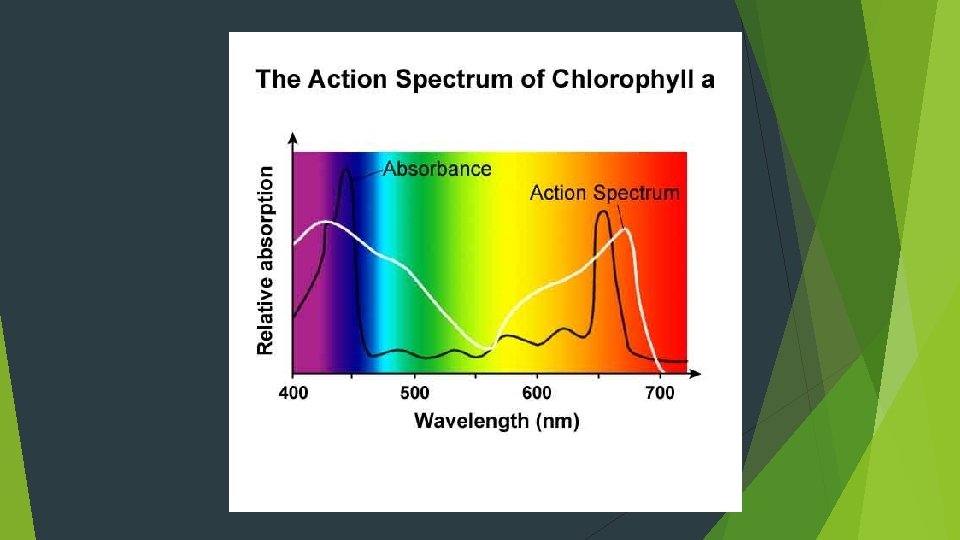
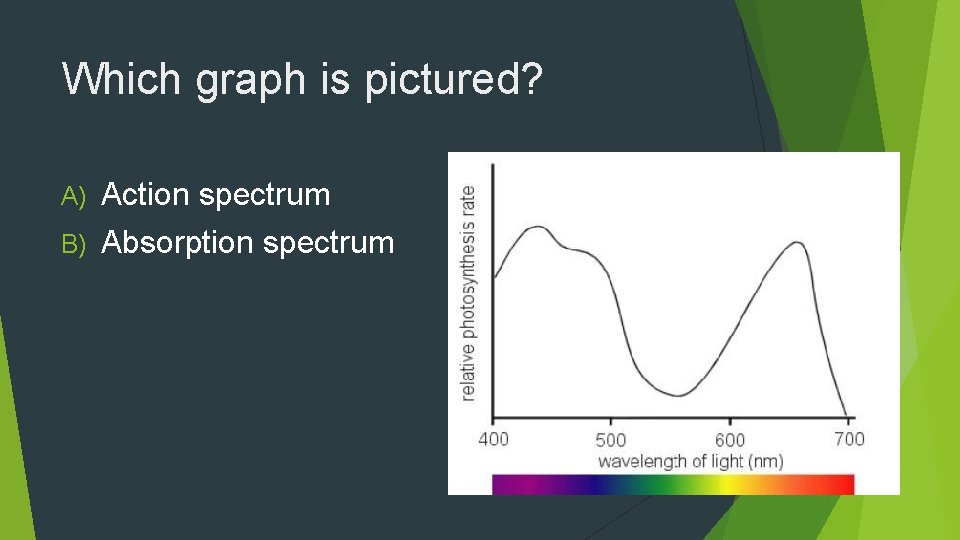
Skill: Drawing an absorption spectrum for chlorophyll & an action spectrum for photosynthesis ABSORPTION SPECTRUM = graph showing percentage of light absorbed at each wavelength of light by a pigment ACTION SPECTRUM = graph showing rate of photosynthesis at each wavelength of light Q: A: Why are absorption and action spectra very similar? Photosynthesis can only occur in wavelengths of light that chlorophyll or other pigments can absorb
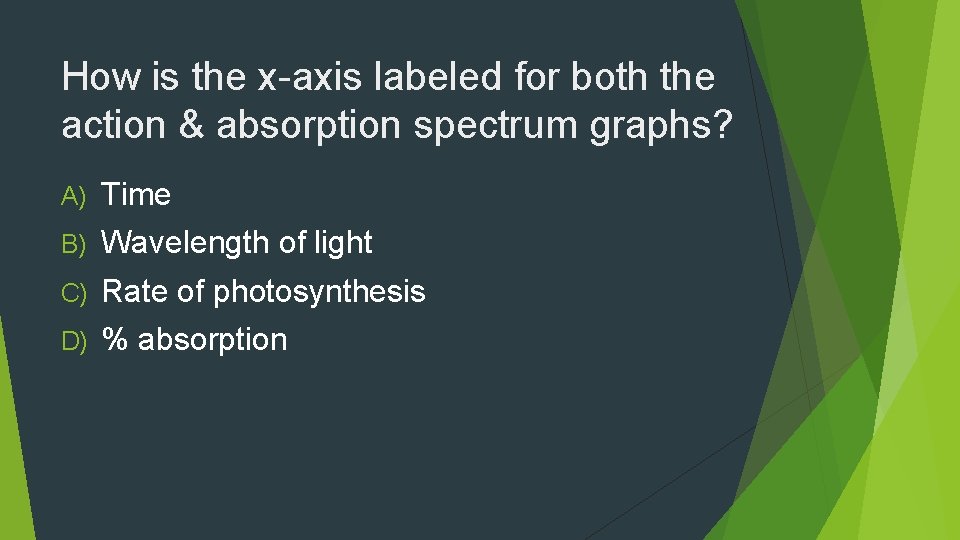
How is the x-axis labeled for both the action & absorption spectrum graphs? A) Time B) Wavelength of light C) Rate of photosynthesis D) % absorption
Which graph is pictured? A) Action spectrum B) Absorption spectrum
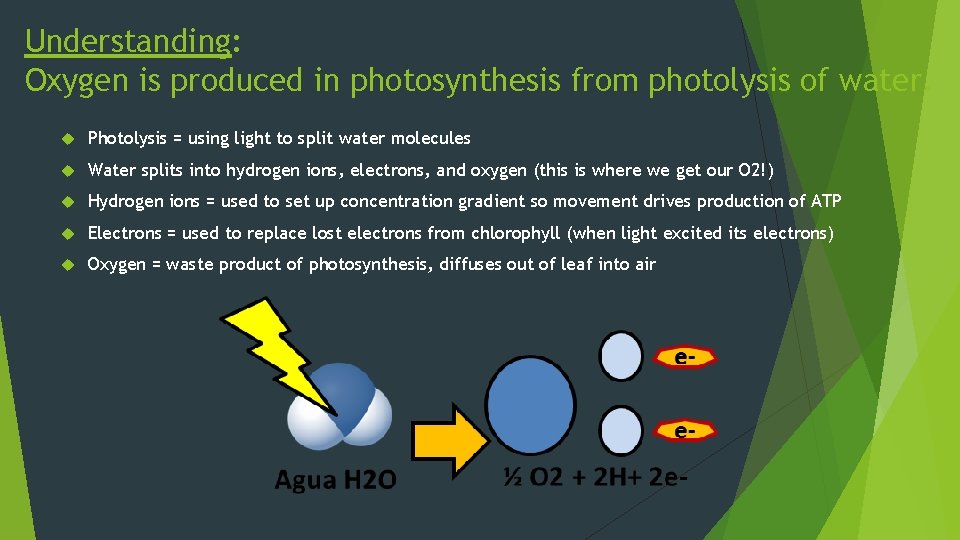
Understanding: Oxygen is produced in photosynthesis from photolysis of water. Photolysis = using light to split water molecules Water splits into hydrogen ions, electrons, and oxygen (this is where we get our O 2!) Hydrogen ions = used to set up concentration gradient so movement drives production of ATP Electrons = used to replace lost electrons from chlorophyll (when light excited its electrons) Oxygen = waste product of photosynthesis, diffuses out of leaf into air
What do you call the splitting of water molecules in photosynthesis? A) Hydrolysis B) Photolysis C) Photosynthesis D) Hydrosynthesis
Understanding: Changes to the Earth’s atmosphere, oceans & rock deposition due to photosynthesis. Great Oxidation Event = the rising of the O 2 concentration in the Earth’s atmosphere, caused by millions of years of photosynthesis by prokaryotes, plants & algae (2% by volume by 2200 mya) This caused Ice Age: Great Oxidation Event decrease in CH 4 & CO 2 decrease in greenhouse effect fall in global temp Also caused Banded Iron Formation: Great Oxidation Event increased dissolved O 2 in ocean oxidation of dissolved Fe to form precipitate onto sea bed rock formation with layers of iron oxide alternating with other minerals (banding pattern) abundant resource of iron lots of steel! 750 -635 mya O 2 rose to 20% same time big boost in multicellular organisms!
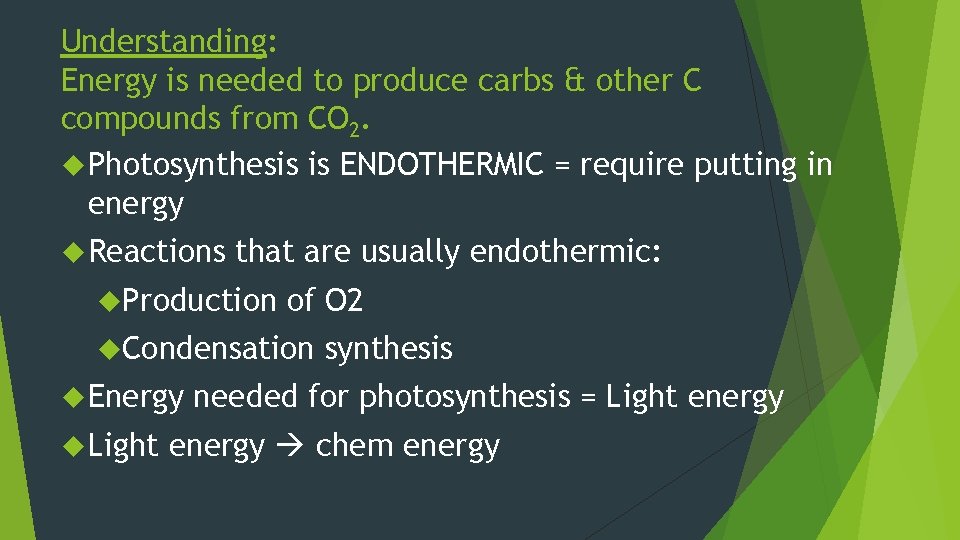
Understanding: Energy is needed to produce carbs & other C compounds from CO 2. Photosynthesis is ENDOTHERMIC = require putting in energy Reactions that are usually endothermic: Production of O 2 Condensation Energy Light synthesis needed for photosynthesis = Light energy chem energy
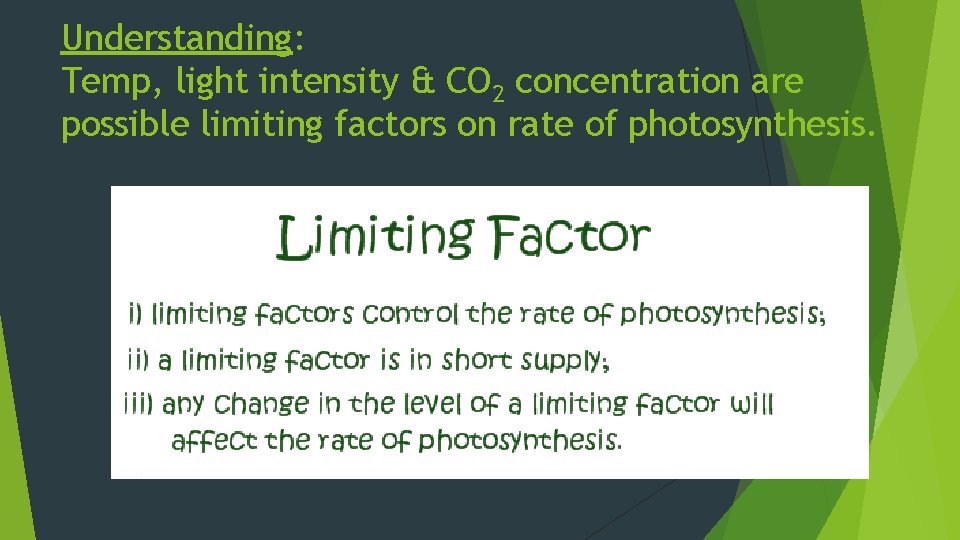
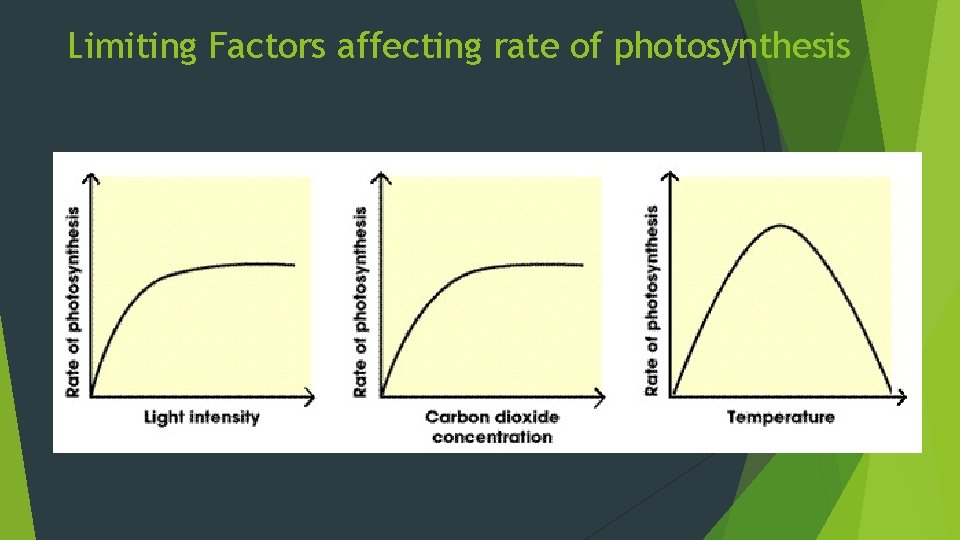
Understanding: Temp, light intensity & CO 2 concentration are possible limiting factors on rate of photosynthesis.
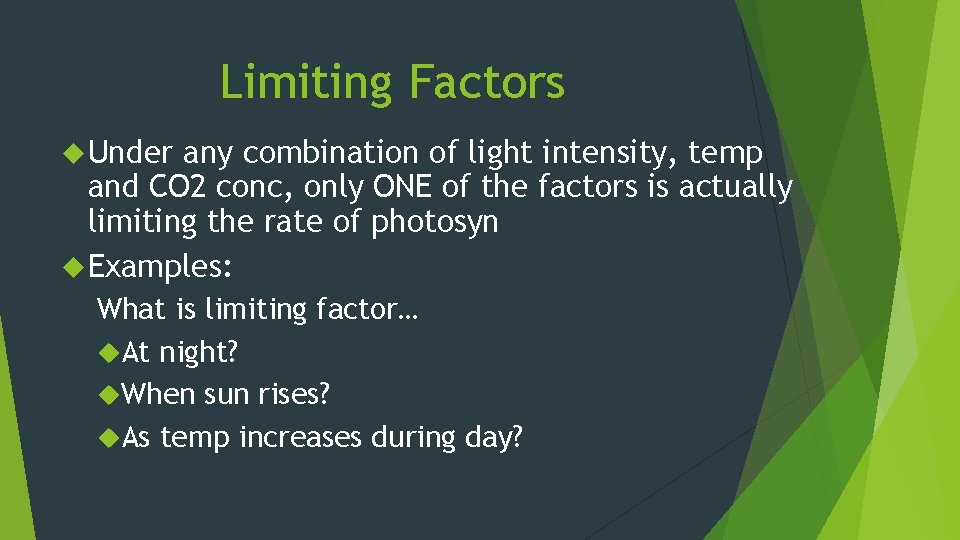
Limiting Factors Under any combination of light intensity, temp and CO 2 conc, only ONE of the factors is actually limiting the rate of photosyn Examples: What is limiting factor… At night? When sun rises? As temp increases during day?
Limiting Factors affecting rate of photosynthesis
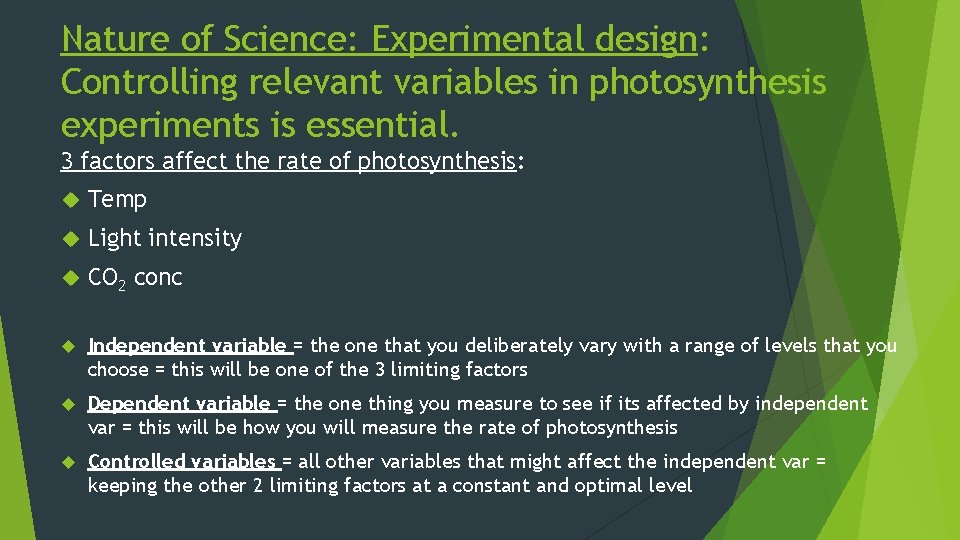
Nature of Science: Experimental design: Controlling relevant variables in photosynthesis experiments is essential. 3 factors affect the rate of photosynthesis: Temp Light intensity CO 2 conc Independent variable = the one that you deliberately vary with a range of levels that you choose = this will be one of the 3 limiting factors Dependent variable = the one thing you measure to see if its affected by independent var = this will be how you will measure the rate of photosynthesis Controlled variables = all other variables that might affect the independent var = keeping the other 2 limiting factors at a constant and optimal level
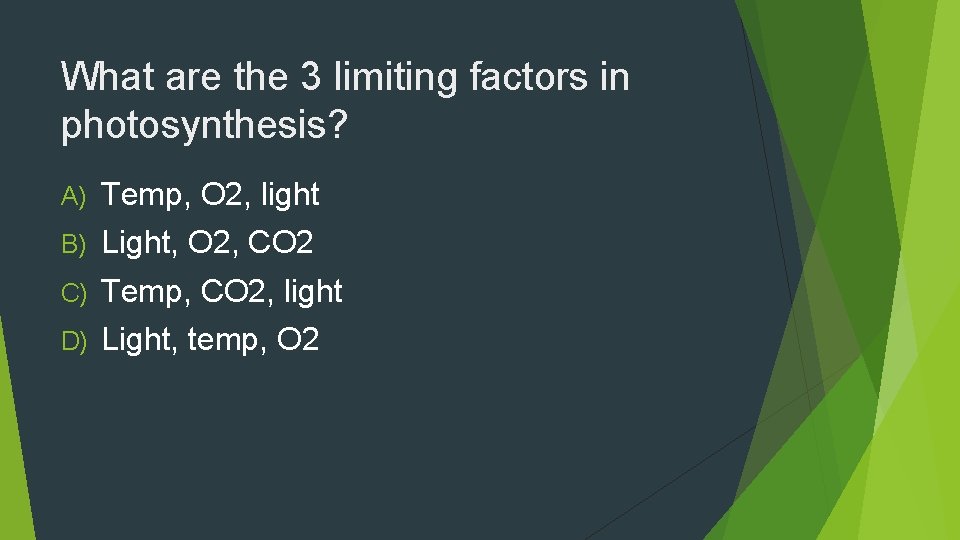
What are the 3 limiting factors in photosynthesis? A) Temp, O 2, light B) Light, O 2, CO 2 C) Temp, CO 2, light D) Light, temp, O 2
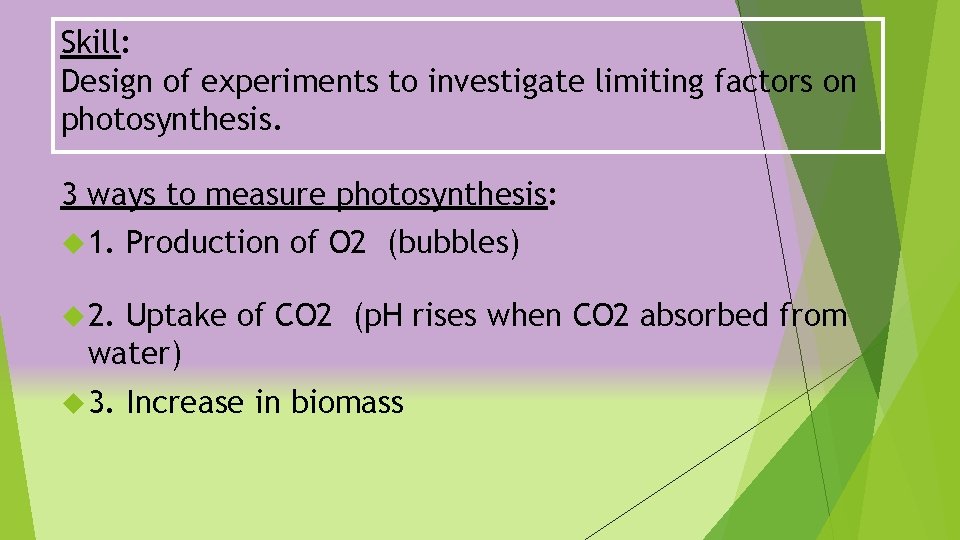
Skill: Design of experiments to investigate limiting factors on photosynthesis. 3 ways to measure photosynthesis: 1. Production of O 2 (bubbles) 2. Uptake of CO 2 (p. H rises when CO 2 absorbed from water) 3. Increase in biomass