
2 7 Angle Constructions How do I copy
- Slides: 18
2. 7 Angle Constructions How do I copy an angle?
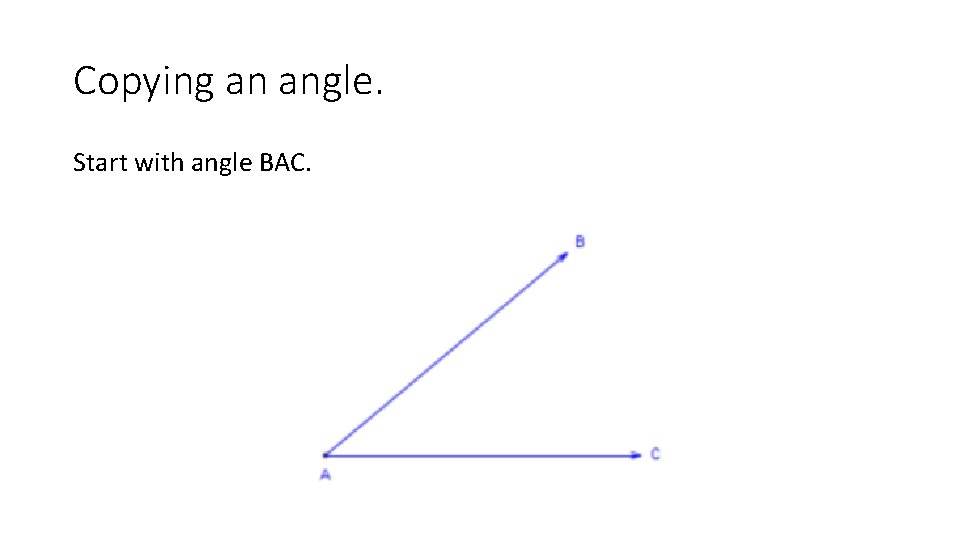
Copying an angle. Start with angle BAC.
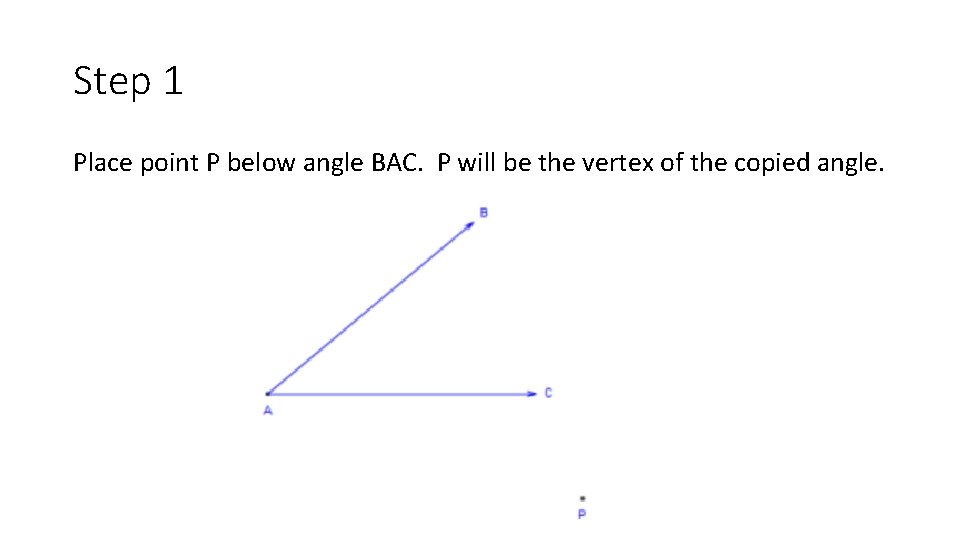
Step 1 Place point P below angle BAC. P will be the vertex of the copied angle.
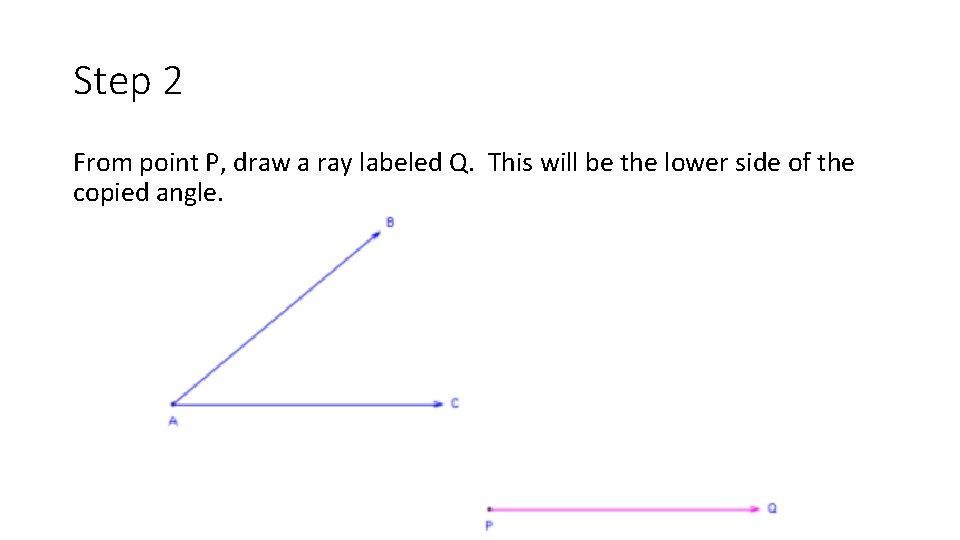
Step 2 From point P, draw a ray labeled Q. This will be the lower side of the copied angle.
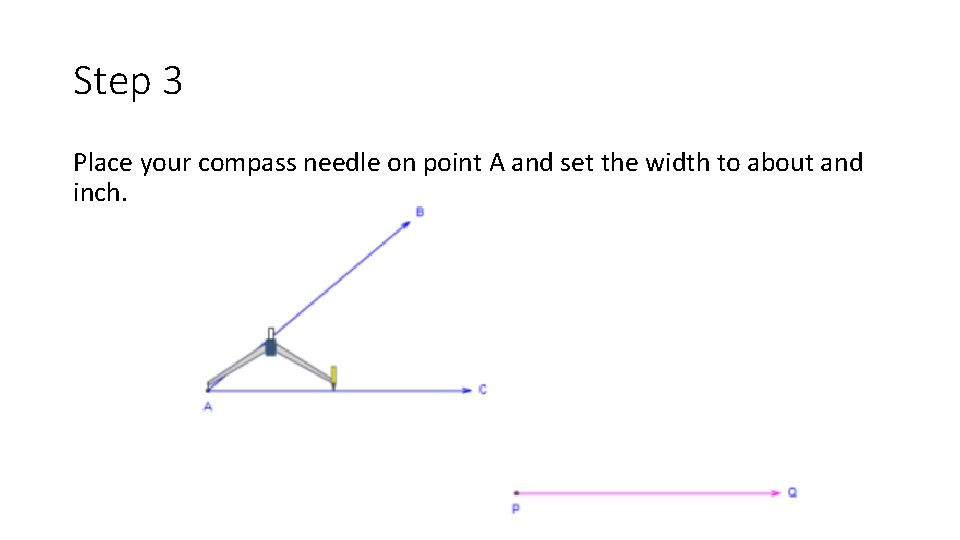
Step 3 Place your compass needle on point A and set the width to about and inch.
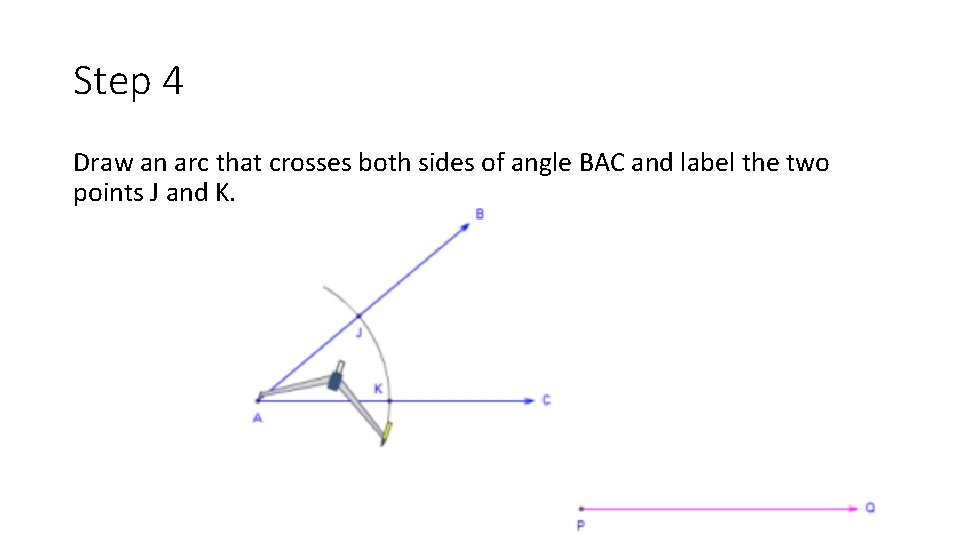
Step 4 Draw an arc that crosses both sides of angle BAC and label the two points J and K.
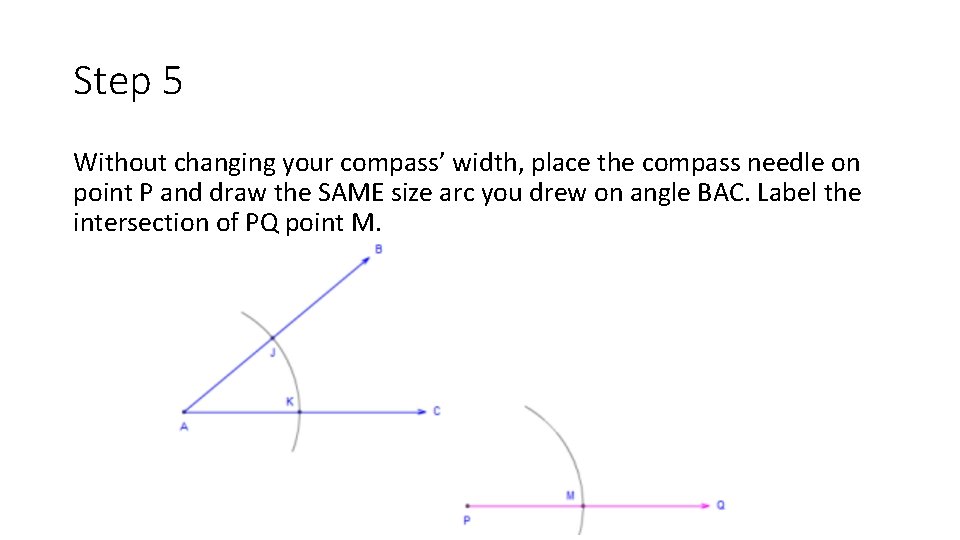
Step 5 Without changing your compass’ width, place the compass needle on point P and draw the SAME size arc you drew on angle BAC. Label the intersection of PQ point M.
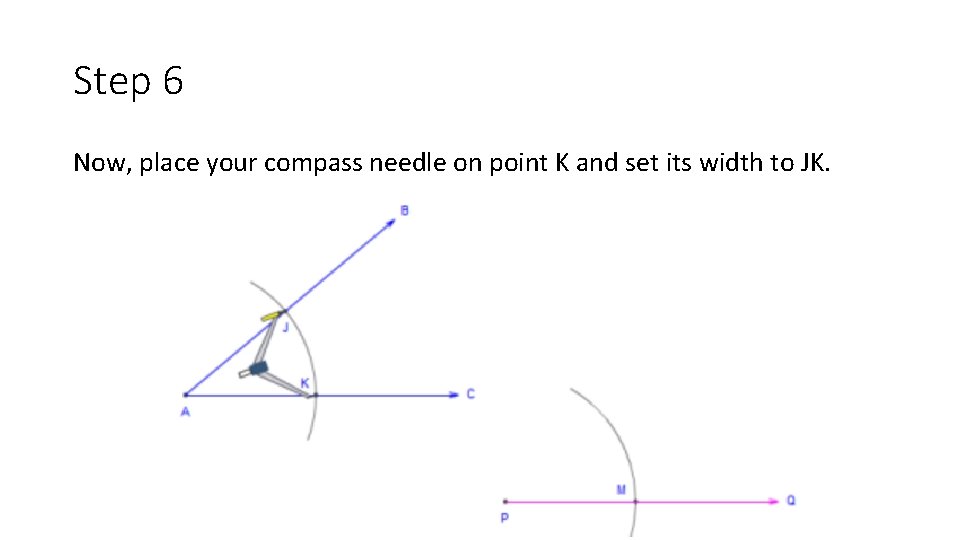
Step 6 Now, place your compass needle on point K and set its width to JK.
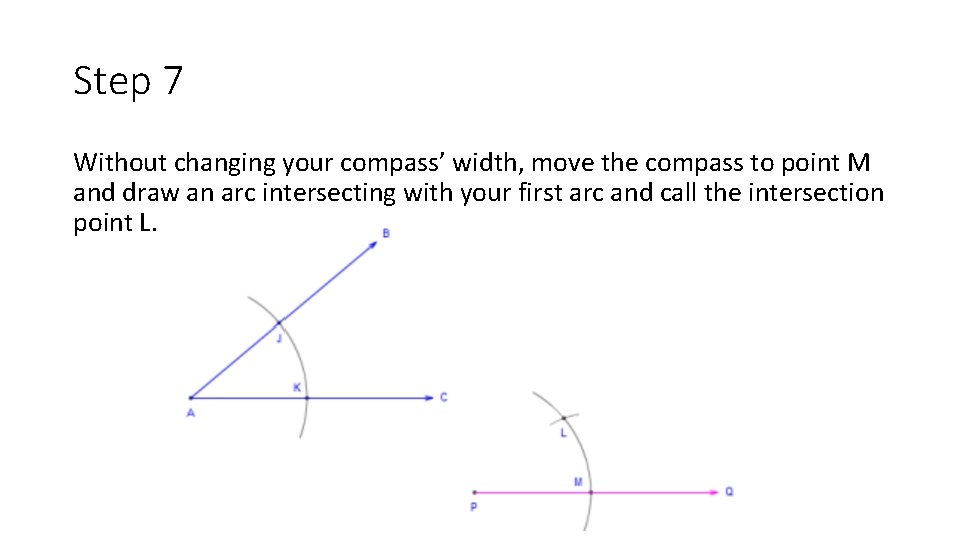
Step 7 Without changing your compass’ width, move the compass to point M and draw an arc intersecting with your first arc and call the intersection point L.
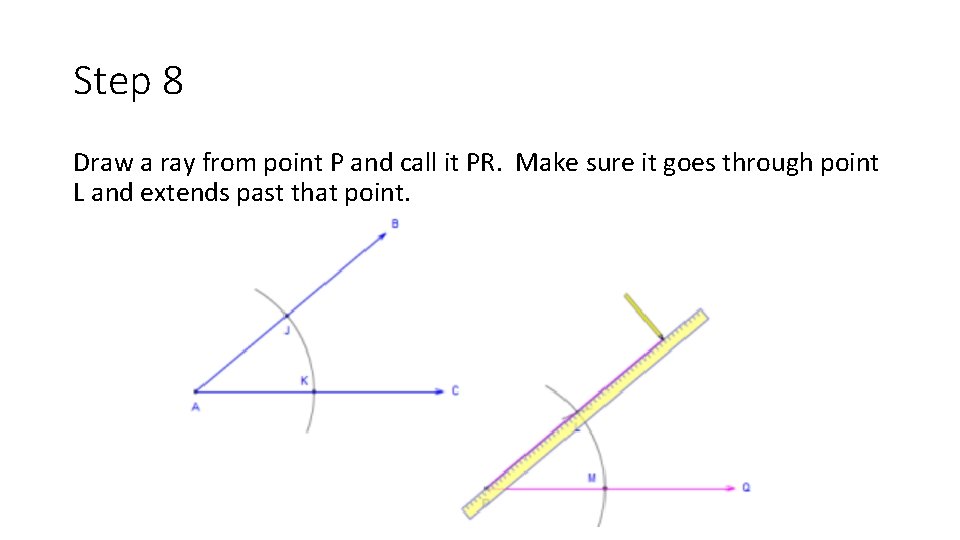
Step 8 Draw a ray from point P and call it PR. Make sure it goes through point L and extends past that point.
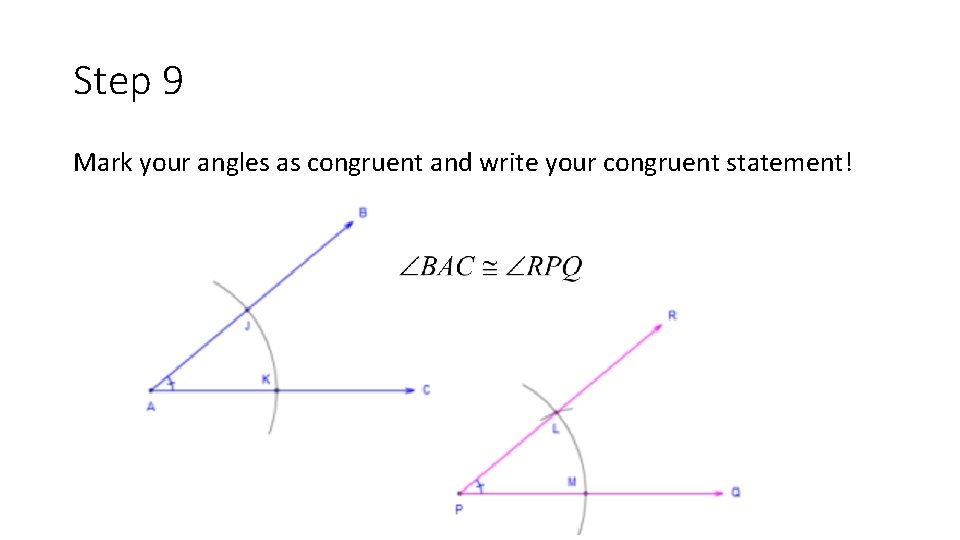
Step 9 Mark your angles as congruent and write your congruent statement!
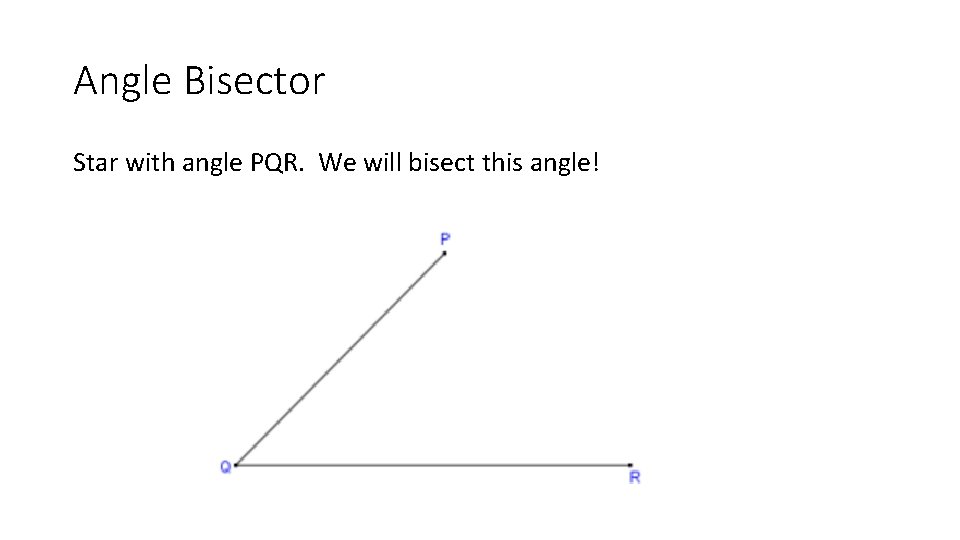
Angle Bisector Star with angle PQR. We will bisect this angle!
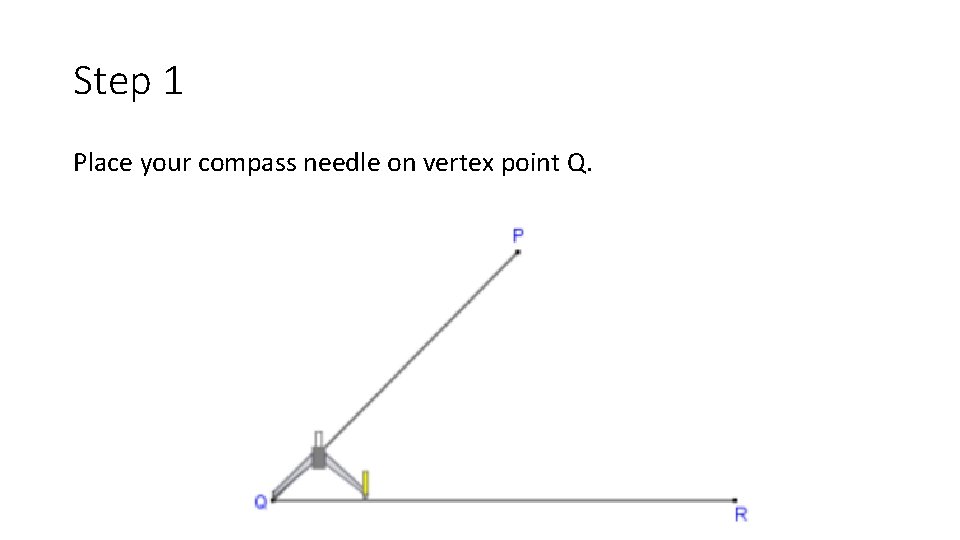
Step 1 Place your compass needle on vertex point Q.
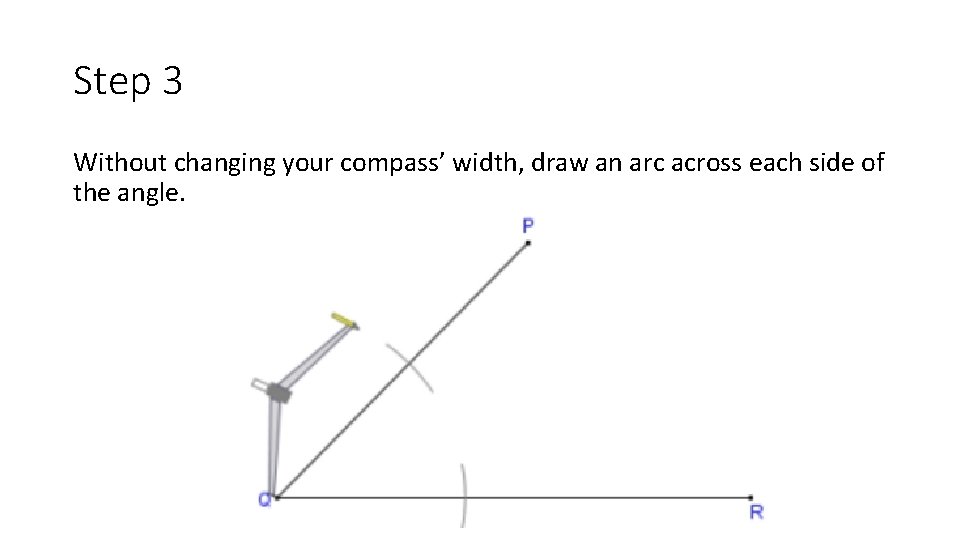
Step 3 Without changing your compass’ width, draw an arc across each side of the angle.
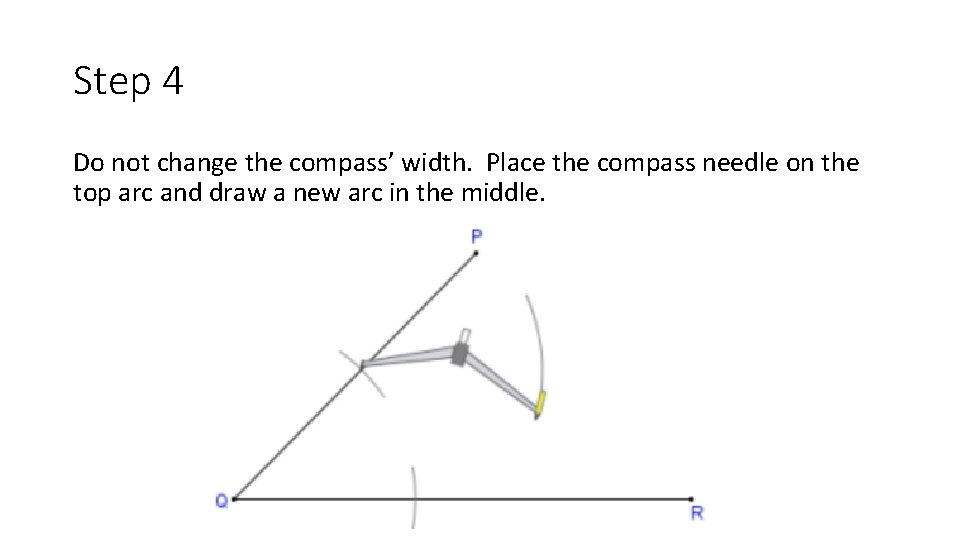
Step 4 Do not change the compass’ width. Place the compass needle on the top arc and draw a new arc in the middle.
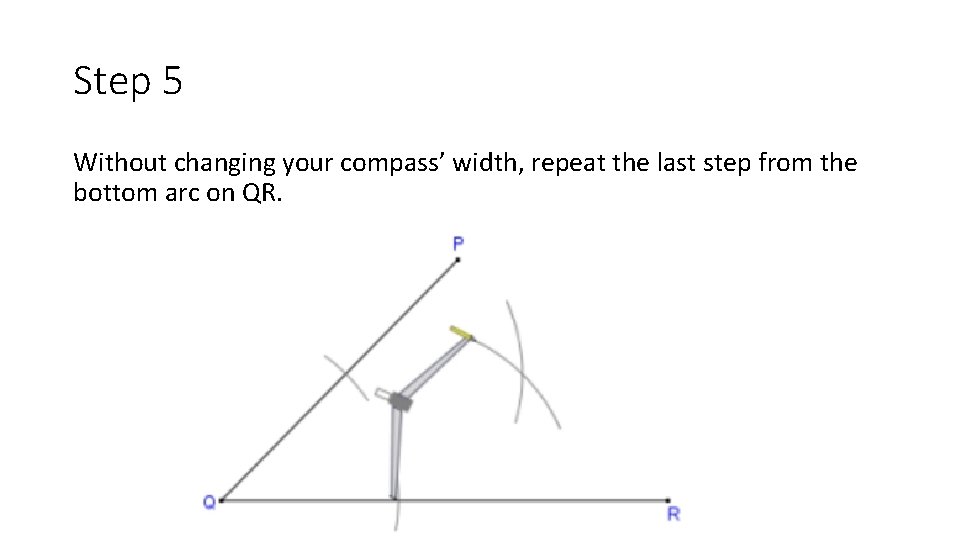
Step 5 Without changing your compass’ width, repeat the last step from the bottom arc on QR.
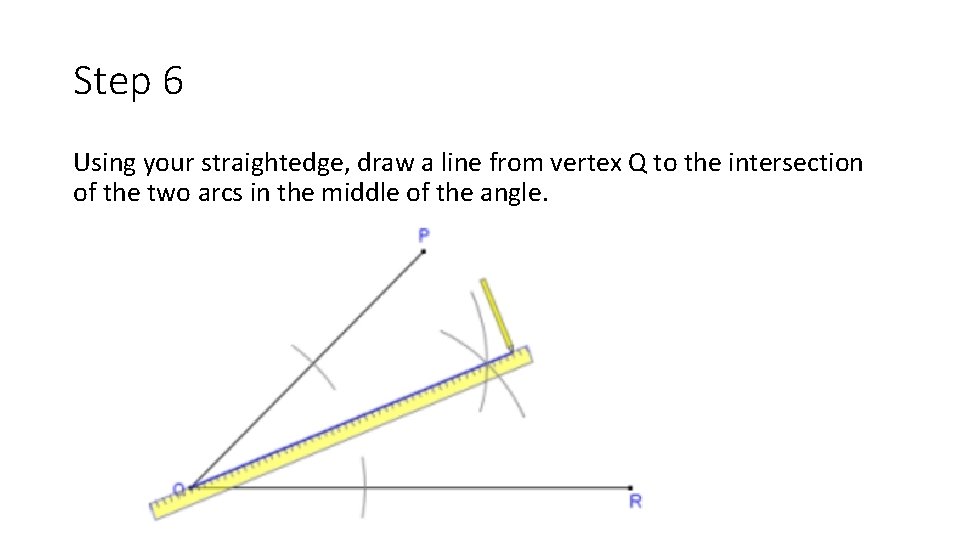
Step 6 Using your straightedge, draw a line from vertex Q to the intersection of the two arcs in the middle of the angle.
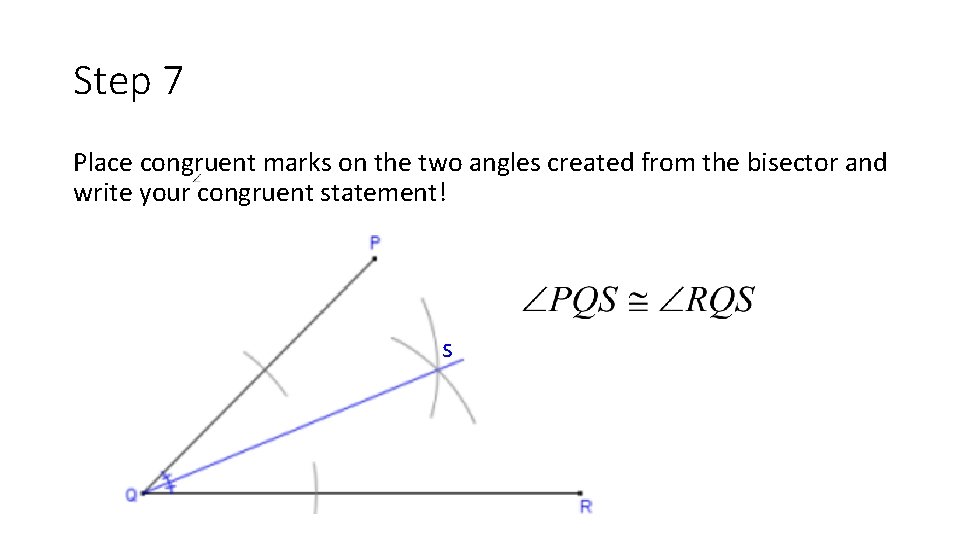
Step 7 Place congruent marks on the two angles created from the bisector and write your congruent statement! s