
2 6 STRUCTURE OF DNA AND RNA UNDERSTANDING
- Slides: 8
2. 6 STRUCTURE OF DNA AND RNA
UNDERSTANDING • The nucleic acids DNA and RNA are polymers of nucleotides • DNA differs from RNA in the number of strands normally present, the base composition and the type of pentose • DNA is a double helix made of two antiparallel strands of nucleotides linded by hydrogen bonding between complimentary base pairs
SKILLS • Drawing simple diagrams of the structure of single nucleotides and of DNA and RNA using circles, pentagons and rectangles to represent phosphates. pentoses and bases.
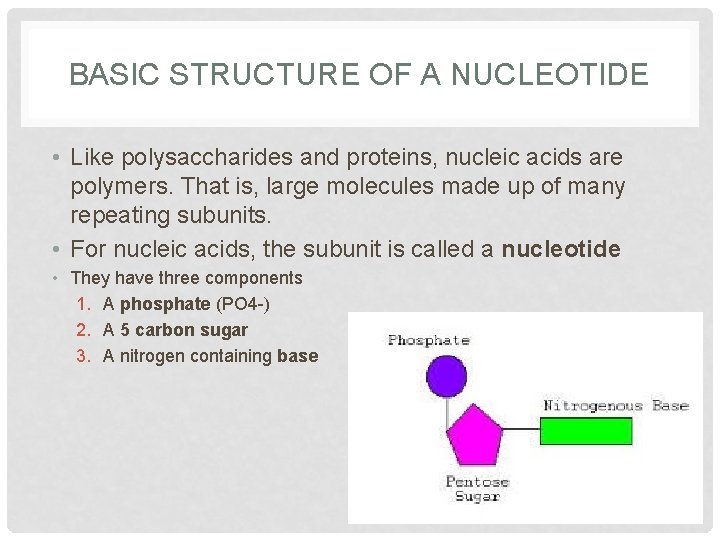
BASIC STRUCTURE OF A NUCLEOTIDE • Like polysaccharides and proteins, nucleic acids are polymers. That is, large molecules made up of many repeating subunits. • For nucleic acids, the subunit is called a nucleotide • They have three components 1. A phosphate (PO 4 -) 2. A 5 carbon sugar 3. A nitrogen containing base
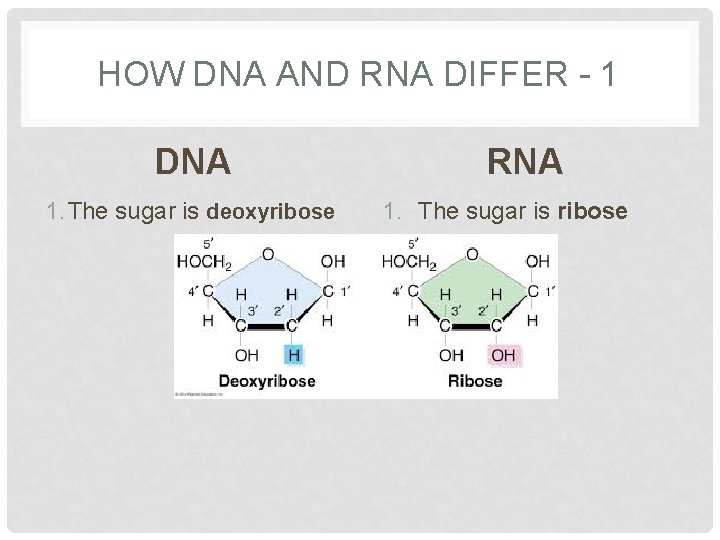
HOW DNA AND RNA DIFFER - 1 DNA 1. The sugar is deoxyribose RNA 1. The sugar is ribose
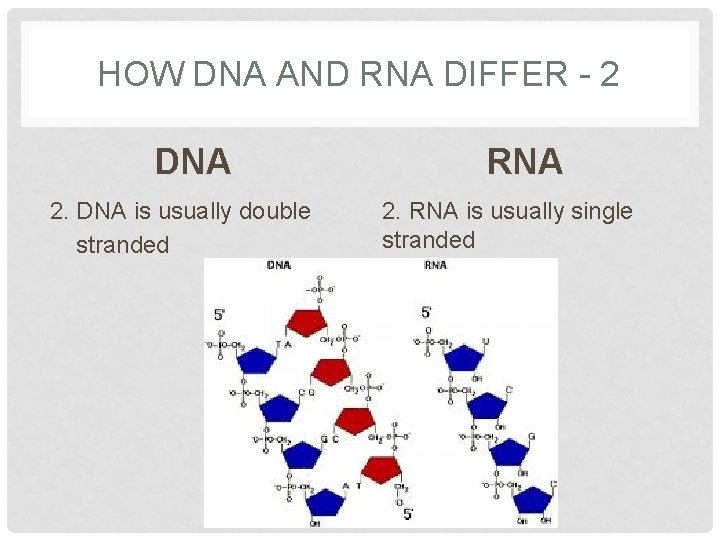
HOW DNA AND RNA DIFFER - 2 DNA 2. DNA is usually double stranded RNA 2. RNA is usually single stranded
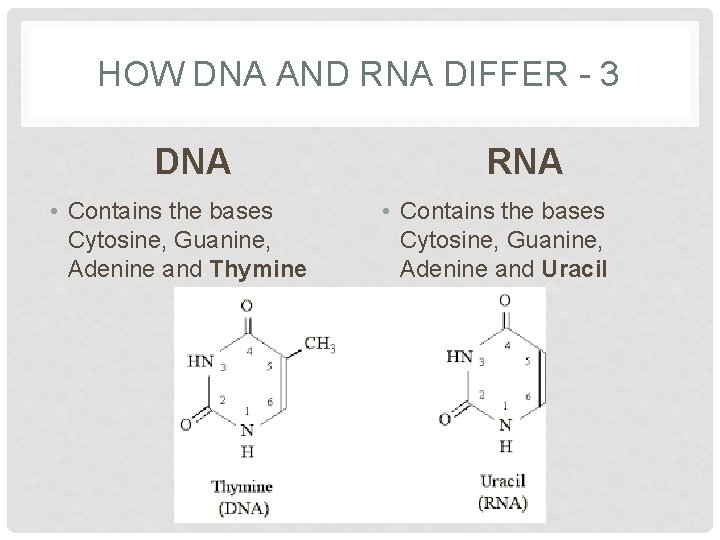
HOW DNA AND RNA DIFFER - 3 DNA • Contains the bases Cytosine, Guanine, Adenine and Thymine RNA • Contains the bases Cytosine, Guanine, Adenine and Uracil
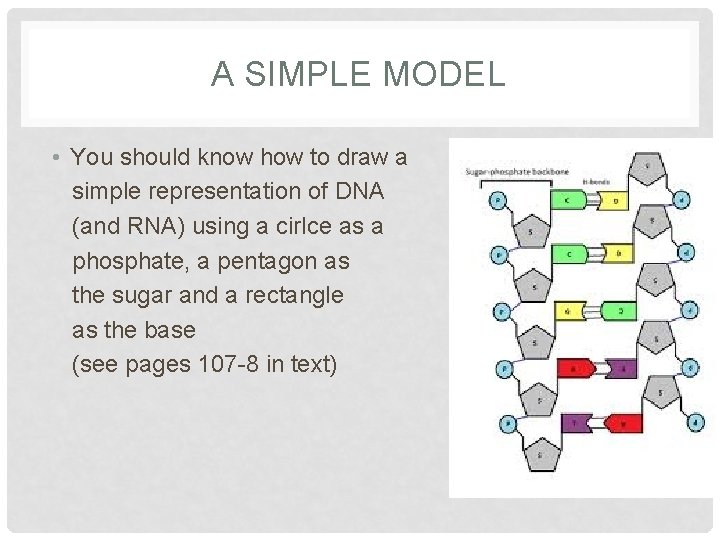
A SIMPLE MODEL • You should know how to draw a simple representation of DNA (and RNA) using a cirlce as a phosphate, a pentagon as the sugar and a rectangle as the base (see pages 107 -8 in text)