
2 6 Cell Division and Asexual Reproduction Reproduction
- Slides: 9
2. 6 Cell Division and Asexual Reproduction
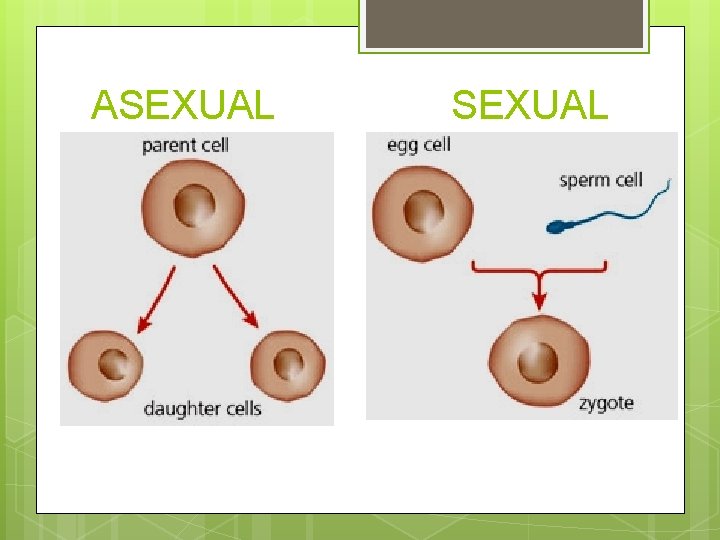
Reproduction 2 TYPES: Sexual : 2 separate organisms (parents) contribute genetic information, usually in specialized sex cells (egg and sperm). Asexual: involves only 1 parent & all offspring identical to parent (clones)
ASEXUAL
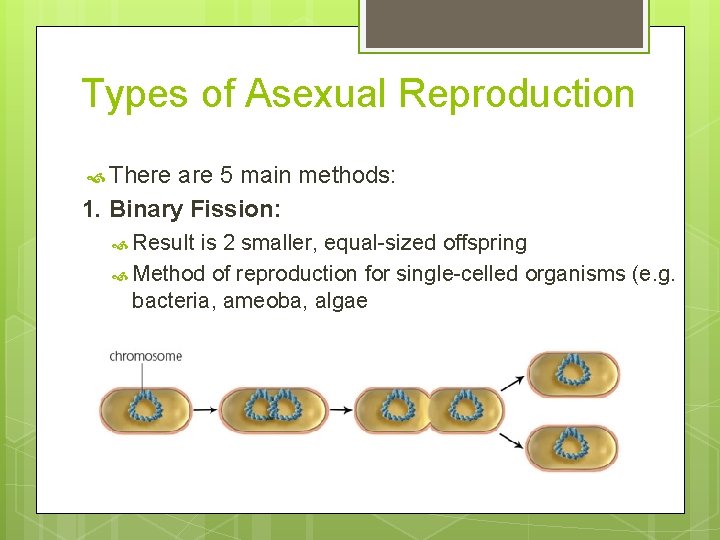
Types of Asexual Reproduction There are 5 main methods: 1. Binary Fission: Result is 2 smaller, equal-sized offspring Method of reproduction for single-celled organisms (e. g. bacteria, ameoba, algae
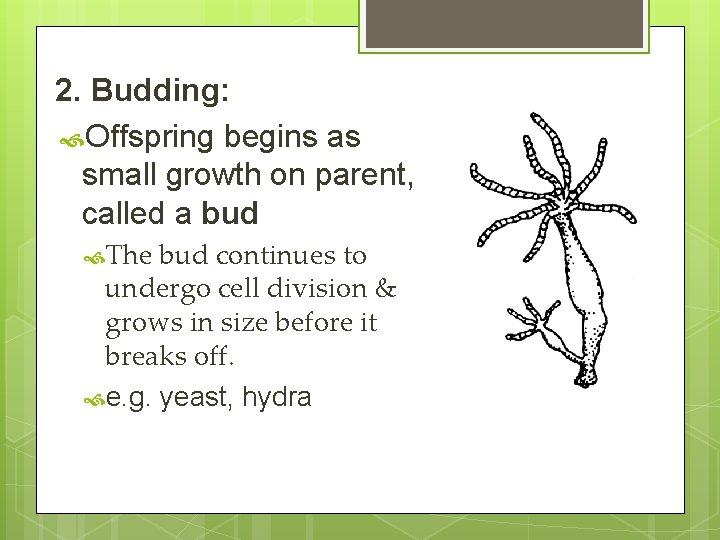
2. Budding: Offspring begins as small growth on parent, called a bud The bud continues to undergo cell division & grows in size before it breaks off. e. g. yeast, hydra
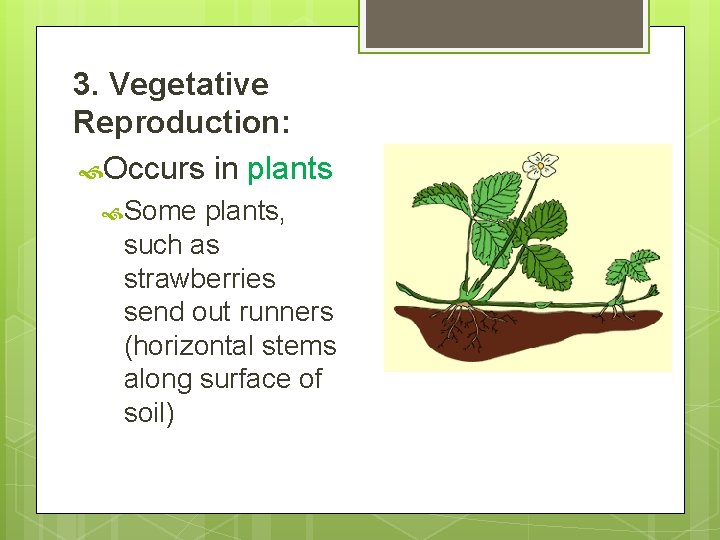
3. Vegetative Reproduction: Occurs in plants Some plants, such as strawberries send out runners (horizontal stems along surface of soil)
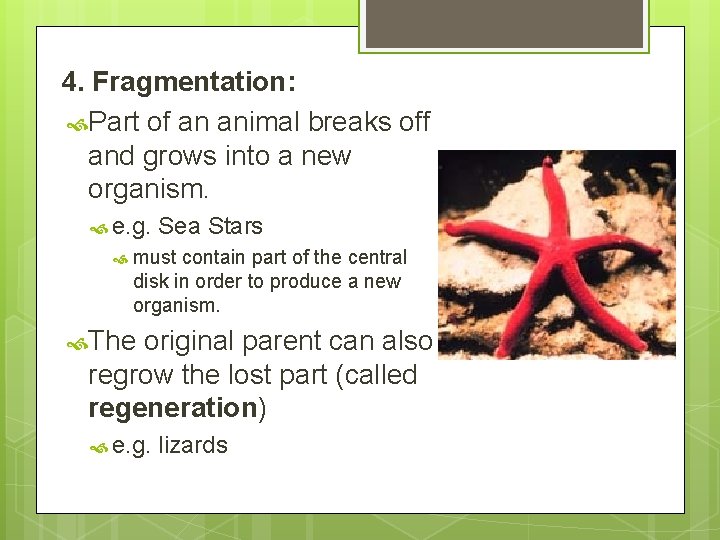
4. Fragmentation: Part of an animal breaks off and grows into a new organism. e. g. Sea Stars must contain part of the central disk in order to produce a new organism. The original parent can also regrow the lost part (called regeneration) e. g. lizards
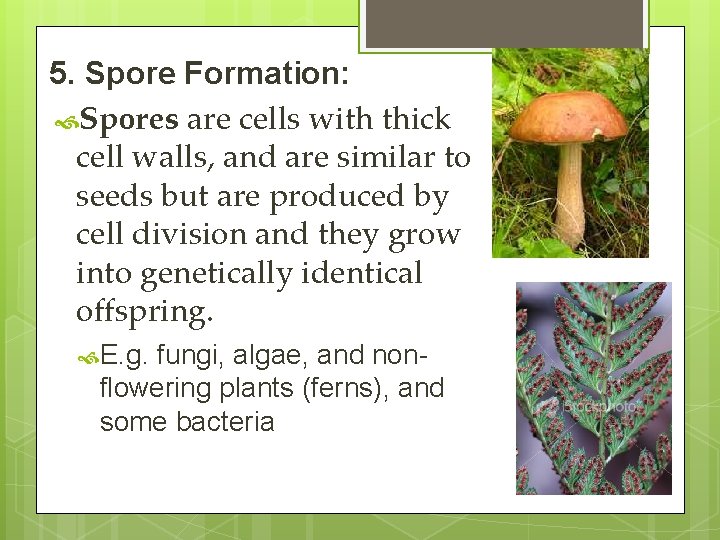
5. Spore Formation: Spores are cells with thick cell walls, and are similar to seeds but are produced by cell division and they grow into genetically identical offspring. E. g. fungi, algae, and nonflowering plants (ferns), and some bacteria
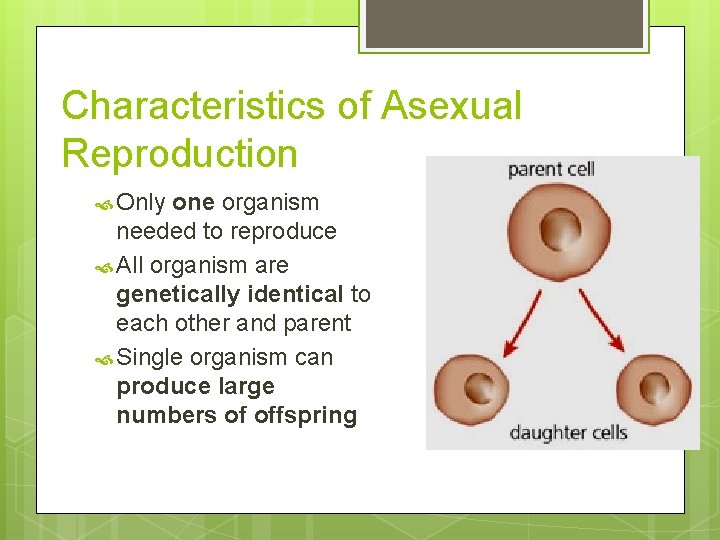
Characteristics of Asexual Reproduction Only one organism needed to reproduce All organism are genetically identical to each other and parent Single organism can produce large numbers of offspring