
2 5 The Chain Rule The Chain Rule
- Slides: 15
2. 5 The Chain Rule
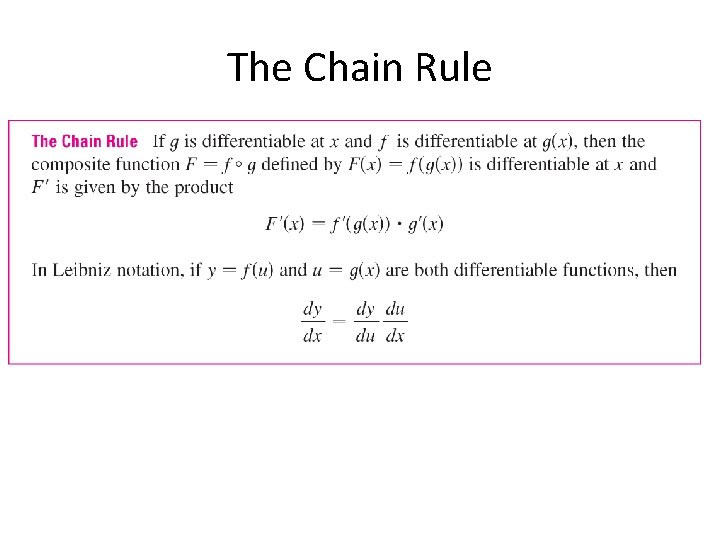
The Chain Rule
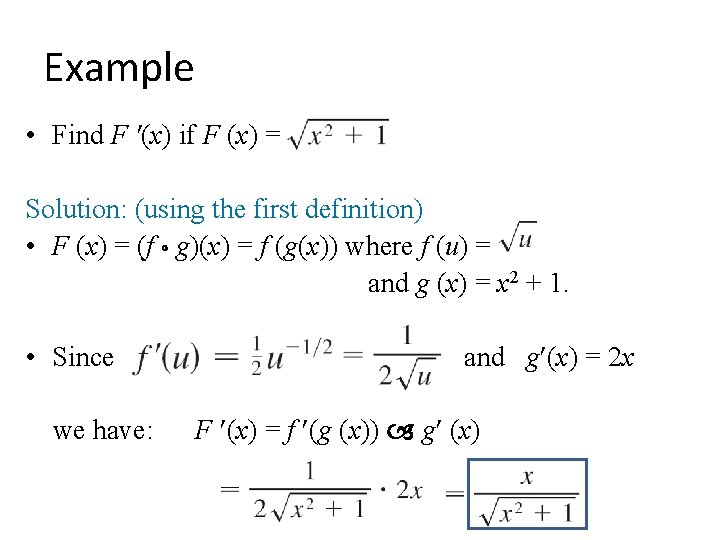
Example • Find F '(x) if F (x) = . Solution: (using the first definition) • F (x) = (f g)(x) = f (g(x)) where f (u) = and g (x) = x 2 + 1. • Since we have: and g (x) = 2 x F (x) = f (g (x)) g (x)
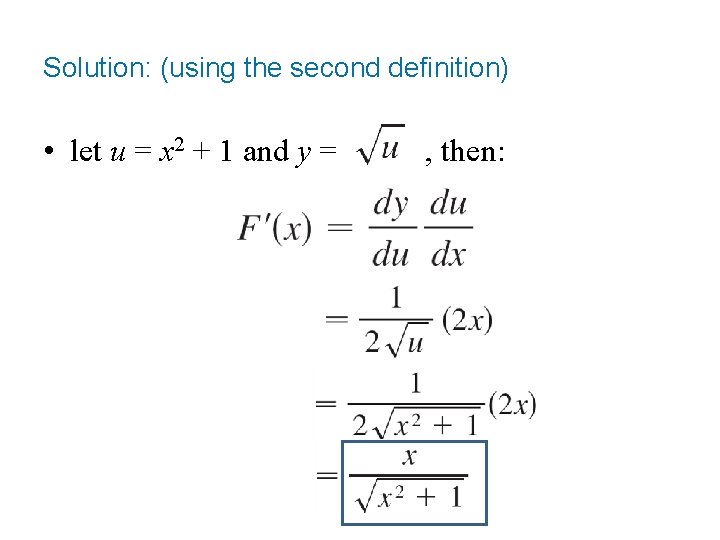
Solution: (using the second definition) • let u = x 2 + 1 and y = , then:
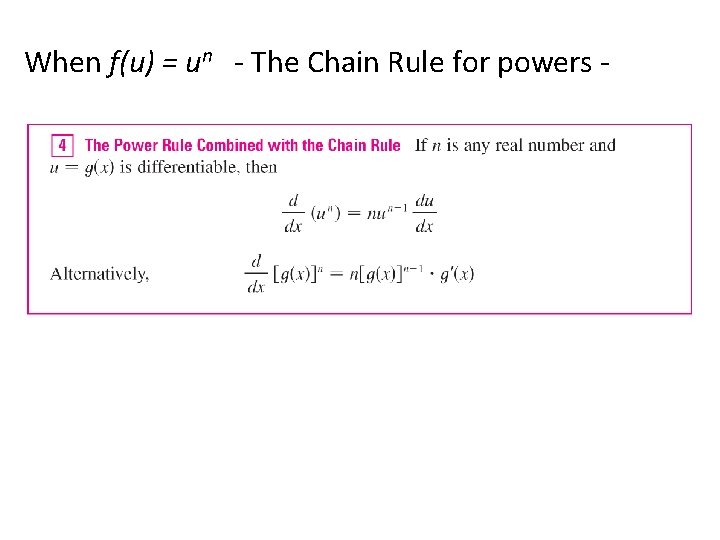
When f(u) = un - The Chain Rule for powers -
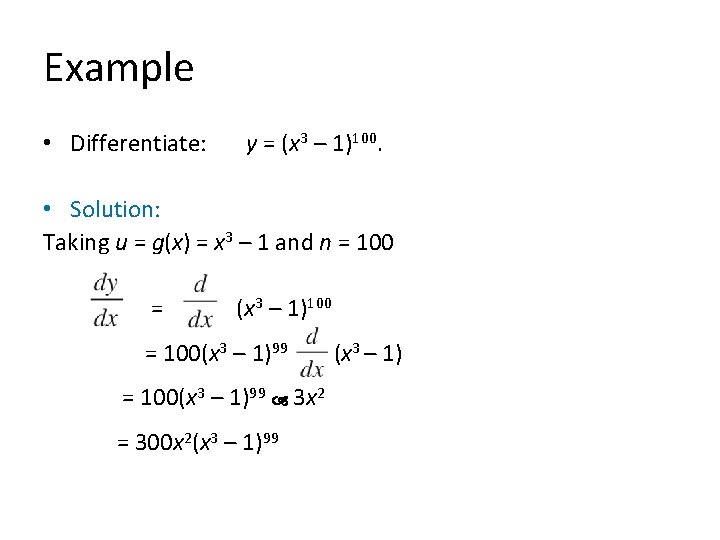
Example • Differentiate: y = (x 3 – 1)100. • Solution: Taking u = g(x) = x 3 – 1 and n = 100 = (x 3 – 1)100 = 100(x 3 – 1)99 3 x 2 = 300 x 2(x 3 – 1)99 (x 3 – 1)
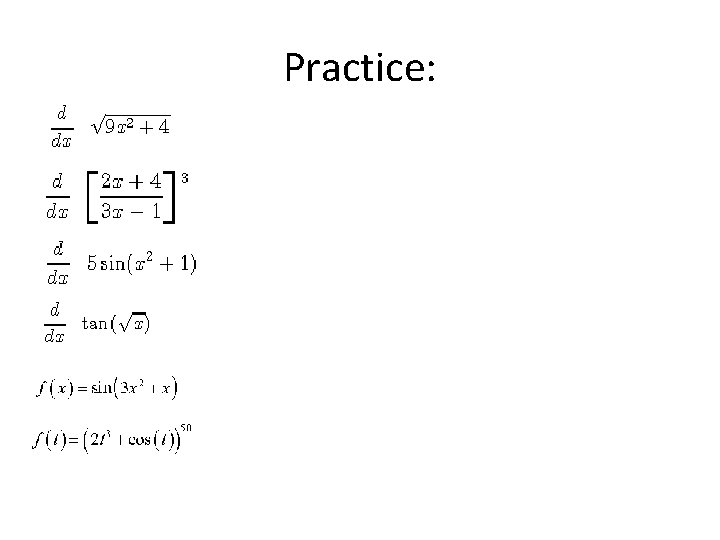
Practice:
2. 6 Implicit Differentiation
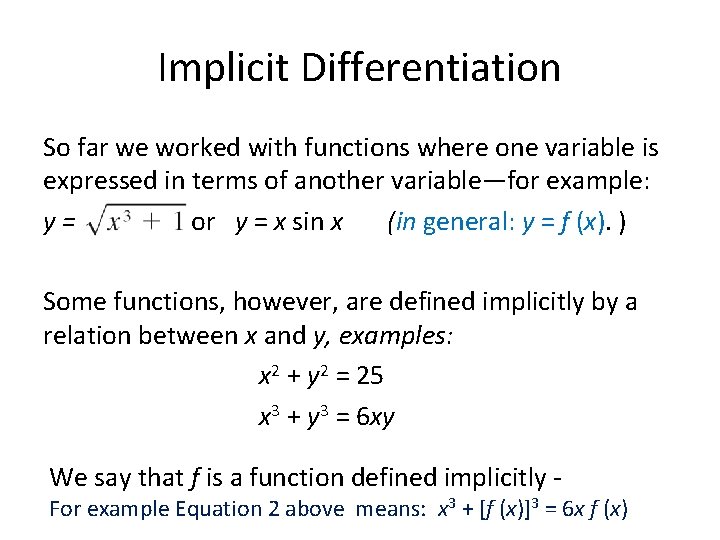
Implicit Differentiation So far we worked with functions where one variable is expressed in terms of another variable—for example: y= or y = x sin x (in general: y = f (x). ) Some functions, however, are defined implicitly by a relation between x and y, examples: x 2 + y 2 = 25 x 3 + y 3 = 6 xy We say that f is a function defined implicitly - For example Equation 2 above means: x 3 + [f (x)]3 = 6 x f (x)
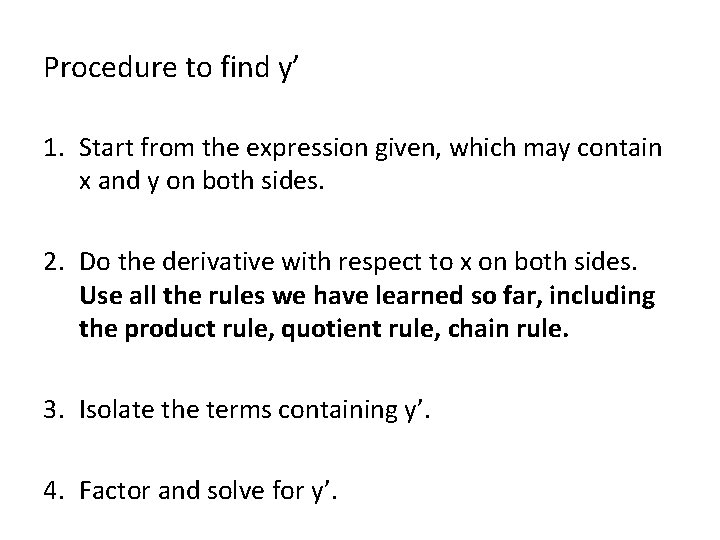
Procedure to find y’ 1. Start from the expression given, which may contain x and y on both sides. 2. Do the derivative with respect to x on both sides. Use all the rules we have learned so far, including the product rule, quotient rule, chain rule. 3. Isolate the terms containing y’. 4. Factor and solve for y’.
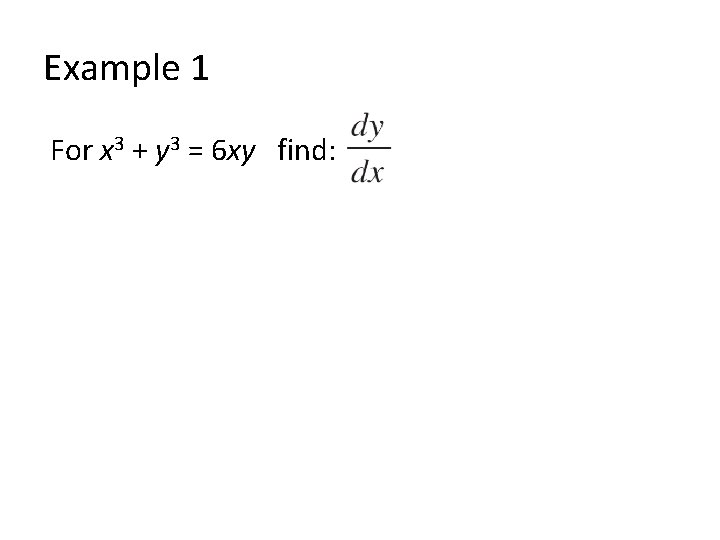
Example 1 For x 3 + y 3 = 6 xy find:
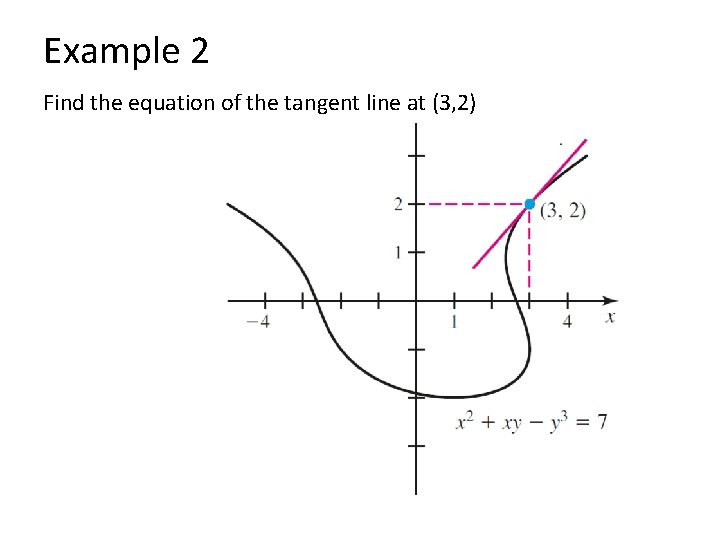
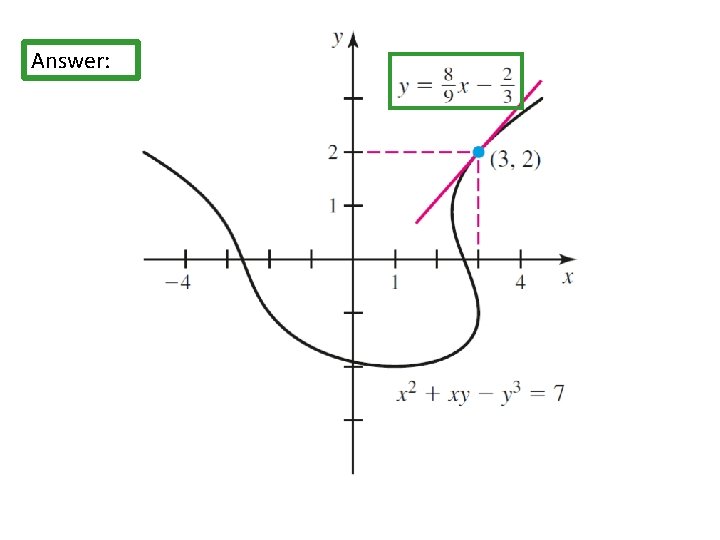
Example 2 Find the equation of the tangent line at (3, 2)
Answer:
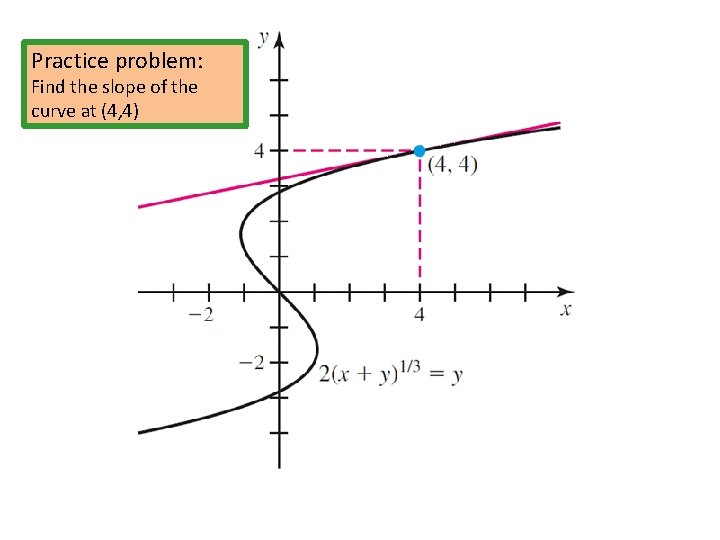
Practice problem: Find the slope of the curve at (4, 4)
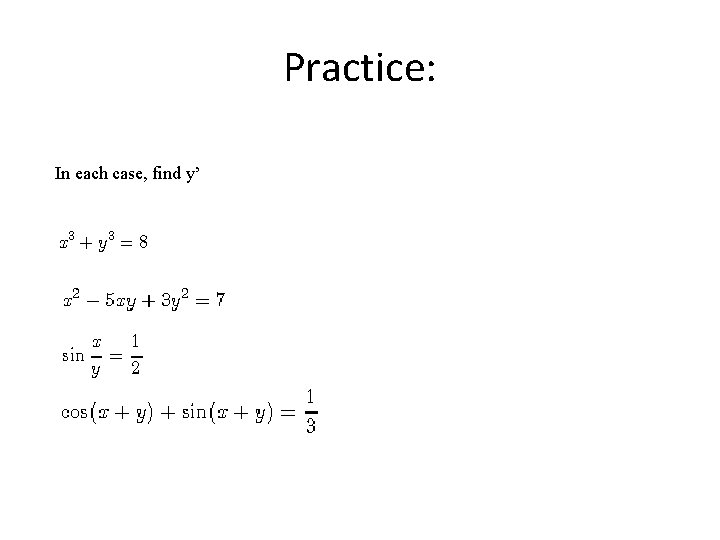
Practice: In each case, find y’