
2 5 G Cellular Systems and Architecture 1
- Slides: 17
2. 5 G Cellular Systems and Architecture 1
2. 5 G Cellular System • Introduction to GPRS and EDGE • 2. 5 G System Architecture 2
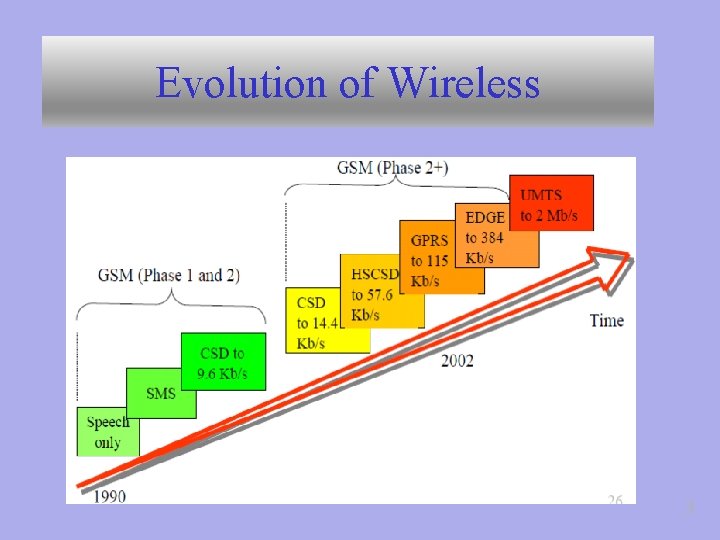
Evolution of Wireless 3
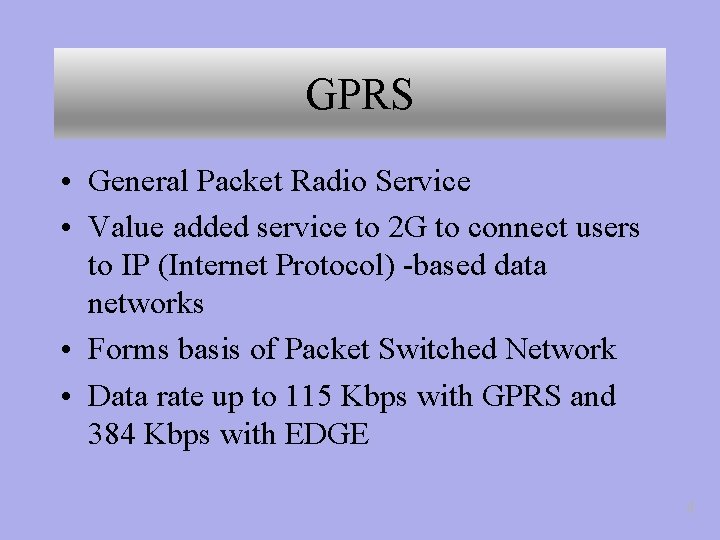
GPRS • General Packet Radio Service • Value added service to 2 G to connect users to IP (Internet Protocol) -based data networks • Forms basis of Packet Switched Network • Data rate up to 115 Kbps with GPRS and 384 Kbps with EDGE 4
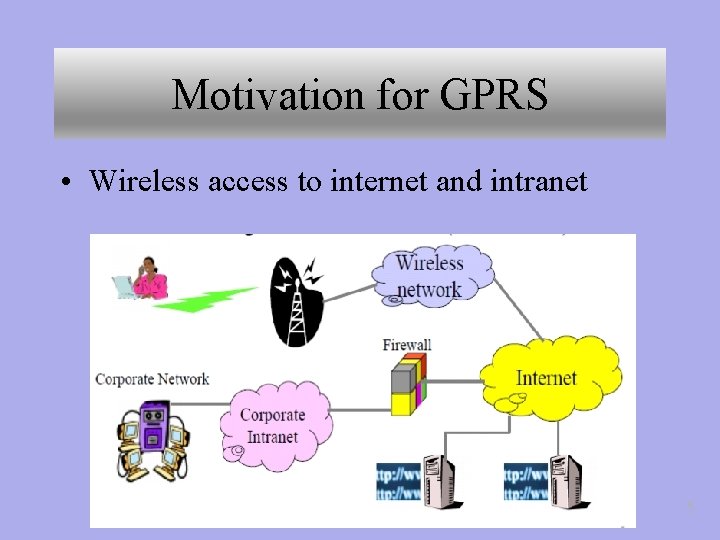
Motivation for GPRS • Wireless access to internet and intranet 5
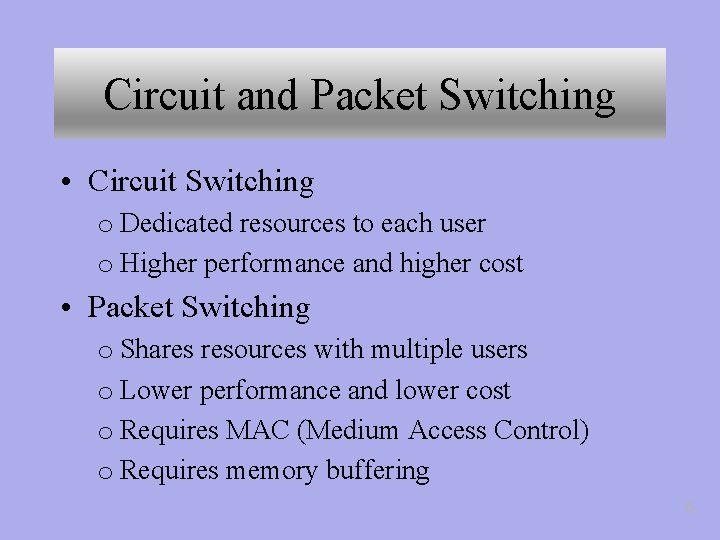
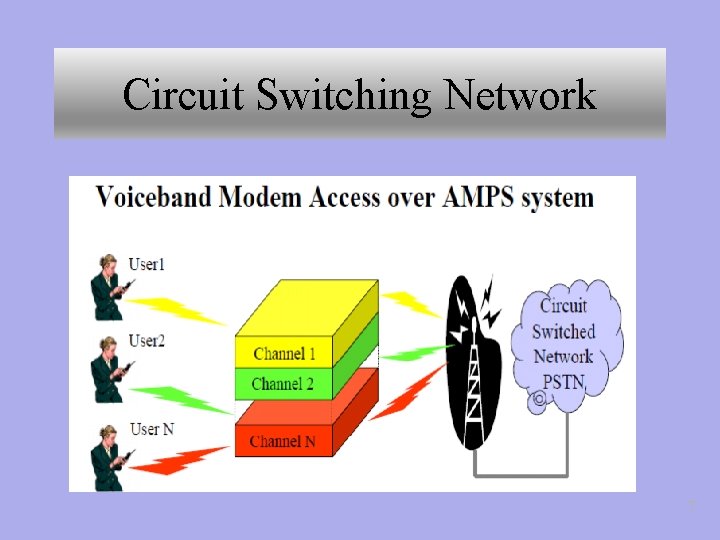
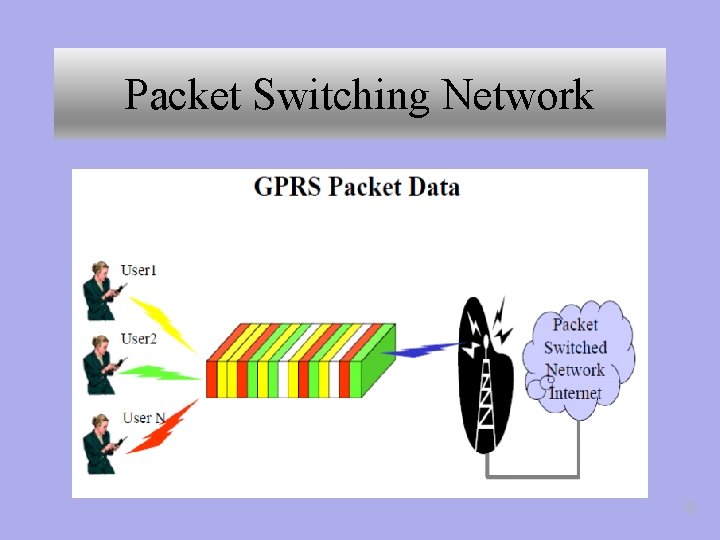
Circuit and Packet Switching • Circuit Switching o Dedicated resources to each user o Higher performance and higher cost • Packet Switching o Shares resources with multiple users o Lower performance and lower cost o Requires MAC (Medium Access Control) o Requires memory buffering 6
Circuit Switching Network 7
Packet Switching Network 8
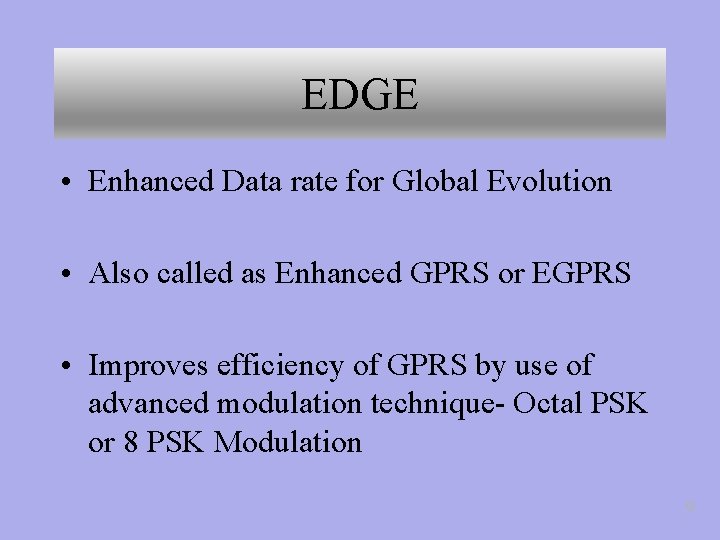
EDGE • Enhanced Data rate for Global Evolution • Also called as Enhanced GPRS or EGPRS • Improves efficiency of GPRS by use of advanced modulation technique- Octal PSK or 8 PSK Modulation 9
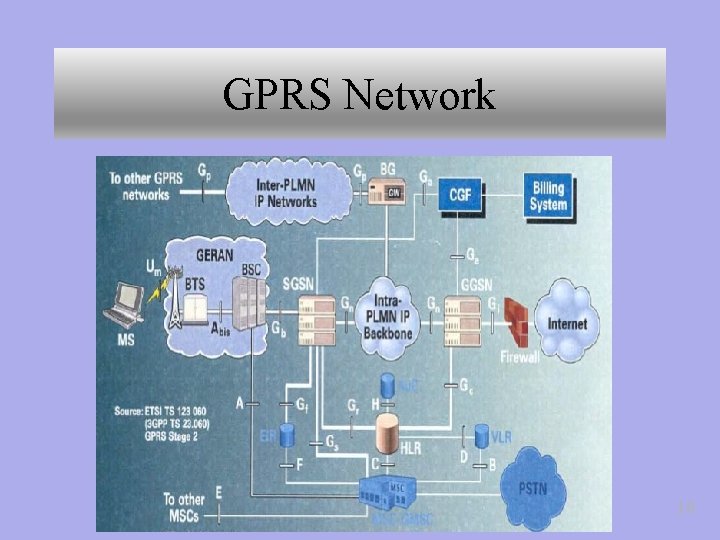
GPRS Network 10
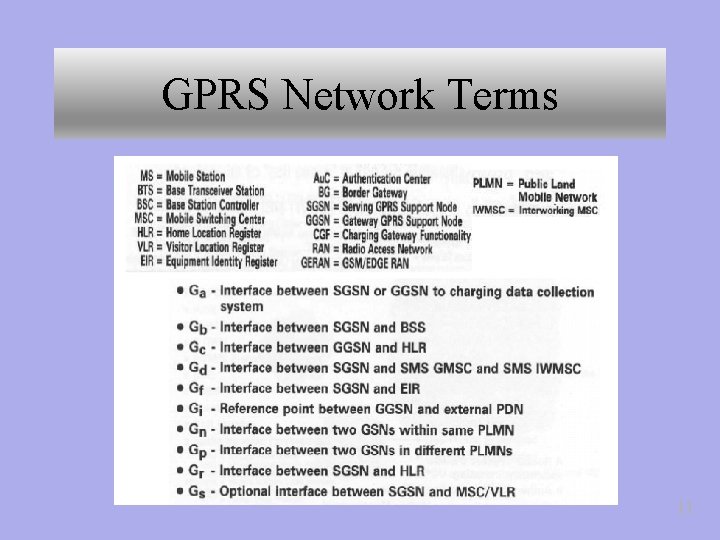
GPRS Network Terms 11
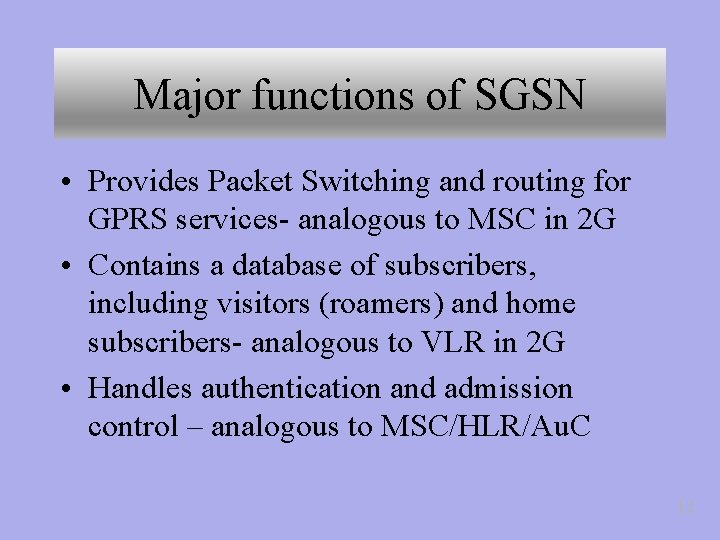
Major functions of SGSN • Provides Packet Switching and routing for GPRS services- analogous to MSC in 2 G • Contains a database of subscribers, including visitors (roamers) and home subscribers- analogous to VLR in 2 G • Handles authentication and admission control – analogous to MSC/HLR/Au. C 12
Major functions of GGSN • Provides Packet Switching and Routing for GPRS services • Provides interface to external Public Data Networks (PDNs) e. g. the Internet • First point of contact for packet session originating outside the PLMN 13
Major functions of GERAN • Handles admission control • Handles radio resource management • Performs packet relay and routing functions 14
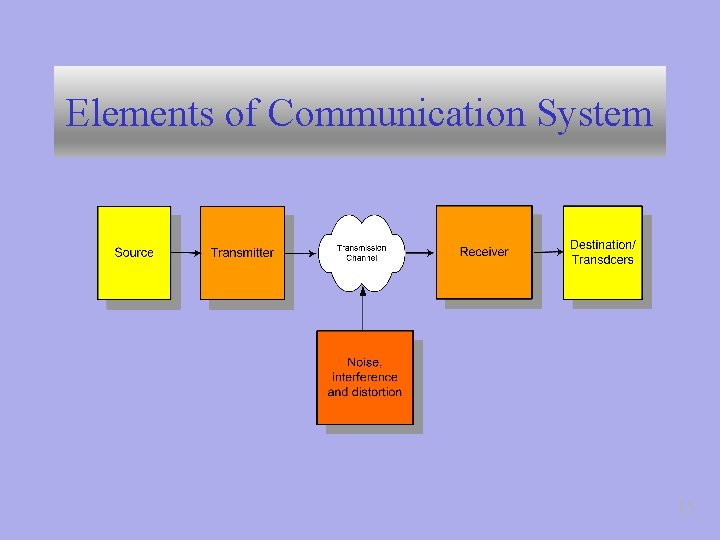
Elements of Communication System 15
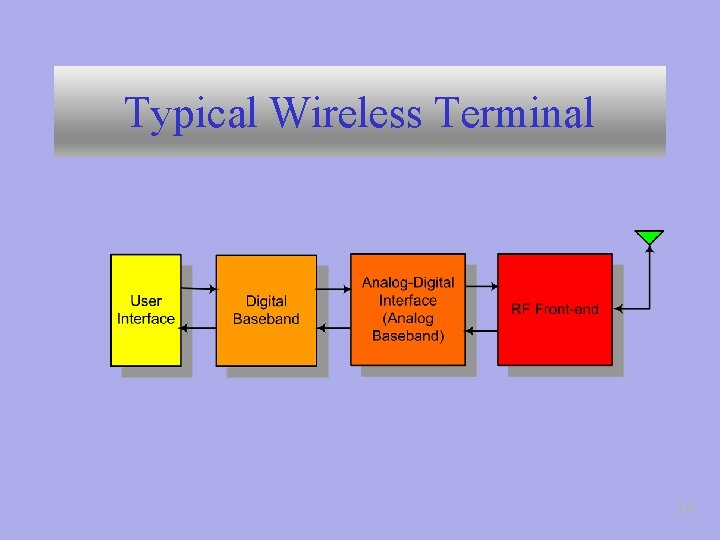
Typical Wireless Terminal 16
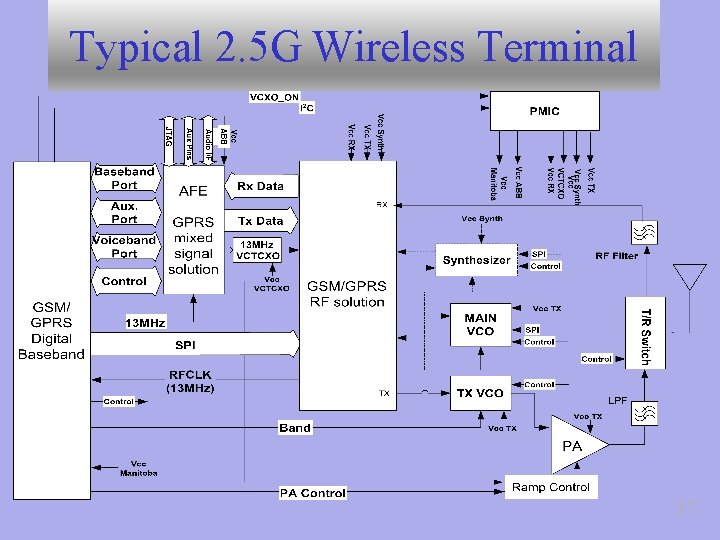
Typical 2. 5 G Wireless Terminal 17