
2 5 Determinants Multiplicative Inverses of Matrices DETERMINANT

- Slides: 20
2. 5 - Determinants & Multiplicative Inverses of Matrices
DETERMINANT a real number representation of a square matrix. The determinant of is a number denoted as or det a matrix with a nonzero determinant is called nonsingular
Second-Order Determinant The value of det is ad - cb. or
Examples 1. Find the value of 2. Find the value of 0(-6) - 8(-2) = 16 8(6) - 7(4) = 20
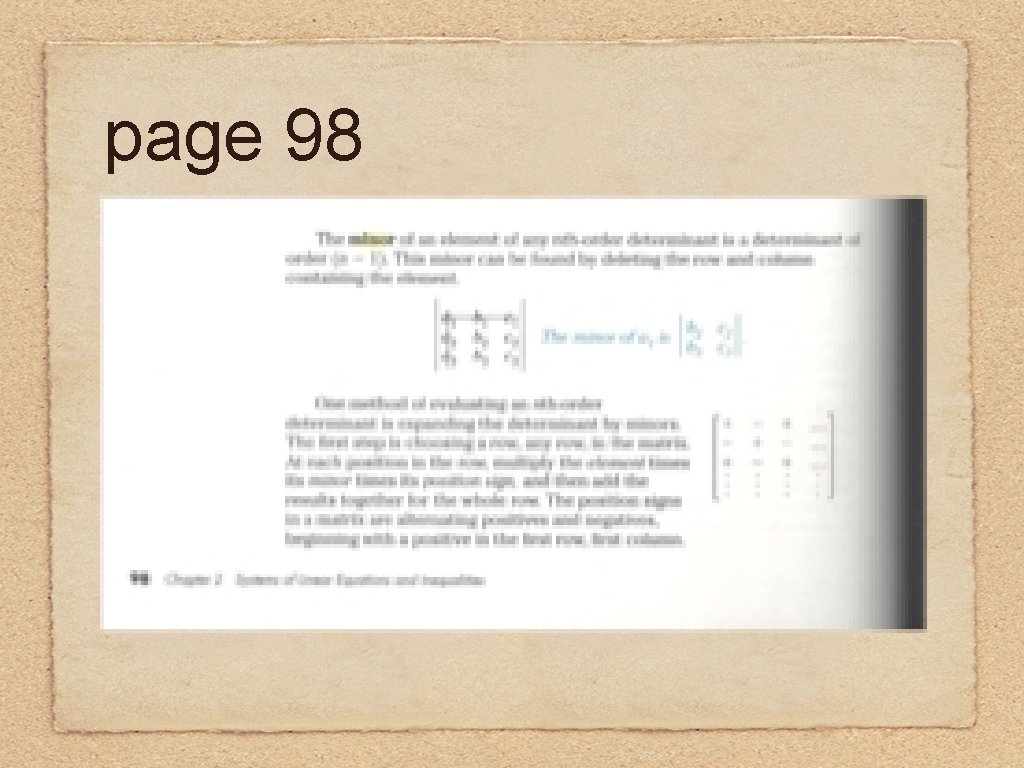
page 98
Third-Order Determinant
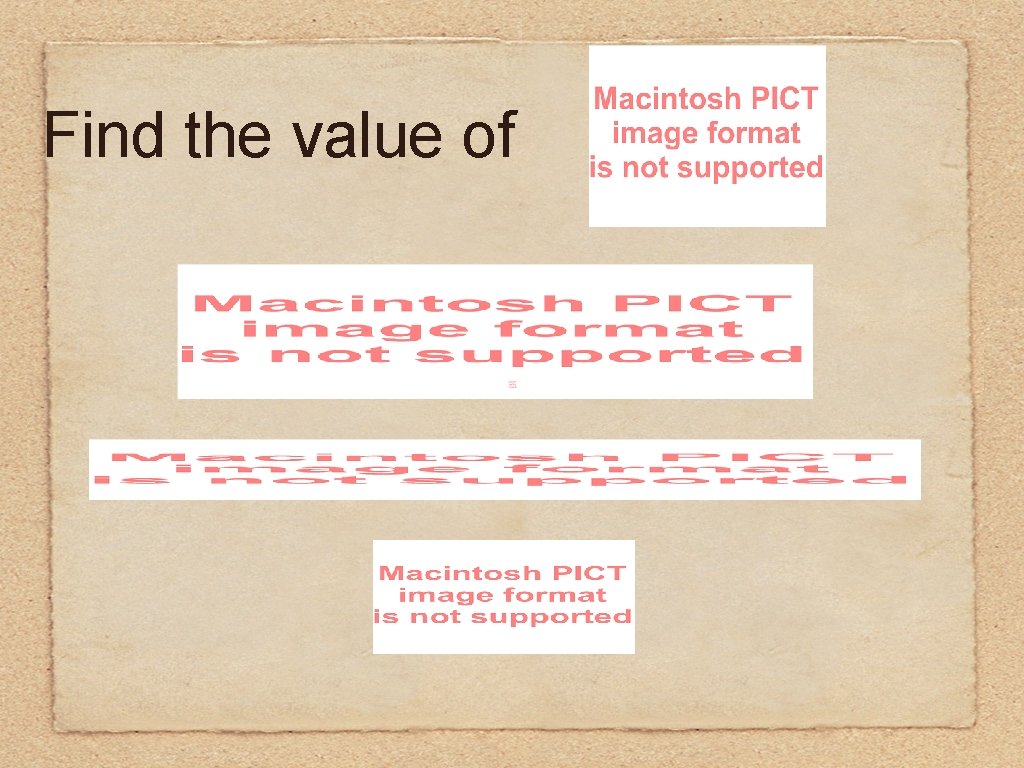
Find the value of
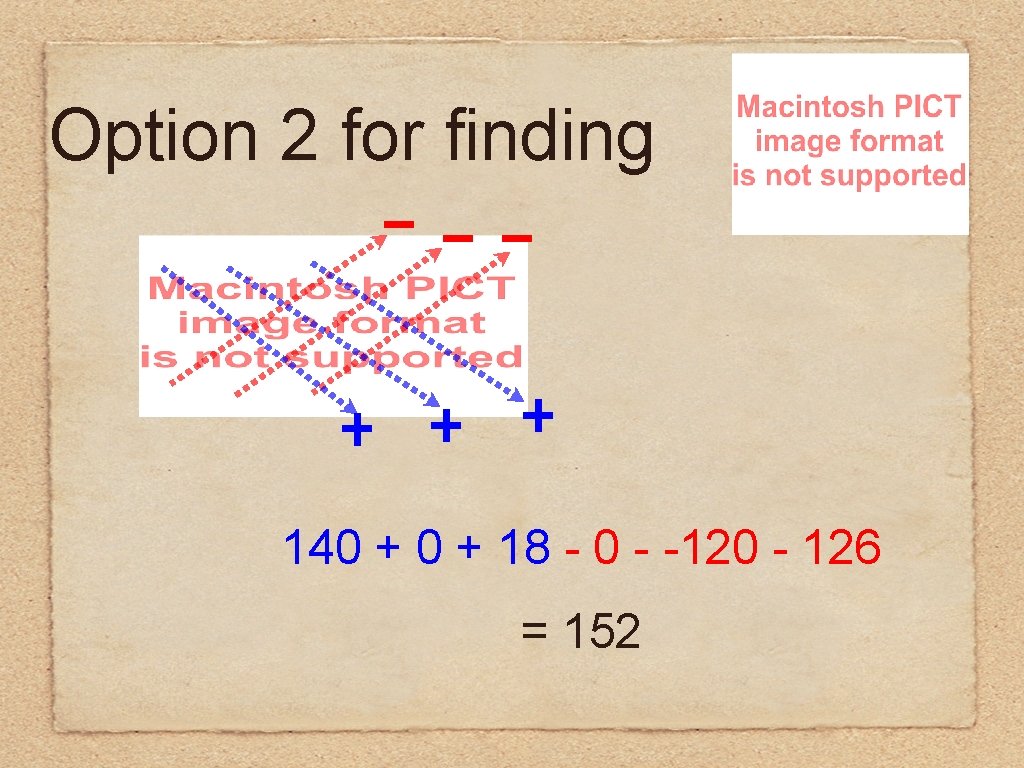
Option 2 for finding 140 + 18 - 0 - -120 - 126 = 152
The Identity Matrix a square matrix whose elements in the main diagonal, from upper left to lower right, are 1 s, while all other elements are 0 s.
Inverse Matrix the product of a matrix and it’s inverse produces the identity matrix only for square matrices The inverse of matrix A would be -1 denoted as A
Inverse of a Second-Order Matrix First, the matrix must be nonsingular! Then, if the matrix is nonsingular, an inverse exists. If the det. A = 0, then it is singular and no inverse exists.
Inverse of a Second-Order Matrix If A = and then A-1 = ,
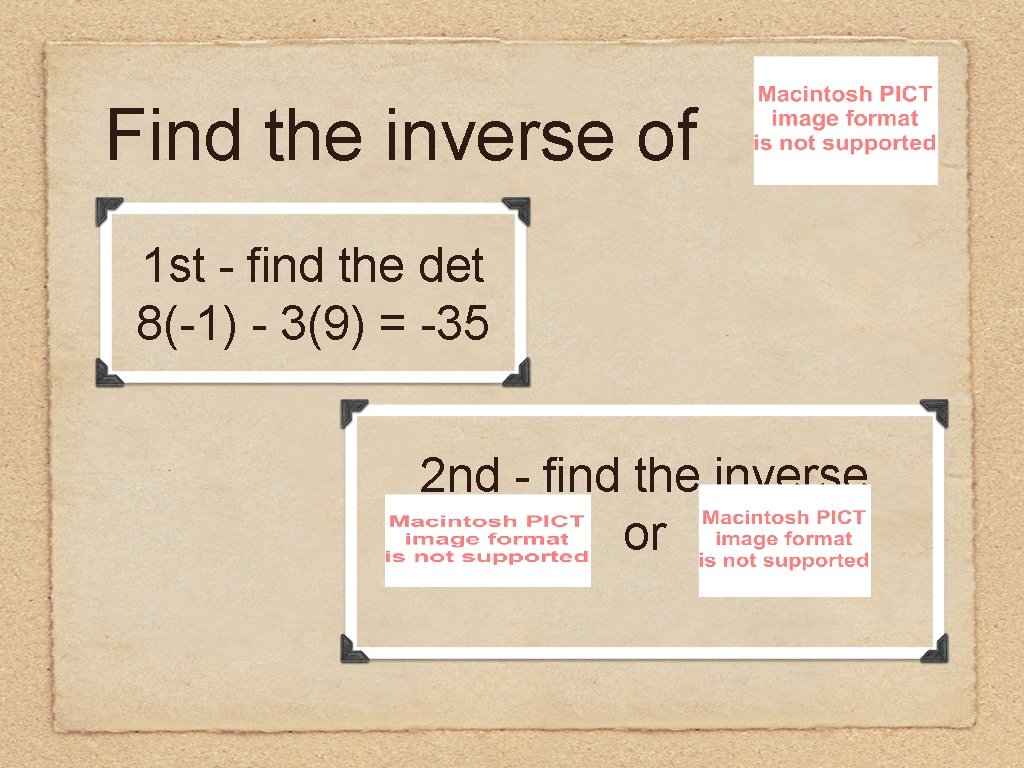
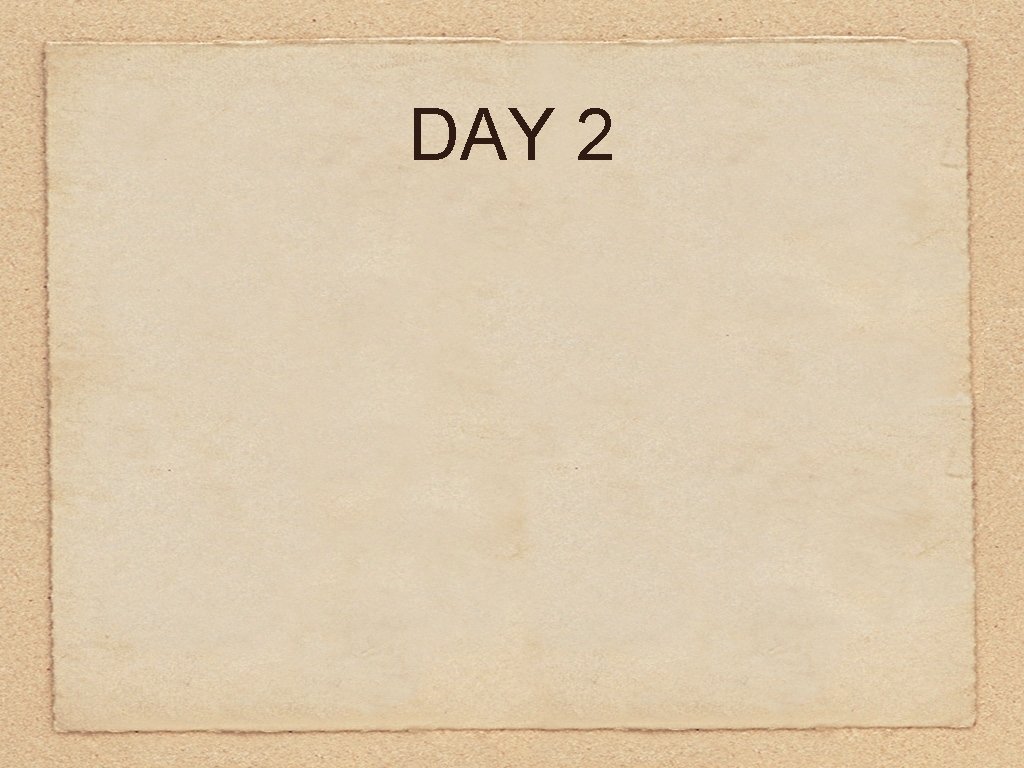
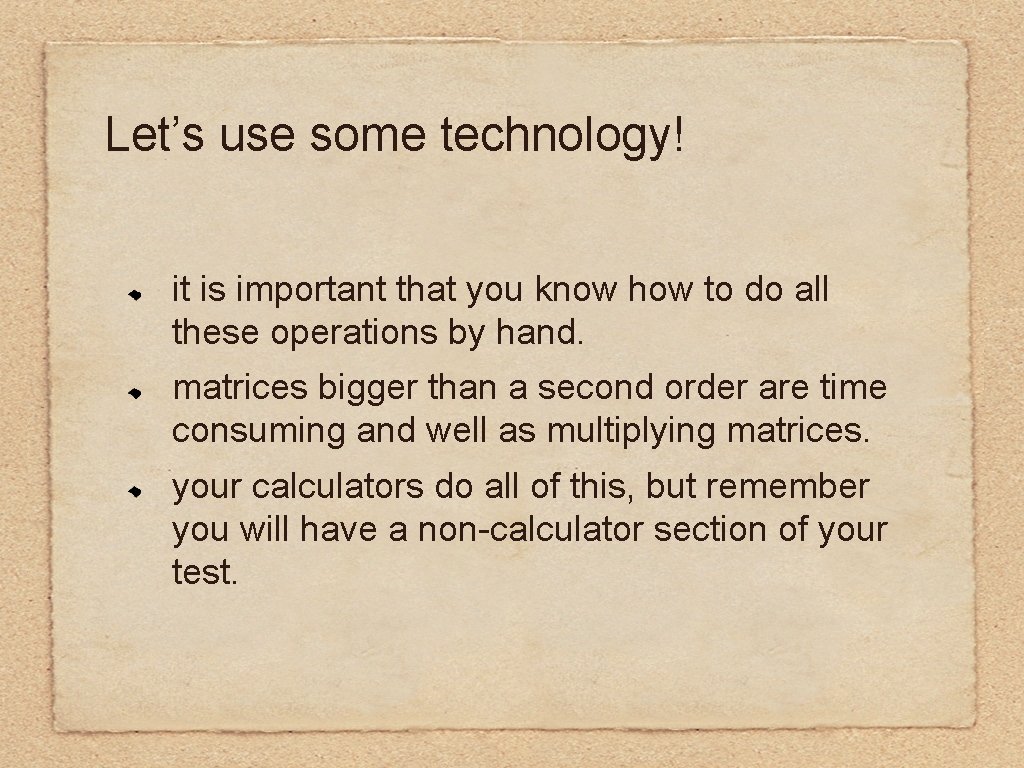
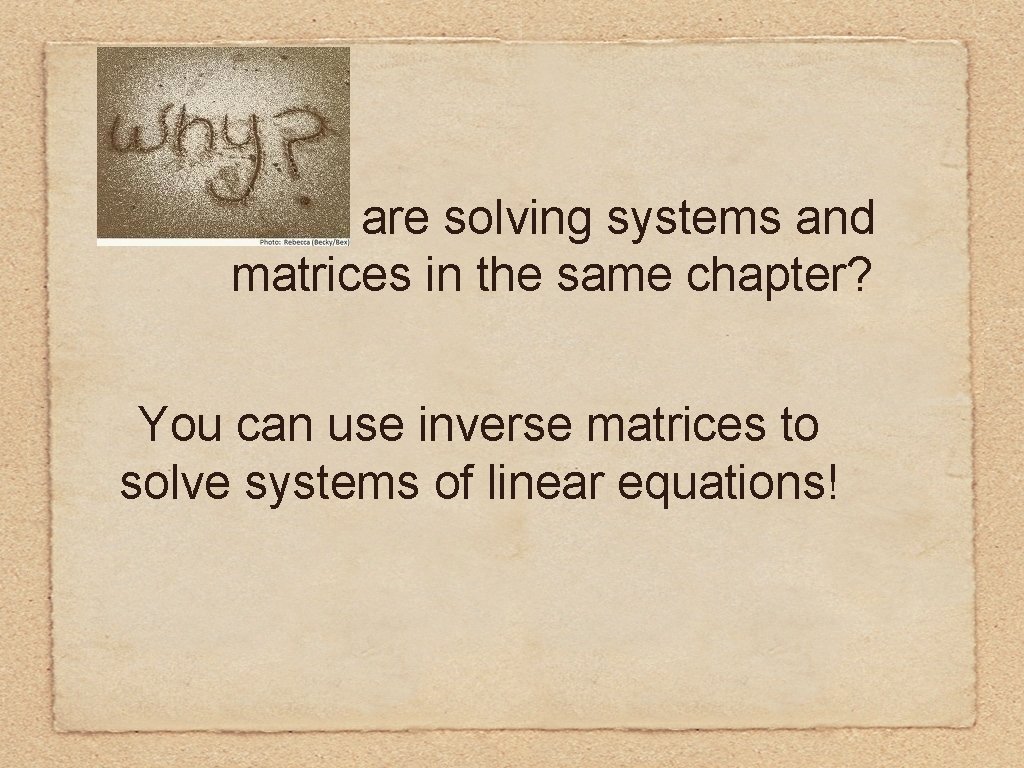
Find the inverse of 1 st - find the det 8(-1) - 3(9) = -35 2 nd - find the inverse or
DAY 2
Let’s use some technology! it is important that you know how to do all these operations by hand. matrices bigger than a second order are time consuming and well as multiplying matrices. your calculators do all of this, but remember you will have a non-calculator section of your test.
are solving systems and matrices in the same chapter? You can use inverse matrices to solve systems of linear equations!
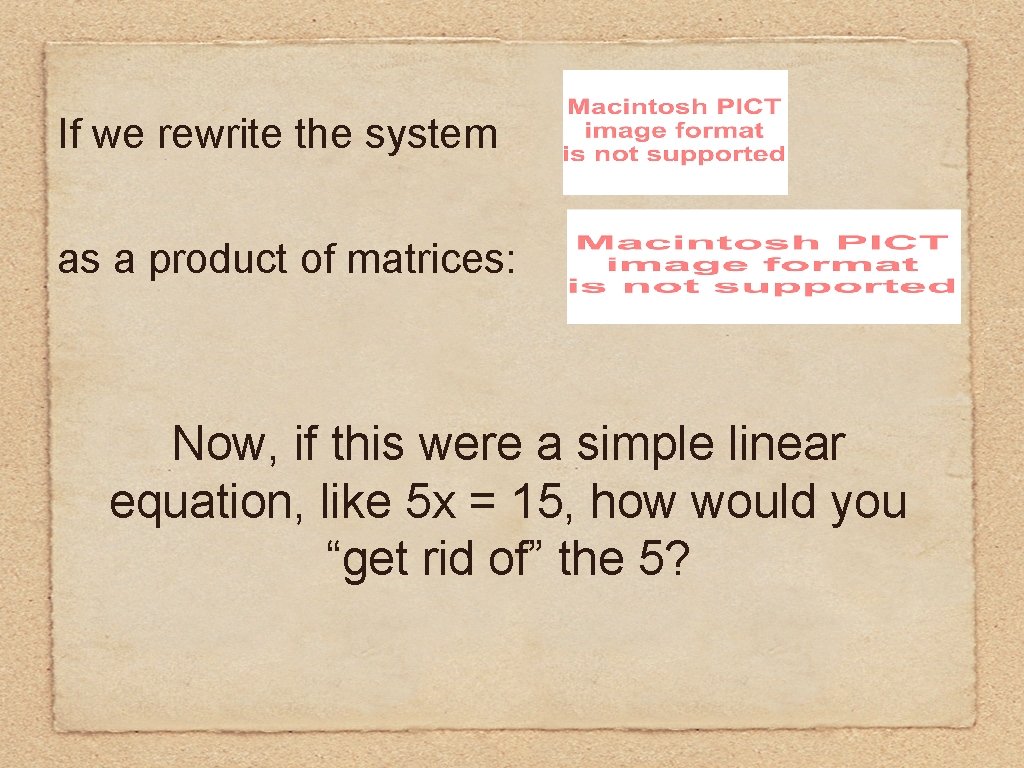
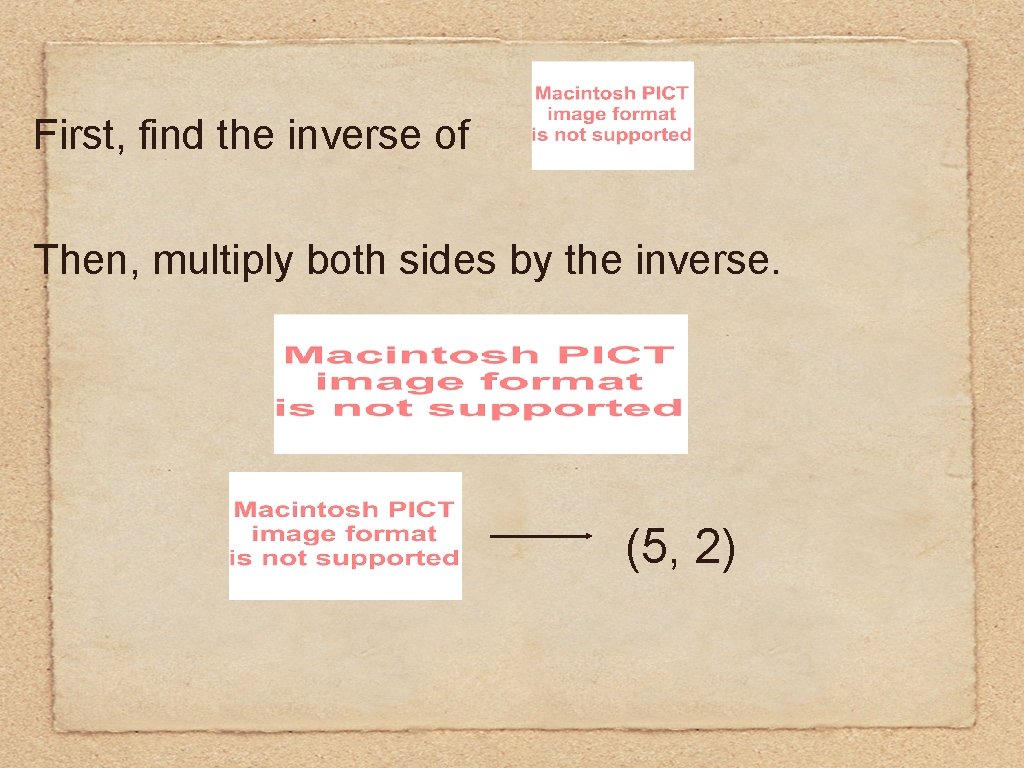
If we rewrite the system as a product of matrices: Now, if this were a simple linear equation, like 5 x = 15, how would you “get rid of” the 5?
First, find the inverse of Then, multiply both sides by the inverse. (5, 2)
Use inverse matrices to solve