
2 5 1 Organisational Structures Worksheet From Edexcel







- Slides: 62
2. 5. 1. Organisational Structures
Worksheet
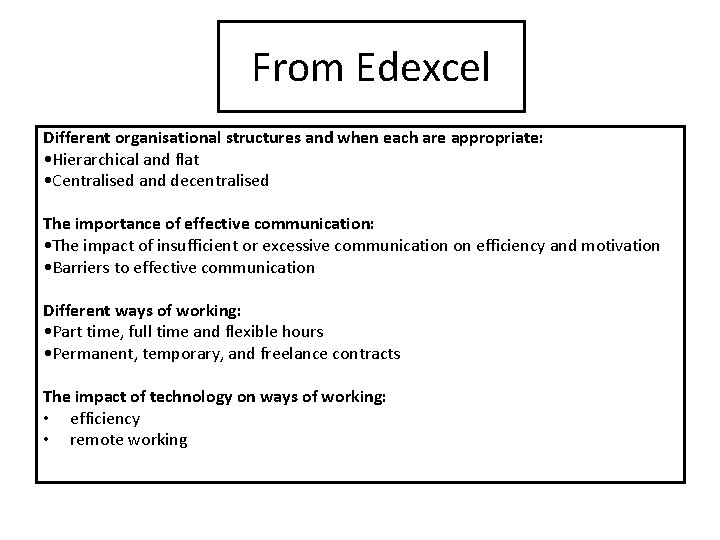
From Edexcel Different organisational structures and when each are appropriate: • Hierarchical and flat • Centralised and decentralised The importance of effective communication: • The impact of insufficient or excessive communication on efficiency and motivation • Barriers to effective communication Different ways of working: • Part time, full time and flexible hours • Permanent, temporary, and freelance contracts The impact of technology on ways of working: • efficiency • remote working
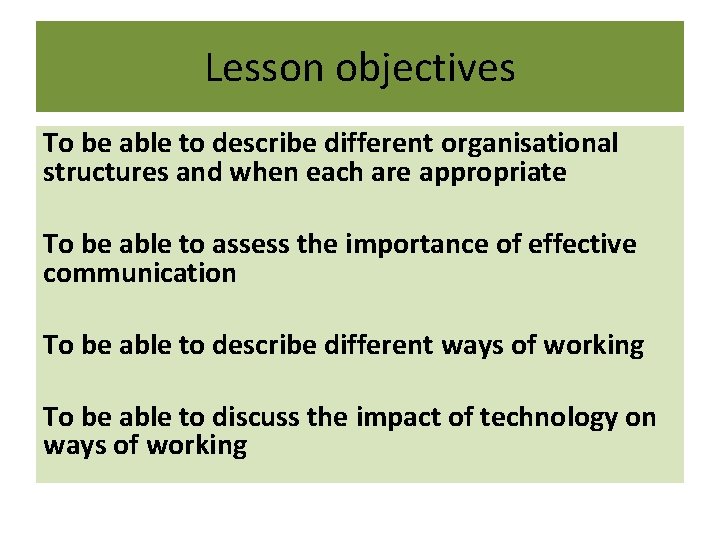
Lesson objectives To be able to describe different organisational structures and when each are appropriate To be able to assess the importance of effective communication To be able to describe different ways of working To be able to discuss the impact of technology on ways of working
Starter • Do you know someone who is terrible at communicating?
Organisational Structure Definition: • An organisational structure is the way that employees and their job roles are organised in a business • For example in a school the Head Teacher would be at the top, senior leadership team below them, then heads of department and teachers and so on • This is shown on a hierarchy diagram
Why have a structure? • All businesses have to organise what they do • A clear structure makes it easier to see which part of the business does what, and who has which job role • Makes communication easier across the company • Employees should find it easier to be aware of their roles and responsibilities
Different organisational structures when each are The impact of competition onand business decision appropriate making
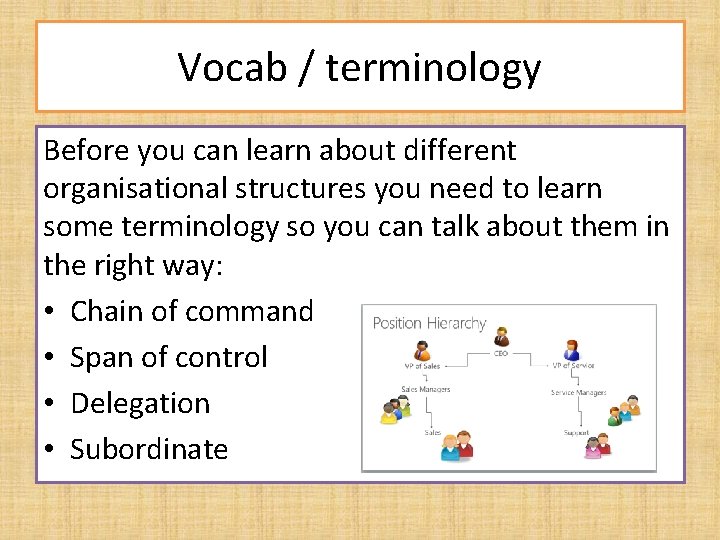
Vocab / terminology Before you can learn about different organisational structures you need to learn some terminology so you can talk about them in the right way: • Chain of command • Span of control • Delegation • Subordinate
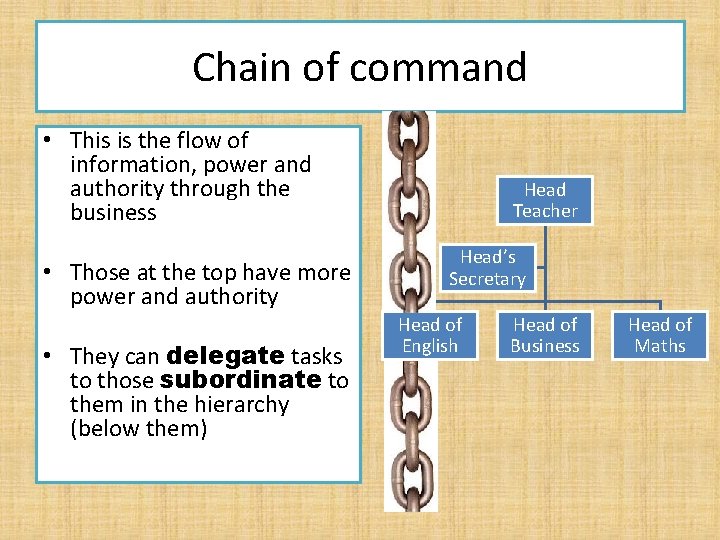
Chain of command • This is the flow of information, power and authority through the business • Those at the top have more power and authority • They can delegate tasks to those subordinate to them in the hierarchy (below them) Head Teacher Head’s Secretary Head of English Head of Business Head of Maths
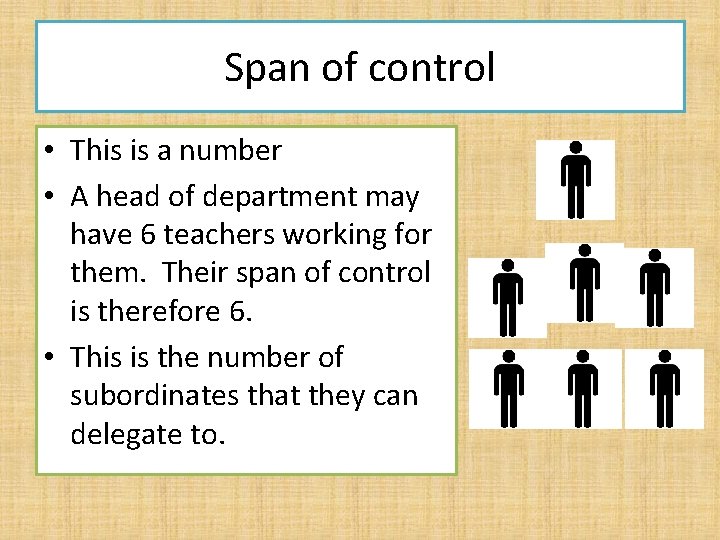
Span of control • This is a number • A head of department may have 6 teachers working for them. Their span of control is therefore 6. • This is the number of subordinates that they can delegate to.
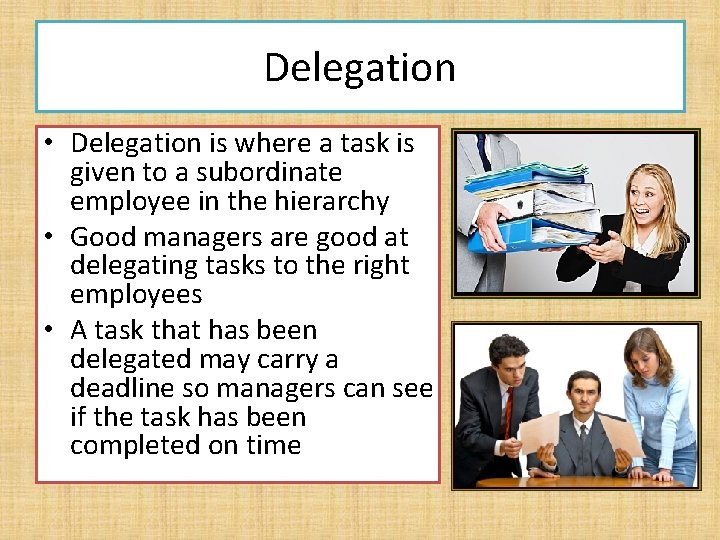
Delegation • Delegation is where a task is given to a subordinate employee in the hierarchy • Good managers are good at delegating tasks to the right employees • A task that has been delegated may carry a deadline so managers can see if the task has been completed on time
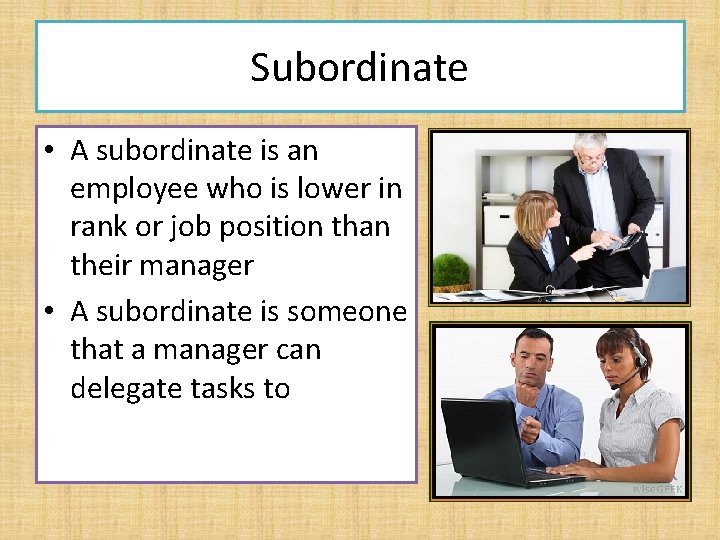
Subordinate • A subordinate is an employee who is lower in rank or job position than their manager • A subordinate is someone that a manager can delegate tasks to
HIERARCHICAL STRUCTURE
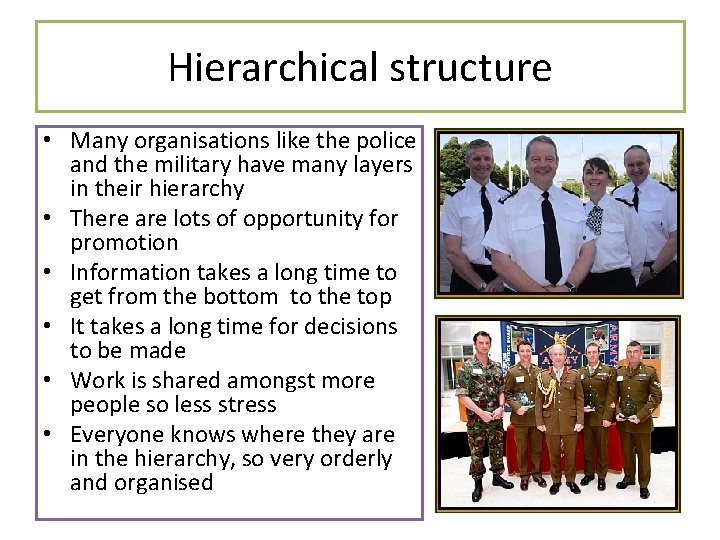
Hierarchical structure • Many organisations like the police and the military have many layers in their hierarchy • There are lots of opportunity for promotion • Information takes a long time to get from the bottom to the top • It takes a long time for decisions to be made • Work is shared amongst more people so less stress • Everyone knows where they are in the hierarchy, so very orderly and organised
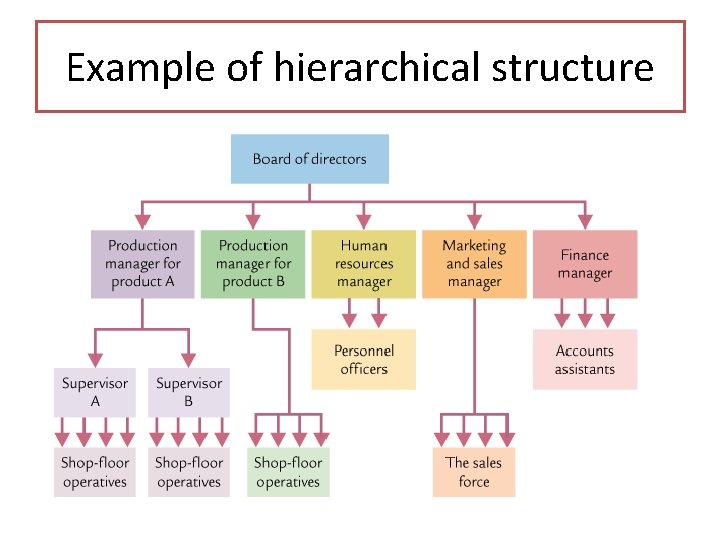
Example of hierarchical structure
Hierarchical structure Advantages Disadvantages
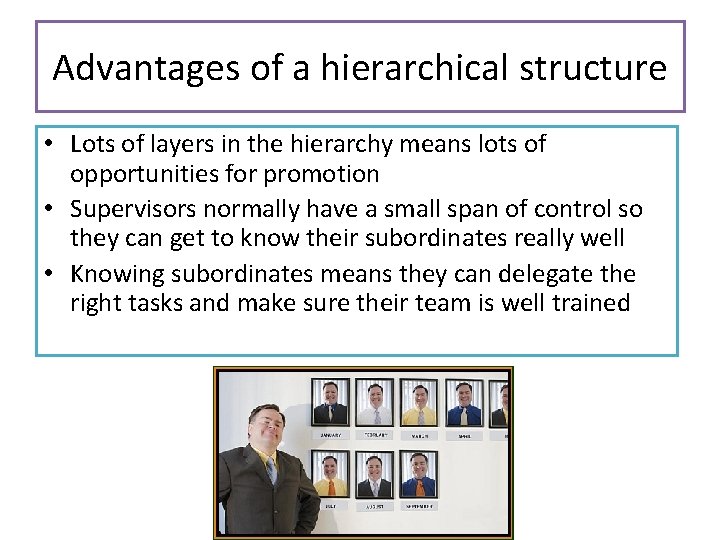
Advantages of a hierarchical structure • Lots of layers in the hierarchy means lots of opportunities for promotion • Supervisors normally have a small span of control so they can get to know their subordinates really well • Knowing subordinates means they can delegate the right tasks and make sure their team is well trained
Disadvantages of a hierarchical structure • Lots of layers and a long chain of command can mean that the business is very inflexible • It can also mean that communications within the organisation are slow • This is expensive as there are more managers and supervisors
FLAT STRUCTURE
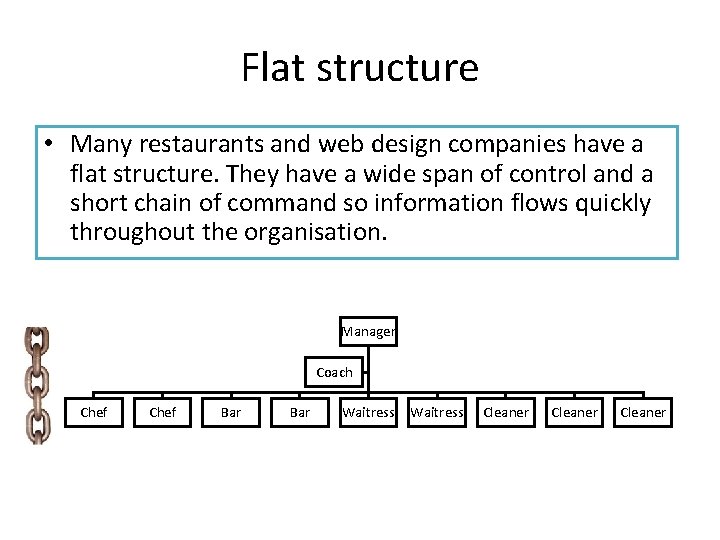
Flat structure • Many restaurants and web design companies have a flat structure. They have a wide span of control and a short chain of command so information flows quickly throughout the organisation. Manager Coach Chef Bar Waitress Cleaner
Flat structure Advantages Disadvantages
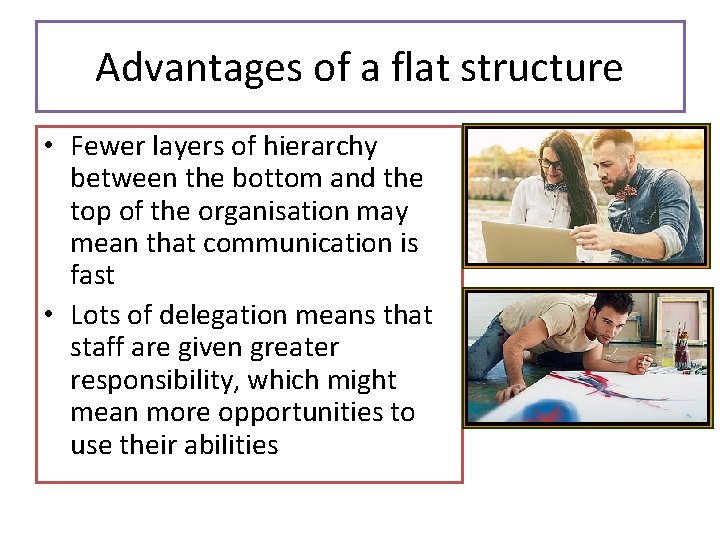
Advantages of a flat structure • Fewer layers of hierarchy between the bottom and the top of the organisation may mean that communication is fast • Lots of delegation means that staff are given greater responsibility, which might mean more opportunities to use their abilities
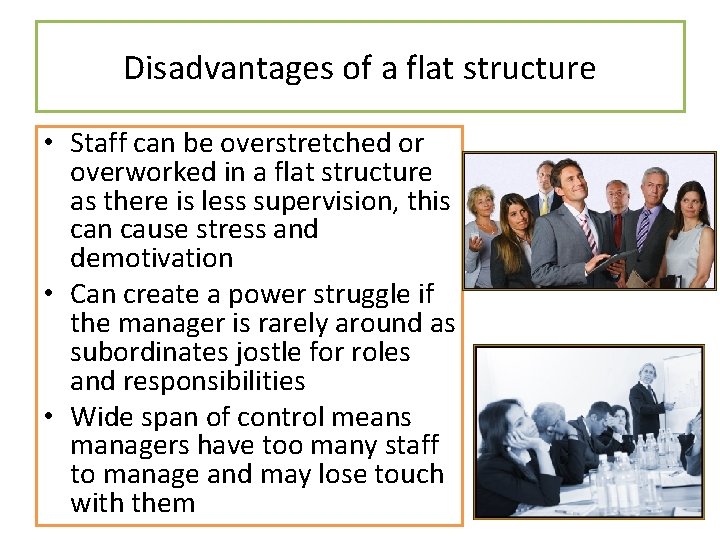
Disadvantages of a flat structure • Staff can be overstretched or overworked in a flat structure as there is less supervision, this can cause stress and demotivation • Can create a power struggle if the manager is rarely around as subordinates jostle for roles and responsibilities • Wide span of control means managers have too many staff to manage and may lose touch with them
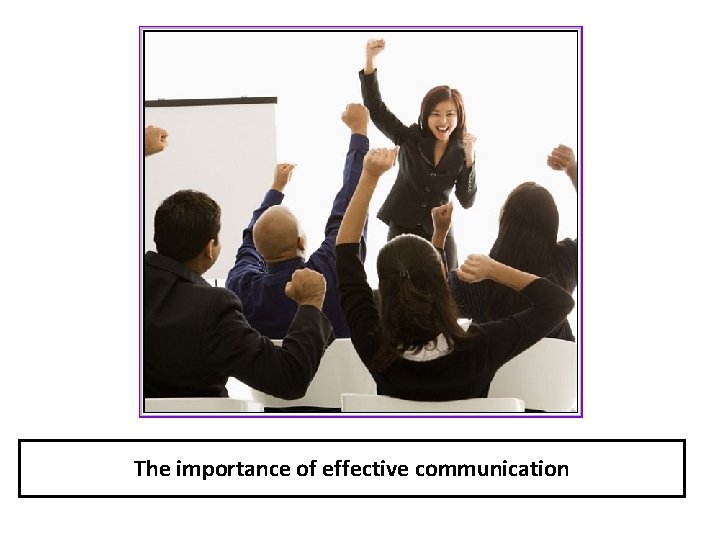
The impact of competition on business decision The importance of effective communication making
Communication in a business • How many methods can you think of that employees can communicate with each other in a business context:
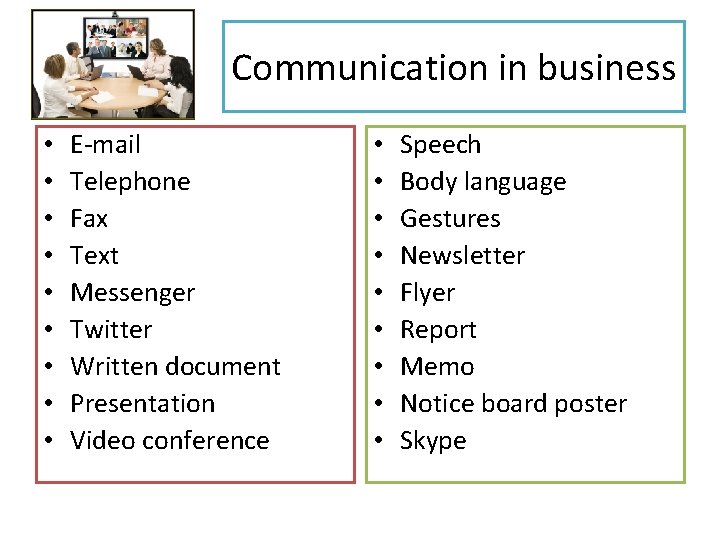
Communication in business • • • E-mail Telephone Fax Text Messenger Twitter Written document Presentation Video conference • • • Speech Body language Gestures Newsletter Flyer Report Memo Notice board poster Skype
Body language
Gestures – what do these mean?
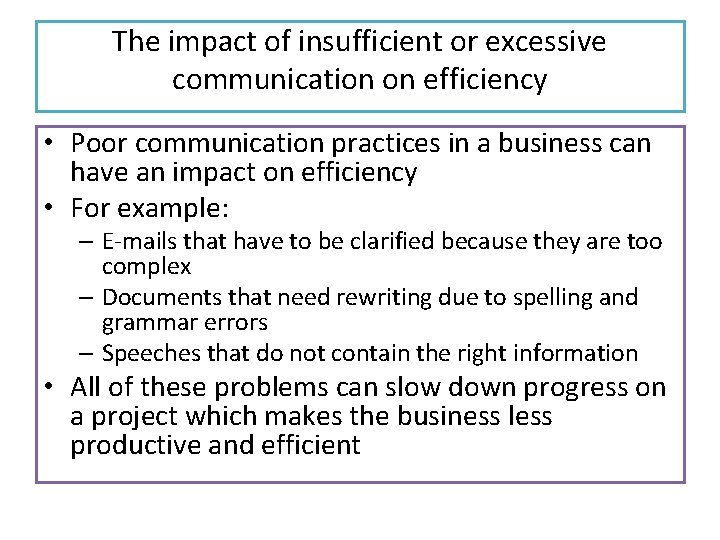
The impact of insufficient or excessive communication on efficiency • Poor communication practices in a business can have an impact on efficiency • For example: – E-mails that have to be clarified because they are too complex – Documents that need rewriting due to spelling and grammar errors – Speeches that do not contain the right information • All of these problems can slow down progress on a project which makes the business less productive and efficient
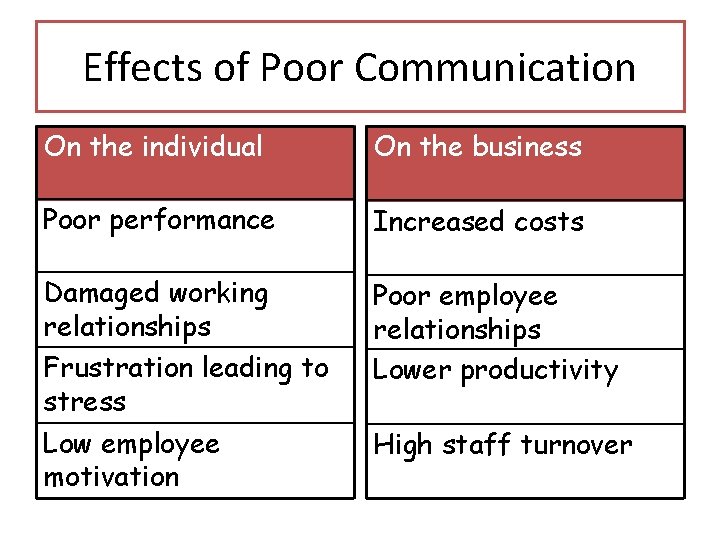
Effects of Poor Communication On the individual On the business Poor performance Increased costs Damaged working relationships Frustration leading to stress Low employee motivation Poor employee relationships Lower productivity High staff turnover
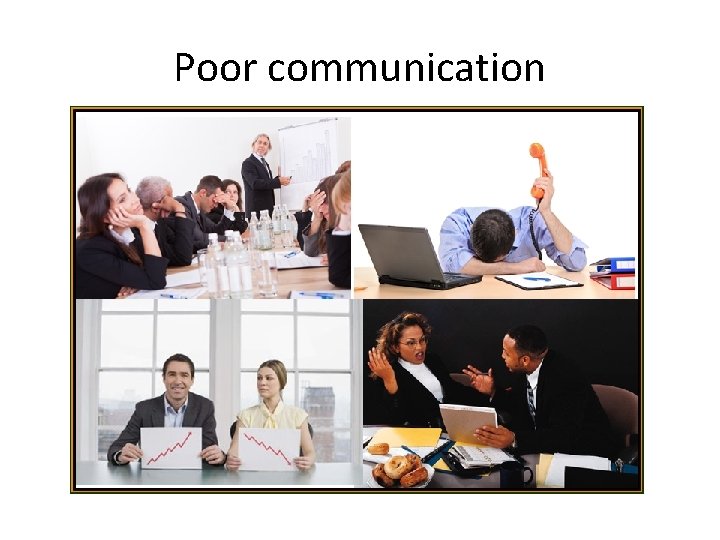
Poor communication
The impact of insufficient or excessive communication on motivation • If communication skills are poor, employees lack enthusiasm in doing their work • Poor business communication skills will also demotivate the employees because they will be forced to sit through dull and boring presentations where they are provided with unclear instructions on projects, leading to confusion and boredom
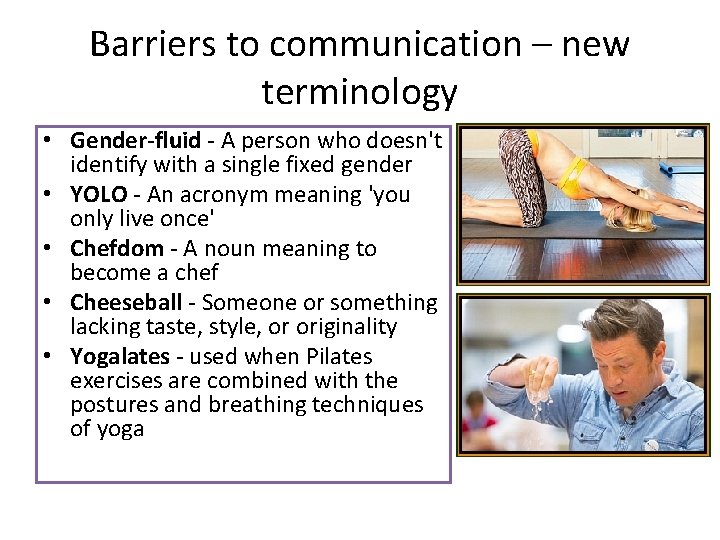
Barriers to communication – new terminology • Gender-fluid - A person who doesn't identify with a single fixed gender • YOLO - An acronym meaning 'you only live once' • Chefdom - A noun meaning to become a chef • Cheeseball - Someone or something lacking taste, style, or originality • Yogalates - used when Pilates exercises are combined with the postures and breathing techniques of yoga
Barriers to Communication Distortion Unclear or inaccurate message Noise Physical, eg traffic or bad wifi signal Differences in perception Jumping to conclusions Lack of interest Different ages, cultures, personality Information overload Bias and selectivity Lack of feedback Too much information Hearing or seeing what you expect Receiver disinterested Receive only part of message If no response, unsure if message has been received
The impact of competition on business decision Different ways of working making
Different ways of working Full time Part time Flexible Permanent Temporary Freelance
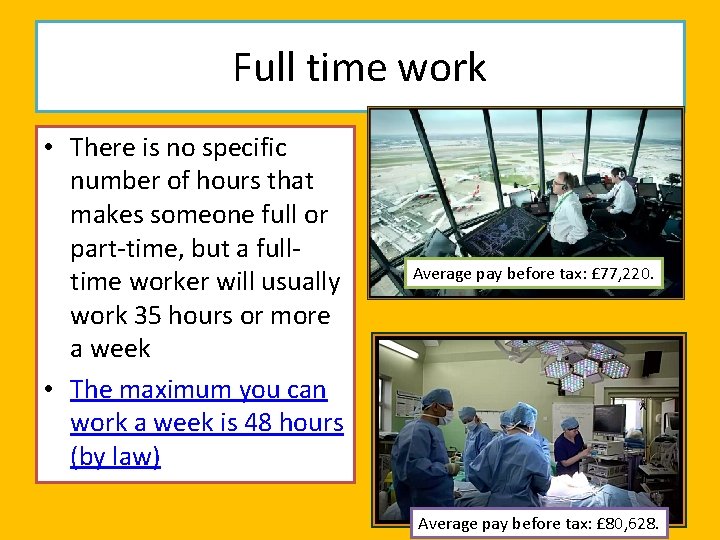
Full time work • There is no specific number of hours that makes someone full or part-time, but a fulltime worker will usually work 35 hours or more a week • The maximum you can work a week is 48 hours (by law) Average pay before tax: £ 77, 220. Average pay before tax: £ 80, 628.
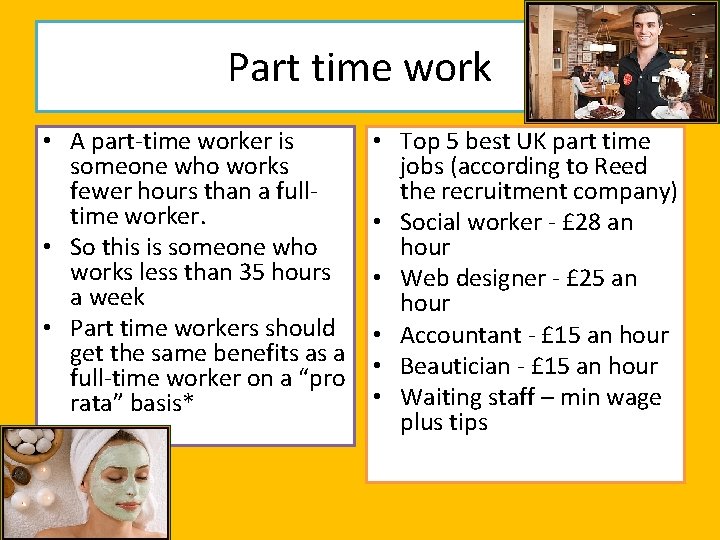
Part time work • A part-time worker is someone who works fewer hours than a fulltime worker. • So this is someone who works less than 35 hours a week • Part time workers should get the same benefits as a full-time worker on a “pro rata” basis* • Top 5 best UK part time jobs (according to Reed the recruitment company) • Social worker - £ 28 an hour • Web designer - £ 25 an hour • Accountant - £ 15 an hour • Beautician - £ 15 an hour • Waiting staff – min wage plus tips
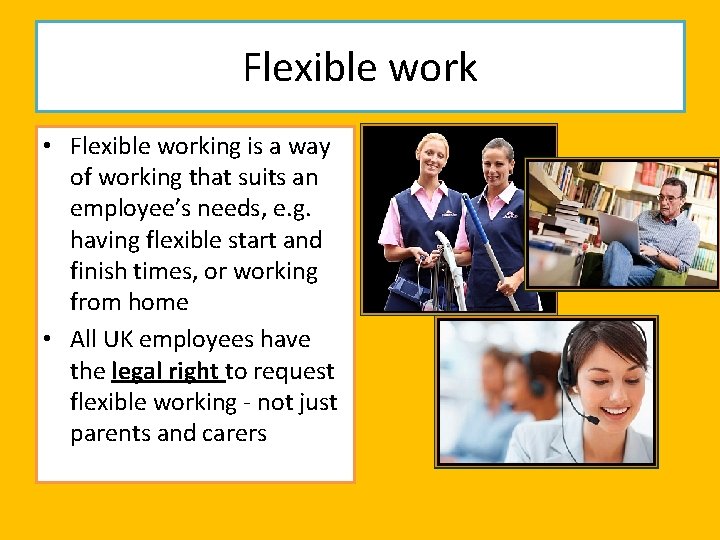
Flexible work • Flexible working is a way of working that suits an employee’s needs, e. g. having flexible start and finish times, or working from home • All UK employees have the legal right to request flexible working - not just parents and carers
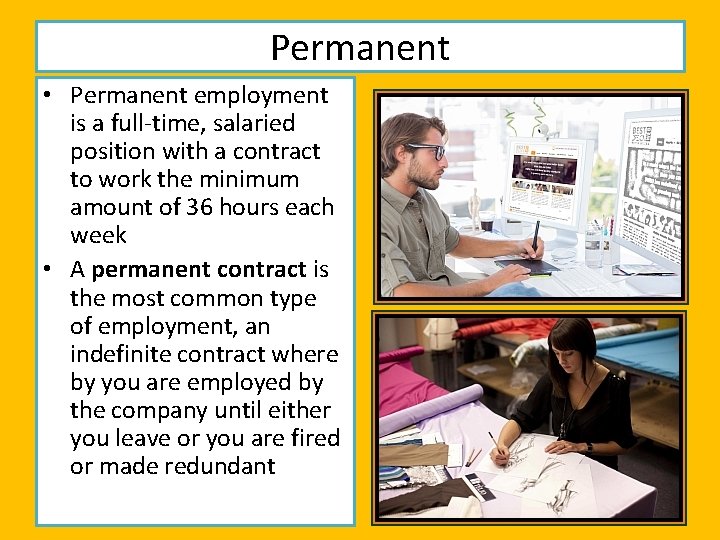
Permanent • Permanent employment is a full-time, salaried position with a contract to work the minimum amount of 36 hours each week • A permanent contract is the most common type of employment, an indefinite contract where by you are employed by the company until either you leave or you are fired or made redundant
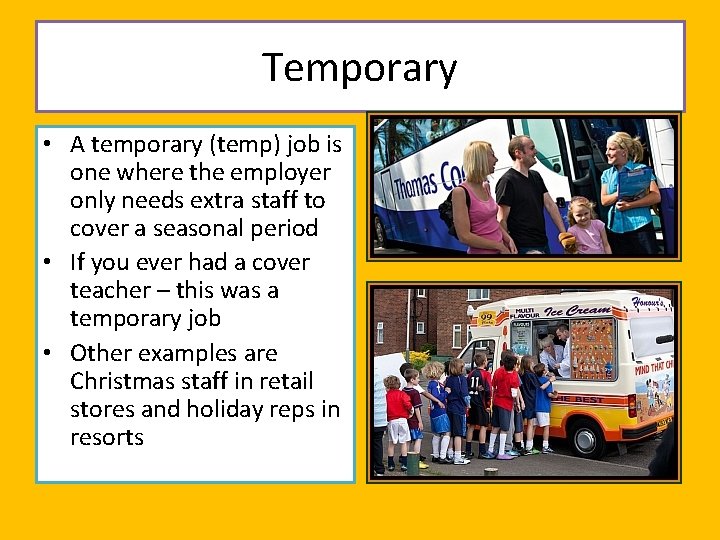
Temporary • A temporary (temp) job is one where the employer only needs extra staff to cover a seasonal period • If you ever had a cover teacher – this was a temporary job • Other examples are Christmas staff in retail stores and holiday reps in resorts
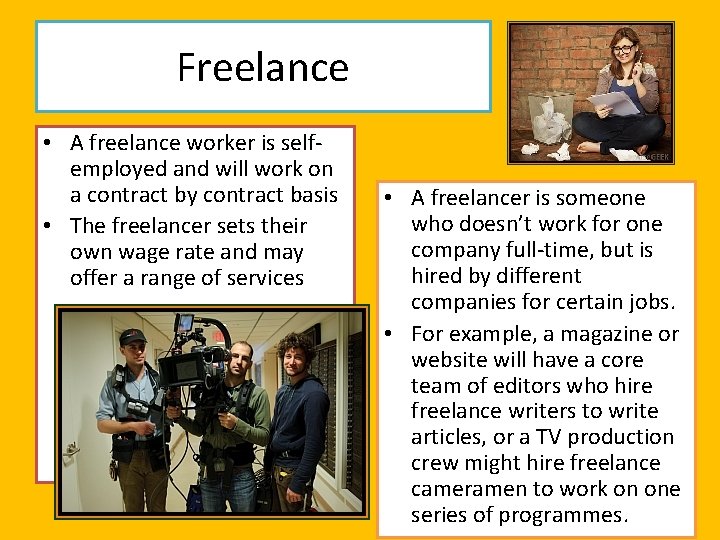
Freelance • A freelance worker is selfemployed and will work on a contract by contract basis • The freelancer sets their own wage rate and may offer a range of services • A freelancer is someone who doesn’t work for one company full-time, but is hired by different companies for certain jobs. • For example, a magazine or website will have a core team of editors who hire freelance writers to write articles, or a TV production crew might hire freelance cameramen to work on one series of programmes.
The impact of competition on business decision The impact of technology on ways of working making
Impact of technology on working efficiency q. Technology helps organise the work environment q. Everything from payroll to stock control is managed more efficiently with well-designed software in place q. Documents, such as letters are easier to write and edit on the computer q. Phone systems include technology for three-way or four-way calling, for example, to save time q. Video or audio conference calls also save plane fare and hotel costs if group calls are productive
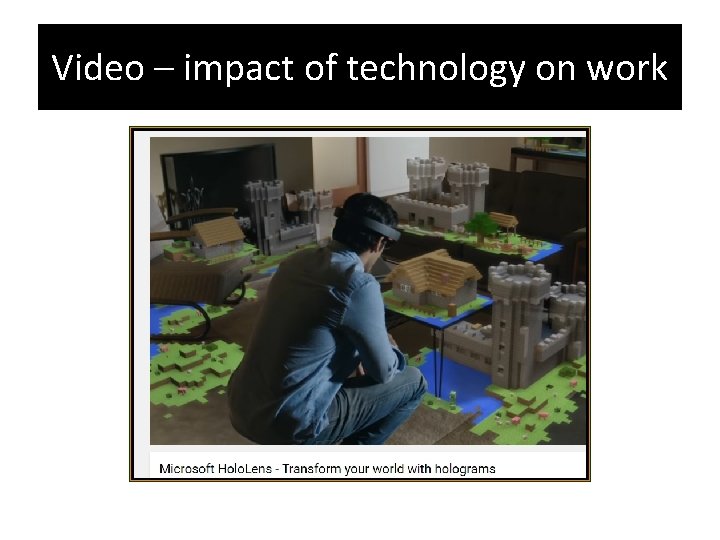
Video – impact of technology on work
Impact of technology on working – remote work • Now that there have been technological advancements in communication methods, employees from around the world can collaborate on projects.
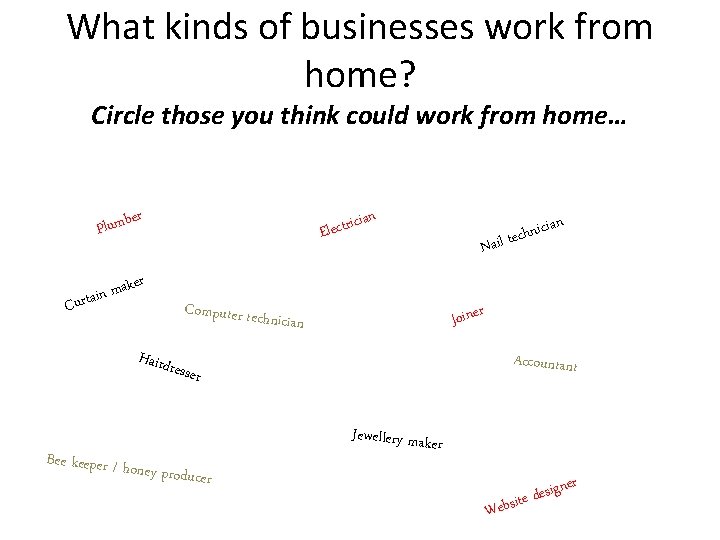
What kinds of businesses work from home? Circle those you think could work from home… er b m u l P mak n i a t Cur er n nicia h c e t Nail Computer tech Joiner nician Haird Bee keeper / h ician r t c e l E Accountant resser oney producer Jewellery make r er ign s e d e it Webs
Group discussion 1 • Draw up a list of 5 advantages you think that there are to working from home…. • 1 • 2 • 3 • 4 • 5
Advantages of working from home 1. Fit a business round a family, gives a good work-life balance 2. The owner can work hours that suit their lifestyle 3. No commute, so reduction in costs of travelling 4. No expensive premises to pay for, so a reduction in fixed costs 5. Less stress from travelling and tension with colleagues
Group discussion 2 • Draw up a list of 5 disadvantages you think that there are to working from home…. • 1 • 2 • 3 • 4 • 5
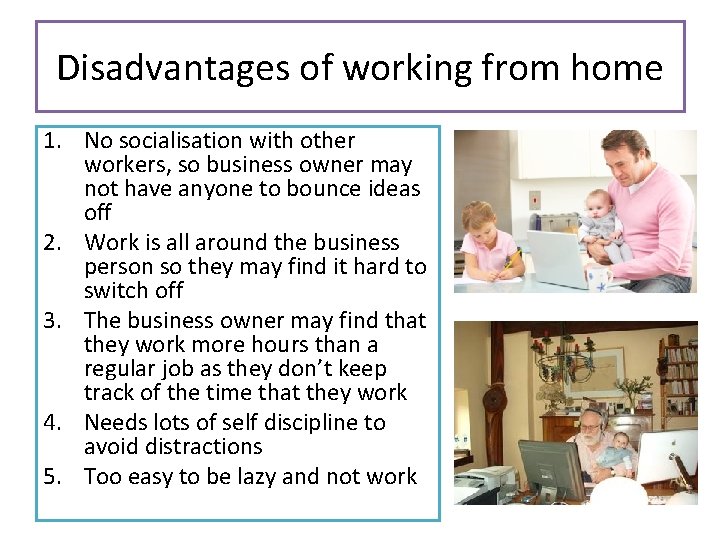
Disadvantages of working from home 1. No socialisation with other workers, so business owner may not have anyone to bounce ideas off 2. Work is all around the business person so they may find it hard to switch off 3. The business owner may find that they work more hours than a regular job as they don’t keep track of the time that they work 4. Needs lots of self discipline to avoid distractions 5. Too easy to be lazy and not work
Plenary • Who is in your chain of command? Can you draw a diagram who is at the top? Who is at the bottom? • Mother brother • Uncle sister Father aunt grandparent carer cousin partner • best friend co-worker • Form tutor class teacher class mate team mate
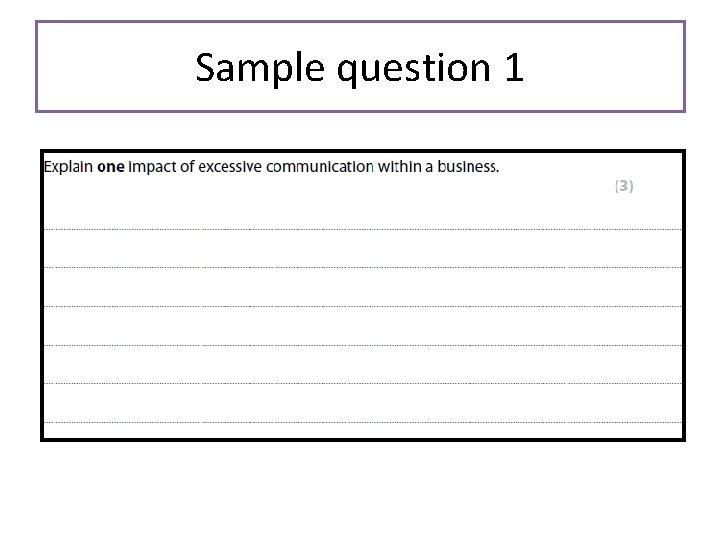
Sample question 1
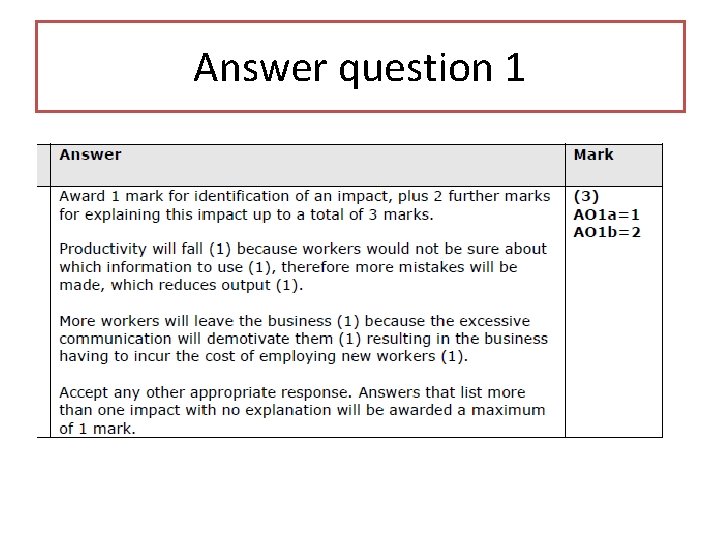
Answer question 1
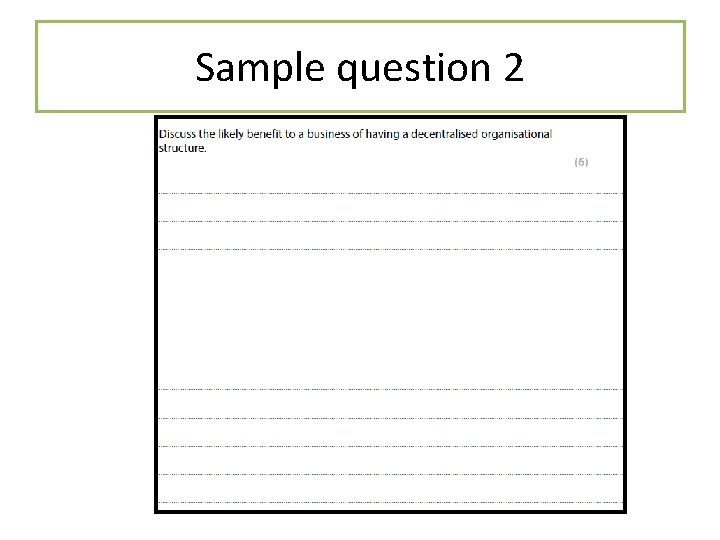
Sample question 2
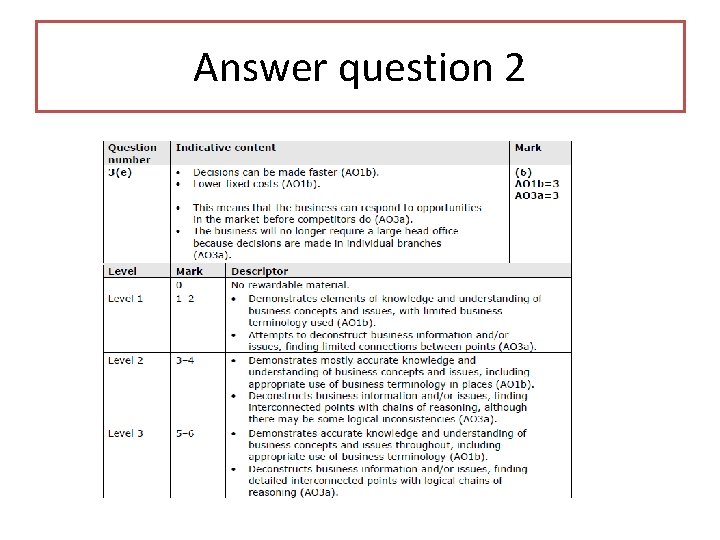
Answer question 2
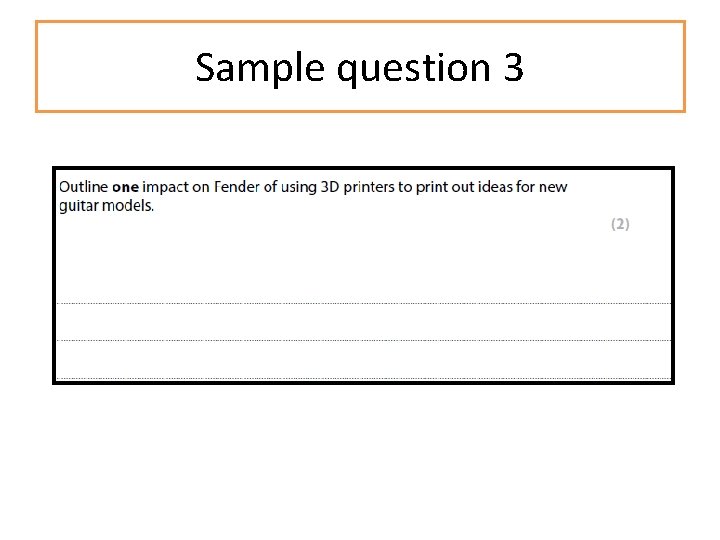
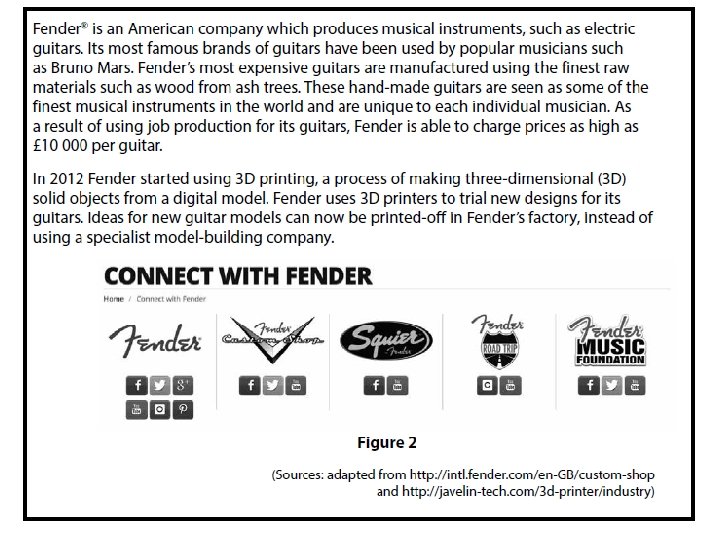
Sample question 3
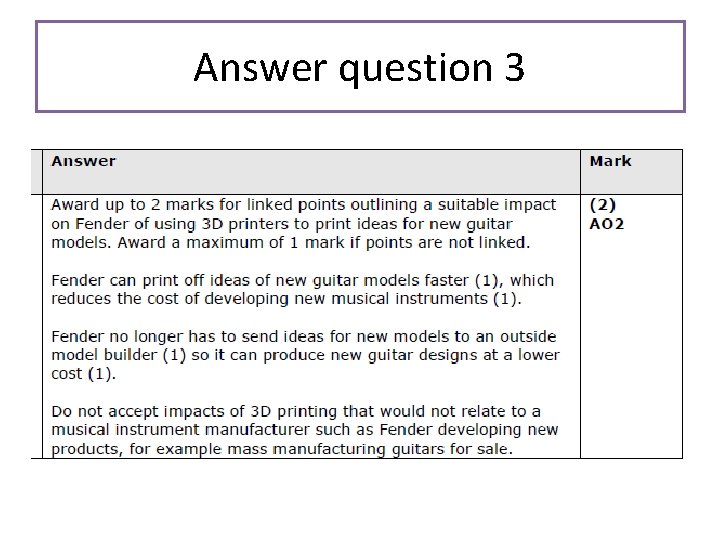
Answer question 3
Written by Sarah Hilton ©