
2 3 Explain how theories of development and


- Slides: 42
*2. 3 Explain how theories of development and frameworks to support development influence current practice.
* In pairs partner yourself A and B. Partner A must call out 15 random numbers between 0 10 and write them down. Partner B must wait 5 seconds and then try and write them down in the correct order. * (You have 5 mins to complete this activity) *
*Research shows most people can remember between 5 and nine numbers correctly in order, the most manage seven. *
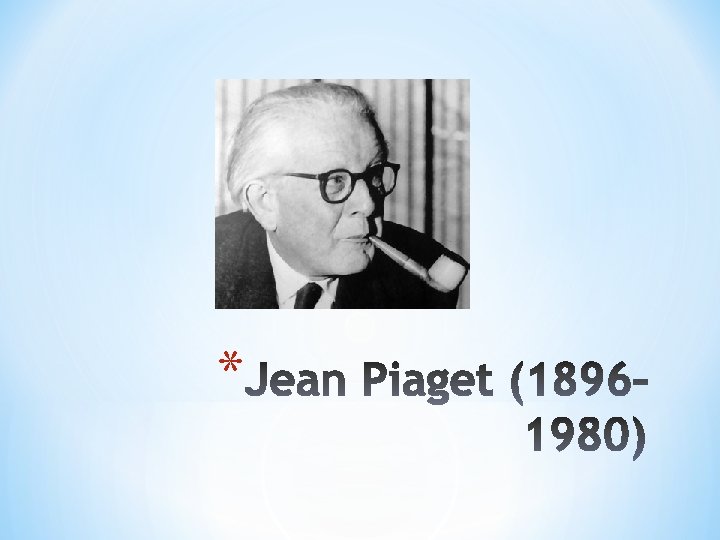
* * Swiss researcher, working from 1920 s onwards * Developed theories by watching his own three children * Believed that children were active participants in their own learning * Believed that children develop understanding through the use of schemas
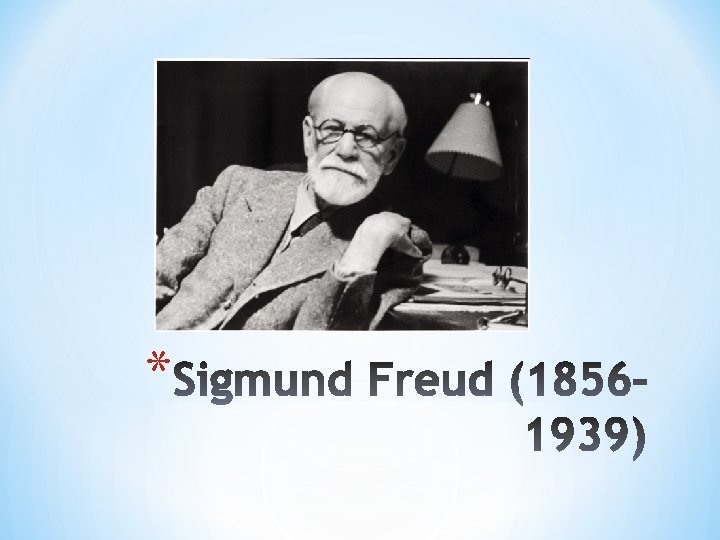
* *Believed that development occurs as you try to balance the demands of the different parts of the personality * Id: instinctive and pleasure-seeking * Superego: conscientious and moralistic * Ego: tries to maintain the balance
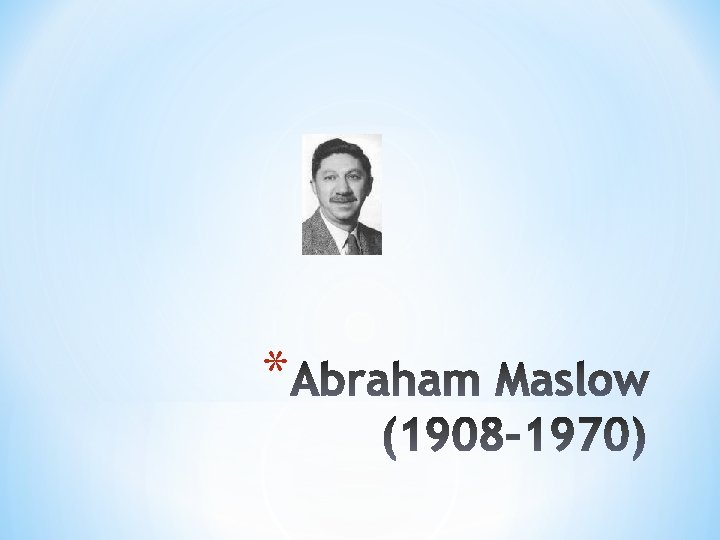
* * Took a psychological approach, looking at the entire person * Believed that all individuals are unique, with an innate (inborn) drive to achieve their maximum potential * Developed a hierarchy of needs
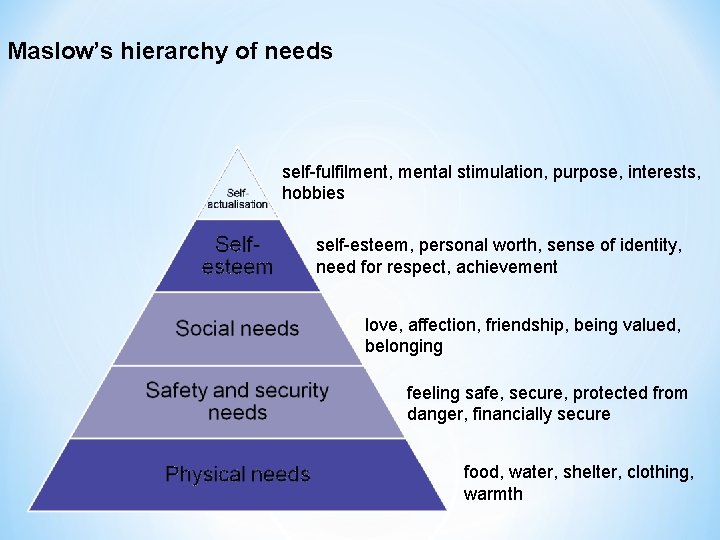
Maslow’s hierarchy of needs self-fulfilment, mental stimulation, purpose, interests, hobbies self-esteem, personal worth, sense of identity, need for respect, achievement love, affection, friendship, being valued, belonging feeling safe, secure, protected from danger, financially secure food, water, shelter, clothing, warmth
* * Believes that we learn behaviour through conditioning (positive and negative reinforcement) * Social learning theorists also believe we learn through observation (observational learning) * Bo. Bo doll experiment
* *Behaviour is not simply a mechanical action which is increased by rewards and decreased by punishments *Sees humans as thinking organisms so believes we have cognitive activity in actions we do. *Observational Learning explains how complex behaviours are learned by observing others.
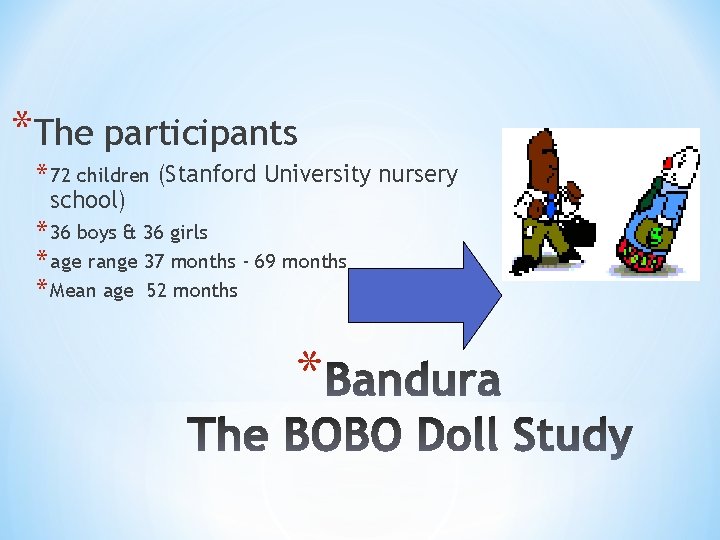
*The participants * 72 children (Stanford University nursery school) * 36 boys & 36 girls * age range 37 months - 69 months * Mean age 52 months *
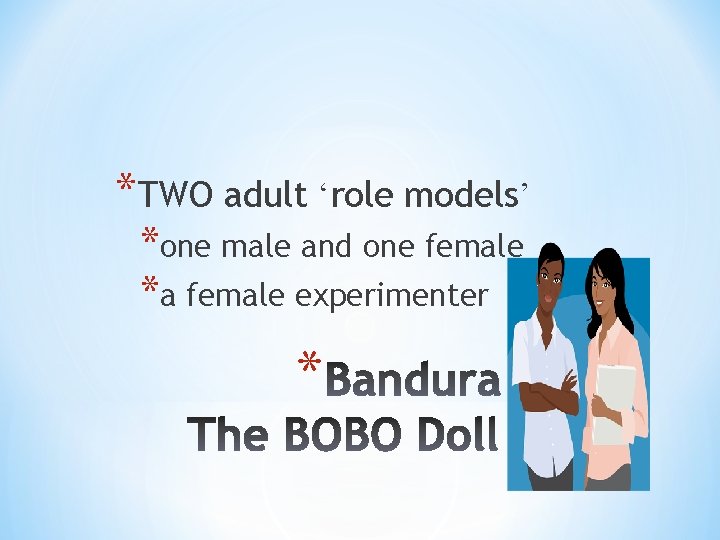
*TWO adult ‘role models’ *one male and one female *a female experimenter *
* *The experiment involved three groups of children *24 children in each group *The children in the study were assessed and rated for levels of aggressiveness. *The children were then assigned at random to one of three groups.
* *Each group of children saw an adult attack a Bobo doll. * In Group 1 another adult enters the room and praises the first adult’s behaviour. * In Group 2 another adult enters the room and tells off the adult for her/his behaviour. * Control condition group - another adult enters the room and takes no action about the first adult’s behaviour.
*What was observed? *The criteria * Imitative aggression * Non-imitative aggression *physical & verbal *
*You. Tube - Bandura (1965) Bobo doll on T. V *www. youtube. com/watch? v=eq. Na. Ler. MNOE *
*What do you think the Bobo Doll Study contributes to the debate about children learning aggressive behaviour from watching violence on TV? *How might watching TV differ from the experience of the children in the Bandura experiment? *
*SYNTAX : rules of grammar *PHONOLOGY / PHONICS sound system *SEMANTICS : meanings of words, phrases *PRAGMATICS: sharing ideas and knowledge (use of language) *
Jerome Bruner
*Born in 1915, Jerome Bruner occupied the chairs of Psychology at the Universities of Harvard and Cambridge. Initially his work was influenced by Piaget but later, and to a greater extent, by Vygotsky, who’s work he extensively developed. * Like Vygotsky he believed the child’s social environment and particularly social interaction with other people were extremely important in the process of learning. *Like Piaget he believed individuals actively assimilate and accommodate in terms of an existing set of cognitive structures.
Scaffolding Bruner's metaphorical term 'scaffolding' has come to be used for interactional support, often in the form of adult-child dialogue that is structured by the adult (Clay and Cazden, 1990). Scaffolding refers to the gradual withdrawal of adult control and support as a function of children’s increasing mastery of a given task.
Bruner outlines 3 distinct modes of representing the world: ENACTIVE (actions), ICONIC (pictures) and SYMBOLIC (words and numbers). He believed children think through these modes because actions, pictures and words are used by people around them in interactions and in performing tasks
Bruner considered language as the most important cultural tool in children’s cognitive growth and learning, enabling symbolic representation of the world, especially thinking and reasoning in the abstract.
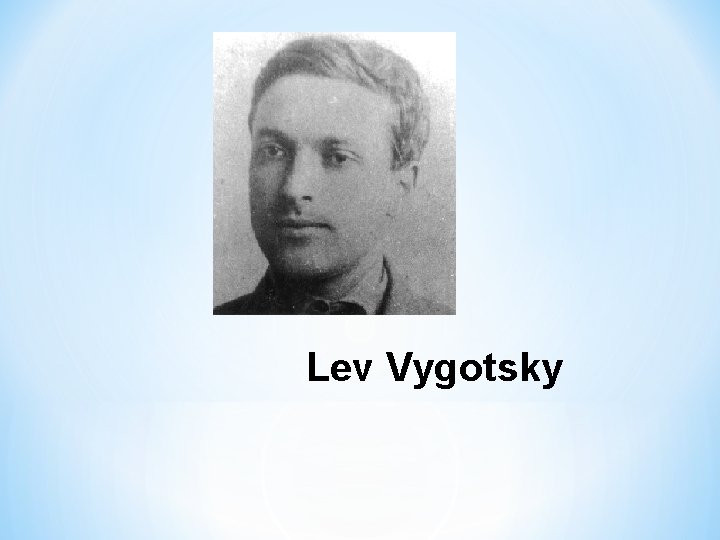
Lev Vygotsky
*Lev Vygotsky, a Russian psychologist and philosopher in the 1930's, is most often associated with the social constructivist theory. He emphasizes the influences of cultural and social contexts in learning and supports a discovery model of learning. This type of model places the teacher in an active role while the students' mental abilities develop naturally through various paths of discovery.
Language acquisition involves not only a child's exposure to words but also an interdependent process of growth between thought and language. Vygotsky's influential theory of the "zone of proximal development" asserts that teachers should consider a child's prospective learning power before trying to expand the child's grasp of language.
*Experience * Vygotsky's theory of language is based on constructivist learning theory, which contends that children acquire knowledge as a result of engaging in social experiences. "Through social and language interactions, older and more experienced members of a community teach younger and less experienced members the skills, values, and knowledge needed to be productive members of that community, " says Harry Daniels, author of "An Introduction to Vygotsky. "
*Signals * According to Vygotsky, words are signals. Rather than engage children in a primary signal system, in which objects are referred to merely as themselves, adults engage children in a secondary signal system, in which words represent objects and ideas.
*Cognition *A child's intellectual development is crucial to his language development. By interacting with his environment, a child develops the ability to develop private, inner speech. "Inner speech is thinking in pure meanings; it is the link between the second signal system of the social world and the thought of the individual, " according to Barry J. Zimmerman and Dale H. Schunk, who evaluate the significance of Vygotsky's language theory in their book "Self. Regulated Learning and Academic Achievement. " Through the development of inner speech, children straddle the divide between thought and language, eventually being able to express their thoughts coherently to others.
*Development *The language learning process occurs as a result of give and take. Parents and teachers usher a child through a process of guided discovery, addressing her learning potential. Eventually, children internalize language skills. As young learners experience language development, they "can reflect better on their own thinking and behavior and reach greater levels of control and mastery over their own behavior, " according to Adam Winsler, co-editor of "Private Speech, Executive Functioning, and the Development of Verbal Self-Regulation".
*Considerations * Vygotsky's constructivist language theory exists in opposition to Jean Piaget's theory of language acquisition. According to Piaget, children construct knowledge about language through a complex process of assimilation, stressing the inherent capability of a child's brain to adapt to stimulation. By contrast, Vygotsky stresses the social nature of language learning, emphasizing the environment within which a child is raised.
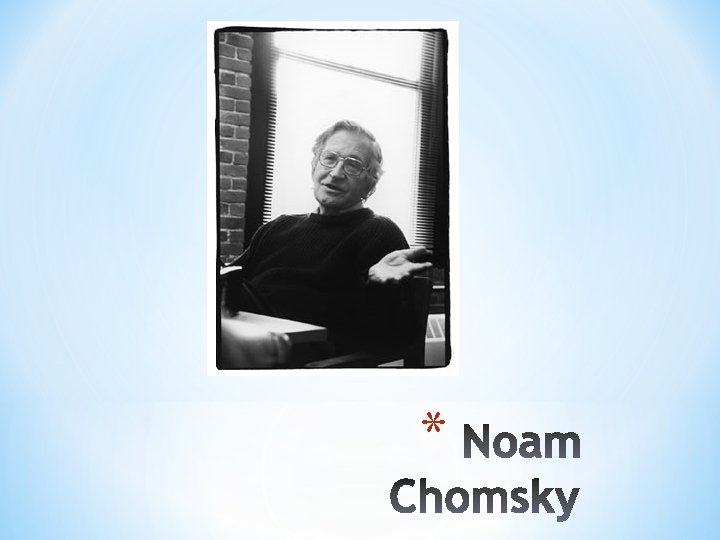
* Chomsky (1965; 1975) proposed that babies are born with an inbuilt Language Acquisition Device (LAD). He suggested that language then simply emerges as the child matures. * Slobin (Ferguson and Slobin 1973; Slobin 1985) continued this line of thought, proposing that just as newborns come into the world ‘programmed’ to look at interesting, especially moving, objects, so babies are pre-programmed to pay attention to language. * One problem with this theory is that children seem to have great proficiency in acquiring whatever language/s they hear around them and during their first year of life they will gradually discard from their repertoire of vocalisations sounds which they do not hear in the speech of those with whom they spend their lives – but of course the pre-programming does not need to be thought of as tied to a specific language.
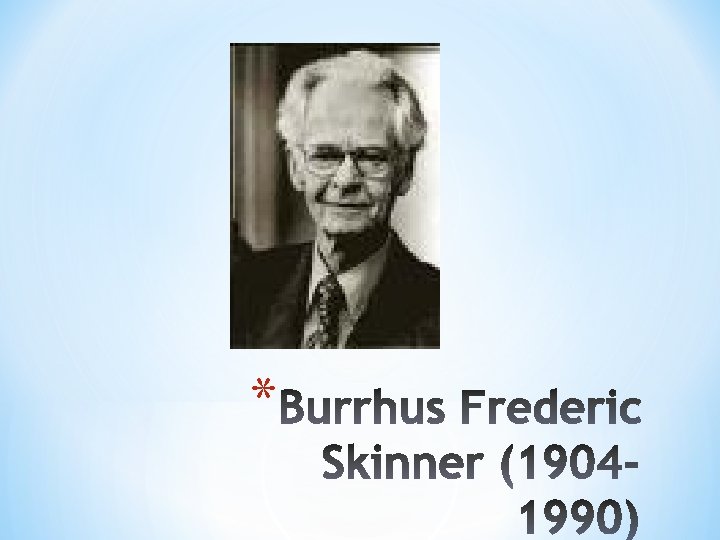
*Skinner, the Behaviourist theorist, suggested that children learn language through reinforcement. *In other words, when a parent or carer shows enthusiasm for something a child tries to say, this should encourage the child to repeat the utterance. *Others would argue that this theory cannot account for children’s inventions of language.
*Early language development theories assumed that children acquire language through imitation. *Research has shown that children who imitate the actions of those around them during their first year of life are generally those who also learn to talk more quickly. *However there is also evidence that suggests that imitation alone cannot explain how children become talkers. *Eg ‘We goed to the shops’ –inventing the past tense of ‘go’ based on the rules they have absorbed. *One wug - two wuges
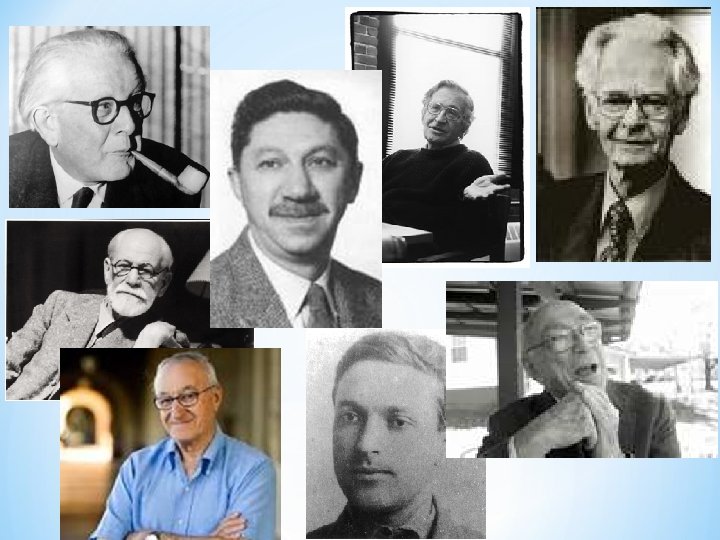
*In your group choose one of theorists talked about in this presentation and carry out some independent research on their theories. Use the books and the internet. *How could these theories be put into practice? *