
2 3 Consensus Building and Conflict Management Objectives
2. 3 Consensus Building and Conflict Management
Objectives of the Session By the end of the session, participants will be able to: List six decision-making methods and when to use them. Describe how to build consensus in the context of cluster coordination. Identify common causes of conflict. To list key tips for resolving conflict and handling impasse.
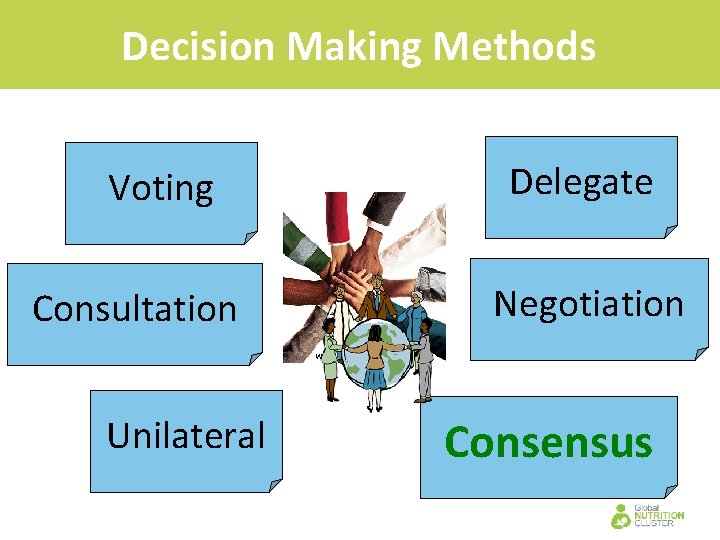
Decision Making Methods Delegate Voting Negotiation Consultation www. workingatmcmaster. ca Unilateral Consensus

What is Consensus? Maximum agreement among people while drawing on as much of everyone’s ideas as possible.
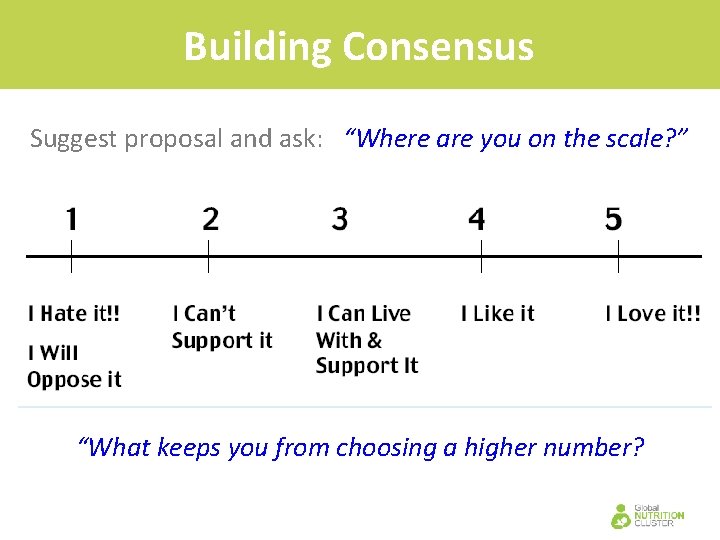
Building Consensus Suggest proposal and ask: “Where are you on the scale? ” “What keeps you from choosing a higher number?
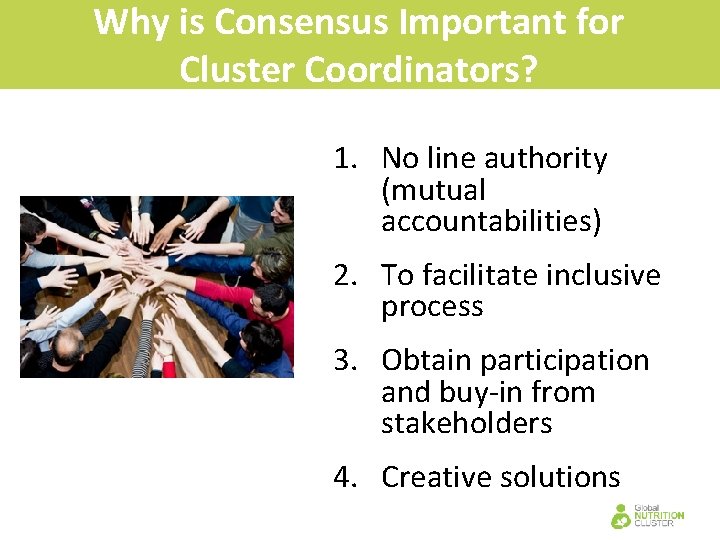
Why is Consensus Important for Cluster Coordinators? 1. No line authority (mutual accountabilities) 2. To facilitate inclusive process 3. Obtain participation and buy-in from stakeholders 4. Creative solutions
Consensus Building Requirements Time Willingness to contribute Openness and honesty Willingness to confront and resolve conflicts and differences of opinion • No right answers • Facilitation skills. • •
Facilitating Consensus • • Listen Limit own ideas Link others’ ideas Encourage reactions Ask questions Check understanding Summarise regularly Balance contributions

Conflict Management
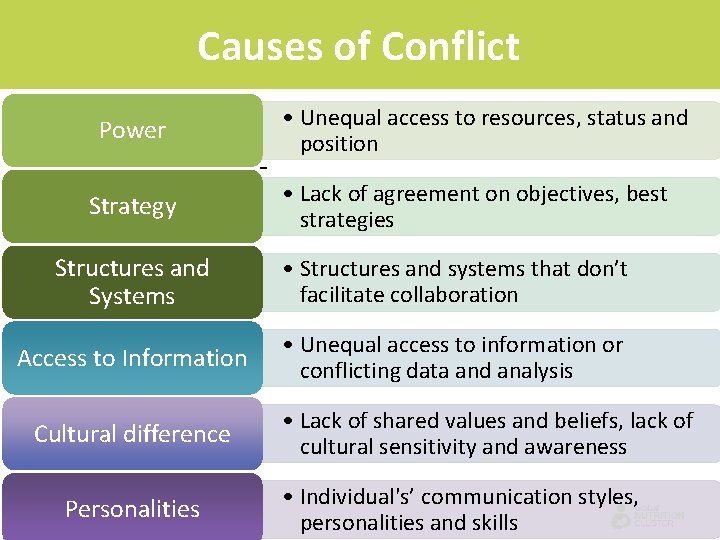
Causes of Conflict Power Strategy • Unequal access to resources, status and position • Lack of agreement on objectives, best strategies Structures and Systems • Structures and systems that don’t facilitate collaboration Access to Information • Unequal access to information or conflicting data and analysis Cultural difference Personalities • Lack of shared values and beliefs, lack of cultural sensitivity and awareness • Individual's’ communication styles, personalities and skills
Constructive Outcomes of Conflict • • • Awareness of problems Encourages change Better decisions Creativity Energises Heightens interest Cohesiveness Clears air Understand yourself better
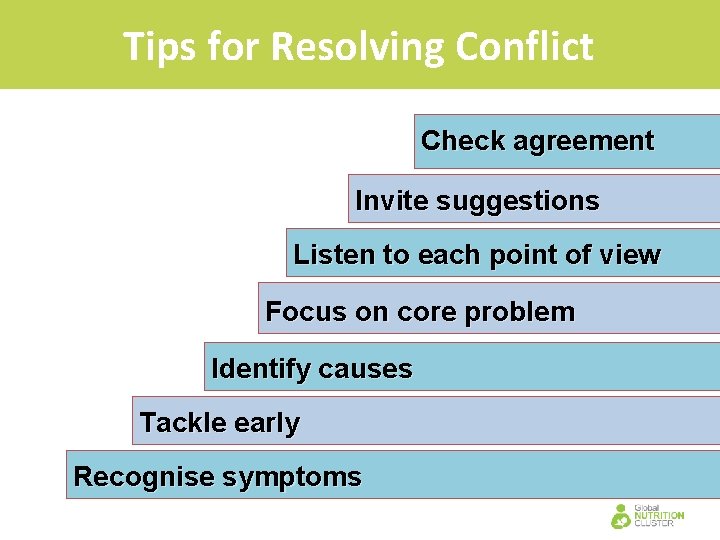
Tips for Resolving Conflict Check agreement Invite suggestions Listen to each point of view Focus on core problem Identify causes Tackle early Recognise symptoms
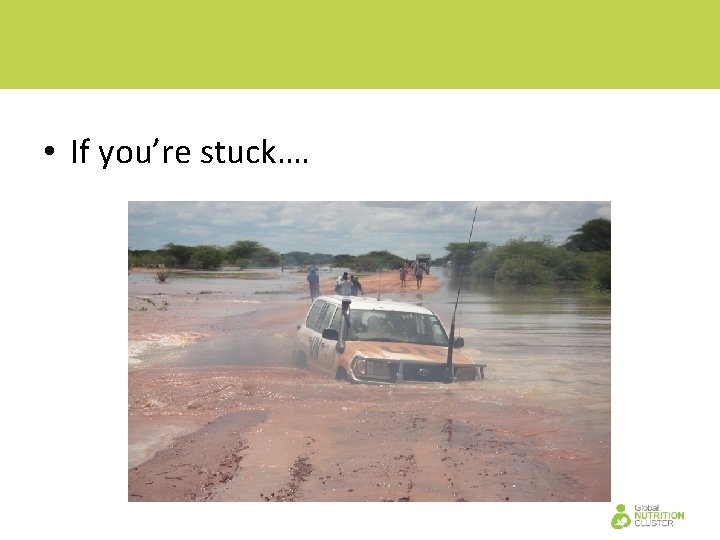
• If you’re stuck….
Dealing with Impasse • Mix up small groups = new dynamic • Use small groups, then meet reps. • Summarise agreement and disagreements • Ask for suggestions • Take a break • Meet separately with primary disputants • Bring disputing parties together • Remind all of humanitarian consequences
Tips Have clear goals groups Allow time • Involve all Be calm and respectful • Be willing to confront and resolve. Use collaborative skills – active listening – questions – communicate openly • Identify ‘agreements’ • Break into smaller • •
Key Messages Consensus building is a key decision-making method in the coordination context Achieving maximum agreement amongst a diverse set of stakeholders takes effective facilitation and active listening skills Conflict is not always a bad thing, but coordinators need to tackle it early. Focusing on the needs, rights and perspectives of affected people can be a good guide to finding appropriate solutions to conflict.
- Slides: 16