
2 3 Carbon Compounds Carbon Compounds Organic chemistry
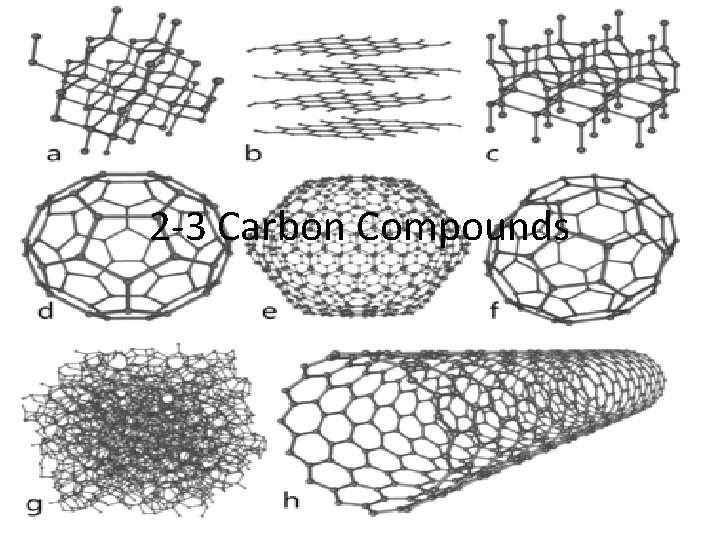
2 -3 Carbon Compounds
Carbon Compounds • Organic chemistry – the study of compounds that contain bonds between carbon atoms
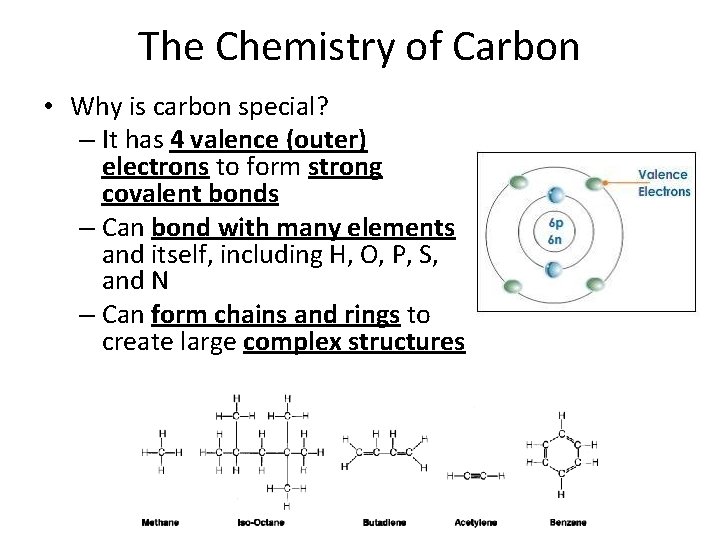
The Chemistry of Carbon • Why is carbon special? – It has 4 valence (outer) electrons to form strong covalent bonds – Can bond with many elements and itself, including H, O, P, S, and N – Can form chains and rings to create large complex structures
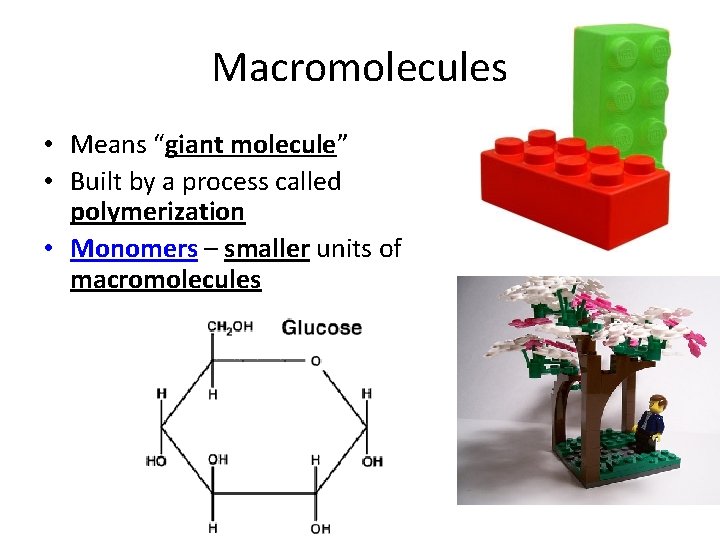
Macromolecules • Means “giant molecule” • Built by a process called polymerization • Monomers – smaller units of macromolecules
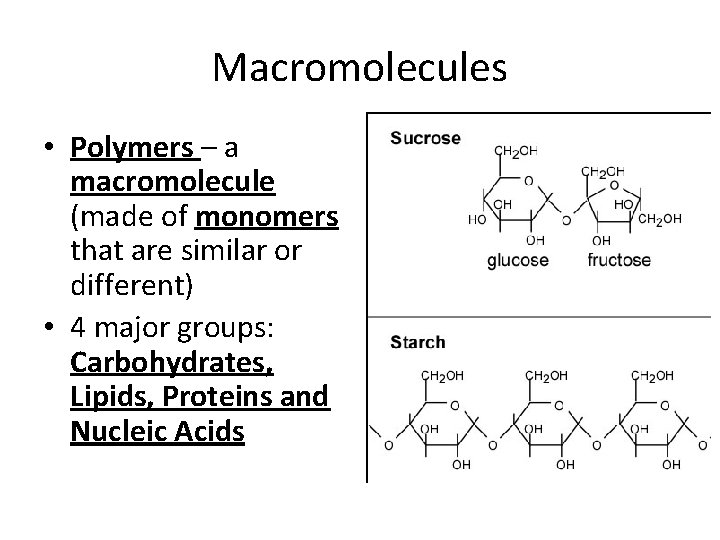
Macromolecules • Polymers – a macromolecule (made of monomers that are similar or different) • 4 major groups: Carbohydrates, Lipids, Proteins and Nucleic Acids
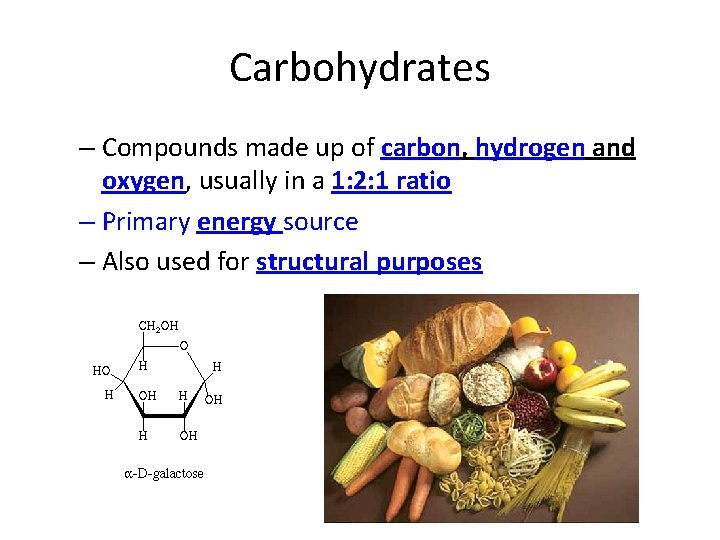
Carbohydrates – Compounds made up of carbon, hydrogen and oxygen, usually in a 1: 2: 1 ratio – Primary energy source – Also used for structural purposes
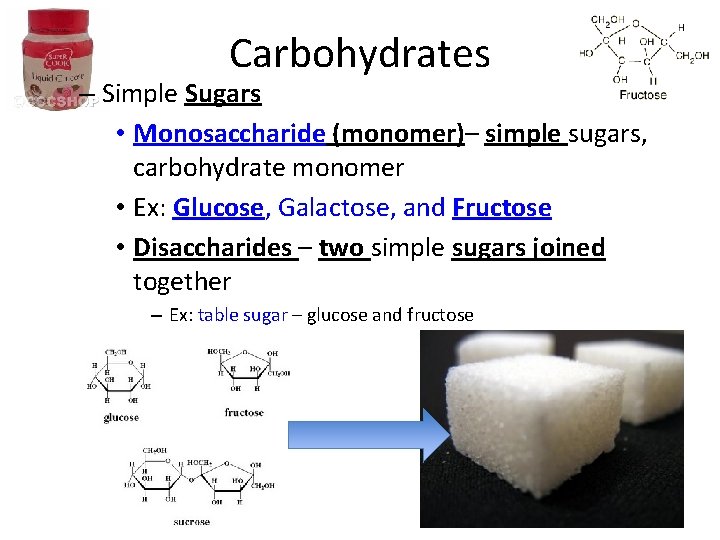
Carbohydrates – Simple Sugars • Monosaccharide (monomer)– simple sugars, carbohydrate monomer • Ex: Glucose, Galactose, and Fructose • Disaccharides – two simple sugars joined together – Ex: table sugar – glucose and fructose

Carbohydrates – Complex Carbohydrates • Large molecules formed from monosaccharide’s • Ex: Glycogen “animal starch” store of excess sugar for muscle contraction • Ex: Starch (stores excess sugar) and Cellulose (for strength)
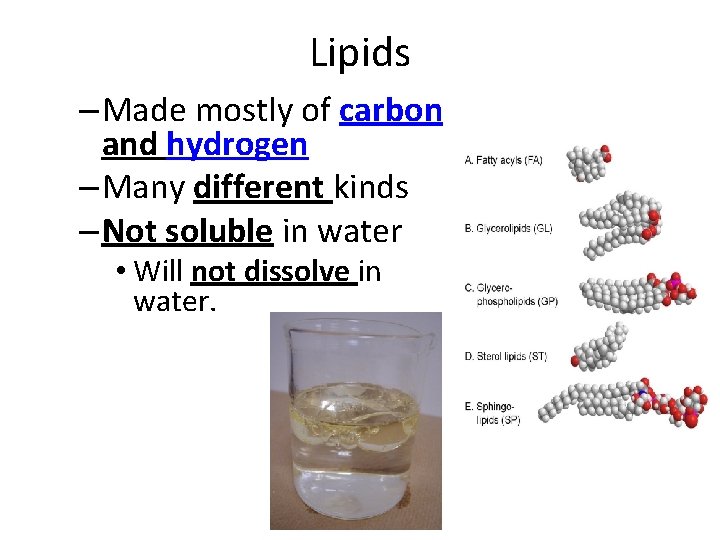
Lipids – Made mostly of carbon and hydrogen – Many different kinds – Not soluble in water • Will not dissolve in water.
Lipids – Used as a STORED energy source – Used as a secondary energy source – Used in biological membranes and waterproof coverings – Some are used as chemical messengers (ex. Steroids, hormones)
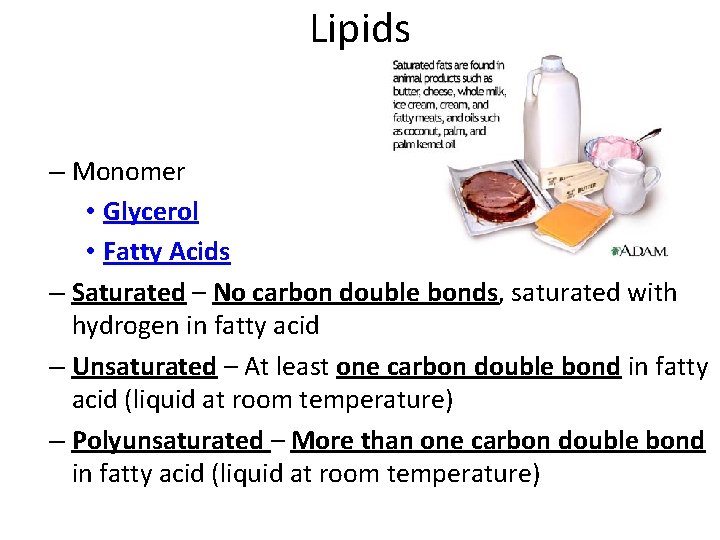
Lipids – Monomer • Glycerol • Fatty Acids – Saturated – No carbon double bonds, saturated with hydrogen in fatty acid – Unsaturated – At least one carbon double bond in fatty acid (liquid at room temperature) – Polyunsaturated – More than one carbon double bond in fatty acid (liquid at room temperature)
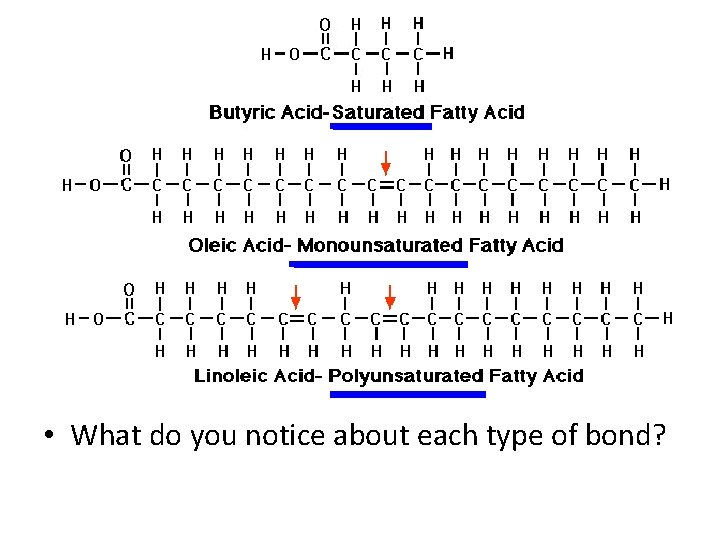
• What do you notice about each type of bond?
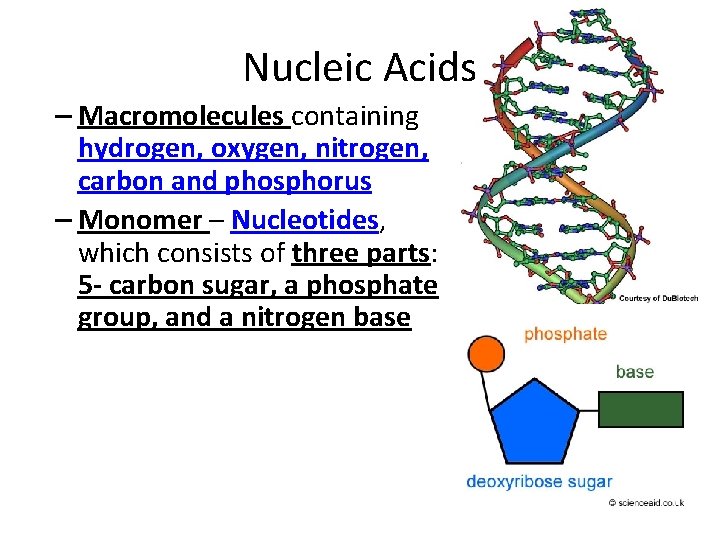
Nucleic Acids – Macromolecules containing hydrogen, oxygen, nitrogen, carbon and phosphorus – Monomer – Nucleotides, which consists of three parts: 5 - carbon sugar, a phosphate group, and a nitrogen base
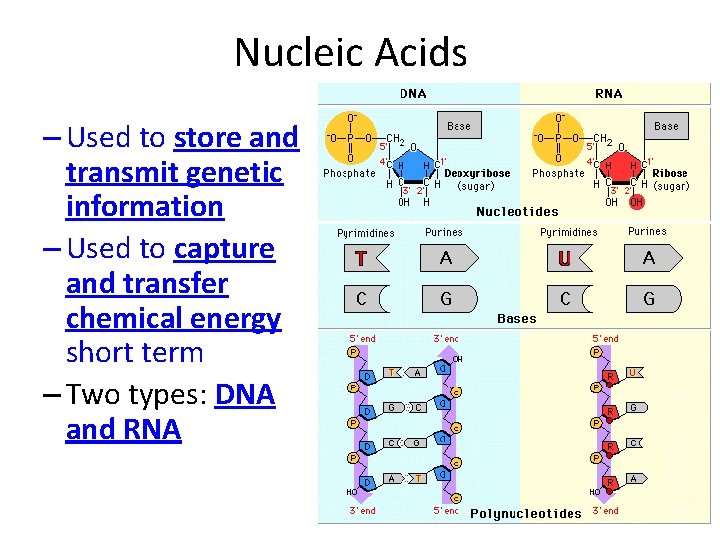
Nucleic Acids – Used to store and transmit genetic information – Used to capture and transfer chemical energy short term – Two types: DNA and RNA
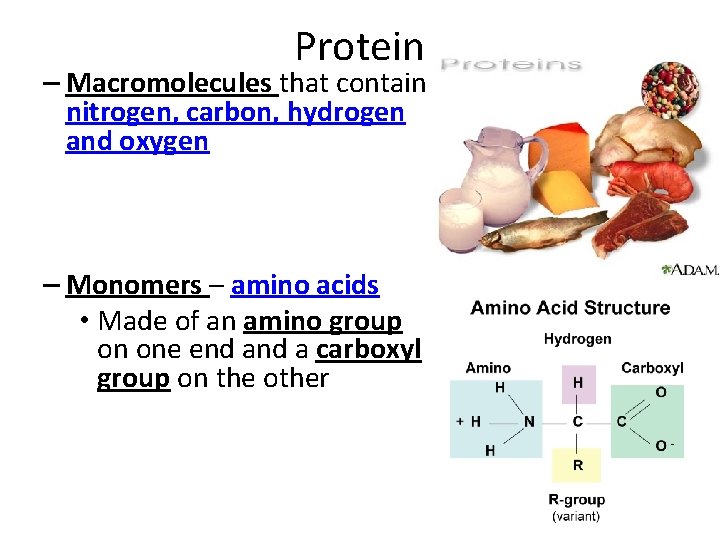
Protein – Macromolecules that contain nitrogen, carbon, hydrogen and oxygen – Monomers – amino acids • Made of an amino group on one end a carboxyl group on the other
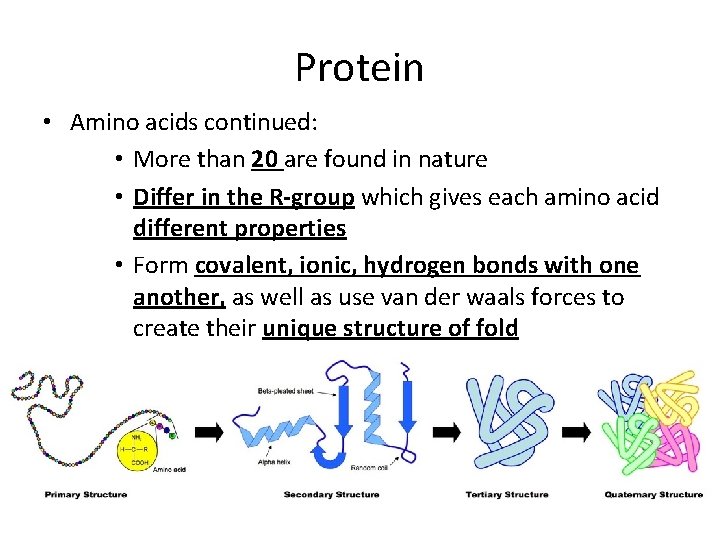
Protein • Amino acids continued: • More than 20 are found in nature • Differ in the R-group which gives each amino acid different properties • Form covalent, ionic, hydrogen bonds with one another, as well as use van der waals forces to create their unique structure of fold
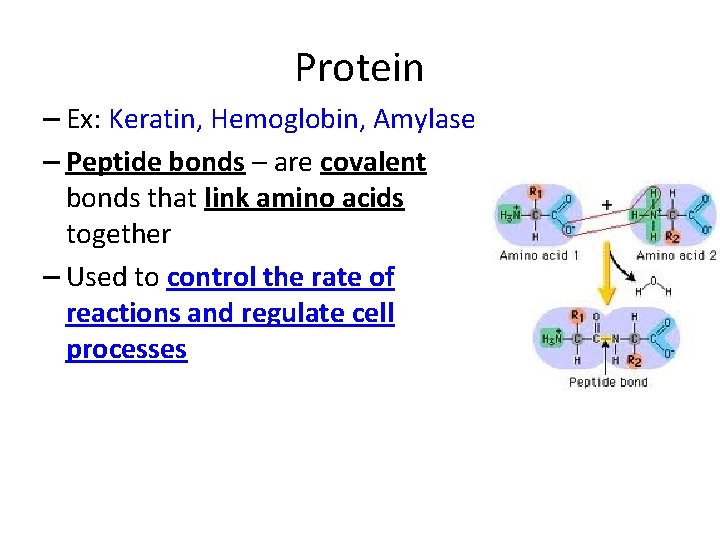
Protein – Ex: Keratin, Hemoglobin, Amylase – Peptide bonds – are covalent bonds that link amino acids together – Used to control the rate of reactions and regulate cell processes
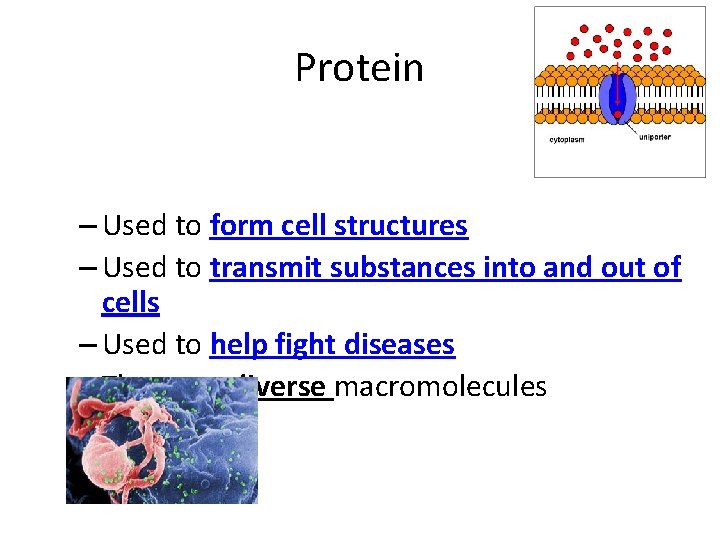
Protein – Used to form cell structures – Used to transmit substances into and out of cells – Used to help fight diseases – The most diverse macromolecules
- Slides: 18