
2 3 Acids Bases Chapter 2 Materials Acid
2. 3 Acids & Bases Chapter 2 Materials
Acid § A substance that releases H+ ions into an aqueous solution. § The strength of an acid is dependent on the quantity of H+ ions that are released. § Stronger acids release more H+ ions
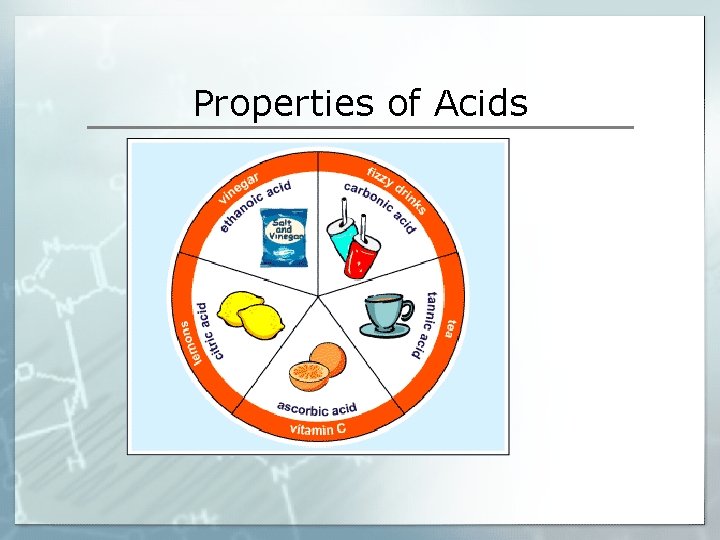
Properties of Acids
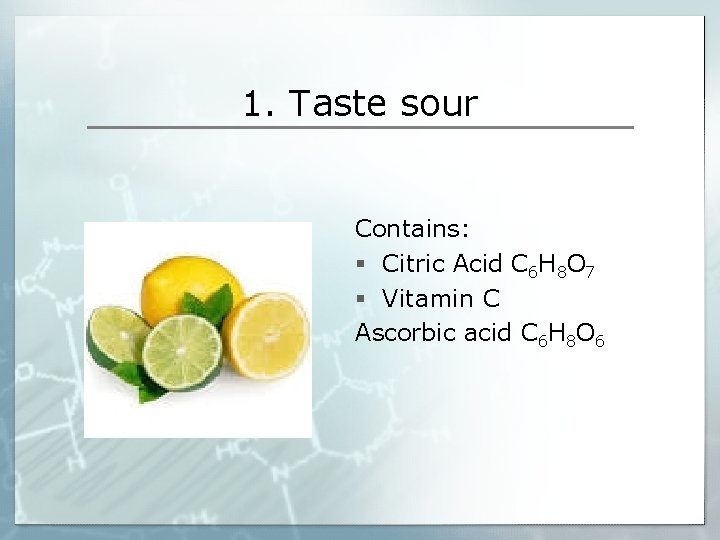
1. Taste sour Contains: § Citric Acid C 6 H 8 O 7 § Vitamin C Ascorbic acid C 6 H 8 O 6
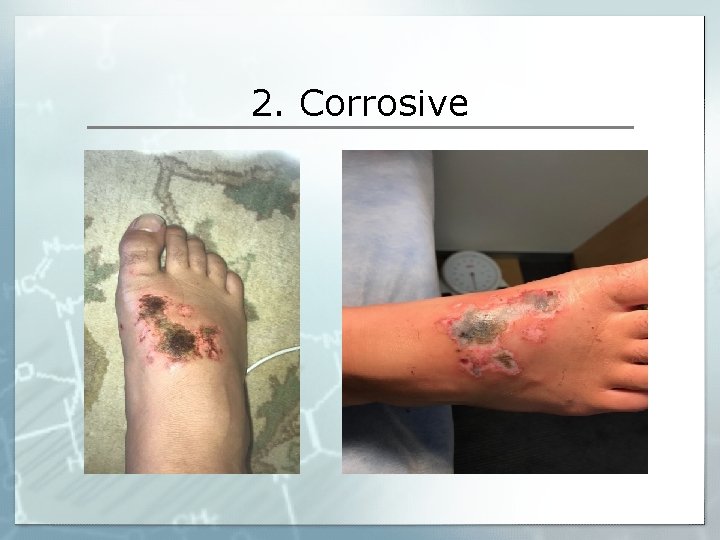
2. Corrosive
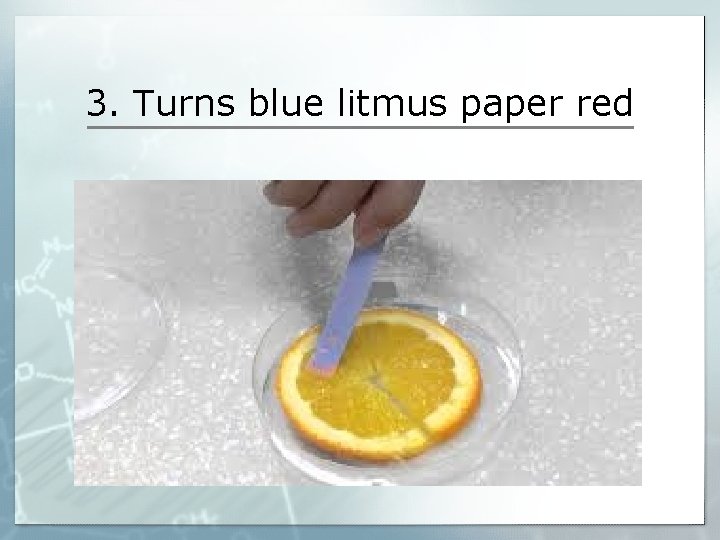
3. Turns blue litmus paper red
4. Conduct electricity 5. Are neutralised by bases 6. React with some metals to make “salts” and hydrogen gas.
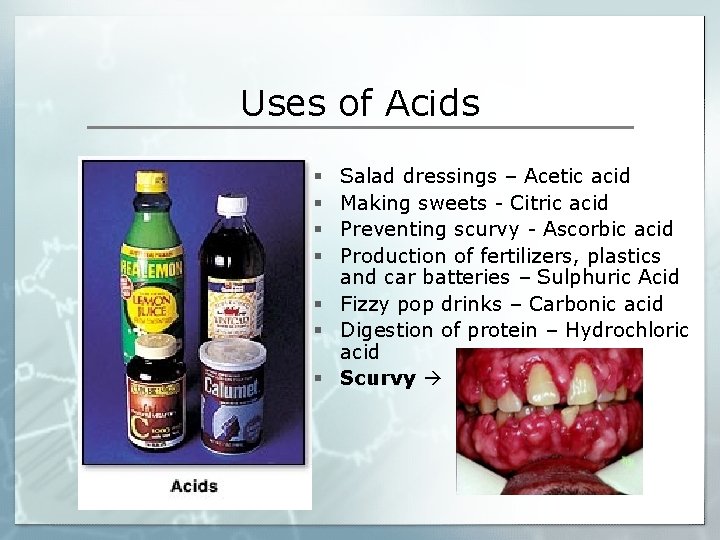
Uses of Acids Salad dressings – Acetic acid Making sweets - Citric acid Preventing scurvy - Ascorbic acid Production of fertilizers, plastics and car batteries – Sulphuric Acid § Fizzy pop drinks – Carbonic acid § Digestion of protein – Hydrochloric acid § Scurvy § §
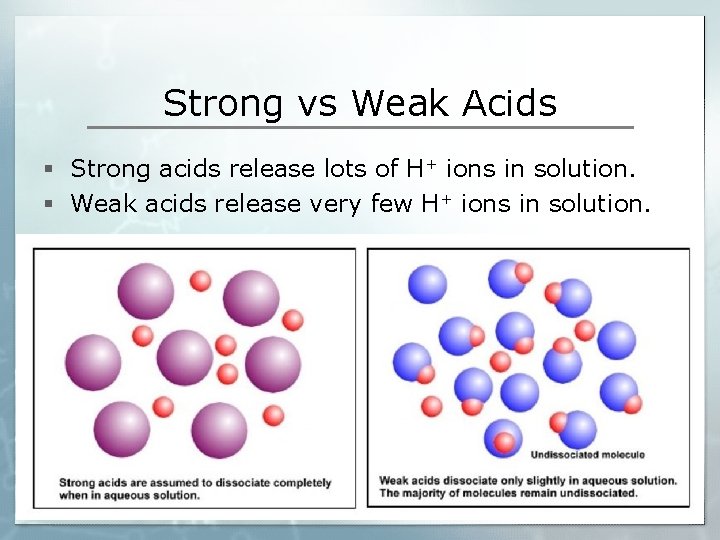
Strong vs Weak Acids § Strong acids release lots of H+ ions in solution. § Weak acids release very few H+ ions in solution.
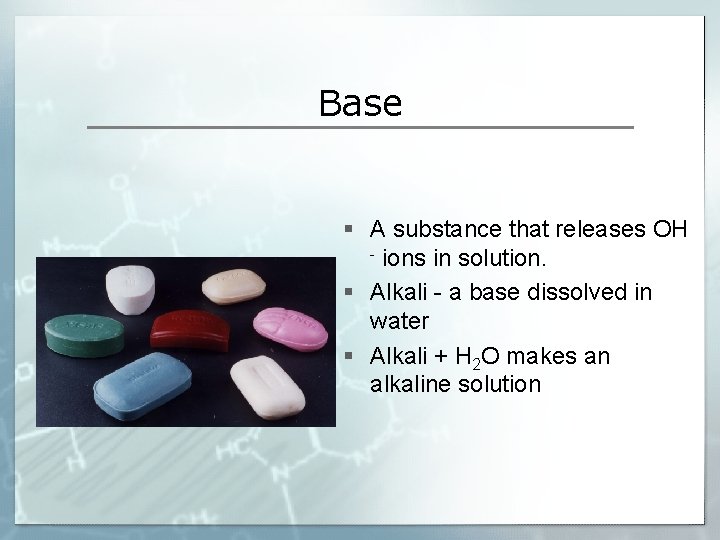
Base § A substance that releases OH - ions in solution. § Alkali - a base dissolved in water § Alkali + H 2 O makes an alkaline solution
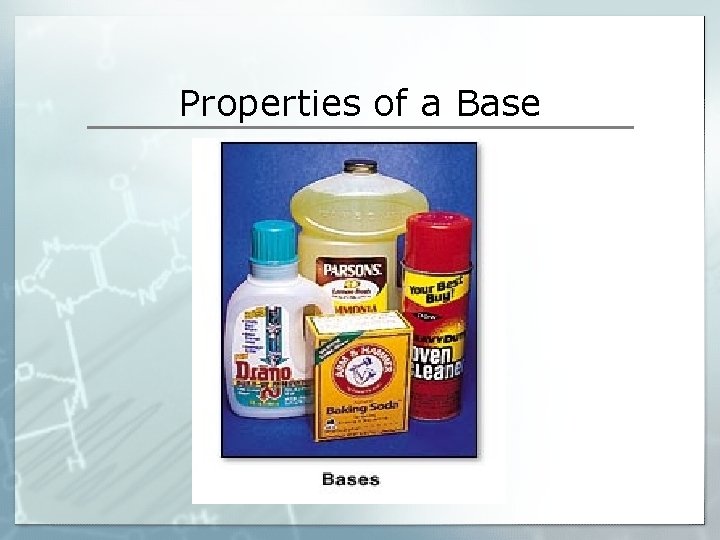
Properties of a Base
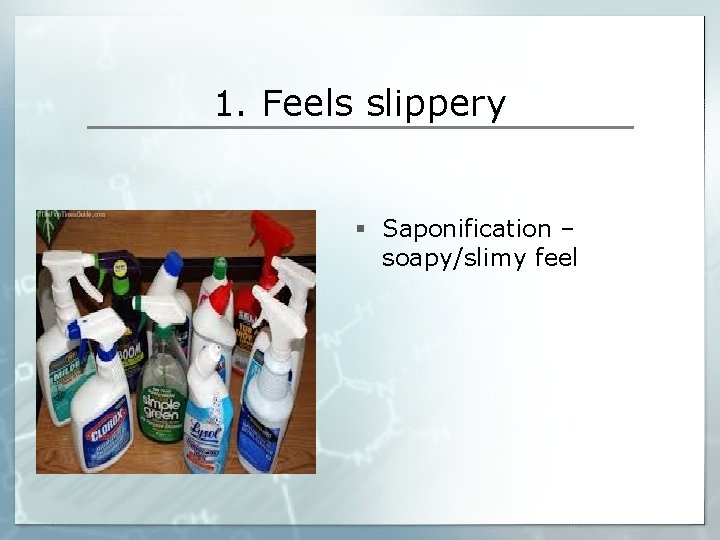
1. Feels slippery § Saponification – soapy/slimy feel
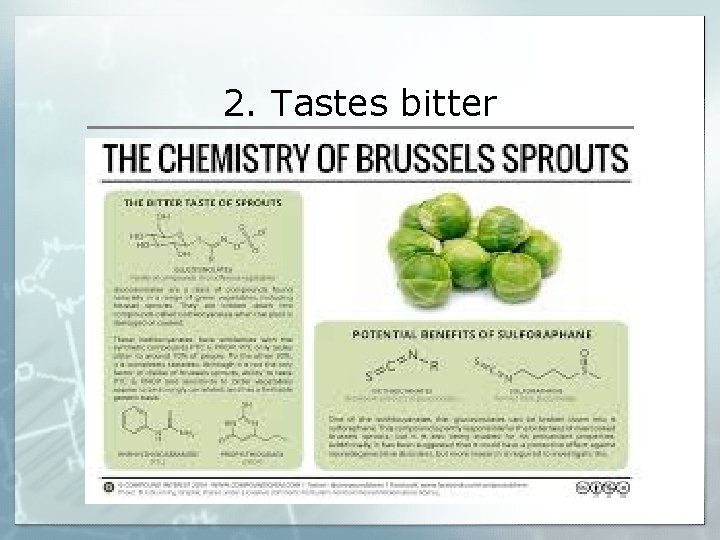
2. Tastes bitter
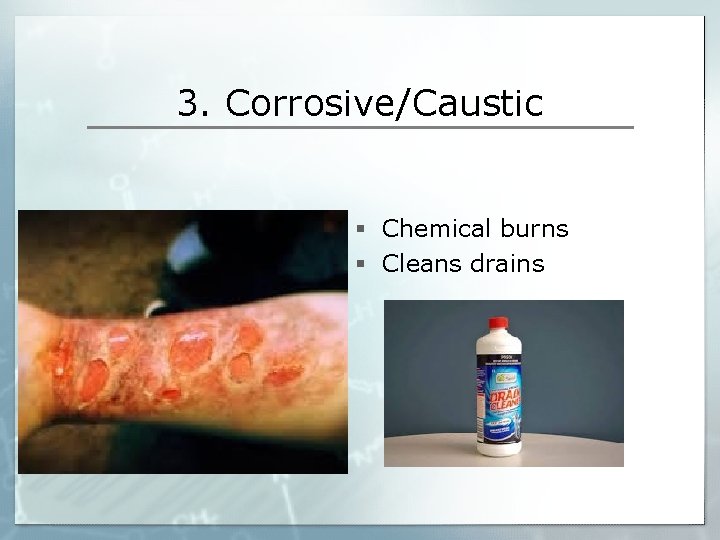
3. Corrosive/Caustic § Chemical burns § Cleans drains
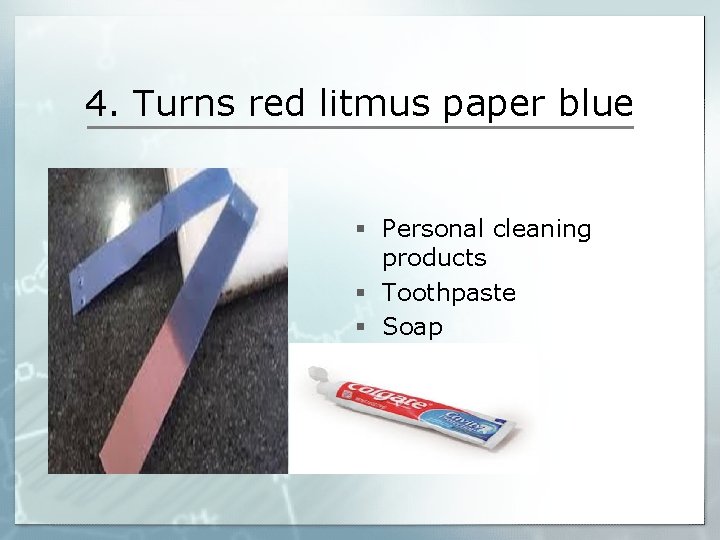
4. Turns red litmus paper blue § Personal cleaning products § Toothpaste § Soap
4. Conduct electricity 5. Are neutralised by acids
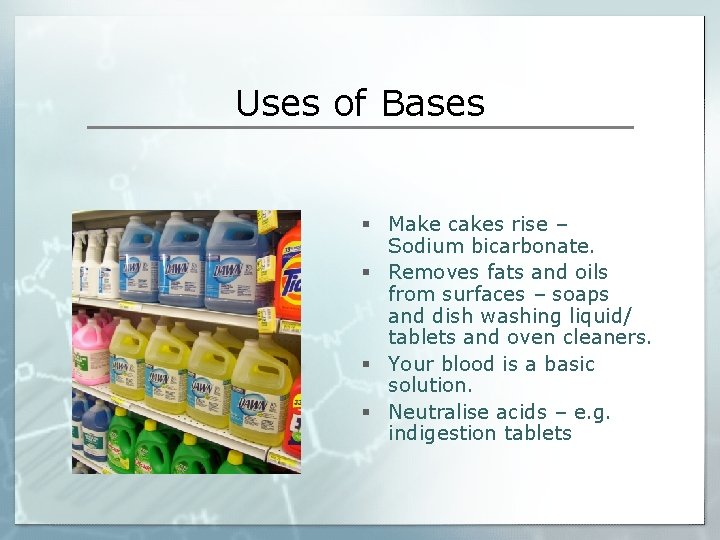
Uses of Bases § Make cakes rise – Sodium bicarbonate. § Removes fats and oils from surfaces – soaps and dish washing liquid/ tablets and oven cleaners. § Your blood is a basic solution. § Neutralise acids – e. g. indigestion tablets
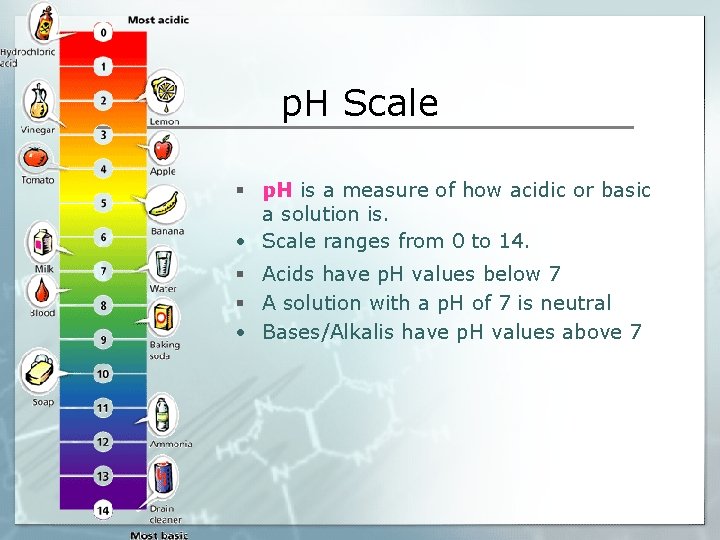
p. H Scale § p. H is a measure of how acidic or basic a solution is. • Scale ranges from 0 to 14. § Acids have p. H values below 7 § A solution with a p. H of 7 is neutral • Bases/Alkalis have p. H values above 7
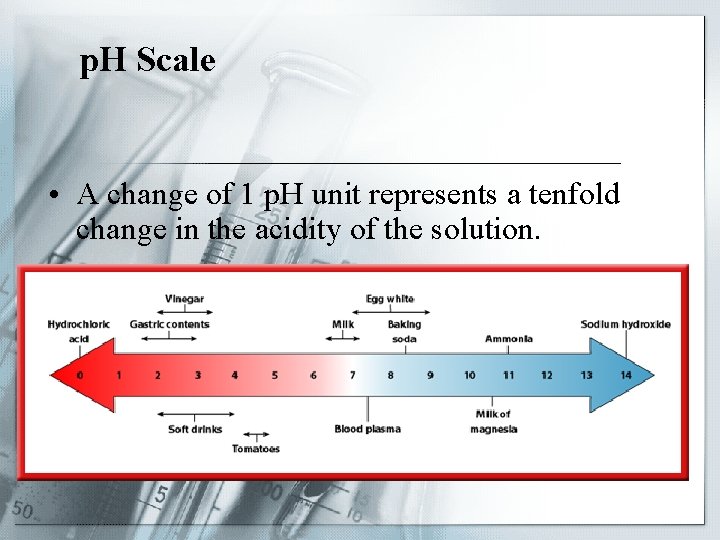
p. H Scale • A change of 1 p. H unit represents a tenfold change in the acidity of the solution.
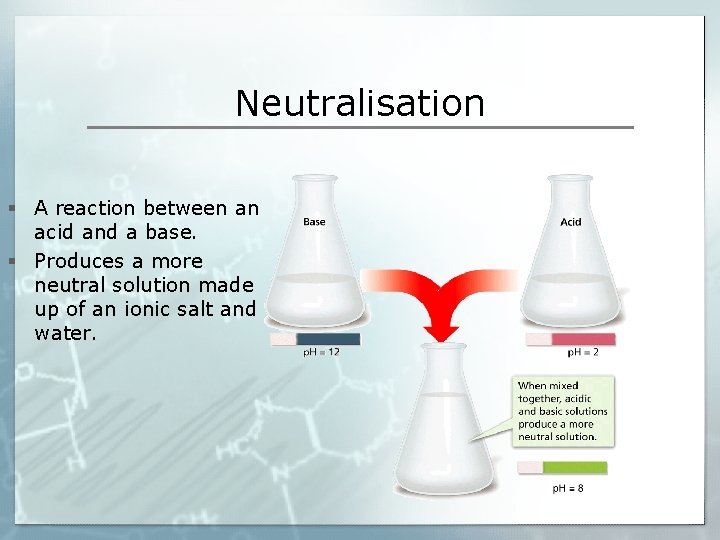
Neutralisation § A reaction between an acid and a base. § Produces a more neutral solution made up of an ionic salt and water.
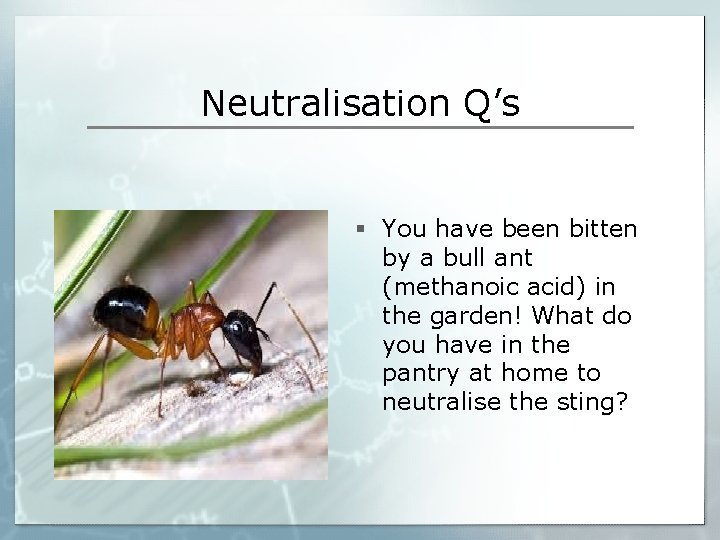
Neutralisation Q’s § You have been bitten by a bull ant (methanoic acid) in the garden! What do you have in the pantry at home to neutralise the sting?
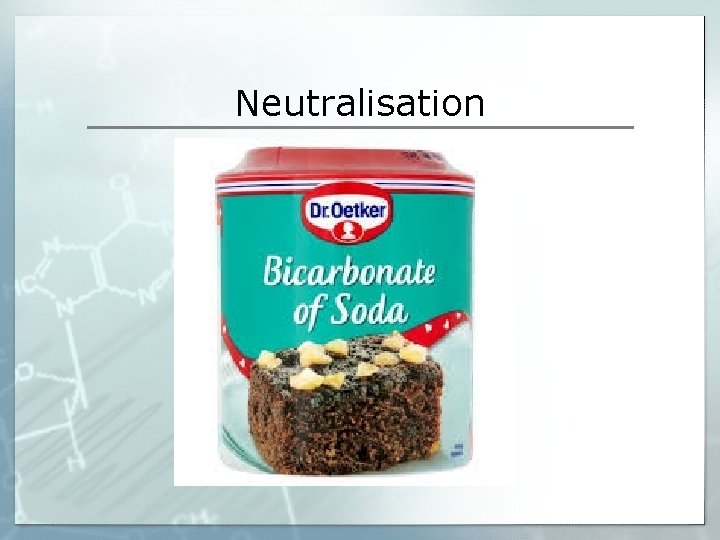
Neutralisation
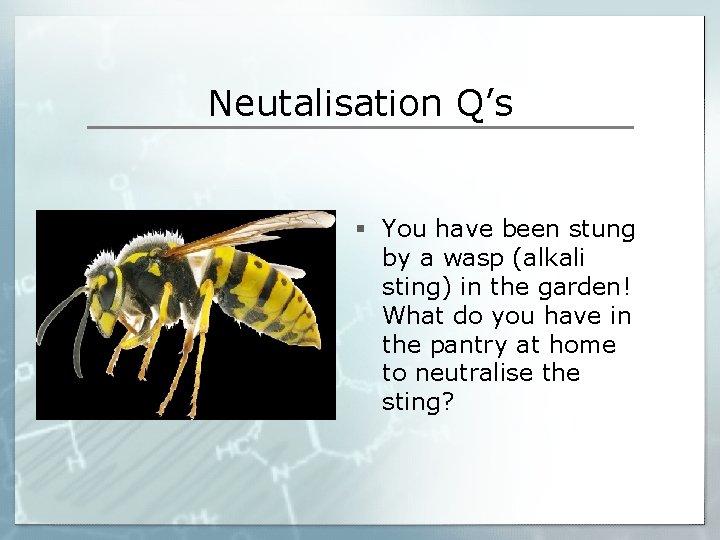
Neutalisation Q’s § You have been stung by a wasp (alkali sting) in the garden! What do you have in the pantry at home to neutralise the sting?
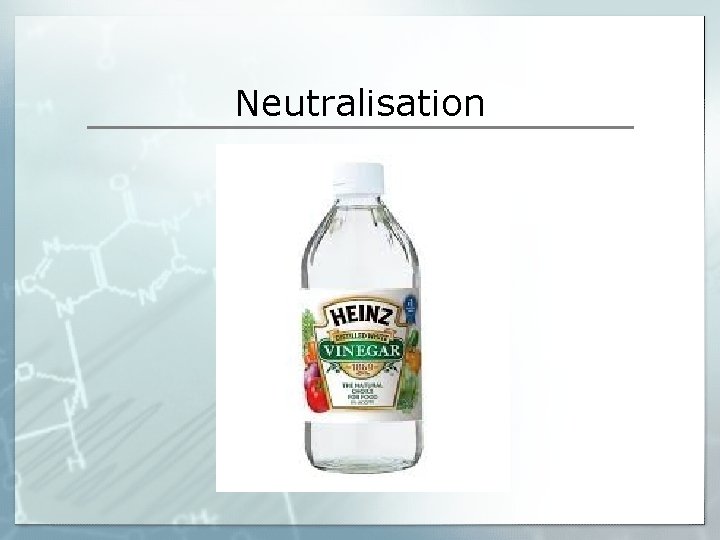
Neutralisation

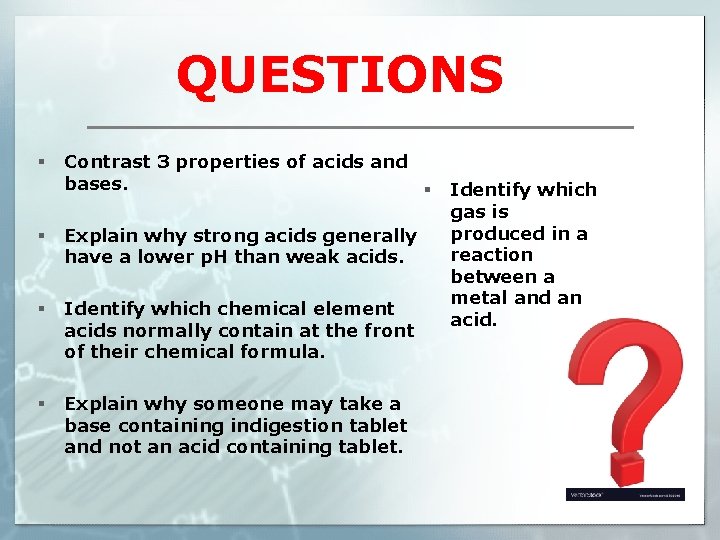
QUESTIONS § Contrast 3 properties of acids and bases. § § Explain why strong acids generally have a lower p. H than weak acids. § Identify which chemical element acids normally contain at the front of their chemical formula. § Explain why someone may take a base containing indigestion tablet and not an acid containing tablet. Identify which gas is produced in a reaction between a metal and an acid.
Activity Book § Complete: § 2. 6 p. H & indicators & Student Book § Complete: § Module 2. 3 Review questions 1 -19
- Slides: 27