
2 3 4 5 6 7 9 Fatalities
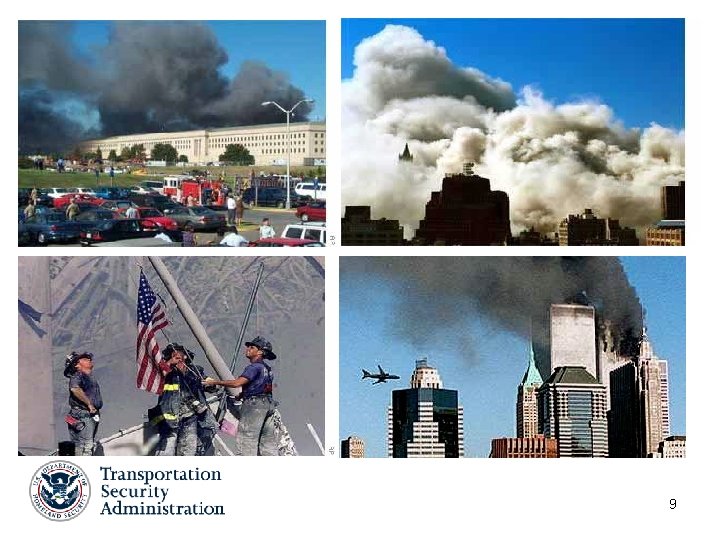
- Slides: 42
2
3
4
5
6
7
9
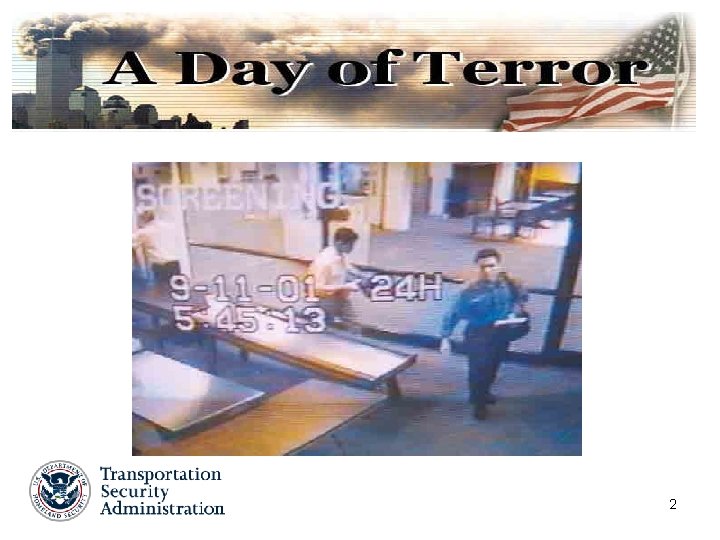
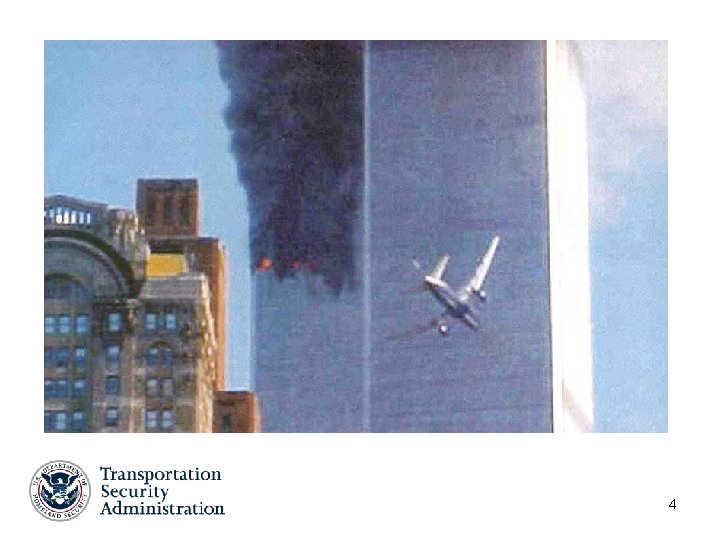
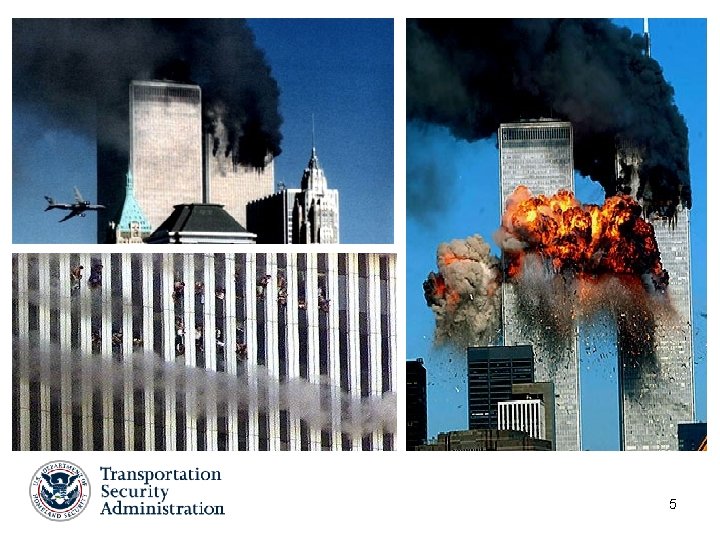
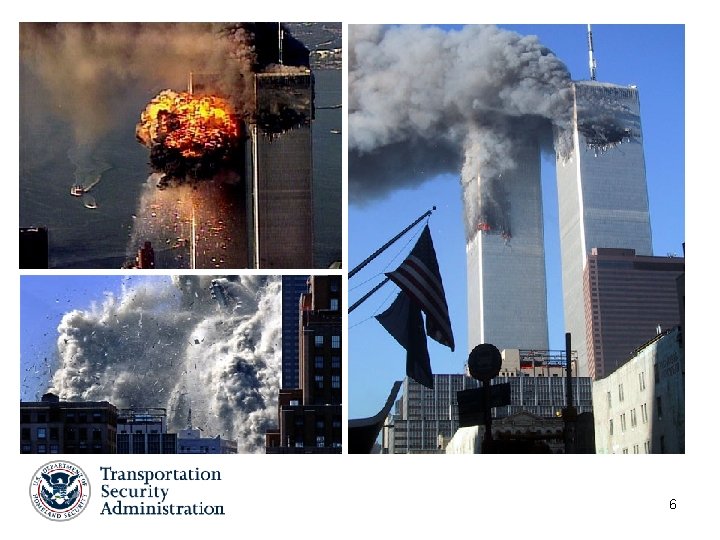
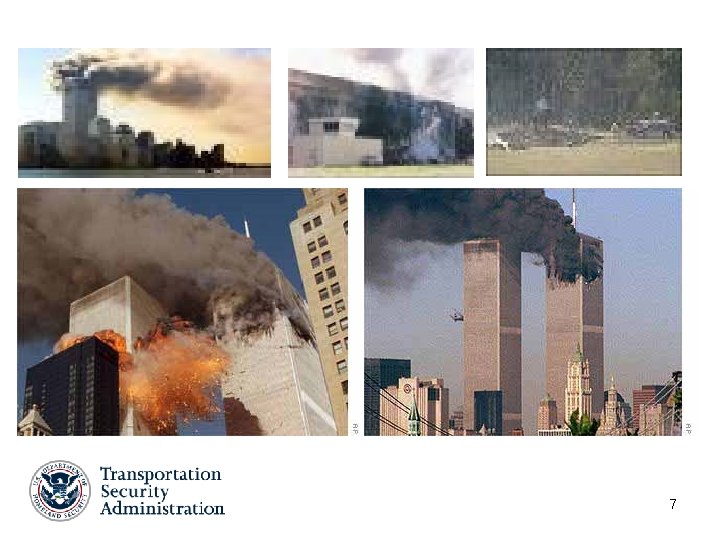
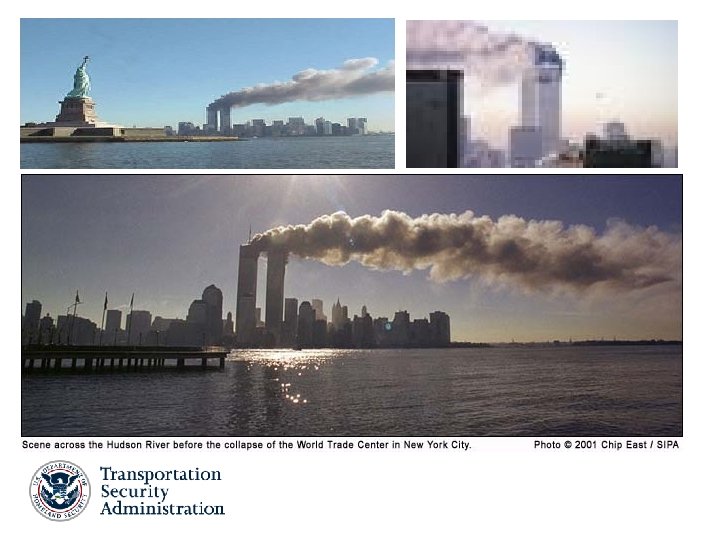
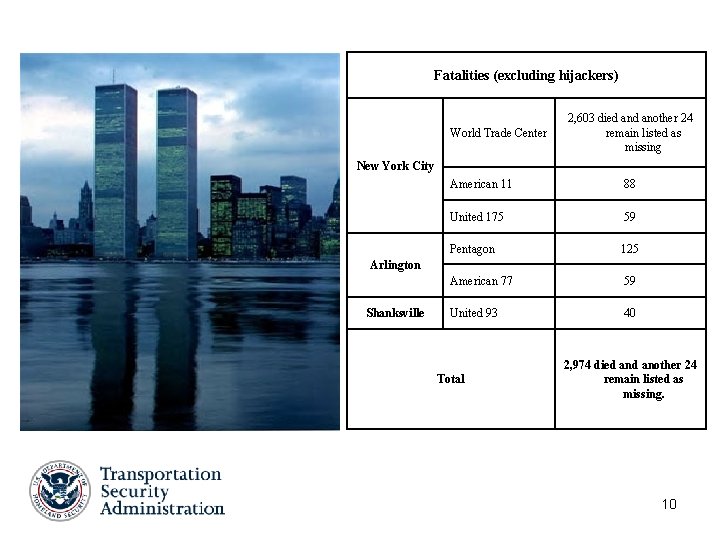
Fatalities (excluding hijackers) World Trade Center 2, 603 died another 24 remain listed as missing New York City American 11 88 United 175 59 Pentagon 125 American 77 59 United 93 40 Arlington Shanksville Total 2, 974 died another 24 remain listed as missing. 10
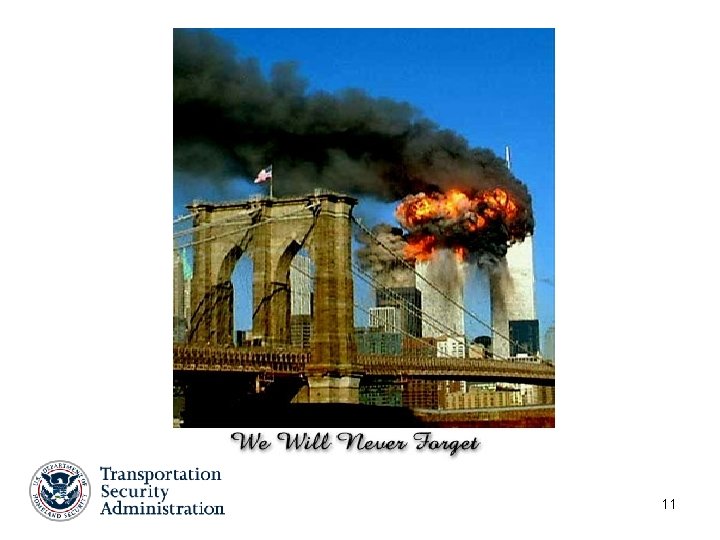
11
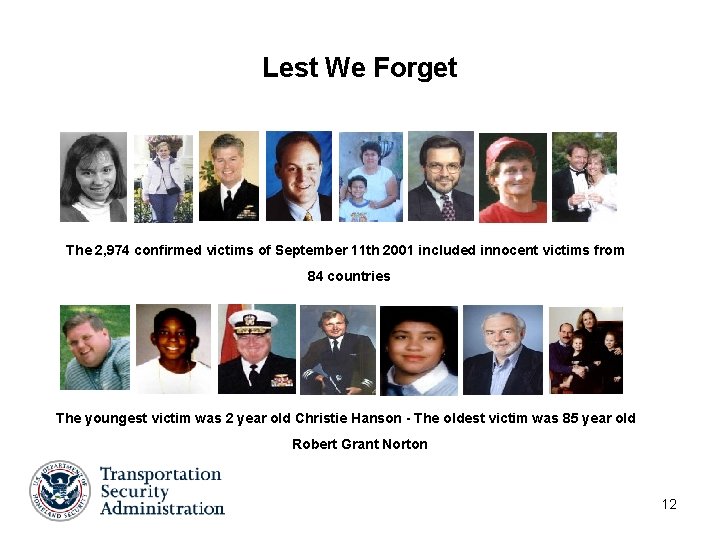
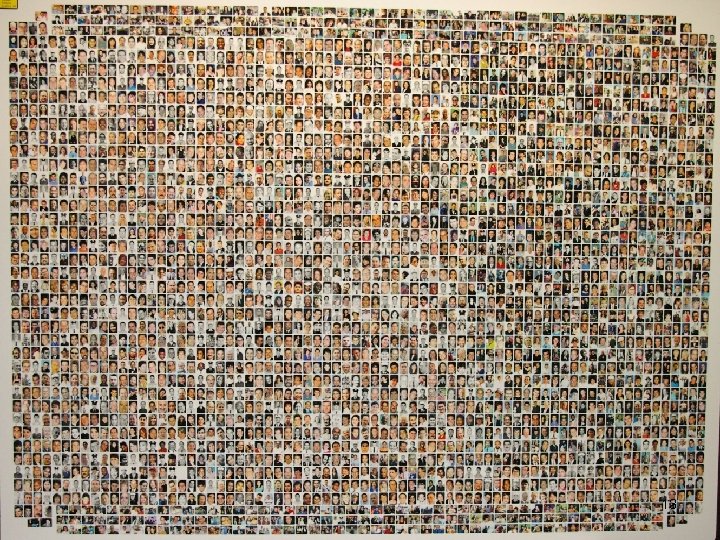
Lest We Forget The 2, 974 confirmed victims of September 11 th 2001 included innocent victims from 84 countries The youngest victim was 2 year old Christie Hanson - The oldest victim was 85 year old Robert Grant Norton 12
13
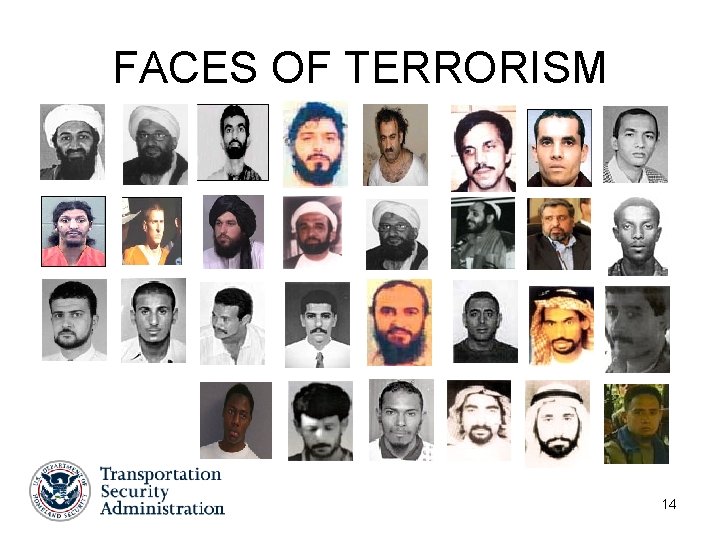
FACES OF TERRORISM 14
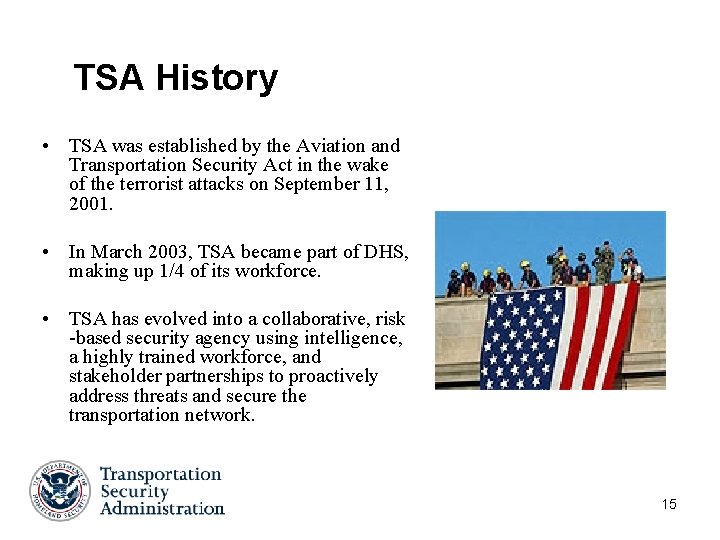
TSA History • TSA was established by the Aviation and Transportation Security Act in the wake of the terrorist attacks on September 11, 2001. • In March 2003, TSA became part of DHS, making up 1/4 of its workforce. • TSA has evolved into a collaborative, risk -based security agency using intelligence, a highly trained workforce, and stakeholder partnerships to proactively address threats and secure the transportation network. 15
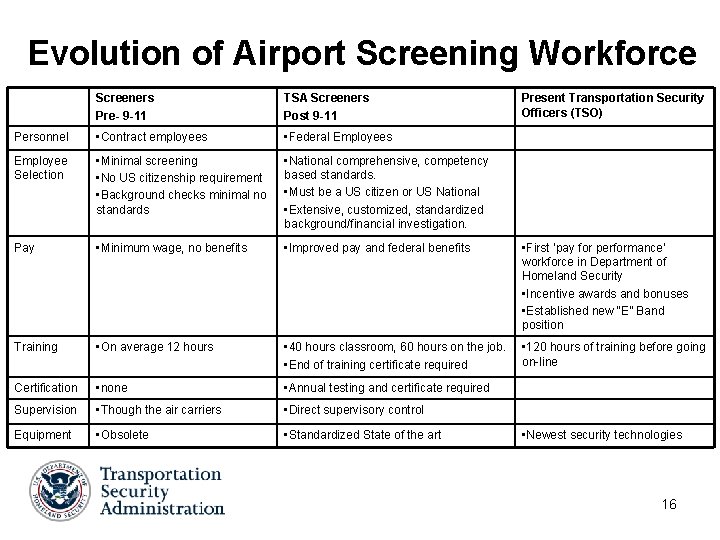
Evolution of Airport Screening Workforce Screeners Pre- 9 -11 TSA Screeners Post 9 -11 Present Transportation Security Officers (TSO) Personnel • Contract employees • Federal Employees Employee Selection • Minimal screening • No US citizenship requirement • Background checks minimal no standards • National comprehensive, competency based standards. • Must be a US citizen or US National • Extensive, customized, standardized background/financial investigation. Pay • Minimum wage, no benefits • Improved pay and federal benefits • First ‘pay for performance’ workforce in Department of Homeland Security • Incentive awards and bonuses • Established new “E” Band position Training • On average 12 hours • 40 hours classroom, 60 hours on the job. • End of training certificate required • 120 hours of training before going on-line Certification • none • Annual testing and certificate required Supervision • Though the air carriers • Direct supervisory control Equipment • Obsolete • Standardized State of the art • Newest security technologies 16
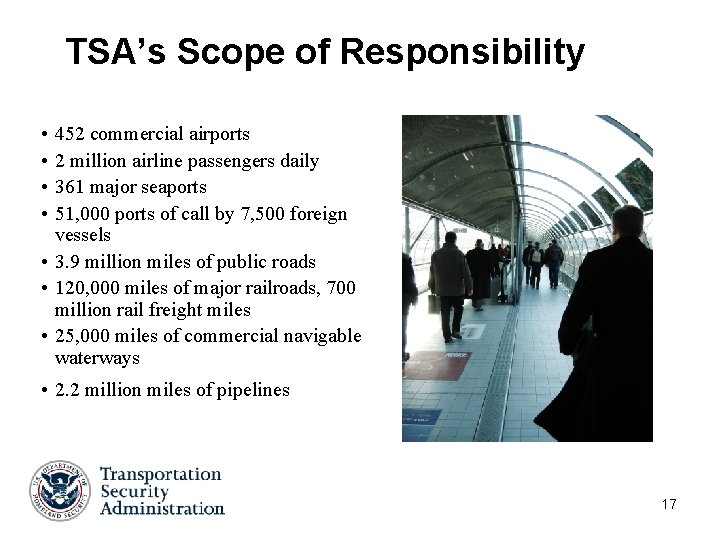
TSA’s Scope of Responsibility • • 452 commercial airports 2 million airline passengers daily 361 major seaports 51, 000 ports of call by 7, 500 foreign vessels • 3. 9 million miles of public roads • 120, 000 miles of major railroads, 700 million rail freight miles • 25, 000 miles of commercial navigable waterways • 2. 2 million miles of pipelines 17
TSA Strategic Approach • Employ a risk-based approach to security • Implement layers of security • Use unpredictable security measures and deploy a flexible, well- trained workforce • Consistent and complimentary security standards • Work closely with stakeholders 18
Layers of Security • Intelligence • Watch list matching • Screening passengers by observation techniques (SPOT) • Ticket Document Checker • 43, 000 highly trained Transportation Security Officers at the nation’s airports • Explosive detection technology • Explosive detection canines • Hardened cockpit doors • Federal flight deck officers (FFDO) • Crew member self-defense training • Federal Air Marshals • Passengers 19
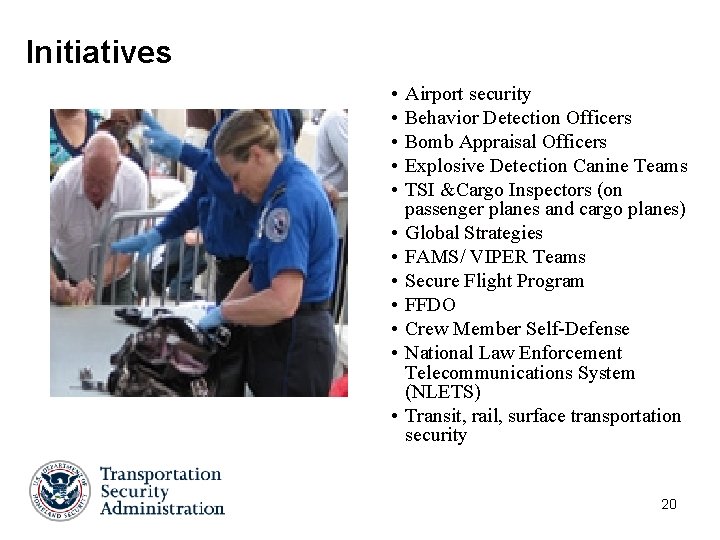
Initiatives • • • Airport security Behavior Detection Officers Bomb Appraisal Officers Explosive Detection Canine Teams TSI &Cargo Inspectors (on passenger planes and cargo planes) Global Strategies FAMS/ VIPER Teams Secure Flight Program FFDO Crew Member Self-Defense National Law Enforcement Telecommunications System (NLETS) Transit, rail, surface transportation security 20
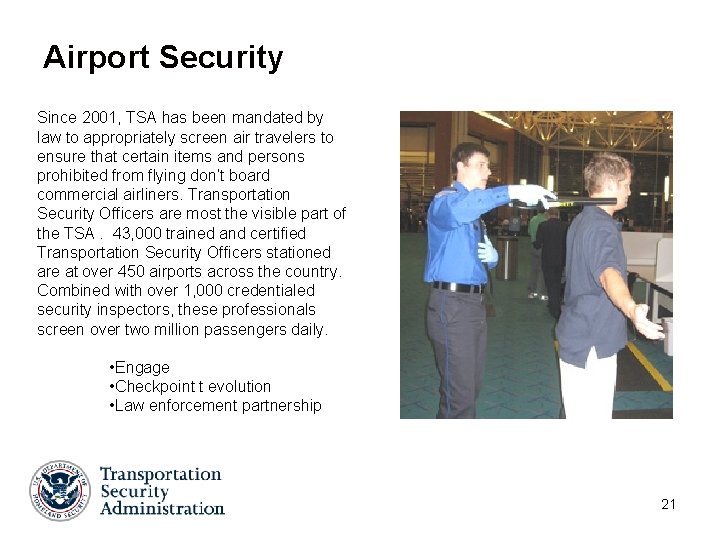
Airport Security Since 2001, TSA has been mandated by law to appropriately screen air travelers to ensure that certain items and persons prohibited from flying don’t board commercial airliners. Transportation Security Officers are most the visible part of the TSA. 43, 000 trained and certified Transportation Security Officers stationed are at over 450 airports across the country. Combined with over 1, 000 credentialed security inspectors, these professionals screen over two million passengers daily. • Engage • Checkpoint t evolution • Law enforcement partnership 21
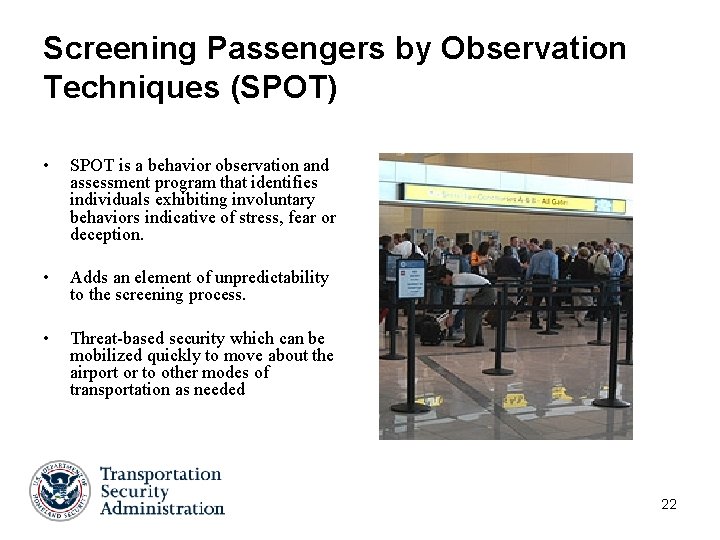
Screening Passengers by Observation Techniques (SPOT) • SPOT is a behavior observation and assessment program that identifies individuals exhibiting involuntary behaviors indicative of stress, fear or deception. • Adds an element of unpredictability to the screening process. • Threat-based security which can be mobilized quickly to move about the airport or to other modes of transportation as needed 22
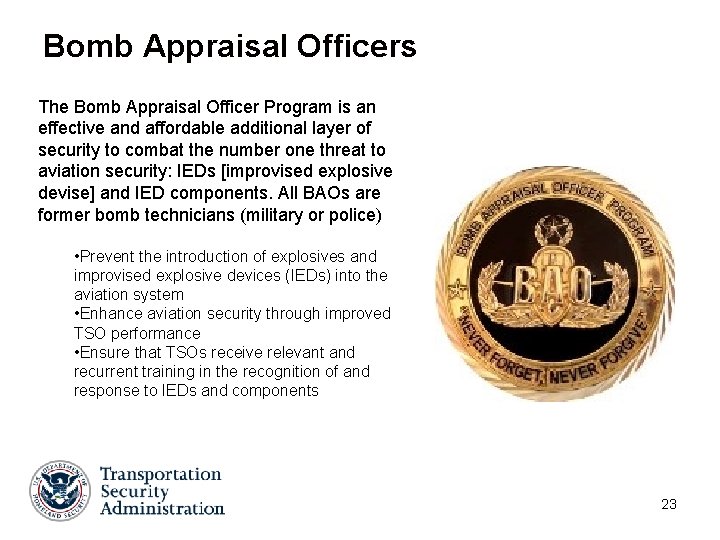
Bomb Appraisal Officers The Bomb Appraisal Officer Program is an effective and affordable additional layer of security to combat the number one threat to aviation security: IEDs [improvised explosive devise] and IED components. All BAOs are former bomb technicians (military or police) • Prevent the introduction of explosives and improvised explosive devices (IEDs) into the aviation system • Enhance aviation security through improved TSO performance • Ensure that TSOs receive relevant and recurrent training in the recognition of and response to IEDs and components 23
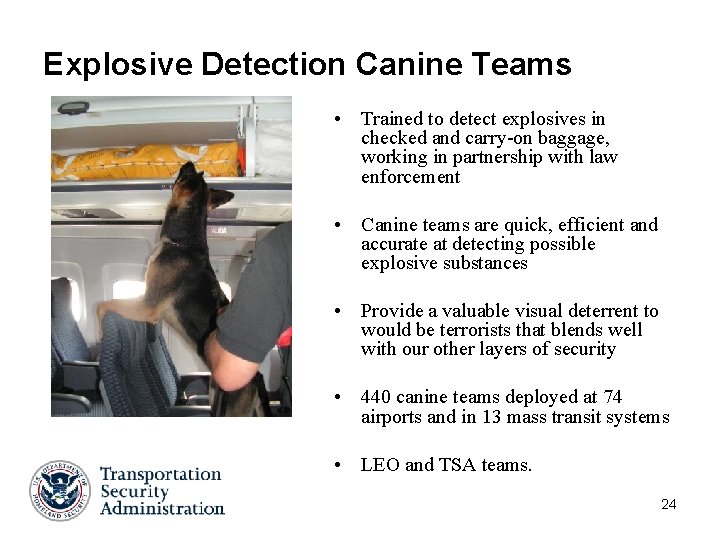
Explosive Detection Canine Teams • Trained to detect explosives in checked and carry-on baggage, working in partnership with law enforcement • Canine teams are quick, efficient and accurate at detecting possible explosive substances • Provide a valuable visual deterrent to would be terrorists that blends well with our other layers of security • 440 canine teams deployed at 74 airports and in 13 mass transit systems • LEO and TSA teams. 24
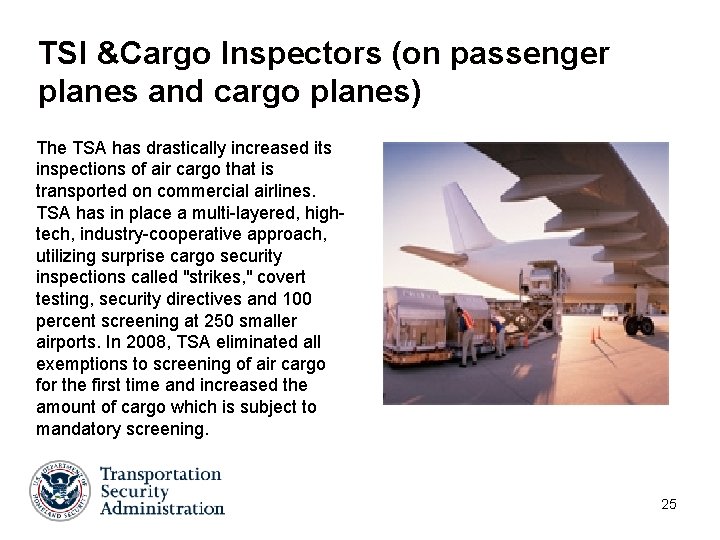
TSI &Cargo Inspectors (on passenger planes and cargo planes) The TSA has drastically increased its inspections of air cargo that is transported on commercial airlines. TSA has in place a multi-layered, hightech, industry-cooperative approach, utilizing surprise cargo security inspections called "strikes, " covert testing, security directives and 100 percent screening at 250 smaller airports. In 2008, TSA eliminated all exemptions to screening of air cargo for the first time and increased the amount of cargo which is subject to mandatory screening. 25
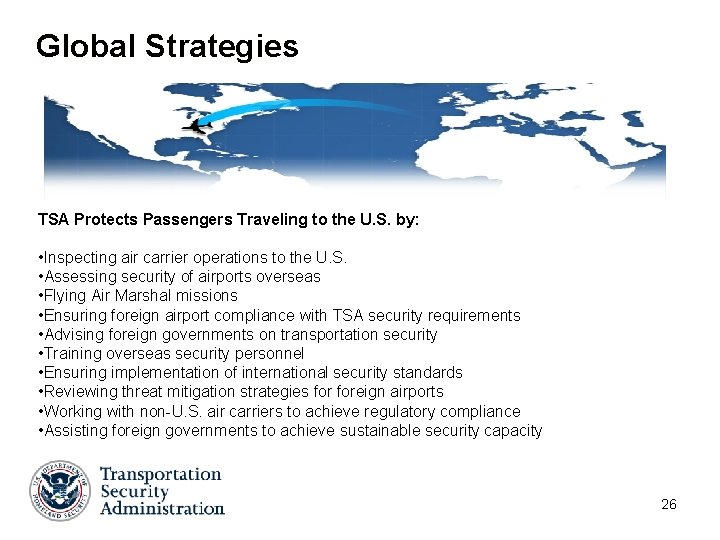
Global Strategies TSA Protects Passengers Traveling to the U. S. by: • Inspecting air carrier operations to the U. S. • Assessing security of airports overseas • Flying Air Marshal missions • Ensuring foreign airport compliance with TSA security requirements • Advising foreign governments on transportation security • Training overseas security personnel • Ensuring implementation of international security standards • Reviewing threat mitigation strategies foreign airports • Working with non-U. S. air carriers to achieve regulatory compliance • Assisting foreign governments to achieve sustainable security capacity 26
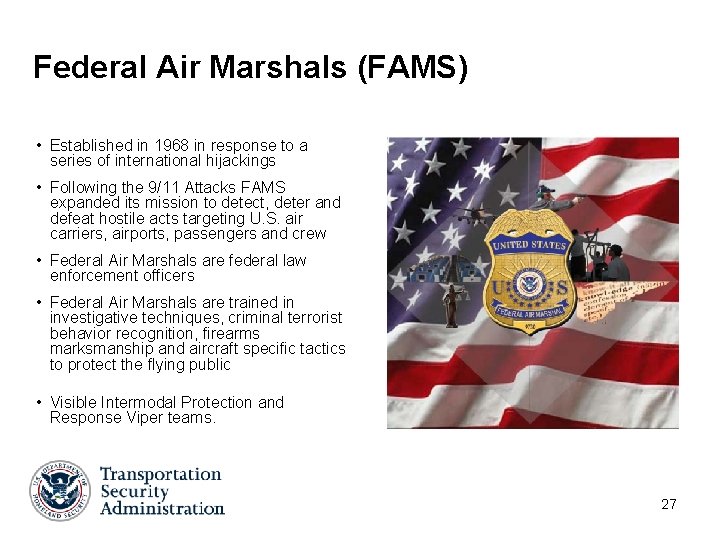
Federal Air Marshals (FAMS) • Established in 1968 in response to a series of international hijackings • Following the 9/11 Attacks FAMS expanded its mission to detect, deter and defeat hostile acts targeting U. S. air carriers, airports, passengers and crew • Federal Air Marshals are federal law enforcement officers • Federal Air Marshals are trained in investigative techniques, criminal terrorist behavior recognition, firearms marksmanship and aircraft specific tactics to protect the flying public • Visible Intermodal Protection and Response Viper teams. 27
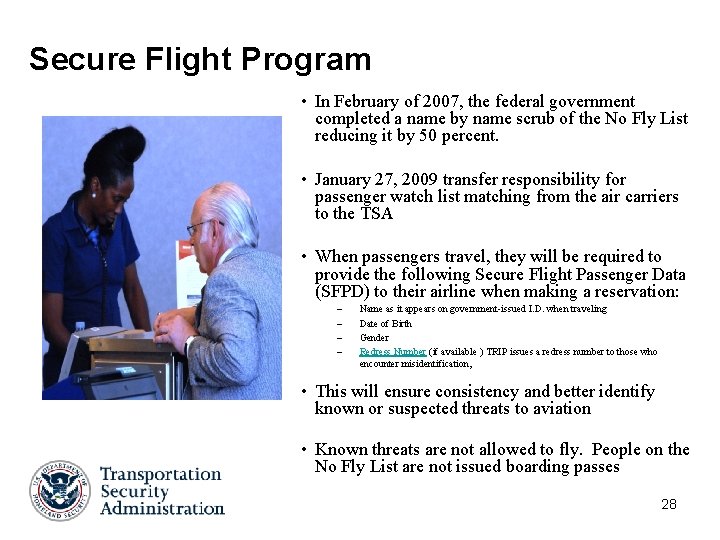
Secure Flight Program • In February of 2007, the federal government completed a name by name scrub of the No Fly List reducing it by 50 percent. • January 27, 2009 transfer responsibility for passenger watch list matching from the air carriers to the TSA • When passengers travel, they will be required to provide the following Secure Flight Passenger Data (SFPD) to their airline when making a reservation: – – Name as it appears on government-issued I. D. when traveling Date of Birth Gender Redress Number (if available ) TRIP issues a redress number to those who encounter misidentification, • This will ensure consistency and better identify known or suspected threats to aviation • Known threats are not allowed to fly. People on the No Fly List are not issued boarding passes 28
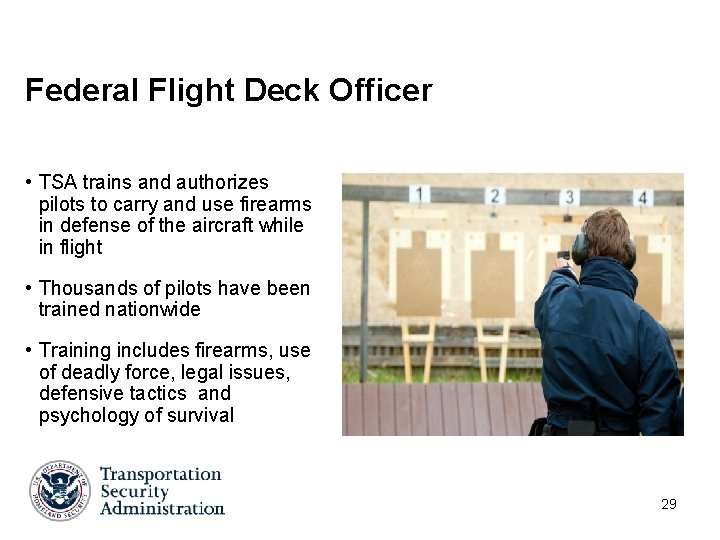
Federal Flight Deck Officer • TSA trains and authorizes pilots to carry and use firearms in defense of the aircraft while in flight • Thousands of pilots have been trained nationwide • Training includes firearms, use of deadly force, legal issues, defensive tactics and psychology of survival 29
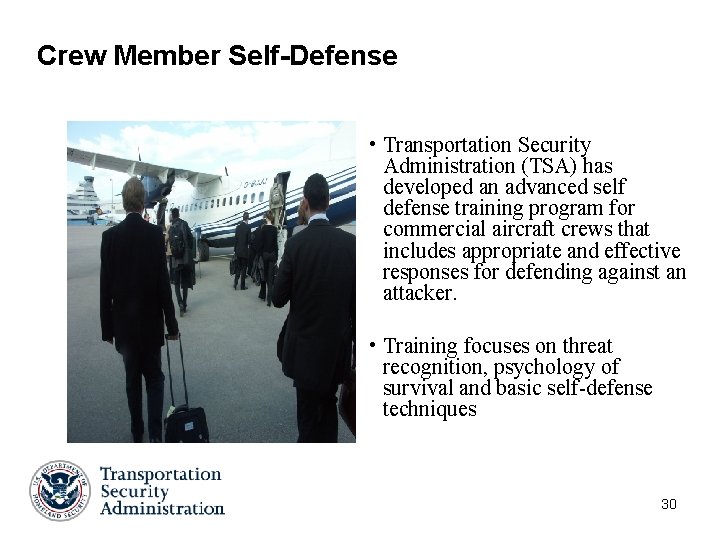
Crew Member Self-Defense • Transportation Security Administration (TSA) has developed an advanced self defense training program for commercial aircraft crews that includes appropriate and effective responses for defending against an attacker. • Training focuses on threat recognition, psychology of survival and basic self-defense techniques 30
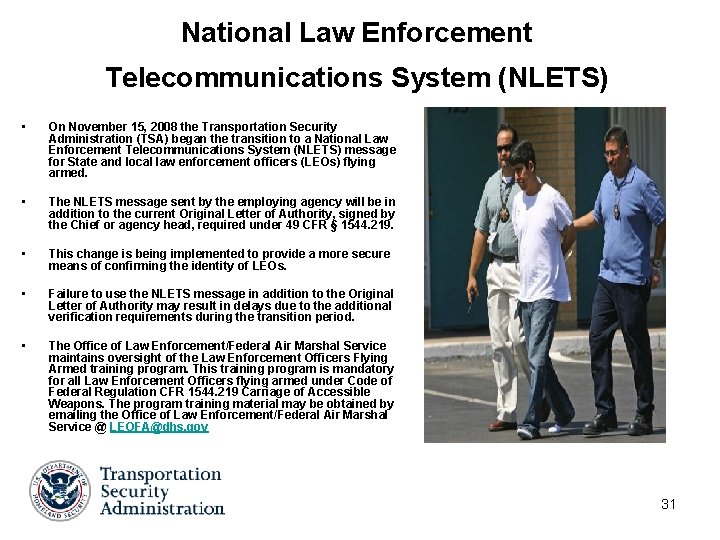
National Law Enforcement Telecommunications System (NLETS) • • On November 15, 2008 the Transportation Security Administration (TSA) began the transition to a National Law Enforcement Telecommunications System (NLETS) message for State and local law enforcement officers (LEOs) flying armed. The NLETS message sent by the employing agency will be in addition to the current Original Letter of Authority, signed by the Chief or agency head, required under 49 CFR § 1544. 219. • This change is being implemented to provide a more secure means of confirming the identity of LEOs. • Failure to use the NLETS message in addition to the Original Letter of Authority may result in delays due to the additional verification requirements during the transition period. • The Office of Law Enforcement/Federal Air Marshal Service maintains oversight of the Law Enforcement Officers Flying Armed training program. This training program is mandatory for all Law Enforcement Officers flying armed under Code of Federal Regulation CFR 1544. 219 Carriage of Accessible Weapons. The program training material may be obtained by emailing the Office of Law Enforcement/Federal Air Marshal Service @ LEOFA@dhs. gov 31
What are the procedures for a State or local Law Enforcement Officer to fly armed? • • Have the operational need to fly armed. The LEO’s employing agency transmits a properly formatted message, via Nlets, to ORI VAFAM 0199. An NLETS receipt, with Unique Alphanumeric Identifier, is transmitted from the Transportation Security Operations Center (TSOC) to the LEO’s employing agency. On the day of travel the LEO checks-in with the airline ticket counter, identifies his/herself and presents the Original Letter of Authority from his/her Chief or Agency Head. The LEO fills out the armed traveler paperwork provided by the airline and proceeds to the Armed LEO Screening Checkpoint. At the TSA Checkpoint the Armed LEO provides the TSA the Unique Alphanumeric Identifier from the NLETS message and displays his/her badge, credentials, boarding pass, a second form of government identification, and required airline paperwork, commonly referred to as Person Carrying Firearms (PCFA) forms. The LEO will complete the LEO Logbook and proceed to his/her boarding gate. At the boarding gate the LEO will provide the airlines armed traveler paperwork and inform the gate agent of his/her presence and status. The LEO then meets with the Pilot in Command, Federal Air Marshals, Federal Flight Deck Officers, and/or other Law Enforcement Officers onboard the flight as directed. 32
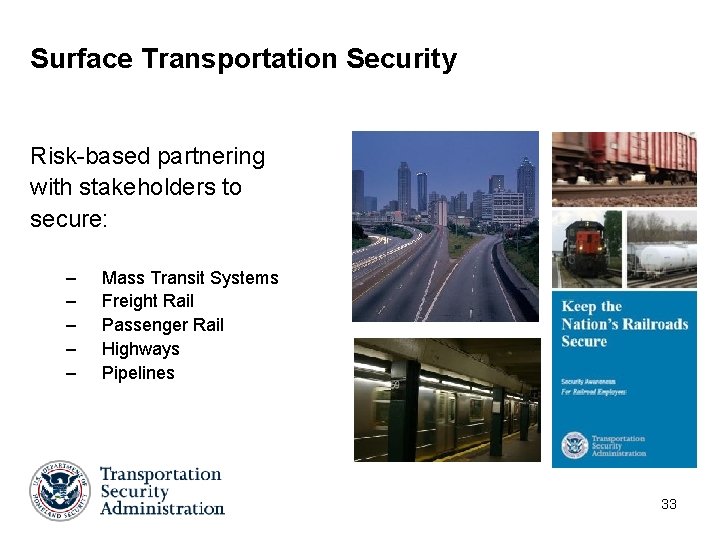
Surface Transportation Security Risk-based partnering with stakeholders to secure: – – – Mass Transit Systems Freight Rail Passenger Rail Highways Pipelines 33
Newest Technology • Backscatter Advanced Imaging • Advanced X-ray • Liquids Scanner • Next Generation Explosive Trace Detectors • Cast & Prosthesis Scanners 34
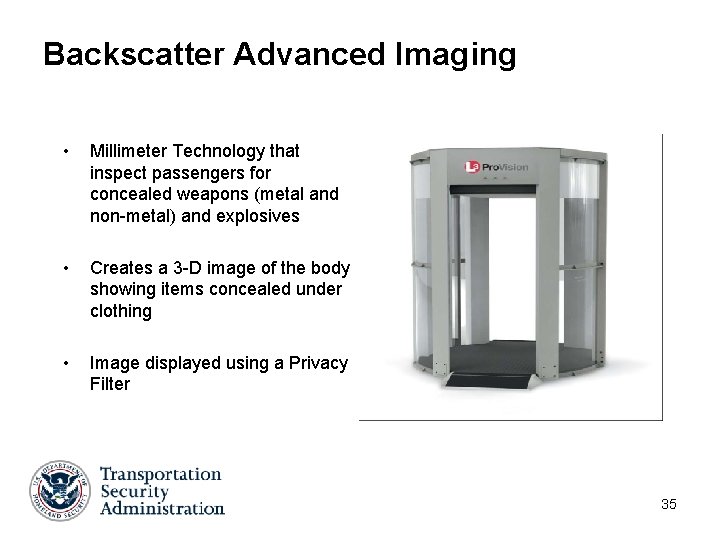
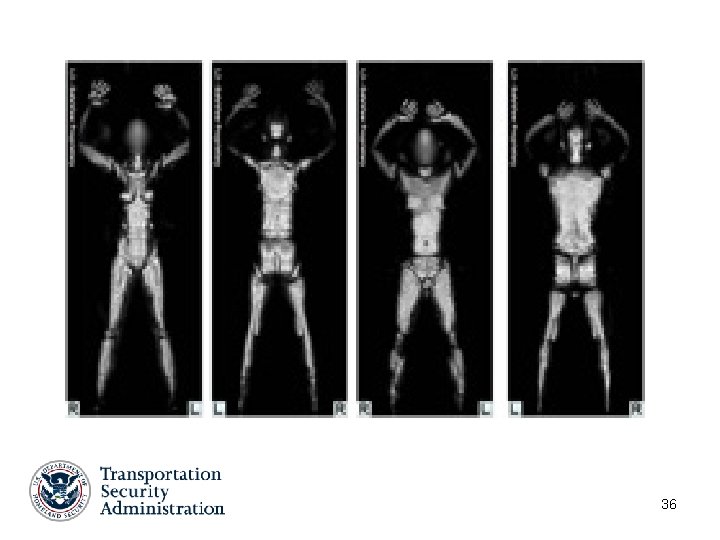
Backscatter Advanced Imaging • Millimeter Technology that inspect passengers for concealed weapons (metal and non-metal) and explosives • Creates a 3 -D image of the body showing items concealed under clothing • Image displayed using a Privacy Filter 35
36
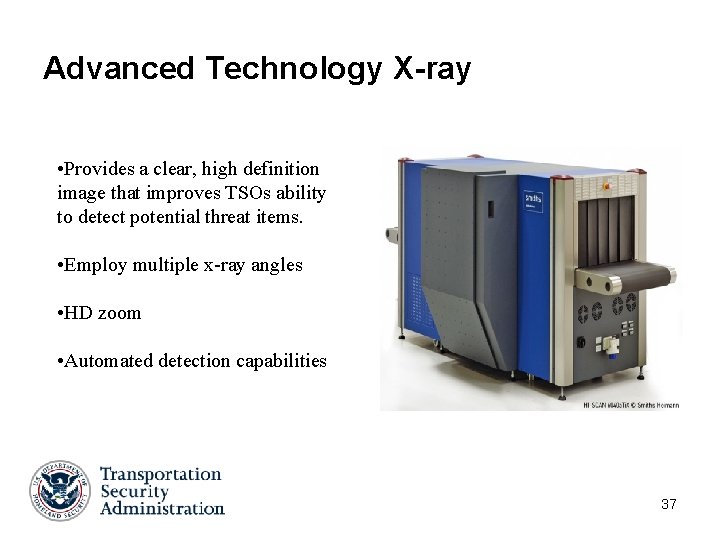
Advanced Technology X-ray • Provides a clear, high definition image that improves TSOs ability to detect potential threat items. • Employ multiple x-ray angles • HD zoom • Automated detection capabilities 37
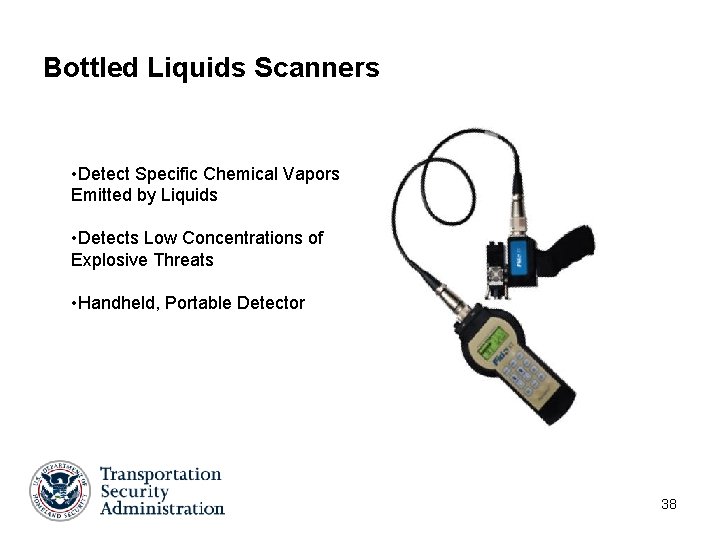
Bottled Liquids Scanners • Detect Specific Chemical Vapors Emitted by Liquids • Detects Low Concentrations of Explosive Threats • Handheld, Portable Detector 38
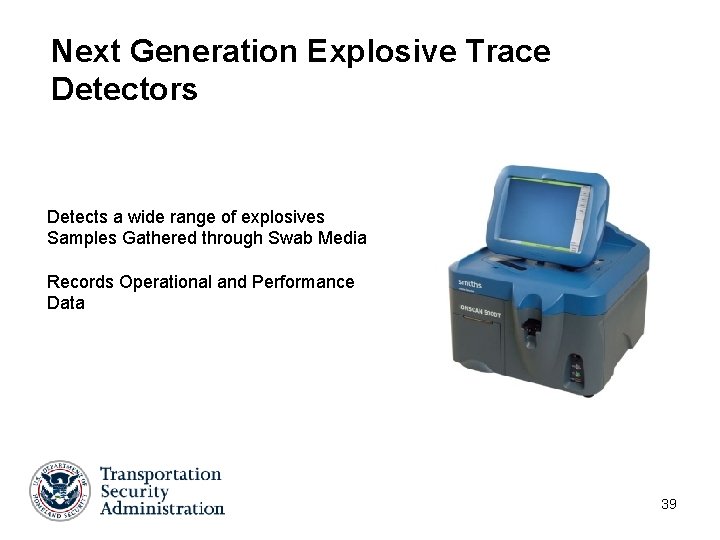
Next Generation Explosive Trace Detectors Detects a wide range of explosives Samples Gathered through Swab Media Records Operational and Performance Data 39
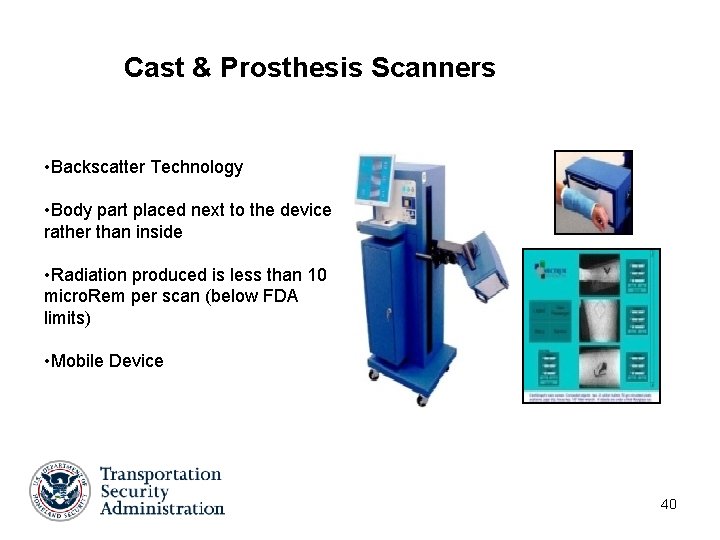
Cast & Prosthesis Scanners • Backscatter Technology • Body part placed next to the device rather than inside • Radiation produced is less than 10 micro. Rem per scan (below FDA limits) • Mobile Device 40
Joseph Modica Stakeholder Manager Office 631 218 -4615 Cell 631 807 -7788 joseph. modica@dhs. gov www. tsa. gov 41
Questions? 42