
2 3 1 Business operations Worksheet From Edexcel

2. 3. 1. Business operations
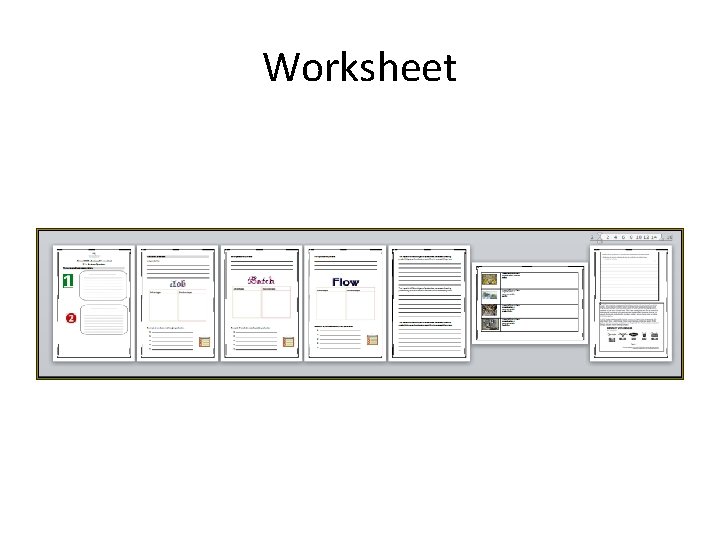
Worksheet
From Edexcel The purpose of business operations: • To produce goods • To provide services Production processes: • Different types: • job • batch • flow • The impact of different types of production processes: keeping productivity up and costs down and allow for competitive prices Impacts of technology on production: • Balancing cost, productivity, quality and flexibility
Lesson objectives To be able to identify the purpose of business operations To be able to assess production processes To be able to discuss the impacts of technology on production
Starter • Can you describe the difference between a product and a service – using the words tangible and intangible?
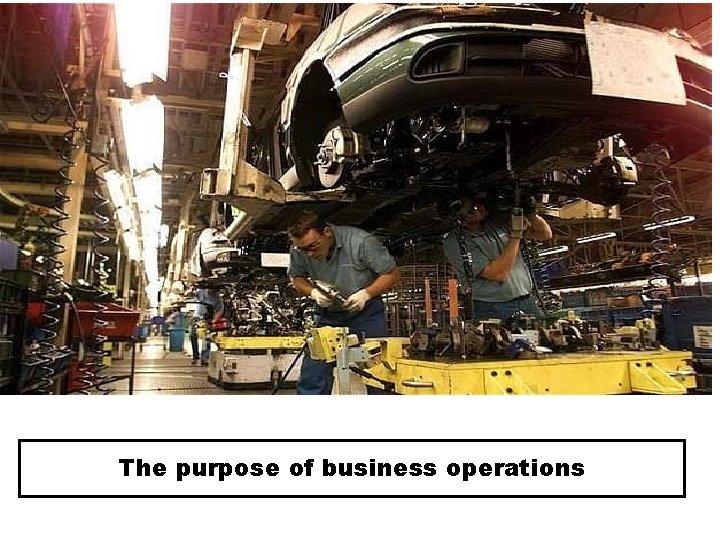
The impact of competition on business decision The purpose of business operations making
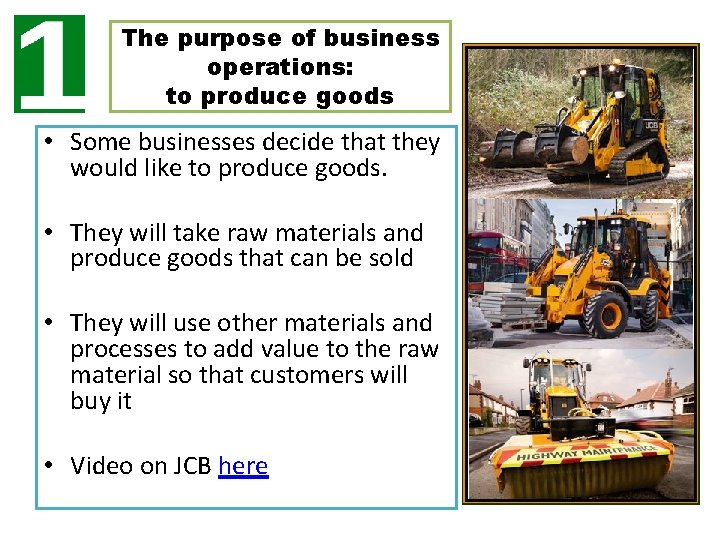
The purpose of business operations: to produce goods • Some businesses decide that they would like to produce goods. • They will take raw materials and produce goods that can be sold • They will use other materials and processes to add value to the raw material so that customers will buy it • Video on JCB here
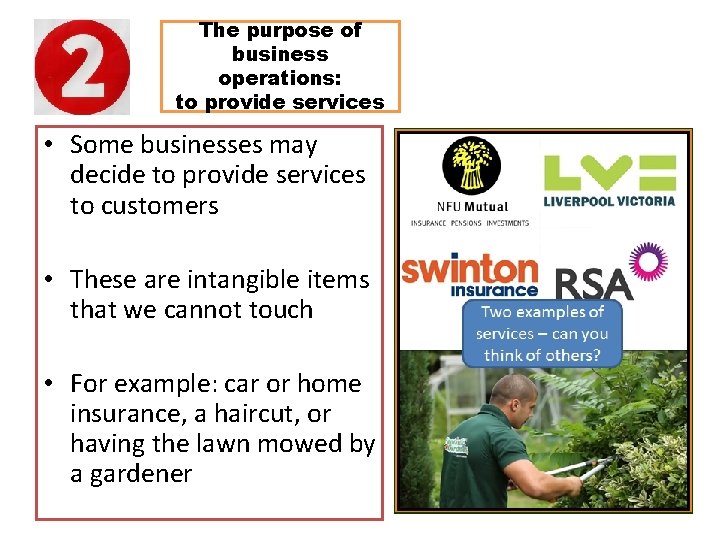
The purpose of business operations: to provide services • Some businesses may decide to provide services to customers • These are intangible items that we cannot touch • For example: car or home insurance, a haircut, or having the lawn mowed by a gardener
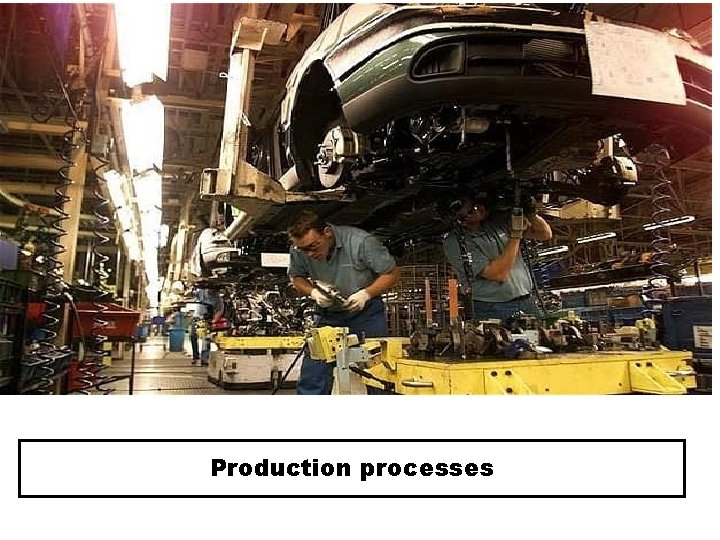
The impact of competition on business decision Production processes making
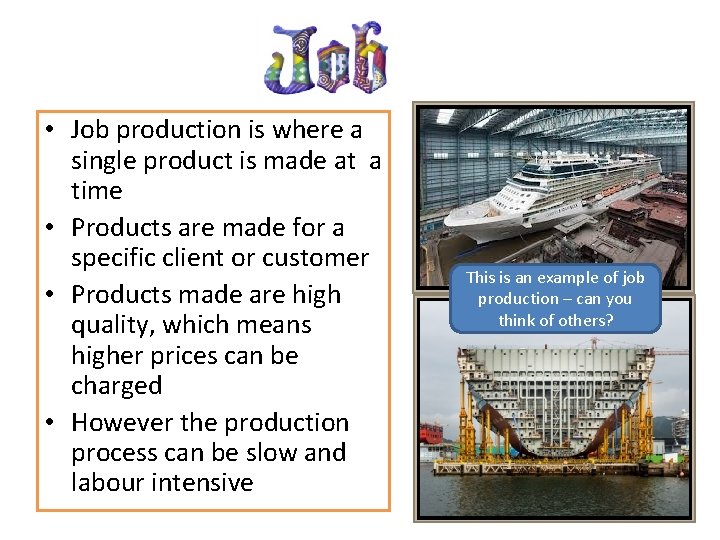
• Job production is where a single product is made at a time • Products are made for a specific client or customer • Products made are high quality, which means higher prices can be charged • However the production process can be slow and labour intensive This is an example of job production – can you think of others?
Advantages Disadvantages
Advantages of job production • Bespoke, unique, one off, to customers measurements or specifications e. g. a kitchen • Very motivated workers who can see one item made from start to finish • Motivated workers are normally more productive and have lower rates of absenteeism • Higher prices can be charged to the customers
Disadvantages of job production • Skilled labour and craftsmen are expensive • Wide range of tools may be required

Examples of job production
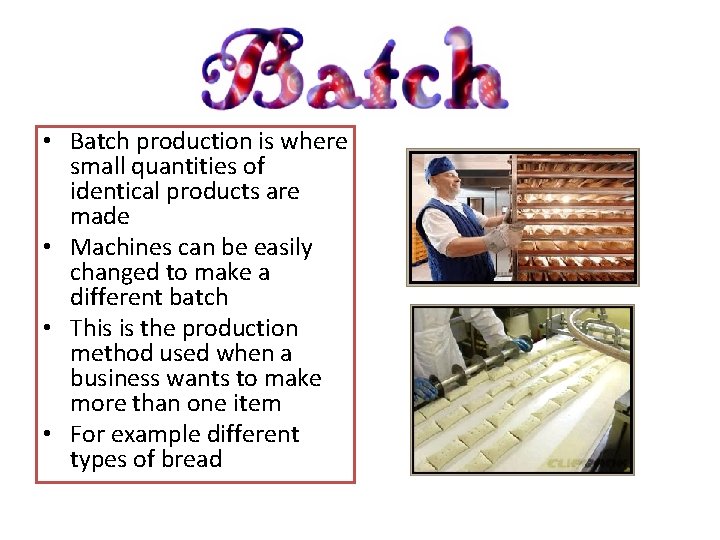
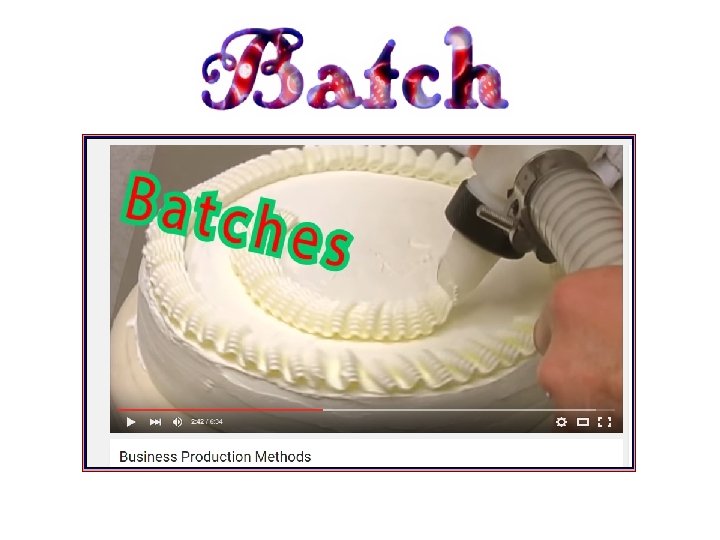
• Batch production is where small quantities of identical products are made • Machines can be easily changed to make a different batch • This is the production method used when a business wants to make more than one item • For example different types of bread
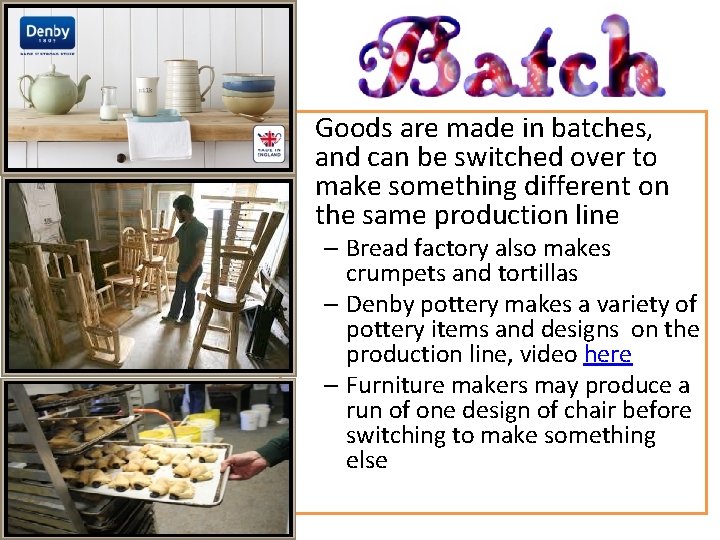
• Goods are made in batches, and can be switched over to make something different on the same production line – Bread factory also makes crumpets and tortillas – Denby pottery makes a variety of pottery items and designs on the production line, video here – Furniture makers may produce a run of one design of chair before switching to make something else
Batch production Advantages Disadvantages
Advantages batch production • Flexibility because production can be changed to meet customer needs or fluctuations in demand • Standard production of items means it can be mechanised, this means less labour involved than in a job production process • Employees specialise so become good at their job
Disadvantages of production • Workers may be less motivated with repetitive work • Idle time between batches needs to be managed as this is wastage because work stops while the machines are changed to make the next product • If one batch takes too long the other batches will all be held up too
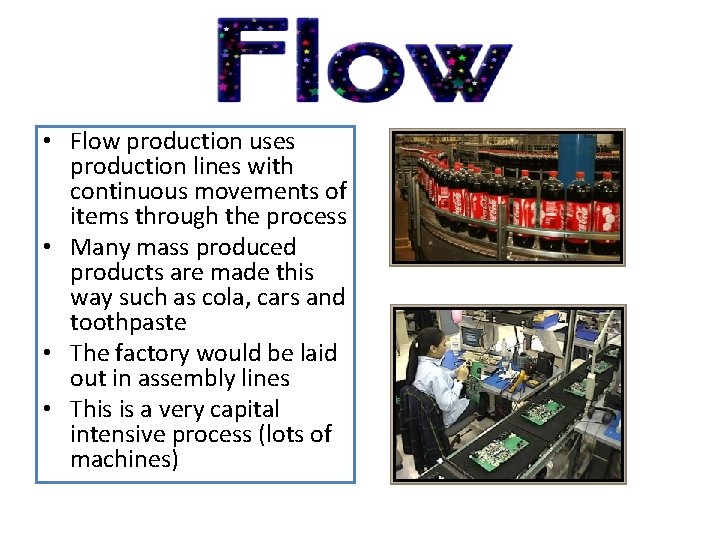
• Flow production uses production lines with continuous movements of items through the process • Many mass produced products are made this way such as cola, cars and toothpaste • The factory would be laid out in assembly lines • This is a very capital intensive process (lots of machines)
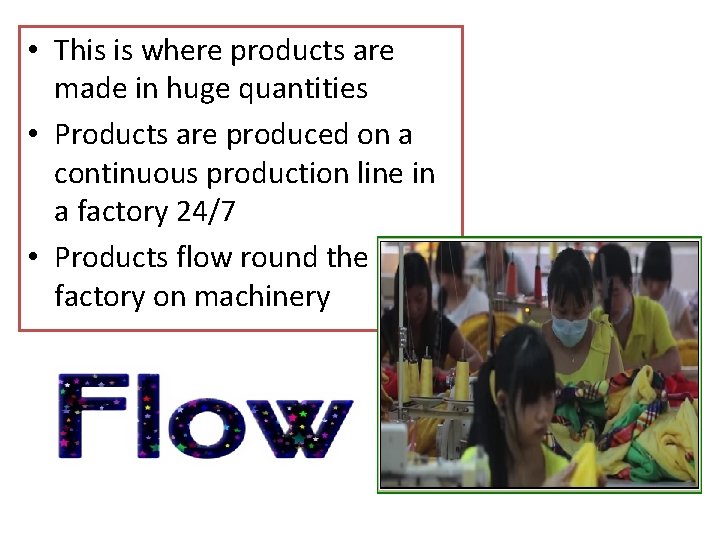
• This is where products are made in huge quantities • Products are produced on a continuous production line in a factory 24/7 • Products flow round the factory on machinery
Advantages Disadvantages
Advantages of flow production • A business can make larger quantities which means they can bulk buy raw materials and save money (economies of scale) • Automated and computerised production means improved quality and more complex designs can be made in shorter times • As production is continuous stocks of parts and raw materials don’t need to be held this means a business can use the JIT system
Disadvantages of flow production • • High costs to buy the factory and machinery Low motivation of staff due to repetitive tasks Break downs and lost production can be costly Very inflexible, hard to change the factory machinery to make different products, the production process will be set up to make just one item e. g. bottled cola
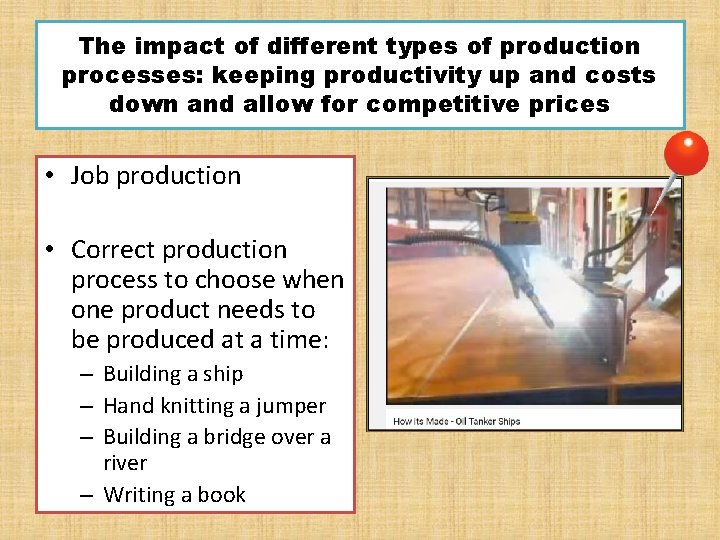
The impact of different types of production processes: keeping productivity up and costs down and allow for competitive prices • Job production • Correct production process to choose when one product needs to be produced at a time: – Building a ship – Hand knitting a jumper – Building a bridge over a river – Writing a book
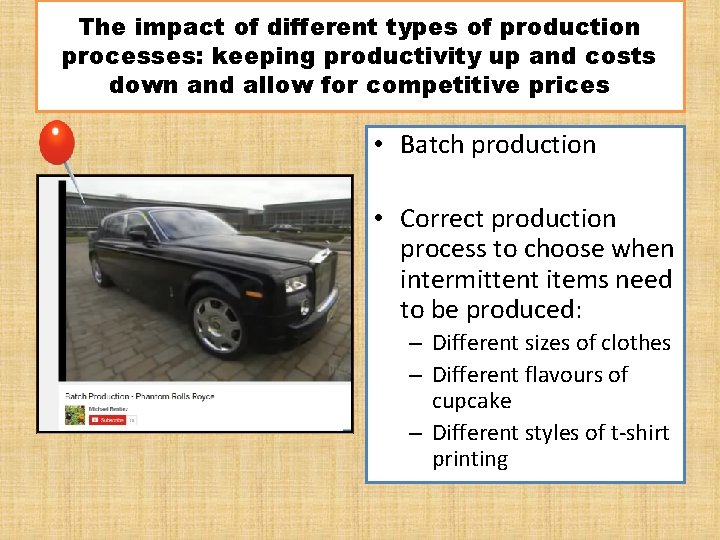
The impact of different types of production processes: keeping productivity up and costs down and allow for competitive prices • Batch production • Correct production process to choose when intermittent items need to be produced: – Different sizes of clothes – Different flavours of cupcake – Different styles of t-shirt printing
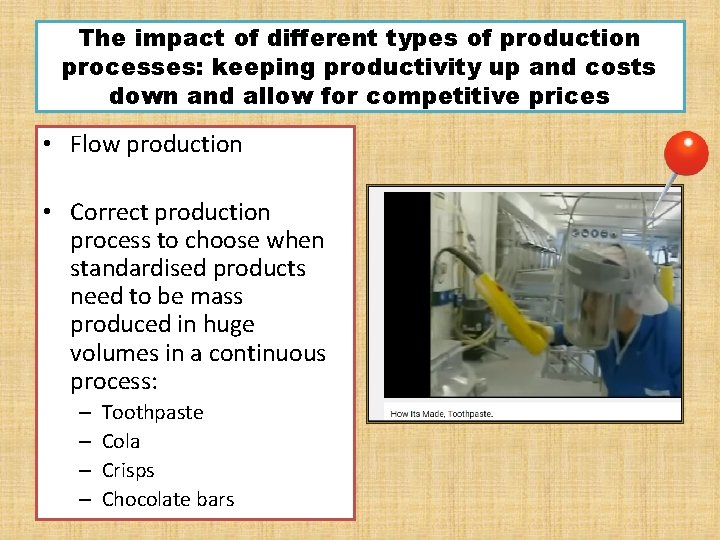
The impact of different types of production processes: keeping productivity up and costs down and allow for competitive prices • Flow production • Correct production process to choose when standardised products need to be mass produced in huge volumes in a continuous process: – – Toothpaste Cola Crisps Chocolate bars
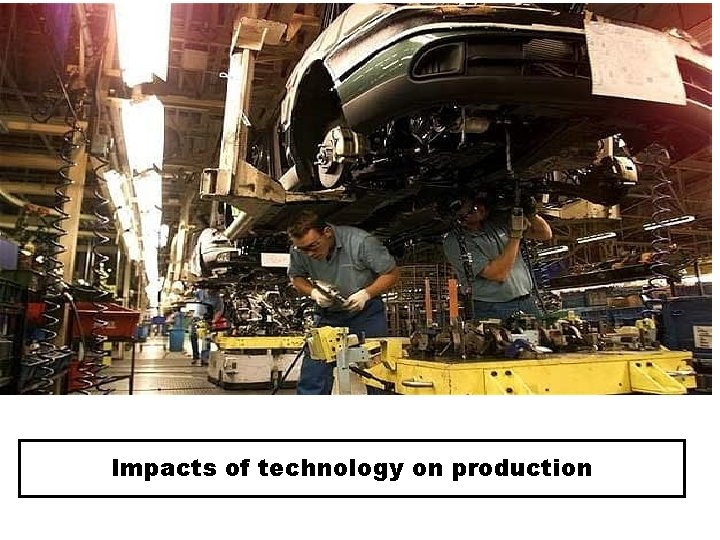
The impact of competition on business decision Impacts of technology on production making
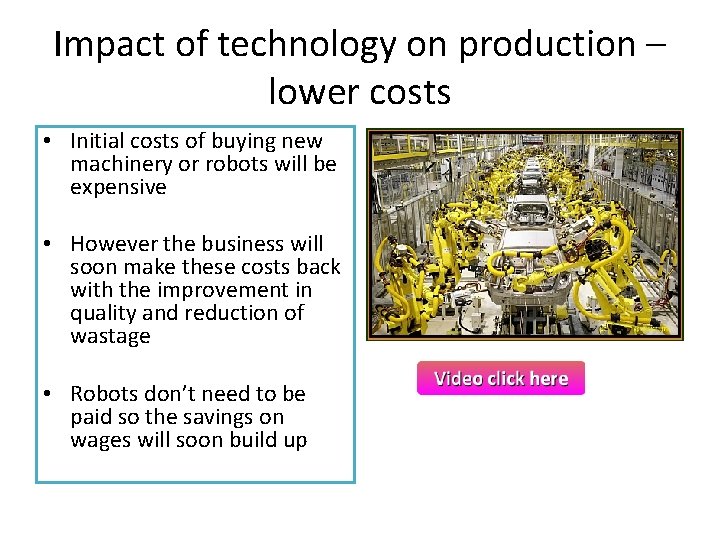
Impact of technology on production – lower costs • Initial costs of buying new machinery or robots will be expensive • However the business will soon make these costs back with the improvement in quality and reduction of wastage • Robots don’t need to be paid so the savings on wages will soon build up
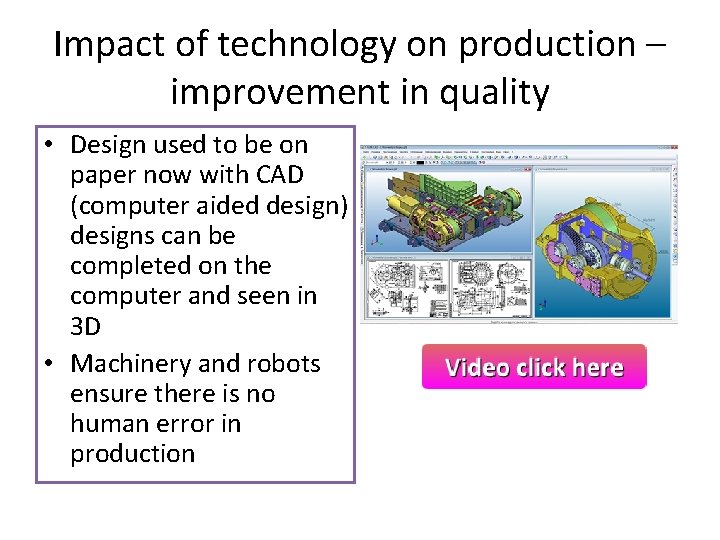
Impact of technology on production – improvement in quality • Design used to be on paper now with CAD (computer aided design) designs can be completed on the computer and seen in 3 D • Machinery and robots ensure there is no human error in production
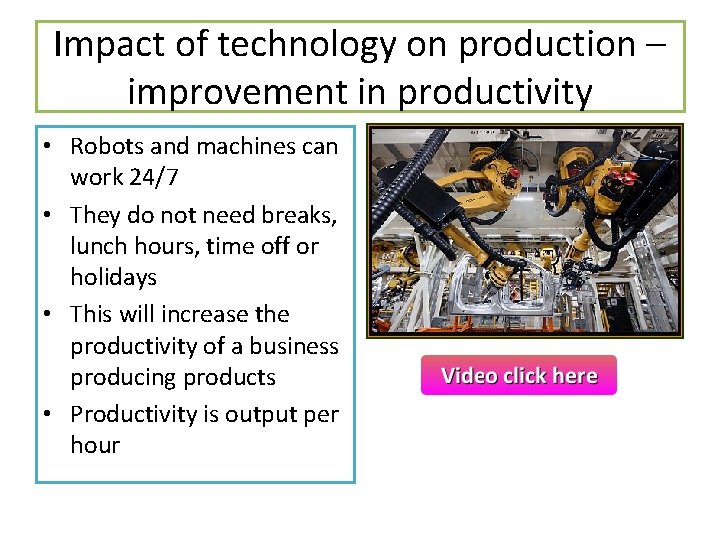
Impact of technology on production – improvement in productivity • Robots and machines can work 24/7 • They do not need breaks, lunch hours, time off or holidays • This will increase the productivity of a business producing products • Productivity is output per hour
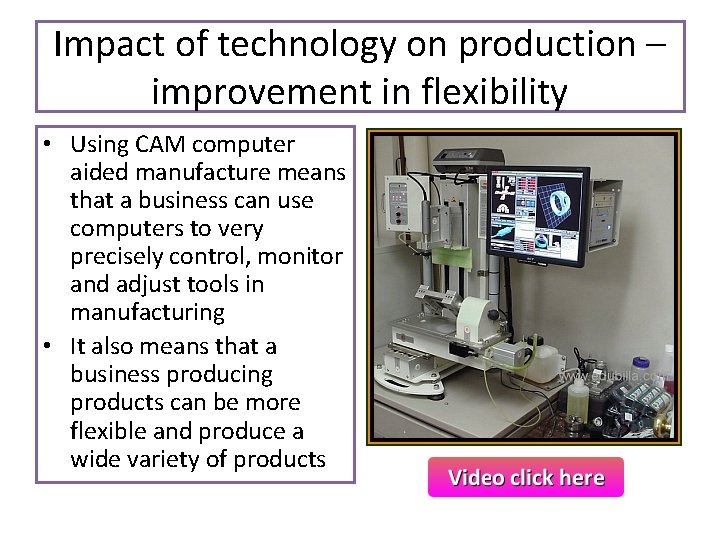
Impact of technology on production – improvement in flexibility • Using CAM computer aided manufacture means that a business can use computers to very precisely control, monitor and adjust tools in manufacturing • It also means that a business producing products can be more flexible and produce a wide variety of products
Plenary • Job, batch or flow? Watch these 7 clips and decide • Clip 1 • Clip 2 • Clip 3 • Clip 4 • Clip 5 • Clip 6 • Clip 7

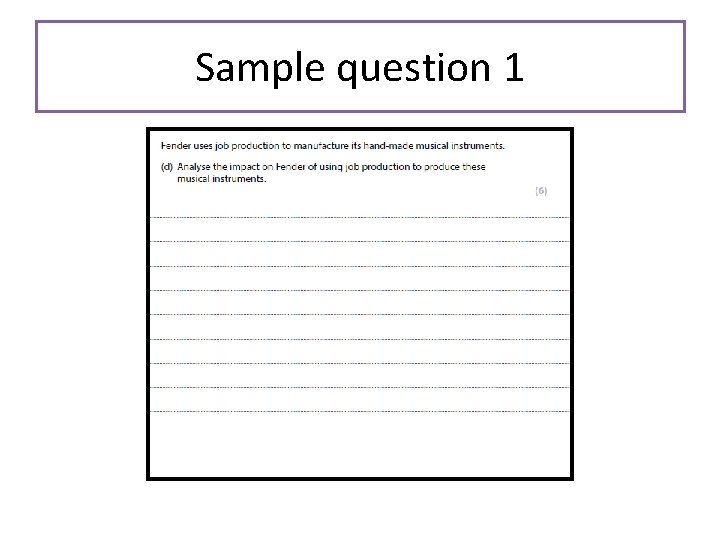
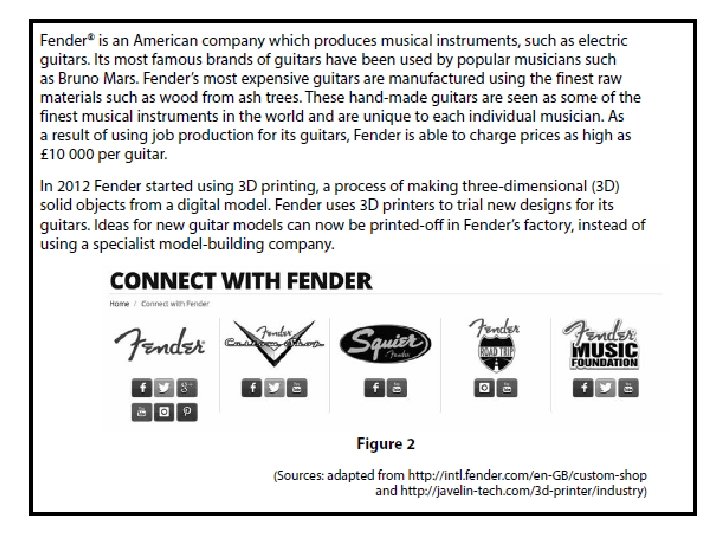
Sample question 1
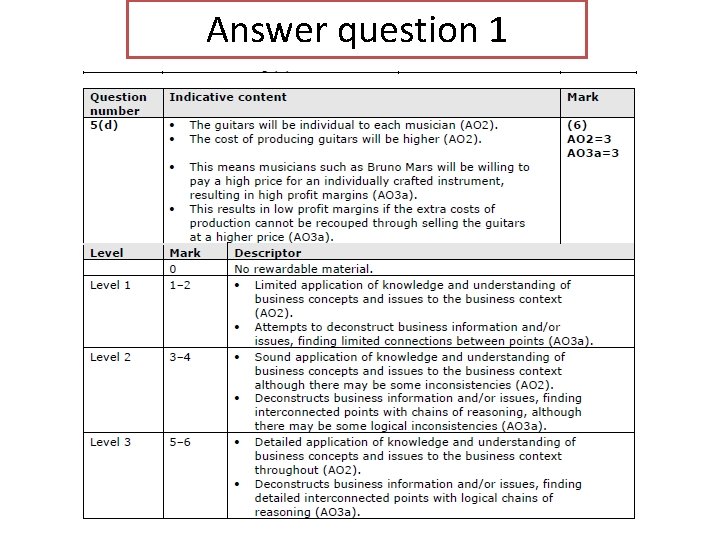
Answer question 1

Written by Sarah Hilton ©
- Slides: 39