
2 2 Reproduction Reproduction is critical for the
- Slides: 28
2. 2 Reproduction • Reproduction is critical for the survival of a species. There are 2 types of reproduction. 1. Asexual 2. Sexual
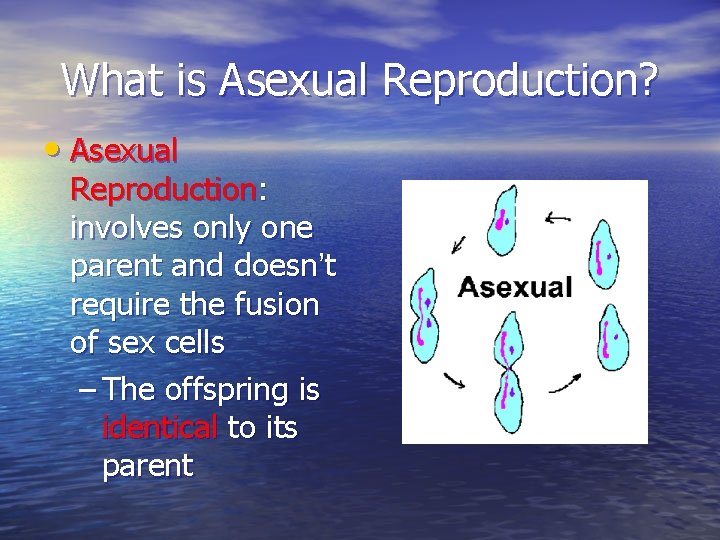
What is Asexual Reproduction? • Asexual Reproduction: involves only one parent and doesn’t require the fusion of sex cells – The offspring is identical to its parent
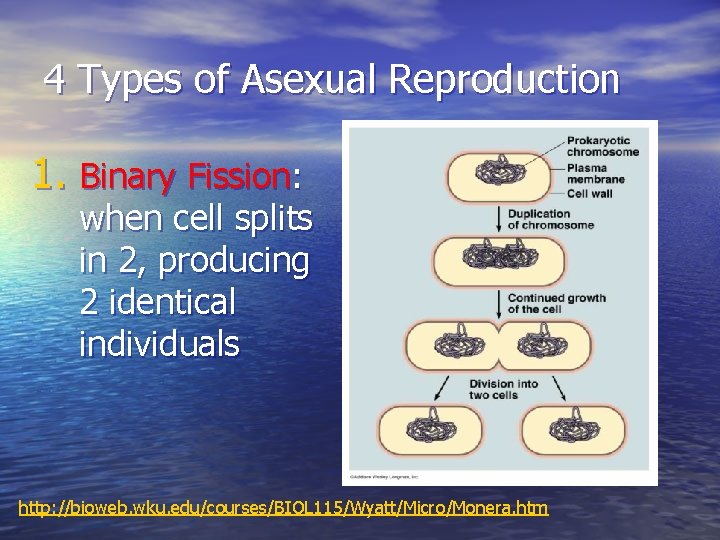
4 Types of Asexual Reproduction 1. Binary Fission: when cell splits in 2, producing 2 identical individuals http: //bioweb. wku. edu/courses/BIOL 115/Wyatt/Micro/Monera. htm
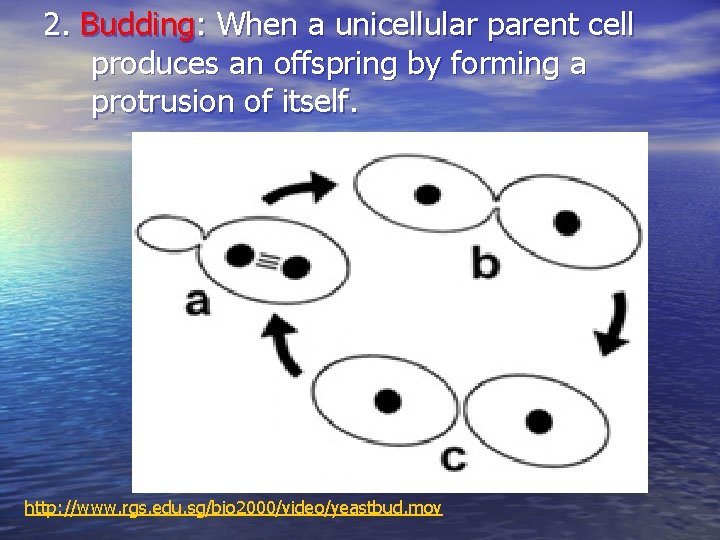
2. Budding: When a unicellular parent cell produces an offspring by forming a protrusion of itself. http: //www. rgs. edu. sg/bio 2000/video/yeastbud. mov
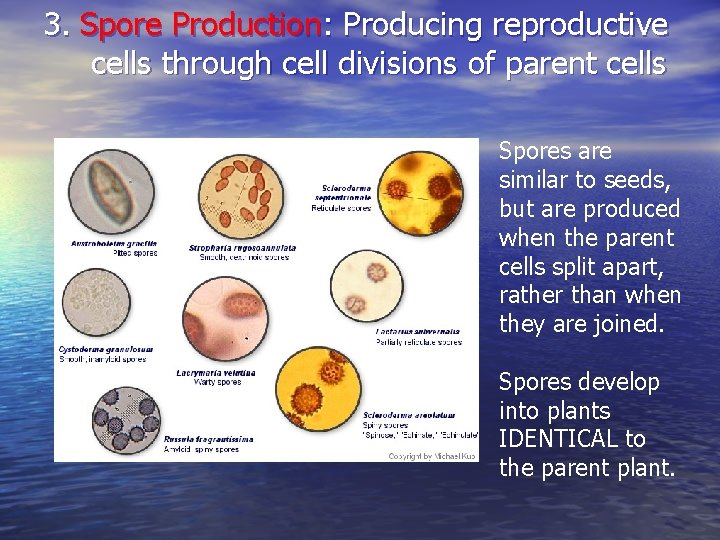
3. Spore Production: Producing reproductive cells through cell divisions of parent cells Spores are similar to seeds, but are produced when the parent cells split apart, rather than when they are joined. Spores develop into plants IDENTICAL to the parent plant.
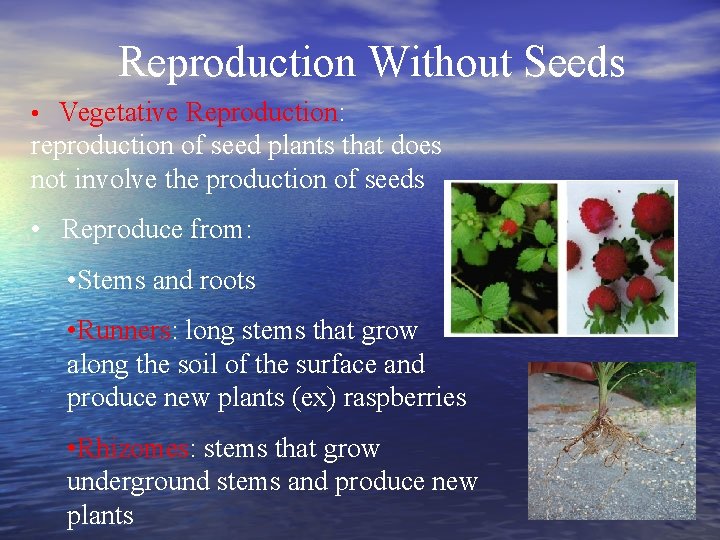
Reproduction Without Seeds • Vegetative Reproduction: reproduction of seed plants that does not involve the production of seeds • Reproduce from: • Stems and roots • Runners: long stems that grow along the soil of the surface and produce new plants (ex) raspberries • Rhizomes: stems that grow underground stems and produce new plants
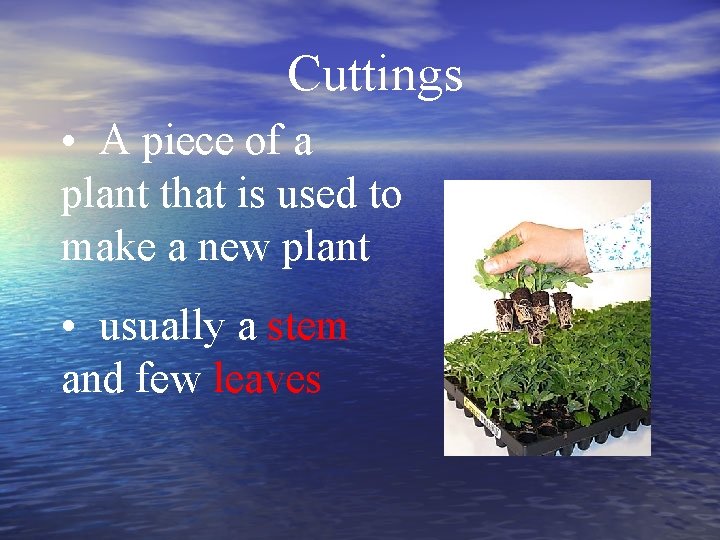
Cuttings • A piece of a plant that is used to make a new plant • usually a stem and few leaves
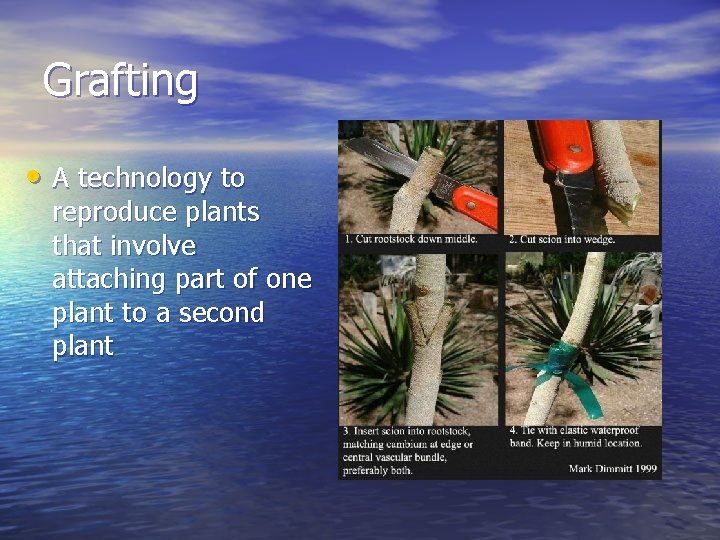
Grafting • A technology to reproduce plants that involve attaching part of one plant to a second plant
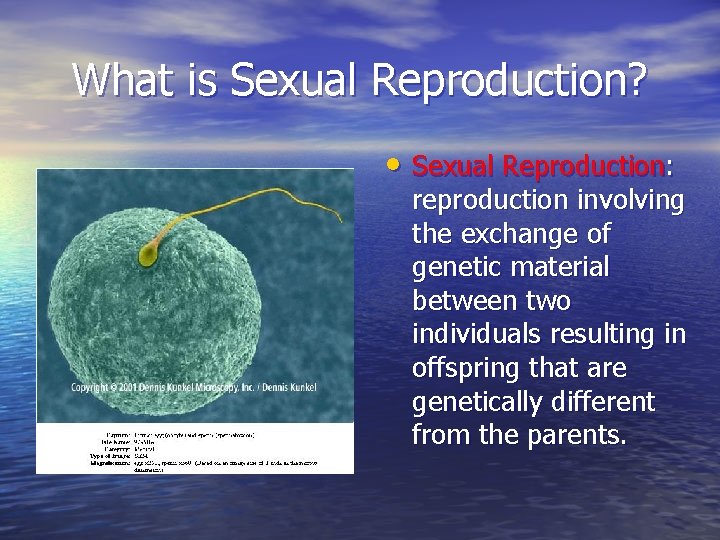
What is Sexual Reproduction? • Sexual Reproduction: reproduction involving the exchange of genetic material between two individuals resulting in offspring that are genetically different from the parents.
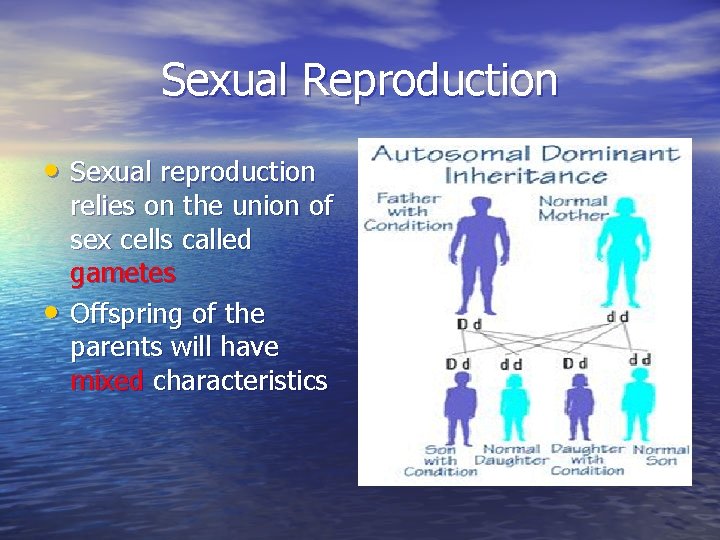
Sexual Reproduction • Sexual reproduction • relies on the union of sex cells called gametes Offspring of the parents will have mixed characteristics
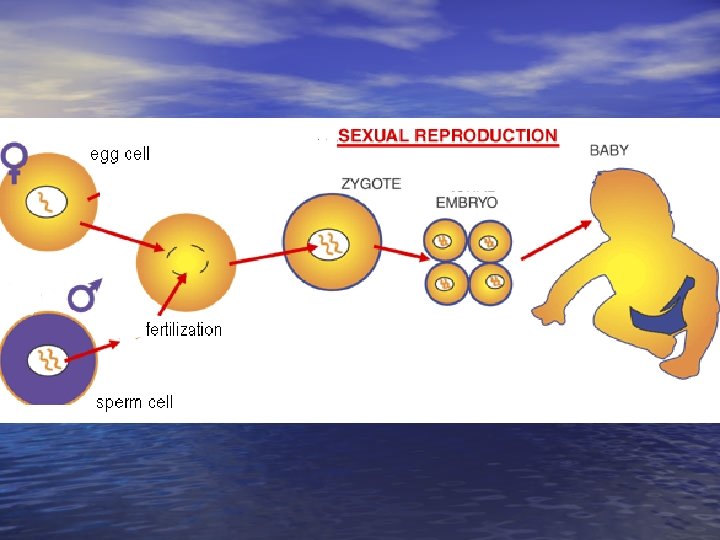
Sexual Reproduction in Animals • Male gametes are called sperm • Female gametes are called egg cells or ova • When a sperm and egg cell come together this is called fertilization – Only 1 sperm cell can fertilize an egg cell
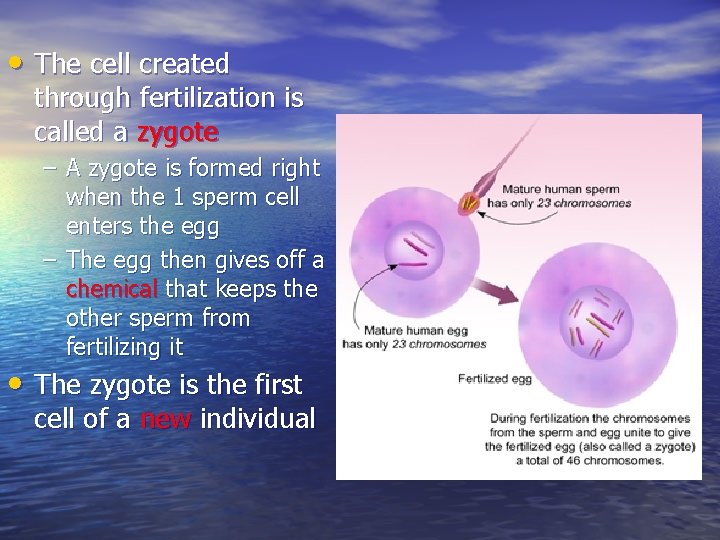
• The cell created through fertilization is called a zygote – A zygote is formed right when the 1 sperm cell enters the egg – The egg then gives off a chemical that keeps the other sperm from fertilizing it • The zygote is the first cell of a new individual
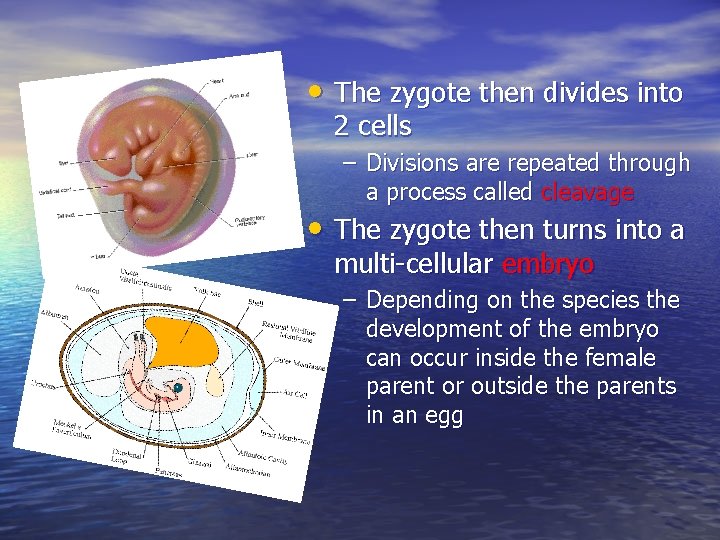
• The zygote then divides into 2 cells – Divisions are repeated through a process called cleavage • The zygote then turns into a multi-cellular embryo – Depending on the species the development of the embryo can occur inside the female parent or outside the parents in an egg
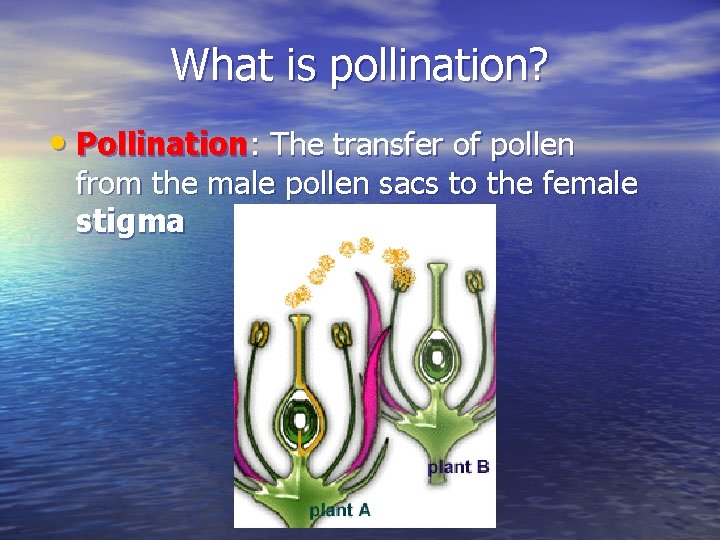
What is pollination? • Pollination: The transfer of pollen from the male pollen sacs to the female stigma
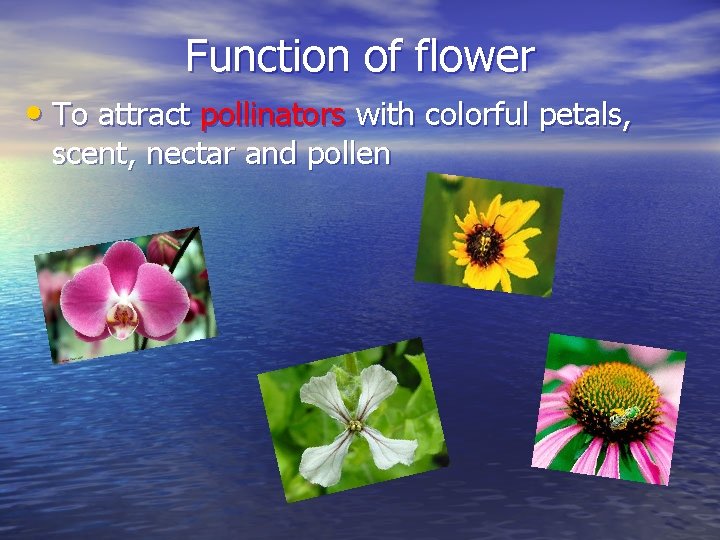
Function of flower • To attract pollinators with colorful petals, scent, nectar and pollen
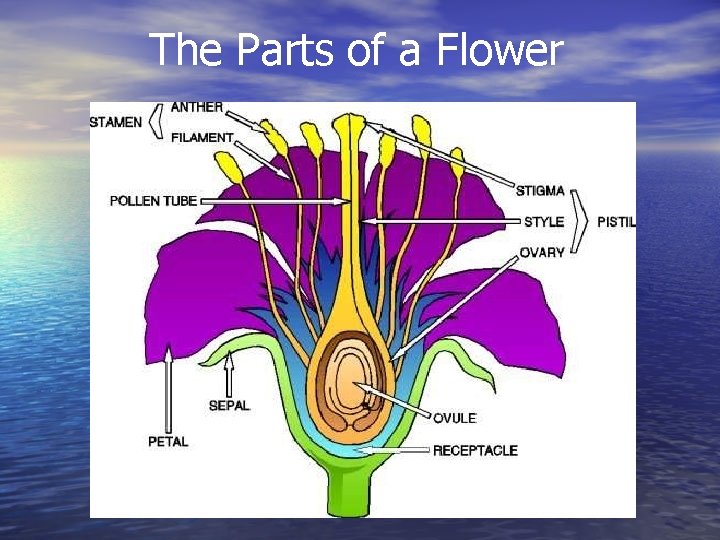
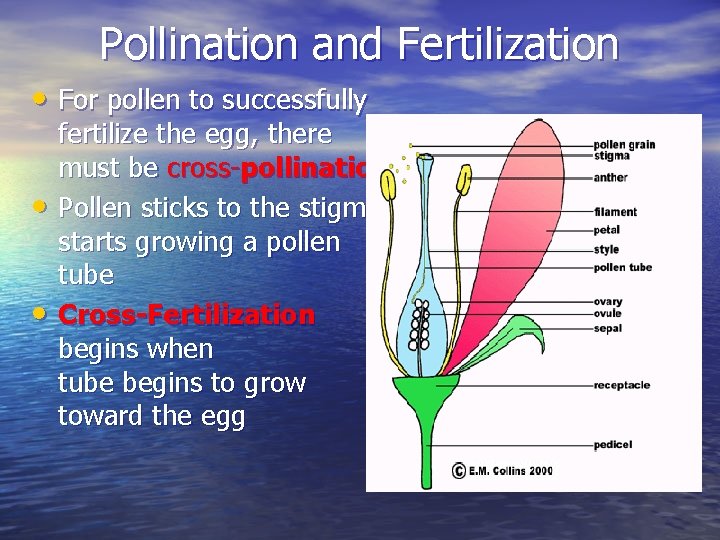
The Parts of a Flower
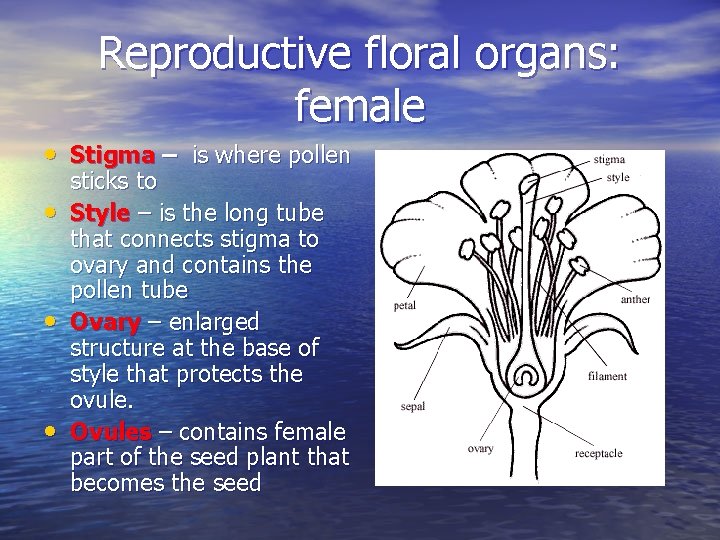
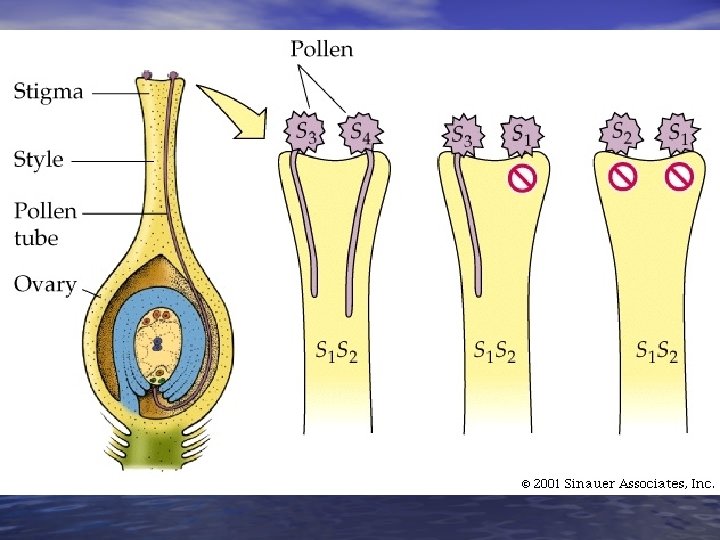
Reproductive floral organs: female • Stigma – is where pollen • • • sticks to Style – is the long tube that connects stigma to ovary and contains the pollen tube Ovary – enlarged structure at the base of style that protects the ovule. Ovules – contains female part of the seed plant that becomes the seed
Sexual reproduction • In animals is easy because you have separate male and female individuals. • In flowering plants it’s not so easy, because most flowers have both male and female parts in them, called perfect flowers.
Strategies to avoid selfpollination • Perfect flowers have both male and female organs, so plants have strategies to avoid self -pollination: • 1. Timing – male and female structures mature at different times • 2. Structure –male and female organs prevent self-pollination (imperfect flower) • 3. Biochemical – chemical on surface of pollen and stigma that stops the pollen tube from being formed in the same flower
Pollination and Fertilization • For pollen to successfully • • fertilize the egg, there must be cross-pollination Pollen sticks to the stigma, starts growing a pollen tube Cross-Fertilization begins when tube begins to grow toward the egg
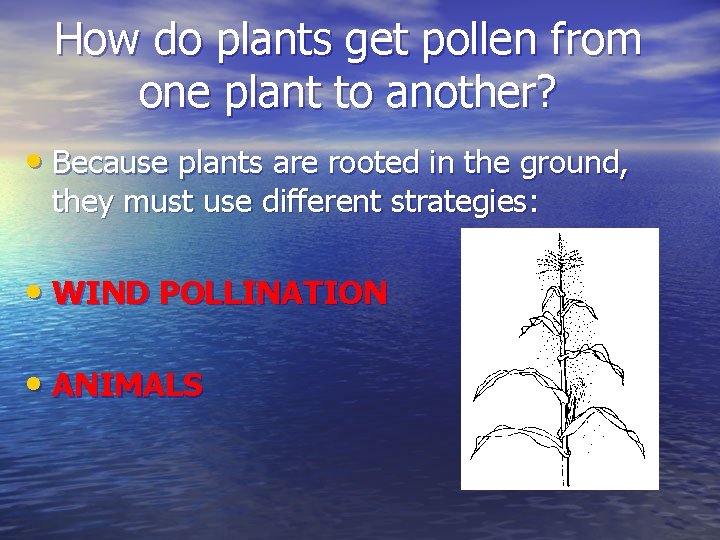
How do plants get pollen from one plant to another? • Because plants are rooted in the ground, they must use different strategies: • WIND POLLINATION • ANIMALS
ANIMAL POLLINATORS • Many flowering plants rely on animals for cross-pollination: • Insects – bees, wasps, flies, butterflies, moths • Birds – hummingbirds, honey creepers • Mammals – bats, mice, monkeys • Even some reptiles and amphibians!
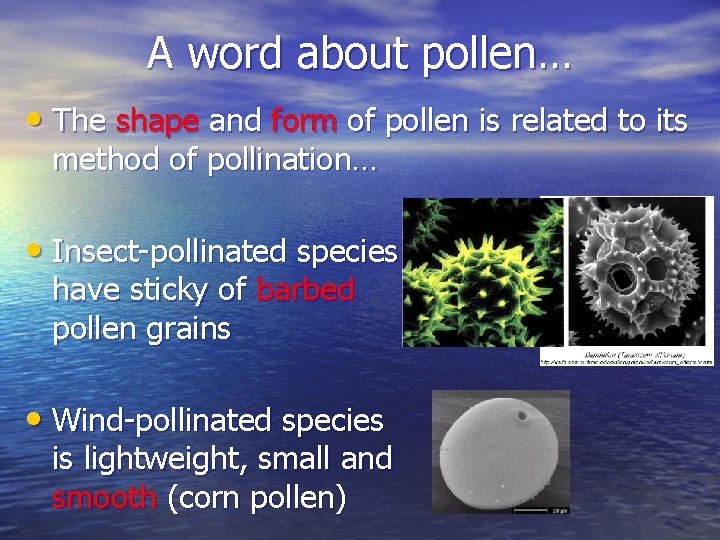
A word about pollen… • The shape and form of pollen is related to its method of pollination… • Insect-pollinated species have sticky of barbed pollen grains • Wind-pollinated species is lightweight, small and smooth (corn pollen)
Advantages and Disadvantages of Asexual Reproduction • Are able to reproduce rapidly – (ex) strep – (ex) white blood cells • Limited variation • If conditions become unfavourable whole populations can be wiped out • Puts all energy into reproduction of itself
Advantages and Disadvantages of Sexual Reproduction • Reproduce a lot slower – (ex) human’s • Provides lots of variation • Takes a lot of energy into making enough gametes so that fertilization can occur – Have a limited amount of offspring – (ex) sperm and pollen
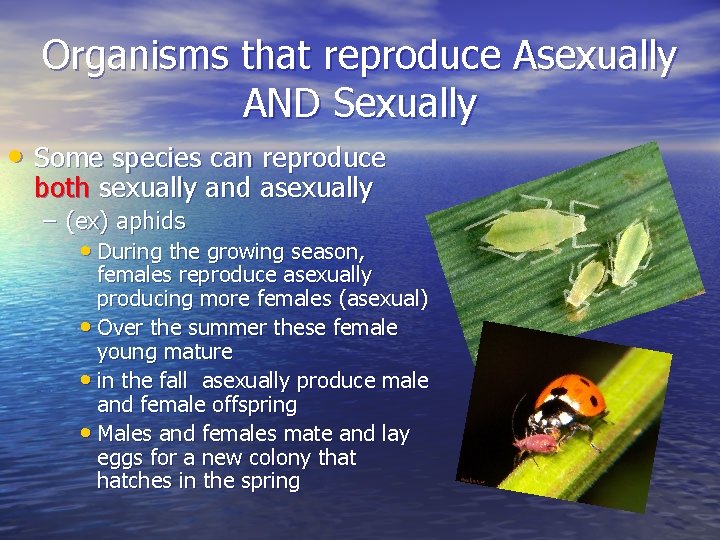
Organisms that reproduce Asexually AND Sexually • Some species can reproduce both sexually and asexually – (ex) aphids • During the growing season, females reproduce asexually producing more females (asexual) • Over the summer these female young mature • in the fall asexually produce male and female offspring • Males and females mate and lay eggs for a new colony that hatches in the spring