
2 2 Preserving Physical Evidence Forensics Physical Evidence

- Slides: 9
2 -2 Preserving Physical Evidence Forensics
Physical Evidence • Physical evidence includes any and all objects that can establish that a crime has been committed or can link the crime to its victim or it's perspective. • The first officer to arrive must secure the crime scene.
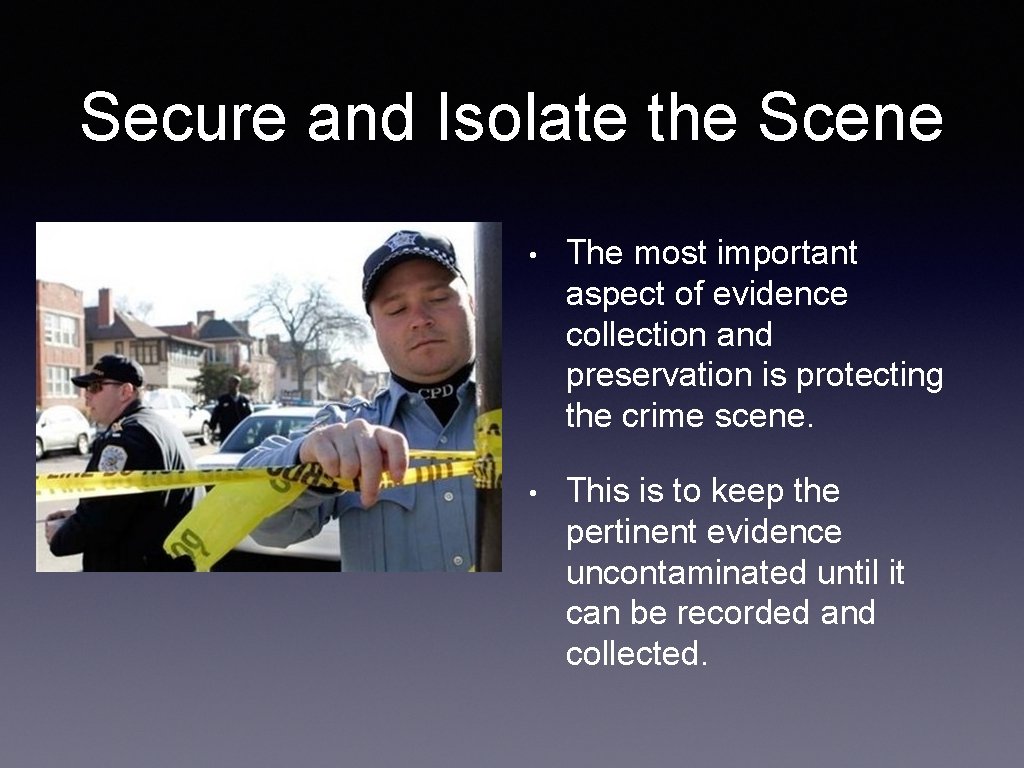
Secure and Isolate the Scene • The most important aspect of evidence collection and preservation is protecting the crime scene. • This is to keep the pertinent evidence uncontaminated until it can be recorded and collected.
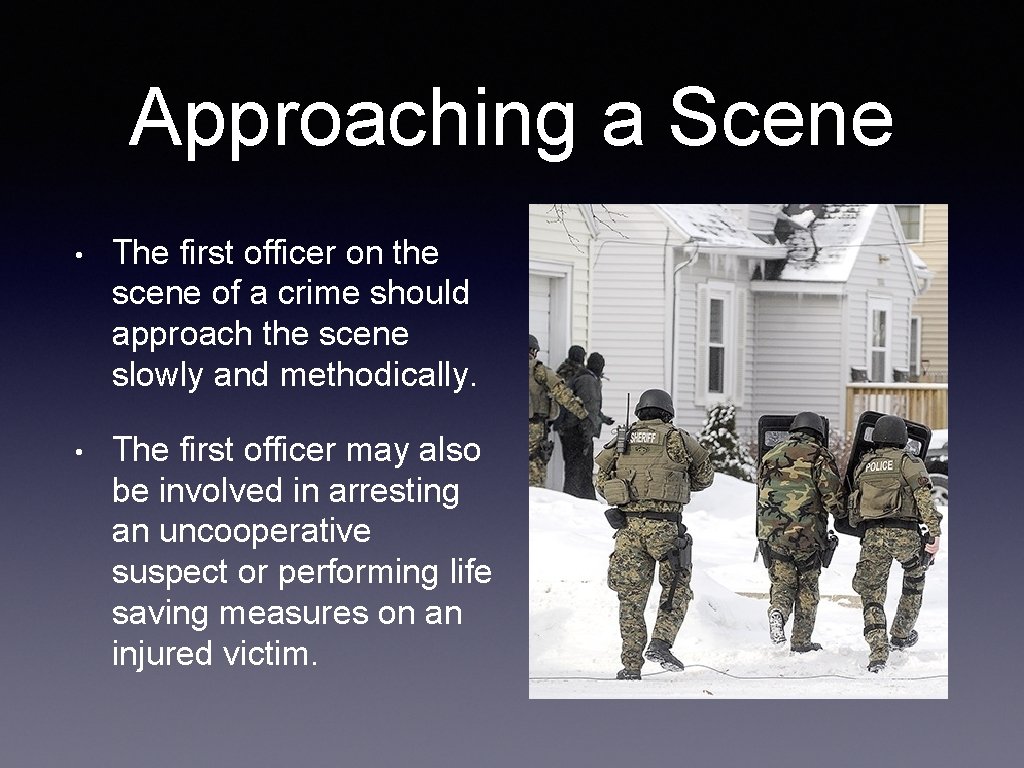
Approaching a Scene • The first officer on the scene of a crime should approach the scene slowly and methodically. • The first officer may also be involved in arresting an uncooperative suspect or performing life saving measures on an injured victim.
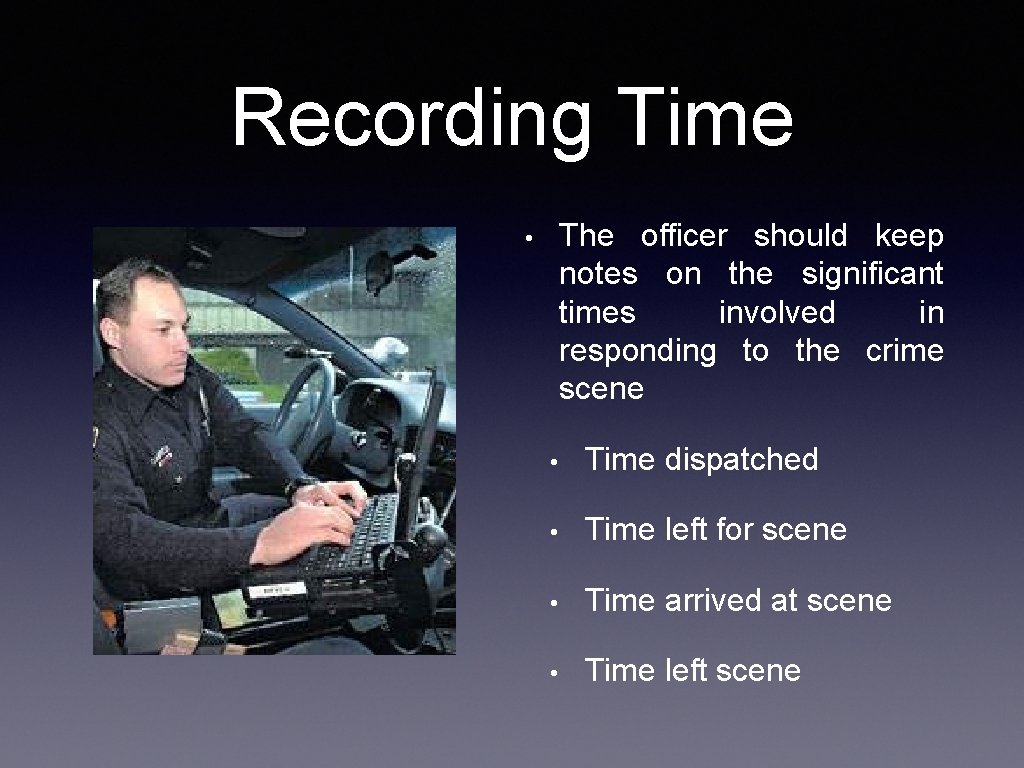
Recording Time The officer should keep notes on the significant times involved in responding to the crime scene • • Time dispatched • Time left for scene • Time arrived at scene • Time left scene
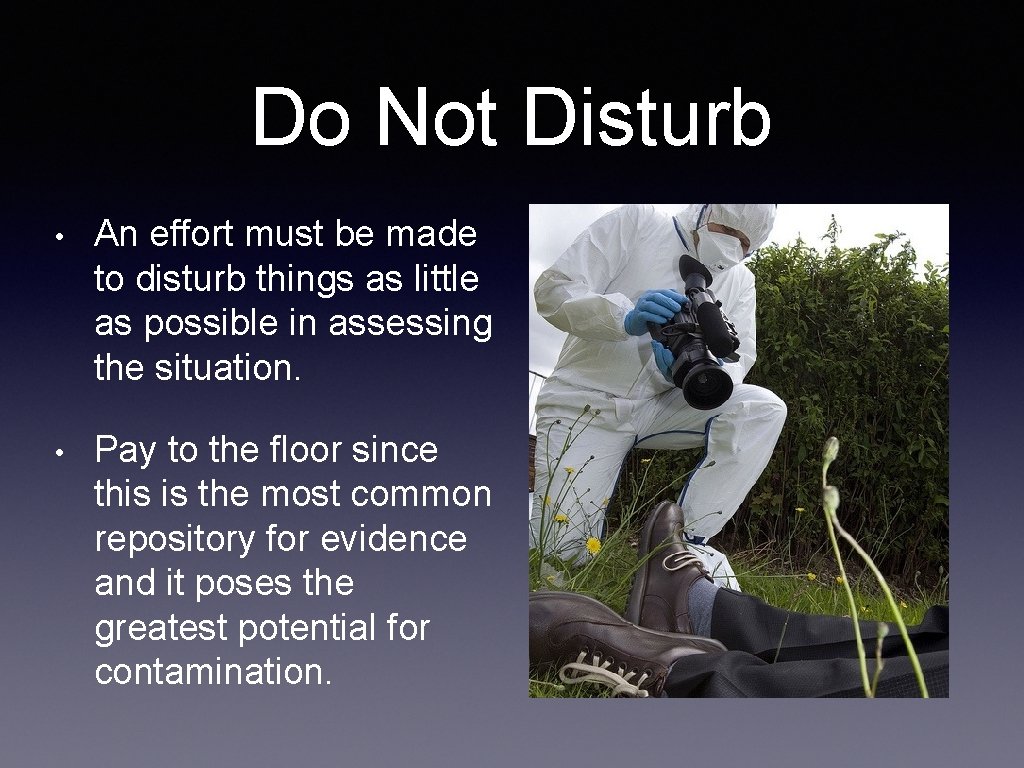
Do Not Disturb • An effort must be made to disturb things as little as possible in assessing the situation. • Pay to the floor since this is the most common repository for evidence and it poses the greatest potential for contamination.
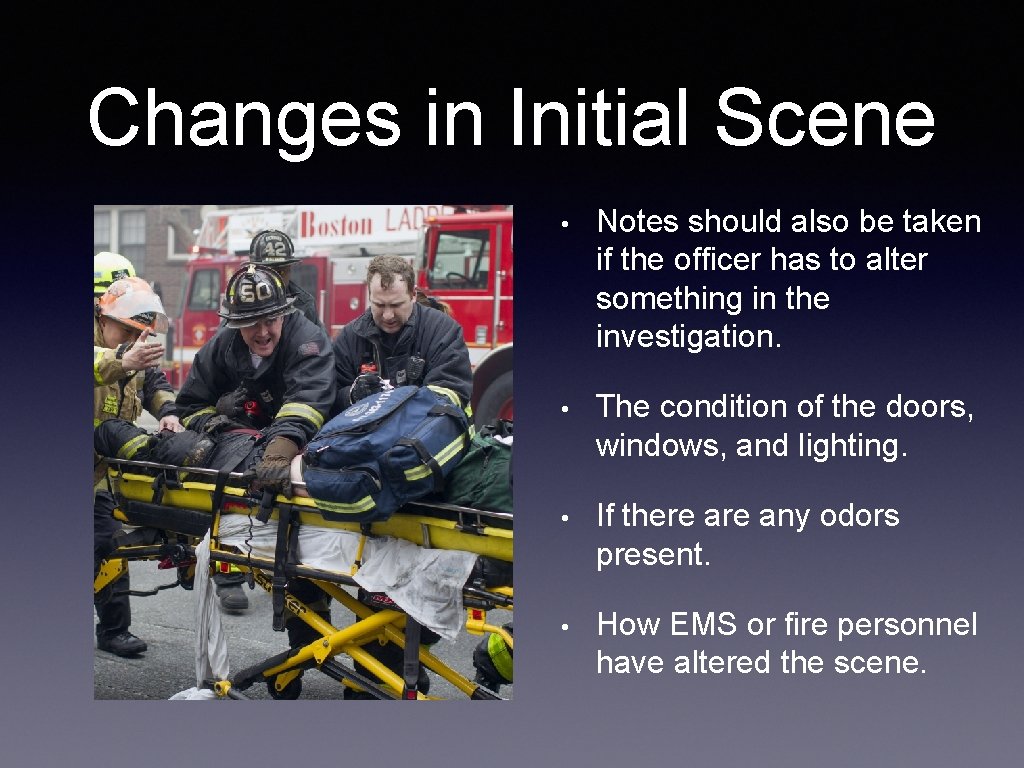
Changes in Initial Scene • Notes should also be taken if the officer has to alter something in the investigation. • The condition of the doors, windows, and lighting. • If there any odors present. • How EMS or fire personnel have altered the scene.
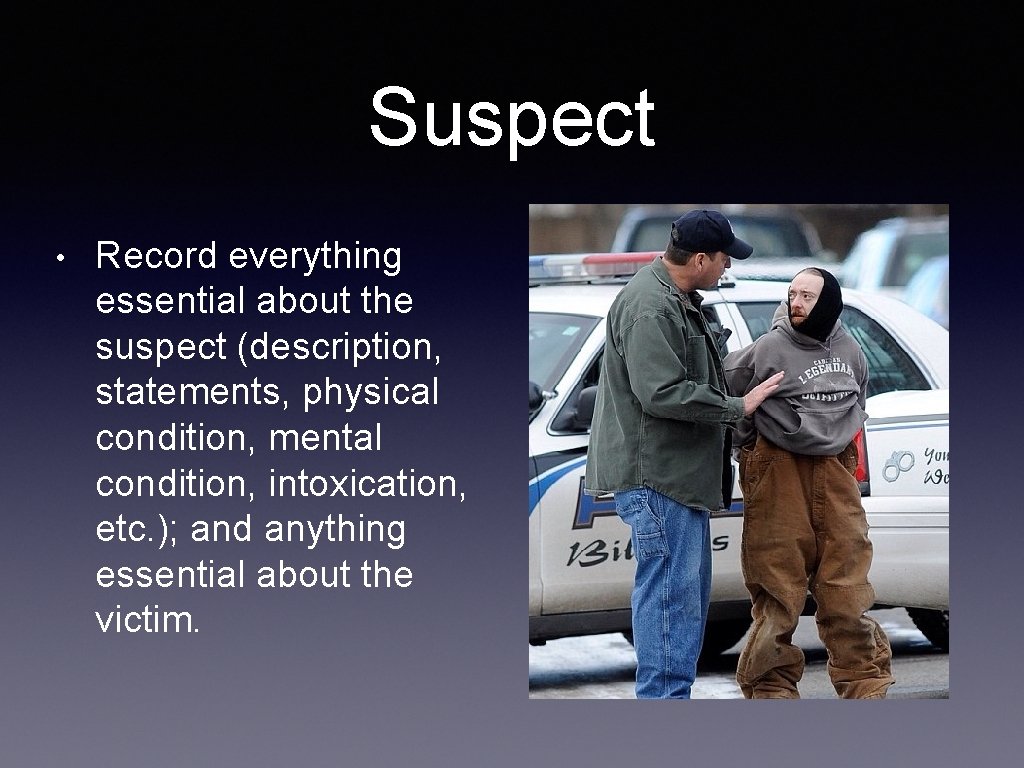
Suspect • Record everything essential about the suspect (description, statements, physical condition, mental condition, intoxication, etc. ); and anything essential about the victim.
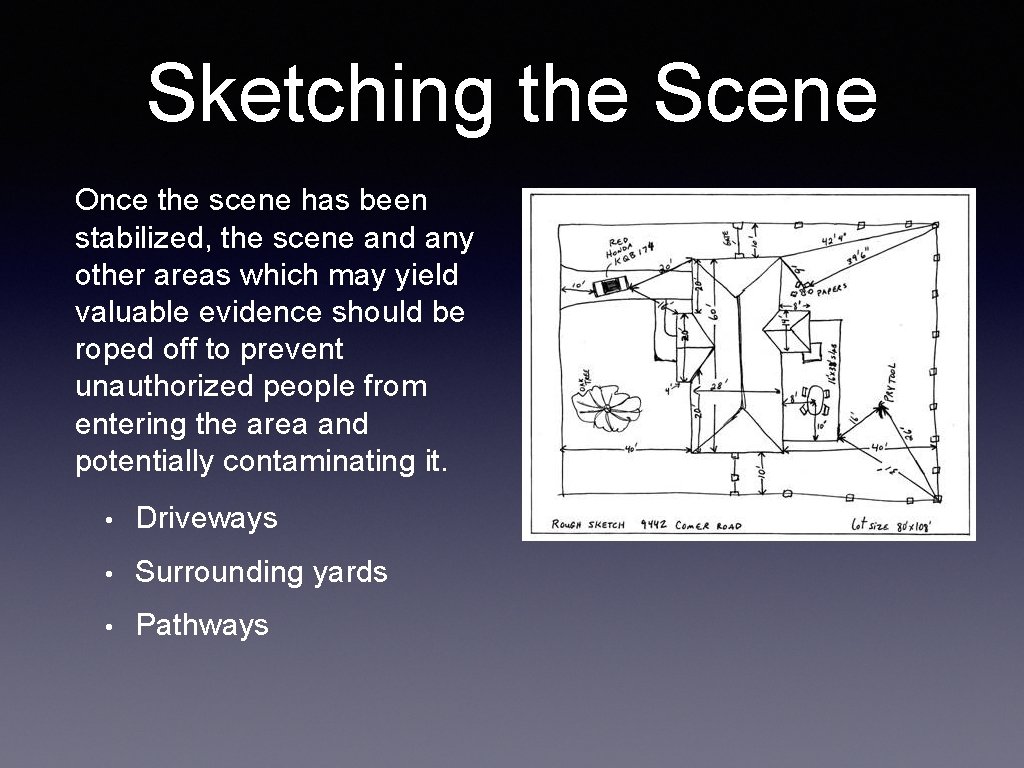
Sketching the Scene Once the scene has been stabilized, the scene and any other areas which may yield valuable evidence should be roped off to prevent unauthorized people from entering the area and potentially contaminating it. • Driveways • Surrounding yards • Pathways