
2 2 Nutrient Cycles in Ecosystems Nutrients are


- Slides: 24
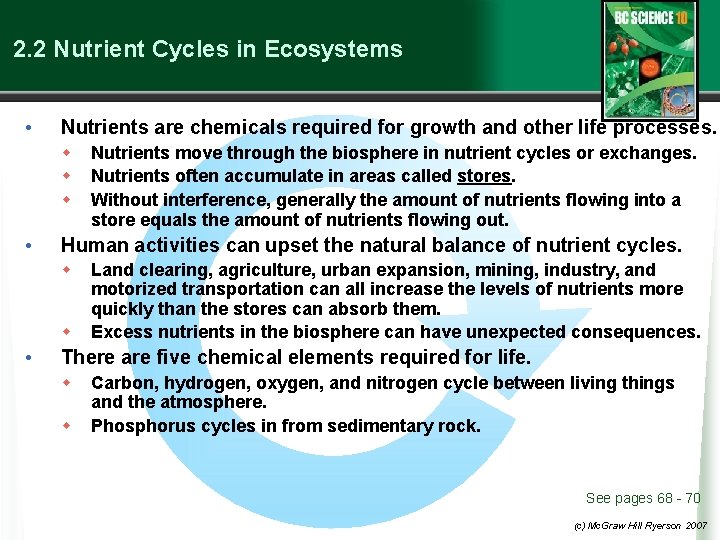
2. 2 Nutrient Cycles in Ecosystems • Nutrients are chemicals required for growth and other life processes. w w w • Human activities can upset the natural balance of nutrient cycles. w w • Nutrients move through the biosphere in nutrient cycles or exchanges. Nutrients often accumulate in areas called stores. Without interference, generally the amount of nutrients flowing into a store equals the amount of nutrients flowing out. Land clearing, agriculture, urban expansion, mining, industry, and motorized transportation can all increase the levels of nutrients more quickly than the stores can absorb them. Excess nutrients in the biosphere can have unexpected consequences. There are five chemical elements required for life. w w Carbon, hydrogen, oxygen, and nitrogen cycle between living things and the atmosphere. Phosphorus cycles in from sedimentary rock. See pages 68 - 70 (c) Mc. Graw Hill Ryerson 2007
(c) Mc. Graw Hill Ryerson 2007
(c) Mc. Graw Hill Ryerson 2007
(c) Mc. Graw Hill Ryerson 2007
(c) Mc. Graw Hill Ryerson 2007
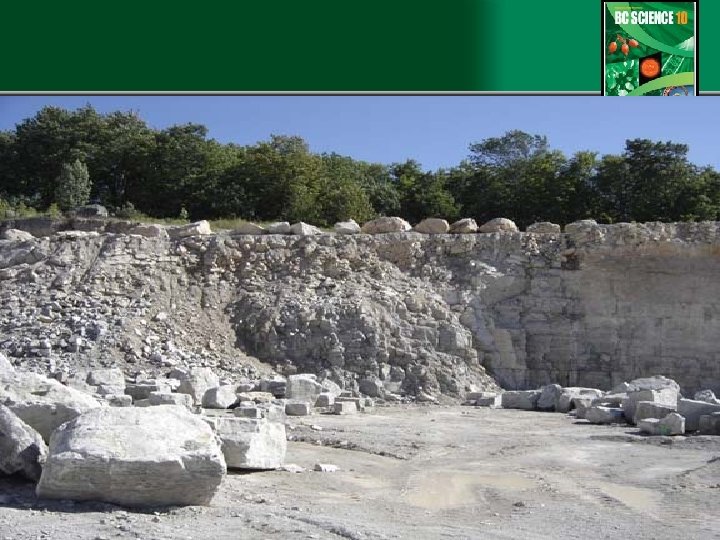
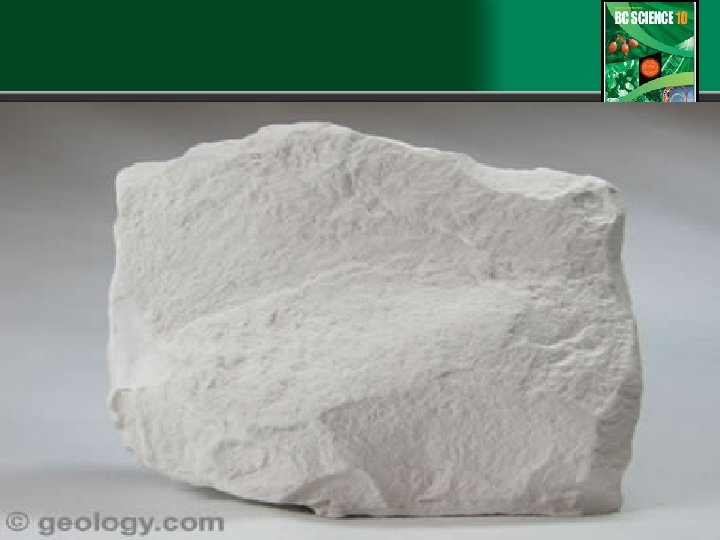
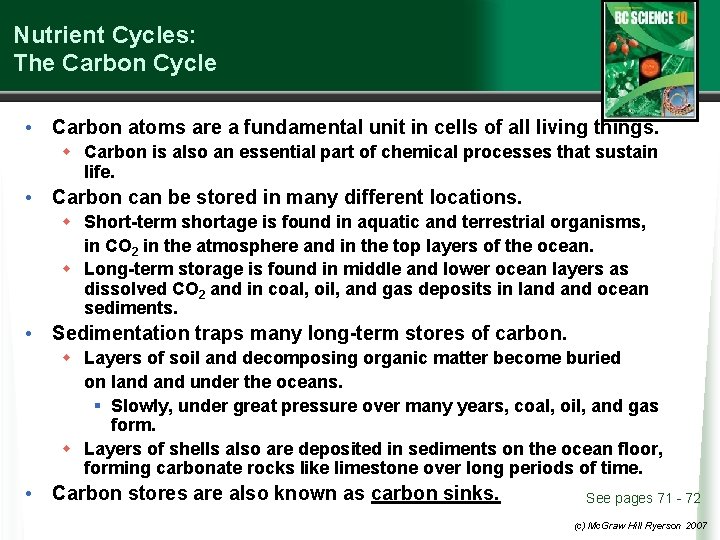
Nutrient Cycles: The Carbon Cycle • Carbon atoms are a fundamental unit in cells of all living things. w Carbon is also an essential part of chemical processes that sustain life. • Carbon can be stored in many different locations. w Short-term shortage is found in aquatic and terrestrial organisms, in CO 2 in the atmosphere and in the top layers of the ocean. w Long-term storage is found in middle and lower ocean layers as dissolved CO 2 and in coal, oil, and gas deposits in land ocean sediments. • Sedimentation traps many long-term stores of carbon. w Layers of soil and decomposing organic matter become buried on land under the oceans. § Slowly, under great pressure over many years, coal, oil, and gas form. w Layers of shells also are deposited in sediments on the ocean floor, forming carbonate rocks like limestone over long periods of time. • Carbon stores are also known as carbon sinks. See pages 71 - 72 (c) Mc. Graw Hill Ryerson 2007
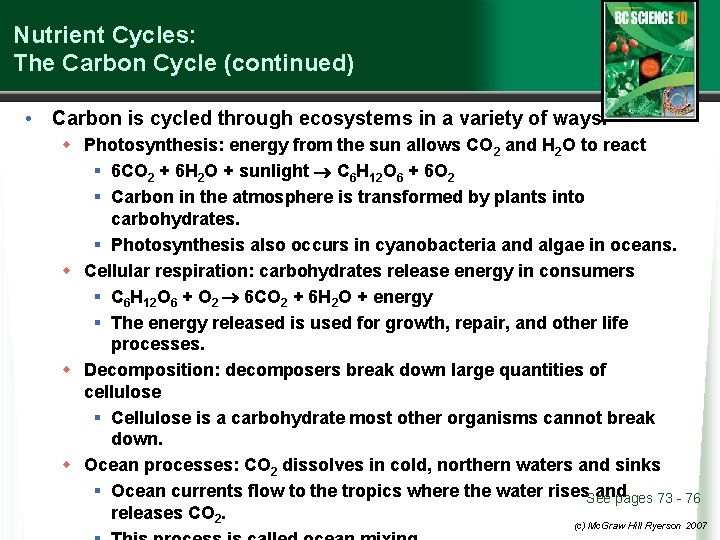
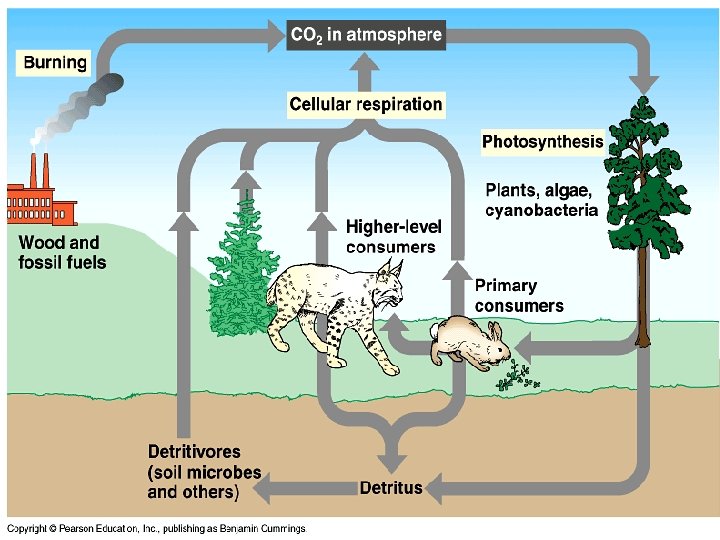
Nutrient Cycles: The Carbon Cycle (continued) • Carbon is cycled through ecosystems in a variety of ways. w Photosynthesis: energy from the sun allows CO 2 and H 2 O to react § 6 CO 2 + 6 H 2 O + sunlight C 6 H 12 O 6 + 6 O 2 § Carbon in the atmosphere is transformed by plants into carbohydrates. § Photosynthesis also occurs in cyanobacteria and algae in oceans. w Cellular respiration: carbohydrates release energy in consumers § C 6 H 12 O 6 + O 2 6 CO 2 + 6 H 2 O + energy § The energy released is used for growth, repair, and other life processes. w Decomposition: decomposers break down large quantities of cellulose § Cellulose is a carbohydrate most other organisms cannot break down. w Ocean processes: CO 2 dissolves in cold, northern waters and sinks § Ocean currents flow to the tropics where the water rises. See and pages 73 - 76 releases CO 2. (c) Mc. Graw Hill Ryerson 2007
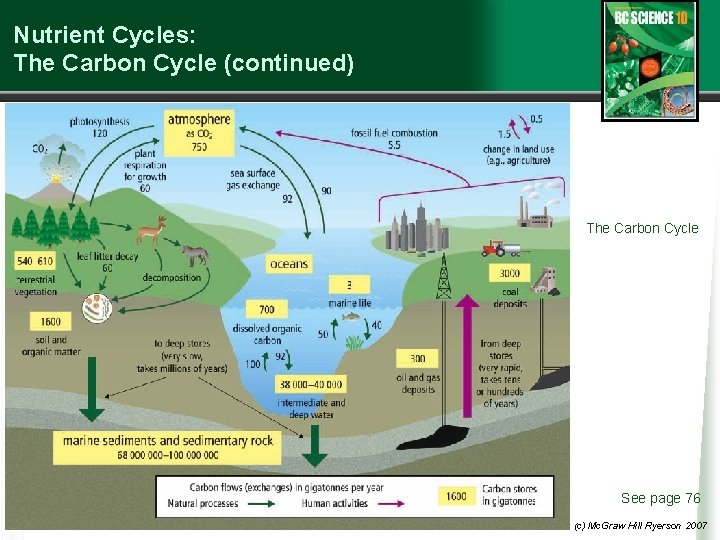
Nutrient Cycles: The Carbon Cycle (continued) The Carbon Cycle See page 76 (c) Mc. Graw Hill Ryerson 2007
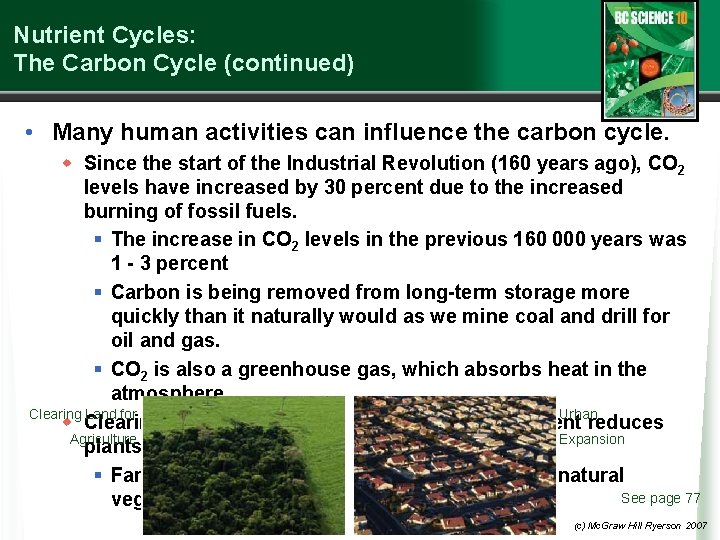
Nutrient Cycles: The Carbon Cycle (continued) • Many human activities can influence the carbon cycle. w Since the start of the Industrial Revolution (160 years ago), CO 2 levels have increased by 30 percent due to the increased burning of fossil fuels. § The increase in CO 2 levels in the previous 160 000 years was 1 - 3 percent § Carbon is being removed from long-term storage more quickly than it naturally would as we mine coal and drill for oil and gas. § CO 2 is also a greenhouse gas, which absorbs heat in the atmosphere. Clearing Land for Urban w Clearing land for agriculture and urban development reduces Agriculture Expansion plants that can absorb and convert CO 2. § Farmed land does not remove as much CO 2 as natural See page 77 vegetation does. (c) Mc. Graw Hill Ryerson 2007
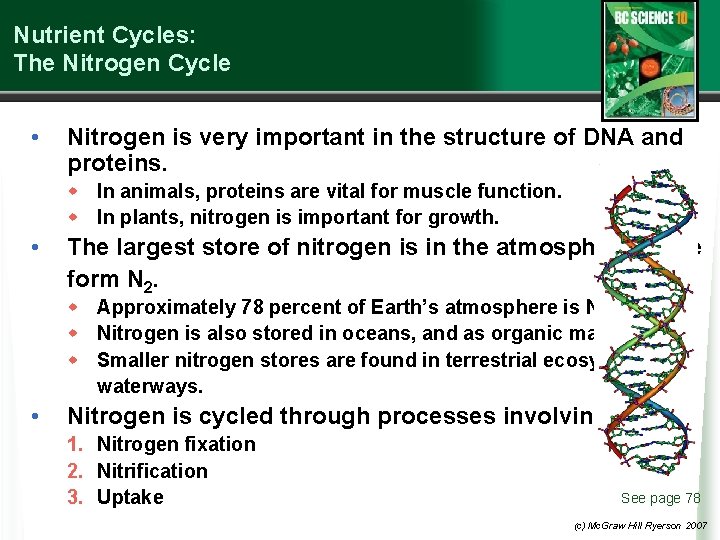
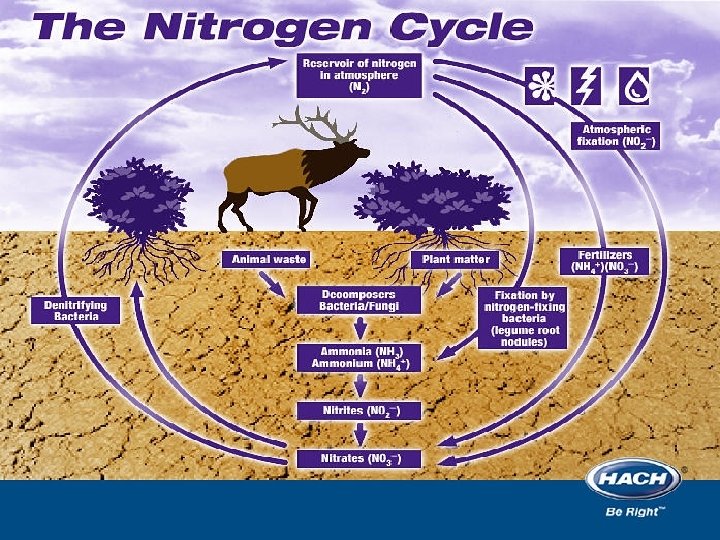
Nutrient Cycles: The Nitrogen Cycle • Nitrogen is very important in the structure of DNA and proteins. w In animals, proteins are vital for muscle function. w In plants, nitrogen is important for growth. • The largest store of nitrogen is in the atmosphere in the form N 2. w Approximately 78 percent of Earth’s atmosphere is N 2 gas. w Nitrogen is also stored in oceans, and as organic matter in soil. w Smaller nitrogen stores are found in terrestrial ecosystems and waterways. • Nitrogen is cycled through processes involving plants. 1. Nitrogen fixation 2. Nitrification 3. Uptake See page 78 (c) Mc. Graw Hill Ryerson 2007
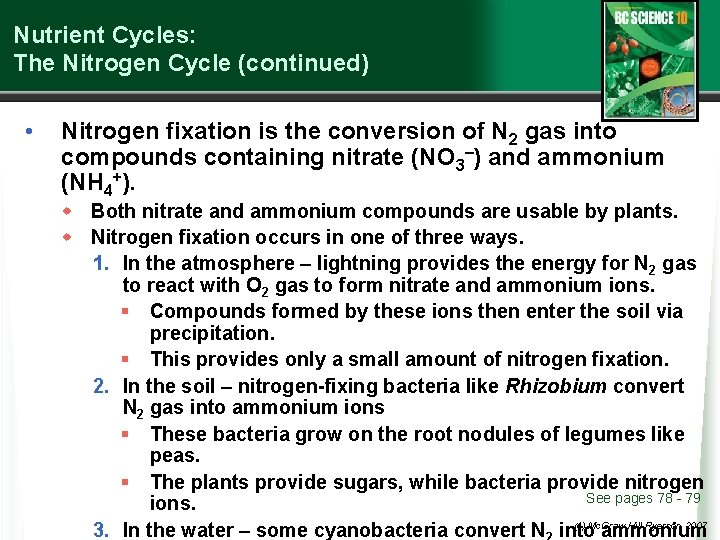
Nutrient Cycles: The Nitrogen Cycle (continued) • Nitrogen fixation is the conversion of N 2 gas into compounds containing nitrate (NO 3–) and ammonium (NH 4+). w Both nitrate and ammonium compounds are usable by plants. w Nitrogen fixation occurs in one of three ways. 1. In the atmosphere – lightning provides the energy for N 2 gas to react with O 2 gas to form nitrate and ammonium ions. § Compounds formed by these ions then enter the soil via precipitation. § This provides only a small amount of nitrogen fixation. 2. In the soil – nitrogen-fixing bacteria like Rhizobium convert N 2 gas into ammonium ions § These bacteria grow on the root nodules of legumes like peas. § The plants provide sugars, while bacteria provide nitrogen See pages 78 - 79 ions. (c) Mc. Graw Hill Ryerson 2007 3. In the water – some cyanobacteria convert N into ammonium
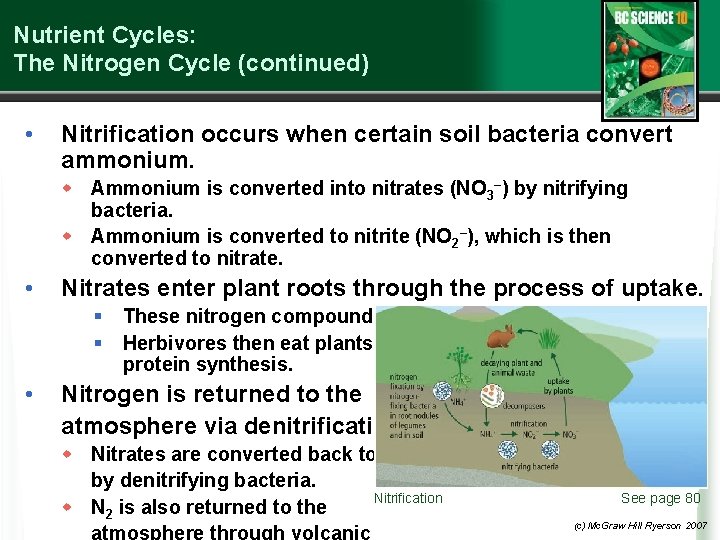
Nutrient Cycles: The Nitrogen Cycle (continued) • Nitrification occurs when certain soil bacteria convert ammonium. w Ammonium is converted into nitrates (NO 3–) by nitrifying bacteria. w Ammonium is converted to nitrite (NO 2–), which is then converted to nitrate. • Nitrates enter plant roots through the process of uptake. § § • These nitrogen compounds compose plant proteins. Herbivores then eat plants and use nitrogen for DNA and protein synthesis. Nitrogen is returned to the atmosphere via denitrification. w Nitrates are converted back to N 2 by denitrifying bacteria. Nitrification w N 2 is also returned to the See page 80 (c) Mc. Graw Hill Ryerson 2007
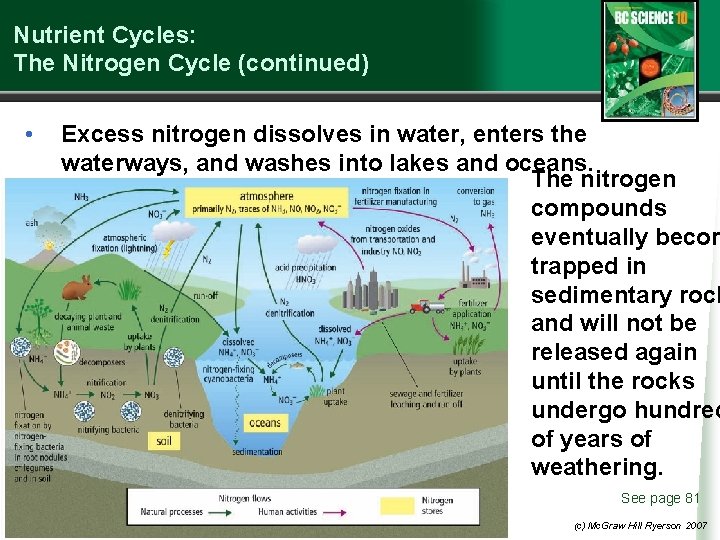
Nutrient Cycles: The Nitrogen Cycle (continued) • Excess nitrogen dissolves in water, enters the waterways, and washes into lakes and oceans. The nitrogen compounds eventually becom trapped in sedimentary rock and will not be released again until the rocks undergo hundred of years of weathering. See page 81 (c) Mc. Graw Hill Ryerson 2007
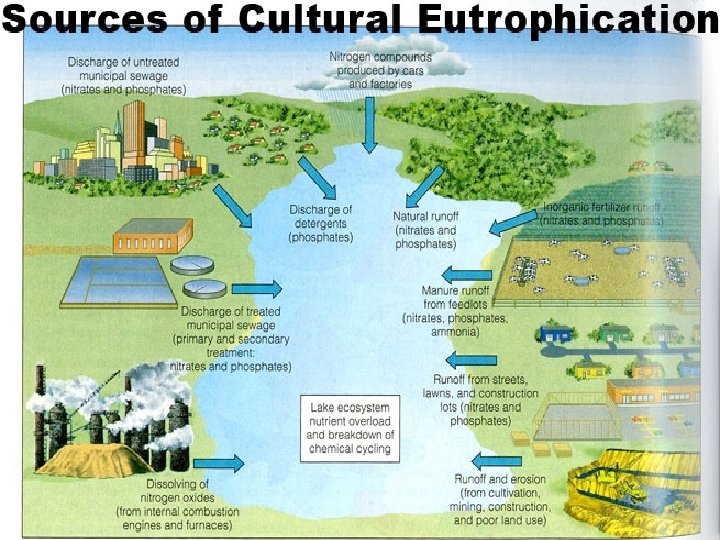
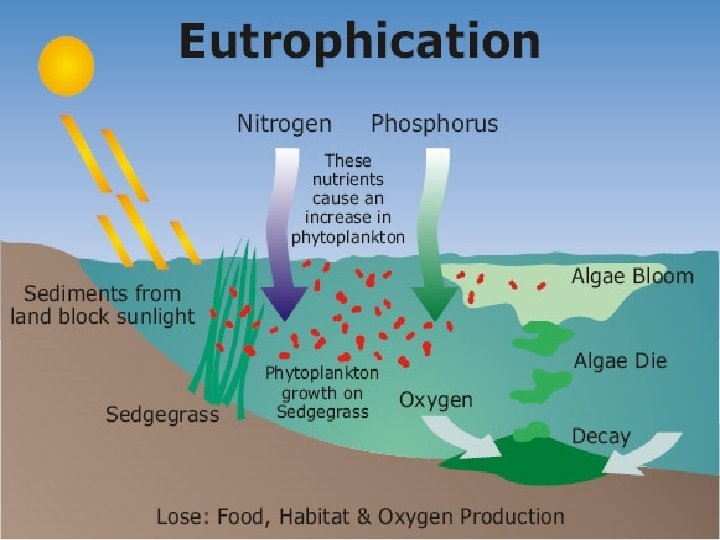
Nutrient Cycles: The Nitrogen Cycle (continued) • Human activities can also affect the nitrogen cycle. w Due to human activities, the amount of nitrogen in the ecosystem has doubled in the last 50 years. w Burning fossil fuels and treating sewage releases nitrogen oxide (NO) and nitrogen dioxide (NO 2). § Burning also releases nitrogen compounds that increase acid precipitation in the form Acid rain damaged these trees of nitric acid (HNO 3). w Agricultural practices often use large amounts of nitrogencontaining fertilizers. § Excess nitrogen is washed away, or leaches, into the waterways. • This promotes huge growth in aquatic algae called algae blooms. • Algae blooms use up all CO 2 and block sunlight, killing many aquatic organisms. See pages 82 - 83 (c) Mc. Graw Ryerson 2007 • Algae blooms can also produce neurotoxins that. Hillpoison
Now draw your own diagram summarizing the Nitrogen Cycle. (c) Mc. Graw Hill Ryerson 2007
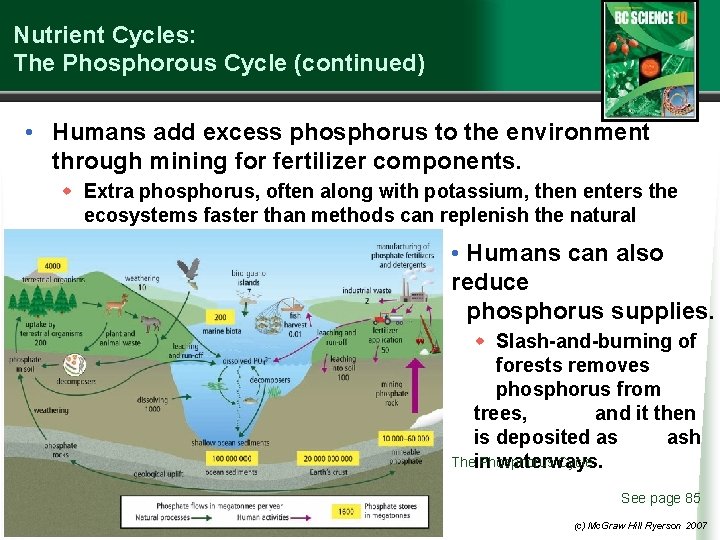
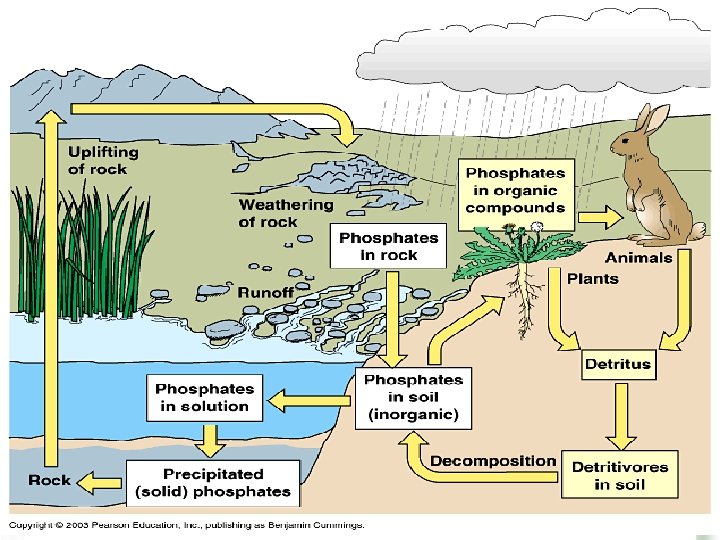
Nutrient Cycles: The Phosphorous Cycle • Phosphorus is essential for life processes in plants and animals. w Phosphorus is a part of the molecule that carries energy in living cells. w Phosphorus promotes root growth, stem strength, and seed production. w In animals, phosphorous and calcium are important for strong bones. • Phosphorus is not stored in the atmosphere. w Instead, it is trapped in phosphates (PO 43–, HPO 42–, H 2 PO 4–) found in rocks and in the sediments on the ocean floor. • Weathering releases these phosphates from rocks. w Chemical weathering, via acid precipitation or lichens, releases phosphates. w Physical weathering, including wind, water and freezing, releases See pages 83 - 84 phosphates. (c) Mc. Graw Hill Ryerson 2007
Nutrient Cycles: The Phosphorous Cycle (continued) • Humans add excess phosphorus to the environment through mining for fertilizer components. w Extra phosphorus, often along with potassium, then enters the ecosystems faster than methods can replenish the natural stores. • Humans can also reduce phosphorus supplies. w Slash-and-burning of forests removes phosphorus from trees, and it then is deposited as ash Thein Phosphorus Cycle waterways. See page 85 (c) Mc. Graw Hill Ryerson 2007
Now draw your own diagram summarizing the Phosphorus Cycle. (c) Mc. Graw Hill Ryerson 2007
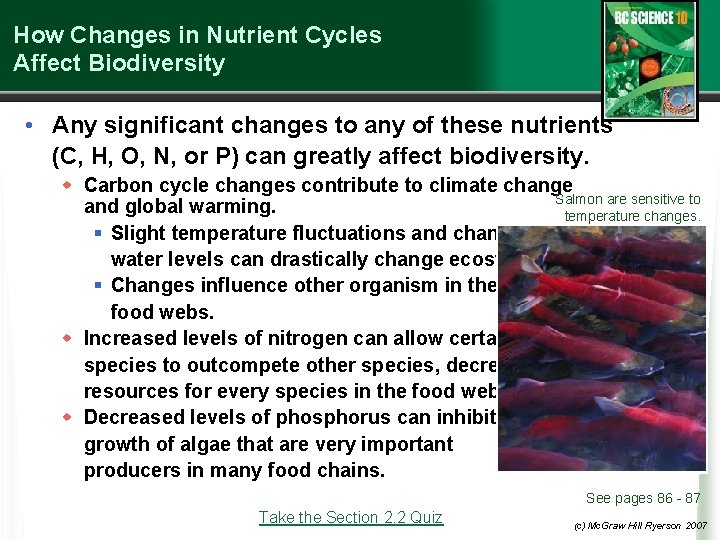
How Changes in Nutrient Cycles Affect Biodiversity • Any significant changes to any of these nutrients (C, H, O, N, or P) can greatly affect biodiversity. w Carbon cycle changes contribute to climate change Salmon are sensitive to and global warming. temperature changes. § Slight temperature fluctuations and changes in water levels can drastically change ecosystems. § Changes influence other organism in the food webs. w Increased levels of nitrogen can allow certain plant species to outcompete other species, decreasing resources for every species in the food webs. w Decreased levels of phosphorus can inhibit the growth of algae that are very important producers in many food chains. See pages 86 - 87 Take the Section 2. 2 Quiz (c) Mc. Graw Hill Ryerson 2007
(c) Mc. Graw Hill Ryerson 2007
(c) Mc. Graw Hill Ryerson 2007